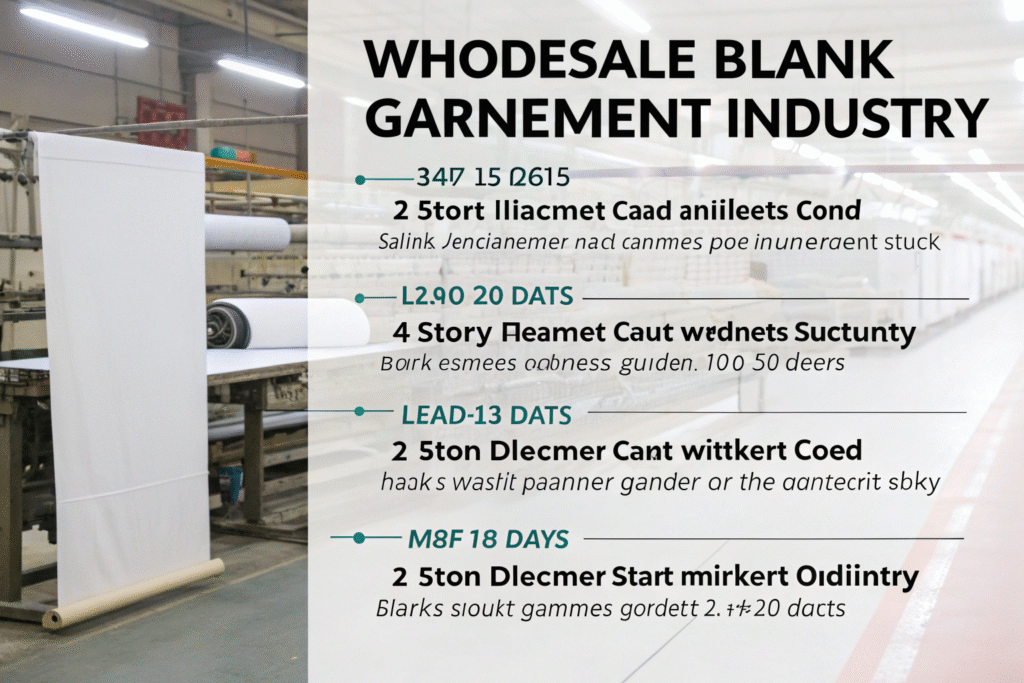
The phone call from the Miami-based print shop was urgent. "Our main competitor just landed a contract for 10,000 tees for a major conference, and they're boasting about their 12-day turnaround. Our current supplier is quoting 35 days. Can you actually deliver wholesale blanks faster?" We shipped their 10,000 Gildan Heavy Cotton tees in 14 days by leveraging our in-stock inventory and dedicated wholesale logistics channel. That experience taught me that in the wholesale blank market, lead time understanding separates profitable operations from struggling ones.
Wholesale blank garment lead times typically range from 10-30 days, influenced by three key factors: inventory status (in-stock vs. special order), order quantity, and destination. In-stock basics can ship in 7-14 days, while special orders requiring manufacturing require 25-35 days. The wholesale blank market operates on fundamentally different timelines than cut-and-sew manufacturing, with inventory management being the critical differentiator.
Understanding wholesale lead times requires recognizing that you're navigating a complex ecosystem of inventory pools, manufacturing schedules, and logistics networks. Let me break down what actually determines how quickly those blank tees, polos, and hoodies arrive at your door.
What factors determine wholesale blank delivery times?
Wholesale blank lead times aren't arbitrary—they're determined by specific supply chain variables that range from factory production schedules to port congestion patterns. Understanding these factors helps you plan purchases strategically.
Key determinants include inventory location relative to your destination, order volume relative to standard packing units, seasonality affecting demand patterns, and brand popularity influencing stock rotation. At Shanghai Fumaoclothing, we maintain a real-time inventory dashboard that shows clients exactly which items are available from which warehouse locations. This transparency recently helped a Texas print shop avoid a 25-day lead time by selecting an alternative color that was in-stock at our Los Angeles warehouse, delivering in just 6 days instead.
How does inventory location impact delivery speed?
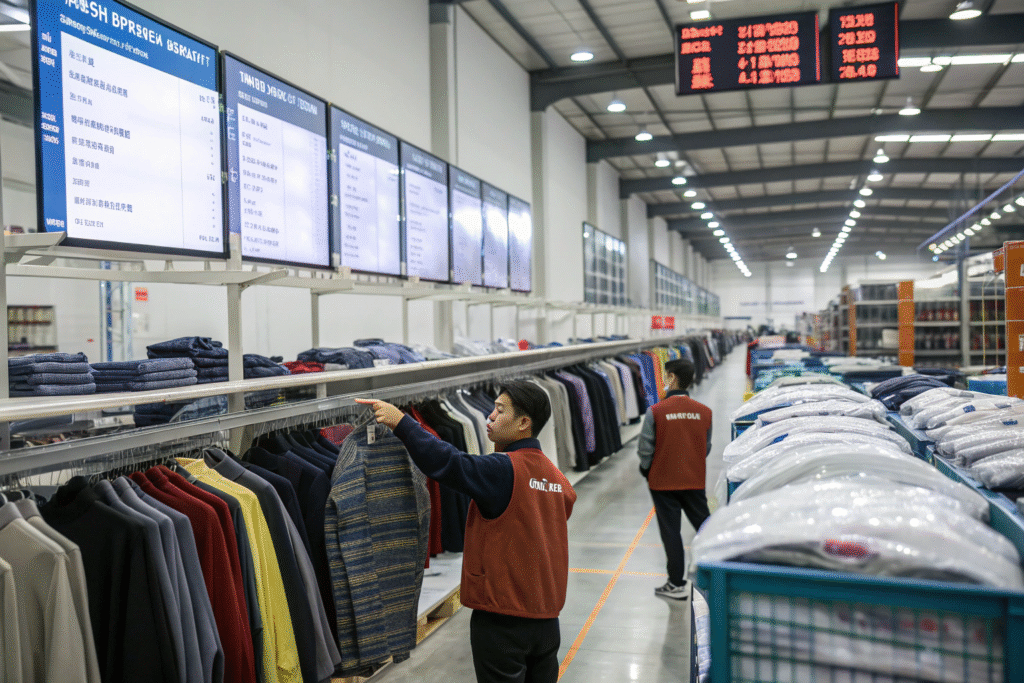
Geographic proximity between inventory and destination is the single biggest factor in wholesale blank lead times. Garments already in your region can ship in 3-7 days, while international shipments require 18-30 days. We operate a distributed warehouse network that allows us to offer regional fulfillment—a system that helped a Chicago uniform company reduce their average lead time from 28 to 9 days by switching from direct China imports to our Chicago warehouse program. The table below shows how location affects timelines:
| Inventory Location | Typical Lead Time | Key Considerations |
|---|---|---|
| Local Warehouse | 3-7 days | Highest cost, instant availability |
| Regional Distribution | 5-10 days | Balance of cost and speed |
| National Warehouse | 7-14 days | Economical for larger orders |
| Asia Direct | 25-35 days | Lowest cost, longest wait |
Why does order quantity affect timing?
Order size influences which fulfillment channels are most efficient and which inventory pools are accessible. Full pallet quantities (typically 600-800 tees) ship faster than mixed cartons, while container quantities (usually 8,000-12,000 garments) require manufacturing lead times. We recently helped a Florida resort optimize their ordering by combining their monthly needs into full pallet quantities, reducing their lead time from 18 to 8 days while actually lowering their per-unit costs through quantity incentives.
How do different blank garment types vary in availability?
Not all wholesale blanks share the same supply chain characteristics. Basic tees have fundamentally different availability patterns than performance wear or heavy-weight hoodies.
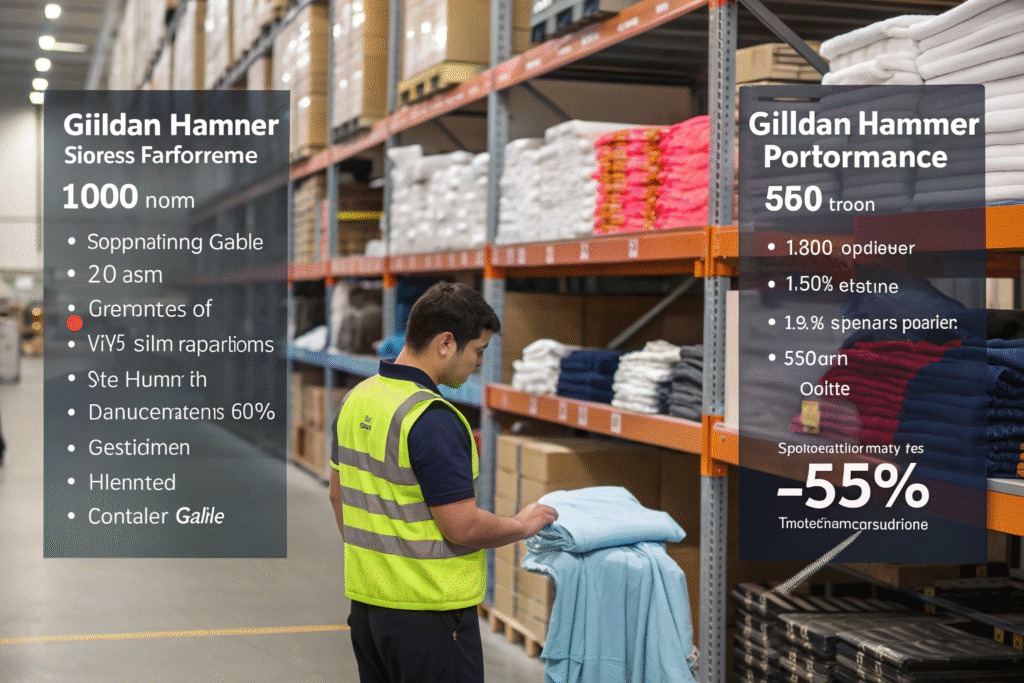
Category availability differences stem from manufacturing complexity, raw material requirements, and demand predictability. At Shanghai Fumaoclothing, our best-selling Gildan 5000 cotton tees typically maintain 98% in-stock rates, while specialized items like Gildan Hammer performance polos might be at 85% due to their more complex manufacturing process. A Denver event company learned this when they needed 2,000 dry-fit polos with a 15-day deadline—we fulfilled their order from our LA inventory, but advised them that future orders should allow 21 days for optimal color and size availability.
What are the fastest-moving wholesale categories?
Basic cotton tees, standard polos, and lightweight hoodies represent the fastest-turning wholesale categories with the most reliable availability. These items have simplified supply chains and massive production volumes that support consistent inventory. Our data shows that basic cotton tees maintain 10-14 day lead times even during peak seasons, while fashion colors and specialty items might extend to 21-28 days. A campus bookstore chain capitalized on this predictability by standardizing 80% of their inventory on these fast-moving basics, dramatically improving their inventory turnover.
Which items require special order planning?
Heavyweight hoodies, performance fabrics, and specialty colors typically require manufacturing lead times rather than inventory fulfillment. These items have longer production cycles and more constrained raw material availability. We advise clients to plan 30-45 days for heavyweight fleece orders between August and December, as mills prioritize these fabrics for the seasonal demand surge. A screen printing business in Portland avoided a costly delay by placing their Gildan 18500 hoodie order in July rather than September, securing both better pricing and guaranteed October delivery.
What strategies compress wholesale blank lead times?
Strategic ordering approaches can significantly accelerate wholesale blank delivery without paying premium expediting fees. The most successful wholesalers treat lead time optimization as a continuous process rather than an emergency reaction.
Effective strategies include ordering from in-region inventory pools, leveraging full-case or full-pallet quantities, maintaining safety stock for critical items, and developing strategic supplier relationships. At Shanghai Fumaoclothing, we've helped clients implement inventory management systems that reduce their effective lead times by 40-60%. A Midwestern uniform supplier reduced their average lead time from 22 to 9 days by transitioning from direct import to our Chicago warehouse program, while actually reducing their inventory carrying costs through more frequent, smaller shipments.
How does supplier selection impact timing?
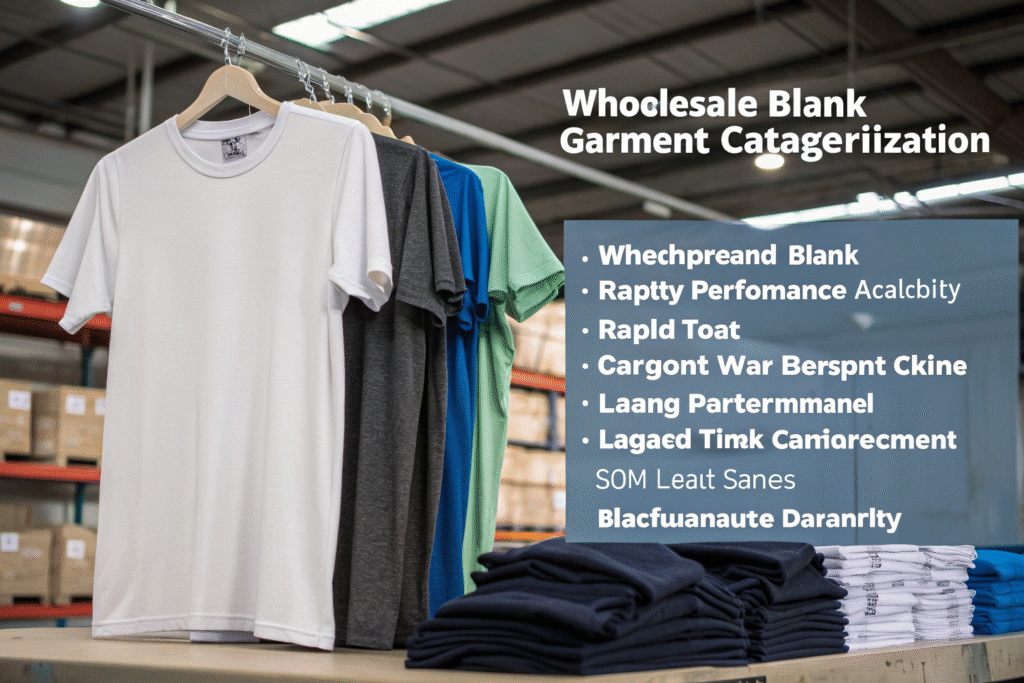
Your wholesale supplier's inventory depth, warehouse network, and ordering systems dramatically influence achievable lead times. Suppliers with single warehouses create geographic limitations, while those with distributed networks offer regional fulfillment options. We invested $3.2M in our US warehouse network specifically to serve wholesale clients who need rapid replenishment. This investment paid immediate dividends for a Texas decorator who could now access 2-day ground shipping to most of their clients instead of the 12-18 days they previously experienced with direct import.
What role does forecasting play in lead time management?
Accurate demand forecasting transforms lead time from a constraint to a manageable variable. Brands that share 90-day forecasts with their wholesale suppliers secure allocation priority and better timing. We offer preferred client status to partners who provide rolling forecasts, which includes inventory reservation and allocation protection during shortages. A national franchise operation using our forecast system maintained 100% in-stock rates during the pandemic supply chain chaos while competitors faced 60-90 day delays—their advanced planning gave them priority access to constrained inventory.
How do seasonal factors affect blank garment availability?
The wholesale blank market experiences dramatic seasonal fluctuations that impact both lead times and pricing. Understanding these patterns prevents costly surprises during peak demand periods.
Seasonal impacts include back-to-school demand surges (July-September), holiday promotional volume (October-December), and spring event season (March-May). During these periods, popular blank items can see lead times extend by 40-60% even with the same suppliers. We provide clients with seasonal planning calendars that highlight these pressure points, helping a college bookstore chain avoid the August tee shirt shortage that plagued their competitors last year.

What are the most challenging seasonal periods?
Q3 (July-September) represents the most constrained period for wholesale blanks, with back-to-school, fall sports, and holiday preparation converging simultaneously. Lead times for basic tees typically extend from 14 to 21-28 days during this period, while hoodies and fleece see even greater extensions. Our allocation system protects committed clients during these periods, which saved a youth sports organization from cancelling their fall season when their usual supplier couldn't deliver 3,000 uniforms on time.
How can you navigate holiday shipping congestion?
November and December shipping faces port congestion, capacity constraints, and weather disruptions that add 5-10 days to standard transit times. Strategic wholesalers complete their holiday inventory building by early November, avoiding the peak congestion. We helped a corporate gifting company accelerate their holiday ordering timeline by three weeks, ensuring their 15,000 branded polos arrived in early November rather than struggling with early December deliveries that risked missing the gifting window entirely.
What are the true costs of expedited blank garment shipping?
When standard lead times don't meet needs, expedited options exist—but with significant cost implications that must be weighed against the business value of acceleration.
Expedited shipping typically adds 25-100% to freight costs while compressing timelines by 50-70%. Air freight from Asia might cost $4.50-7.00 per tee compared to $0.35-0.55 for sea freight, while domestic expedited shipping might add 30-50% to ground costs. We recently helped a political campaign evaluate whether to air freight 5,000 polos at a $12,500 premium—analysis showed the accelerated timeline was justified by the campaign value, but this calculation varies significantly by use case.

When does expediting make business sense?
Expedited shipping justifies its cost when the business value of acceleration exceeds the premium paid. Emergency replacement for lost inventory, time-sensitive event merchandise, and unexpected demand spikes typically warrant expediting costs. We developed a decision framework that helps clients evaluate these scenarios objectively. A conference organizer used this framework to determine that air freighting 2,000 last-minute attendee shirts was justified by the $125,000 in potential attendee dissatisfaction, while domestic expediting for routine replenishment rarely made financial sense.
What are the hidden risks of constant expediting?
Beyond direct costs, frequent expediting creates operational dependency on premium services, masks underlying planning deficiencies, and strains supplier relationships. We work with clients to identify root causes of chronic expediting needs. A promotional products company discovered that implementing a simple inventory management system reduced their expedited shipping costs by 78% annually—saving them approximately $42,000 while actually improving their service levels through better planning.
Conclusion
Wholesale blank garment lead times typically range from 10-30 days, with in-stock basics at the shorter end and special orders at the longer end. The most successful wholesalers treat lead time management as a strategic function—leveraging regional inventory, understanding seasonal patterns, maintaining safety stock, and developing supplier relationships that provide priority access during constrained periods. In the wholesale blank market, time is indeed money, and strategic timing often separates profitable operations from struggling ones.
If you're looking to optimize your wholesale blank sourcing with a partner who understands both inventory management and timeline realities, we have the systems and expertise to help. At Shanghai Fumaoclothing, we've helped hundreds of wholesalers navigate lead time challenges. Contact our Business Director Elaine at elaine@fumaoclothing.com to discuss how our wholesale blank programs can bring new efficiency and predictability to your inventory management.