Your children's wear brand was built on adorable designs. But your customer service inbox tells a different story than your lookbook. Parents are writing in about stains that won't come out. About pants that pilled after three washes. About a jacket that lost its waterproofing after one rainy playground session. One parent wrote: "The dress was beautiful, but after my daughter wore it twice, it looked like we'd owned it for years." The design won their heart. The fabric lost their loyalty. In the North American children's wear market, the fabric is not just part of the product. It is the product's durability report card, and parents grade harshly.
The latest 2026 fabric innovations for kids' wear that North American buyers demand fall into four categories: adaptive durability textiles that withstand the abuse of active children without sacrificing softness, proactive safety fabrics with permanent rather than topical protective properties, sustainable materials that meet the eco-expectations of millennial and Gen Z parents without the premium price tag that limits market reach, and sensory-smart fabrics designed for neurodiverse children and comfort-sensitive kids. These innovations share a common thread: they solve specific parental pain points rather than offering generic "performance" claims.
At Shanghai Fumao, our children's wear fabric development program has expanded significantly in response to demands from our North American brand and distributor partners. Parents in the US and Canada are vocal about what they want from kids' clothing, and their expectations are rising faster than the general apparel market. Let me walk you through the specific fabric innovations that are moving from development labs into our production lines, and how these textiles solve the real-world problems that drive purchase decisions and brand loyalty in the children's wear segment.
Why Are Adaptive Durability Textiles the Number One Demand for Kids' Wear in 2026?
The traditional trade-off in kids' wear fabric was simple: choose softness and accept pilling, fading, and knee blowouts, or choose durability and accept a rough, stiff hand feel that children complain about. Parents were forced to choose between a fabric their child would wear willingly and a fabric that would survive the child's lifestyle. In 2026, this trade-off is obsolete. Adaptive durability textiles deliver both softness and survival, and North American parents are increasingly unwilling to accept anything less.
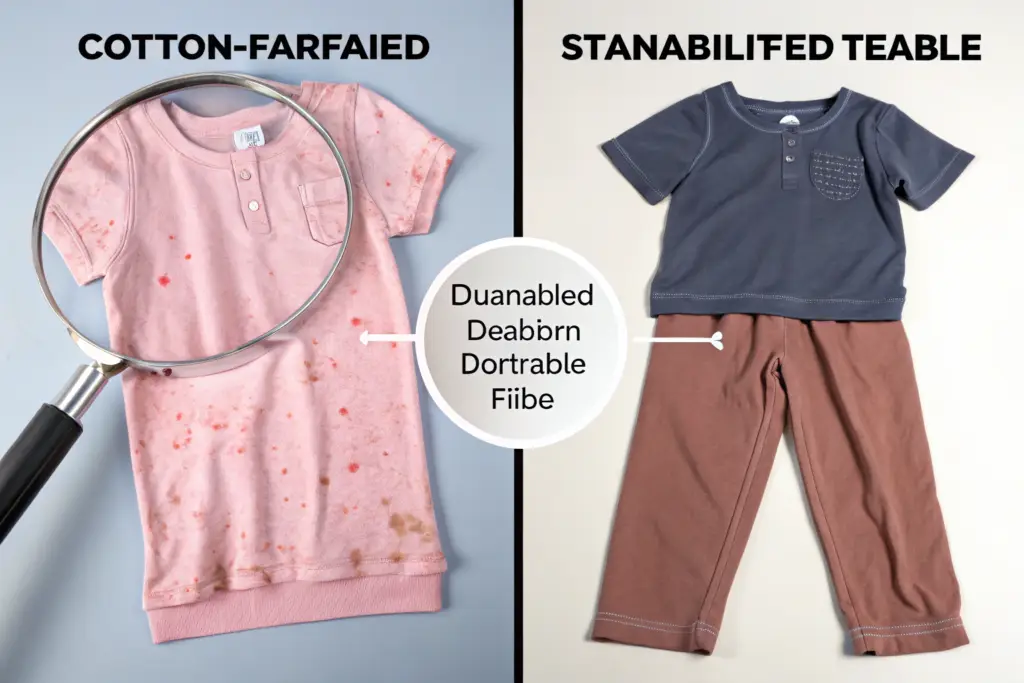
Adaptive durability textiles achieve the dual promise of softness and strength through three technical approaches: core-spun yarns that wrap a strong, resilient filament core with a soft natural fiber sheath, cross-linked fiber structures that resist abrasion and pilling at the molecular level while maintaining flexibility, and reinforced high-stress zones where fabric density or weave structure is increased at knees, elbows, and seat areas without creating stiff panels. These fabrics survive playgrounds, washing machines, and hand-me-down cycles while feeling as soft as the cotton pajamas kids never want to take off.
How Do Core-Spun Yarns Deliver Softness and Strength Simultaneously?
Traditional cotton yarn is soft but weak. Traditional polyester yarn is strong but feels synthetic against the skin. Neither satisfies the modern parent's demand for a fabric that feels premium and lasts through multiple children. Core-spun yarn engineering solves this by combining the best properties of both fibers in a single yarn structure.
A core-spun yarn wraps a high-tenacity filament—typically recycled polyester or nylon—with a sheath of soft natural fiber like long-staple cotton, modal, or bamboo viscose. The filament core provides tensile strength, abrasion resistance, and dimensional stability. The natural fiber sheath provides the soft hand feel, breathability, and natural appearance that parents and children prefer. The core is completely hidden inside the yarn. The child feels only the soft natural sheath. The parent benefits from the hidden strength. We have adopted core-spun yarns for our children's knit programs, particularly for leggings, T-shirts, and hoodies that face the highest abrasion stress. In wash testing, garments made from our core-spun cotton-poly yarns show 60% less pilling after 20 washes compared to equivalent 100% cotton garments, while maintaining a hand feel indistinguishable from cotton. This core-spun yarn technology for kids' wear is not a marketing claim. It is a measurable durability improvement that reduces returns and increases the garment's useful life.
What Is Zonal Reinforcement and How Does It Prevent Knee and Elbow Blowouts?
Children do not wear out garments evenly. They blow out the knees of leggings. They fray the elbows of sweaters. They wear through the seat of pants. Reinforcing the entire garment adds weight, cost, and stiffness. Zonal reinforcement targets the protection where it is needed, leaving the rest of the garment soft and lightweight.
Our zonal reinforcement technique for children's woven and knit bottoms uses a localized increase in fabric density at the knee area. During the knitting or weaving process, the fabric construction is tightened specifically in the knee zone. The result is a garment that looks uniform but has 30-40% higher abrasion resistance at the knees. There is no sewn-in patch that can detach or create a stiff, uncomfortable panel. The reinforcement is integral to the fabric. For a children's brand we serve, this technique reduced knee-related returns by 45% on their legging program. The leggings still feel soft and uniform to the child. The parent notices that they last through the entire school year without holes. This zonal reinforcement in children's clothing is an invisible innovation that parents discover through experience, and their repeat purchase behavior reflects their satisfaction.
What Proactive Safety Fabrics Are Replacing Topical Chemical Treatments?
Parents buy UPF sun protection clothing for their children. They buy flame-resistant sleepwear as required by regulations. They rely on the protective properties these garments promise. But many of these protective properties are applied as topical chemical finishes that degrade with every wash cycle. The UPF 50+ swim shirt that protected the child in June may be UPF 15 by August, after a summer of washing and chlorine exposure. The parent does not know the protection has washed away. The child is exposed. The regulatory and ethical problem is significant, and North American buyers are increasingly demanding permanent, wash-proof protective properties.
Proactive safety fabrics replace topical chemical treatments with inherent protective properties built into the fiber at the extrusion or polymerization stage. UV-blocking titanium dioxide particles are embedded into polyester fibers during extrusion. Flame-resistant properties are engineered into the polymer chain of modacrylic and aramid fibers. Antimicrobial properties are achieved through silver-ion infusion rather than surface coating. These inherent protections do not wash out. They do not degrade with use. They last the lifetime of the garment, providing continuous protection without the parent needing to understand or manage the treatment's longevity.
How Does Inherent UPF Protection Differ from Topical UV Finishes?
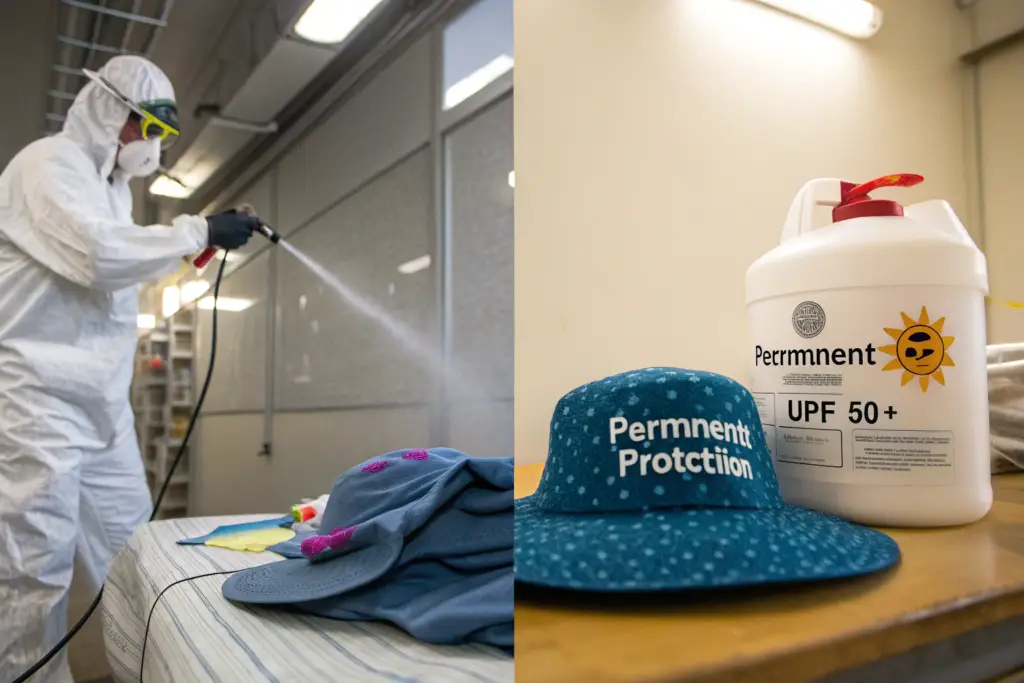
A topical UV finish is applied to the fabric surface after weaving or knitting. The finish fills the gaps between fibers that would otherwise allow UV radiation to pass through. The finish works immediately after application. But it is water-soluble to some degree. Every wash removes a portion of the finish. Every stretch of the fabric opens gaps that the diminished finish cannot cover. The UPF rating printed on the hang tag reflects the garment's condition when new, not its condition after a summer of use.
Inherent UPF protection embeds UV-blocking particles—typically titanium dioxide—directly into the synthetic fiber during extrusion. The particles are distributed throughout the fiber cross-section. They cannot be washed out because they are part of the fiber itself. The fabric can be stretched, washed, and worn for years without losing its UV protection. Our children's swimwear and sun-protective clothing programs now use inherently UV-protective polyester and nylon fabrics exclusively. We provide UPF test data not just for the new fabric, but after 30 and 50 simulated wash cycles. The UPF 50+ rating is maintained throughout the garment's useful life. This inherent UPF fabric technology for kids addresses a genuine safety concern that North American parents, particularly in sun-intensive regions, are increasingly aware of and willing to pay for.
What Are the Latest Developments in Chemical-Free Flame Resistance for Sleepwear?
Children's sleepwear in the United States must meet flammability standards under 16 CFR Parts 1615 and 1616. Historically, compliance was achieved through chemical flame retardant treatments, some of which have raised health concerns among parents and advocacy groups. The alternative has been tight-fitting sleepwear made from untreated natural fibers, which complies by fitting closely enough to reduce oxygen supply to any potential flame. But parents also want loose-fitting, comfortable sleep options for their children, and they want them without chemical treatments.
Inherently flame-resistant fibers provide a solution. Modacrylic fibers, engineered with flame-resistant polymer structures, achieve compliance without chemical additives. Blends of modacrylic with cotton or viscose create sleepwear fabrics that are soft, breathable, and permanently flame-resistant. The protection is built into the fiber chemistry. It cannot wash out because it is not a treatment; it is the material itself. We have introduced modacrylic-cotton blend fabrics for our children's sleepwear programs. The fabric meets CPSC flammability standards without any topical flame retardant chemicals. The hand feel is soft and comfortable. The fabric is machine washable. Parents can purchase loose-fitting, comfortable sleepwear for their children with confidence that the safety is permanent and chemical-free. This inherently flame-resistant children's sleepwear addresses the dual demands of safety compliance and parental preference for chemical-free children's products.
What Sustainable Fabric Innovations Are Accessible at Wholesale Price Points?
Sustainable fabric used to mean expensive fabric. Organic cotton cost 30-40% more than conventional cotton. Recycled polyester cost 20-30% more than virgin polyester. The premium limited sustainable children's wear to premium brands selling at premium prices. The mass market, where most North American parents shop, was excluded. In 2026, the sustainable premium is shrinking rapidly. Advances in recycling technology, economies of scale in organic farming, and improved manufacturing efficiencies are bringing sustainable fabric costs down to levels where wholesale brands can adopt them without destroying their margin structure or their retail price points.
The sustainable fabric innovations accessible at wholesale price points in 2026 include mechanically recycled polyester from post-consumer bottles now priced within 5-10% of virgin polyester, organic cotton from scaled farming operations with premiums narrowed to 10-15%, closed-loop lyocell fibers like Tencel that offer sustainability credentials and superior softness at mid-range pricing, and innovative blends that combine recycled and sustainable fibers in proportions that balance cost and performance. These fabrics allow children's wear brands to offer genuine sustainability stories at price points that mainstream North American parents can afford.
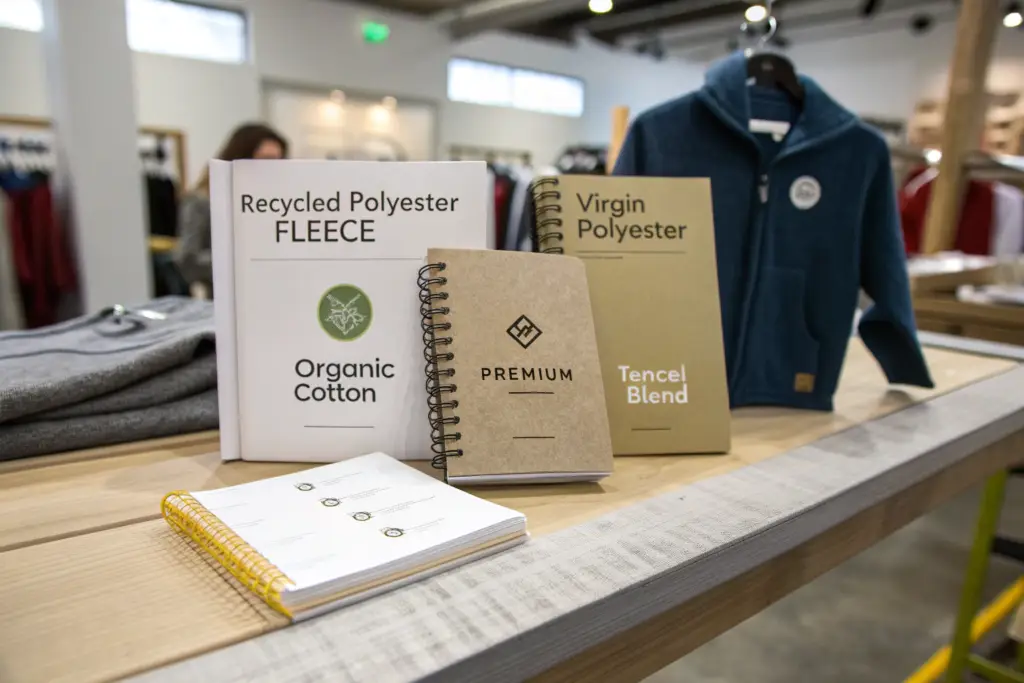
How Has Recycled Polyester Become Cost-Competitive for Children's Wear?
The first generation of recycled polyester was expensive. The collection, sorting, cleaning, and reprocessing of post-consumer PET bottles into textile-grade polyester filament was a niche industry with high unit costs. The sustainability premium was 20-30% or more. Only premium outdoor and activewear brands could absorb the cost.
The recycled polyester industry has scaled dramatically. Collection infrastructure has improved. Processing technology has become more efficient. Production volumes have increased. The cost gap between recycled and virgin polyester has narrowed to 5-10%, and for some standard specifications, recycled is approaching price parity. For a children's fleece jacket made from recycled polyester, the fabric cost premium over virgin polyester is now approximately $0.15-0.25 per garment. This is a premium that can be absorbed within the brand's margin or passed through as a negligible retail price increase. We now offer recycled polyester fleece, jersey, and woven fabrics as standard options in our children's wear fabric library. The fabrics are GRS (Global Recycled Standard) certified, providing the documentation that North American brands and retailers require for sustainability claims. This recycled polyester for children's wear at near-parity pricing is a breakthrough that makes sustainable kids' wear accessible to the mass market.
What Role Do Closed-Loop Lyocell Fibers Play in Sustainable Kids' Wear?
Lyocell fibers, produced through a closed-loop process that recovers and reuses more than 99% of the solvent used in production, offer a compelling sustainability profile. The wood pulp feedstock is sourced from sustainably managed forests. The production process has a lower environmental footprint than conventional viscose. The resulting fiber is soft, breathable, biodegradable, and naturally resistant to bacterial growth—a valuable property for children's wear.
Tencel, the leading lyocell brand, has expanded production capacity significantly in recent years. The increased supply has brought pricing into the mid-range, competitive with premium cotton and significantly less expensive than silk or cashmere. For children's wear, lyocell and lyocell-rich blends offer a softness that parents and children love, sustainability credentials that brands can communicate, and a price point that works for mid-market wholesale. We have introduced Tencel-cotton blends for children's T-shirts, dresses, and sleepwear. The fabric feels luxurious against sensitive skin. The sustainability story is clear and certifiable. The cost is manageable within standard children's wear wholesale pricing structures. This lyocell fiber technology for sustainable apparel is a key enabler of sustainable kids' wear that does not demand a luxury price tag.
What Are Sensory-Smart Fabrics and Why Are They Growing in Demand?
A significant and growing segment of the children's wear market is driven by sensory considerations. Children with autism spectrum disorder, sensory processing disorder, ADHD, and general tactile sensitivity experience clothing differently. A scratchy tag, a rough seam, a tight elastic, or a fabric that feels "wrong" against the skin can cause genuine distress. For these children and their parents, clothing is not just about style and durability. It is about whether the child can comfortably wear the garment at all. This market is underserved, and North American buyers are increasingly seeking sensory-smart fabric solutions.
Sensory-smart fabrics for children's wear are designed to eliminate tactile irritants: flatlock seams that eliminate raised ridges against the skin, tagless labeling printed directly onto the fabric, ultra-soft brushed finishes that provide a consistent, comforting tactile experience, compression-appropriate stretch that provides proprioceptive input without constriction, and seamless construction where possible to eliminate friction points entirely. These features benefit children with diagnosed sensory conditions and also appeal broadly to any parent whose child complains about "scratchy" or "uncomfortable" clothing.
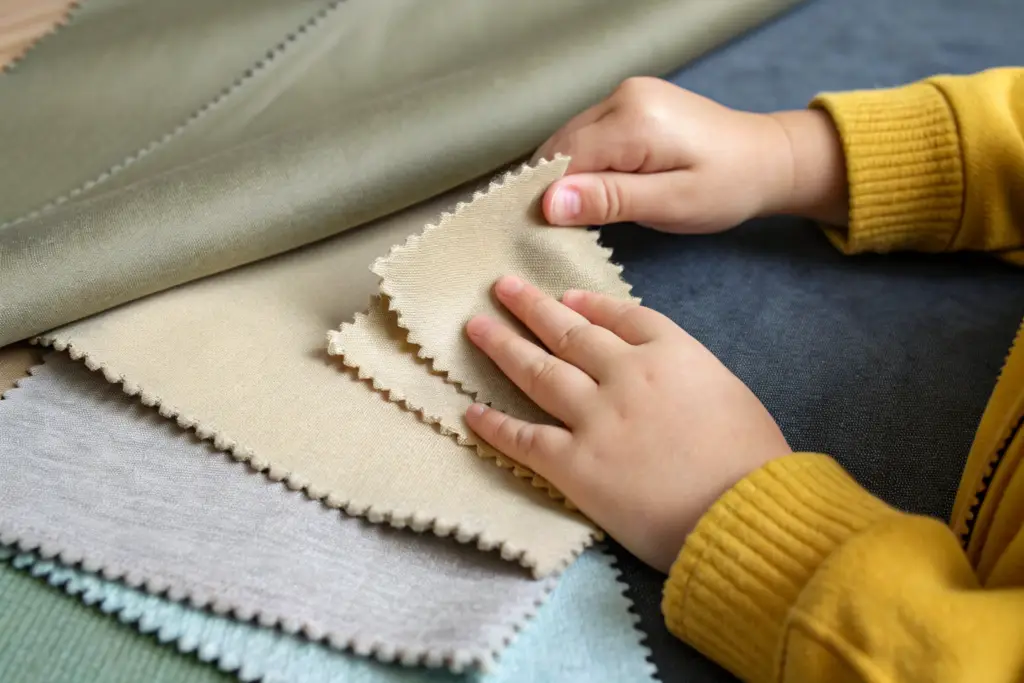
How Do Flatlock Seams and Seamless Construction Reduce Tactile Irritation?
A standard overlock seam creates a raised ridge on the inside of the garment. For a child with tactile sensitivity, that ridge can feel like a constant irritant, like a pebble in a shoe. The child may refuse to wear the garment entirely, or may become distracted and distressed while wearing it. The problem is invisible to the parent who does not experience the sensory input the same way.
Flatlock seams are constructed so that the seam lies flat against the skin, with no raised ridge. The inside of the garment is as smooth as the outside. Seamless construction, produced on circular knitting machines that create the entire garment in one piece, eliminates side seams entirely. We have invested in flatlock seaming capability on our children's knitwear line and offer seamless construction options for sensory-sensitive product lines. For a children's adaptive wear brand we serve, the conversion to flatlock seams throughout their product line was the single most impactful quality improvement they made. Parent feedback was overwhelmingly positive. Children who had previously rejected clothing due to seam irritation began wearing the garments comfortably. This sensory-friendly clothing construction is not a niche concern. It addresses a genuine need for a significant population of children, and it improves comfort for all children, not just those with diagnosed sensitivities.
What Fabric Finishes Provide the Most Comfort for Sensory-Sensitive Children?
The tactile experience of fabric against skin is determined by both the fiber content and the finishing process. A fabric that feels soft to an adult's hand may feel different to a child with heightened tactile sensitivity. Finishing processes that create a consistently smooth, friction-free surface can make the difference between a garment that is worn and a garment that sits in the drawer.
Brushed finishes, where the fabric surface is mechanically raised to create a soft, fuzzy texture, are widely preferred by sensory-sensitive children. The brushing creates a consistent, predictable tactile experience. Enzyme washes, which use biological enzymes to remove surface fibers and create a smooth, worn-in feel, achieve a similar effect. For our children's sensory-smart fabric program, we apply a dual finishing process: an enzyme wash to remove surface fiber irregularities, followed by a light mechanical brushing to create a uniform soft texture. The fabric is then cut and sewn with flatlock seams and printed with tagless labels. The resulting garment addresses the major tactile irritants that sensory-sensitive children experience. This fabric finishing for sensory comfort is a specialized capability that North American buyers serving the adaptive and sensory-friendly market segments are actively seeking.
Conclusion
The 2026 fabric innovations that North American children's wear buyers demand are not driven by runway trends or seasonal color forecasts. They are driven by the real-world experiences of parents and children: the frustration of garments that pill after three washes, the fear of sun protection that washes away without warning, the desire for sustainable choices that do not break the family budget, and the need for clothing that children with sensory sensitivities can wear without distress. These are not fashion problems. They are life problems, and fabrics that solve them earn brand loyalty that transcends seasonal trends.
At Shanghai Fumao, our children's wear fabric development program is guided by direct input from our North American brand and distributor partners. They tell us what their customers are asking for. We find or develop the textile solutions that deliver it. Core-spun yarns for durability without sacrificing softness. Inherent UV and flame protection for permanent safety. Recycled and lyocell fibers for accessible sustainability. Flatlock seams and brushed finishes for sensory comfort. These innovations are in production now, available to our children's wear partners, and continuously evolving as we learn from market feedback.
If you are a children's wear brand or distributor seeking a manufacturing partner with genuine fabric innovation capability, let us discuss your specific product requirements and the fabric challenges you are trying to solve. Contact our Business Director, Elaine, at elaine@fumaoclothing.com. Share your fabric performance goals, and we will present the textile solutions that can turn those goals into garments that parents trust and children love to wear.