Seasonal apparel collections require agility, creativity, and flawless execution. For buyers like Ron in the U.S., missing a season can mean millions in lost revenue. That’s why sourcing strategies must go beyond price—they must ensure timing, trend accuracy, and logistical reliability.
The best sourcing strategies combine local market understanding, proven supplier performance, and flexible production planning to ensure your seasonal collections are ready for launch.
In this article, I’ll share key strategies we use at Fumao Clothing to help global buyers like Ron confidently build and deliver high-performing seasonal collections—on time and on budget.
How to Forecast Fabric Demand for Each Fashion Season?
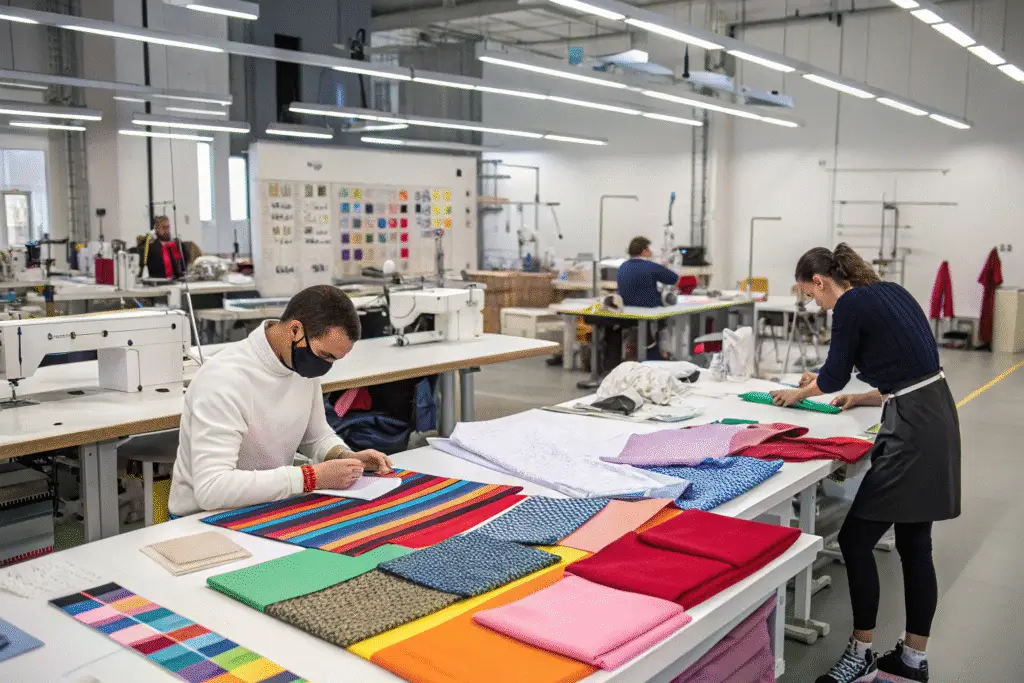
Planning fabric requirements accurately is one of the hardest yet most important aspects of seasonal sourcing. Get it wrong, and you either run short during peak sales or end up with piles of unsold fabric. That’s why forecasting is not a guess—it’s a science built on data, tools, and close mill communication.
Top U.S. buyers use consumption analysis, past sales performance, and trend data to predict how much of each fabric they’ll need for every season. At Fumao, we support that with early reservations at our partner mills and sample-based projections.

Why Is Fabric Forecasting So Critical for Seasonal Success?
Fabric forecasting drives the entire apparel production chain. If fabric is delayed, patterns can’t be cut, samples can’t be approved, and delivery deadlines slip. At our factory, we work with tools like WGSN and Trendstop to align forecasts with U.S. seasonal demands.
We also offer clients historical fabric usage reports. For instance, if a customer used 8,000 meters of French terry last fall, we help forecast an increase or decrease based on this year’s SKU count. Our edge is locking fabric capacity in advance—even for small brands—so they aren’t left behind during raw material shortages.
Our U.S. buyers often want quick changes in fabric spec. We maintain a greige stock of essential base fabrics so we can offer faster switching.
What Metrics Help Predict Fabric Consumption Accurately?
Buyers like Ron should rely on structured metrics like fabric yield per size, waste allowance, and pattern layout. Using 3D virtual sampling tools makes early projections far more accurate. For each seasonal style, we build a detailed Bill of Materials (BOM) that includes yardage by size, fabric type, shrinkage % and tolerance margins.
We also monitor textile commodity trends on Fibre2Fashion to anticipate cost fluctuations and suggest pre-booking when prices are favorable. This protects both cost and delivery reliability.
Data-based forecasting reduces risk and maximizes margin. That’s how our seasonal sourcing starts strong.
Which Suppliers Can Handle Tight Seasonal Timelines?
When the selling window is short, the supplier's speed and system become the most critical factor. Many buyers miss out on peak retail seasons because their vendors couldn't deliver in time. That’s why identifying fast-response suppliers is non-negotiable.
Look for factories with in-house sampling, fabric reserves, and transparent workflow tracking—these ensure delivery within seasonal calendars.
How to Identify Vendors with Quick-Turn Capabilities?
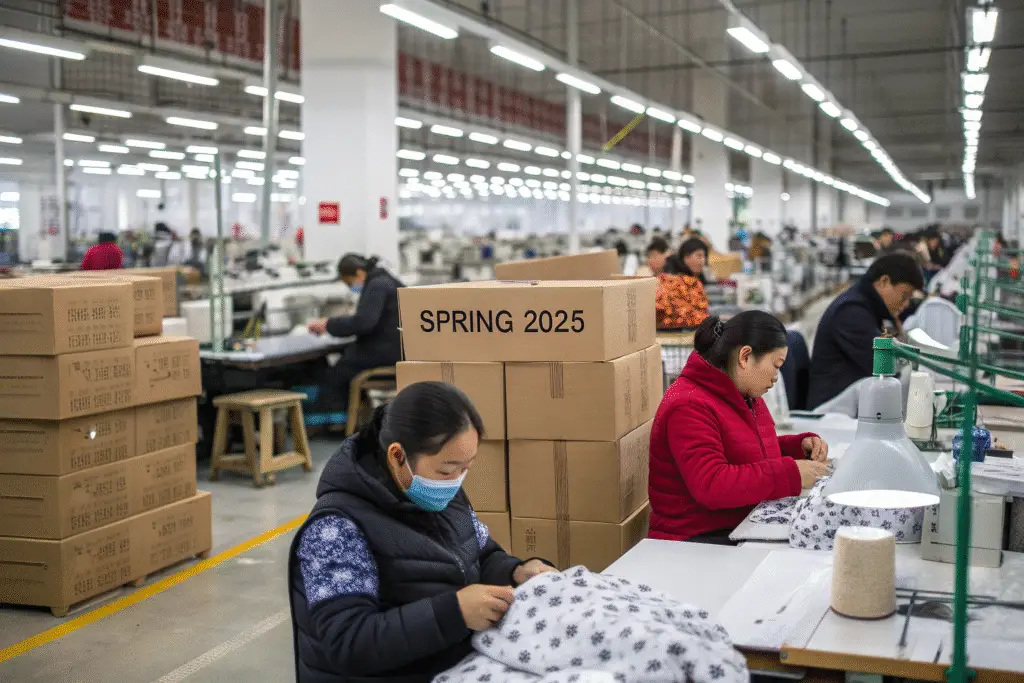
Seasonal collections need speed without sacrificing quality. At Fumao, we conduct pre-season planning with every client. We allocate specific production line windows, confirm raw material readiness, and even pre-approve trims.
Buyers can request lead time simulations to test how fast a factory can respond. Speed isn’t just about output—it’s about internal coordination. Our production line reports are shared in real time using Trello and WeChat Work.
Most importantly, we offer parallel sampling and production options, which saves at least 12 working days per season for repeat orders.
What Certifications Prove Supplier Reliability for Seasons?
Factory reliability can be verified with international certifications. Our operations meet BSCI social compliance and ISO 9001 Quality Standards. These frameworks help us manage spikes in production and ensure consistent output.
Clients often use third-party audit firms like Intertek or QIMA to verify our seasonal ramp-up capabilities. We welcome these inspections and even help coordinate logistics for auditors.
Seasonal buyers need proof of reliability—not just promises. Certifications provide that peace of mind.
What Production Models Suit Seasonal Clothing?
Not every season calls for 100,000 units. Sometimes, limited-edition drops or capsule collections need fast, flexible production. That’s where choosing the right model—prebooking or flexible batch—makes all the difference.
Successful seasonal brands mix pre-planned bulk orders with agile small-batch programs to avoid overstock and underdelivery.

Should You Use Pre-Booking or Flexible Production?
Prebooking gives better pricing, but you need to predict demand. Our buyers in the U.S. often prebook basics—tees, leggings, hoodies—because these are perennial sellers. But for trend-led pieces, we recommend flexible production with smaller Minimum Order Quantities (MOQs).
Our factory offers lean manufacturing lines that switch styles quickly. This enables capsule drops and A/B testing in retail markets. We also allow rolling orders so clients can place reorders mid-season.
For wholesale buyers, a hybrid approach—secure base SKUs via prebooking, test trendy SKUs flexibly—is often the safest and smartest path.
How to Handle Carry-Over and Deadstock Risks?
Deadstock hurts margins and fills warehouses. That’s why we help clients use PLM software to monitor sell-through and trigger reorders only when proven successful.
Some brands partner with resale platforms like Queen of Raw to monetize leftover fabric or samples. Others reuse unsold stock in new collections through over-dyeing or re-labeling.
At Fumao, we keep track of each roll's status and usage using barcode tracking. This helps buyers avoid surprises and lets us build carry-over logic into their seasonal calendars.
How Can You Coordinate Seasonal Logistics Smoothly?
Great production means nothing if shipping fails. The final step in your seasonal sourcing strategy is logistics—and it’s the one most prone to breakdown. That’s why smart coordination from factory to retail is vital.
DDP shipping, consolidation, and live tracking platforms reduce delays and guarantee on-time delivery of seasonal merchandise.
What Shipping Methods Suit Seasonal Deadlines?
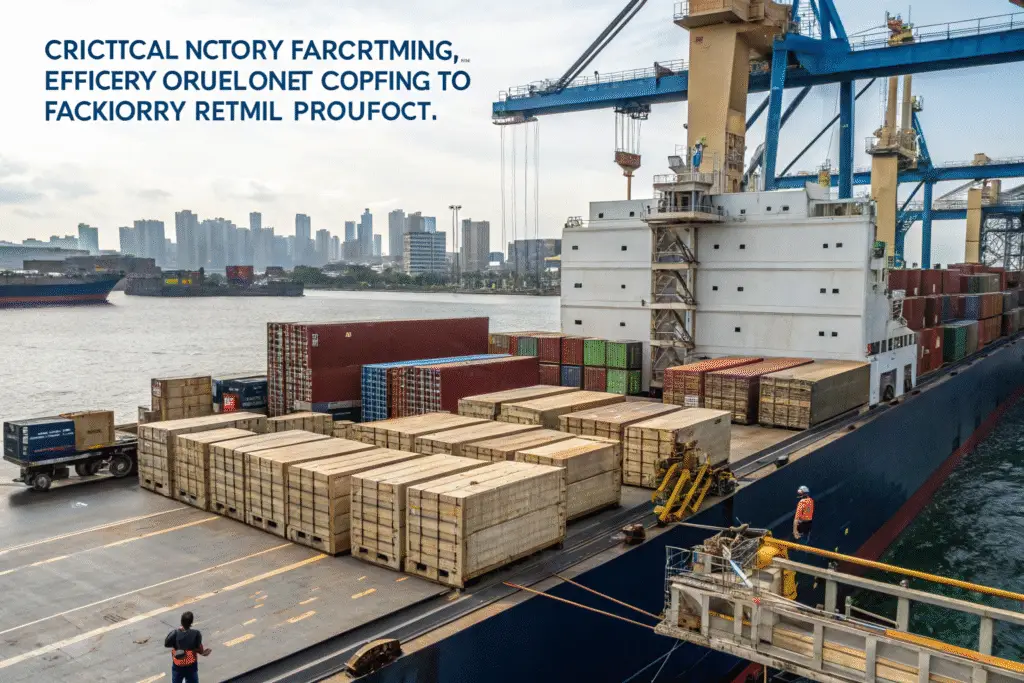
We recommend DDP (Delivered Duty Paid) for U.S. buyers with seasonal timelines. It removes customs complexity, ensures tax transparency, and keeps control in one hand—ours.
For large loads, we use LCL consolidation to mix client shipments and cut costs. For urgent SKUs, we offer express air freight with scheduled release windows to avoid bottlenecks.
Our shipping plan is tied to your retail date—not our factory calendar.
How to Monitor Seasonal Shipments in Real Time?
Real-time visibility is critical. That’s why we use FourKites for cargo tracking and update clients through Slack or integrated Project44 APIs that sync with their inventory dashboards.
We also provide delay alerts and alternate routing options if port congestion occurs. Each season, we pre-book slots and stagger shipments by color or size set, ensuring stores don’t miss launches.
Logistics isn’t the last mile—it’s a core part of seasonal sourcing. We build it in from day one.
Conclusion
At Fumao Clothing, our approach to seasonal apparel sourcing blends planning, production flexibility, and delivery precision. We work closely with clients like Ron to align every garment with the demands of the retail calendar.
We believe sourcing is not just about cost—it’s about empowering your brand to win each season. From forecasting fabrics to planning logistics, our strategies are built to support U.S. buyers scaling seasonal fashion without stress.