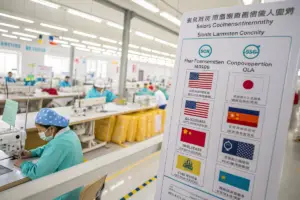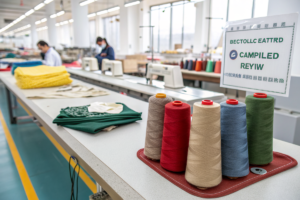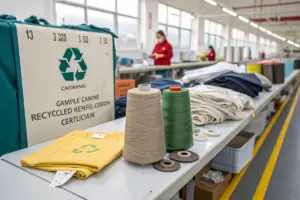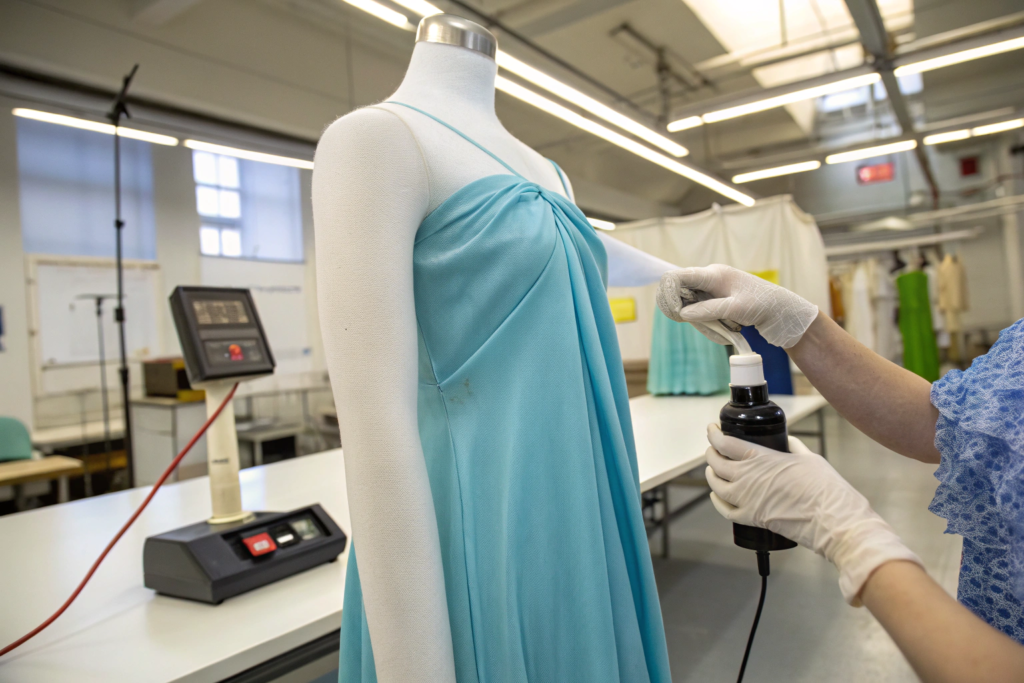
I once received a furious email from a brand owner during a heatwave in Arizona. She had ordered 500 units of a beautiful, flowy rayon maxi dress. The fabric was perfect. The color was a stunning terracotta sunset. But her customers were returning them in droves, complaining that the dress "wrapped around their legs like plastic wrap" and "crackled with sparks" when they took it off. The fabric was clinging so aggressively that the dresses were unwearable. The problem was not the design. It was physics. Rayon, in a dry, hot climate, generates enough static electricity to ruin the drape of a garment. We had not applied a proper anti-static finish because the sample had been tested in humid Shanghai. That $12,000 mistake taught me that summer fabrics require a specific chemical defense against the environments they will be worn in.
The anti-static treatments needed for special summer fabrics depend on the fiber type and the end-use climate. For synthetic sheers like polyester chiffon and nylon organza, a durable hydrophilic co-polymer finish is required. This finish attracts microscopic moisture from the air to the fabric surface, creating a conductive layer that dissipates the electrical charge before it builds up. For natural, moisture-absorbing fibers like silk and rayon that become brittle and static-prone in dry heat, an amino-silicone micro-emulsion softener is the preferred treatment. It lubricates the fibers internally, reducing the friction that generates the charge without blocking the fabric's natural breathability. For performance blends, carbonized fiber weaving or a metallic core yarn is the premium solution, physically conducting the electricity away. The key is to avoid cheap cationic surfactant sprays that wash out after one laundry cycle and leave a greasy residue. True anti-static treatment is an invisible, breathable, wash-durable shield.
Most brands test their samples in the comfort of an air-conditioned, humid design studio. They never see the static horrors that emerge when the garment hits a dry desert wind or an air-conditioned office tower. Summer is the peak season for static cling because the air is often artificially dehumidified by air conditioning, and natural fibers lose their moisture content. I want to share the exact chemistry and mechanical processes we use at Shanghai Fumao to solve this, ensuring our brand partners' clothes drape beautifully in any climate.
What Chemical Finishing Agents Permanently Stop Static Cling in Polyester and Nylon Summer Sheers?
I walked through a trade show booth last summer and watched a designer demonstrate her new polyester georgette blouse. She rubbed it against a plastic mannequin to show the anti-static properties. The treated blouse fell smoothly back into place. She then showed me a competitor's blouse; it stuck to the mannequin like glue. The difference was a $0.15 per garment chemical finish. The designer told me that this one invisible treatment had reduced her online return rate by 22%.
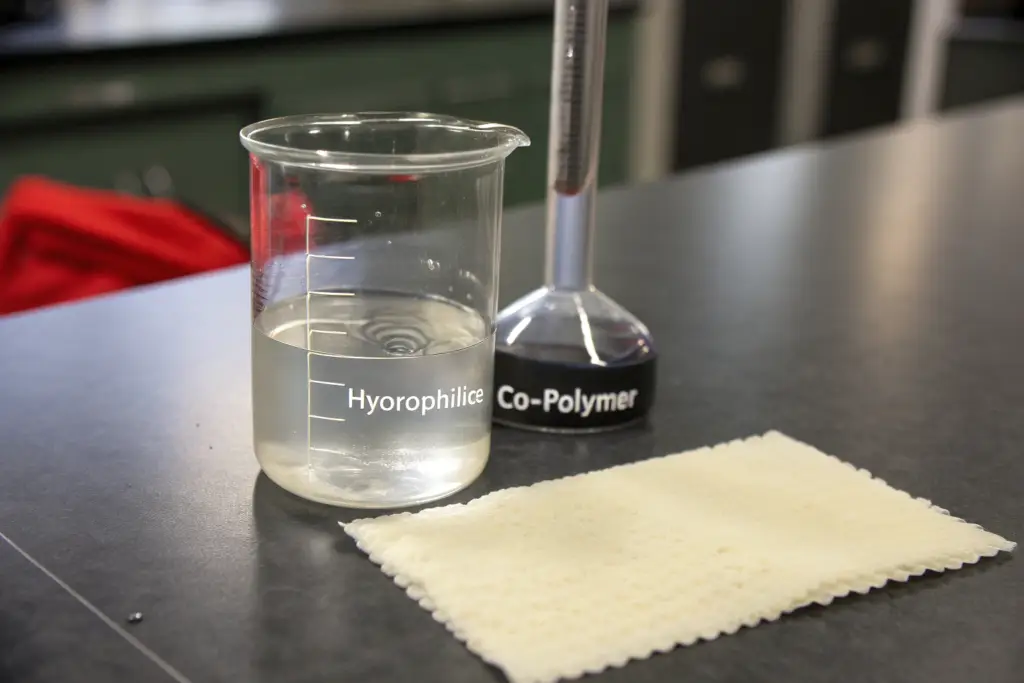
For synthetic summer sheers like polyester and nylon, you cannot wait for humidity to solve the static problem because these fibers are hydrophobic. You must apply a durable hydrophilic copolymer finish, often based on polyethylene glycol (PEG) or a modified polyester resin. This finish is applied in the dyeing or finishing bath and heat-set onto the fiber. The molecular structure has one end that anchors to the synthetic fiber and one end that attracts water molecules from the air. This microscopic moisture film is invisible to the touch but highly effective at bleeding off electrical charges. Unlike temporary cationic sprays, this finish should survive 20 to 30 home laundry cycles. The standard test is the AATCC 76 Surface Electrical Resistivity test; a reading below 10^10 ohms per square indicates excellent anti-static protection.
The critical mistake is using a finish that is too heavy. A cheap treatment can make a chiffon feel greasy or stiff. The art is in the nano-emulsion: particles so small they lubricate the filament without bridging the gaps between yarns. This preserves the soft, airy hand feel that makes summer sheers so desirable.
How Does a Hydrophilic Co-Polymer Finish Differ from a Basic Cationic Softener in Breathability?
A basic cationic softener works by coating the fiber with a waxy, fatty substance. This lubricates the surface and prevents friction. However, it clogs the pores of the fabric, turning a breathable summer sheer into a sweat-trapping plastic bag. A hydrophilic co-polymer does not coat the fiber so much as chemically alter its surface energy. It creates a moisture highway across the surface of the yarn. This allows water vapor to pass freely through the weave. In a textile finishing guide for breathable synthetics, hydrophilic treatments are always specified for next-to-skin summer wear because they dissipate heat while dissipating static.
What Is the Standard AATCC 76 Test for Verifying Anti-Static Properties in a Lab?
The AATCC 76 test measures the electrical surface resistivity of a fabric. The fabric is placed between two electrodes, and a known voltage is applied. The meter reads how easily the charge flows across the surface. A low resistivity (below 10^10 ohms per square) means the charge dissipates quickly and static cling is unlikely. For a brand, you should request this test report from your factory for the treated bulk fabric. It is a quantifiable guarantee that the treatment is working. Without it, you are just hoping the finish was applied correctly.
How Do You Prevent Static Build-Up in Ultra-Dry Natural Fibers Like Linen, Silk, and Bamboo Rayon?
I had a brand partner who launched a stunning line of bamboo rayon kaftans. They sold beautifully in coastal cities. But when they expanded to a market in inland California, they got destroyed in the reviews. "Hair-raising experience!" one customer wrote. Bamboo rayon is wonderfully soft and absorbent, but in arid climates, it dries out completely and becomes a static generator. We retooled the finishing process by adding a reactive amino-silicone softener. This did not just coat the surface; it cross-linked with the rayon fibers, providing internal lubrication that lasted for the life of the garment. The next season, the return rate in that market dropped to single digits.
For natural cellulosic and protein fibers like linen, silk, and rayon, the approach is to condition the fiber internally, not just treat the surface. These fibers rely on their natural moisture content (regain) to stay static-free. In dry summer heat or air-conditioned offices, they lose this moisture and become insulators. You must apply an amino-silicone macro-emulsion softener that penetrates the fiber and provides "internal lubrication." This reduces the friction coefficient when the fibers rub against each other or against the wearer's skin. For luxury silk, a specific silicone acrylate copolymer is used to prevent the "sand-washed" effect of friction without ruining the natural sheen. Additionally, the finishing environment itself must be controlled; adding a steam conditioning chamber after drying re-introduces a controlled amount of moisture into the fabric, stabilizing it before cutting.
The secret with luxury summer fabrics is that you cannot simply douse them in chemicals. The treatment must be undetectable to the hand. A customer buying a $150 silk blouse expects it to feel like dry water, not a lubricated slip. This requires a precision application measured in grams per liter.
Why Is an Amino-Silicone Micro-Emulsion Preferable to a Standard Silicone Oil for Luxury Silk?
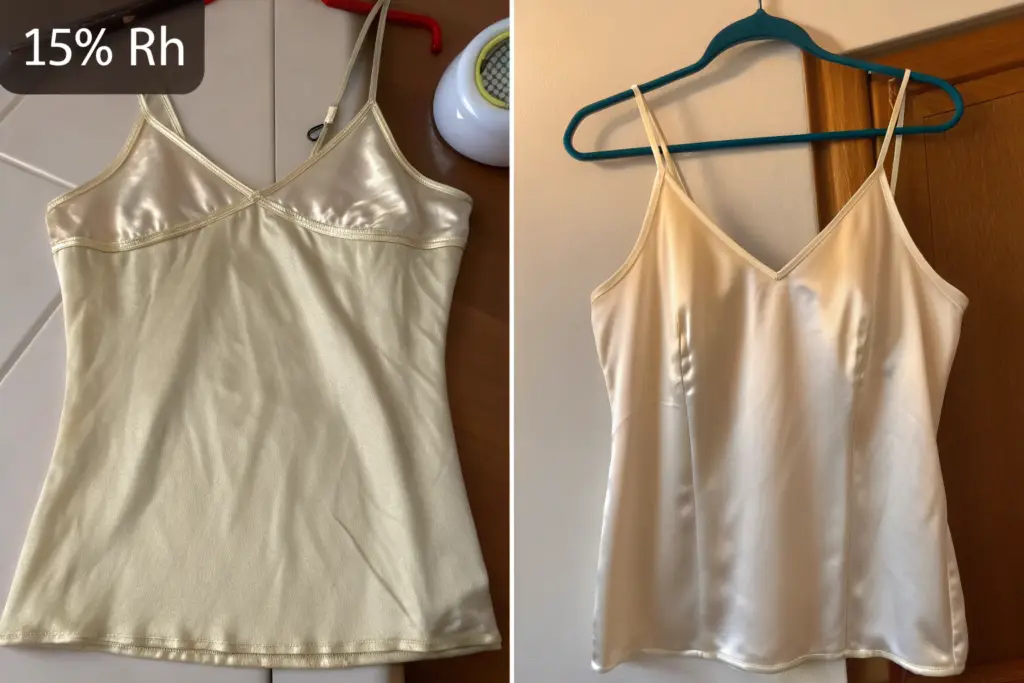
Standard silicone oil sits on the surface. It gives a high, slick slip, which feels excellent initially but can mark the fabric and look greasy under bright summer light. It also interferes with the silk's natural breathability. An amino-silicone micro-emulsion has a particle size less than 0.1 microns. It penetrates the interstitial spaces between the silk fibrils. It provides "softness from within." The fabric remains matte and breathable, yet the filaments glide past each other without generating a charge. This is the technical standard for high-end silk finishing.
How Does Adding a "Conditioning Chamber" to the Production Line Stabilize Fabric Moisture Before Cutting?
Static cling is worsened when the fabric is bone-dry and hot from the finishing stenters. If you cut it immediately, the cut pieces curl and stick. By passing the fabric through a conditioning chamber, essentially a room with controlled ultrasonic misting, the fabric absorbs a specific percentage of moisture (typically 8-12% for rayon). This relaxes the fibers and discharges any existing static. It makes the fabric easier to spread and cut accurately. It is a simple addition to the production line that prevents sizing inconsistency caused by static-distorted panels.
What Are the Advantages of Conductive Fibers and Carbonized Yarns for High-End Summer Performance Wear?
I toured a high-end sportswear factory in Japan a few years ago where they were making golf polo shirts. The fabric felt like a high-end cotton pique, but the tag said 100% polyester. I asked how they stopped it from crackling when the golfer pulled it out of their bag on a dry day. The technician pulled a thread out of the fabric and pointed to a tiny, dark sliver in the yarn. "Carbonized filament," he said. They had woven conductive threads into the fabric core. The static charge did not just dissipate; it was physically conducted away to the seams and dissipated into the air. It was the most effective anti-static solution I had ever seen, and it was completely invisible.
For high-end summer performance wear, conductive fibers offer a permanent, wash-proof solution. These fabrics incorporate a small percentage (often 1-3%) of carbonized or metallic-core yarns. Unlike chemical finishes that can degrade, these fibers act as a Faraday cage. When the fabric rubs and generates a charge, the electricity immediately hits the conductive pathway and is drained away to the edges of the garment. This is the standard for anti-static workwear and premium flight crew uniforms. For summer, the challenge is making these conductive yarns soft enough for next-to-skin comfort. The latest generation uses "sheath-core" yarns, where a soft cotton or Tencel sheath wraps a nano-carbon core. This provides the touch of a natural fiber with the physics of a lightning rod. It is the ultimate solution for brands selling high-end travel wear or luxury polos.
While this is more expensive than a chemical finish, it is a powerful differentiator. You can label the garment as "Permanently Anti-Static" rather than "Anti-Static Finish," which implies the treatment might wash out. It is a structural, permanent part of the textile.
How Do Sheath-Core Conductive Yarns (Carbon Core, Cotton Sheath) Maintain a Natural Hand Feel?
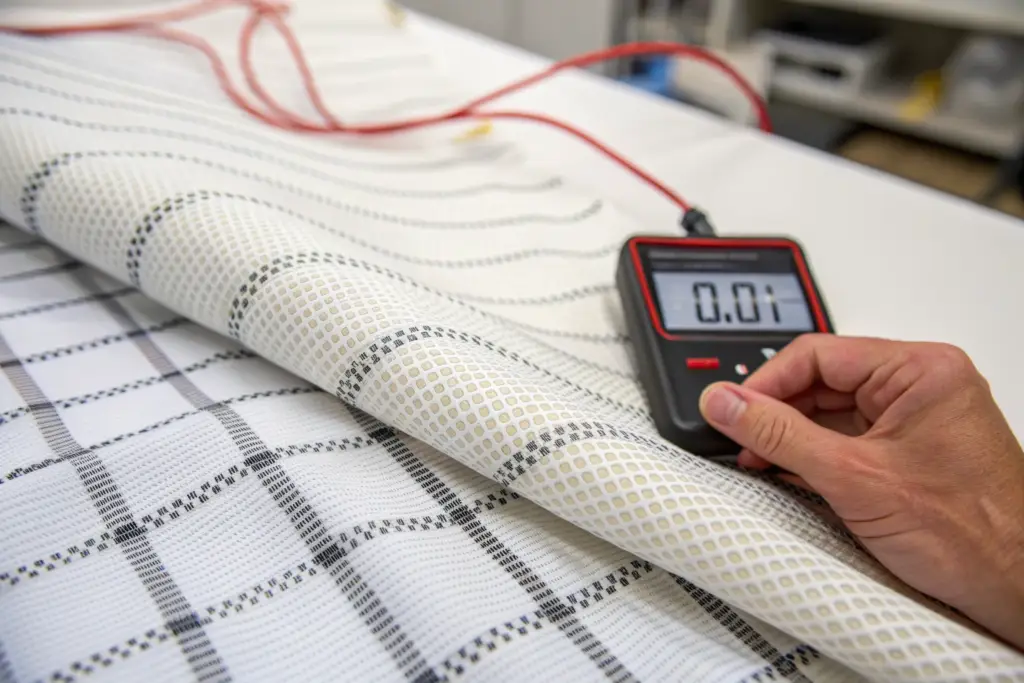
The technology works by hiding the function. The conductive carbon is completely encapsulated by the soft natural fiber. You cannot see it. You cannot feel it. The cotton sheath acts as the interface with the skin, providing moisture absorption and softness. The carbon core acts as the electrical wire. Even a grid of these yarns spaced every 5 to 8 millimeters in the weave is enough to create an effective conductive network. The textile conductive yarn technology allows brands to solve a high-tech problem without sacrificing the organic aesthetic that summer customers demand.
Why Is This Method "Permanent" While Chemical Finishes Are "Durable"?
Chemical finishes are applied to the surface of the fiber. They abrade away over time due to washing and wear. A "durable" finish might last 30 washes. A conductive fiber is part of the fabric's architecture. You can cut it, sew it, and wash it hundreds of times; the electrical conductivity remains unchanged. For a premium brand charging $100+ for a polo shirt, the permanent solution justifies the premium price point and guarantees customer satisfaction for the life of the garment.
Conclusion
The static cling that plagues summer fabrics is not an unavoidable act of nature. It is a solvable problem of chemistry and physics. For synthetic sheers, the solution is a breathable hydrophilic finish that mimics the moisture conductivity of natural fibers. For natural fibers dried out by the summer heat, the solution is internal amino-silicone lubrication and careful moisture conditioning. For the ultimate in performance, the solution is weaving a conductive skeleton directly into the fabric. Each method has a direct impact on your return rate, your brand reputation, and the drape of your garment in the real world.
No brand owner wants to read a review that says their dress "crackles like a thunderstorm." The $12,000 lesson I learned from the clinging rayon dresses is that the finish is just as important as the fabric itself. You must specify the anti-static treatment in your tech pack and verify it with a lab test before the fabric goes to the cutting table.
At Shanghai Fumao, we treat summer fabric sourcing as a science. We maintain a library of certified anti-static agents that are compliant with GOTS, OEKO-TEX, and ZDHC standards. We offer AATCC 76 testing reports for every treated batch. Whether you need a wash-durable finish for a polyester capsule or a nano-conditioning treatment for a luxury silk line, we control the process in-house.
If static cling is causing returns for your brand, or if you want to pre-emptively protect your next summer line, we can help. At Shanghai Fumao, we will work with you to select the correct anti-static protocol for your specific fabric and climate. Contact our Business Director, Elaine, at elaine@fumaoclothing.com. She can send you a sample pack of treated versus untreated fabric swatches so you can feel the difference. Let's make sure your customers feel nothing but beautiful drape when they wear your clothes.