The U.S. clothing industry is shifting—not toward mass volume, but toward smarter, faster, and more sustainable production.
The future of clothing manufacturing in the USA lies in nearshoring, automation, premium categories, and regional microfactories designed for speed, quality, and transparency—not cost leadership.
At Fumao, we work with global clients who increasingly blend U.S.-based production into their sourcing mix—for speed to market, compliance, and customization. Here’s how the U.S. market is evolving.
What is the future of the textile industry in the US?
The American textile sector is moving from volume to value. Innovation and reshoring are fueling a rebirth.
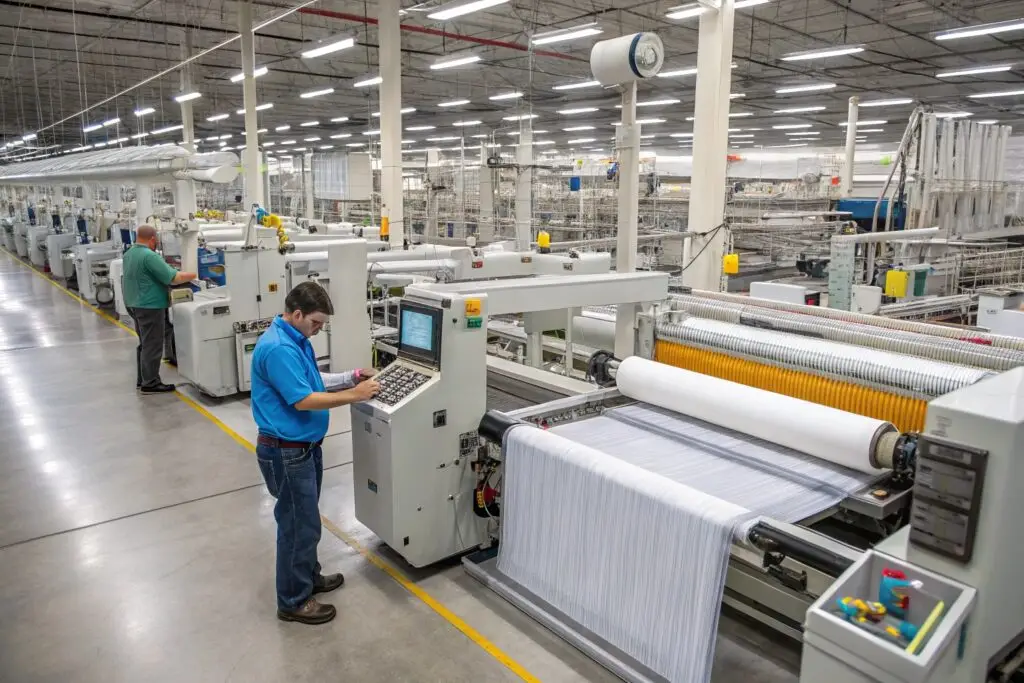
The U.S. textile industry is investing in automated manufacturing, sustainable fiber production, and technical textiles—repositioning itself as a high-value, low-volume supply hub.
What are the key shifts happening now?
- Nearshoring of mills1 to serve domestic cut-and-sew factories
- Growth in recycled fiber production2 (rPET, recycled cotton)
- Rise in functional textiles3 for sportswear, defense, and medical
- Public–private investments in tech-enabled facilities
According to the National Council of Textile Organizations (NCTO), U.S. textile and apparel exports exceeded $28 billion in 2024, with technical textiles and PPE leading the way.
At Fumao, we supply clients who combine U.S. knits with overseas finishing to get the best of both worlds—speed + cost control.
What is the future of the clothing industry?
From mass retail to micro fulfillment, the industry is pivoting to meet smaller, faster, and greener demands.
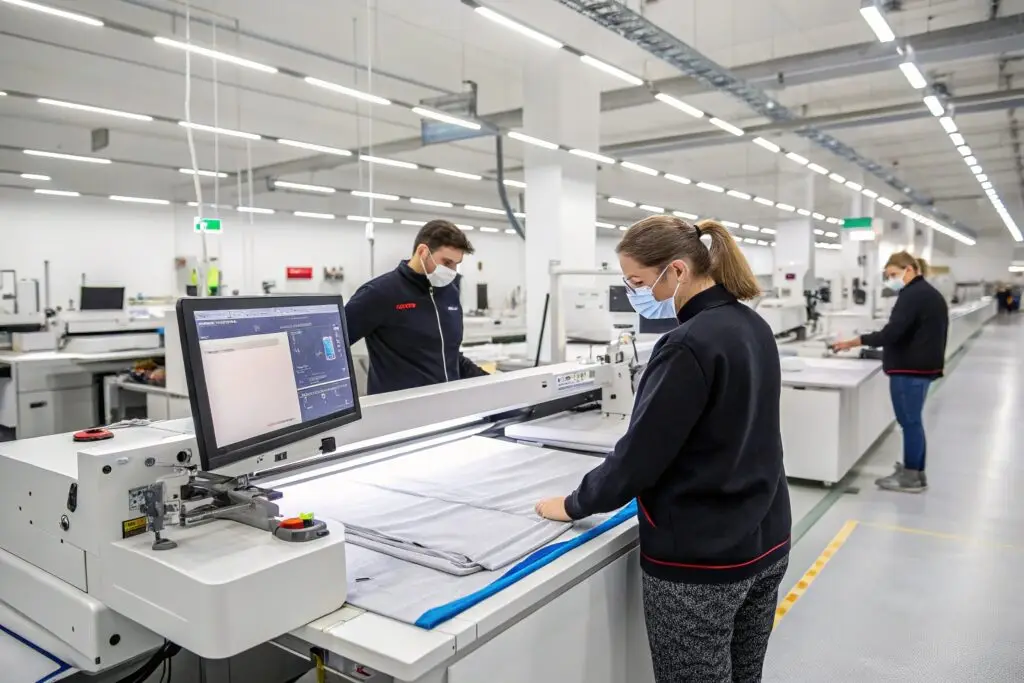
The clothing industry is shifting toward sustainable materials, on-demand production, AI-driven design, and agile supply chains that respond to trends in real time.
What global trends are shaping the U.S. outlook?
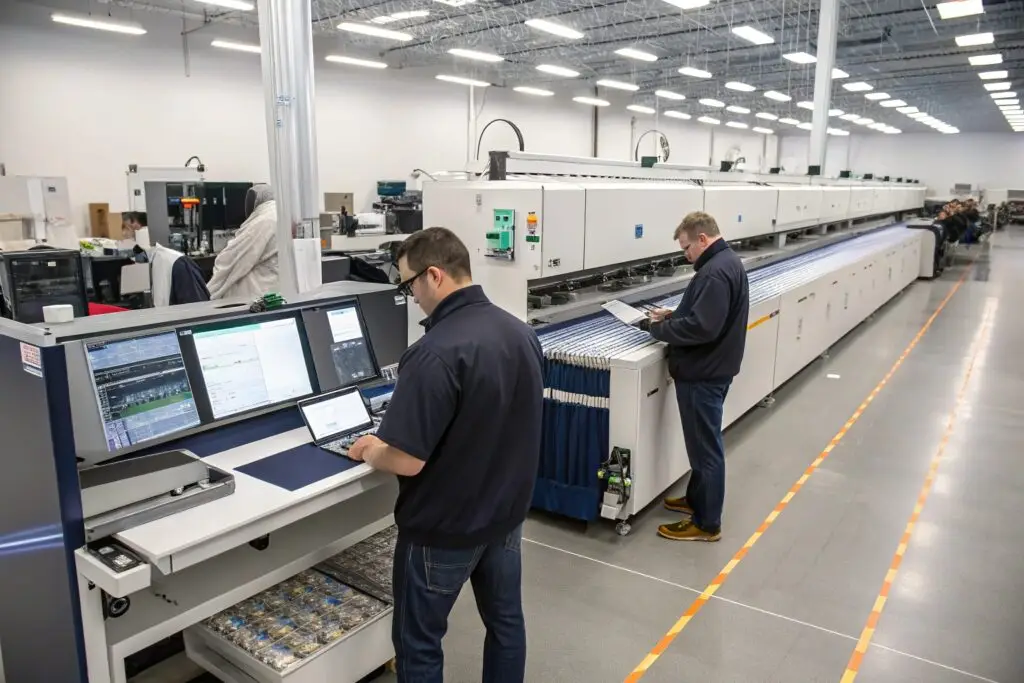
- Automation of sewing and packaging
- Digitization of sampling and fit testing
- Carbon reporting mandates
- Circular production systems
The brands thriving in this new landscape are those that:
- Reduce inventory risk
- Localize production when speed matters
- Customize drops for micro-niches
We’ve helped clients design hybrid production chains4: quick-turn basics from U.S. partners; complex, high-volume items from Asia—balanced by category and urgency.
Does the USA manufacture clothing?
Yes—but not at scale for basics. Instead, U.S. manufacturing now focuses on flexibility, speed, and special-purpose garments.
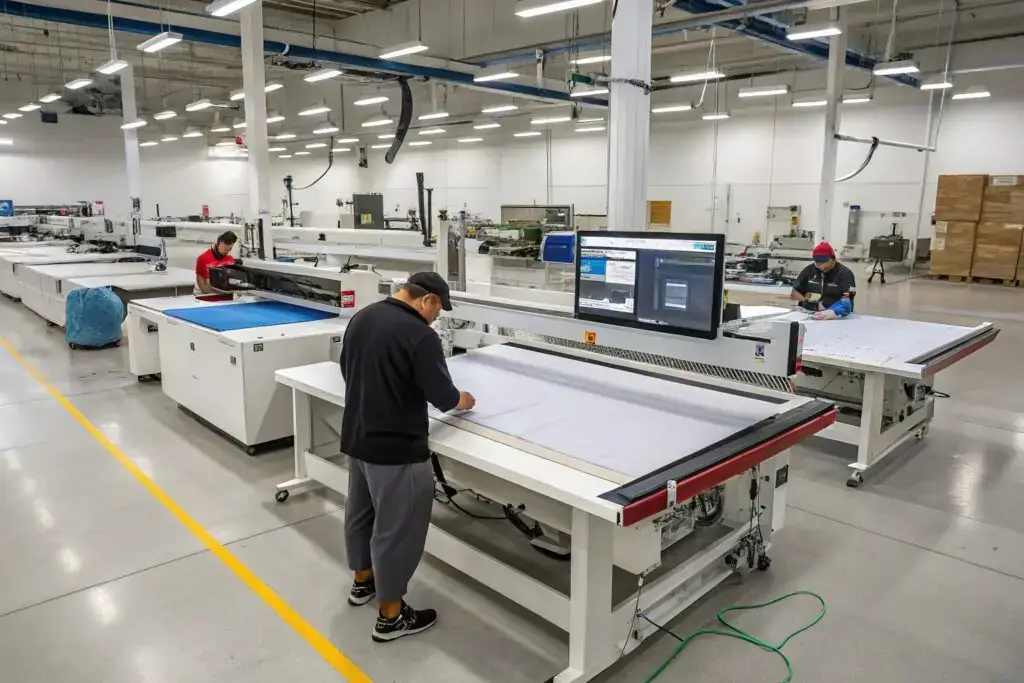
The U.S. manufactures clothing through a growing number of small to mid-sized factories specializing in uniforms, luxury, made-to-order, and compliance-sensitive categories.
What types of clothing are commonly made in the U.S.?
| Category | Reason for Domestic Production |
|---|---|
| Uniforms & Military Gear | Government contracts, specs compliance |
| Designer Fashion5 | “Made in USA” label, brand heritage |
| Workwear & Denim6 | Higher margins, durability focus |
| Event or Stagewear | One-off designs, local fittings |
| Subscription or DTC Brands | Speed, returns, customer loyalty |
Some U.S. regions like Los Angeles, New York, and North Carolina remain hubs for niche apparel production. But high labor costs prevent large-scale basics like T-shirts or socks from dominating.
Why do some brands still produce in the USA?
- Faster lead times7 (5–7 days vs. 30–60)
- Reduced freight and customs risk
- Better quality oversight
- ESG or ethical branding value
- “Made in USA” marketing advantage
At Fumao, our clients often split production: 20–30% in the U.S. for launch or PR-sensitive runs, with the rest overseas to protect margins.
What is the forecast for the clothing industry?
The next five years will see more fragmentation, digitization, and value segmentation.
The clothing industry is expected to grow steadily with 3–5% CAGR through 2030, driven by e-commerce, rental models, personalization, and sustainability investments.
What does this mean for U.S. manufacturing?
U.S.-based production will remain a small but growing slice8 of the pie—especially for:
- Fast replenishment SKUs
- Regulated sectors (medical, gov’t)
- Luxury and made-to-order fashion
- Brands needing IP or supply chain control
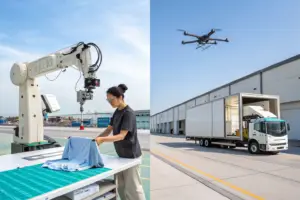
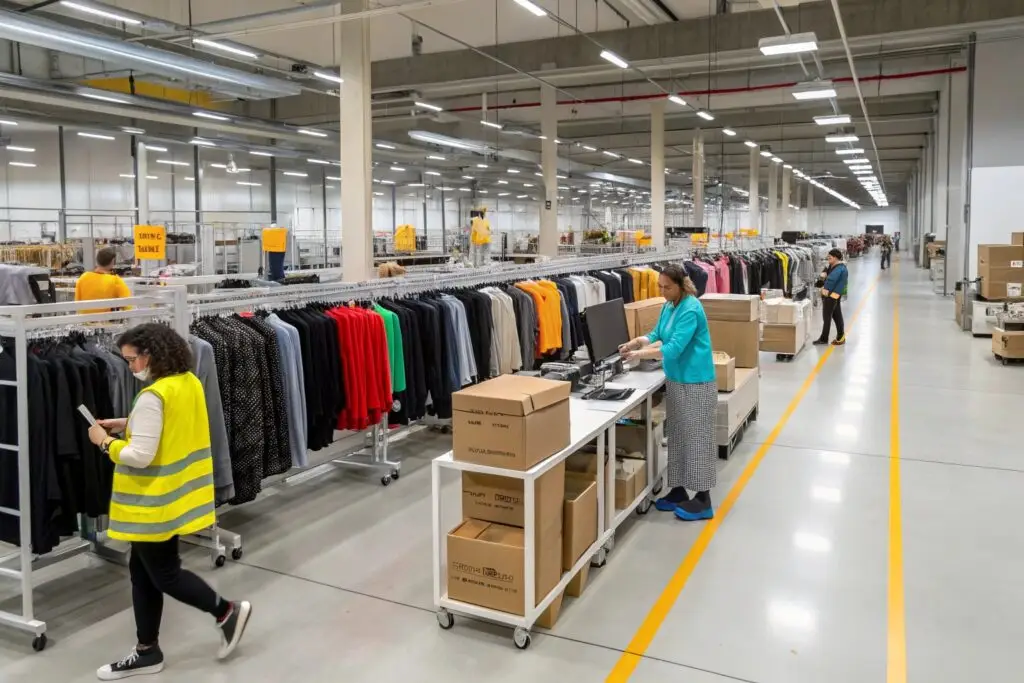
Technologies such as on-demand cutting9, robotic folding, and real-time inventory linking will enable more efficient U.S. production without massive labor expansion.
The winners? Brands and suppliers who can combine global volume with local agility10.
Conclusion
The future of U.S. clothing manufacturing isn’t about going back to the past—it’s about building smarter, faster, and more focused production for a new fashion economy. At Fumao, we believe in supply chains that flex, factories that adapt, and garments made with both speed and care.
-
Explore this link to understand how nearshoring is reshaping the textile industry and its benefits for domestic production. ↩
-
Discover the advantages of recycled fiber production and its impact on sustainability in the textile industry. ↩
-
Learn about the innovative applications of functional textiles in various industries, including sportswear and medical fields. ↩
-
Explore this link to understand how hybrid production chains can optimize efficiency and responsiveness in manufacturing. ↩
-
Explore how producing Designer Fashion in the USA enhances brand heritage and appeals to consumers seeking quality and authenticity. ↩
-
Discover the reasons behind the production of Workwear & Denim in the USA, focusing on durability and higher profit margins. ↩
-
Learn about the advantages of faster lead times in U.S. clothing production and how it benefits brands and consumers alike. ↩
-
Understanding this concept can provide insights into the evolving landscape of U.S. manufacturing and its future potential. ↩
-
Exploring this technology reveals how it enhances efficiency and adaptability in manufacturing processes. ↩
-
This strategy is crucial for brands aiming to thrive in a competitive market, making it worth exploring further. ↩