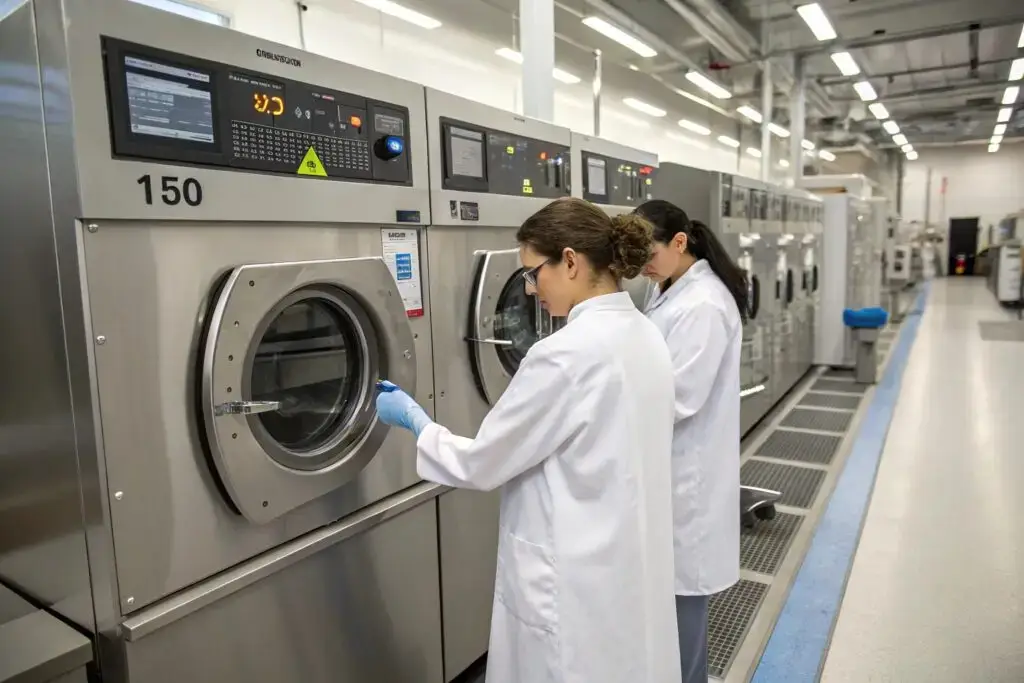
You can’t afford to guess if your garments will survive commercial washing—because one failure damages your client’s trust and your bottom line.
To ensure rental garments survive harsh laundry conditions, test them using industrial standards like ISO 15797 and AATCC 61 across at least 50 wash cycles before mass production.
I’ve seen American rental companies lose entire contracts over fading uniforms and ripped seams. At Fumao, we test every fiber, stitch, and finish to simulate the real laundry battlefields.
Key Lab Tests for Industrial Wash Durability
A strong garment starts in the lab. Without testing, you’re just hoping your clothes will last.
Essential tests include colorfastness, shrinkage, pilling, seam strength, and dimensional stability—using AATCC and ISO standards built for rental garments.
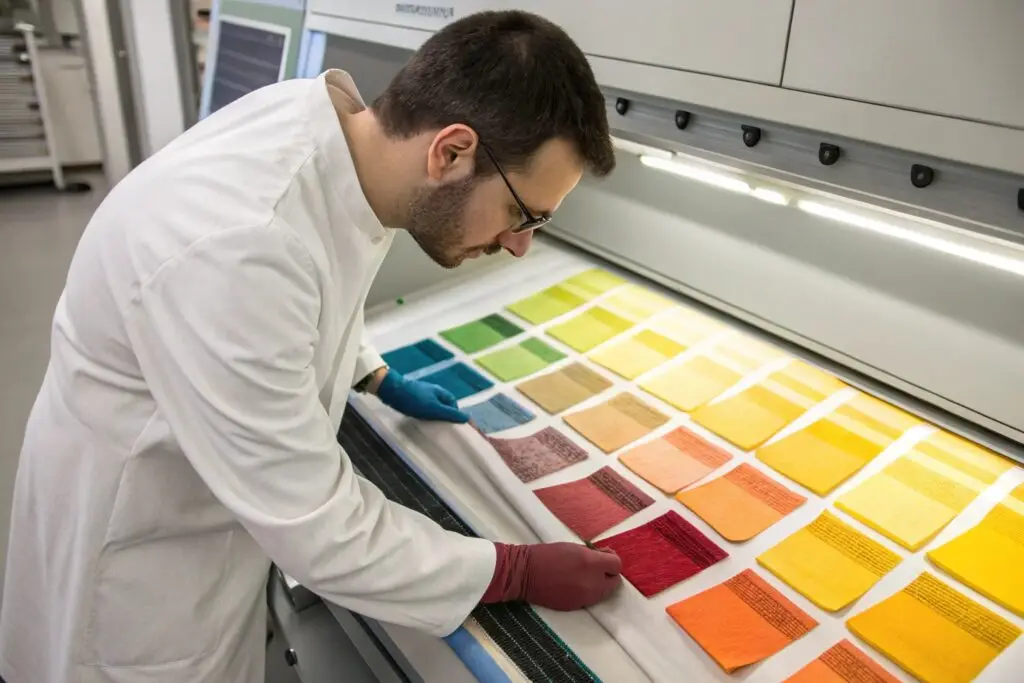
What are the most important test methods to verify if garments can handle commercial laundering?
We simulate commercial washing with a set of globally accepted methods. These are not optional—they are the core of serious rental wear design:
| Test Standard | What It Measures | Target Score (Rental Use) |
|---|---|---|
| AATCC 611 | Colorfastness after detergent washing | Grade 4+ on grayscale |
| ISO 157972 | Industrial laundry compatibility | Survives 50+ cycles |
| AATCC 135 | Dimensional change after wash/dry | Less than 3% shrinkage |
| ASTM D49663 | Pilling and abrasion resistance | 10,000+ rub cycles |
| ISO 13934-1 | Tensile strength in fabric | 400N+ (woven fabrics) |
We submit these tests for all new styles before production. And we re-test if we change mills or finishes.
Why do industrial test conditions differ from home laundry tests, and how can that impact results?
Home machines use soft water, light loads, and lower heat. Commercial laundries? They're brutal. They use hard water, high pH detergent, rotary tumblers, and sometimes steam or bleach. That’s why garments that pass consumer tests may still fail in rental use.
One of our clients used a home washing machine for initial tests. Their pants passed. But in the real laundry, elastic waistbands snapped and hems puckered. Now they send every sample through our ISO 15797 process.
How Many Wash Cycles Should Garments Withstand?
Not every garment needs to last forever—but in rental, it better outlive the contract.
Rental garments should survive at least 50 industrial wash cycles, with premium items enduring 75 to 100 cycles without critical failure.
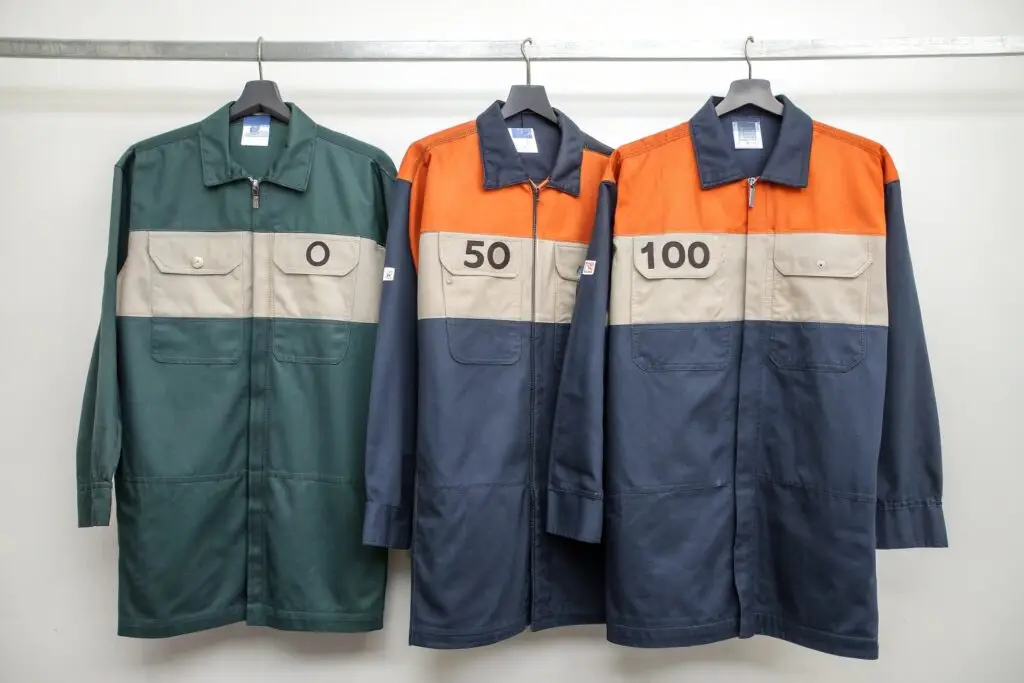
What’s the ideal wash cycle benchmark4 for rental products like uniforms, workwear, and table linens?
The benchmark varies by garment type. Here’s what we recommend at Fumao based on our own lab results and client data:
| Garment Type | Minimum Cycles | Ideal Benchmark | Reason |
|---|---|---|---|
| Basic Uniform Shirt | 50 | 75 | Daily wear in hospitality |
| Work Pants | 50 | 100 | Exposed to abrasion, oils |
| Aprons & Linens | 75 | 100+ | High bleach use, hot drying |
| Chef Coats | 50 | 80 | Frequent washing, visibility |
| Safety Vests | 30 | 50 | Delicate reflective areas |
In one case, a logistics client wanted uniforms that would last a full 2-year rental contract. That meant 104 weeks—or roughly 100 washes. We developed a poly-nylon-spandex blend and added reinforced gussets and bartacks. The prototypes survived 110 cycles.
How can buyers monitor real-time wear data5 to track actual garment lifespan?
We advise large rental clients to tag garments with QR codes or RFID6. These track:
- Number of washes
- Repair records
- Damage points
- Client complaints
With this data, you can pinpoint which style or fabric fails early. Then we can adjust the construction—before it becomes a financial loss.
Common Fabric Failures in Commercial Laundering
Even tough fabrics fail—if they’re built wrong or used in the wrong application.
Typical failures include color fading, seam puckering, shrinking, fiber breakage, and elastic failure—usually caused by poor fiber choice or weak stitching.
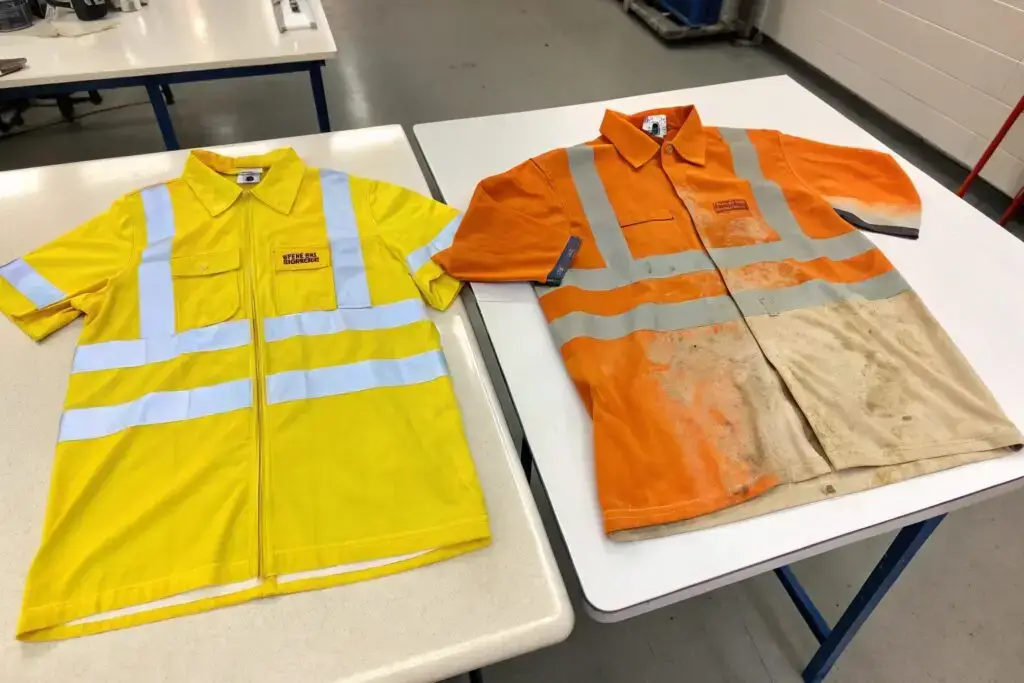
What are the top five failure points rental buyers should look for in early testing?
Here’s what we see most often when rental garments fail under testing or field use:
- Fading prints7 – Poor-quality heat transfers peel after 10–15 washes.
- Fraying seams8 – Weak thread or poor tension leads to unraveling.
- Shrinkage >5%9 – Especially in cotton-rich blends not pre-treated.
- Puckering – Stitch line gathers after heat exposure, deforming shape.
- Broken trims – Buttons and reflective tape degrade faster than fabric.
We help buyers avoid these by using:
- Core-spun polyester threads (stronger, bleach-resistant)
- Pre-shrunk fabrics with moisture-stable finishes
- Heat-resistant accessories (metal snaps, durable velcro)
- Triple needle stitching at tension points
How can buyers evaluate prototypes without waiting for months of field wear?
Fast-track testing saves time. At Fumao, we offer a 7-day “accelerated aging test.” We:
- Wash samples 10 times at 75°C with bleach
- Dry at 80°C
- Evaluate with calibrated lightboxes and calipers
This simulates 50 cycles in one week. It’s not perfect, but it shows if your garment will survive real conditions—or fall apart after first delivery.
Choosing ISO Standards for Wash Performance Testing
ISO standards remove the guesswork. They show you what "durable" actually means—on paper and in practice.
ISO 15797 is the global gold standard for testing workwear and rental garments under industrial laundry conditions.
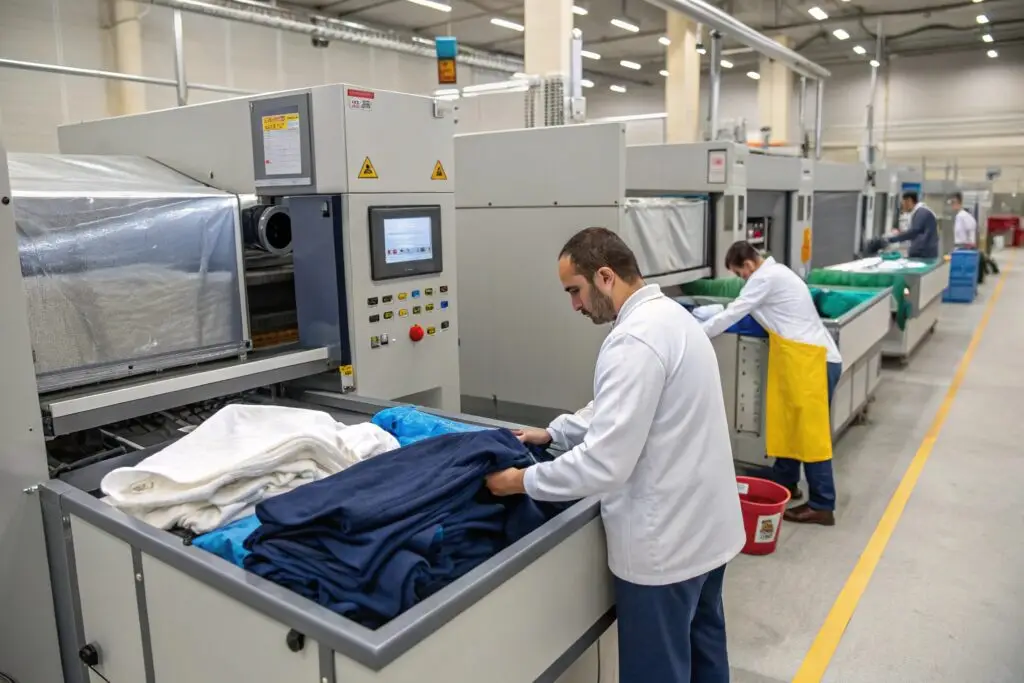
What makes ISO 1579710 different from regular consumer fabric testing?
ISO 15797 is designed specifically for garments meant for leasing, industrial use, and high-frequency washing. It evaluates:
- Color change
- Dimensional change
- Pilling
- Wrinkling
- Appearance retention
It does this using industrial washing machines11, not domestic ones. The fabric is tested at 75°C with high pH detergent, followed by tumble drying or tunnel finishing—just like real rental use.
Here's what we get from each ISO stage:
| ISO Stage | Test Action | Outcome Evaluated |
|---|---|---|
| Wash Procedure A | 75°C wash, high pH detergent | Color + fiber strength |
| Tunnel Finish | 155°C exposure | Shrinkage, puckering |
| Grayscale Comparison | Visual post-wash evaluation | Fading, distortion |
We certify each batch of new designs to ISO 15797 before quoting to rental clients.
How do ISO-compliant fabrics12 help buyers get contracts with strict client specs?
Major clients—especially in food service, health, and transport—require ISO-compliant garments. One buyer from the U.S. told us their government tender required ISO 15797 on all uniforms.
We helped them pass the audit by providing lab results, batch certifications, and fabric origin documents. They won a 3-year contract supplying bus driver uniforms.
ISO isn’t just a test—it’s a tool for trust. Your client sees you took the steps to guarantee performance. And they’ll choose you over someone who just says “our fabric is strong.”
Conclusion
Rental garments live in harsh worlds. That’s why we test ours harder than anyone—because if they don’t survive the laundry, they don’t belong in your business.
-
Understanding AATCC 61 is crucial for ensuring colorfastness in commercial laundering, which is vital for rental wear durability. ↩
-
Exploring ISO 15797 will provide insights into industrial laundry compatibility, essential for garment longevity in rental services. ↩
-
Learning about ASTM D4966 helps in assessing fabric durability, ensuring garments withstand the rigors of commercial laundering. ↩
-
Understanding the ideal wash cycle benchmark helps ensure longevity and cost-effectiveness for rental products. Explore this link for detailed insights. ↩
-
Monitoring real-time wear data is crucial for optimizing garment lifespan and reducing costs. Discover effective tracking methods here. ↩
-
Using QR codes or RFID can revolutionize garment tracking, enhancing efficiency and reducing losses. Learn more about these technologies. ↩
-
Understanding the causes of fading prints can help buyers choose better quality garments that last longer. ↩
-
Preventing fraying seams is crucial for garment durability; explore effective techniques to enhance garment quality. ↩
-
Learn about the impact of shrinkage on garment fit and longevity to make informed purchasing decisions. ↩
-
Explore this link to understand the unique aspects of ISO 15797 and its importance in industrial fabric testing. ↩
-
Discover the benefits of industrial washing machines in fabric testing and how they ensure durability and performance. ↩
-
Learn how ISO-compliant fabrics can enhance your credibility and help you win contracts with strict specifications. ↩