I once watched a brand owner throw a stack of buyer feedback forms into the recycling bin. She was angry. A department store buyer had written that her dress fabric "felt like sandpaper after one wash." Another boutique owner had complained that the buttons on her cardigan "popped off during a try-on." She took the criticism personally. She assumed the buyers were being harsh or the factory had made errors. She did not read the feedback as data. She read it as insult. She made the same dresses and cardigans the next season with the same fabric and the same buttons. The negative reviews repeated. The buyers dropped her line. Her brand shrank. The feedback she threw away contained the precise instructions for saving her business.
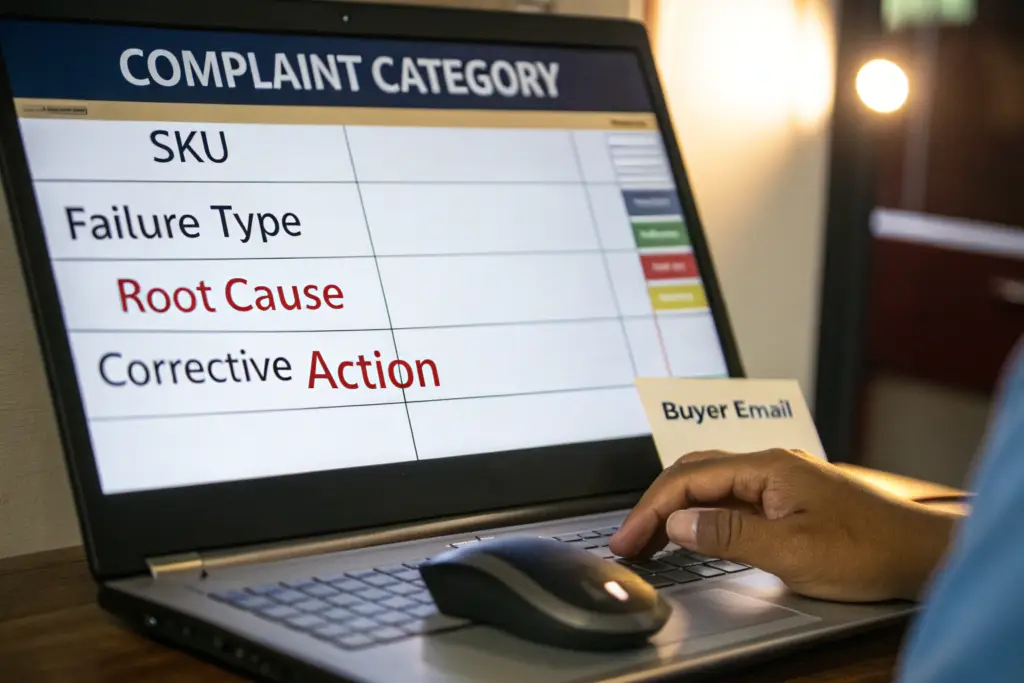
You brilliantly use honest buyer feedback to drastically improve your next garment production run by treating every piece of negative feedback as a free, actionable quality audit. A buyer complaint about pilling is a specific instruction to increase the yarn twist or apply an anti-pilling finish. A complaint about color fading is a directive to upgrade the dye fastness requirement from a grade 3 to a grade 4. A complaint about a zipper failure is a mandate to switch to a heavier gauge zipper from a named supplier. The process is systematic: you collect every piece of feedback into a single database, you categorize it by failure type, fabric, trim, construction, fit, you assign a root cause to each failure, and you write a specific corrective action into the next season’s tech pack. The feedback is not an attack. It is a diagnostic report on your product’s performance in the real world. The brand that reads the report and acts on it improves every season. The brand that ignores it repeats the same mistakes until it fails.
Buyer feedback is the most valuable product development resource you have. It is more honest than a factory’s quality report. It is more specific than a customer review. It comes from professionals who handle hundreds of garments and know exactly what quality looks like. I want to share exactly how our most successful brand partners collect, analyze, and act on buyer feedback, and how you can build a feedback loop that makes every production run better than the last.
What Specific Categories of Buyer Feedback Should You Systematically Collect and Analyze?
A brand owner I work with used to read buyer emails and either feel good or feel bad. "Great collection!" meant she was happy. "The stitching came undone" meant she was upset. She had no system for turning those feelings into improvements. We helped her build a simple feedback tracker. Every piece of feedback from every wholesale buyer went into a spreadsheet. Each complaint was tagged with a category. After two seasons, the data revealed a clear pattern. 60% of all complaints were about seam durability on woven garments. The fabric was beautiful. The design was strong. The seams were failing. She had a systemic problem, not a random one. She upgraded her seam construction specifications across her entire woven line. The next season’s complaint rate dropped by 70%. The data told her exactly what to fix.
You systematically collect and analyze buyer feedback by categorizing every complaint into one of five buckets: fabric performance, which includes pilling, fading, shrinkage, and hand feel degradation; trim and component failure, which includes zipper breaks, button detachments, snap failures, and drawstring fraying; construction quality, which includes seam slippage, skipped stitches, hem failures, and loose threads; fit and sizing inconsistency, which includes garments that run small, large, or inconsistent within the same size; and packaging and presentation, which includes wrinkled garments, missing hang tags, or damaged packaging. Each complaint is tagged with the specific SKU, the production run date, and the factory that produced it. This structured data allows you to see patterns. One zipper complaint is a fluke. Ten zipper complaints across five styles is a systemic trim sourcing problem. The data transforms scattered grievances into a prioritized corrective action plan.
The categorization is the foundation of the feedback system. Without it, feedback is just noise. With it, feedback becomes a roadmap for improvement. The brand that categorizes its complaints knows exactly where to focus its quality efforts.
How Do You Distinguish Between a “One-Off” Defect and a “Systemic” Fabric Failure That Demands a Mill Change?
A one-off defect appears on a single garment or a single carton. The root cause is a random error: a sewing machine misfired, a fabric roll had a single slub, a packer forgot a hang tag. The corrective action is a conversation with the factory about tightening the specific process. A systemic failure appears across multiple garments, multiple styles, or multiple production runs. Ten buyers report pilling on three different jersey styles. The root cause is not a random error. It is the fabric. The yarn quality is insufficient, the twist is too low, or the finishing process is inadequate. The corrective action is a mill change. You stop using that fabric from that mill and either re-spec the fabric with higher performance requirements or switch to a different mill. The distinction between one-off and systemic is made by looking at the frequency and distribution of the complaint. The root cause analysis for textile defects distinguishes between special cause and common cause variation.
Why Should You Track “Feel Complaints” (Hand Feel Degradation) as Obsessively as You Track Physical Defects?
A physical defect, a broken zipper, a torn seam, is an objective failure. The garment is non-functional. A hand feel complaint, "The fabric felt stiff after washing," is subjective. The customer can still wear the garment. Many brands dismiss hand feel complaints as minor. This is a mistake. Hand feel is the customer’s most intimate interaction with the garment. A fabric that feels soft in the store but rough after three washes creates a sense of betrayal. The customer may not return the garment, but they will not buy from the brand again. Hand feel complaints are tracked by asking buyers to report any customer feedback about fabric softness, scratchiness, or stiffness. They are categorized under fabric performance. The corrective action is typically a change in the finishing chemistry or an upgrade to a more durable softener. The hand feel measurement and tracking in quality control provides objective data to support subjective complaints.
How Do You Translate Buyer Feedback into Specific, Enforceable Tech Pack Revisions?
A brand owner received a complaint from three different buyers that the buttons on her linen shirts were falling off. She forwarded the emails to her factory and said, "Fix the buttons." The next production run arrived. The buttons still fell off. The factory had added a few extra stitches, but the root cause was not the stitching. The buttons were too heavy for the lightweight linen fabric. The fabric tore around the button before the thread broke. The fix was not more stitches. The fix was a lighter button or a reinforcing interlining behind the button placket. The brand owner’s feedback was too vague to be actionable. "Fix the buttons" is not an engineering instruction.
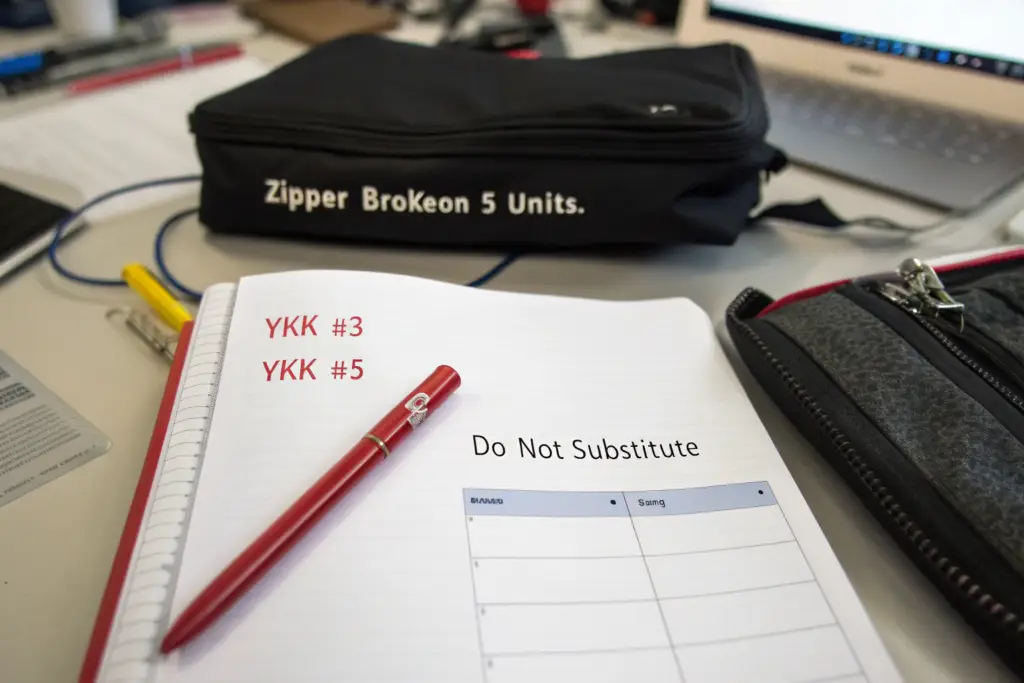
You translate buyer feedback into enforceable tech pack revisions by writing a specific, measurable corrective action for every complaint. "Button fell off" becomes "Replace 18mm resin button with 14mm corozo button and add fusible interlining to button placket per attached swatch." "Fabric pilled" becomes "Increase yarn twist to minimum 650 TPM and apply anti-pilling finish per AATCC Test Method 135, pass required after 5 wash cycles." "Zipper failed" becomes "Upgrade from YKK #3 coil zipper to YKK #5 molded tooth zipper with auto-lock slider, product code YKK-5MT-AL." The revised specification is written directly into the next season’s tech pack. The old specification is struck through. The new specification is highlighted. A physical reference swatch of the approved new material is attached. The factory receives a clear, unambiguous instruction. There is no room for interpretation. There is no "fix it." There is only "use this specific material, this specific construction, and test to this specific standard."
The tech pack is the legal and technical contract between the brand and the factory. A buyer complaint that does not result in a tech pack revision is a complaint that will be repeated next season. The tech pack revision closes the feedback loop.
How Can a “Failure Code” System on Your Tech Pack Trace a Recurring Issue Directly Back to a Buyer’s Complaint?
A failure code is a unique identifier assigned to each type of complaint. "BTN-01" means button detachment. "ZIP-02" means zipper slider failure. "FAB-03" means fabric pilling. When a buyer complaint is received, it is tagged with the failure code. When the tech pack is revised in response, the failure code is noted in the revision history. This creates a traceable link from the complaint to the corrective action. A season-end review can pull every tech pack revision tagged with "FAB-03" and verify that the anti-pilling specification was actually changed. The failure code system in apparel quality management provides accountability and traceability.
What Is the Correct Way to Create a “Corrective Action Report” (CAR) That a Factory Must Sign Off On?
A Corrective Action Report is a one-page document that describes the defect, the root cause, the corrective action, the responsible party, and the verification method. The defect: "Six buyer reports of zipper slider separating from tape." The root cause: "Slotted slider used on coil zipper; slot width insufficient for tape thickness." The corrective action: "Replace all #3 coil zippers with #5 molded tooth zippers from YKK; submit 50-cycle zipper test report before bulk production." The responsible party: "Factory Sourcing Manager." The verification: "Third-party lab test report to be submitted 14 days before shipment." The CAR is signed by both the brand owner and the factory manager. It is a binding commitment. The corrective action report process is standard in ISO 9001 quality management.
What Is the Most Effective Way to Co-Create a “Seasonal Quality Improvement Plan” with Your Factory?
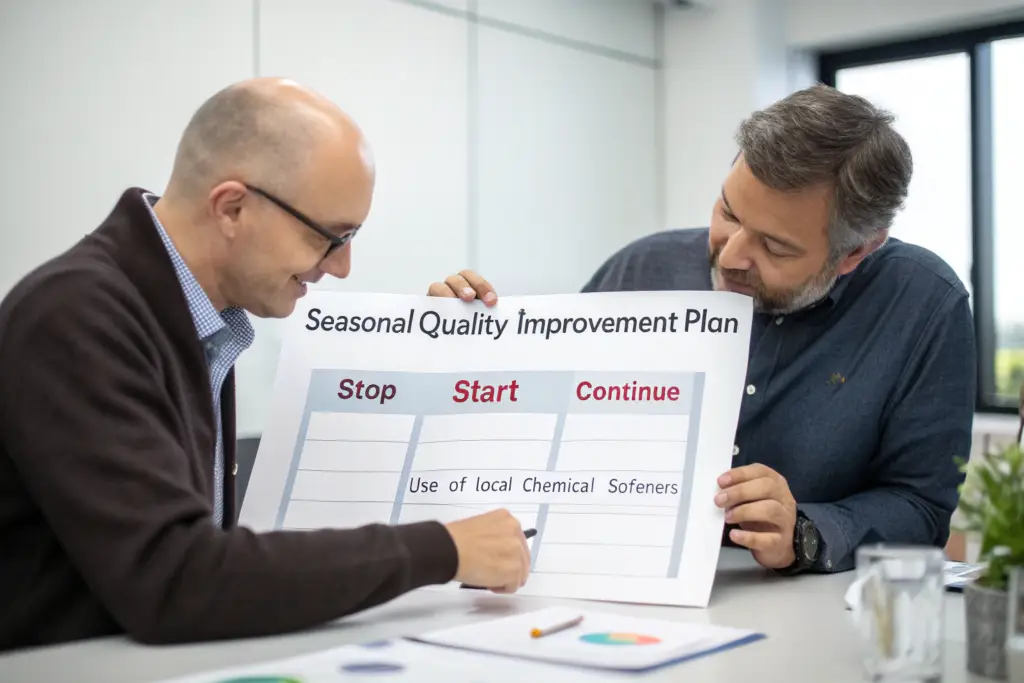
A brand owner I work with used to send a list of complaints to her factory at the end of each season. The factory manager would read the list, feel attacked, and become defensive. The relationship was adversarial. We changed the format. Instead of a complaint list, she now sends a "Seasonal Quality Improvement Plan" with three columns: "Stop," "Start," and "Continue." Stop: "Using the softener that washes out. Buyers say fabric feels rough after 3 washes." Start: "Using a silicone macro-emulsion softener that lasts 30 washes. Cost increase is $0.08 per unit." Continue: "The new reinforced shoulder seam. Buyers reported zero shoulder seam failures this season." The factory manager receives the document as a collaborative improvement plan, not an accusation. The factory is part of the solution.
You co-create a Seasonal Quality Improvement Plan by framing the feedback as a shared mission to build a better product, not as a list of factory failures. After each season, you compile the categorized buyer feedback. You meet with the factory manager, either in person or by video call. You present the data objectively: "We had 12 seam-related complaints this season, down from 20 last season. The improvement is good. Let’s target fewer than 5 next season. Here is the specific construction change we propose." You ask the factory for their input. They may have a better solution than the one you proposed. They may know that a specific thread type will solve the problem more cost-effectively than your proposed solution. The plan is co-created. The factory signs off on the "Stop," "Start," and "Continue" actions for the next production run. The relationship shifts from adversarial to collaborative. The factory becomes a partner in quality improvement, not a defendant in a quality trial.
The "Stop, Start, Continue" format is borrowed from lean management and Agile retrospectives. It works because it is simple, constructive, and action-oriented. It does not dwell on blame. It focuses on the specific behavioral change for the next production cycle.
How Does the “Stop, Start, Continue” Framework Prevent a Factory from Becoming Defensive About Negative Feedback?
The framework provides balance. "Stop" addresses the problems. "Continue" acknowledges the successes. A factory manager who hears "We need to stop using this cheap zipper" may feel criticized. But if they also hear "We want to continue using this reinforced pocket bag, which buyers praised," they feel recognized. The positive feedback creates psychological safety for the negative feedback. The factory understands that the brand is not simply complaining. The brand is providing a balanced assessment of what worked and what did not. The Stop Start Continue feedback framework is widely used in performance management for exactly this reason.
The factory’s production team worked hard on your order. They take pride in their work. If the first thing they hear from you is a list of defects, they feel that their effort is invisible and only their mistakes are noticed. They become defensive. If you start the meeting by sharing a specific piece of positive feedback, "The boutique in Austin said your stitching on the linen shirts was the cleanest they have seen in years," the factory team feels proud. They are now emotionally open to hearing about the areas that need improvement. The positive feedback sets a collaborative tone.
Conclusion
Honest buyer feedback is a gift. It is a free, detailed, real-world quality audit of your product. The buyer who tells you your zipper failed is doing you a favor. They are giving you the opportunity to fix the problem before it damages your reputation with hundreds of end consumers. The brand that collects this feedback, categorizes it, translates it into specific tech pack revisions, and co-creates a Seasonal Quality Improvement Plan with its factory will produce a better product every season.
The brand owner who threw her feedback in the recycling bin was not a bad person. She was overwhelmed and defensive. She did not have a system for processing feedback, so she rejected it. The system is the solution. The feedback database, the failure codes, the CARs, and the Stop-Start-Continue framework transform raw criticism into engineered improvement.
At Shanghai Fumao, we actively solicit feedback from our brand partners and treat it as the most valuable input to our quality improvement process. We accept Corrective Action Reports as binding commitments. We participate in Seasonal Quality Improvement Plan meetings. We maintain a feedback database that tracks complaints and corrective actions across all production runs. We do this because we know that a factory that listens to feedback improves, and a factory that ignores it stagnates.
If you want to build a feedback loop with your manufacturing partner, or if you want to see how we handle buyer feedback at Shanghai Fumao, reach out to us. At Shanghai Fumao, we will share our CAR template, our feedback categorization framework, and our Stop-Start-Continue meeting agenda. Contact our Business Director, Elaine, at elaine@fumaoclothing.com. She can send you a sample Seasonal Quality Improvement Plan from a recent production cycle and walk you through how we translate feedback into action. Your buyers are your best quality inspectors. Listen to them. Act on their feedback. Make every production run better than the last.