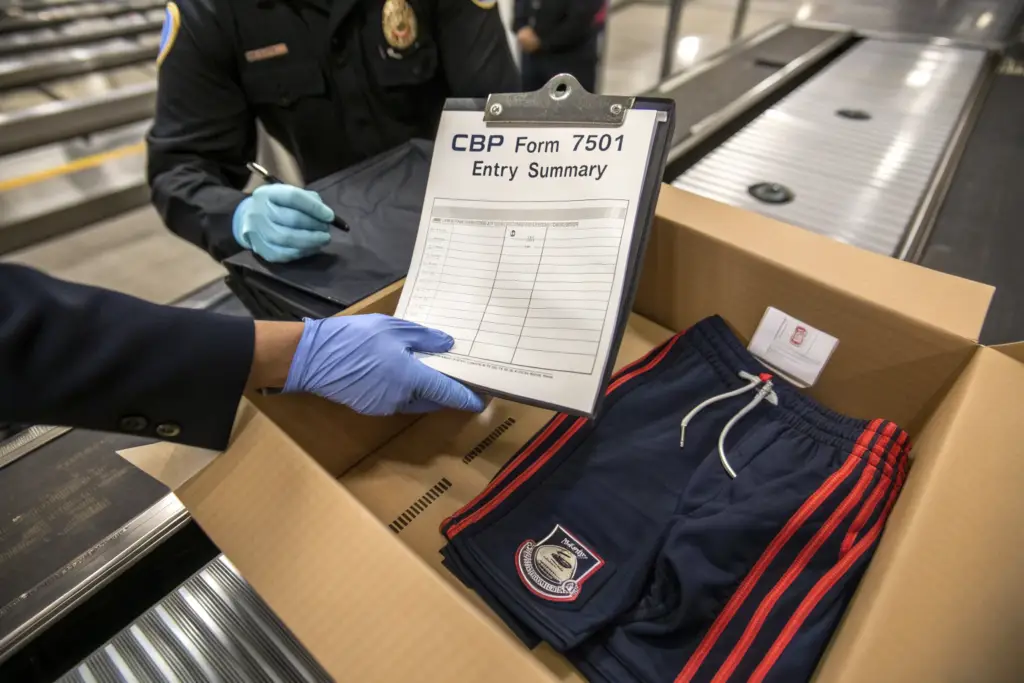
A brand owner from New Jersey called me in a cold panic in February 2025. US Customs had detained his container of 2,500 branded classic shorts at the Port of Newark. The shipment was flagged for a "documentation review." His customs broker, a discount service he had found online, had misclassified the shorts under a duty-free HTS code. The misclassification triggered a formal enforcement action. Customs was demanding back duties, a penalty fine of $12,000, and the container was racking up $200 per day in demurrage charges while the dispute dragged on. His entire season's inventory was locked in a bonded warehouse, and his wholesale accounts were emailing him daily about missed delivery dates. He had made a $37,500 mistake because he treated customs compliance as an afterthought instead of a core business process.
Avoiding customs issues when importing branded classic shorts from China requires a system of three non-negotiable practices: correct HTS classification with fiber-content verification, meticulous country-of-origin marking on both the garment and the packaging, and a complete, accurate commercial invoice that declares the transaction value and assists with zero ambiguity.
US Customs and Border Protection is not a passive checkpoint. It is an enforcement agency with the authority to seize, destroy, or levy massive fines on imported goods that do not meet legal requirements. Branded apparel, because of its high rate of intellectual property issues and misclassification, receives heightened scrutiny. At Shanghai Fumao, we have shipped thousands of branded shorts to US importers without a single customs detention. This is not luck. It is a process. Let me walk you through the exact steps to keep your branded shorts moving through the port without incident.
Why Is Correct HTS Classification the Single Most Important Document Decision?
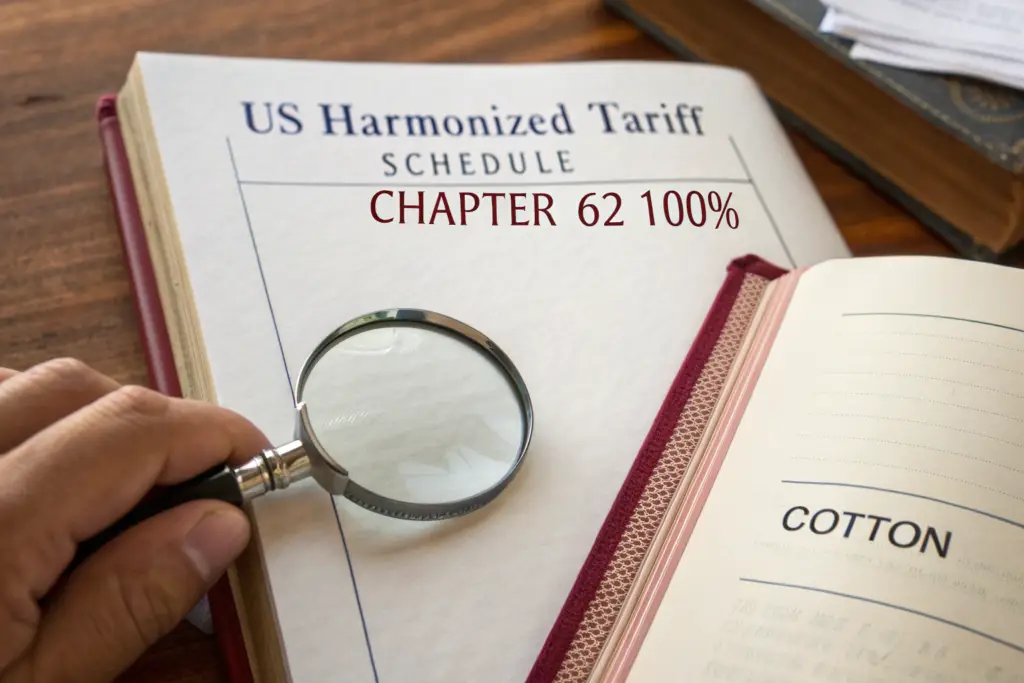
The Harmonized Tariff Schedule code is the numerical fingerprint of your product. It tells customs exactly what you are importing, what material it is made from, and how much duty you owe. A single digit error in this code can change your duty rate from 12% to 27.7% or trigger an audit. The code for men's cotton shorts is 6203.42. The code for women's cotton shorts is 6204.62. The code for synthetic fiber shorts is different. The code for shorts with a cotton shell and a polyester lining may be different depending on which fiber predominates by weight. The classification decision must be made with scientific precision, not guesswork.
Correct HTS classification depends on sending a pre-production fabric sample to a US customs attorney or licensed broker for a binding classification ruling, then building the entire production and documentation process around that specific code to ensure consistency from factory floor to customs entry.
A brand I advised had a shipment of shorts classified under 6203.42 with a 12% duty rate. Customs pulled the shipment for a lab test. The lab found that the pocket lining was 100% polyester and that the lining comprised more than 10% of the garment's total weight. The correct classification shifted to a different code with a 16% duty rate. The brand was billed for the duty difference on the current shipment, plus the difference on two previous shipments that had used the incorrect code. The total bill was $8,700. The pocket lining fabric had cost $0.08 per unit to install. It triggered a disaster because no one had considered its classification implications.
How Does a Binding Ruling from CBP Protect Your Shipments?
A binding ruling is a formal, written decision from US Customs on the correct HTS classification of your specific product. You send a sample, a detailed description, and a request letter to CBP's National Commodity Specialist Division. They respond with a ruling letter that is legally binding on all US ports of entry. If your shipment matches the product described in the ruling, no customs officer can reclassify it at the border. The ruling is an insurance policy against misclassification disputes. It takes 30 to 60 days to obtain, so it must be part of pre-production planning, not a last-minute fix. The process is described in detail on the U.S. Customs and Border Protection website under the "Binding Rulings" section. A binding ruling transforms classification risk from a variable into a constant.
Why Must the Fabric Content Label Match the HTS Declaration Exactly?
Customs officers are trained to check the fabric content label sewn into the garment against the HTS code declared on the entry paperwork. If the label says "98% Cotton, 2% Spandex" and the entry declares 100% cotton under a code that requires 100% cotton, the shipment is misdeclared. The officer will detain the goods. The importer will be asked to explain the discrepancy. If the explanation is unsatisfactory, a penalty may be issued. The fabric content label, the HTS code, and the commercial invoice must all tell the same story. This requires the factory to provide a certified fabric composition report from a testing lab like SGS or Intertek. This report should be attached to the shipping documents. Preemptive evidence prevents disputes.
What Are the Mandatory Country of Origin Marking Requirements for Branded Apparel?
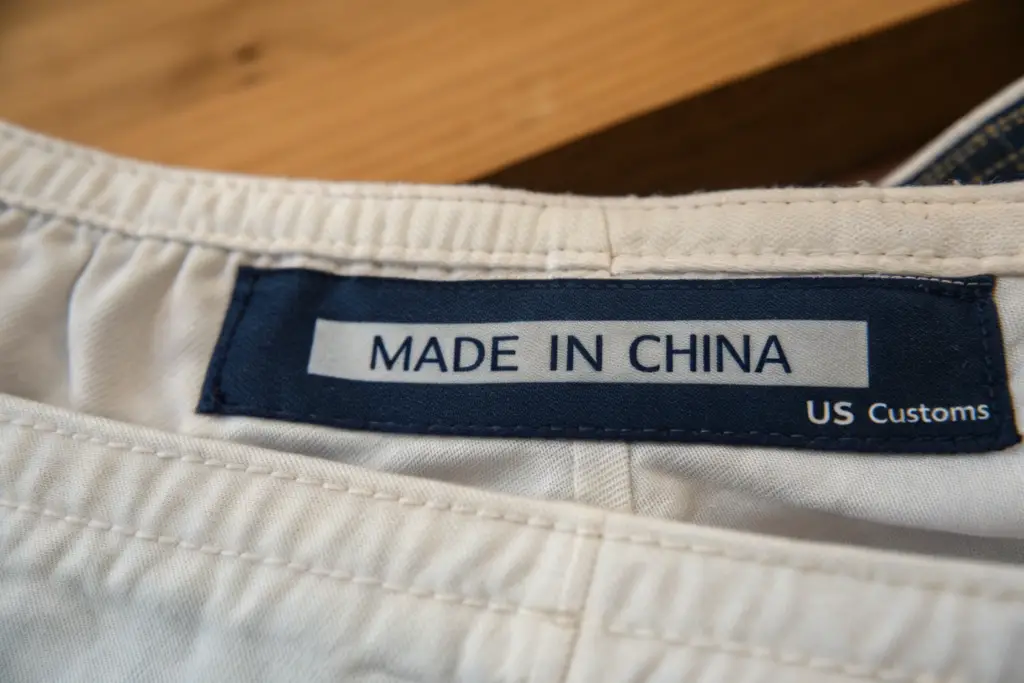
Every imported garment must be marked with its country of origin. This is not a preference. It is federal law under 19 USC 1304. The marking must be legible, permanent, and conspicuous to the ultimate purchaser. For shorts, this means a sewn-in label on the inside waistband, printed on the fabric care label, or heat-sealed in a location where the customer will easily find it. A removable hangtag is not sufficient. A label printed on the outside of the polybag is not sufficient. The marking must survive washing and normal wear. If the marking is missing, obscured, or incorrect, the shipment can be detained, assessed a marking duty of 10% of the customs value, and required to be re-exported or destroyed.
Country of origin marking must be a permanently affixed woven or printed label sewn into the garment, placed conspicuously on the inside waistband or side seam, with lettering at least 1/8 inch in height, stating "Made in China" in English, and this marking must match the country of origin declared on the customs entry documents.
I recall a shipment that was flagged because the factory had printed the country of origin on the back of the brand label, which was then sewn inside the pocket bag. The CBP officer ruled that the marking was not "conspicuous" because the customer had to turn the pocket inside out to find it. The shipment was detained for three weeks while the brand arranged for a marking compliance rework at the port. The rework cost $1,800. The lesson: the marking goes where the customer's eyes naturally go when they examine the garment.
Where Exactly Must the Country of Origin Label Be Placed on Shorts?
The marking must be placed in a location where the ultimate purchaser will easily find it during a casual examination. For shorts, the standard placement is on the inside center back waistband, either as a separate label or integrated into the fabric care and content label. It must not be hidden under a fold of fabric, inside a pocket, or on a flap that is not immediately visible. If the shorts have a waistband drawcord, the label must not be obscured by the cord. The lettering must be clear and in English. A marking that says "PRC" instead of "Made in China" may be rejected because "PRC" is not considered sufficiently clear to the average US consumer. The full requirements are detailed by U.S. Customs and Border Protection in their publication on country of origin marking.
What Happens If the Marking Is on the Hangtag But Not Sewn Into the Garment?
The hangtag is not permanent. It is removed before the customer wears the garment. Customs does not consider a hangtag to satisfy the marking requirement. The marking must be on the garment itself and must survive washing. If a shipment arrives with only a hangtag marking, the CBP officer will issue a Notice of Marking and Detention. The goods cannot be released until they are properly marked, either at the port or at a bonded warehouse under CBP supervision. This process costs time and money. The cost is always higher than having the factory sew in a compliant label before shipment. The factory should be instructed explicitly in the purchase order: "Permanent country of origin label must be sewn into inside waistband. Removable hangtag marking is not acceptable."
How Can You Avoid Intellectual Property Seizures for Branded Goods?
If you are importing shorts with your own brand label, you might think intellectual property seizure is not your problem. You own the brand. You are not counterfeiting anyone. But CBP does not know you own the brand unless you tell them. CBP officers are trained to look for branded goods and check the brand against a database of registered trademarks. If your brand is not registered with CBP's e-Recordation program, the officer sees an unknown brand on imported apparel. The officer may suspect the goods are counterfeit or infringing. The shipment can be detained while you prove you own the brand. The proof process takes time. The detention costs money.
To prevent IP-related customs seizures, every brand owner must register their trademark with the US Patent and Trademark Office, record that registration with CBP's e-Recordation program, and include the trademark registration number on the commercial invoice, so CBP officers can instantly verify that the importer is the legitimate brand owner.
I worked with a brand that had a federal trademark registration but had never recorded it with CBP. Their first import shipment of branded shorts was detained at the port of Los Angeles. The CBP officer suspected the brand was a knockoff of a similar European brand. The brand owner had to hire an IP attorney, file documentation with CBP proving ownership, and wait three weeks for the detention to be lifted. The demurrage bill was $4,200. The attorney bill was $3,500. The brand had done the hard work of creating the trademark but skipped the final step of recording it with CBP. That final step would have cost $190 and prevented the entire incident.
What Is CBP's e-Recordation Program and Why Must You Enroll?
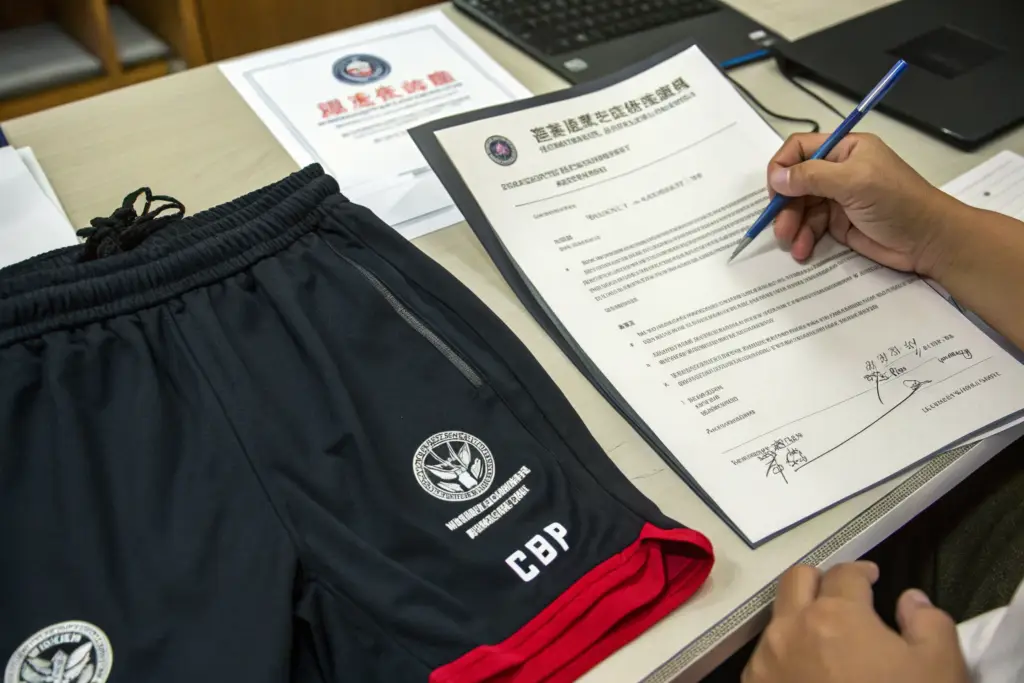
The e-Recordation program is CBP's online system for recording registered trademarks and copyrights. Once a trademark is recorded, CBP officers nationwide can access the record and verify that imported goods bearing that mark are authorized by the rights holder. The recordation fee is $190 per trademark class. The process is straightforward: submit the USPTO registration certificate, proof of the mark's use in commerce, and images of the mark as it appears on the goods. The recorded mark is then loaded into CBP's inspection database. When an officer scans a shipment of branded shorts, they can instantly see that the importer is the registered trademark owner. The risk of wrongful detention drops to near zero. The application and requirements are on the U.S. Customs and Border Protection e-Recordation page.
What Documentation Proves Ownership to CBP During a Detention?
If a shipment is detained for suspected IP infringement, CBP will issue a Notice of Detention. The importer has a limited number of days to respond with proof of ownership. The required proof includes a copy of the federal trademark registration certificate, a letter from the trademark owner authorizing the importation, and evidence that the goods are genuine—such as factory invoices, quality control reports, and photographs of the goods. If the importer cannot produce this documentation within the deadline, the goods are seized and forfeited. The documentation must be prepared before the shipment leaves the factory. It should be kept in a digital folder accessible to the importer and the customs broker at all times. Being prepared for a detention request is the difference between a two-day delay and a total loss.
What Makes a Commercial Invoice "Customs-Ready" for Branded Shorts?
The commercial invoice is the single most scrutinized document in an import shipment. It is not a receipt. It is a legal declaration of the goods' value, origin, and nature. An incomplete or vague invoice is a red flag that triggers a documentation hold. A customs officer who sees "Clothing" as the product description will pull the shipment. A customs officer who sees "Men's 100% Cotton Woven Classic Shorts, HTS 6203.42.4511" has the information needed to clear the shipment in minutes. The difference between these two descriptions is the difference between a smooth clearance and a costly delay.
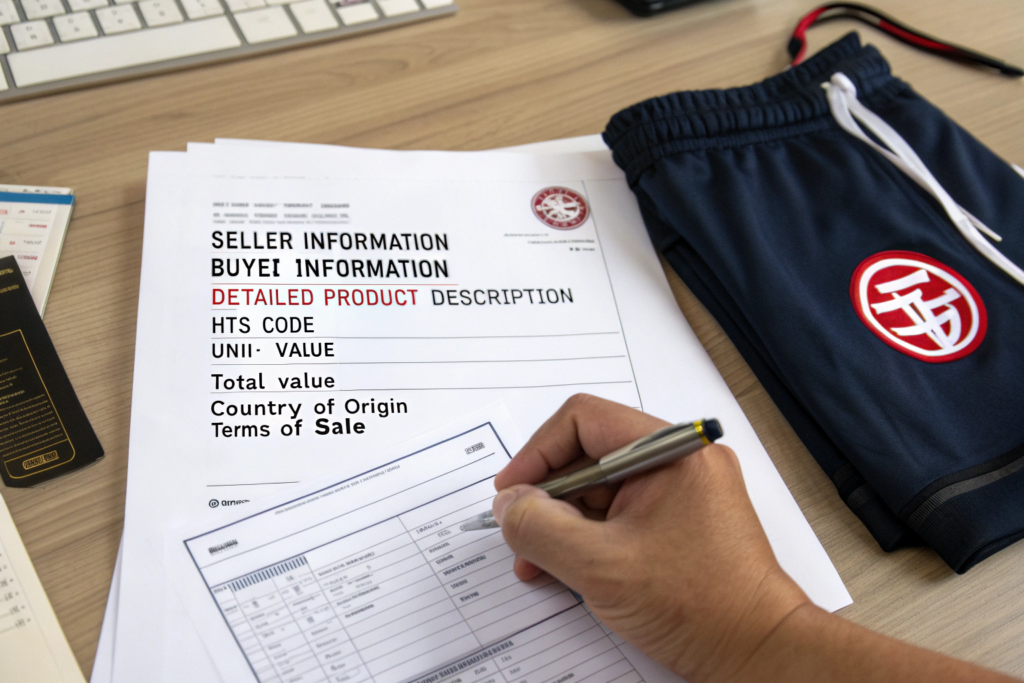
A customs-ready commercial invoice must include the seller and buyer legal names and addresses, a detailed product description with fiber content and HTS code, the unit and total value in US dollars, the country of origin, the Incoterms, and a signed declaration of truthfulness, with no vague language or estimated numbers.
A brand I consulted for had a shipment held because their invoice listed the product as "Summer Collection - 500 pcs." The CBP officer had no idea what "Summer Collection" meant. Were the items shorts? Shirts? Dresses? The officer could not verify the HTS classification, could not assess the duty, and could not determine if the goods complied with applicable regulations. The shipment sat for two weeks while the brand provided a corrected invoice. The simple fix was to list each item with its specific product name, fiber composition, HTS code, and unit value. The invoice must answer every question a customs officer might ask without requiring a follow-up email.
| Invoice Element | Required Detail for Branded Shorts |
|---|---|
| Product Description | "Men's 100% Cotton Woven Classic Chino Shorts" not "Shorts" |
| HTS Code | Full 10-digit code, e.g., 6203.42.4511 |
| Country of Origin | "Made in China" stated explicitly |
| Unit Value | Price per piece in USD, not a bundled price |
| Total Value | Sum of all unit values, matching the PO exactly |
| Incoterms | FOB, CIF, or DDP clearly stated |
| Buyer/Seller Info | Legal entity names, addresses, and EIN or tax ID |
Why Must the Declared Value Match the Actual Transaction Value Exactly?
CBP requires the declared value to be the price actually paid or payable for the goods. Undervaluing goods to reduce duty liability is customs fraud. Overvaluing goods to inflate insurance claims is also fraud. Both are criminal offenses. The declared value must match the commercial invoice, the purchase order, and the bank transfer records exactly. If CBP audits the shipment and finds a discrepancy—for example, the invoice declares $8.50 per unit but the wire transfer shows $9.00—the importer will face penalties, back duties, and potentially criminal charges. The paper trail of value must be flawless. Every document in the transaction chain must tell the same financial story.
An "assist" is something of value the buyer provides to the factory for free or at reduced cost to be incorporated into the imported goods. Brand labels, hangtags, custom polybags, and packaging supplied by the buyer are assists. Their value must be added to the transaction value of the goods for duty assessment purposes. If you send your factory $1,200 worth of branded hangtags to be attached to your shorts, that $1,200 is dutiable. It must be declared on the commercial invoice as an assist, and the duty paid on it. Failing to declare assists is a common customs violation that CBP auditors specifically look for during importer audits. The cost of the assists should be itemized on the invoice and included in the total declared value. Guidance on assists valuation is available from U.S. Customs and Border Protection.
Conclusion
Customs compliance is not a bureaucratic nuisance. It is the difference between a profitable import season and a catastrophic one. The importer who correctly classifies their shorts, permanently marks the country of origin, records their trademark with CBP, and prepares a detailed, accurate commercial invoice will move goods through the port in days. The importer who guesses at HTS codes, prints the country of origin on a removable tag, skips trademark recordation, and submits a vague invoice will face detention, demurrage, penalties, and potentially seizure.
The costs of non-compliance are not theoretical. They are specific, measurable, and devastating to a small brand's cash flow. The costs of compliance—a binding ruling request, a CBP recordation fee, a properly printed label, a detailed invoice—are minor in comparison. Compliance is an investment in predictable delivery dates and protected margins.
At Shanghai Fumao, we support our brand partners with the documentation required for smooth customs clearance. We provide certified fabric composition reports, detailed packing lists, and commercial invoices built to CBP standards. We label every garment with a permanent, conspicuous "Made in China" mark. If you are importing branded classic shorts and want a manufacturing partner who understands the US customs process, contact our Business Director, Elaine, at elaine@fumaoclothing.com. Let us help you move your branded shorts from our factory floor to your warehouse without a customs headache.