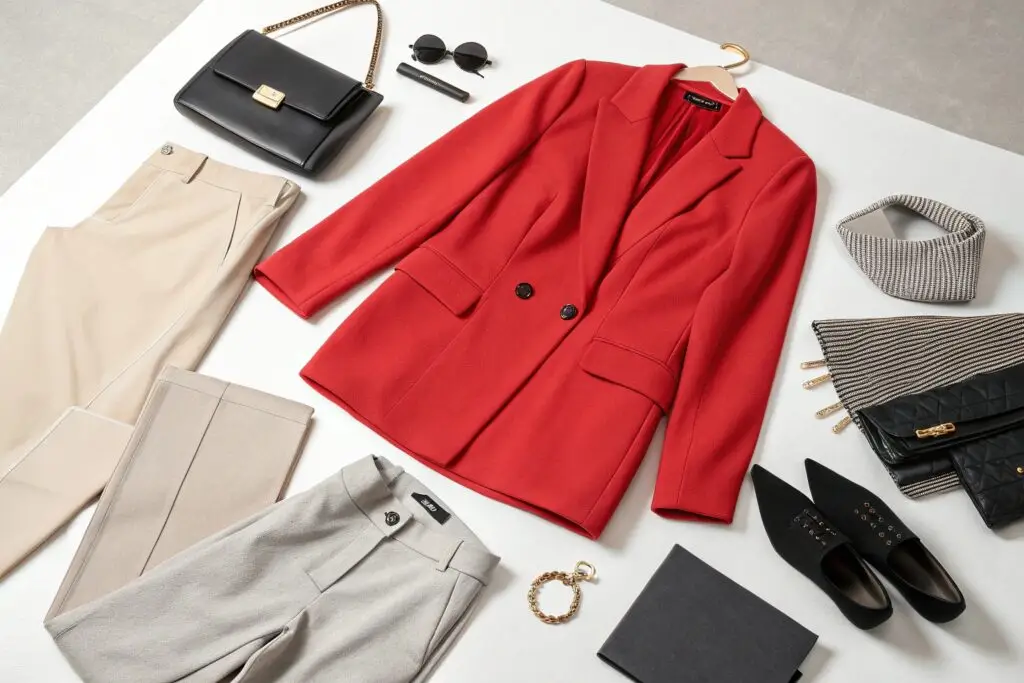
Capsule collections focus on minimalism—but that doesn’t mean boring. Adding bold pieces can elevate your line, as long as they don’t disrupt cohesion.
A well-designed statement piece can enhance a capsule by introducing focus and flair—without sacrificing versatility.
I’ve worked with brands who wanted to add drama without losing their capsule logic. When done right, one standout item can define the entire line while maintaining a mix-and-match strategy.
What Makes a Statement Piece Capsule-Friendly?
Statement garments often carry strong personality—but capsules demand simplicity. So how do you reconcile the two?
The best capsule-friendly statement pieces are bold in detail but neutral in function—they must still mix well with core pieces.
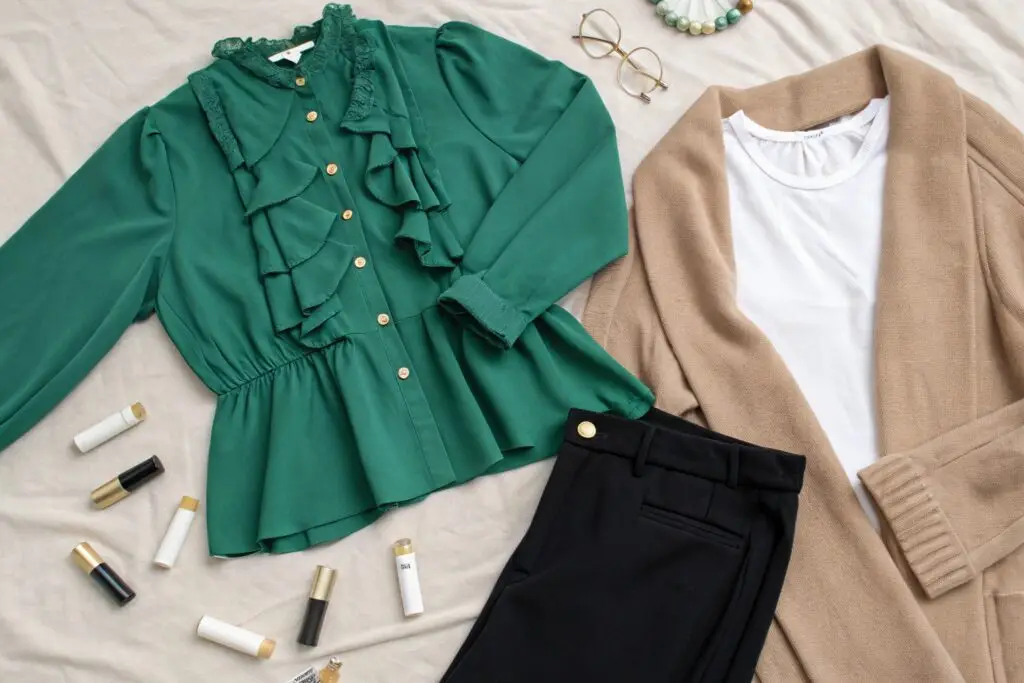
Can a bold garment still be practical?
Yes, but it needs to follow capsule rules:
- Clear focal point: Should draw attention without overpowering the outfit
- Controlled palette: Even if textured or printed, it should align with your capsule colors
- Multipurpose: Must pair easily with at least 3–4 other items in the collection
- Classic base silhouette: Unusual detail on a timeless frame works best
Let me show you examples:
| Statement Type | Capsule-Friendly Version | Avoid This |
|---|---|---|
| Printed Blazer | Neutral-toned check in tailored cut | Neon animal print, boxy fit |
| Textured Skirt | Subtle pleats in earthy satin | Crinkled metallic tulle |
| Color Pop Top | Clean shape in solid jewel tone | Ruffled neon crop top |
| Unique Closure | Wrap blouse with diagonal buttons | Backless tie-up top |
The key is balance. If the silhouette is classic, then the texture can be adventurous. If the color pops, then the shape should stay grounded. That’s how statement pieces earn their place in a capsule.
Balancing Bold Design with Mix-and-Match Versatility
It’s tempting to go “all out” on your hero piece—but overdesign kills the capsule mood. In our factory, we always advise: bold doesn’t mean busy.
To keep a statement garment mix-friendly, focus on one design highlight—either cut, color, or texture—not all three at once.
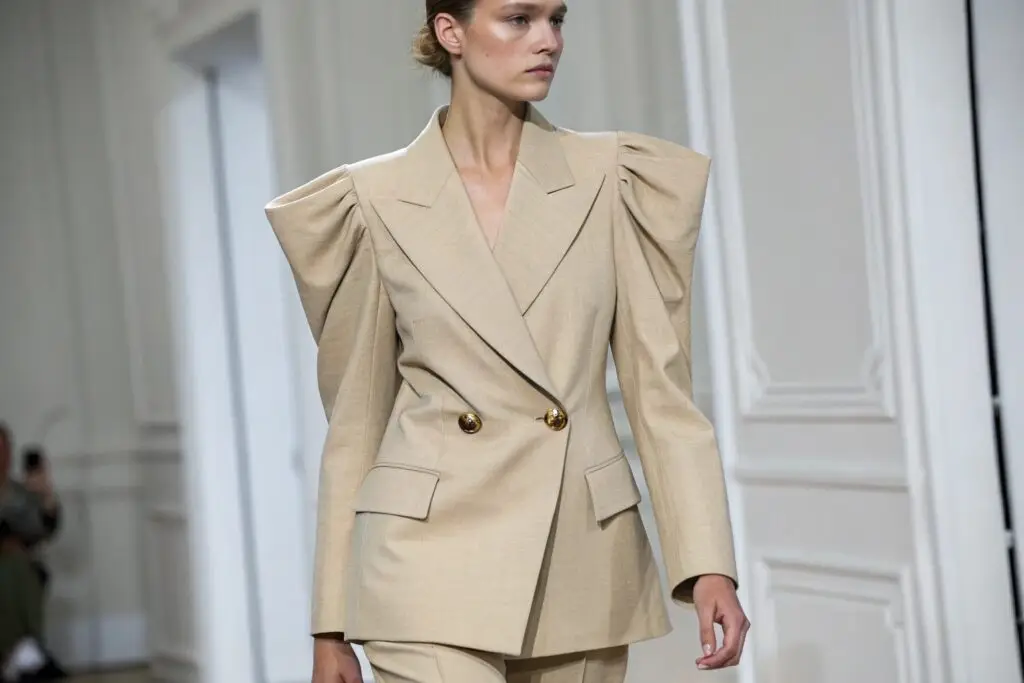
How do we keep boldness wearable?
Here’s how I guide buyers and designers alike:
- Anchor the piece with one capsule trait: A bold color? Then neutral fabric. A dramatic cut? Then basic tone.
- Use symmetry and clean lines: It helps even the boldest piece feel structured and wearable.
- Avoid gimmicks: Statement doesn’t mean trend-chasing. Design details should feel intentional, not seasonal.
Here's a cheat sheet I often use:
| Bold Element | Capsule-Compatible Rule | Example |
|---|---|---|
| Dramatic Sleeve | Keep body minimal and neckline clean | Bell-sleeve tee in solid color |
| Bright Color | Use classic shape | Red sheath dress |
| Rich Texture | Pair with structured silhouette | Velvet blazer with tailored waist |
| Print or Pattern | Stick to capsule’s base tones | Navy check trousers in capsule navy/white |
And don’t forget—buyers want outfits. If your statement top only goes with one skirt, it’s not a capsule piece. If it works with denim, a slip skirt, and tailored pants? Now we’re talking.
How to Use Color and Texture for Subtle Impact
When loud prints don’t fit your aesthetic, texture and tone can be your best tools for adding edge. This is how many of our capsule clients build statement power without losing refinement.
Understated accents—like suede, pleats, or monochrome sheen—can turn basic cuts into statement pieces that still blend effortlessly.
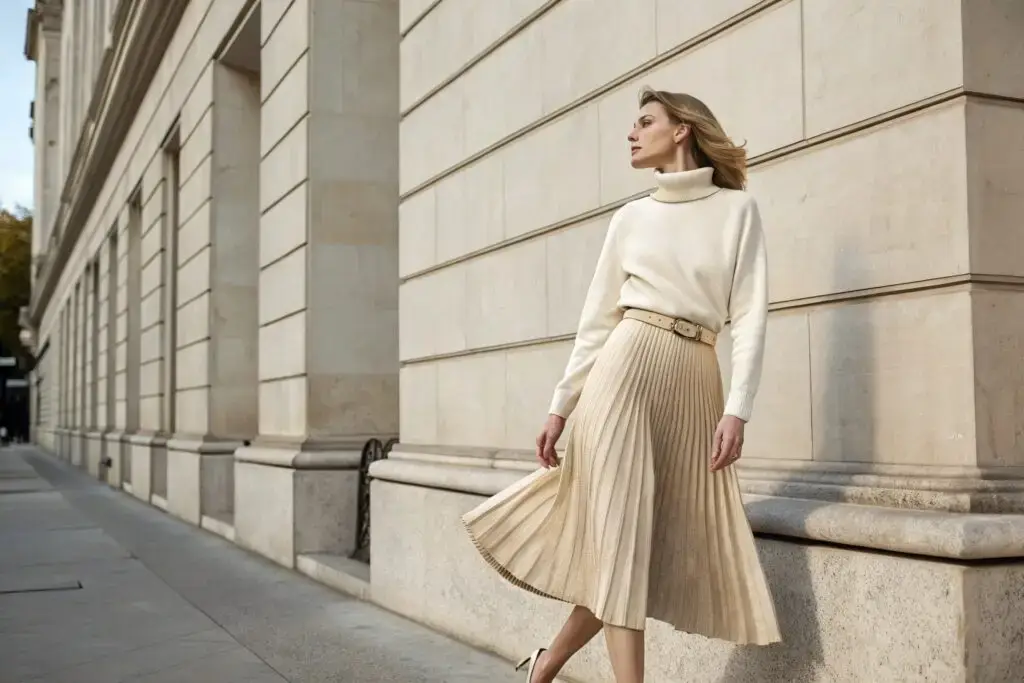
How can texture speak louder than color?
Think of these tricks:
- Same color, different surface: Matte vs. gloss. Woven vs. brushed.
- Layered tonalities: A forest green mesh over emerald base creates richness without introducing new colors.
- Strategic contrast: Mix smooth jersey with grainy crepe for an upscale twist.
I always recommend this approach when buyers say, “We want to stand out but still sell basics.” Texture gives you quiet boldness.
Here's a texture impact map:
| Texture Type | Best Use in Capsule | Fabric Suggestion |
|---|---|---|
| Micro-rib | Adds movement to solid tees | Modal blend |
| Matte satin | Elevates slip skirts or dresses | Stretch charmeuse |
| Raw hem denim | Subtle edge in pants or jackets | Mid-weight cotton denim |
| Brushed twill | Adds depth to structured pieces | Cotton-tencel blend |
Capsule customers love owning “that one piece” that looks standard until they wear it—and someone says, “That fabric’s amazing. Where did you get it?”
Can One Standout Item Anchor the Whole Collection?
In capsule theory, less is more. So one strong piece can become the hero, the visual hook of your whole drop. But only if it echoes the collection’s style DNA.
A standout piece becomes the capsule’s center if it defines the tone, anchors the palette, and embodies the season’s energy.
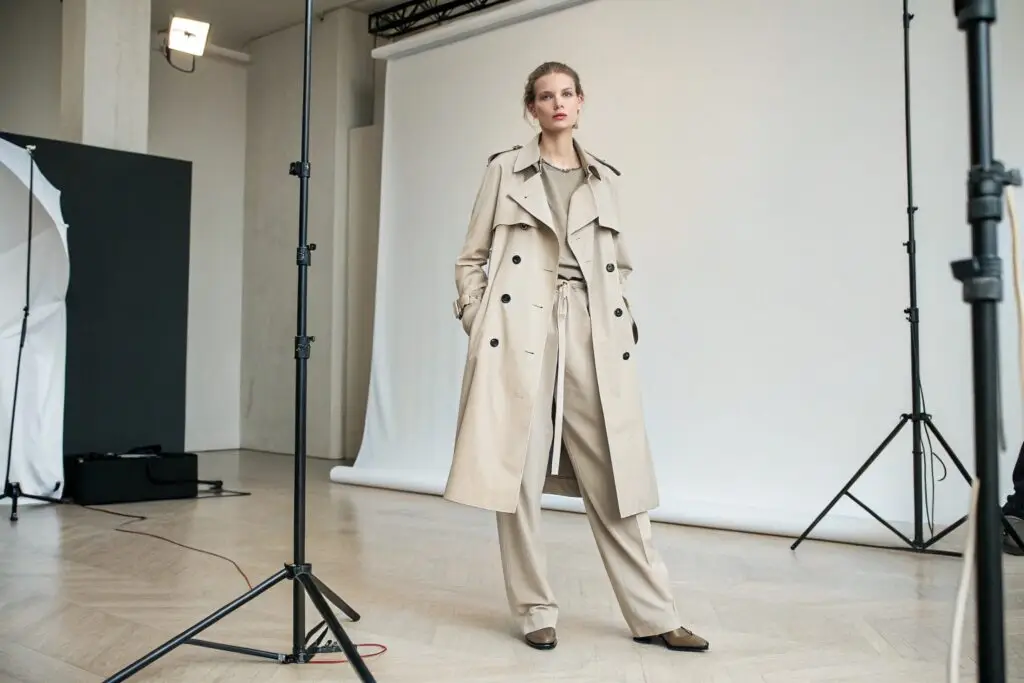
What makes a hero item feel central?
When I guide clients through hero design, I tell them:
- It should carry your theme: Is your capsule “urban romance”? Then your hero might be a structured trench with soft draping.
- It should preview your palette: At least 2–3 of the capsule’s key colors should appear in or work with the hero piece.
- It should inspire multiple looks: Pair it with both casual and dressy items to create day-to-night transformations.
Think of the hero item like your brand’s cover image. Even if the rest of the collection is quiet, this one piece holds the viewer’s eye—and tells the whole story.
Here’s how I evaluate hero readiness:
| Hero Checklist | Must-Have Feature |
|---|---|
| Color Linkage | Matches 2–3 other pieces |
| Style Consistency | Reflects the mood of collection |
| Layering Flexibility | Works under or over 2+ outfits |
| Retail Visual Appeal | Looks strong in promo photos |
If you’re launching a 10-piece drop, that standout blouse, wrap dress, or cropped jacket might be the piece people remember. So make it count—but don’t let it overshadow the whole line.
Conclusion
Statement pieces don’t need to shout. In a capsule, they whisper with purpose—through shape, texture, or silhouette—guiding the customer toward a confident, cohesive wardrobe.