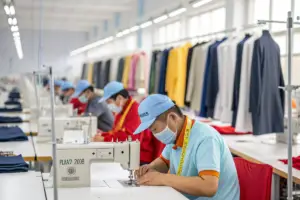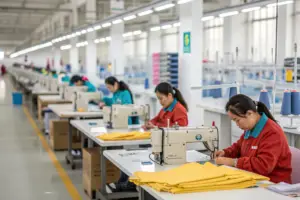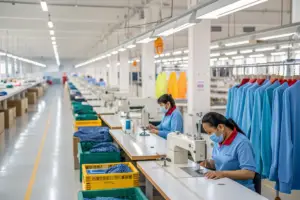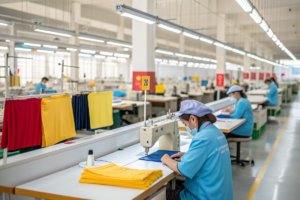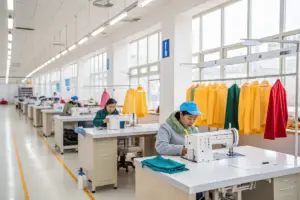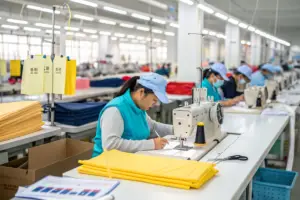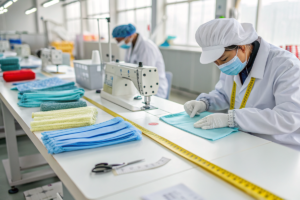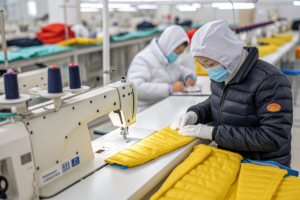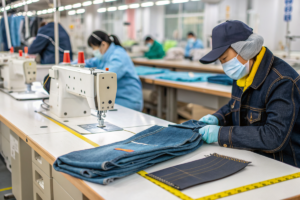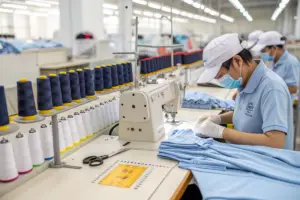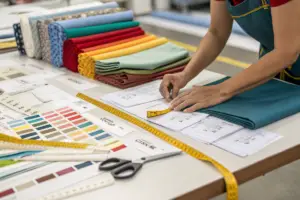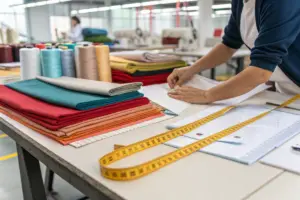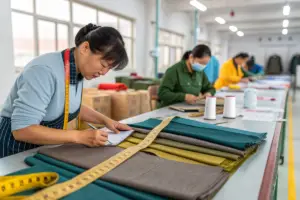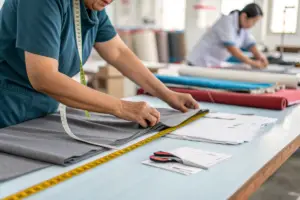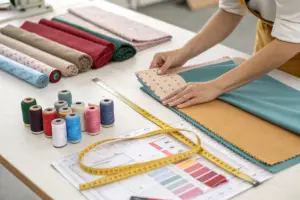
In the spring of 2024, a womenswear brand owner from Vancouver came to me with a problem that was threatening her Fall launch. She had been working with a factory that required her to nominate her own fabric suppliers. She spent three weeks emailing mills, requesting swatches, comparing prices, and negotiating minimums. She finally selected a mill, placed the fabric order, and waited. The mill quoted a four-week delivery. The delivery took six. The fabric arrived at the factory, failed inspection for shade variation, and had to be returned for re-dyeing. By the time compliant fabric reached the cutting table, eight weeks had passed since her original purchase order. Her Fall production was compressed into a four-week window. Her shipment was three weeks late. Her retail delivery window was missed. She sat in my office and asked, "Is there a way to make fabric just appear when I need it, without me having to become a textile sourcing expert?" The answer is in-house fabric sourcing.
Shanghai Fumao's in-house fabric sourcing reduces lead times for custom orders by eliminating the three-to-six-week period that brands typically spend searching for, negotiating with, and waiting for independent fabric suppliers. We maintain a pre-vetted network of mills with negotiated pricing, reserved capacity, and established quality standards. When a brand places a custom order, our fabric team selects the appropriate mill from our network, issues the purchase order on our existing commercial terms, and manages the entire procurement, inspection, and approval process internally. The brand receives a single production timeline that includes fabric sourcing as an integrated step, not a separate, brand-managed project.
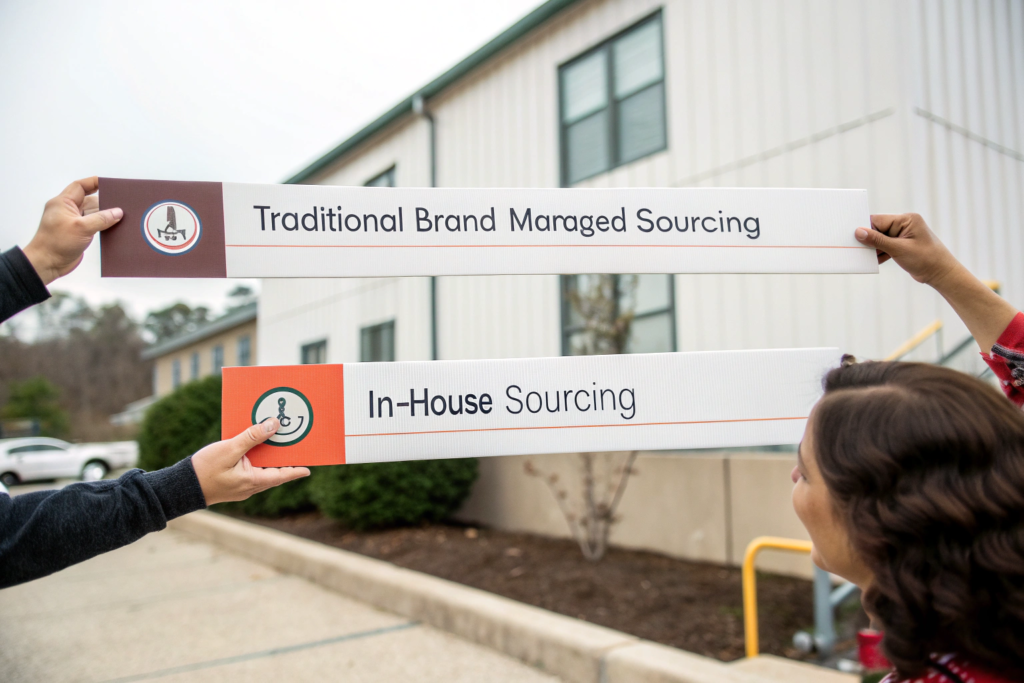
The traditional model, where the brand sources fabric and the factory only provides cut-and-sew labor, is slow. It is slow because the brand is an occasional fabric buyer, not a volume fabric buyer. The brand does not have established credit with mills. The brand does not have a fabric inspection department. The brand does not know which mills are reliable and which mills overpromise. The brand learns these lessons one delayed shipment at a time. In our model, the fabric sourcing is done by our dedicated team, who buy fabric every day, who know the mills personally, and who inspect fabric as a core operational function. The time savings are not theoretical. They are measured in weeks on every custom order. Let me explain exactly how the system works and where the time is saved.
What Are the Time Drains in Traditional Fabric Sourcing That In-House Teams Eliminate?
The traditional fabric sourcing timeline begins when the brand has a design and needs fabric. The brand does not know which mill makes the specific fabric quality they need. They search online, attend trade shows, or ask their network. This mill identification phase consumes one to two weeks. The brand then contacts the mill, requests a quote, negotiates price and minimums, and requests a lab dip. This negotiation and sampling phase consumes another one to two weeks. The mill then produces the fabric, which takes three to four weeks. The fabric ships to the factory, another one to two weeks. The factory receives the fabric and inspects it. If the fabric passes, it moves to cutting. If it fails, the process restarts. The total brand-managed fabric sourcing timeline is six to ten weeks, and the brand has spent dozens of hours managing a process that is not their core competency.
In-house fabric sourcing eliminates the mill search time because the factory's sourcing team already has a qualified mill for every fabric type in its network. It eliminates the negotiation time because pricing, payment terms, and quality standards are pre-negotiated under umbrella agreements. It eliminates the separate fabric shipping time because the factory orders fabric to its own receiving dock on its own logistics account. It eliminates the inspection delay because the factory's in-house inspection team processes incoming fabric as a standard receiving operation. The total in-house sourcing timeline, from purchase order to fabric ready for cutting, is three to four weeks, compared to six to ten weeks in the traditional model. The time savings are three to six weeks per order.
At Shanghai Fumao, my fabric sourcing team consists of four people who do nothing but source fabric. They maintain relationships with over 40 mills across China, covering wovens, knits, denim, and specialty fabrics. They negotiate umbrella agreements annually, not per order. They visit mills quarterly to audit quality and capacity. When a brand partner needs fabric for a custom order, the team knows within hours which mill can supply it, at what price, and on what timeline. Here is how the mill search and lab dip processes compare.
How Does a Pre-Vetted Mill Network Eliminate the Supplier Search Phase?
A brand sourcing fabric independently begins with a search. They type "organic cotton twill manufacturer" into Google or Alibaba. They receive dozens of responses. They must vet each one, request samples, compare pricing, and assess reliability. This process is time-consuming and the outcome is uncertain. The brand may select a mill that looks credible online but delivers poor quality or misses deadlines.
Our in-house team does not search. They consult a database of mills that we have already vetted through multiple production orders. The database includes the mill's specialty, their typical lead times, their pricing tiers, their quality history with us, and their current capacity status. When a brand requests a specific fabric, we match the specification to the appropriate mill in our database and issue the purchase order. The search phase is eliminated entirely. The time from fabric requirement identification to purchase order issuance is measured in hours, not weeks. The reliability risk is also eliminated because we only work with mills that have proven their performance over time.
Why Does In-House Lab Dip Management Accelerate Color Approval?
Lab dip approval is the process of matching the brand's desired color on the specific fabric quality. The mill dyes a small swatch, sends it to the brand, the brand reviews it under standardized lighting, and either approves it or requests adjustments. In a traditional model, the brand manages this process directly with the mill. The brand emails the mill, the mill produces the lab dip, the mill ships the lab dip to the brand, the brand reviews it, the brand emails feedback. Each round-trip takes one to two weeks. Multiple rounds are common.
In our in-house model, the mill produces the lab dip and sends it to our office, not to the brand overseas. We receive it within one to two days. We conduct an initial review under our D65 light booth, comparing the lab dip against the brand's Pantone reference and our own quality standards. If the lab dip is clearly off, we reject it immediately and request a revision from the mill without involving the brand. We only forward lab dips to the brand that have passed our internal review. The brand receives a pre-qualified lab dip that is more likely to be approved on the first submission. The number of trans-Pacific lab dip shipments is reduced. The color approval cycle is compressed from two to three rounds over two to three weeks, to one to two rounds over one week.
How Does Bulk Fabric Reservation Reduce Lead Times for Repeat Orders?
The longest lead time in custom garment production is not the sewing. It is the fabric. For a first-time order with a new fabric quality, the mill lead time is unavoidable. The yarn must be sourced or spun, the fabric must be woven or knitted, and the dyeing and finishing must be completed. For a repeat order of the same fabric quality, the mill lead time can be eliminated entirely through bulk fabric reservation.
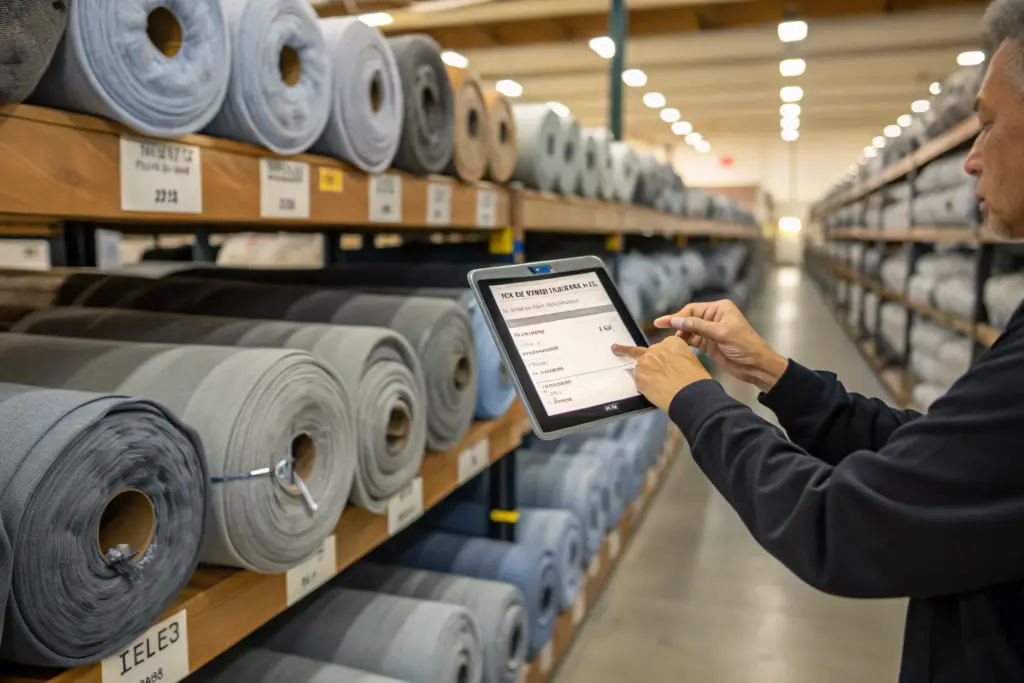
Bulk fabric reservation means that Shanghai Fumao purchases and holds greige or finished fabric inventory for a brand's confirmed repeat orders. When the brand places a repeat purchase order, the fabric is already in our warehouse. The mill lead time of three to four weeks is eliminated. The fabric moves from our inventory shelf to the cutting table within 24 hours of order confirmation. The total order lead time for a repeat style drops from six to eight weeks to two to three weeks. The brand can reorder best-selling styles during the season and receive them before the selling window closes.
This capability is only possible when the brand and the factory have a forecasting relationship. The brand shares a rolling forecast of expected repeat orders. The factory reserves fabric against that forecast. If the forecast is accurate, the fabric is waiting when the order arrives. If the forecast changes, the reserved fabric can often be reallocated to other orders or absorbed into our general inventory. The brand is not financially committed to the fabric until the purchase order is issued, but the fabric is physically committed and ready. Here is how the reservation system works and how it interacts with stock fabric programs.
What Is the Difference Between Reserved Fabric and Stock Fabric Programs?
Reserved fabric is fabric purchased specifically for a particular brand's forecasted orders. It is held in our warehouse with the brand's name on it. It is dedicated inventory. Stock fabric is fabric that we purchase for our general inventory, available to any brand partner who needs a core fabric quality in a core color. A brand that designs into our stock fabric program can begin production immediately, with zero fabric lead time.
The two programs serve different needs. Reserved fabric is for brands with consistent, predictable volume in specific fabric qualities that are unique to their collection. Stock fabric is for brands that are willing to design into our available fabric palette in exchange for maximum speed. A brand launching a new collection can use stock fabric for the core basics and reserved fabric for the hero styles that require a unique fabric. The combination of the two programs allows the brand to balance speed and differentiation.
How Does a Rolling Forecast Enable Fabric Reservation Without Financial Risk?
A rolling forecast is not a purchase order. It is a planning document that states the brand's expected fabric consumption for the next three to six months. We use this forecast to reserve fabric with our mills. We place a fabric purchase order based on the forecast, using our own working capital. The fabric arrives in our warehouse and is tagged for the brand's upcoming orders.
If the brand issues the expected purchase orders, the fabric is consumed and invoiced as part of the garment cost. If the brand's orders are lower than forecasted, the excess fabric may be charged to the brand at cost, or we may absorb it into our stock program if it is a core quality, or we may negotiate a shared absorption. The specific terms are agreed in the manufacturing agreement. The key principle is that the brand shares a forecast in good faith, the factory reserves fabric to support the brand's speed requirements, and both parties share the risk of forecast inaccuracy in a pre-agreed, fair manner. A brand that provides an accurate forecast receives fabric on demand. A brand that provides no forecast waits for mill lead times.
How Does In-House Fabric Inspection Prevent the Biggest Cause of Production Delays?
The single biggest cause of production delays in garment manufacturing is fabric that fails inspection after it has already been cut, or worse, after the garments have been sewn. The fabric arrives at the factory. The brand or the factory trusts the mill's certificate and releases the fabric to cutting without a thorough inspection. The fabric has a hidden defect, a shade band, a bar mark, a width variation. The defect is discovered after cutting, or after sewing, or worst of all, during a pre-shipment inspection when the entire order is packed and ready to ship. The order must be re-cut, re-sewn, or the fabric must be returned to the mill. The delay is measured in weeks.
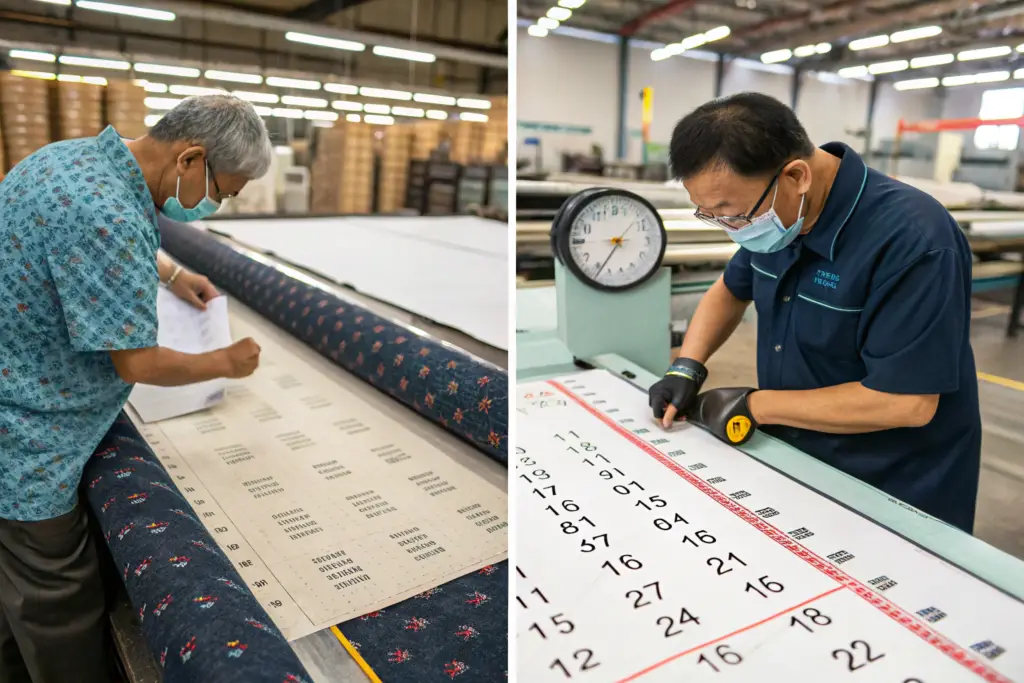
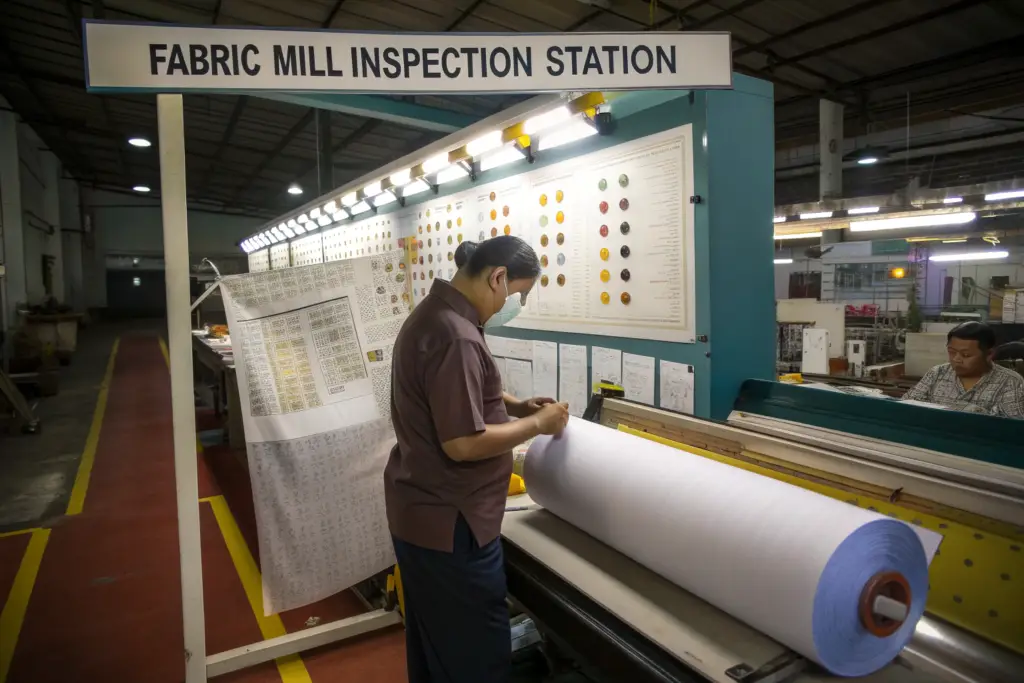
Shanghai Fumao's in-house fabric inspection inspects 100% of incoming fabric before it is released to the cutting room. Every roll is checked for visual defects on a backlit inspection table. Every roll is checked for shade continuity against the approved lab dip under a D65 light booth. Every roll is checked for weight, width, and hand feel against the specification sheet. Rolls that pass are released to inventory. Rolls that fail are quarantined and returned to the mill or held for a concession decision by the brand. This inspection gate catches defects before they enter production, eliminating the most common and most costly cause of production delays.
A fabric defect caught at inspection costs the mill a returned roll and the factory a minor scheduling adjustment. A fabric defect caught after cutting costs the factory the wasted fabric, the wasted cutting labor, and the production rescheduling. A fabric defect caught after sewing costs the factory the entire garment cost and a missed delivery date. The inspection investment is a fraction of the cost of a post-sewing defect discovery. Here is how we inspect and what happens when a roll fails.
What Does 100% Fabric Inspection Look Like in Practice?
Every fabric roll that arrives at our receiving dock is assigned a unique receiving number. The roll is moved to the fabric inspection area. An inspector loads the roll onto an inspection machine, a motorized table that unrolls the fabric over a backlit glass panel. The light passes through the fabric, revealing any holes, thin spots, slubs, or bar marks that would be invisible on a tabletop. The inspector watches the fabric as it passes over the light, marking defects with a chalk pencil or a small sticker.
After the visual inspection, the inspector cuts a swatch from the end of the roll. The swatch is compared to the approved lab dip under a D65 light booth. The inspector checks for shade continuity, ensuring the roll matches the approved standard and matches adjacent rolls from the same dye lot. The inspector measures the fabric width at multiple points along the roll, records the weight using a GSM cutter and scale, and assesses the hand feel against the reference swatch. The results of all checks are recorded in our fabric inspection database. The roll is assigned a pass, pass with concession, or fail status.
How Are Failed Fabric Rolls Handled to Minimize Timeline Impact?
A roll that fails inspection is immediately moved to a designated quarantine rack, physically separated from approved inventory. The failure is documented with photographs and a description of the defect. Our fabric sourcing team contacts the mill within 24 hours. The conversation is specific: "Roll number XYZ, 85 meters, failed for shade variation. Reference photo attached. We require a replacement roll shipped by Friday, or we will dye this roll locally and debit the cost."
The mill's response depends on the severity of the defect and the availability of replacement fabric. If a replacement roll is available, we prioritize its shipment. If a replacement is not immediately available, and the defect is minor, we may request a concession from the brand. The brand reviews the defect photo and decides whether to accept the fabric with a discount, or wait for a replacement. The decision is made within hours, not days. The fabric either moves to cutting with an approved concession, or a replacement roll is expedited. The key is that the failure is identified and resolved before the fabric reaches the cutting table. The production schedule is adjusted, but it is not broken.
How Does Fabric Sourcing Integration with Pattern Making Improve First-Sample Accuracy?
Fabric is not a passive material. It stretches, drapes, shrinks, and behaves differently depending on its fiber content, weave, and finish. A pattern that is perfect for a rigid cotton twill will produce a garment that is too large when cut in a stretch cotton sateen. A pattern that fits a lightweight rayon challis will be too tight when cut in a heavier wool crepe. The pattern must account for the fabric's specific properties. When the fabric sourcer and the pattern maker work in the same facility, sharing fabric data before the pattern is finalized, the first sample is significantly more accurate.
In-house fabric sourcing enables the pattern maker to access the actual production fabric, with its exact stretch percentage, shrinkage rate, and drape characteristics, before drafting the pattern. The pattern is engineered for the specific fabric, not for a generic approximation. The first sample fits the brand's fit model more accurately. The number of sample iterations required to achieve fit approval drops from three or four to one or two. Each eliminated sample iteration saves one to two weeks of development time. The cumulative time savings from improved first-sample accuracy, combined with the fabric sourcing lead time reductions, can compress the total development and production timeline by four to eight weeks compared to a traditional brand-managed fabric sourcing model.
At Shanghai Fumao, my pattern-making team and fabric sourcing team sit on the same floor, 20 meters apart. When a new fabric arrives for sampling, the pattern maker walks to the fabric inspection area, cuts a swatch, performs a stretch and shrinkage test, and inputs the data into the pattern software. The pattern is adjusted for the fabric's specific properties before the first sample is cut. This integration is only possible when fabric sourcing and pattern making are managed by the same team in the same facility. A factory that receives fabric from a brand's nominated mill does not have this integration opportunity. Here is how fabric data is shared and why the first sample fit is so much better.
How Are Stretch and Shrinkage Data Communicated to the Pattern Team?
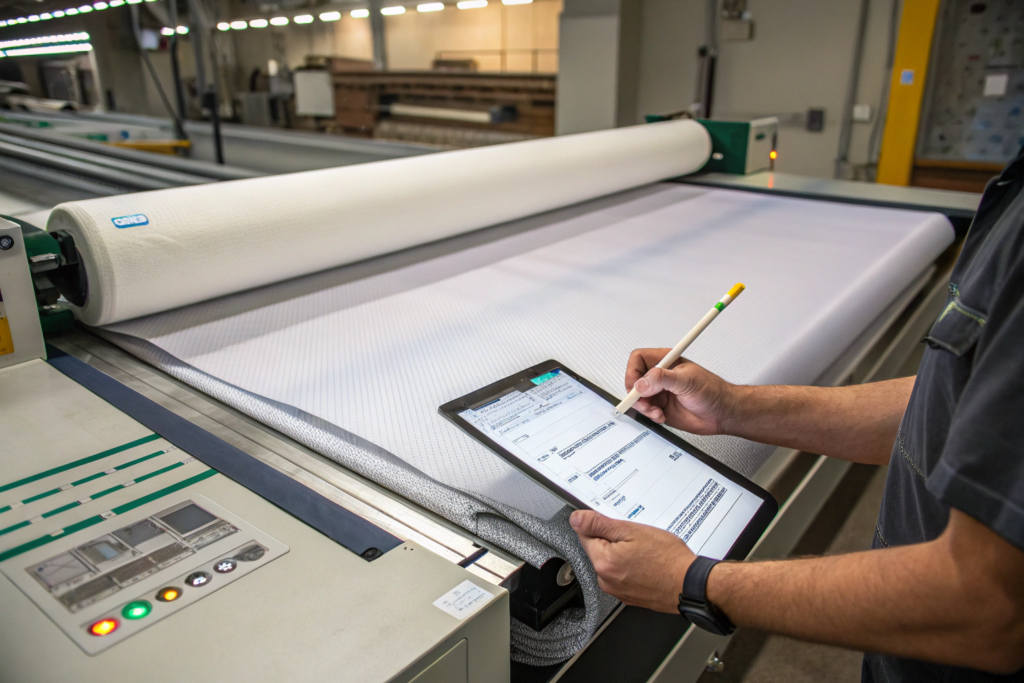
When a new fabric arrives in our facility, our fabric technician performs a series of standardized tests. The stretch test measures the percentage of stretch in the warp and weft directions under a specified load. The shrinkage test measures the dimensional change after a standard wash and dry cycle. The drape test measures the fabric's bending stiffness. This data is recorded on a fabric technical data sheet.
The technical data sheet is provided to the pattern maker before the pattern is drafted. The pattern maker inputs the stretch percentage into the CAD software, which automatically adjusts the pattern ease to compensate. A fabric with 5% stretch requires less wearing ease than a fabric with zero stretch. The pattern maker inputs the shrinkage percentage, and the pattern is adjusted to account for the expected post-wash dimensional change. The fabric properties are engineered into the pattern from the start. The first sample is cut from the actual production fabric, not from a substitute, and the pattern has been adjusted for that fabric's specific behavior. The result is a first sample that fits closer to the target than a sample made from a generic pattern and an uncharacterized fabric.
Why Does the First-Sample Fit Improve So Dramatically with Integrated Sourcing?
In the traditional model, the brand sources fabric, sends it to the factory, and the factory cuts the first sample. The factory does not know the fabric's stretch or shrinkage until the fabric arrives. The first sample is often cut from a substitute fabric because the actual fabric is still being sourced or is in transit. The substitute fabric has different properties. The first sample fit is inaccurate. The brand provides fit comments. The factory adjusts the pattern. The second sample is cut from the actual fabric, and the fit is still off because the pattern was developed on the substitute. The iteration cycle is long and frustrating.
In the integrated model, the actual production fabric is available at the start of the pattern-making process. The pattern is developed for that specific fabric. The first sample is cut from that fabric. The fit is accurate on the first attempt. The time and cost of multiple sample iterations are eliminated. The brand receives a sample that fits, approves it quickly, and production begins. The development calendar is compressed. The production calendar is protected. The delivery date is met. The integration of fabric sourcing and pattern making is the quiet engine that drives speed and quality through the entire development process.
Conclusion
In-house fabric sourcing is not a minor operational detail. It is the structural foundation of fast, reliable custom garment production. It eliminates the brand's fabric search time. It accelerates lab dip approval. It enables fabric reservation for repeat orders. It catches fabric defects before they enter production. It integrates fabric data with pattern making to improve first-sample accuracy. The cumulative effect is a production timeline that is three to six weeks shorter than the traditional brand-managed fabric sourcing model, with fewer delays, fewer surprises, and fewer midnight emails about fabric that did not arrive.
At Shanghai Fumao, I built our in-house fabric sourcing capability because I saw that fabric was the root cause of most production delays. The sewing is not the problem. The cutting is not the problem. The fabric is the problem. The factory that controls its fabric supply chain controls its production timeline. The brand that partners with a factory that has in-house fabric sourcing delegates the most time-consuming and risk-laden part of garment production to the team best equipped to manage it.
If your fabric sourcing process is consuming weeks of your development calendar, or if a fabric delay has ever caused you to miss a retail delivery window, let us show you how in-house fabric sourcing works in practice. We can walk you through our mill network, our inspection process, and our fabric reservation program. Reach out to our Business Director, Elaine, at elaine@fumaoclothing.com. The fabric should be waiting for the order. The order should not be waiting for the fabric.