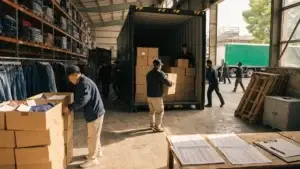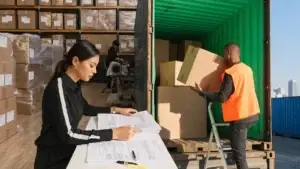
The PDF landed in your inbox. It had the right logo. The right signatures. The right stamp. Three months later, your shipment was seized at the Port of Long Beach because the certificate was a Photoshop file purchased for fifty dollars. I have spoken to brand owners who lost entire seasons to this nightmare. One women's apparel entrepreneur told me she wired a $40,000 deposit to a supplier who provided a complete set of "verified" compliance documents. The certificates looked perfect on screen. The factory did not exist. The money disappeared, and the brand's fall collection launched with gaping holes in the inventory plan.
Shanghai Fumao reduces the risk of falsified certificates by providing a multi-layered verification system that includes real-time database cross-checking of all certification numbers, a direct relationship with third-party auditing bodies, a transparent digital document trail accessible to buyers, and a standing invitation for independent verification at any point in the production cycle. We treat certificate authenticity as a buyer's right, not a factory's favor.
Falsified certificates are not a minor compliance issue. They are a direct threat to your brand's legal standing, your customers' trust, and your inventory's ability to clear customs. At Shanghai Fumao, we have built our entire compliance documentation system around the assumption that every certificate will be scrutinized by skeptical buyers and customs authorities. Let me show you exactly how we make falsification impossible.
Why Are Falsified Certificates Such a Pervasive Problem in Apparel Sourcing?
The incentives for falsification are strong and the barriers are low. A genuine BSCI or WRAP audit costs a factory several thousand dollars and requires actual compliance with labor and safety standards. A fake certificate costs an hour of a graphic designer's time. The factory owner who fakes a certificate can win orders from buyers who check the document superficially. The buyer who accepts a fake certificate unknowingly assumes the full legal and reputational risk. The system rewards the fraudster and punishes the diligent buyer who does not verify deeply enough.
Falsified certificates persist because the sourcing industry relies on document-based trust rather than database-verified trust. Buyers accept PDF attachments as proof, and fraudsters exploit this by editing genuine certificates from other factories, creating entirely fake documents, or bribing low-level auditors for "soft" reports that hide violations. The only defense is to move verification from the document to the source database.
How Do Fraudsters Create Convincing Fake Compliance Documents?
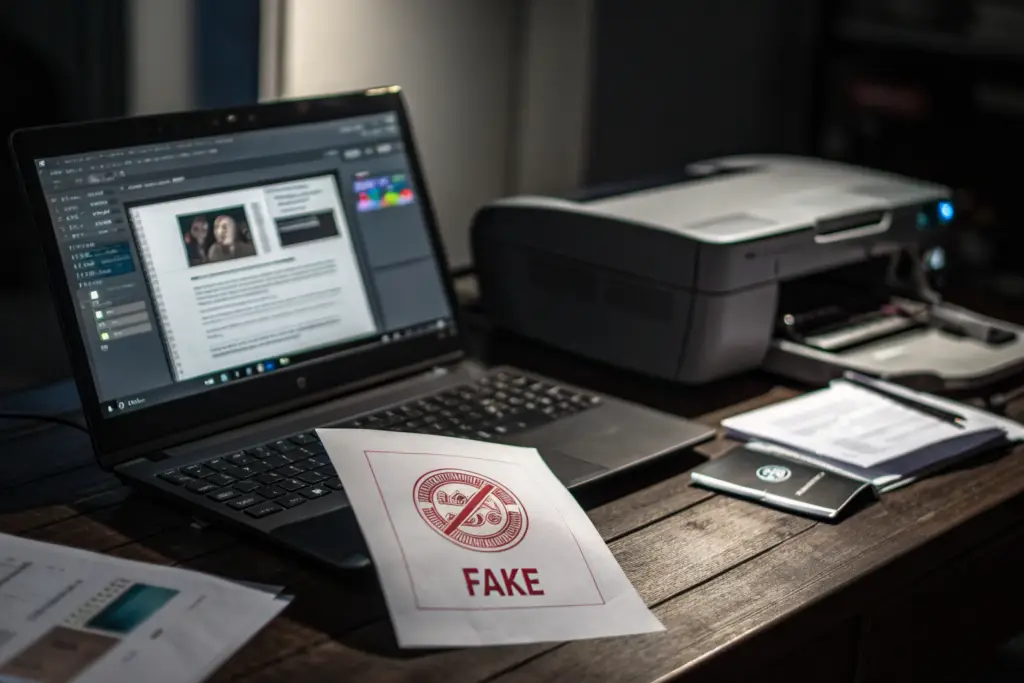
The methods are more sophisticated than most buyers realize. The simplest method is document theft. A genuine audit report from a compliant factory is obtained, often through a shared network or a corrupt employee. The fraudster changes the factory name, address, and certificate number using basic PDF editing software. The auditor's signature, the formatting, and the issuing body's logo are all real because they came from a real document. A buyer who checks only the visual appearance of the PDF will be deceived.
Another method is partial fraud. The factory undergoes a genuine audit but hides a second, non-compliant production facility. The audit report covers the clean facility shown to the auditor. The bulk production happens in the hidden facility with no oversight. The certificate is technically genuine, but the scope is fraudulent. A third method exploits expired certificates. The factory had a valid certification three years ago. They continue to distribute the old certificate with the date cropped out or altered. We have seen cases where a certificate verification was not performed by the buyer because the document "looked official." The problem is that visual inspection of a PDF is not verification. It is theater. Our sourcing partners need to understand that even a third-party audit report must be validated against the issuing body's live database to be trusted.
What Are the Consequences for a Brand Accepting a Falsified Certificate?
Customs seizure is the immediate operational consequence. U.S. Customs and Border Protection scrutinizes documentation for high-risk product categories, and apparel is frequently flagged. If a CBP officer determines a certificate is fraudulent, the shipment is detained. The brand owner faces storage fees, legal costs, and potential forfeiture of the goods. The financial damage from a single detained container can exceed $20,000 in direct costs, plus the lost revenue from undelivered inventory.
The reputational damage is longer-lasting. If a brand is publicly associated with a factory that uses forced labor or unsafe working conditions, the consumer backlash can be immediate and severe. Social media campaigns, retailer delistings, and negative press coverage have destroyed brands that sourced irresponsibly. Even if the brand was deceived by a fake certificate, the court of public opinion rarely distinguishes between complicity and negligence. Legal liability is also evolving. The Uyghur Forced Labor Prevention Act in the United States shifts the burden of proof onto importers. A brand cannot claim ignorance as a defense. They must demonstrate reasonable care in verifying their supply chain. Accepting a PDF certificate without database verification likely fails the reasonable care standard. Working with U.S. Customs compliance requirements demands a higher standard of evidence from manufacturing partners.
What Is Fumao's Real-Time Certificate Verification System?
A static certificate posted on a factory wall or emailed as a PDF is a historical artifact. It proves compliance at the time of the audit, often months in the past. It does not prove current compliance. It does not prove the certificate has not been suspended or revoked. Real-time verification closes this gap by connecting the certificate to the issuing body's live database at the moment of inquiry. This shifts trust from the document to the data.
Our real-time certificate verification system links every compliance document to its source database through a digital chain of custody. When a buyer requests verification, we provide not only the certificate but also the live database URL, the unique identification number, and a screen-shared walkthrough of the verification process on the certifying body's official platform. The buyer confirms the validity independently, with their own eyes, in real time.

How Do We Demonstrate Live Database Verification During Buyer Calls?
When a buyer asks about our BSCI compliance, I do not send a certificate PDF as a first response. I schedule a video call. I share my screen. I navigate to the amfori BSCI platform and enter our DBID number. The buyer watches the database return our current audit status, the audit date, the validity period, and the rating. They see the information populate live from the source. There is no document to Photoshop. There is no opportunity for manipulation.
This process transforms certificate verification from a document exchange into a witnessed event. A buyer recently told me this screen-share verification was the deciding factor in choosing Shanghai Fumao over a competitor. The competitor had sent a professional-looking WRAP certificate PDF. When the buyer asked for the certificate number to verify independently, the competitor delayed for a week and then claimed the number was "confidential." The buyer recognized the stall tactic immediately. Our approach to supplier compliance verification is to make transparency the easiest interaction a buyer has with us. We provide the verification information proactively, before being asked. Our standard onboarding package for new brand partners includes our BSCI DBID, our WRAP certificate number, our SGS lab accreditation details, and direct links to each verification portal. We welcome verification on the first call, the tenth call, and every call in between.
What Technology Prevents Internal Document Tampering?
External verification protects against fake certificates from suppliers. But what prevents an internal employee from altering a document before sending it? Our document management system uses blockchain-verified digital signatures. Every compliance document—audit reports, lab test results, fabric certifications—is stored in a system that generates a unique cryptographic hash at the time of upload. Any subsequent alteration to the document changes the hash. The system logs every access and every change with a timestamp and user identity.
When we send a document to a buyer, the email includes a verification link that checks the document's hash against the stored original. If the document has been altered in any way since upload, the link reports a mismatch. This protects against internal fraud and also against external manipulation if a forwarded document is later edited by an unknown third party. We implemented this system after learning of an industry case where a trading company intercepted a genuine audit report, altered the factory name, and forwarded it to their buyer. The buyer had no way to detect the alteration. Our document integrity system provides that detection. It is not a marketing feature we promote widely because security through obscurity is not a strategy. It is a technical safeguard we have in place and are happy to demonstrate to any partner who asks.
How Do Our Direct Auditor Relationships Eliminate Middleman Fraud?
A trading company or a non-compliant factory fears direct contact between the buyer and the auditor. The auditor might reveal inconvenient truths. The buyer might ask questions the factory cannot control. This fear drives a wedge between the three parties. The factory communicates with the auditor. The trading company communicates with the buyer. The buyer never talks to the auditor. The information gap is where fraud breeds. Eliminating this gap eliminates the opportunity for deception.
Shanghai Fumao maintains direct, documented relationships with our auditing bodies, and we authorize them to communicate directly with our buyers upon request. We do not insert ourselves as a filter between the buyer and the verification source. This means a buyer can contact SGS, Bureau Veritas, or amfori directly, reference our factory identification number, and receive independent confirmation of our compliance status without our involvement.

Can a Buyer Independently Contact Our Auditors?
Yes, and we provide the contact information to make it easy. When a buyer requests verification of our SGS lab test reports, we provide the report number, the testing laboratory location, and the direct phone number and email of the lab manager who oversaw the testing. The buyer can call the lab, quote the report number, and confirm the results independently. We do not need to be on the call. We do not need to "prepare" the lab. The data speaks for itself.
A premium outerwear brand exercised this option last year. They called our SGS lab contact directly and verified the fluorocarbon content test on their DWR fabric. The lab confirmed the results and even offered to re-send the original report from their official email. The brand's compliance officer told us this independent verification was the single most reassuring moment in their sourcing process. They knew, with external certainty, that the fabric met their chemical compliance requirements. This direct access is rare in the industry because many factories and trading companies fear it. We build it into our process intentionally. Our relationships with testing and certification bodies are strong because our compliance is genuine. We have nothing to hide from their scrutiny.
How Do Unannounced Audits Strengthen Certificate Credibility?
An audit scheduled three months in advance allows a non-compliant factory to stage a temporary clean-up. Workers are coached. Unsafe equipment is hidden. Overtime records are falsified. The auditor sees a performance, not a reality. Unannounced audits remove the preparation window. The auditor arrives and sees the factory as it operates every day. A certificate based on an unannounced audit is significantly more credible than one based on a scheduled visit.
We operate on a permanent unannounced audit readiness basis. Our auditors, both from BSCI and our brand partners' independent inspectors, are welcome to arrive at our factory gate with no prior notice. Our compliance manager has standing instructions to grant immediate access, escort the auditor to any area of the facility, and facilitate confidential worker interviews upon request. We do not have an "audit mode." The factory floor you see on a random Tuesday is the same floor you see during an audit. This readiness is the strongest defense against certificate fraud because it eliminates the gap between audited conditions and daily conditions. A social compliance audit that reflects genuine daily practice cannot be falsified. It is simply a documentation of reality. We encourage buyers to send their own auditors unannounced. The consistency between our third-party audit reports and our buyer-directed audit reports is the ultimate proof of authenticity.
How Can a Buyer Build a Personal Verification Protocol?
Relying on a supplier's word is not a strategy. Relying on a PDF is not verification. A buyer who is serious about eliminating falsified certificate risk must build a personal, repeatable verification protocol. This protocol is a set of actions the buyer takes independently, without depending on the supplier's cooperation beyond basic information provision. A supplier that resists any step in the protocol is a supplier that should be disqualified.
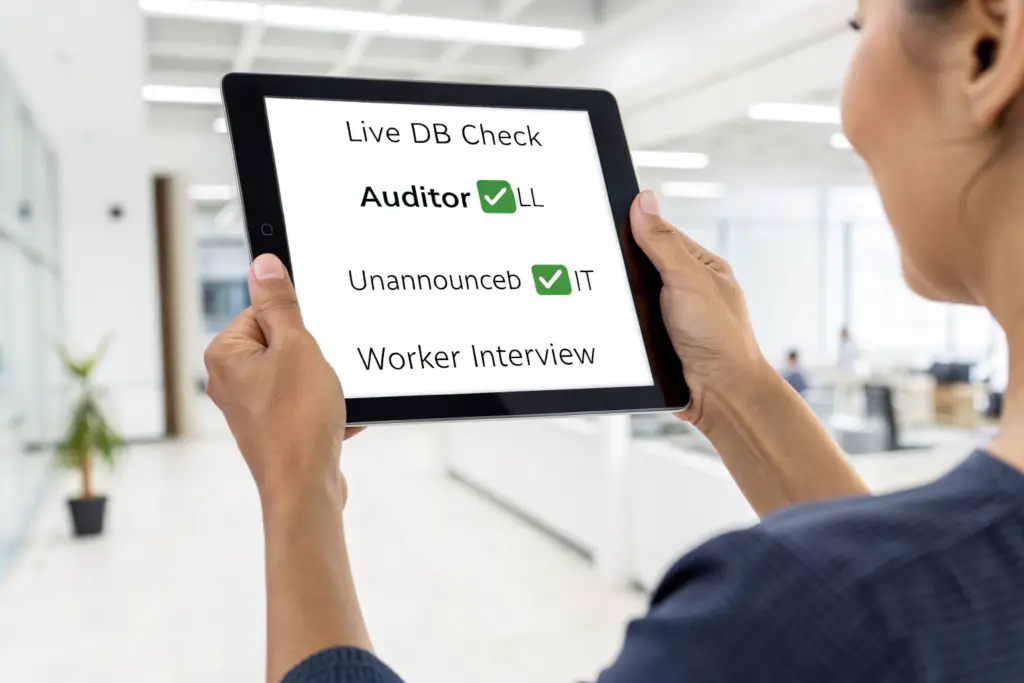
A personal certificate verification protocol consists of five steps: request the certificate's unique identification number, not just the document; verify that number on the issuing body's live public database; contact the issuing body or auditor directly for independent confirmation; cross-reference the certificate's factory address with a live video call showing the same address; and verify worker interview availability for your own visit or a trusted third-party inspector. A genuine factory passes all five steps. A fraudulent one fails by step two.
What Is the Five-Minute Certificate Validation Any Buyer Can Perform?
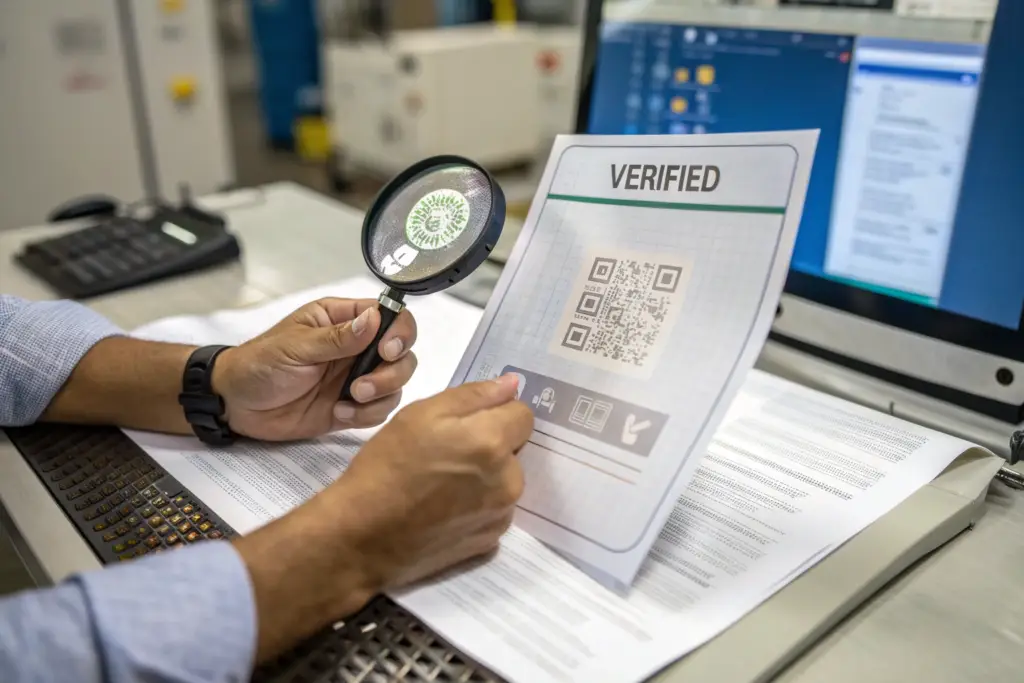
You do not need specialized software or industry connections to catch most fake certificates. You need internet access and five minutes. When a supplier sends you a BSCI certificate, locate the DBID number on the document. Open the amfori BSCI public platform. Enter the number. If the database returns no result, the certificate is fake. If the database returns a result with a different factory name or address, the certificate is stolen. If the database shows an expired validity date, the certificate is obsolete. This check takes five minutes and eliminates the majority of falsified documents.
The same process works for WRAP certificates on the WRAP compliance directory, for GOTS certifications on the Global Organic Textile Standard database, and for OEKO-TEX certificates on the OEKO-TEX label check. Every legitimate certification body maintains a public verification database. A supplier who provides a certificate without a verifiable number, or whose number does not appear in the database, is presenting fraudulent documentation. There is no exception to this rule. We train our sales team to provide certificate numbers proactively because we want buyers to perform this five-minute check. It builds trust faster than any sales conversation. Familiarity with certification databases is a core competency for any modern apparel buyer.
How Should a Buyer Cross-Reference the Factory Address During a Video Call?
A certificate lists a factory address. A fake supplier can copy a real address from Google Maps. During a video call, ask the person holding the camera to walk outside the factory building and show the street sign or building number. If the address on the certificate is "No. 88, Changjiang Road," the street sign in the video must show "Changjiang Road" and the building number must be visible. Ask them to pan the camera to show a recognizable landmark that appears on the satellite view of the address.
I have guided buyers through this verification on calls with Shanghai Fumao. We walk outside, show the street sign, and pan to the surrounding buildings. The buyer can pull up Google Maps or Baidu Maps, verify the satellite imagery matches the video, and confirm the certificate address is real and correct. This cross-reference cannot be faked with a pre-recorded video because the buyer controls the instructions in real time. "Walk left and show me the building entrance." "Zoom in on the company nameplate." These interactive commands force a live, physical presence at the claimed address. A supplier who refuses this request, citing "privacy" or "security," is almost certainly not at the address on their certificate.
Conclusion
Falsified certificates thrive in darkness. They survive because buyers accept documents at face value, because the distance between sourcing offices and factory floors feels unbridgeable, and because fraudsters exploit the gap between what is claimed and what is verified. The solution is not more complex certificates with more holograms. The solution is a sourcing culture that treats independent, real-time verification as a standard operating procedure, not an extraordinary demand.
At Shanghai Fumao, we have built our compliance transparency around this reality. Our real-time database verification during video calls, our blockchain document integrity system, our direct auditor access policy, and our permanent unannounced audit readiness are all designed to make verification effortless for our brand partners. We do not ask for trust. We provide the tools to verify. We do not send a certificate and hope you accept it. We share a screen and walk you through the database entry.
If certificate fraud has burned you in the past, or if the fear of it is paralyzing your sourcing decisions, let us show you how a transparent manufacturer operates. Reach out to our Business Director, Elaine, at elaine@fumaoclothing.com. Request a compliance verification call. We will share our screen, show you our live database entries, give you our auditor contact information, and walk you outside to show you the street sign. Verify everything. That is exactly what we want you to do.