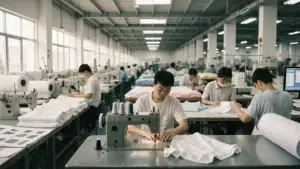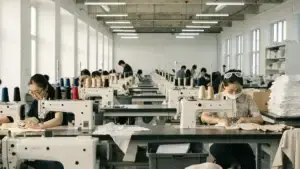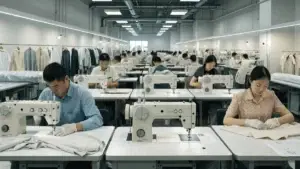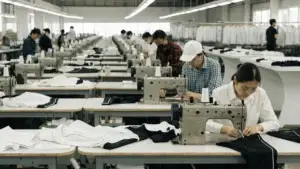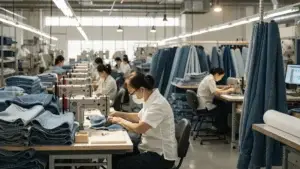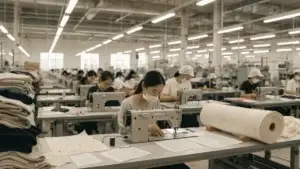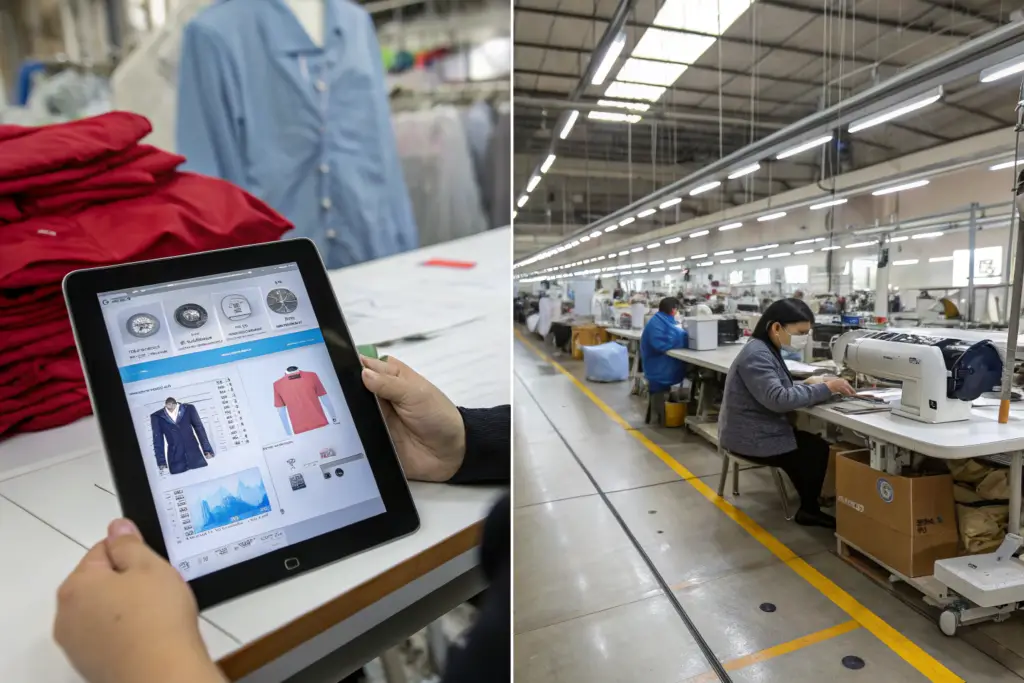
Three years ago, a brand owner from Portland flew to a factory in another Asian country to audit a supplier who had promised a capacity of 15,000 units per month. The sales presentation was flawless. The factory profile showed five production lines and a modern machinery list. When he arrived, he found three lines running. Two were completely empty, the machines gathering dust. The "modern machinery list" included machines that had been sold off two years earlier but remained on the inventory spreadsheet. The factory's real capacity was closer to 6,000 units per month. The brand had already placed a purchase order for 12,000 units with a 60-day delivery window. The order shipped 40 days late, and the brand lost their spring retail placement entirely. This story repeats itself across the industry because brands trust what factories tell them instead of verifying what factories can actually do.
Assessing a garment factory's true production capacity requires physical verification of three operational layers: the machine count and condition on the production floor, the current work-in-progress volume and its alignment with claimed output, and the shift schedule correlated with worker headcount and attendance records. A factory's capacity is not what it claims on a website. It is the product of available machines, trained operators, working hours, and current order load. No single number tells the truth. The truth lives in the intersection of these four variables.
At Shanghai Fumao, I invite every potential partner to verify our capacity with their own eyes. I have nothing to hide, and I know that a transparent factory is a trustworthy factory. But most buyers do not know what to look for when they walk a factory floor. They nod at the tour, drink the tea, and leave with a feeling rather than a fact. Let me give you the tools to turn that feeling into a verifiable assessment.
What Physical Factory Metrics Reveal Real Production Capability?
A factory's physical environment tells you its capacity before a single spreadsheet does. The machines, the layout, the lighting, the noise level, the organization of the cutting tables. These are not aesthetic details. They are production indicators. A factory that claims to produce 10,000 units per month but has a cutting room the size of a two-car garage cannot spread and cut enough fabric to feed that output. The physical footprint is a hard constraint that no amount of salesmanship can overcome. When I walk a factory floor, I am not admiring the paint. I am measuring the space, counting the machines, and checking whether the equipment is warm from use or cold from staging.
The physical metrics that reveal real capacity include the number of functional sewing machines and their types, the size and layout of the cutting room, the presence and condition of finishing equipment like pressing tables and steam boilers, and the material handling flow from raw fabric storage to finished goods packing. A factory with 50 lockstitch machines but only one overlock machine cannot produce knit garments at volume. The machine mix must match the product category claimed.
These physical checks do not require engineering expertise. They require attention and a willingness to look behind the tour route. Here are the two most revealing physical indicators I check on every first visit.
How to Count Active Versus Idle Machines on a Factory Floor?
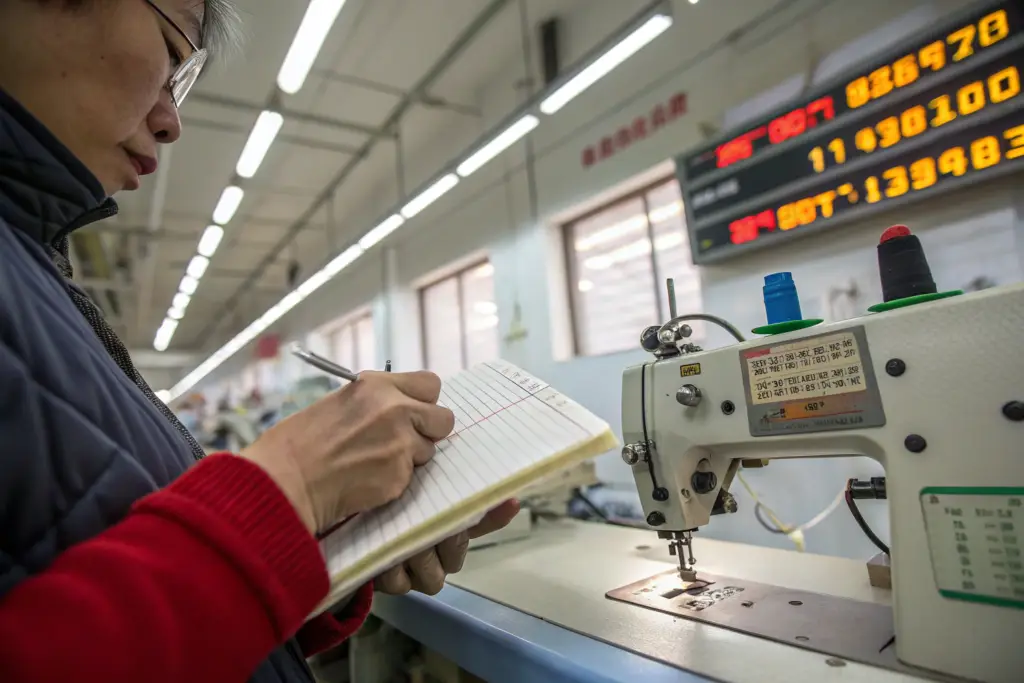
A factory will tell you they have 120 sewing machines. The number on the inventory list is 120. But the number that matters is the number of machines with a seated operator, a bundle of cut fabric beside them, and a warm motor housing. I count these three things. Operator present. Work-in-progress beside the machine. Machine motor warm to the touch.
In one factory visit, I counted 90 machines on the floor. 60 had operators. 45 of those operators had active work bundles. 30 of those machines were warm. The real active machine count was 30, not the claimed 90. The factory was running at one-third of its theoretical capacity, but the owner was still quoting lead times based on the 90-machine assumption. This gap between theoretical capacity and actual capacity is where late deliveries are born. I recommend buyers carry a simple tally counter on factory visits. Count active, loaded, and warm machines. This takes 15 minutes on a medium-sized floor and gives you a number that no sales brochure will provide.
Why Does Cutting Table Capacity Often Bottleneck the Whole Line?
The sewing floor gets all the attention, but the cutting room is often the hidden bottleneck. A factory needs enough cutting table length to spread fabric for every style in production. If they have five sewing lines but only two cutting tables, they can only cut fabric for two lines at a time. The other three lines will run out of work and sit idle, burning labor cost and missing delivery dates.
I measure the cutting tables. A standard spreading table is 6 to 10 meters long. A factory running five lines producing woven shirts needs at least three tables of 8 meters each to keep the lines fed. If I see two short tables, I know the factory's real capacity is capped by its cutting throughput, not its sewing headcount. I also check whether the tables are level. A cutting table with a dip in the middle produces inaccurate cuts, especially on striped or patterned fabrics where pattern matching is critical. A factory that has not invested in flat, maintained cutting tables is not serious about precision production.
How Can Work-in-Progress Analysis Expose Overbooking Risks?
A factory that overbooks is a factory that delivers late. Overbooking happens when a factory accepts more orders than its capacity can handle, betting that some orders will be delayed by the brands themselves or that overtime can absorb the excess. The bet often fails, and every brand suffers. You can spot overbooking by looking at the work-in-progress on the floor. If every cutting table is stacked, every sewing station is buried in bundles, and the finished goods area is empty, the factory is choking. It has too much work started and not enough capacity to finish any of it on time.
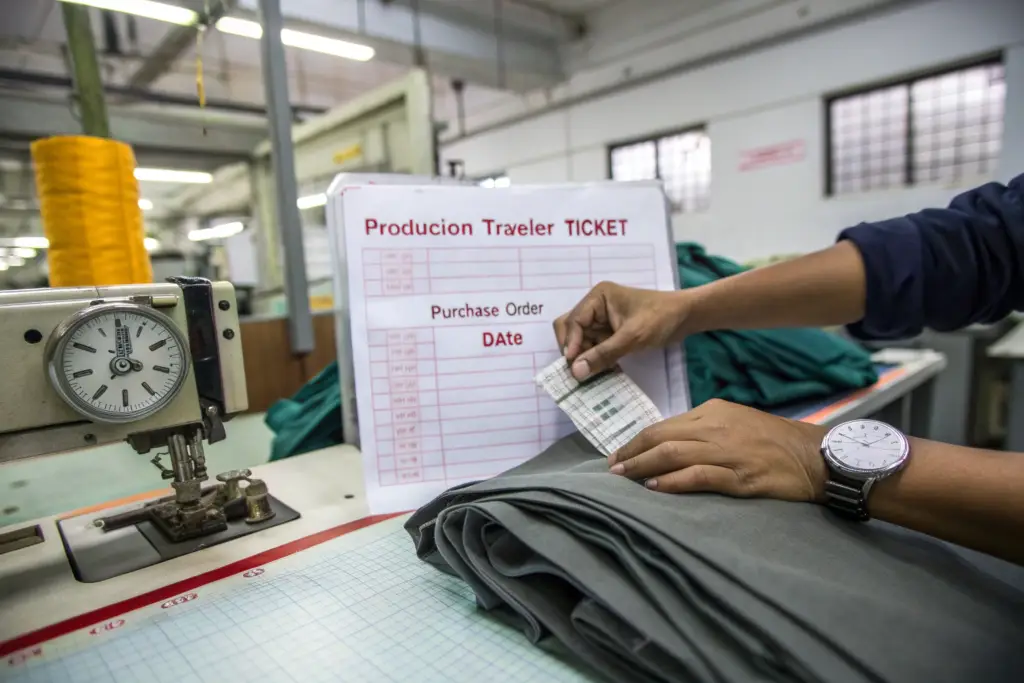
Work-in-progress analysis involves checking the volume of cut fabric bundles on the sewing floor, the dates on the production traveler tickets attached to those bundles, and the balance between WIP and finished goods output. A factory that is running at a healthy capacity has a steady flow of goods moving from cutting to sewing to finishing. A factory that is overbooked has a flood of cut fabric at the sewing stations and a trickle of finished cartons in the packing area.
The traveler ticket is the most honest document in a garment factory. It tells you when an order was cut and how long it has been sitting on the floor. Here is how to read these tickets and what they reveal about a factory's true scheduling discipline.
What Do Production Traveler Ticket Dates Reveal About Scheduling?
A traveler ticket is the paper or barcode tag attached to every bundle of cut fabric. It contains the purchase order number, the style number, the size, the bundle quantity, and the date the bundle was cut. When I walk a factory floor, I randomly pick up five traveler tickets from five different sewing stations. I look at the cut date.
If the cut date is from this week, the factory is processing work in a normal flow. If the cut date is from three weeks ago, that bundle has been sitting on the floor for three weeks. That means the order it belongs to is already late, or about to be late. If I find three out of five tickets with old cut dates, the factory has a systemic flow problem. They are starting work faster than they can finish it. This is the classic symptom of overbooking. I once found a bundle with a cut date six weeks old, buried under a pile of fabric on a back table. The order had been "in production" for two months and was not even halfway through sewing. The sales manager had told the brand the goods would ship in ten days. The traveler tickets told the truth.
How to Cross-Reference Scheduled Output with Actual Packing Records?
The packing area is where promises become cartons. A factory that claims to ship 500 units per day should have packing records that show 500 units per day over the past two weeks. I ask to see the daily packing log. This is a simple record: date, purchase order number, number of cartons packed, number of units packed. It is not a confidential document. A factory that refuses to show it is hiding something.
I compare the packing log against the production schedule whiteboard on the factory floor. If the whiteboard says Line 3 is finishing 200 units of Style ABC today, the packing log should show 200 units of Style ABC packed today or tomorrow. If the two do not match, the whiteboard is a fiction written for visitors. I have found discrepancies of 40% or more between scheduled output and actual packed output in factories that were overbooked. The factory was scheduling work it could not finish, and the packing log was the silent proof. Brands should ask for a weekly packing report as part of their production monitoring. A transparent factory provides this without hesitation.
Why Do Worker Shift Patterns Determine a Factory's True Ceiling?
Machines do not make garments. People make garments. A factory's capacity is limited by the number of trained sewing operators, the hours they work, and the number of shifts they run. A factory can claim a capacity based on three shifts of eight hours each, but if they only have enough workers for one shift, their real capacity is one-third of the claim. Worker headcount and shift structure are the hardest capacity variables to verify because factories can pad their headcount with temporary workers during an audit or claim a shift structure that does not actually operate consistently.
A factory's true labor capacity is the product of the number of permanently employed sewing operators, the standard daily working hours excluding overtime, and the number of consistent shifts. Temporary workers, seasonal fluctuations, and excessive overtime are not sustainable capacity. They are crisis responses that cannot support a long-term production partnership. A factory that relies on overtime to meet its claimed output will eventually burn out its workforce, degrade its quality, and miss its deadlines.
I assess labor capacity by looking at the payroll records, the shift schedule, and the skill distribution on the floor. These are sensitive topics, but a factory that is serious about partnership will discuss them openly. Here is how to get the real numbers.
How to Verify Worker Headcount Against Payroll Records?
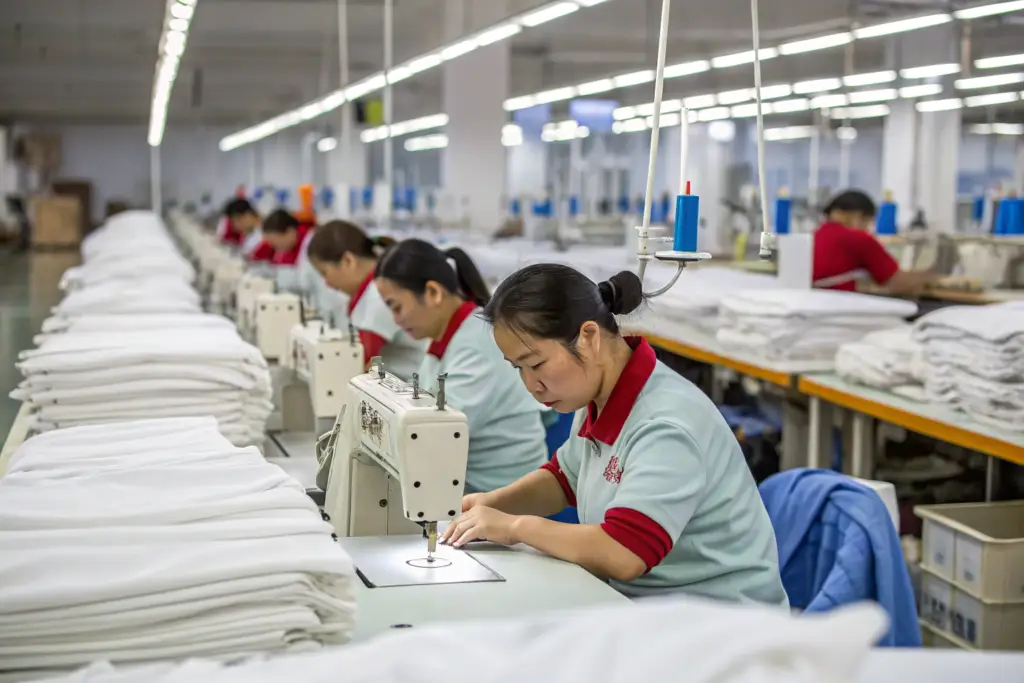
The factory tour shows you a headcount. The payroll records show you the truth. I ask to see the payroll register for the past three months, with individual names redacted for privacy. The register shows the number of workers paid each month, broken down by department. If the factory claimed 200 sewing operators during the tour, the payroll register should show approximately 200 sewing operators paid each month for the past three months. If the register shows 120 operators in March, 115 in April, and 130 in May, the factory's consistent labor force is around 120 to 130, not 200. The extra 70 workers on the day of my visit may have been temporary hires brought in for show.
I also look at the overtime hours on the payroll. If the operators are regularly working 60-hour weeks to achieve the factory's claimed output, the factory is over capacity on its base shift. That output is not sustainable. An operator working a 60-hour week for six months will make more mistakes, produce lower quality, and eventually quit. The factory's true sustainable capacity is based on a standard 48-hour work week, which is the legal maximum in many sourcing countries. Anything beyond that is borrowed capacity that will be repaid in defects and delays.
What Skill Distribution Is Needed for Complex Garment Production?
Not all sewing operators are equal. A factory that produces tailored jackets needs operators skilled in setting sleeves, attaching collars, and sewing bound buttonholes. A factory that produces simple T-shirts needs operators skilled in overlocking and coverstitching. The machine mix must be matched by a skill mix.
When I walk a factory floor, I stop at the specialized stations. The collar setting station. The sleeve insertion station. The buttonhole machine. I ask the operator how long they have been doing that specific operation. If the answer is "two weeks," the factory is training new workers and quality will be inconsistent. If the answer is "five years," the factory has retained skilled labor. A factory's capacity to produce complex garments is directly proportional to the number of operators with more than three years of experience on specialized operations. This is not a number that appears on any certificate. It is learned by walking the floor and asking questions. I recommend brands bring a technical designer or a pattern maker on factory visits. They will spot a weak collar setter in thirty seconds, where a general manager might miss it entirely.
How to Test a Factory's Capacity with a Structured Trial Production Run?
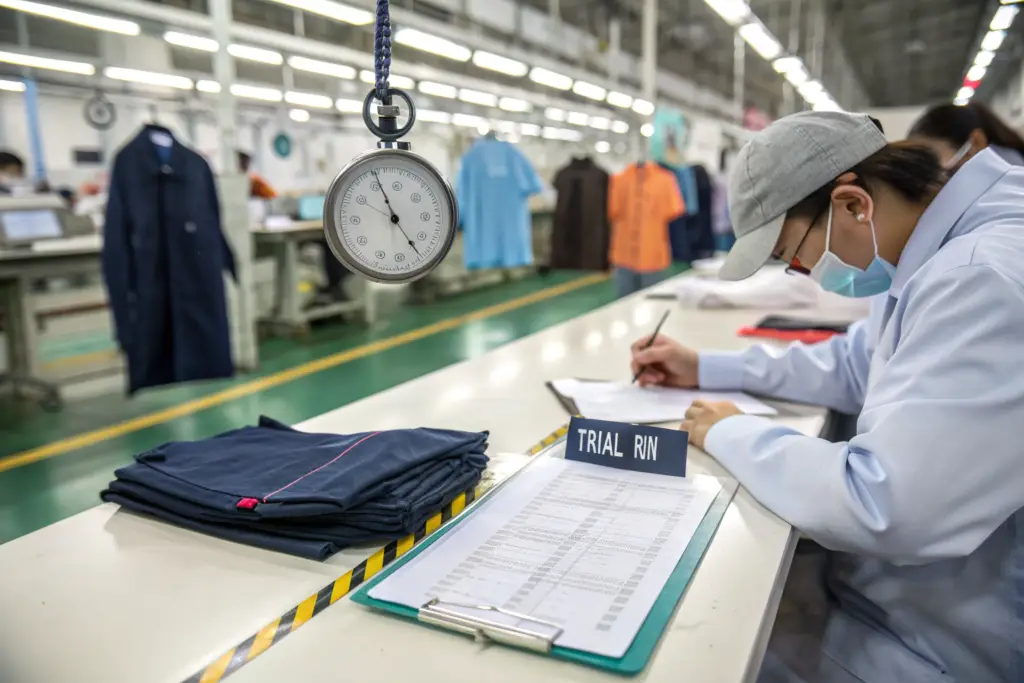
The physical checks, the WIP analysis, and the labor verification all lead to the same conclusion: a factory's claims must be tested with a real production run before you commit your full season. The structured trial run is the final exam. It is a small order, typically 100 to 300 units per style, that runs through the factory's full production system from fabric receipt to packed carton. The trial run is not primarily about the product. It is about the process. It reveals whether the factory's actual throughput matches its claimed throughput, and whether its quality control system works under real production conditions.
A structured trial production run measures the factory's actual output rate against its claimed output rate, the defect rate on a full batch versus the approval sample, and the adherence to the promised timeline from cutting to shipping. The trial run is placed as a standalone purchase order with no commitment for future volume. It is an audition, not a pilot for a larger program, and the brand must be willing to walk away if the factory fails the test metrics.
I have designed trial run protocols for brands moving from Alibaba suppliers to direct partnerships. The trial run is the bridge between hope and certainty. Here is how to design one that gives you real data.
What Output Metrics Should a Trial Run Validate?
The trial run should validate three numbers: the daily output rate, the total production lead time, and the first-pass quality yield. The daily output rate is the number of units the factory completes per day on your specific style. You track this by requesting a daily production update during the trial run, with photos of the packed cartons accumulating. If the factory claims a capacity of 200 units per day and your trial run of 300 units takes five days to complete, their real daily output on your style is 60 units, not 200. The style complexity may explain some of the gap, but a 70% shortfall is a capacity overstatement, not a complexity factor.
The total production lead time is the number of days from purchase order issuance to carton shipment. The factory's salesperson quoted a lead time. The trial run tests that quote under real conditions. If the quoted lead time was 30 days and the trial run ships on day 42, the factory's lead time claim is inaccurate. The first-pass quality yield is the percentage of units that pass final inspection without requiring rework. A first-pass yield below 90% indicates that the factory's quality control is either absent or ineffective, and that their capacity includes significant rework time that is not accounted for in their lead time quote.
How to Structure a Fair "Capacity Test" Without Jeopardizing the Relationship?
The factory will be nervous about a trial run. They know they are being tested. Frame it as a standard onboarding process that you use for all new partners, not as a special scrutiny reserved for them. Explain the metrics upfront. Share the daily reporting template you expect them to fill out. Make it collaborative, not adversarial.
I recommend including a "lessons learned" meeting after the trial run. Sit down with the production manager, not just the salesperson, and review what worked and what did not. If the trial run revealed a bottleneck, discuss how they plan to address it. If the trial run went perfectly, acknowledge the performance specifically. This meeting is as informative as the production run itself. A factory that engages seriously with the feedback is a factory that can improve. A factory that dismisses every finding as "that was just a one-time issue" is a factory that will repeat the same problems at scale.
Conclusion
A factory's sales pitch is a promise. A factory's production floor is the proof. The gap between the two is where brands lose money. The only way to close that gap is to verify the physical metrics, read the traveler tickets, count the workers, and run a structured trial before you commit your season. This is not distrust. This is due diligence. A factory that welcomes this scrutiny is a factory that has nothing to hide.
At Shanghai Fumao, I keep our production floor open, our packing logs current, and our traveler tickets visible on every bundle. I know that a brand who audits us thoroughly today is a brand who will trust us deeply tomorrow. The time you spend verifying our capacity is an investment in the partnership, not an insult to our integrity.
If you are evaluating a new manufacturing partner and you want to bring the same rigor to your factory assessment, let us show you what a transparent operation looks like. You can walk our floor, count our machines, check our traveler tickets, and talk to our operators. To schedule a visit or to discuss a structured trial run, reach out to our Business Director, Elaine, at elaine@fumaoclothing.com. Bring your clipboard. We are ready for the audit.