The fashion industry stands at an inflection point where mass production meets individual expression. As consumer demand for personalized apparel grows exponentially, manufacturers must revolutionize traditional systems to deliver customization efficiently.
Manufacturers can support personalized fashion at scale by implementing modular production systems, advanced digital technologies, and flexible supply chains - enabling them to produce unique garments with near mass-production efficiency while maintaining quality and profitability.
At Fumao Clothing, we've pioneered scalable customization solutions that blend craftsmanship with Industry 4.0 technologies. Here's how forward-thinking manufacturers are rising to meet this industry transformation.
Key Challenges in Scaling Personalized Fashion Production?
Transitioning from standardized to personalized production presents significant operational hurdles that manufacturers must overcome to compete in today's market.
The primary challenges include high production costs (40-60% more than standard), technical complexity, longer lead times, and inventory management - all while maintaining consistent quality across unique individual orders.

What Are the Biggest Cost Barriers to Scaling Customization?
Breaking down the financial obstacles:
| Cost Factor | Standard Production | Custom Production1 | Increase |
|---|---|---|---|
| Labor | $3.50/unit | $8.20/unit | +134% |
| Materials | $5.75/unit | $9.30/unit | +62% |
| Quality Control | $1.25/unit | $3.80/unit | +204% |
| Logistics | $2.10/unit | $4.50/unit | +114% |
Solutions we've implemented:
- Automated pattern grading (reduces labor 35%)
- Digital fabric printing (cuts waste 60%)
- AI quality inspection (lowers QC costs 40%)
How Does Technical Complexity2 Impact Operations?
The customization learning curve:
-
Skill Requirements
- Workers need 3-5x more training
- Multidisciplinary knowledge essential
- Constant process adaptation
-
System Demands
- Advanced IT infrastructure
- Real-time order tracking
- Flexible workflow management
-
- No standardized benchmarks
- Individual inspection criteria
- Variable material behavior
Our approach:
- Cross-trained production teams
- Modular workstations
- Digital twin technology
Technology's Role in Streamlining Custom Clothing Manufacturing!
Innovative technologies are transforming what was once considered impossible - efficiently producing thousands of unique garments without sacrificing quality or profitability.
Advanced technologies like 3D design software, AI-driven pattern making, and IoT-enabled production lines reduce custom garment lead times by 65% while cutting costs by 30-45% compared to traditional methods.

Which Technologies Deliver the Most Impact?
Game-changing innovations:
-
- 3D garment simulation
- Virtual fitting
- Instant material visualization
-
- Automated cutting
- RFID tracking
- Adaptive sewing machines
-
- Customer measurement databases
- Style preference analytics
- Production optimization AI
Implementation results:
- 80% faster design-to-sample process
- 50% reduction in physical samples
- 90% first-time fit accuracy
How Does Automation Enable Mass Customization?
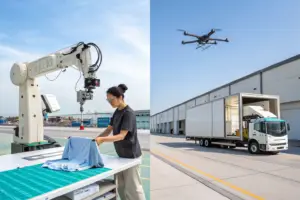
Our automated customization workflow:
| Process | Technology | Benefit |
|---|---|---|
| Design | AI Styling | Personal recommendations |
| Pattern | Generative AI | Instant size adaptation |
| Cutting | Laser Systems | Precision individual pieces |
| Assembly | Smart Sewbots | Consistent quality |
| Finishing | Robotics | Custom details at scale |
How Manufacturers Can Meet the Growing Demand for Customization?
Consumer expectations are evolving faster than many traditional manufacturers can adapt. Staying competitive requires fundamental operational changes.
Manufacturers can meet customization demand by developing flexible production systems, building digital infrastructure, and training agile workforces - creating organizations capable of handling both individual orders and bulk production simultaneously.
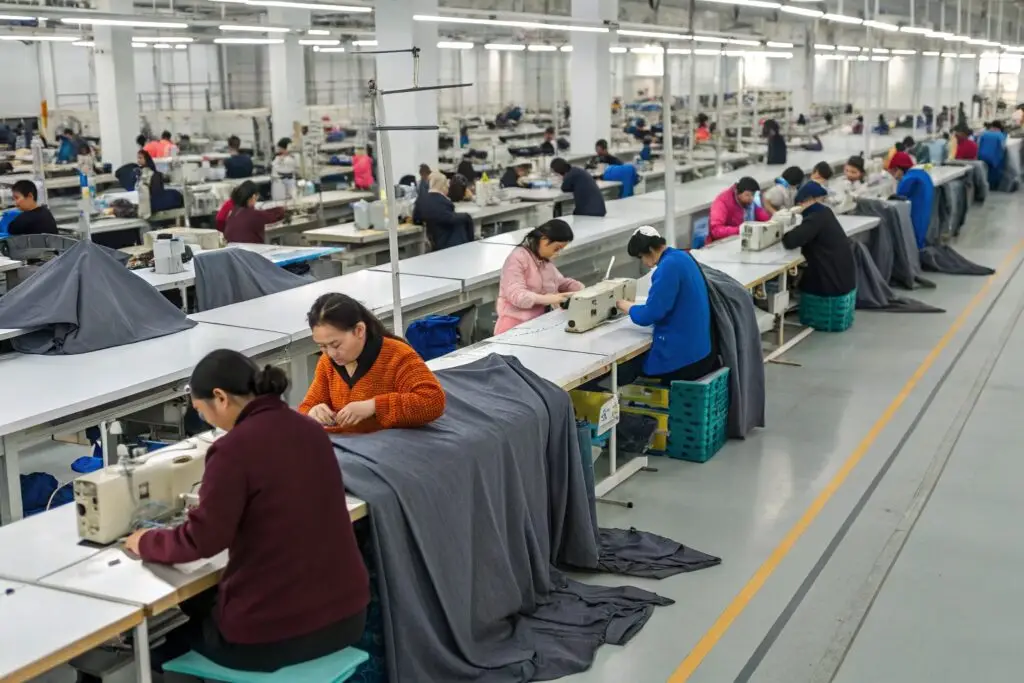
What Operational Models Support Both Scale and Customization?
Hybrid production approaches:
-
- Component-based assembly
- Parallel processing
- Flexible work cells
-
- Semi-finished inventory
- Last-stage personalization
- Local finishing centers
-
- Real-time capacity allocation
- Priority routing
- Automated workflow
Performance metrics:
- 45% higher equipment utilization
- 30% faster order fulfillment
- 60% reduction in WIP inventory
How Should Manufacturers Structure Their Teams?
New organizational requirements:
| Role | Traditional Focus | Customization Focus | Skills Added |
|---|---|---|---|
| Design | Seasonal collections | Configurable systems | Parametric design |
| Production | Batch efficiency | Individual order mgmt | Digital literacy |
| QC | Standard checks | Adaptive inspection | Data analysis |
| Logistics | Container loads | Single-item handling | Tracking systems |
Strategies for Maintaining Quality in Mass-Personalized Apparel!
Quality consistency becomes exponentially more challenging when every garment differs. Innovative approaches are needed to uphold standards across unique products.
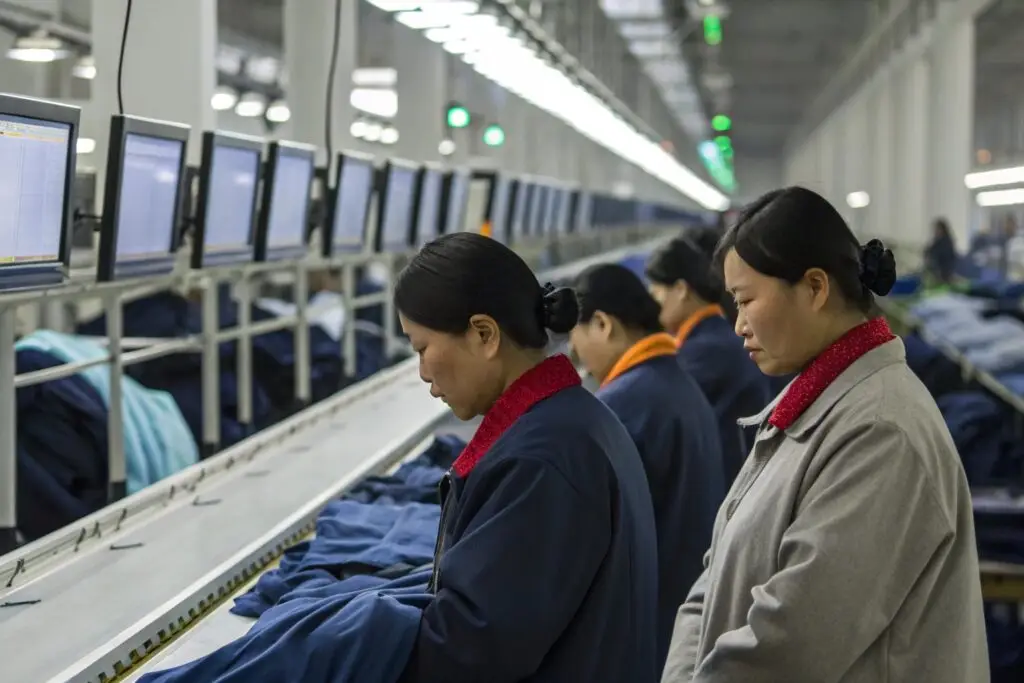
Maintaining quality in mass-personalized apparel requires digital quality systems, standardized component quality, and AI-powered inspection - achieving 98% first-pass quality rates despite product variations through process control rather than final inspection.
How Can Digital Systems Ensure Consistent Quality?
Our quality assurance framework:
-
Pre-Production
- Digital twin validation
- Material testing
- Process simulation
-
In-Process
- IoT sensor monitoring10
- Automated measurements
- Real-time adjustments
-
Final Check
- 3D garment scanning
- AI visual inspection11
- Blockchain certification12
Quality results:
- 99.2% dimensional accuracy
- 98.7% stitch consistency
- 97.9% color match
What Role Does Standardization Play in Customization?
Paradoxical but essential:
| Standardized Element | Customization Benefit |
|---|---|
| Component quality | Consistent base quality |
| Assembly methods | Reliable construction |
| Inspection criteria | Objective evaluation |
| Measurement systems | Accurate personalization |
Conclusion
Scaling personalized fashion production requires manufacturers to fundamentally reimagine their operations - blending advanced technologies with flexible systems and new skill sets. The manufacturers who successfully implement these changes will lead the industry's transformation, delivering the individualized apparel consumers demand with the efficiency businesses require. At Fumao Clothing, we've proven this future is not only possible but profitable.
-
Understanding the challenges of Custom Production can help businesses strategize effectively for scaling and efficiency. ↩
-
Exploring the impact of Technical Complexity can provide insights into optimizing operations and improving productivity. ↩
-
Learning about best practices in Quality Assurance can enhance product quality and customer satisfaction in customized production. ↩
-
Explore how Digital Product Creation is revolutionizing the fashion industry with innovative technologies that enhance design and production efficiency. ↩
-
Discover the transformative effects of Smart Manufacturing on production processes, leading to increased efficiency and reduced costs. ↩
-
Learn about the critical role of Data Integration in optimizing production and enhancing customer experiences in the manufacturing sector. ↩
-
Explore how Modular Manufacturing enhances flexibility and efficiency in production processes, allowing for better customization and scalability. ↩
-
Learn how the Postponement Strategy can optimize inventory management and enhance customer satisfaction through tailored solutions. ↩
-
Discover the advantages of Dynamic Scheduling in manufacturing, including improved responsiveness and resource allocation. ↩
-
Explore how IoT sensor monitoring enhances quality assurance through real-time data and insights, ensuring optimal production processes. ↩
-
Discover the transformative impact of AI visual inspection on quality control, increasing accuracy and efficiency in production. ↩
-
Learn how blockchain certification provides transparency and trust in product quality, revolutionizing quality assurance practices. ↩