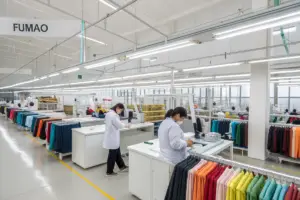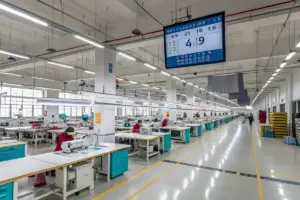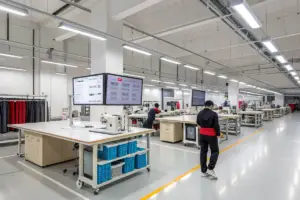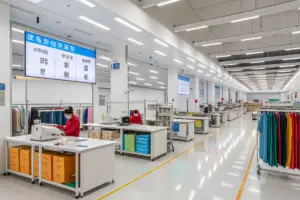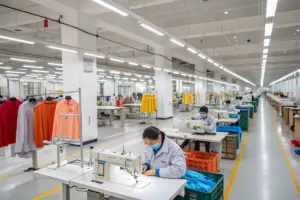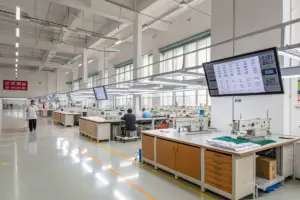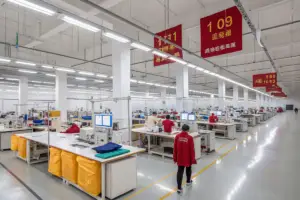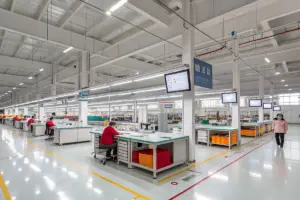
Today’s customers expect custom logos, eco-friendly fabrics, and fast delivery. That kind of demand needs more than just a big factory—it needs agility and scale combined.
A China-based factory like ours powers global personalization by offering flexible production, cost-effective customization, and deep experience in international supply chains.
Let’s explore why China remains central to the future of manufacturing—and how our factory helps brands build custom products that reach the world fast.
What is China’s role in global manufacturing?
When new buyers ask me, “Why are so many factories in China?” I tell them: it’s not just size—it’s structure. China is built for scale and speed.
China is the world’s largest manufacturing center, producing over 28% of global industrial output—thanks to its advanced infrastructure, skilled labor, and end-to-end supply chains.
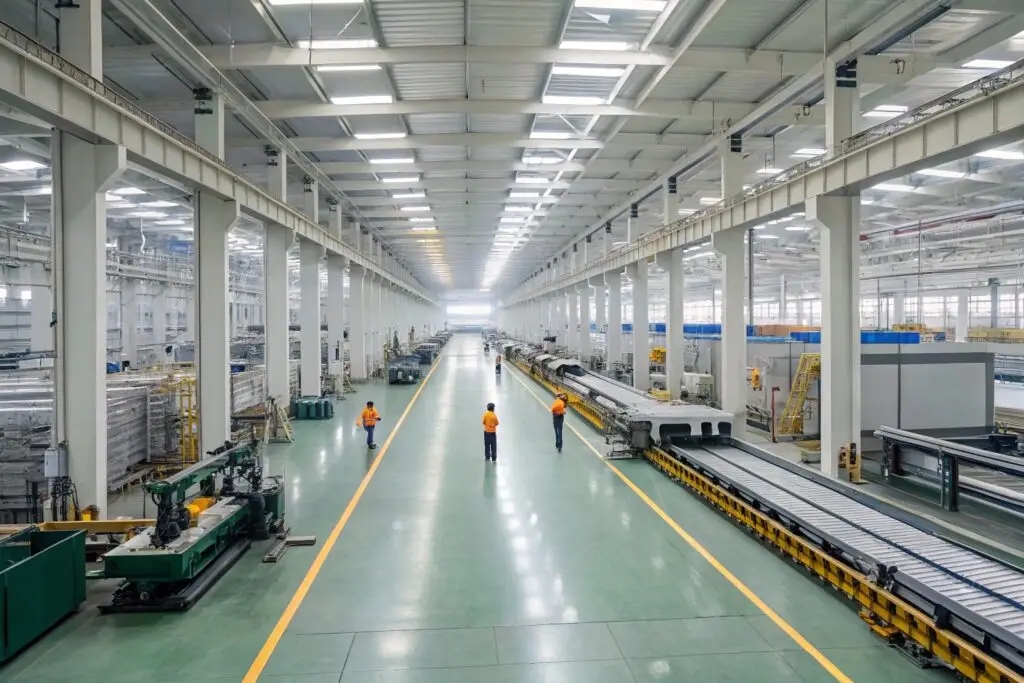
How does China maintain its global manufacturing leadership?
China leads because of:
- Integrated supply chains1—from fabric mills to printing to logistics
- High production capacity—factories can scale from 300 to 30,000 pieces
- Cost efficiency2—competitive pricing for both labor and raw materials
- Skilled labor3—workers trained specifically for garment categories
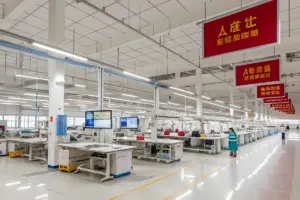
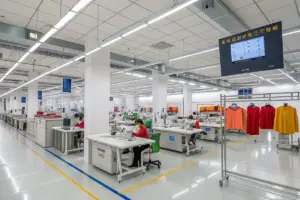
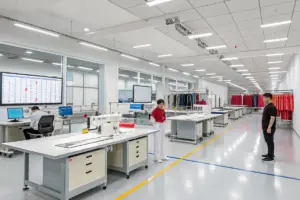
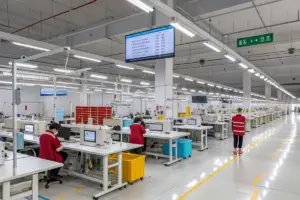
At Fumao, we handle the full workflow in-house or within 30 miles: fabric sourcing, cutting, sewing, printing, packing, and shipping.
What does this mean for personalized apparel?
- Lower MOQs with high output potential
- Multi-style orders without delays
- Quick switching between sizes, prints, or trims
Our clients can order 5 styles in 1,000 pcs each—and receive them all on the same container.
How is China helping power the world’s green transition?
A few years ago, sustainability wasn’t part of sourcing conversations. Now, it’s a top priority—and China’s factories are catching up fast.
China supports the green transition by investing in cleaner production tech, renewable energy, and sustainable textile innovation—making eco-friendly manufacturing more accessible.
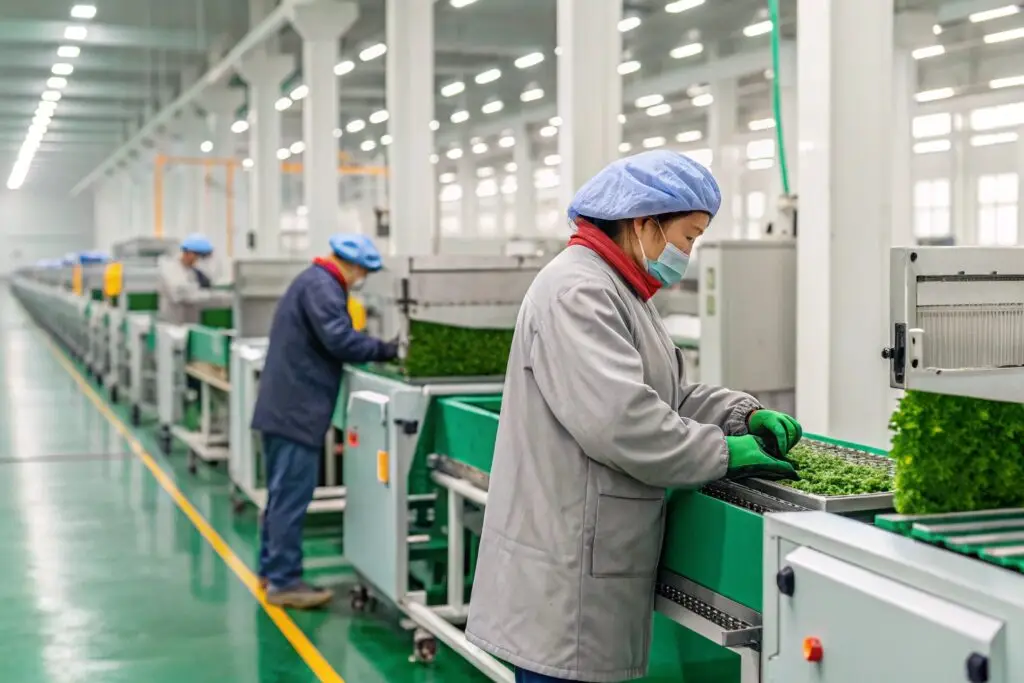
What green initiatives are happening in China’s apparel sector?
- Solar-powered factories
- Recycled polyester and cotton blends4
- Water-saving dye technology5
- Certifications like GOTS, OEKO-TEX, BCI6
At Fumao, we use recycled fabrics upon request and partner with mills that meet international environmental standards.
Can you get customized and eco-conscious?
Yes. Many buyers think sustainability raises costs—but done right, it adds value and customer trust.
| Green Option | Customizable? | Extra Cost? | Lead Time Impact |
|---|---|---|---|
| Recycled cotton fabric | ✅ | +8–12% | Slight increase |
| Low-impact dyes | ✅ | +5% | No delay |
| Compostable packaging | ✅ | +10–15% | No delay |
We believe personalization and responsibility go hand-in-hand—and we’re ready to prove it.
What is China’s comparative advantage in manufacturing?
I once met a European buyer who said, “You can’t beat China’s balance of price, quality, and speed.” That’s China’s edge in a sentence.
China’s comparative advantage lies in its ability to deliver high-volume, customizable goods at competitive prices—supported by strong infrastructure and experienced workforce.
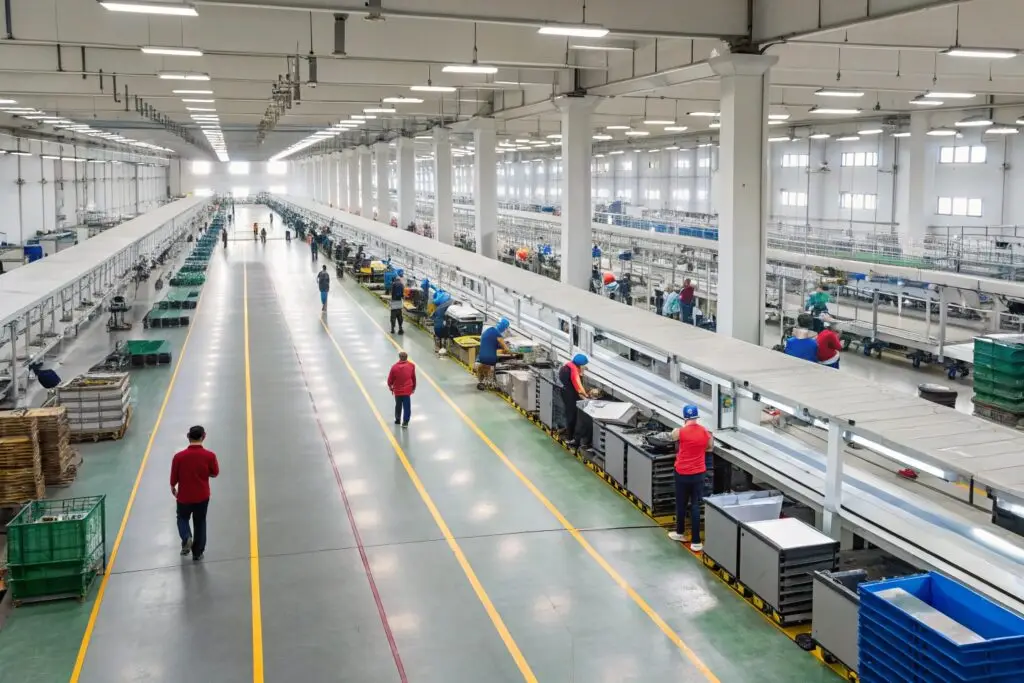
What gives China this edge?
- Massive industrial zones with shared resources
- Years of export experience7 and global client knowledge
- Fast port and inland logistics8
- Government support9 for export industries
Here’s how China compares to other regions:
| Country | Strengths | Challenges |
|---|---|---|
| China | Scale, price, speed, flexibility | Rising labor costs |
| Vietnam | Low labor cost, stable quality | Limited capacity for large orders |
| India | Raw materials, large workforce | Slower logistics, less flexibility |
| Turkey | EU proximity, fast shipping | Smaller factories, higher cost |
For brands looking to personalize and scale, China remains the most balanced option.
How does this support small brands?
Even if you’re not placing 50,000-unit orders, you benefit from:
- Affordable setup for embroidery or print
- Easy combination of SKUs
- Factory processes built to pivot quickly
That’s how we serve both new DTC startups and established retailers.
What factors explain the rise of China as the world’s manufacturing hub?
China’s rise wasn’t overnight. It’s a mix of planning, policy, and the world’s demand for reliable sourcing.
China became the world’s manufacturing hub due to decades of infrastructure investment, low-cost labor, pro-export policies, and the development of large-scale industrial zones.
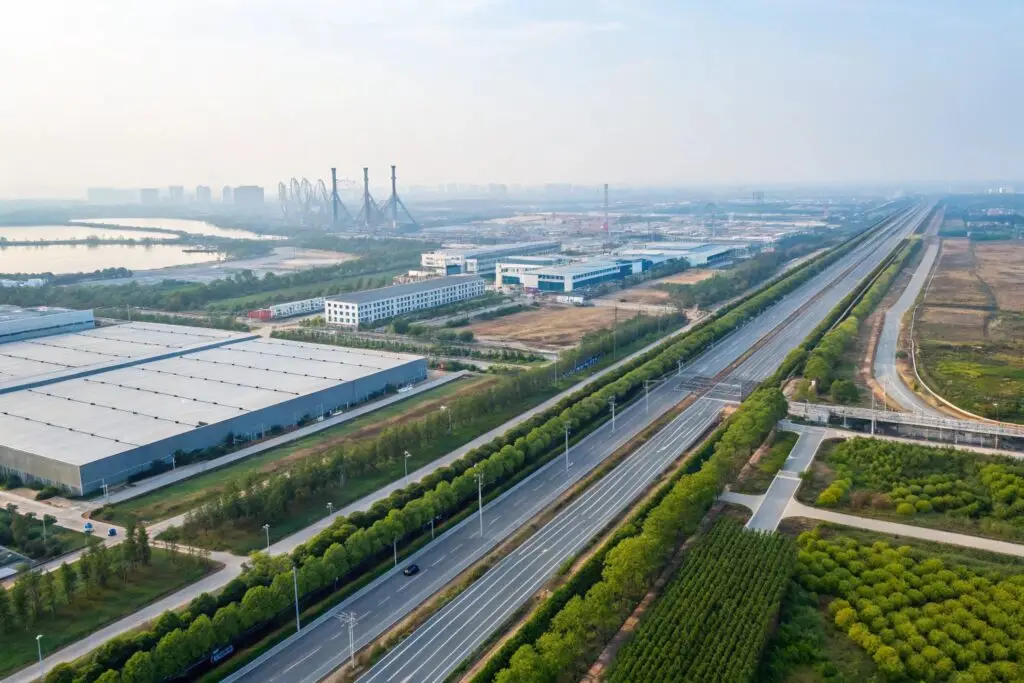
What set the foundation?
- Special Economic Zones (SEZs)10 attracted foreign investment in the 1980s
- Government focus11 on roads, ports, and logistics
- Heavy investment in power, textile parks, and worker training
- Supplier clusters12 that reduce transportation and delay
For example, in our region of Jiangsu, we’re surrounded by:
- Fabric mills
- Accessory suppliers
- Packaging providers
- Freight agents
That’s how we turn around personalized orders faster—because everything’s already in place.
Why does this history matter today?
Because it means:
- You don’t wait for missing trims
- Shipping is consolidated and cost-effective
- Design changes can be made mid-cycle
This kind of speed + flexibility is hard to match elsewhere.
Conclusion
China isn’t just the factory of the world—it’s the future of personalized, global fashion. With flexible capacity, sustainable options, and deep experience, factories like Fumao help brands deliver custom apparel that connects, everywhere.
-
Explore how integrated supply chains enhance efficiency and competitiveness in manufacturing, crucial for understanding China’s leadership. ↩
-
Learn about the role of cost efficiency in manufacturing, a key factor in China’s ability to lead the global market. ↩
-
Discover why skilled labor is vital for manufacturing success, particularly in the context of China’s workforce and production capabilities. ↩
-
Explore the advantages of using recycled materials in fashion, enhancing sustainability and reducing waste. ↩
-
Learn about innovative dyeing methods that conserve water, crucial for sustainable fashion practices. ↩
-
Understand the importance of these certifications in ensuring eco-friendly and ethical clothing production. ↩
-
Understanding the advantages of export experience can help businesses leverage global markets effectively. ↩
-
Exploring logistics efficiency can reveal how it enhances trade speed and reduces costs for businesses. ↩
-
Learning about government support can provide insights into how policies can benefit businesses in competitive markets. ↩
-
Explore how SEZs can boost foreign investment and economic growth, providing insights into their strategic importance. ↩
-
Learn about the critical role of government infrastructure investment in enhancing economic growth and attracting businesses. ↩
-
Discover how supplier clusters can streamline production processes and improve efficiency in manufacturing industries. ↩