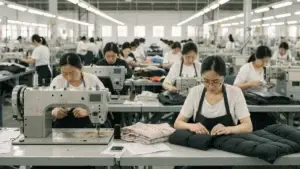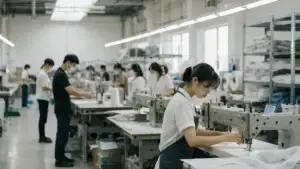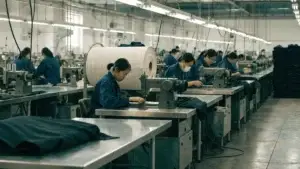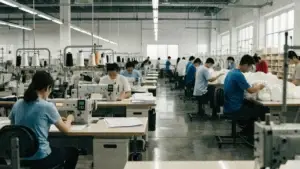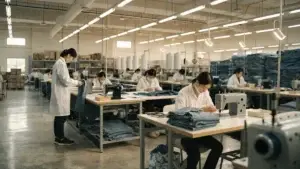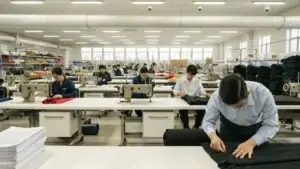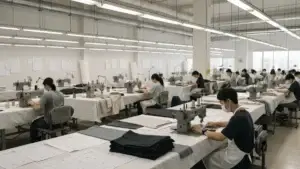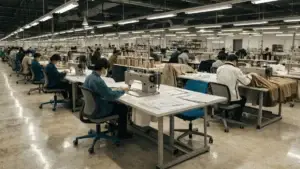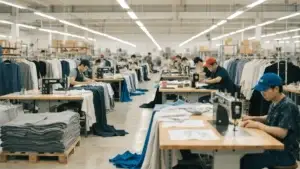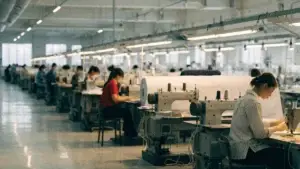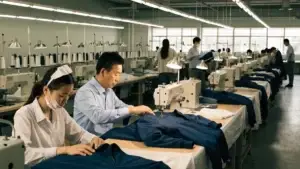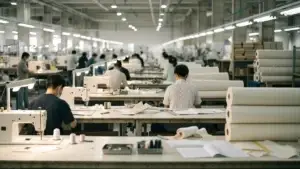
Fashion trends may come and go, but how clothes are made is undergoing permanent change. The industry is preparing for a new era—faster, smarter, cleaner.
In 2025, clothing manufacturing will be shaped by automation, sustainability, new materials, and smarter tech. These trends will define how factories run and how fashion brands stay ahead.
If you’re in the apparel business, these 10 trends are not optional—they’re your next competitive edge.
How Sustainability Is Shaping the Future of Clothing Manufacturing
Sustainability is no longer a buzzword. It’s a business strategy. And manufacturers that don’t adapt are falling behind.
Sustainable clothing manufacturing in 2025 focuses on reducing waste, lowering emissions, using recycled materials, and proving ethical compliance through traceable supply chains.
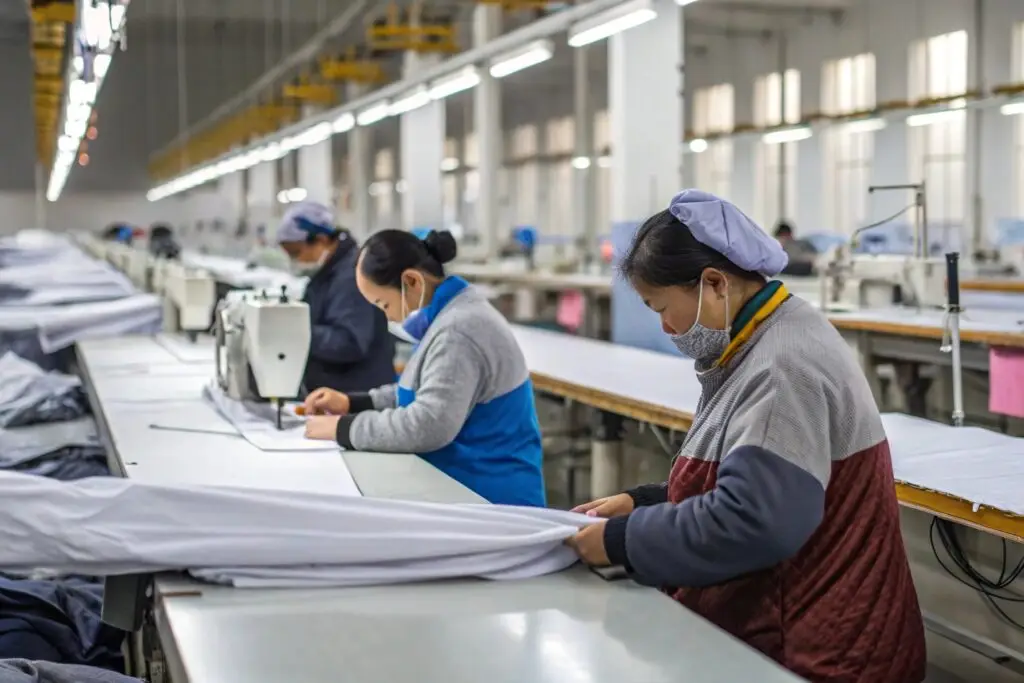
Why are buyers demanding traceability and impact reports1?
Modern consumers want more than style—they want values. Brands now require factories to show where raw materials come from, how much water was used, and who made the product. It’s no longer enough to say “eco”—you need data.
| Sustainability Trend | Impact on Manufacturing |
|---|---|
| Recycled fabrics | Shifts sourcing to post-consumer |
| Waterless dyeing | Cuts finishing cost and pollution |
| Digital labels (QR/Blockchain) | Shows transparency and impact |
| Carbon audits | New buyer requirement |
At Fumao, we help clients run low-waste production lines and offer DDP shipping with eco-packaging2 as standard.
How does going green reduce long-term cost?
While sustainable materials3 may cost more up front, lower returns, better brand trust, and tighter production control often result in higher margins. Plus, global regulations are getting stricter—being ready means fewer fines and disruptions.
The Role of AI and Automation in Apparel Production
Manual work still dominates many factories—but that’s about to shift. AI and automation are moving from pilot projects to production floors.
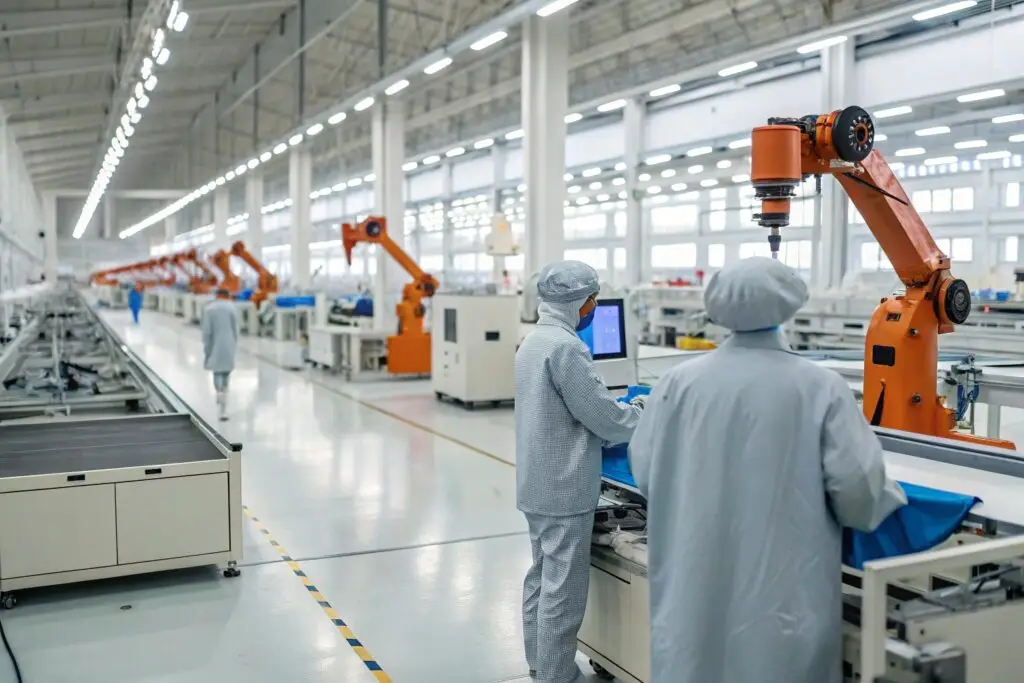
AI and automation are transforming apparel production by speeding up cutting, sewing, forecasting, and quality checks—while reducing labor dependence and human error.
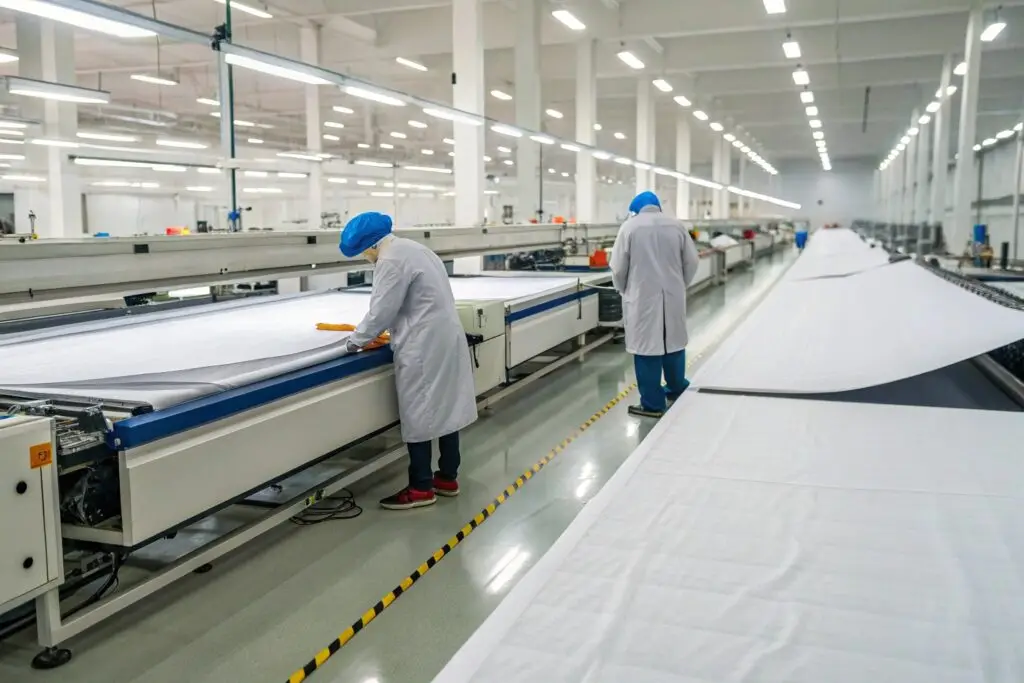
What parts of the factory are becoming automated?
From cutting tables to order planning dashboards, software and robotics are taking over repetitive and data-heavy tasks. In 2025, you’ll see AI-powered demand forecasts4 and robotic arms stitching basic patterns5.
| Automation Zone | Technology in Use |
|---|---|
| Fabric cutting | Laser-guided, auto-nesting |
| Production scheduling | AI-powered ERP systems6 |
| Quality control | Computer vision for defect checks |
| Inventory management | RFID and smart barcoding |
Fumao is testing an AI model that predicts shipment delays based on raw material ETA and customs data. It helps our clients plan around risk—not react to it.
Will automation replace human workers?
Not entirely. Skilled labor will shift from sewing to supervising. But repetitive roles may decline. That’s why factories must start reskilling teams today—not after robots arrive.
How 3D Printing Is Revolutionizing Clothing Manufacturing
3D printing used to sound like sci-fi. Now it’s real—and changing how apparel is designed, prototyped, and even worn.
3D printing in clothing manufacturing enables on-demand, waste-free production of complex garments, accessories, and even footwear—with fewer design limits.
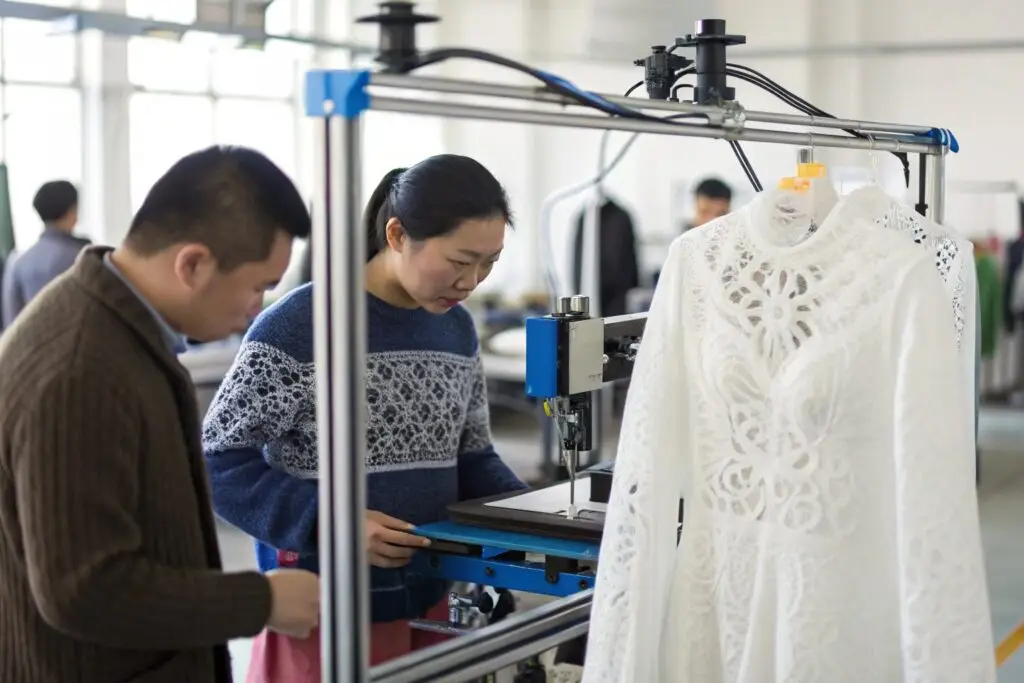
What types of clothing can be 3D printed today?
Right now, 3D printing7 is mostly used in footwear soles, accessories, and experimental dresses. But as flexible filament tech evolves, we’ll see wearable tops, activewear components, and customizable trims.
| Application Area | 3D Printing Role |
|---|---|
| Footwear | Midsoles and cushioning parts |
| Fashion accessories | Belts, bags, jewelry |
| Sportswear | Performance-enhancing zones |
| Custom-fit garments | Made-to-measure body scanning |
Some companies already offer “scan your body, print your top” services in major cities. In the near future, even mass retail may adopt it for high-demand SKUs.
What are the challenges of 3D printing in fashion?
Material softness, production speed, and cost still limit large-scale adoption. But for limited runs and high-value items, 3D printing offers lower waste and greater design freedom than any traditional method.
Emerging Fabrics and Materials in Apparel Manufacturing
Fabric is where innovation begins. And in 2025, what we wear will look and feel nothing like the past.
New fabrics made from algae, mushrooms, recycled ocean plastic, and lab-grown fibers are reshaping the apparel manufacturing landscape—offering function, comfort, and eco-credibility.
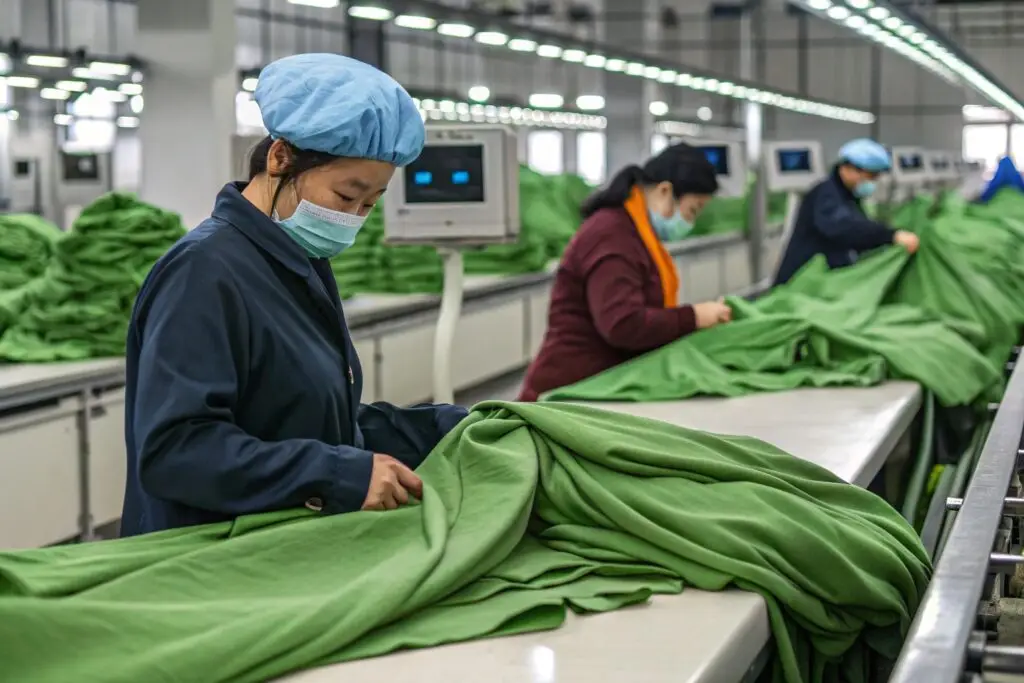
What are the most promising fabric innovations?
In 2025, expect to see more bio-based and engineered textiles8 that go beyond basic sustainability. These materials offer better performance and storytelling.
| Material Name | Origin / Feature |
|---|---|
| Mylo | Mushroom leather alternative9 |
| SeaCell | Seaweed-based, anti-inflammatory |
| Piñatex | Pineapple leaf fiber, leather feel |
| Repreve | Recycled plastic bottles into polyester |
| Spiber | Lab-grown protein silk |
At Fumao, we’re testing bamboo-carbon blends10 that regulate body temp and reduce odor—ideal for sportswear and kidswear.
Are buyers willing to pay for better materials?
Yes—especially Gen Z and millennial consumers. But brands must communicate the benefit clearly. A “$10 more” shirt can still convert if it’s softer, cooler, and cleaner for the planet. Packaging, hangtags, and website storytelling all matter.
Conclusion
The future of clothing manufacturing isn’t coming—it’s already here. From sustainable systems to digital factories, the next generation of apparel will be made smarter, faster, and with far less waste.
-
Understanding traceability and impact reports can help consumers make informed choices about sustainable brands. ↩
-
Discovering the advantages of eco-packaging can enhance your understanding of sustainable practices in the industry. ↩
-
Exploring the impact of sustainable materials can reveal how they contribute to cost savings and brand loyalty over time. ↩
-
Explore this link to understand how AI-powered demand forecasts can revolutionize manufacturing efficiency and decision-making. ↩
-
Discover the advancements in robotic technology and how they enhance production processes in factories. ↩
-
Learn about the transformative impact of AI-powered ERP systems on production scheduling and overall factory management. ↩
-
Explore the latest advancements in 3D printing technology to understand its impact on the fashion industry and future trends. ↩
-
Explore this link to understand how these innovative textiles can enhance sustainability and performance in fashion. ↩
-
Discover the process and benefits of mushroom leather, a sustainable alternative that could revolutionize the fashion industry. ↩
-
Learn about bamboo-carbon blends and how they can improve comfort and performance in sportswear and kidswear. ↩