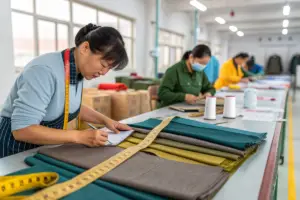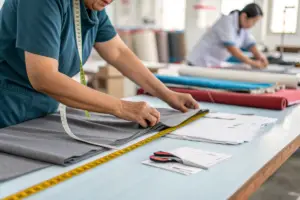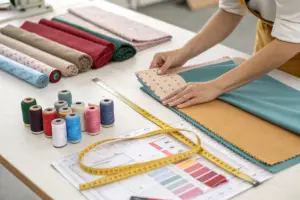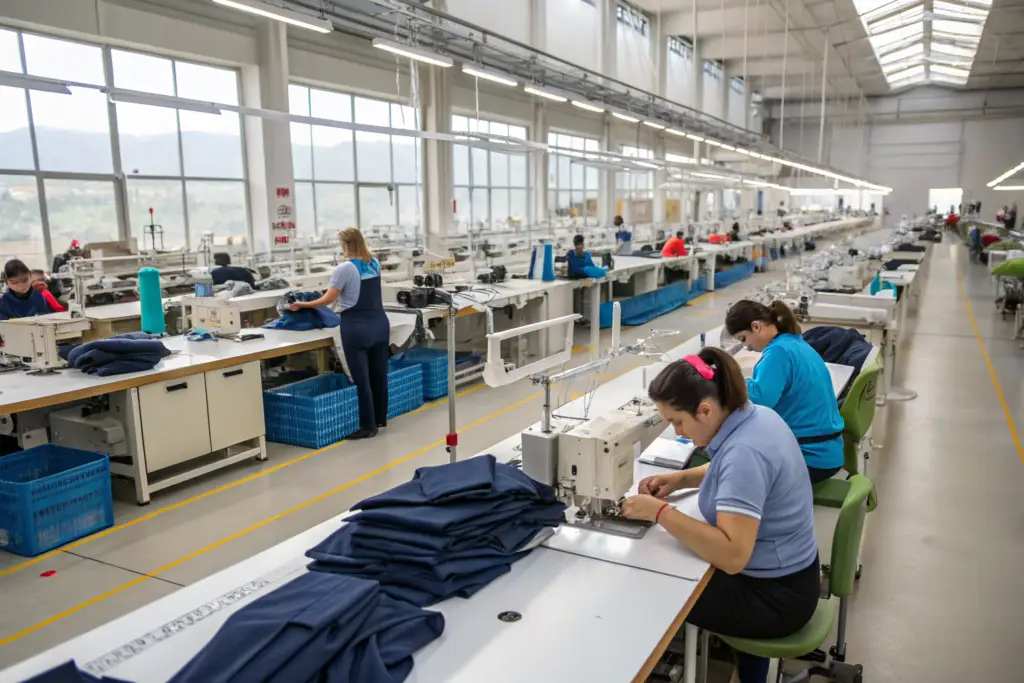
Yes. You can visit our production line. I'm not going to bury that answer under a paragraph of marketing fluff. If you are a serious brand owner or a volume distributor, my factory floor is open to you. I want you to see the stitching, smell the wash house, and talk to the cutting room supervisor. I believe a physical visit is the single most powerful trust-building tool we have. But I also know that a trans-Pacific flight isn't always practical, so I've built a virtual visit system that comes remarkably close to the real thing. I'm Richard, the owner of Shanghai Fumao. In this article, I'm going to walk you through exactly what a visit looks like, whether you're stepping off a plane in Shanghai or opening a video link from your office in Chicago.
What Should You Expect During an On-Site Factory Tour?
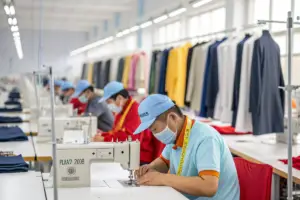
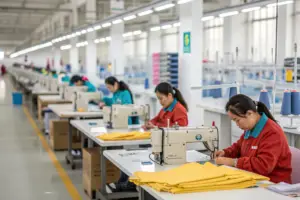
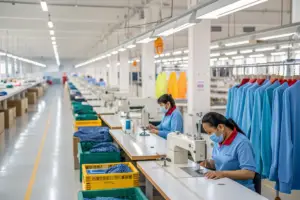
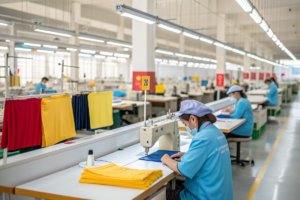
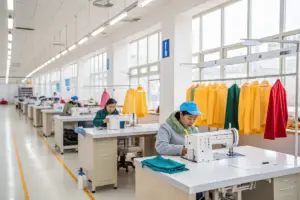
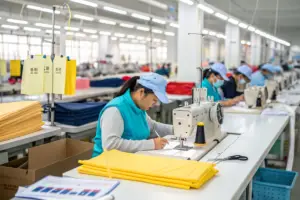
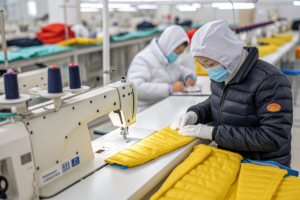
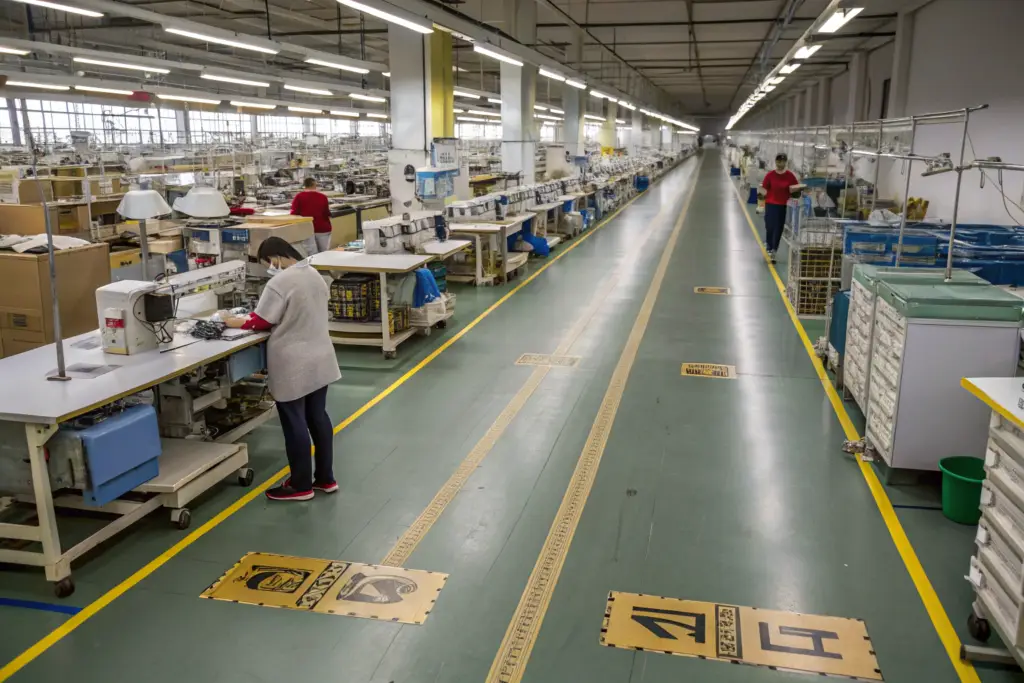
When you walk through my front gate, I don't want you to feel like you're being managed by a sales team. I want you to feel like you're entering a production environment that runs on systems, not on my personal charisma. The first thing you'll notice is probably the quiet. A well-organized sewing floor isn't chaotic and loud. It hums. The machines run at a steady rhythm. The material handling carts move along taped floor lanes. The cutting room has its own climate-controlled enclosure to keep the denim at a consistent humidity. You'll see things that a staged showroom can't fake: the wear on the floor paint in the high-traffic areas, the maintenance logbooks hanging next to each machine, the way the workers glance up at you briefly and then return to their tasks. A factory that's hiding something feels tense when a visitor walks through. A factory that's proud of its operation feels relaxed and focused.
I usually start a tour in the fabric warehouse. This is deliberate. I want you to see the raw material before you see the finished product. You can walk up to the denim rolls, touch the fabric, read the mill labels, and check the batch numbers. I'll show you our shrinkage test station right there in the warehouse corner, with its small washing machine and the clipboard hanging on the wall with logged results. This sets the tone for the entire visit: we don't hide our processes, we put them on display.
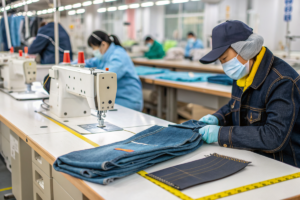
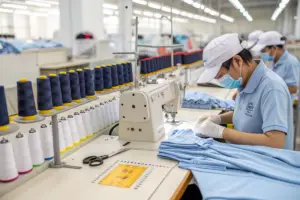
From the warehouse, we move to the cutting room. This is often the most impressive stop for visitors who have a technical background. They see the automatic spreading machine laying down fifty plies of denim with zero tension variance. They see the CAD-driven cutting machines slicing through the fabric stack with millimeter precision. I explain how the digital pattern files are loaded directly from the tech pack they approved, and how the system tracks fabric utilization in real time to minimize waste. After cutting, we walk the sewing lines. I'll point out the inline inspection stations and explain how we catch defects at the source. Then we visit the wash house, which is a tour in itself—I'll cover that in a dedicated section. Finally, we end in the finishing and packing area, where you can see the final inspection, the labeling, and the carton packing. A full tour takes about ninety minutes if you're thorough. I never rush this. A rushed tour is a sales pitch. A patient tour is due diligence.
How Do We Prepare Our Production Floor for Your Arrival?
Some visitors worry that a factory will "clean up" for their arrival and hide the real working conditions. Let me tell you exactly what we do and don't do before a visit. We don't repaint the floor. We don't hide machines. We don't coach workers on what to say. Those are the behaviors of a factory that has something to hide.
What we do is practical and respectful. We confirm the visit date and time, and we make sure the production schedule has an active denim order running on the lines. There is nothing worse than visiting a factory on a day when the line is idle, because then you're just looking at empty machines. I want you to see work happening. I also assign a dedicated English-speaking guide—usually the account manager who handles that client's region—to accompany you for the entire visit. This person is not a "tour guide" in the corporate sense. They are a production professional who can answer technical questions in detail.
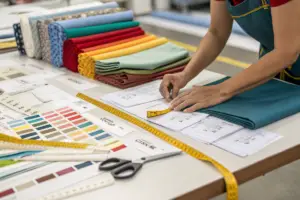
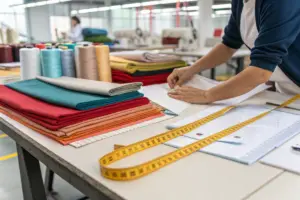
We also prepare a specific set of reference materials for you. On the meeting table in our showroom, we lay out the fabric swatches, wash samples, and trim options relevant to your inquiry. If you sent us a tech pack ahead of time, we'll have a pre-production sample or a similar reference garment ready for you to handle. We do a safety briefing at the start of the tour. You'll be given a visitor lanyard and asked to follow certain safety protocols, like keeping a safe distance from moving machine parts and not touching the chemicals in the wash house without gloves. These protocols are not for show; they are the same rules our workers follow, and they reflect a genuine safety culture.
The factory floor you'll see is the same floor our workers walk onto every morning. The cleaning schedule is daily, not pre-visit. The machine maintenance is weekly, not pre-visit. The fire exits are clear every day, not just when a buyer is coming. If a factory needs more than a quick tidy-up to be presentable, they aren't running a clean operation. At Shanghai Fumao, we don't scramble before a visit because there's nothing to hide.
Can You Speak Directly With Our Sewing and Wash Technicians?
Yes. And I encourage it. A factory owner who stands between the visitor and the workers is a filter, not a facilitator. I will introduce you to the line supervisor and the senior wash technician, and then I'll step back. You can ask them anything. The language barrier exists, of course—most of our technicians speak Mandarin, not English. But your account manager will translate accurately, without editorializing.
I've had visitors ask my workers some very pointed questions over the years. "How long have you worked here?" "Do you get paid overtime?" "Show me the needle guard on your machine." "What happens if you make a mistake?" These are fair questions. A worker in a well-managed factory answers them easily. They've been here for years because the conditions are good. They get paid overtime at the legal rate because the payroll is compliant. Their needle guard is in place because safety is enforced. They tell the supervisor about a mistake because the culture doesn't punish honest errors, it fixes the system that caused them.
I remember a visit from a Canadian brand owner about three years ago. She spent ten minutes talking, through translation, with a woman operating a bartack machine. She asked about the chair ergonomics, the lighting, the break schedule. The operator showed her the adjustable lumbar support on her chair and explained that her team leader checks the lighting angle every month. After the tour, the brand owner told me that conversation was the deciding factor in moving her production to us. She said, "Your operator described her workstation like a professional describing her tools. That's the culture I want behind my product." I couldn't have said it better myself. A worker who takes pride in their workstation makes a better pair of shorts.
How Can You Virtually Tour the Factory If You Can't Travel?
I get it. A physical visit is expensive. Between the flights, the hotels, and the time away from your business, you're looking at a few thousand dollars and a week of your life. For a smaller brand testing a new supplier relationship, that's a lot to commit. I never pressure anyone to visit in person. Instead, I've built a virtual tour capability that I believe is more revealing than a hurried physical walkthrough, because it puts you in control of the camera.
Our virtual tour is not a pre-recorded, edited video that shows only the nicest angles of the newest machines. It's a live, interactive video call conducted by a staff member who walks through the factory with a tablet or a phone on a stabilized gimbal. You tell us where to go and what to zoom in on. If you want to look at the back of a machine, we walk around it. If you want to open a cabinet and see the chemical storage, we open it. If you want to pan slowly across an entire row of sewing stations so you can observe the operator body language, we do that. The tour is unscripted. We don't rehearse a route.
The technology setup is straightforward. We use a standard video conferencing platform, usually Zoom or Teams, whatever the client prefers. The device on our end is connected to a stable fiber internet line, so the video quality is high and the feed doesn't drop. We use a wide-angle lens attachment so you get a broader field of view than a standard phone camera. The sound is important too. A factory has background noise—machines running, fabric moving, the ventilation system humming. I want you to hear that. A silent factory is a staged factory. The ambient sound tells you production is real and active.
I recommend scheduling a virtual tour during our operating hours, which is Shanghai time, morning or early afternoon. That's when the lines are running at full capacity. We can accommodate evening or early morning calls for U.S. clients, but you'll see a less active floor. I also recommend blocking out at least sixty minutes. A thorough virtual tour, with time for you to ask questions and direct the camera, takes time. Rushing it defeats the purpose. The cost to you is zero. I absorb the staff time because I consider it a sales investment. A client who has seen our operation live, even through a screen, is a client who trusts us.
What Technology Do We Use for Live-Streamed Inspections?
The virtual tour is a general overview. A live-streamed inspection is a more focused, more rigorous process. It's designed to mirror a third-party audit as closely as possible, but with you as the auditor, directing the inspection in real time.
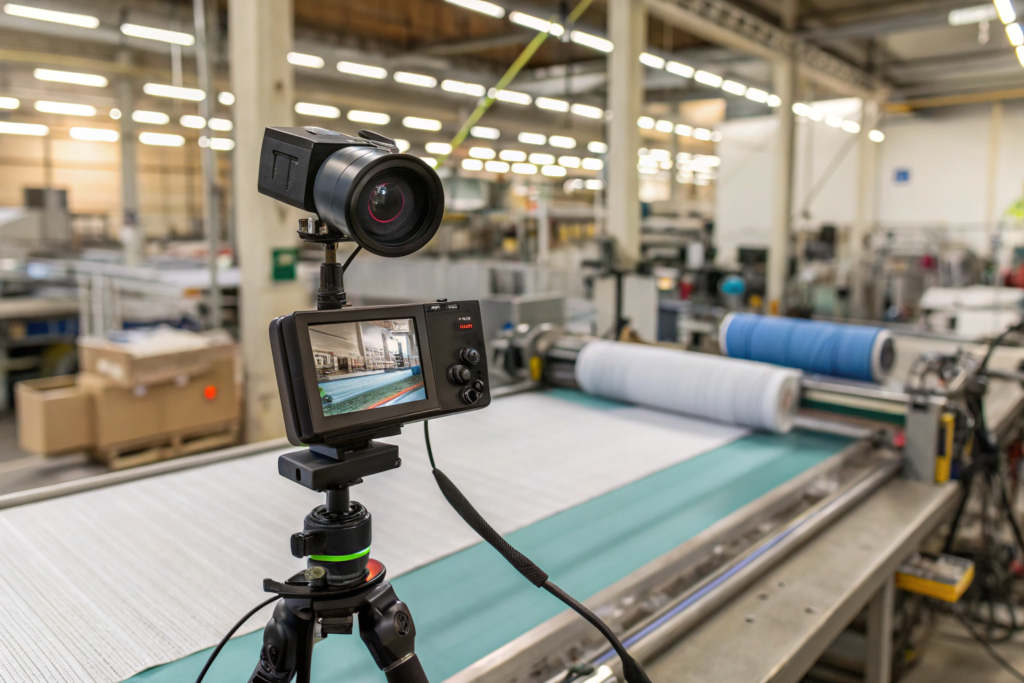
For these sessions, we use a multi-camera setup. The primary camera is a high-resolution handheld device with image stabilization, operated by a staff member who follows your instructions. We can also deploy a secondary camera on a tripod for a fixed wide shot of a specific area, so you can watch a process continuously while the handheld camera moves in for close-ups. The video feed is high enough quality that you can read the date stamps on a fire extinguisher inspection tag or see the stitch density on a seam.
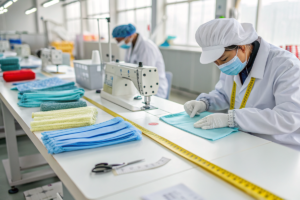
We can integrate measurement tools into the stream. If you want to verify the waist measurement on a pair of shorts pulled randomly from the finishing line, we put the short on a flat inspection table, position the camera directly overhead, and hold a calibrated measuring tape against the waistband. You read the measurement yourself on your screen. We don't tell you the number; you see it with your own eyes. We can do the same for fabric weight verification, placing a sample swatch on a digital scale that is clearly visible in the camera frame. This direct observation eliminates the "trust me" dynamic and replaces it with a "see for yourself" dynamic.
We also record the entire session and send you the video file afterward. This recording serves as a reference document. If a question comes up later about a specific detail—"Did we check the pocket lining fabric in that session?"—you can pull the timestamped video and verify. Some of our clients share these recordings with their retail buyers as evidence of factory conditions. The recording is unedited, which adds to its credibility. A jump-cut video is suspicious. A continuous sixty-minute feed with natural pauses, background noise, and occasional unexpected moments (like a worker walking past and waving) is authentic.
How Do You Verify Our Claims Without Physically Touching the Product?
This is the hardest part of remote evaluation. You can see the denim. You can watch the sewing. But you can't touch the fabric, feel the hand, or test the stretch recovery with your own fingers. We've developed several workarounds that, while not perfect, get you very close.
For fabric hand feel, we use what I call a "comparative handling demonstration." We take the fabric swatch you're considering and a reference swatch you already know—perhaps a sample from a previous order or a widely available benchmark fabric. We hold both swatches up to the camera simultaneously, and then we perform a series of physical manipulations: crumpling, stretching, folding, and rubbing the surface. You watch how the fabrics respond side by side. A stiff 15oz denim crushes differently than a soft 10oz denim. A stretch denim with good recovery snaps back quickly; one with poor recovery stays deformed. You can see these differences even through a screen if the demonstration is done slowly and clearly.
For color accuracy, we go a step further. We use a calibrated color reference card in the video frame, positioned next to the denim sample. We also send you a physical lab dip swatch by express courier before production begins. The video inspection is for verification that the bulk fabric matches that approved swatch. We hold the approved swatch and the bulk fabric side by side under the same lighting, with the color card in frame. Your eye can detect color variations by comparing the two against the known reference.
For construction details, we use macro lens attachments that can focus on individual stitches. You can count the stitches per inch on your screen. You can see the thread texture, the bartack density, the edge finishing inside a pocket. The macro close-up often reveals more than a naked-eye physical inspection would, because the camera can zoom in to a level of detail that the human eye struggles to resolve. I've had clients tell me they caught a minor thread tension issue during a macro live-stream that they probably would have missed if they were standing in the factory, because the camera magnified it. These digital verification methods don't replace physical touch entirely, but combined with express-shipped samples, they provide a level of confidence that is sufficient for a production decision.
What Details Reveal a Factory's True Quality During a Visit?
When I walk through a competitor's factory—which I do occasionally at trade shows or industry events—I'm not looking at the fancy reception area or the new coffee machine. I'm looking at the edges. The corners. The things that a tour guide doesn't think to stage. These peripheral details are where a factory's true quality culture reveals itself. I encourage every visitor to our factory to look at these same details. If they pass inspection, the overall operation is probably sound. If they fail, no amount of polished showroom samples can compensate.
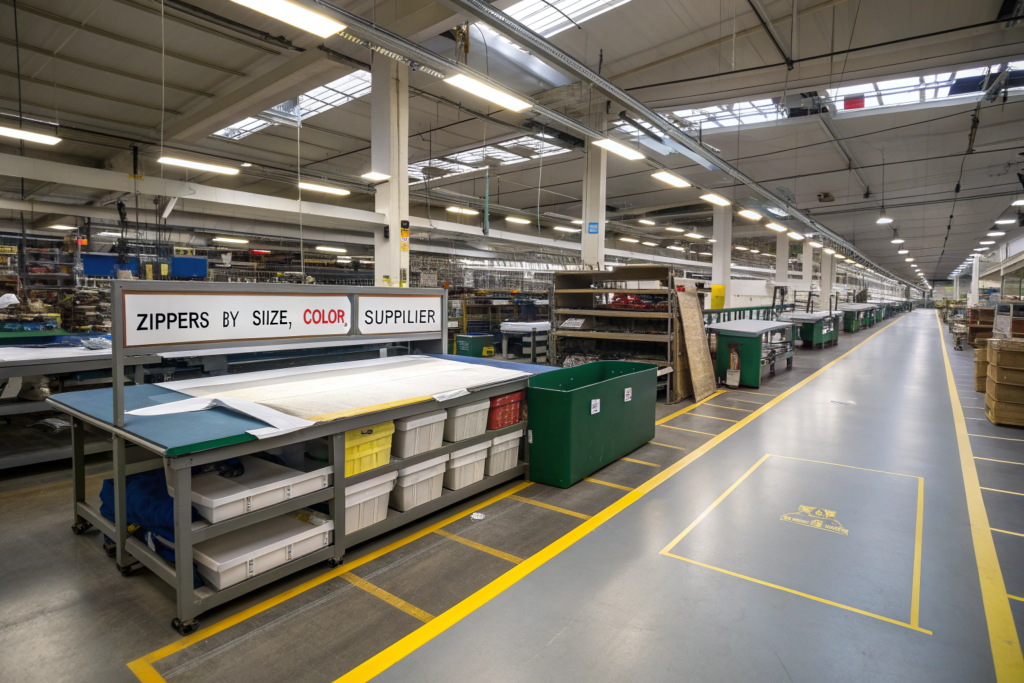
I've developed a mental checklist over the years. The first thing I notice is the floor. Not the main aisle where the tour walks, but the corners under the cutting tables. Is there accumulated fabric dust? Are there stray threads? A clean floor in the high-traffic areas is basic. A clean floor under the heavy, hard-to-move equipment is evidence of a thorough cleaning culture. The second thing I notice is the labeling. In a well-organized factory, every shelf, every bin, every roll of fabric has a clear, dated, legible label. Handwritten is fine; missing is not. A bin of zippers with no label telling you the size, color, and supplier is a bin that will eventually cause a production error.
The third detail is the notice boards. Every factory has them. The question is whether they are alive or dead. A live notice board has recent dates. It has a safety committee meeting minutes from last week. It has a production target update from today's morning shift. It has a handwritten note correcting a quality issue spotted yesterday. A dead notice board has yellowed papers from six months ago and a "Happy New Year" poster that's still up in July. A dead notice board means management stopped communicating with the floor. That's a red flag of the highest order.
Why Should You Inspect the Wash House Ventilation and Drainage?
The wash house is the most chemically intensive part of any denim operation. It's also the area most likely to be excluded from a standard tour. If a factory owner tries to keep you out of the wash house, end the meeting and leave. That's a deal-breaker.
When you step into our wash house, the first thing you should notice is the air. It should not sting your eyes. It should not smell acrid or sharply chemical. Good ventilation is non-negotiable. We have large-diameter exhaust ducts above every washing machine and spray booth, pulling fumes out and venting them through a scrubbing system before release. The air should feel fresh, or at least neutral. If the air is thick, stagnant, or makes you want to cough, the workers are breathing that for eight hours a day. That's a health crisis waiting to happen, and it also means the chemical reactions on the fabric are happening in an uncontrolled atmosphere, which can affect wash consistency.
The second thing to inspect is the floor drainage. A wash house uses a lot of water. That water needs somewhere to go. Look at the floor. Is there standing water pooling around the machines? That's a slip hazard and a sign of poor drainage design. Are the drainage channels covered with grates? Are those grates clean or clogged with lint and chemical residue? A well-maintained drainage system moves water away quickly and keeps the floor dry. We installed sloped flooring and wide-channel drains with removable stainless steel grates in our wash house three years ago. It was a significant investment in concrete work, but it transformed the safety and cleanliness of the space. Before that, we had a persistent puddling problem near the rinsing station, and I worried constantly about a worker slipping.
The third detail is chemical storage. The drums of potassium permanganate, enzymes, bleaching agents, and softeners should be stored on secondary containment pallets, not directly on the floor. Each drum should have a clear, waterproof label with the chemical name, the hazard classification, and the date of receipt. There should be a chemical spill kit visibly accessible, not buried in a storage closet. The Material Safety Data Sheet binder should be present and current. If any of these elements are missing, the wash house is being run irresponsibly, and the quality of the washes coming out of it is likely inconsistent because the chemical handling is sloppy.
How Do You Assess the Cutting and Sewing Workflow Efficiency?
Workflow efficiency isn't about speed. It's about the logical flow of materials through the factory floor. A well-designed denim production line moves in one direction, without backtracking. The fabric enters at the warehouse, moves to cutting, flows to sewing, flows to washing, flows to finishing, and exits to packing. There are no carts of half-sewn shorts being wheeled back across the sewing floor against the main flow. Backtracking indicates a bottleneck or a layout problem.
When I walk a visitor through our sewing line, I show them the bundle system. Each bundle of cut denim pieces travels in a small cart or a hanging carrier. The bundle is accompanied by a paper traveler or a digital RFID tag that lists every operation, the operator ID for each station, and the target completion time. You can pick up any bundle and read its history. You can see if a bundle has been sitting idle between stations. An idle bundle indicates a line imbalance, where one station is faster than the next and work is piling up. We track this daily and rebalance stations as needed.
Another efficiency indicator is the machine layout. Our denim sewing line is arranged in a cellular configuration. Instead of a long, straight assembly line where each worker does one tiny operation and passes the garment to the next, we group operations into cells. One cell handles all the pocket assembly. Another handles the fly and waistband. This reduces the travel distance of each bundle and allows the cell team to balance their own workflow. It also improves quality, because the team that sews the pockets all day becomes exceptionally good at sewing pockets.
The final efficiency detail I point out is the maintenance station. Somewhere on the sewing floor, there should be a dedicated area with a trained mechanic, spare machine parts, and a maintenance schedule posted on the wall. Sewing machines break. Needles dull. Bobbin cases wear out. A factory that doesn't have a visible, active maintenance presence will suffer frequent downtime and produce inconsistent stitch quality. When you visit, look for this station. If you don't see one, ask where it is. If the answer is vague, the factory is running its machines into the ground.
When Is the Best Time to Schedule a Production Line Visit?
Timing matters. If you visit my factory in late February, you'll see a frantic, high-pressure environment as we push out Spring/Summer orders. If you visit in late August, you'll see the same intensity for Fall/Winter. If you visit during the Chinese New Year holiday, you'll see an empty factory, and I'll be at home with my family. So, when you schedule your visit, you need to align it with both our production calendar and your own sourcing timeline.
The ideal time to visit for a Summer denim shorts program is September or October of the preceding year. This is when we are in the development phase. The bulk production hasn't started yet, so the lines are less pressured, and my development team has time to sit with you and work through wash samples and fit revisions. You'll see the sampling room in action, which is arguably more important for your project than seeing bulk production. The sampling room is where your ideas become physical garments. Visiting during development allows you to collaborate in person on the fit and finish.
If your goal is to audit a running production line and verify our bulk manufacturing capability, then visit during our peak production months: February through April for Summer goods, or August through October for Winter goods. During these windows, the lines are running at full speed, and you can observe the entire operation under realistic, high-pressure conditions. You'll see how we manage quality when we're pushing volume. You'll see if the inline inspection system holds up under load. You'll see the real factory, not the relaxed, low-volume version.
I discourage visits during the two weeks surrounding Chinese New Year, which falls in late January or early February. The factory closes for the holiday, and the weeks immediately before and after are chaotic, with workers traveling home and returning. You won't get a representative view of our operation. I also suggest avoiding August, which is peak summer heat in Shanghai. The factory is air-cooled but not air-conditioned, and a visitor from North America will be uncomfortable walking the floor in 35-degree Celsius humidity. April, October, and November offer pleasant weather and representative production conditions.
Should You Visit During a Running Denim Order?
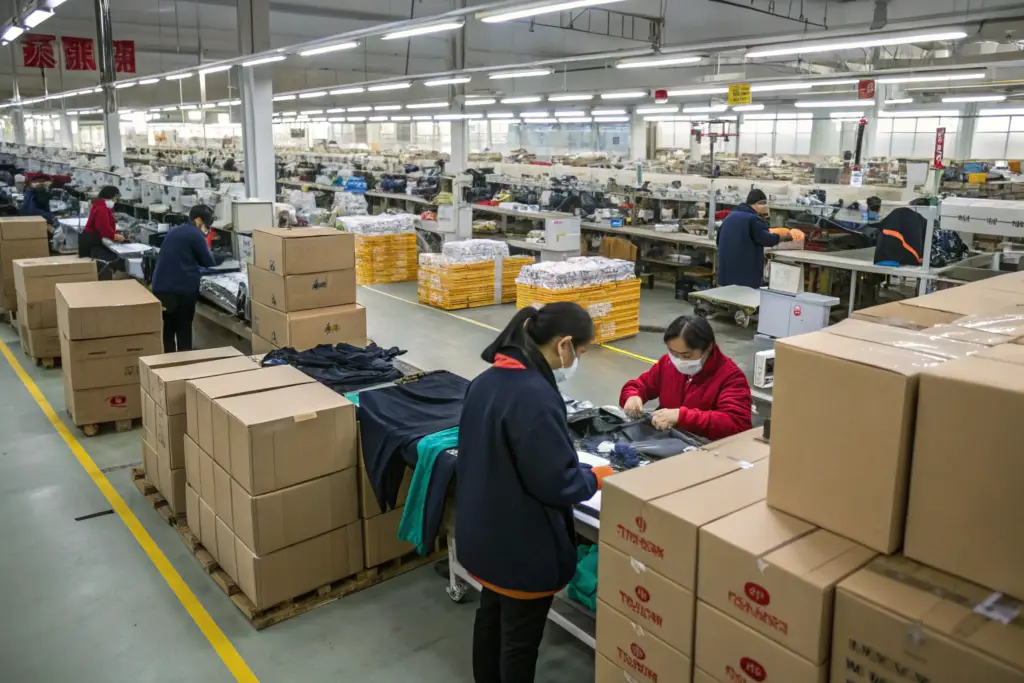
Absolutely. In fact, I prefer it. A factory operating at 80% capacity with a real order on the line is the most honest version of itself. You'll see the actual working pace, the actual supervisor-worker interactions, the actual quality checks happening in real time. A factory running a sample or a tiny trial order for your visit isn't showing you how they handle the pressure of your 10,000-unit program.
When you visit during a running order, I'll take you to the line that's sewing the denim shorts. You can stand at the end of the line and watch the finished pieces come off. You can pick one up, measure it, inspect the seams, and compare it to the spec sheet on the spot. You can watch the inline inspector work. You can see the rejection bin and count how many pieces were pulled in the last hour. That number should be low but not zero. A zero-defect bin during a high-volume run is suspicious. It suggests the inspectors aren't doing their jobs or the rejects are being hidden. A low, consistent reject rate with documented reasons is a sign of a functioning QC system.
I also recommend asking to see the order that shipped the previous week, if it's still in the warehouse awaiting pickup. The finished, packed cartons represent the quality that actually leaves the factory. Open a carton at random. Pull a pair of shorts from the middle of the stack, not the top. Inspect it. This is the ultimate test. The shorts in that carton have passed through the entire production and QC process. They are what your customer will receive. If they look good, the factory's systems work. If they look different from the samples you approved, there's a disconnect between sampling and production that needs investigation.
How Far in Advance Should You Book a Factory Appointment?
I ask for at least two weeks' notice for an on-site visit. This isn't because I need to prepare the factory—as I've said, the factory is visit-ready every day. It's because I want to make sure the right people are available to spend time with you. If you fly to Shanghai without telling me and show up at the gate, I'll welcome you, but my senior wash technician might be at a supplier meeting, and my head pattern maker might be in a fitting. You'll get a tour, but you won't get the deep technical conversations that make a visit valuable.
Two weeks gives us time to schedule a meaningful agenda. I'll confirm which team members you want to meet. I'll make sure a relevant production run is scheduled on the day of your visit. I'll prepare the samples, swatches, and cost breakdowns specific to your project. I'll also help you with logistics—airport pickup, hotel recommendations, and any visa invitation letters you might need. We've hosted enough international visitors that we have this process down to a routine.
For a virtual tour, I need about three days' notice. The scheduling is simpler because no travel is involved, but I still need to align the call time with a running production shift. I'll send you a calendar invitation with the Shanghai time and your local time clearly stated, along with the video link and a suggested agenda. The agenda is flexible, but I find that having a loose structure helps us cover everything efficiently. A typical virtual tour agenda includes: a five-minute introduction and safety briefing, fifteen minutes in the fabric warehouse and cutting room, twenty-five minutes on the sewing floor with live Q&A, fifteen minutes in the wash house, and ten minutes in finishing and packing, with a wrap-up discussion at the end. You're free to deviate from this. It's your tour. I'm just the guide.
Conclusion
Whether you step onto my factory floor in person or dial in through a video link from halfway around the world, the invitation is genuine and the access is real. I've designed the visit experience—physical and virtual—to be the most transparent view of a denim production line you'll find anywhere. You can inspect the fabric rolls in the warehouse, watch the CAD cutters slice your patterns, observe the sewing line operators at their stations, walk the wash house floor and check the drainage and ventilation, and pull finished shorts from sealed cartons for a final inspection. You can talk to the technicians who make your product. You can ask hard questions. You can verify our claims with your own eyes.
This openness isn't a marketing tactic. It's a business philosophy. I believe that a factory that hides its floor has something to hide. A factory that welcomes scrutiny earns long-term partnerships. The distributors and brand owners who work with Shanghai Fumao year after year are the ones who have walked our lines, asked their questions, and left satisfied that they've found a manufacturing partner, not just a vendor.
If you're considering a denim shorts program and you'd like to schedule a visit—on-site or virtual—please reach out to our Business Director, Elaine. She can coordinate the timing, send you a proposed agenda, and handle all the logistical details. You can contact her directly at elaine@fumaoclothing.com. Come see how we make denim shorts. I'll keep the factory floor ready for you.