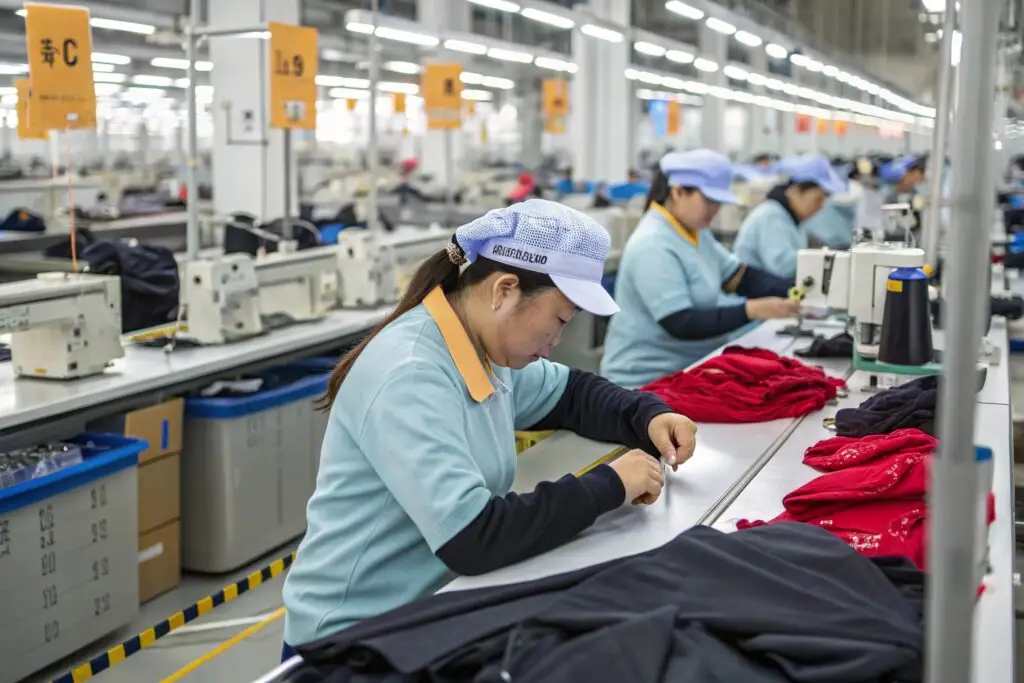
The fashion industry stands at a crossroads where mass production meets personalization. As consumers increasingly demand unique, made-to-order garments, supply chains originally built for bulk manufacturing face unprecedented challenges.
While traditional fashion supply chains struggle with individualized demand, innovative manufacturers are adapting through technology investments, with 68% of apparel factories now implementing some form of customization-capable production - though full personalization at scale remains challenging.
The shift toward personalized fashion isn't just changing what we wear - it's transforming how clothing gets made and delivered. Let's examine whether existing infrastructure can support this revolution.
What Is the Supply Chain in the Fashion Industry?
Fashion supply chains represent complex global networks that have evolved for efficiency over flexibility. Understanding their structure reveals why personalization presents such a disruption.
The fashion supply chain encompasses all steps from raw material sourcing to final delivery, typically spanning 5-7 countries across 4 continents, with lead times averaging 6-9 months for traditional bulk production models.
How Do Traditional Fashion Supply Chains Operate?
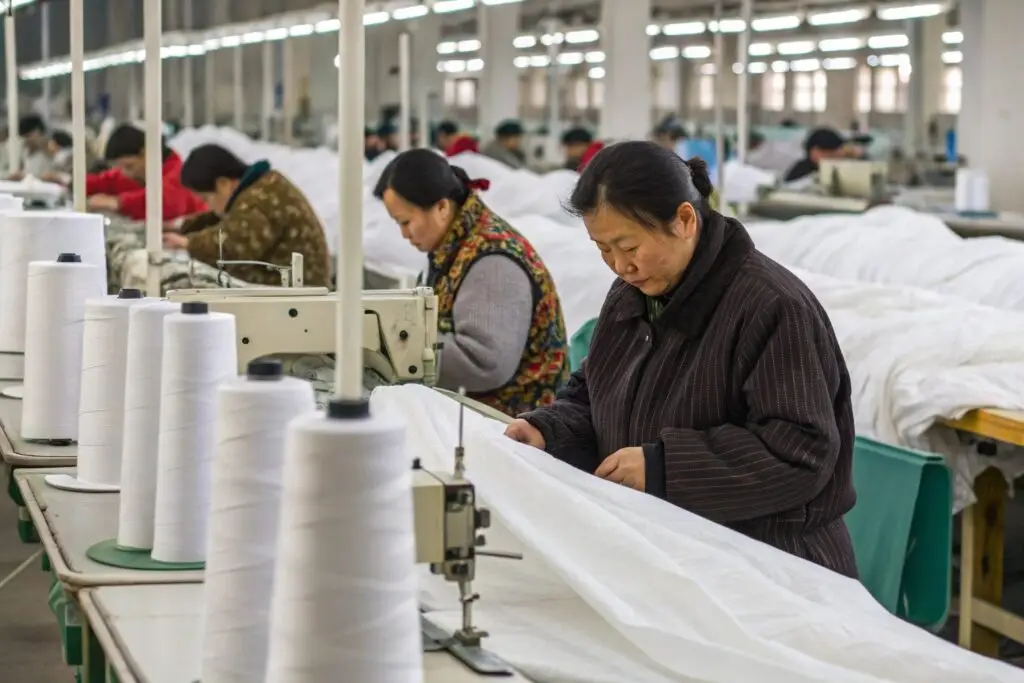
The conventional linear model flows through distinct phases:
-
Material Sourcing1 (Weeks 1-12)
- Fiber production
- Fabric mills
- Dyeing facilities
-
Manufacturing2 (Weeks 13-24)
- Pattern making
- Cutting
- Sewing
- Finishing
-
Distribution (Weeks 25-36)
- Quality control
- Shipping
- Warehousing
- Retail delivery
Key characteristics:
- 95% standardized processes
- Minimum order quantities
- Batch-based production
- Long lead times
What Infrastructure Limitations Hinder Personalization?
Traditional systems face multiple customization barriers:
| Challenge | Impact | Standard Solution | Personalization Conflict3 |
|---|---|---|---|
| Bulk Material Orders | Fabric MOQs | Large rolls | Small-batch needs |
| Assembly Line Setup | Changeover costs | Long runs | Frequent switches |
| Quality Standards | Consistency focus | Uniformity | Individual variation |
| Shipping Logistics | Container loads | Bulk shipments | Single-item fulfillment |
How Does Zara Manage Its Supply Chain?
Zara's revolutionary supply chain offers insights into balancing responsiveness with efficiency - a crucial capability for personalized fashion.
Zara manages its supply chain through vertical integration, local production clusters, and rapid replenishment systems that can design, produce, and deliver new styles in 2-3 weeks - though still focused on small batches rather than true individualization.
What Zara Strategies Could Support Personalization?
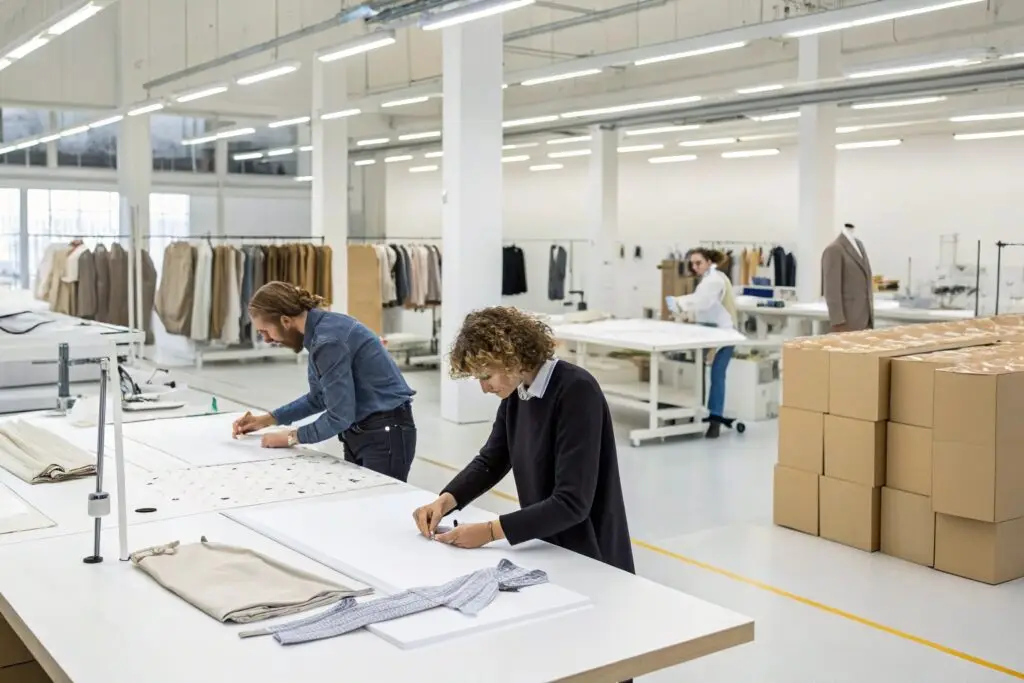
Adaptable elements from Zara's model:
-
- 50% manufacturing near HQ
- Quick sample iterations
- Fast fabric access
-
- Store feedback loops
- Weekly production updates
- Small initial runs
-
- Own factories for 40% production
- Direct material control
- No middlemen delays
Potential customization applications:
- Regional personalization hubs
- Digital design integration
- Dynamic material allocation
Where Does Zara's Model Fall Short for True Customization?
Limitations for individualized fashion:
| Zara Strength | Personalization Requirement | Gap |
|---|---|---|
| 2-week production | Immediate customization | Speed |
| 500-unit batches | Single-unit production | Scale |
| Standard sizing | Made-to-measure | Flexibility |
| Trend forecasting | Individual preferences | Data |
Is Fast Fashion Good or Bad for the Fashion Supply Chain?
The fast fashion revolution trained supply chains for speed but left them ill-prepared for personalization's complexity. The legacy presents both advantages and obstacles.
Fast fashion developed supply chain speed and flexibility but prioritized volume over variety, creating systems that can quickly produce thousands of identical items yet struggle to efficiently make hundreds of unique ones.
What Positive Capabilities Did Fast Fashion Create?
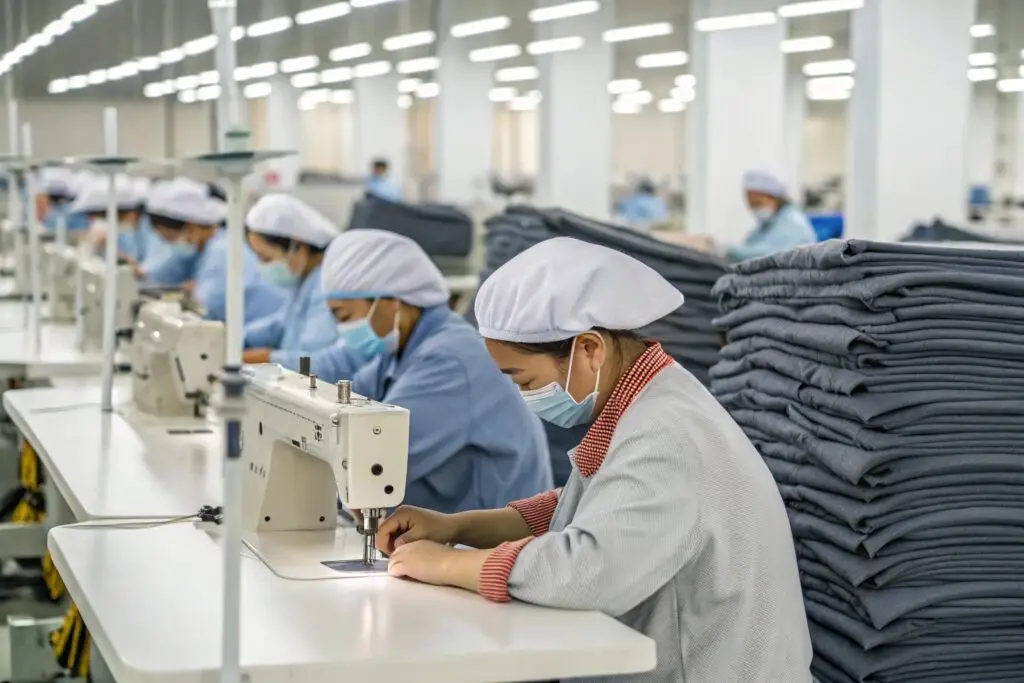
Useful foundations for customization:
-
- 3-day sample turnaround
- Digital pattern making
- Instant feedback loops
-
- Smaller batch sizes
- Flexible scheduling
- Multi-skilled workers
-
- Air freight networks
- Distributed fulfillment
- Real-time tracking
Adoption rates:
- 78% of factories added quick-change capabilities
- 62% implemented digital workflow systems
- 45% trained cross-functional teams
What Harmful Legacies Remain?
Problematic fast fashion inheritances:
| Practice | Customization Conflict | Solution Needed |
|---|---|---|
| Bulk Material Dyeing | Small-lot color needs | Digital printing |
| Standard Size Runs | Individual measurements | 3D pattern tech |
| Seasonal Buying | Continuous input | On-demand systems |
| Price Pressure | Customization costs | Value education |
Does Supply Chain Include Demand?
Traditional supply chain thinking separated production from consumption, but personalized fashion requires integration of these historically distinct domains.
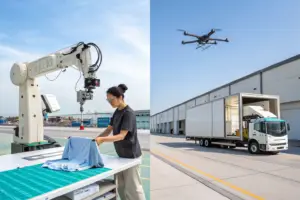
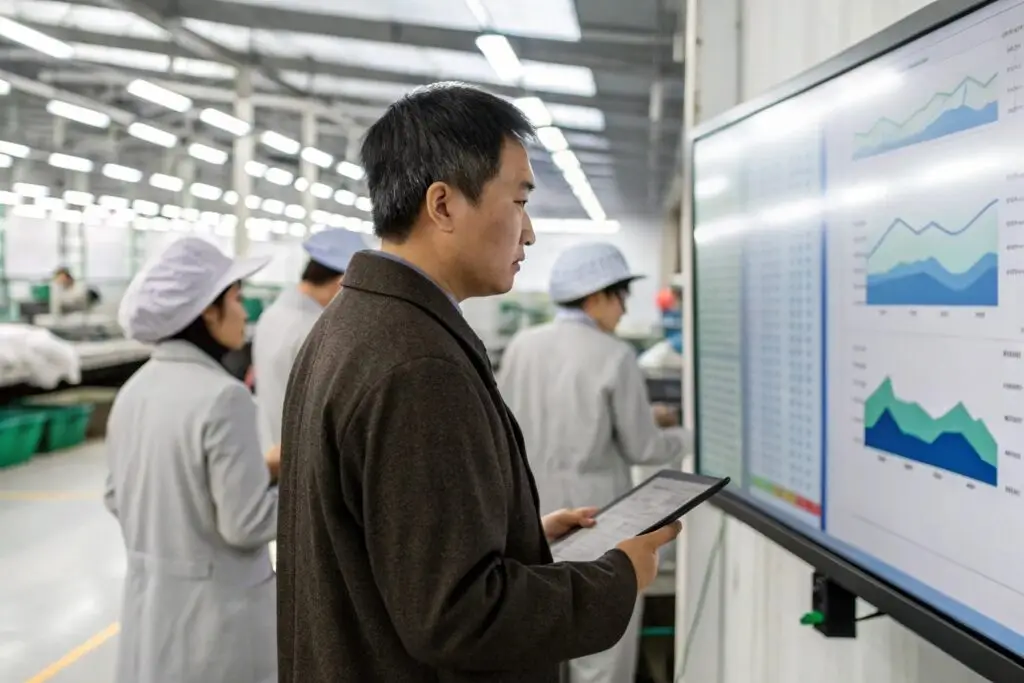
Modern supply chains increasingly incorporate demand planning through AI forecasting and real-time sales data, but true individualized fashion requires demand integration at the single-unit level - a capability only 12% of apparel manufacturers currently possess.
How Can Supply Chains Absorb Individual Demand?
Emerging solutions for unit-level responsiveness:
-
- Connects customer specs to machines
- Tracks personalized orders
- Enables micro-routing
-
- Component-based systems
- Flexible work cells
- Parallel processing
-
- Local micro-factories
- On-site customization
- Last-mile personalization
Implementation challenges:
- 68% cite legacy system limitations
- 55% face skills gaps
- 42% struggle with cost justification
What New Capabilities Are Required?
Essential upgrades for demand-integrated supply chains:
| Traditional Capability | Personalized Requirement | Technology Enabler |
|---|---|---|
| Bulk Material Orders | Just-in-time sourcing | Digital inventory |
| Linear Production | Non-linear workflows | IoT tracking |
| Seasonal Planning | Continuous input | AI forecasting |
| Standard Logistics | Unique packaging | Smart labeling |
Conclusion
While existing fashion supply chains face significant challenges in supporting true personalization at scale, innovative manufacturers are proving it's possible through technology adoption and operational reinvention. The future belongs to hybrid systems blending mass production efficiency with craft customization flexibility - and that transformation is already underway.
-
Explore this link to understand effective strategies in Material Sourcing that can enhance efficiency and sustainability in fashion. ↩
-
Discover insights on how Manufacturing processes shape the fashion industry and influence product quality and delivery. ↩
-
Learn about the complexities of Personalization Conflict and how they affect customer satisfaction and brand loyalty in fashion. ↩
-
Explore how local production clusters can enhance responsiveness and personalization in fashion, benefiting brands like Zara. ↩
-
Learn how demand-responsive systems can optimize inventory and meet customer needs effectively, crucial for personalization. ↩
-
Discover the advantages of vertical integration in fashion, including control over production and faster response times for customization. ↩
-
Explore how Rapid Prototyping enhances creativity and efficiency in fashion design, leading to innovative products. ↩
-
Learn about the advantages of Responsive Manufacturing in adapting to market demands and improving production efficiency. ↩
-
Discover how Agile Logistics streamlines supply chains and enhances customer satisfaction in the fast fashion sector. ↩
-
Explore how Digital Thread Technology enhances supply chain responsiveness and connects customer specifications to production. ↩
-
Learn about Modular Manufacturing and its role in creating flexible and efficient production systems. ↩
-
Discover the advantages of Distributed Production and how it enables on-site customization and personalization. ↩