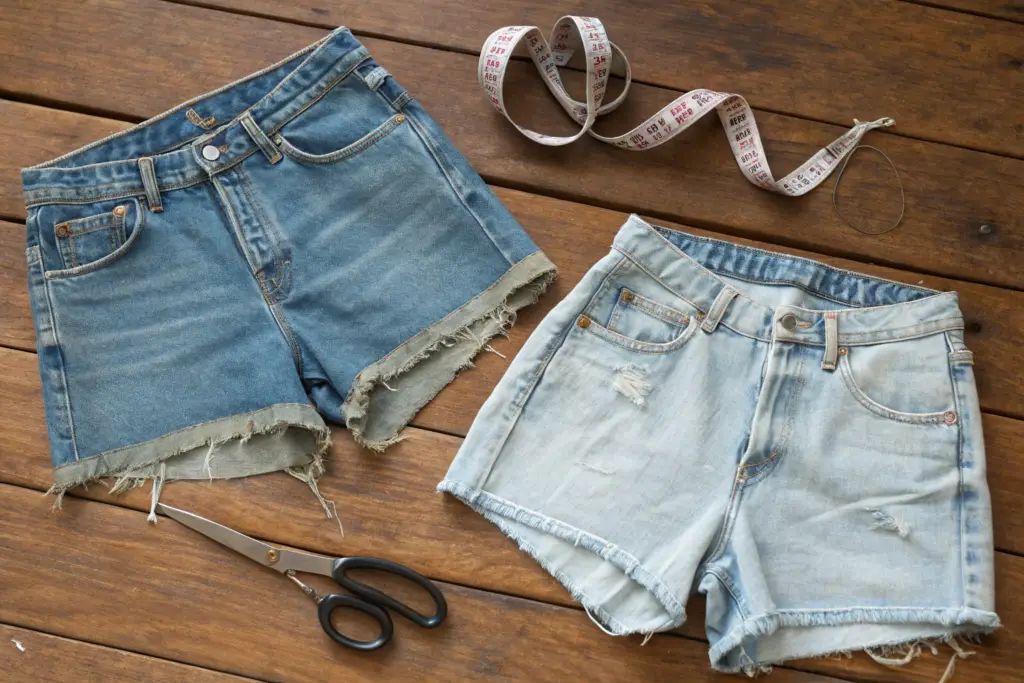
I keep a pair of shorts in my office that most people would throw away. They're from 1987. The denim is soft as flannel. The indigo has faded to a pale, greenish-blue that no chemical bath can exactly reproduce. The hems are frayed from three decades of contact with asphalt and grass. The left back pocket has a faint rectangular fade where a wallet sat for ten thousand hours. These shorts belong to my father. He wore them every summer for thirty years. I keep them not as a sentimental object—though they are that—but as a technical challenge. A reminder of what authentic vintage denim looks and feels like, and a benchmark for what our replication work aspires to achieve. When a brand owner comes to me with a vintage reference, whether it's a 1990s skate short or a 1970s cutoff, they're asking me to do something far more complex than match a color. They're asking me to recreate time. I'm Richard, the owner of Shanghai Fumao. This article is about how we do it.
What Makes a Vintage Denim Short So Hard to Replicate?
The short answer is time. A genuinely vintage pair of denim shorts has been worn for hundreds or thousands of days, washed dozens or hundreds of times, exposed to sunlight, sweat, friction, and the specific body mechanics of a single human being. You cannot replicate that with a washing machine recipe and a laser file alone. The aging is not just visual. It's physical. The cotton fibers have been abraded and re-abraded. The yarns have relaxed and shifted. The seams have puckered in response to the specific stress patterns of the wearer's movements. The fabric has molded to a particular body shape and then relaxed again when the shorts were washed and dried. This three-dimensional, structural aging is what separates a convincing vintage replication from a flat, obviously fake "distressed" short.
The second challenge is that vintage denim was made differently. The cotton was often a different varietal—longer staple, less uniformly processed—than the cotton used in most commercial denim today. The yarn was spun on older ring-spinning frames that produced a slightly irregular, slubby character. The indigo dyeing was often done with rope-dyeing techniques that created a different penetration pattern than modern slasher dyeing. The fabric was woven on shuttle looms that produced a narrower width and a self-finished selvedge edge. These material and process differences add up to a denim that ages differently from modern denim. If you start with a modern, uniform, efficiently-produced denim and try to distress it to look vintage, the result will always feel slightly wrong to a trained eye.
The third challenge is that vintage fading is highly localized and irregular. A pair of shorts worn by a bicycle messenger fades differently from a pair worn by a student who walks across a campus quad. The messenger's shorts will have a pronounced saddle fade on the seat, heavy abrasion on the inner thighs, and a distinctive phone or tool fade on one pocket. The student's shorts will have softer, more diffuse fading with honeycomb patterns behind the knees and gentle whiskering at the front hip. A convincing replication must capture the specific fade story of the reference garment, not just apply a generic "distressed" pattern.
At Shanghai Fumao, we approach vintage replication as a forensic process. We don't just look at the reference garment and try to make something similar. We deconstruct it. We analyze the fabric, the thread, the hardware, the construction techniques, the wear patterns, and the chemical changes in the indigo. We build a technical profile of the original, and then we reverse-engineer a manufacturing process that reproduces each layer of aging. It's slow, meticulous work, and I love it.
The brands that come to us for vintage replication are typically premium-positioned. They're heritage menswear labels, boutique denim specialists, and fashion-forward streetwear brands that want to offer a "found vintage" aesthetic without the impossible logistics of sourcing genuine vintage garments at scale. They understand that a convincing replication commands a higher retail price because the customer is paying for the artistry and the technical difficulty, not just the materials and labor.
How Do We Analyze a Vintage Reference Garment?
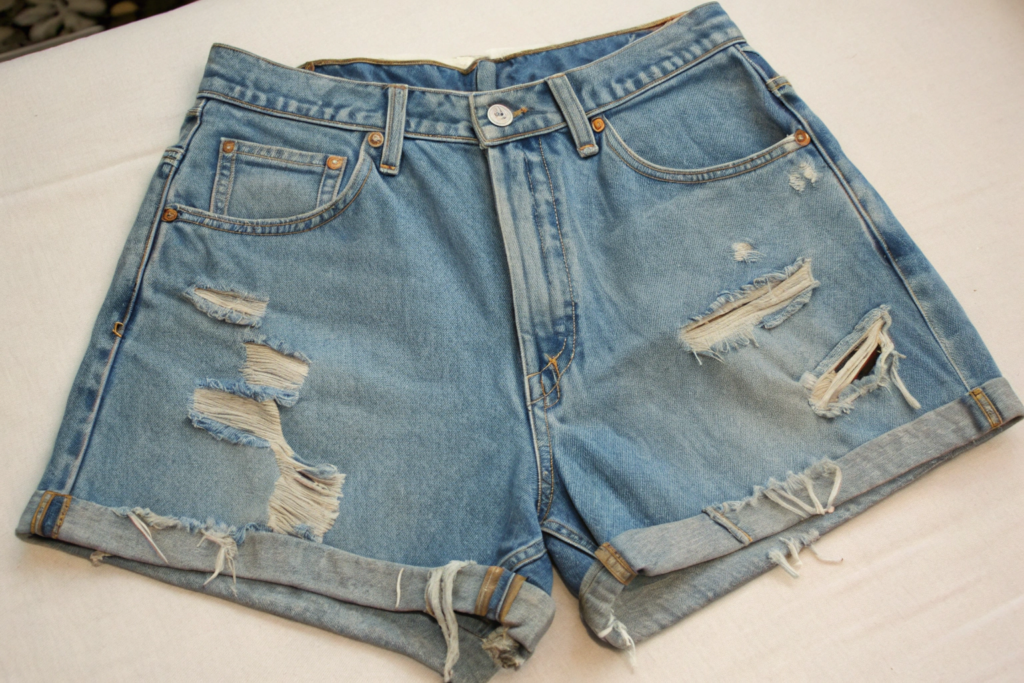
When a client sends us a vintage reference, the first thing we do is document it exhaustively. The reference garment goes to our development lab, where a team of three people—our head pattern maker, our senior wash technician, and our fabric specialist—spend several hours with it.
The fabric specialist begins by identifying the fiber content and the yarn structure. We take a small sample from an inconspicuous area—usually the inside of the waistband—and analyze it under a microscope. We look at the cotton staple length, the yarn twist direction and tightness, the presence of any slub or nep character, and the density of the weave. We measure the fabric weight with a precision scale. We identify whether the denim is ring-spun or open-end, shuttle-loomed or projectile-loomed. These technical details define the starting point for sourcing or developing a matching base fabric.
The pattern maker studies the construction. They measure every seam, every pocket, every bartack. They examine the stitch type and the stitch density. Is the inseam a flat-felled seam or an overlock? Are the back pockets attached with a single needle or a double needle? What's the shape of the coin pocket? How is the waistband constructed? They photograph the construction details and create a technical drawing that documents every operation. If the vintage short has any unique construction features—a particular way of finishing the fly, a specific shape to the back pocket—those are captured precisely.
The wash technician has the most complex job. They map the fade pattern in detail, photographing every area of the short under controlled lighting and measuring the color values at multiple points with a spectrophotometer. They identify where the indigo has been removed by abrasion, where it has been chemically altered by oxidation, and where it remains relatively intact. They note any staining, yellowing, or tint shifts. They create a fade map that becomes the blueprint for the wash development process.
All of this data is compiled into a vintage replication brief. The brief is a technical document that describes the reference garment in exhaustive detail. It becomes the contract between us and the client: this is what we are trying to achieve. The brief is shared with the client for approval before any development work begins. This ensures that our technical analysis aligns with the client's aesthetic intent.
Why Is Identifying the Original Denim Weight and Weave Critical?
The denim is the foundation. If the foundation is wrong, everything built on top of it—the wash, the fading, the drape—will be wrong too. A lightweight 8-ounce denim drapes and fades completely differently from a heavyweight 14-ounce denim. An open-end weave has a uniform, flat surface that doesn't produce the irregular fade patterns of a ring-spun slub denim. A projectile-loomed denim lacks the selvedge edge and the subtle width-wise texture variations of a shuttle-loomed denim.
When we analyze the vintage reference, we determine the original fabric weight by weighing a measured sample and calculating the weight per square yard. This measurement is often complicated by the fact that the vintage fabric has lost some weight through decades of washing. The cotton has been abraded away. The fibers have thinned. We have to estimate the original weight based on the remaining yarn thickness and the weave density, applying a correction factor for age-related fiber loss.
The weave identification is done under magnification. We look at the weave pattern—is it a standard 3x1 right-hand twill, a 2x1 left-hand twill, or something less common? We look at the yarn character. Does the warp yarn show the irregular slubs characteristic of ring-spun cotton? Does the weft yarn have a different character from the warp, suggesting a mixed-source yarn strategy? We look at the selvedge, if present, to identify the loom type. A narrow, finished selvedge with a colored stripe woven in indicates a shuttle loom. A wider, cut edge indicates a projectile loom.
The weight and weave analysis determines our fabric sourcing strategy. If the vintage reference uses a fabric that's still in production—a standard 12-ounce redline selvedge, for example—we can source it from our network of mills. If the reference uses a fabric that's no longer made, we may need to develop a custom fabric. This is a longer and more expensive process, but for a brand that's building a collection around a specific vintage reference, it's often worth the investment. The custom fabric development timeline, as I've discussed in a previous article on lead times, adds 3 to 5 weeks to the project, but it ensures the foundation is authentic.
Can You Match the Exact Fade Pattern from a Client's Sample?
Yes. And I say that with the confidence of someone who has done it dozens of times. Matching a fade pattern is not magic. It's a methodical, layer-by-layer reconstruction of the physical and chemical processes that created the original fade. The difficulty is not in the concept; it's in the execution. The execution requires precise control over multiple variables and a willingness to run many lab trials until the match is right.
The fade on a vintage denim short is created by two primary mechanisms: abrasion and oxidation. Abrasion removes indigo from the surface of the yarns where the fabric rubs against itself, against the wearer's body, or against external surfaces. This creates the bright, high-contrast fade areas like the thigh whiskers, the honeycomb behind the knees, and the wallet outline on the back pocket. Oxidation is a slower chemical process where the indigo molecules react with oxygen, UV light, and body chemistry, gradually shifting the overall color from a deep indigo blue to a greener, more yellowed tone. The combination of abrasion and oxidation, distributed unevenly across the garment according to the wearer's body and lifestyle, creates the unique fade fingerprint.
To match a fade pattern, we map the reference garment's fade onto a coordinate system. We assign a target color value to each zone of the short, based on the spectrophotometer readings from our analysis. We then build a multi-stage wash process that replicates the effect of each aging mechanism. The abrasion fades are recreated using a combination of laser engraving for the high-contrast lines, hand-sanding for the broader abrasion zones, and stone washing for the overall surface abrasion. The oxidation is recreated using controlled chemical treatments—mild bleaching agents, pigment tints, and ozone exposure—that shift the indigo toward the green-yellow spectrum characteristic of aged denim.
The stages are applied in a specific sequence that mirrors the natural aging process. Abrasion happens first in real life, so we apply the laser and hand-sanding first in the wash process. Oxidation happens gradually over time, so we apply the chemical treatments after the physical abrasion. Each stage is calibrated by running a small lab sample and comparing it to the reference under our calibrated lightbox. The spectrophotometer confirms the color match. Our senior wash technician confirms the visual texture match. The lab sample is adjusted and re-run until both the instrument and the human eye agree that the match is within tolerance.
I once worked on a replication for a Los Angeles brand that had acquired a pair of 1978 denim shorts from a vintage dealer in Japan. The fade pattern was extraordinary—asymmetrical whiskering, a pronounced wallet fade, and a general color that had shifted to a pale, dusty blue-green. We ran fifteen lab samples before we were satisfied. The brand owner was patient because he understood the complexity. When we shipped the final pre-production sample, he called me and said, "I'm holding the original in my left hand and your sample in my right hand, and if I close my eyes and just feel the fabric, I can't tell which is which." That's the standard we aim for.
What Role Does Laser Engraving Play in Replicating Whiskers?
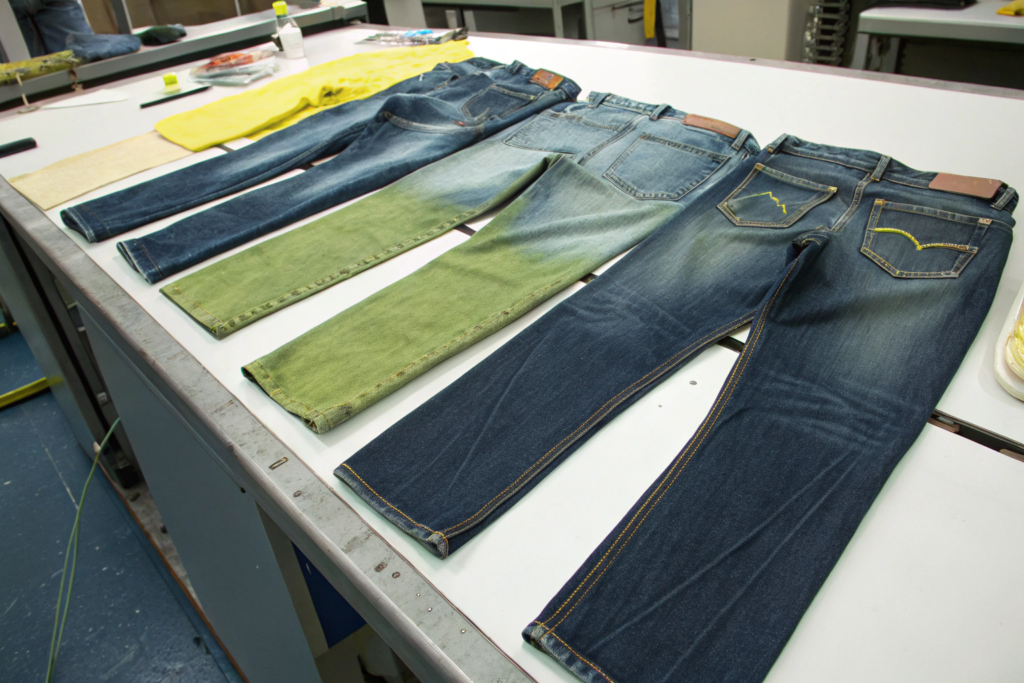
Laser engraving is the most precise tool we have for replicating high-contrast fade lines like whiskers, honeycombs, and wallet outlines. A laser can remove indigo from the surface of the denim with sub-millimeter accuracy, creating a crisp, defined fade line that mimics the effect of repeated creasing and abrasion. The laser doesn't just bleach the indigo; it vaporizes it, removing the dye from the surface of the yarn while leaving the underlying cotton fiber intact. The result is a fade line that has the brightness and the sharpness of a genuine wear crease.
The laser is programmed from a digital file that maps the exact shape and intensity of each fade line. We create this file from the reference garment by photographing it under flat, even lighting and then tracing the fade lines in our design software. The software converts the traced lines into a grayscale intensity map. The darkest parts of the map correspond to the brightest parts of the fade, and the laser burns more aggressively in those areas. The lighter parts of the map correspond to the softer edges of the fade, and the laser burns more gently.
The laser's power, speed, and frequency are calibrated for the specific denim being used. A heavyweight 15-ounce denim requires more laser power to achieve the same degree of indigo removal as a lighter 10-ounce denim. A denim with a heavy starch finish reacts differently than a denim that's been desized. The calibration is done on a scrap piece of the production fabric before the laser touches any of the actual shorts.
Laser engraving alone, however, produces a fade that looks too perfect. Nature doesn't work in perfectly smooth grayscale gradients. A genuine wear crease has micro-irregularities—tiny variations in the fade intensity along the line, slight asymmetries between the left and right sides of the body. To introduce these organic imperfections, we follow the laser engraving with a light hand-sanding along the fade lines. A skilled artisan, using a fine-grit sanding block, gently scuffs the edges of the laser fade, softening the transition and introducing a subtle irregularity that the human eye reads as "real." The combination of laser precision and hand-sanding artistry produces a fade line that is almost indistinguishable from a natural wear crease.
How Do We Recreate the Soft Hand Feel of Decades-Old Denim?
The hand feel of vintage denim is unmistakable. It's soft, almost velvety, with a drape that flows rather than stands. The stiffness of new denim is completely gone. The fabric has a lived-in quality that you can feel the moment you pick it up. This hand feel is one of the hardest aspects of vintage denim to replicate, because it's the product of thousands of micro-abrasions that have gradually worn down the surface of the cotton fibers.
New denim has a slightly rough, crisp hand. The cotton fibers have defined edges, and the starch or sizing applied during weaving gives the fabric body and stiffness. Over decades of wear and washing, the starch is completely removed, and the surface of each cotton fiber is gradually abraded smooth. The fibers become softer and more pliable. The yarns relax and the weave opens up slightly. The fabric loses its structural rigidity and gains a supple, almost fluid drape.
We recreate this hand feel through a multi-stage softening process that mimics the cumulative effect of years of laundering. The first stage is an aggressive enzyme wash. Cellulase enzymes selectively digest the surface fuzz and the protruding fiber ends on the cotton yarns, smoothing the fabric surface at a microscopic level. This is the same mechanism that creates the soft hand of a well-worn garment, but accelerated from years to hours.
The second stage is a stone wash with a mix of pumice stones and synthetic abrasive balls. The stones physically beat the fabric, breaking down the remaining stiffness and creating a uniform surface texture. The synthetic abrasive balls provide a gentler, more controlled abrasion that prevents the stone wash from creating excessive surface damage.
The third stage is a silicone softener application. A micro-emulsion of silicone is applied to the fabric in the final rinse cycle. The silicone molecules bond to the cotton fibers and create a lubricated surface that feels smooth and silky to the touch. The silicone also helps the fabric drape more fluidly.
The fourth stage is a mechanical breaking process. The shorts are tumbled in a large dryer with no heat, just ambient air, for an extended cycle. The continuous tumbling physically breaks down any remaining fiber bonds and gives the fabric a relaxed, un-structured character.
The result is a denim short that, fresh from the factory, has the hand feel of a garment that's been loved for twenty years. A brand owner from Portland once picked up a sample we'd processed through this full softening protocol. He rubbed the fabric between his fingers for a solid thirty seconds, then looked up and said, "This feels like my dad's old shorts." That's exactly the reaction we're aiming for.
How Do We Source or Develop Authentic Vintage-Style Denim?
The fabric is the starting point, and getting it right is the most critical sourcing decision in a vintage replication project. There are three paths we can take, depending on the specific requirements of the reference garment and the client's budget and timeline.
The first path is sourcing existing deadstock or reproduction denim from our network of mills. There are mills, particularly in Japan and in a few specialized Chinese operations, that produce reproduction denim specifically for the vintage market. These mills use old shuttle looms, ring-spun yarns, and natural indigo dyeing techniques to create denim that is materially very close to what was being produced in the 1950s through 1980s. If the client's vintage reference falls within the range of what these mills produce, sourcing existing reproduction denim is the fastest and most cost-effective path.
The second path is modifying an existing denim to more closely match the reference. We might take a standard 12-ounce selvedge from one of our partner mills and request a specific dyeing modification—a different number of indigo dips, a different pH in the dye bath, a post-dye overdye with a sulfur or pigment color—to shift the shade toward the reference. We might request a different yarn character, more slub or less slub, to match the surface texture. The modification path takes longer than sourcing existing stock, but it's faster and cheaper than full custom development.
The third path is full custom fabric development. This is the nuclear option, reserved for projects where the vintage reference is so specific or so unusual that no existing fabric comes close. The mill spins a trial yarn to our specification, weaves a sample meterage, dyes it, finishes it, and sends it to us for evaluation. We compare it to the reference, provide feedback, and the mill adjusts. The process repeats until the fabric is right. As I mentioned earlier, this path adds 3 to 5 weeks to the project timeline and increases the fabric cost significantly. But for a brand building a hero product around a specific vintage reference, it's the only way to achieve true authenticity.
Regardless of which path we take, the selected fabric must pass our standard battery of incoming inspection tests: shrinkage, tensile strength, seam slippage, colorfastness, and crocking. A fabric that looks perfect but fails the durability tests is not viable for commercial production. The client's customers need the shorts to survive real-world wear, not just look good on a shelf.
Where Do We Find Deadstock Fabrics for Limited Runs?
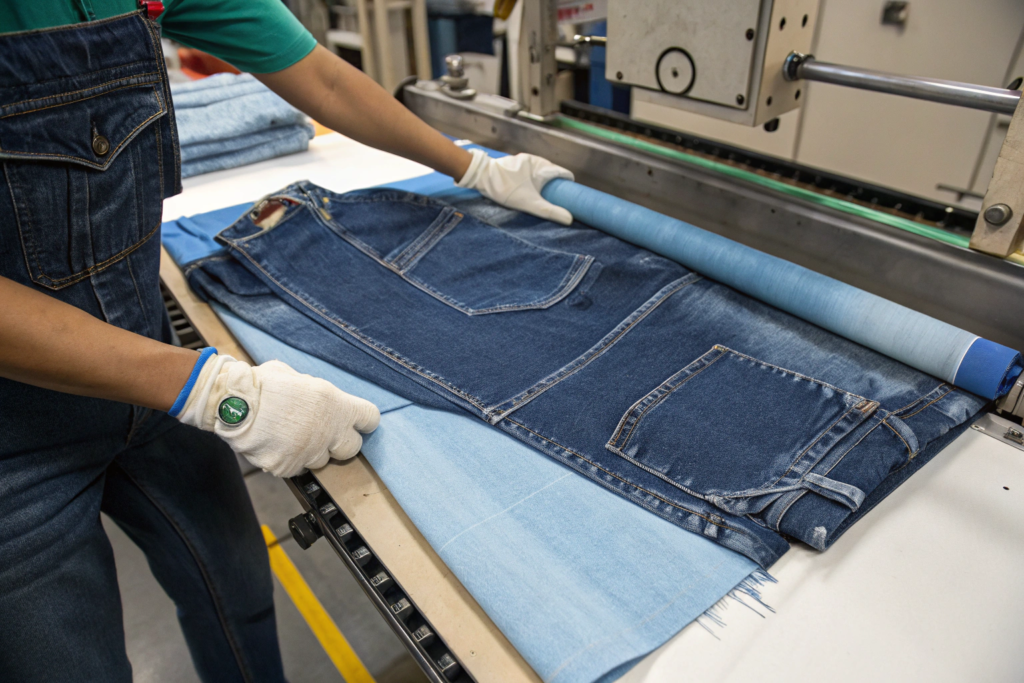
Deadstock fabric is the holy grail of vintage replication. It's fabric that was woven years or decades ago, by mills that may no longer exist, using machinery that has since been retired. It sat in a warehouse, untouched, waiting to be discovered. Deadstock denim has the authentic yarn character, dye chemistry, and loom signature of its era. You can't fake it. You either find it or you don't.
I maintain relationships with several deadstock fabric dealers in Japan, Italy, and China. These are small, specialized businesses that acquire surplus fabric from defunct mills, estate sales, and warehouse cleanouts. They catalog their inventory meticulously, with details about the mill of origin, the estimated production date, the fiber content, the weight, and the width. When a client's vintage reference requires a deadstock fabric, I reach out to my network with the specifications.
The challenge with deadstock is availability and consistency. A deadstock roll might contain enough fabric for 50 units or 500 units, but almost never enough for 5,000 units. Deadstock is inherently limited, which makes it ideal for limited-edition runs and capsule collections but unsuitable for volume production. I advise clients to use deadstock for their premium, limited-release styles and to use reproduction fabric for their volume styles.
Deadstock also requires extra testing. Fabric that has been stored for decades may have degraded in subtle ways. The cotton might have yellowed. The sizing might have crystallized. The selvedge might be brittle. We test every deadstock roll thoroughly before cutting. If the fabric has integrity issues, we either reject it or work with the client to incorporate the imperfections into the product story. A slight yellowing of the base cotton, for example, can actually enhance the vintage look if it's consistent and controlled.
A specific example: a menswear brand from New York came to us with a 1960s denim short reference. The fabric was a 10-ounce left-hand twill with a pronounced green cast to the indigo, characteristic of a specific Japanese mill that had closed in the 1980s. I reached out to a deadstock dealer in Okayama who I've worked with for years. He had three rolls of a very similar fabric from a mill that had acquired the original mill's yarn stock before it closed. We bought all three rolls. It was enough for 180 pairs. The brand launched the shorts as a limited edition at $225 retail, with a hangtag that told the deadstock story. They sold out in two weeks. The scarcity was the value proposition.
How Do We Work with Mills to Recreate Discontinued Denim?
When deadstock isn't available and the reference fabric is truly distinctive, we go to our mill partners and say, "Can you make this?" The answer is usually yes, but the cost and timeline depend on how far the reference fabric is from anything the mill currently produces.
The mill's first step is a technical analysis of the reference fabric, similar to what we do in our own lab but with mill-grade equipment. They analyze the yarn count, the twist multiple, the slub character, the dye method, the dye penetration, the weave construction, the loom type, and the finishing treatment. From this analysis, they create a development plan that identifies which aspects they can match with existing capabilities and which aspects require experimentation.
The yarn is usually the biggest challenge. If the reference fabric uses a ring-spun yarn with a specific slub character that the mill doesn't normally produce, the mill has to set up a trial spinning run. This is expensive and time-consuming. The spinning frame has to be configured with the correct roving, the correct twist, and the correct slub attachment settings. The trial yarn is spun, evaluated, and adjusted. A single yarn development iteration can take two weeks.
The dyeing is the second challenge. Natural indigo dyeing, which produces the characteristic green-cast fade of pre-1970s denim, is a completely different process from modern synthetic indigo dyeing. It's slower, more variable, and more expensive. Very few mills still do natural indigo dyeing at any scale. If the reference requires natural indigo, we're limited to a handful of specialist mills, primarily in Japan, and the cost premium is significant. Most clients opt for a synthetic indigo with a sulfur overdye that approximates the natural indigo look at a lower cost.
The weaving is the third challenge. If the reference is a selvedge denim from a shuttle loom, and the mill primarily uses projectile looms, the mill either has to have shuttle looms available or we have to find a different mill. Shuttle looms are slower, narrower, and less common. The denim they produce is more expensive per yard, but the selvedge edge and the subtle width-wise texture variations are essential to the vintage look.
The development process is iterative. The first trial fabric is usually close but not perfect. We provide feedback, often with a side-by-side comparison to the reference under our calibrated lightbox. The mill adjusts and submits a second trial. This continues until we judge the fabric to be within an acceptable tolerance of the reference. The entire process, from initial brief to approved fabric, typically takes 4 to 8 weeks for a complex development.
What Details Turn a Replica Into an Authentic Reproduction?
The fabric and the wash get you 80% of the way to a convincing vintage reproduction. The remaining 20% lives in the details. The hardware. The labels. The thread. The construction quirks. These are the elements that a casual observer might not consciously notice, but that collectively create the impression of authenticity.
The hardware is the most visible detail after the wash. Vintage denim shorts from different eras used different types of buttons, rivets, and zippers. A 1950s short used a laurel wreath button and copper rivets with a specific embossed pattern. A 1970s short used a different button profile and may have used a brass zipper from a specific manufacturer. An early 1990s short used yet another hardware style. Getting the hardware right requires identifying the era-correct style and either sourcing it or having it custom-made. The cost of custom hardware, as I've discussed in a previous article on MOQs, is manageable even for small-batch production if you work with the right suppliers.
The labels tell a story. A vintage reproduction should have labels that look like they belong to the era. This doesn't mean faking a vintage brand's labels—that's counterfeiting, and we won't do it. It means creating original labels for your brand that use era-appropriate materials, printing techniques, and design language. A 1960s-style label might be a woven jacquard patch with a simple, bold logo. A 1970s-style label might be a printed paper patch with a more graphic, colorful design. A 1990s-style label might be a minimalist woven tab. The label design is a collaboration between us and the client's design team. We provide technical guidance on what's era-appropriate; the client provides the brand identity.
The thread is a detail that most replicas get wrong. Modern denim is sewn with polyester or poly-cotton core-spun thread, which is strong, consistent, and colorfast. Vintage denim was often sewn with 100% cotton thread, which fades alongside the denim and creates a more harmonious overall look. Cotton thread is weaker than polyester thread and requires more careful machine setup to avoid breakage during sewing. It's more expensive and less efficient to use. But for a premium vintage reproduction, the visual payoff is worth it. The cotton thread fades to a soft, muted tone that synthetic thread never quite matches.
The construction quirks of the original should be preserved, not corrected. Vintage denim shorts often have idiosyncratic details—a slightly asymmetrical back pocket placement, a particular angle to the belt loops, a specific shape to the coin pocket—that a modern factory would normally standardize out. In a reproduction, these quirks are features, not flaws. They're part of the garment's character. We document them in the construction analysis and replicate them intentionally.
A brand owner from London once brought us a 1983 pair of shorts with a distinctive construction detail: the left back pocket was angled 15 degrees off vertical, while the right back pocket was straight. We reproduced the asymmetry exactly. The brand's customers noticed. It became a talking point, a detail that signaled the brand's obsessive commitment to authenticity. That's the power of sweating the small stuff.
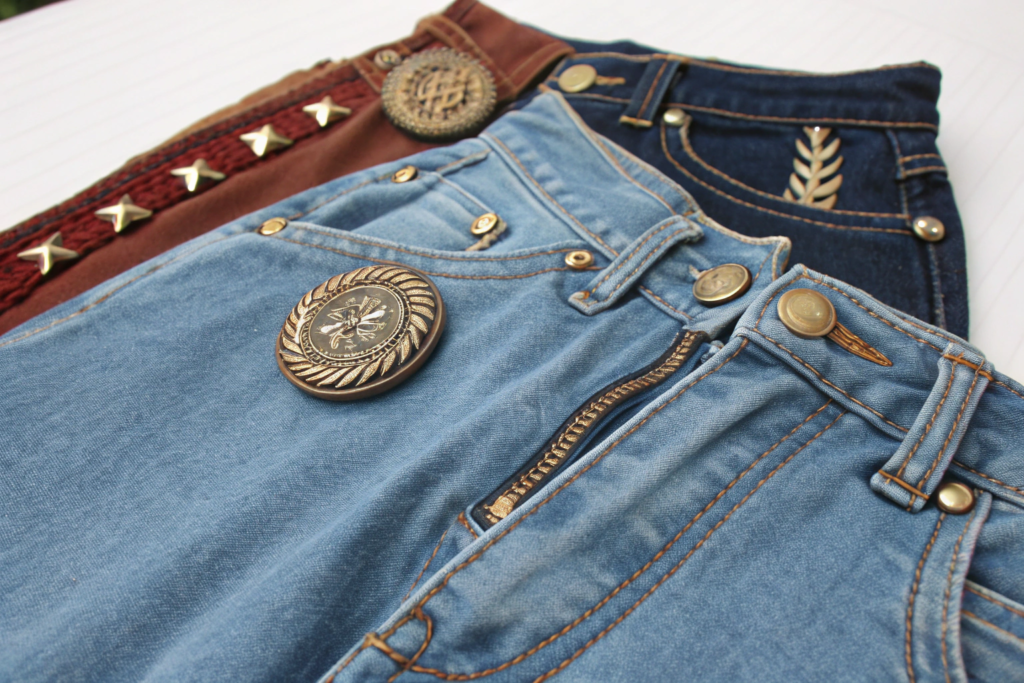
How Do We Age Hardware to Match the Garment's Era?
New hardware on a vintage reproduction looks wrong. A shiny new brass button on a pair of shorts that otherwise looks forty years old breaks the illusion. The hardware needs to have a patina that matches the age of the garment it's referencing. We achieve this through a combination of material selection and post-production finishing.
The first step is choosing the right base material. Solid brass and solid copper age differently from plated alloys. A solid brass button will develop a warm, brown-gold patina over time. A solid copper rivet will darken to a deep, reddish-brown. An alloy button plated with a thin brass coating will look shiny when new, but when the plating wears off it reveals a dull gray base metal. For a vintage reproduction, we always recommend solid brass or solid copper hardware. The raw material cost is higher, but the aging behavior is authentic.
Once the hardware is manufactured, we apply an accelerated aging treatment. This is a chemical process that artificially creates the patina that would naturally develop over decades of exposure to air, moisture, and skin oils. The exact treatment depends on the era and the desired look. A 1950s short might have hardware with a dark, almost chocolate-brown patina. A 1980s short might have hardware with a lighter, more golden patina with areas of brighter metal showing through at the contact points.
The chemical aging is done in our finishing department, not by the hardware supplier. We use a combination of oxidizing solutions, mild acids, and controlled tumbling with abrasive media. The process is calibrated by running samples and comparing them to the reference hardware. The goal is a patina that looks natural and varied, not uniform and artificial. Real patina is uneven. It's darker in the crevices and lighter on the raised surfaces. Our process replicates this unevenness.
After aging, the hardware is sealed with a micro-thin wax coating. This protects the patina from further rapid oxidation while still allowing it to continue aging slowly with wear. The customer who buys the shorts will add their own layer of aging on top of ours, and the wax ensures that the transition between our artificial patina and their natural patina is seamless.
Why Is the Right Stitch Thread Essential for Period Accuracy?
Thread is the skeleton of the garment. It holds everything together, and it's visible on every seam, every hem, every topstitch line. If the thread looks modern, the entire garment looks modern, no matter how authentic the denim and the wash.
Period-accurate thread for vintage denim has three characteristics. First, it's often 100% cotton rather than the polyester-core threads used in modern production. Cotton thread has a matte finish and a slight texture that synthetic thread lacks. It also fades with washing, so the thread on the high-abrasion areas of a vintage short will be lighter than the thread on the protected areas. This differential fading is a subtle but important authenticity cue.
Second, the thread thickness is different. Vintage denim was typically sewn with a heavier thread than modern denim—think a Tex 80 or Tex 105 topstitching thread rather than a Tex 60. The heavier thread creates a more pronounced stitch line that's visible from a distance. It's a bolder, more tactile detail.
Third, the thread color palette was more limited and more muted than modern thread color ranges. A 1960s short used a limited range of thread colors: natural ecru, tobacco brown, navy blue, and occasionally a muted gold. Modern thread comes in thousands of precisely matched colors. For a vintage reproduction, we source thread from suppliers who specialize in period-correct colors for the heritage denim market.
Sewing with 100% cotton thread in heavier weights requires machine adjustments. The thread tension has to be higher. The needle size has to be larger. The operator has to sew at a slightly slower speed to prevent thread breakage. These adjustments reduce the line efficiency, which increases the labor cost. The client needs to understand this trade-off and accept it as part of the premium reproduction package.
The payoff is visible in the finished garment. A pair of shorts sewn with period-correct cotton thread has a different visual texture than a pair sewn with modern polyester thread. The stitch lines look warmer, more organic, more integrated with the denim. Under magnification, the cotton thread has a slight fuzziness that scatters light differently. It's a detail that denim enthusiasts notice and appreciate.
Conclusion
Replicating a vintage denim short is not a single process. It's a sequence of forensic analyses, material sourcing decisions, and layered manufacturing techniques that together reconstruct the physical history of a garment. We begin by deconstructing the reference—measuring its fabric weight and weave, mapping its fade pattern with a spectrophotometer, documenting every construction detail and hardware component. We source or develop a base denim that matches the reference in fiber content, yarn character, dye chemistry, and loom signature, whether from existing reproduction stock, deadstock inventory, or custom mill development. We build a multi-stage wash process that combines laser engraving for precision fade lines, hand-sanding for organic texture, enzymatic softening for hand feel, and chemical tinting for the oxidized patina of age. And we obsess over the details that separate a convincing reproduction from a costume piece: period-correct cotton thread, solid brass hardware with an authentic chemical patina, and construction quirks preserved rather than corrected.
The brands that invest in this level of vintage replication are rewarded with products that command premium price points and attract deeply loyal customers. A short that genuinely looks and feels like a found vintage piece is a story-driven product. The customer isn't just buying denim; they're buying the illusion of time, the romance of a garment with a history. When the replication is done right, that illusion is persuasive and powerful.
If your brand has a vintage reference that you've been wanting to bring into production—a pair of shorts from a specific era, with a specific fade and a specific feel—I invite you to start a conversation with us. Our Business Director, Elaine, can walk you through our vintage replication process, discuss timelines and costs, and arrange for you to send your reference garment for an initial analysis. You can contact her directly at elaine@fumaoclothing.com. Let's make something that feels like it's been loved for thirty years, fresh from the factory floor.