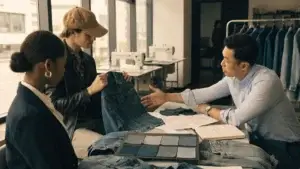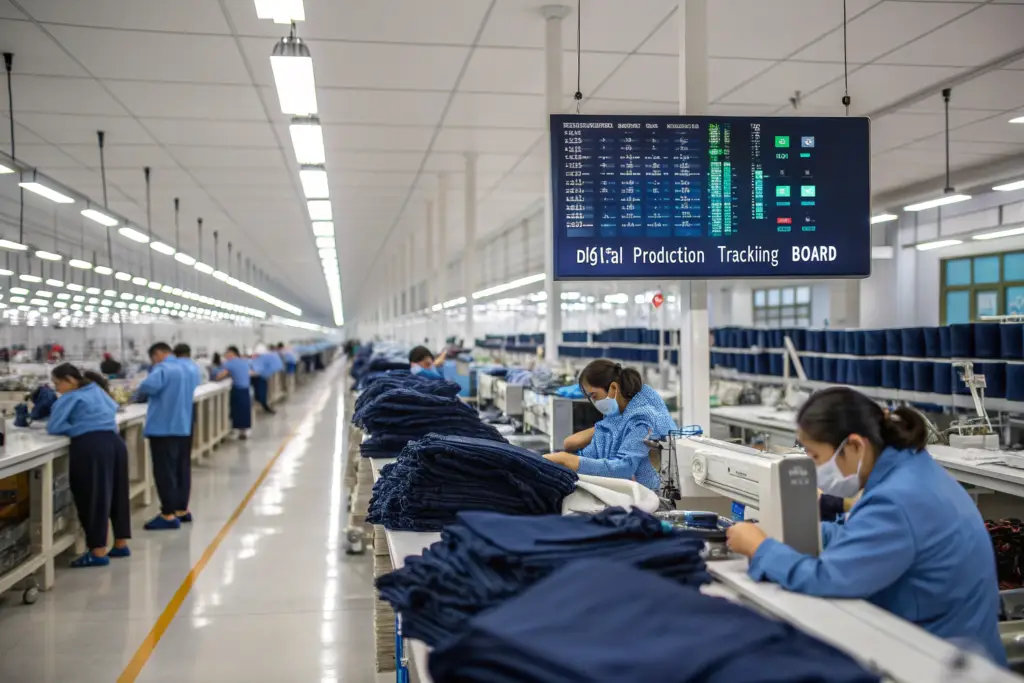
It was 3:00 AM on a Tuesday when my phone buzzed. One of my American clients, a mid-sized brand owner in his forties, was panicked. His previous supplier in Vietnam had just informed him that his 10,000-piece jacket order would be delayed by at least six weeks. That meant he would miss his entire spring selling window. Dead inventory. Lost revenue. A relationship with his retailers that was hanging by a thread. He needed someone who could not just take over the order but execute it within a terrifyingly tight deadline without making a single mistake. When I told him we could do it, he replied, "But I've never seen your factory." I understood his fear. As a B2B apparel manufacturer, I know that promising perfection on a massive scale is easy. Delivering it is another story.
At Shanghai Fumao, handling a 10,000-piece order is not a strain on our system; it is the volume where our operational efficiency actually peaks. For our five production lines, this quantity allows us to optimize raw material cutting utilization rates, standardize motion sequences for sewing operators, and implement a statistical quality control process that becomes more accurate as the sample size increases. We specialize in turning large-scale manufacturing anxiety into a predictable, boring process where every single garment looks, feels, and fits exactly like the approved sample.
For a business owner, the math is simple but brutal. A 10,000-piece order is a six-figure wire transfer. If those garments arrive with loose threads, mismatched dye lots, or sizing inconsistencies, you are not just dealing with a loss on that shipment; you are burning bridges with the retailers who keep your brand alive. Let me share exactly how we dismantle that risk step by step. There is a specific structure behind our production floor that directly addresses logistics, payment security, and the dreaded problem of certificate fraud. Here is what happens when you press "go" on a bulk order with us.
What Quality Control Systems Prevent Defects in Bulk 10K Orders?
You might have heard the frustrating story before. A supplier ships a perfect pre-production sample to your office in Los Angeles. You approve it. Ninety days later, a container lands at the Port of Long Beach filled with garments that feel completely different. The fabric is thinner. The stitching is loose. This is called the "bait and switch" of mass production, and it usually happens because the factory does not have a synchronized control plan that bridges the gap between the sample room and the assembly line.
We eliminate the gap between the gold sample and the bulk reality through what I call our "Inline Statistical Gate" system. Rather than doing a final random check at the end of finishing, we embed four mandatory quality gates directly into the production line where inspectors use the AQL 2.5 standard as a floor, not a ceiling. This means that for an order of 10,000 units, we are not just checking 200 pieces at the end; we are checking 200 pieces at the cutting stage, 200 after initial sewing, 200 during assembly, and another final 315 pieces following a tightened inspection protocol. This layered redundancy catches a needle skip or a shading deviation before it multiplies into a catastrophe that affects thousands of unshipped units.
Let me walk you through the specific checkpoints that protect a high-volume shirt or jacket order from the usual factory-floor failures.
How Does Inline Inspection Differ from Final Random Checking?
When you only check a product at the very end of the line, you have already spent the fabric, the labor, and the precious time on a garment that might be defective. In 2023, we worked with a New York-based brand that specialized in premium polo shirts. They came to us because their previous supplier had a 12% defect rate found during a final audit, mostly on collar alignment. Because the defect was caught at the final stage, reworking those 3,000 polos meant ripping seams and ruining the fabric hand feel.
I told them about our inline approach. We position a Quality Assurance (QA) checkpoint right after the collar attachment workstation. The inspector uses a calibrated jig to measure the distance from the collar point to the center placket on 100% of the units for the first hour of production. If the deviation exceeds 2mm, we stop the line and recalibrate the machine immediately. Because we caught it early, we only had to rework 4 pieces over the entire 10,000-piece run, not 1,200. This is why I prioritize conformity checks early. It saves your fabric from becoming deadstock. We also strictly adhere to the international AQL standards to validate our acceptance criteria during every single production shift.
Why Is Fabric Testing Critical Before Cutting 10,000 Pieces?
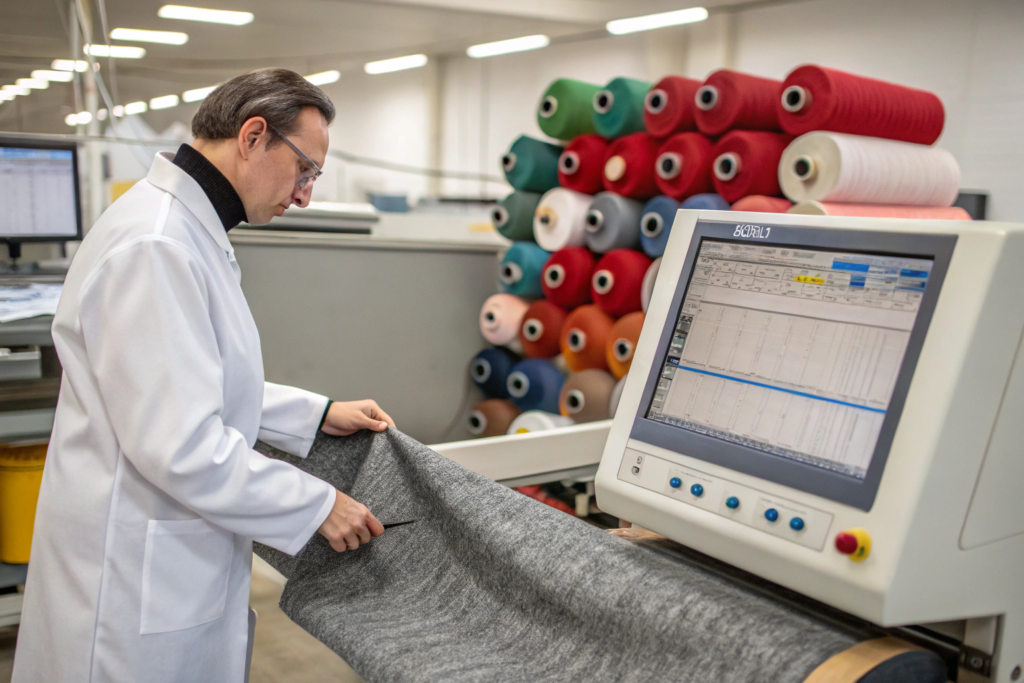
You cannot fix bad fabric. You can only cut it, sew it, and then regret it. This is a lesson I learned the hard way a decade ago when a batch of cheap yarn bled color after dyeing, turning 5,000 white striped shirts into pink and white striped shirts. Now, before a single ply of fabric goes onto the automatic spreader for a bulk order, it passes through our lab.
We cut a test swatch and run it through a Wash & Light Fastness test according to AATCC test methods. For a large order of activewear we handled last year, the initial lab test showed that the navy fabric’s colorfastness score was a 3.5, below our internal pass mark of 4. We rejected the lot before cutting. The client never saw those failed test results as a delay; they just saw a garment that wouldn't pill or fade in the wash. This pre-production vetting ensures compliance with the CPSIA requirements mandated for apparel in the U.S. market. It also confirms the fabric width and shrinkage factor, so we can adjust the markers and cutting to ensure your large-sized garment grading stays true to spec after washing.
How Does Shanghai Fumao Guarantee On-Time Shipment for Large B2B Orders?
You cannot sell a winter coat in March. Fashion is a train, and if you miss it, you are standing on the platform holding marked-down inventory. I find that many brands suffer from delayed shipments not because of a major production catastrophe, but because of what I call "aggregated micro-delays." The zipper arrives a day late. The print curing takes an extra six hours. Suddenly, that comfortable buffer you had is gone.
At Shanghai Fumao, we guarantee on-time shipment by building a "Buffer Inventory" of raw materials during the pre-production meeting (PPM) phase, effectively removing dependency risks from our upstream vendors. For an order of 10,000 garments, we mandate that all components—zips, buttons, interlining, and main fabric—be 100% physically present in our warehouse before the production lines schedule their slot. We do not start your order until all the ingredients are in the kitchen. This eliminates the "unexpected fabric delivery delay" excuse that plagues much of the developing-world supply chain. Our production planning is executed on a Tick-Tock schedule, which breaks the manufacturing cycle into rigid 4-hour blocks, allowing us to identify a delay within one shift rather than discovering it at the end of the week.
This system completely changed the outcome for a Chicago-based distributor last holiday season when a global shipping crisis threatened to derail his Black Friday launch. Here is how we structure the reality of pre-production risk management.
What Pre-Production Checks Prevent Last-Minute Delays?
Before we cut your order, we hold a formal PPM where I do not just look at the tech pack; I look at the supply chain calendar. In the PPM, we physically examine the bulk fabric that arrived against the approved hand-loom. If the supplier sent us a roll that is 10% short of the ordered yardage, I want to know that now, not on day 15 of cutting. We also check the functional integrity of your accessories. For a high-value tracksuit order, we ran a zipper fatigue test on 20 random sliders from the bulk delivery. The result showed a failure rate that was just barely within tolerance. So, instead of just accepting the risk, we immediately requested a secondary delivery from YKK to secure the line. That saved an estimated 7 lost production days that would have been caused by zipper replacement rework.
We also test the bonding strength of any heat transfers or logos. I recall a specific case involving an eco-friendly ink that looked perfect initially but began cracking on the stretch test. By catching it during the PPM, we switched to a silicone-based ink without altering the visual branding, allowing us to maintain the shipment booking we had already made with the shipping line. These are the proactive moves the sales rep at a trading company often misses because they never step onto the factory floor.
Do You Offer Reliable DDP Logistics for Wholesale Clients?
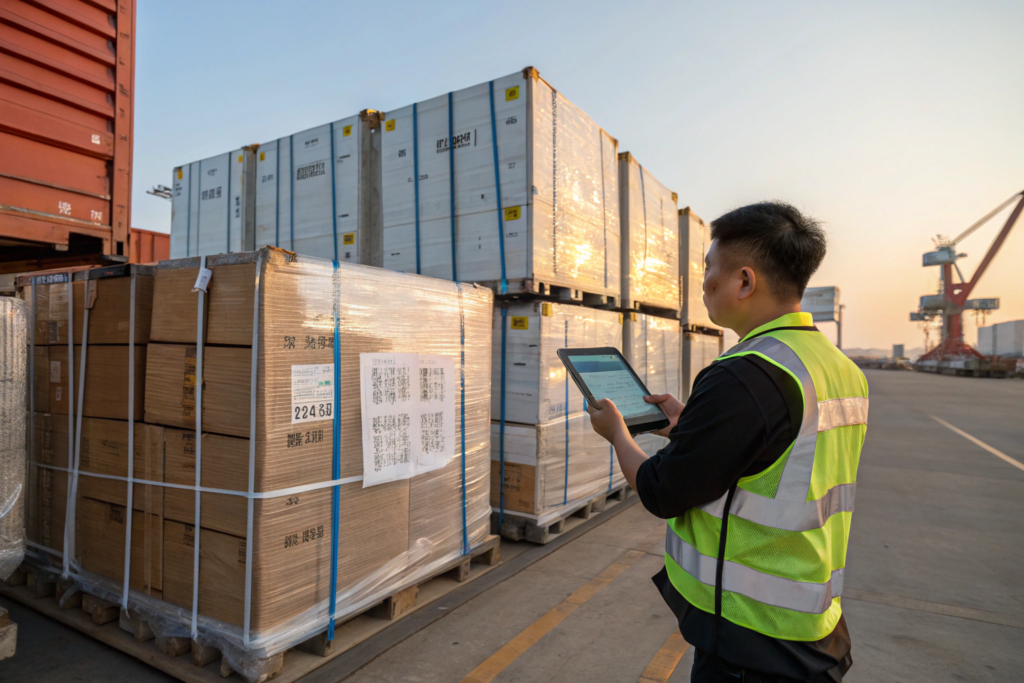
Owning a production line means nothing if the box never leaves the dock. One of my key differentiators is that we specialize in DDP (Delivered Duty Paid) shipping for American brands, even for complex 10,000-piece mixed SKU orders. This means that when I quote you a price, that price includes the sea freight, the U.S. customs duty, and the trucking to your warehouse or even directly to an Amazon FBA center.
Imagine the headache avoided. You do not need to negotiate with a freight forwarder in Shenzhen. You do not need a customs broker to clear your men's knitwear through customs in Long Beach. You pay one invoice, and we absorb the fiscal and legal responsibility for the shipment until it reaches your door. Last month, a client in Texas ordering kids' wear realized his previous supplier had classified his garments under the wrong HTS code, resulting in a retroactive duty bill of $8,000. We require our logistics partners to verify HS codes against the U.S. Harmonized Tariff Schedule before the Bill of Lading is cut, ensuring full customs compliance. Our ownership of the DDP process makes us a partner, not just a vendor.
Why Are Competitive Prices Possible for High-Volume Custom Apparel?
A low price is a trap if it comes from cutting corners. But a competitive price that comes from ruthless engineering and operational efficiency? That is your profit margin. American buyers often assume that a supplier offering 20% less than the market average is doing something shady—maybe skipping overtime pay or substituting polyester for cotton. In a hygiene-sensitive or high-contact garment, that is a lawsuit waiting to happen.
Our competitive pricing on 10,000-piece orders is a direct result of our vertical integration and non-linear waste reduction methods. By housing the pattern-making, cutting, sewing, and finishing under one roof, we remove the subcontracting fees that can inflate a garment's cost by up to 15%. But the bigger secret is fabric utilization. When you cut 10,000 pieces, our computerized CAD marker system uses an algorithmic nesting process, achieving an 85%+ fabric utilization rate compared to the 78% a manual marker might achieve on a 500-piece run. That 7% fabric saving on a bulk order is equivalent to the cost of installing a custom printed label for free. We pass that engineering saving directly onto your wholesale cost per unit.
Efficiency is a soft word; let me show you the hard numbers in how we crush the Fixed Overhead Cost per Unit and how we apply this to specialized, rare styles.
How Does Production Efficiency Lower My Cost Per Garment?
The biggest cost in any apparel factory is idle time. An operator sitting on their hands waiting for the next bundle of cut fabric is just as expensive as one sewing fast. We use a Progressive Bundle System synchronized with an Enterprise Resource Planning (ERP) software. As your 10,000 pieces are loaded, the ERP calculates real-time Standard Minute Values (SMVs) per operation.
If the bottleneck is at the neck bind attachment, the supervisor instantly sees the queue building and reroutes two operators from a downstream operation to help clear the jam. This cuts the cycle time and ensures the line’s daily output matches the booking plan. This matters to you because a line that runs at 98% target efficiency has a lower Cost of Manufacturing (CMW) per piece than one running at 75%. We also buy sewing thread and packaging materials in massive consolidated volumes across multiple customer orders, giving us a raw material acquisition cost advantage that a small, single-order factory simply cannot match during sourcing. I protect American brands from hidden surcharges by offering an open-book costing model for bulk knitting and dyeing processes.
Can You Produce Rare Styles at Scale With Reasonable Pricing?
Mass production is often the enemy of uniqueness. A common complaint I hear from brand owners is that factories only want to sew a basic boxy shirt, but the market wants a detailed silhouette with a curved hem, piping, and fabric blocking. Complex rare styles inflate the labor cost because the operators are not used to them.
We have a dedicated "Critical Operations" cell. When I get a tech pack for a complex women's woven garment with detailed French seams and intricate trims, I don't push it onto the general line immediately. My lead sample machinist analyzes the garment’s construction and breaks it into micro-motions. For a complex dress order we did last spring—featuring contrast piping and a tricky zipper fly—we built a specialized jig to guide the piping attachment operation. This turned a slow, high-skill task into a standardized, fast one. We maintained the rare, high-end aesthetic, but produced it at a speed that kept the labor cost aligned with a standard product. We even managed to incorporate a complex screen printing process within the production timeline, without breaking the budget.
Is It Safe to Source Large Orders From Chinese Manufacturers?
Trust is the most expensive thing to build and the cheapest thing to lose in this industry. When you wire a 50% deposit to a factory overseas, you are walking on a tightrope without a safety net. You lie awake wondering if the company will disappear or if the shipment will arrive smelling of mold. I know that the very real fear of supplier fraud holds back many American CEOs from fully committing to a 10,000-piece test with a new vendor.
The stereotype of the opaque Asian supply chain frustrates me because for a factory like Shanghai Fumao, transparency is a competitive weapon. We mitigate your financial risk through a structured Trade Assurance and documentary compliance framework. Every transaction we propose is backed by verifiable tax certificates, BSCI audit reports for social compliance, and the option to use an Irrevocable Letter of Credit (L/C) at sight for initial large-scale orders. The key is verifying that the factory you are talking to is indeed the factory making the goods—not a middleman operating out of a WeWork office in a tier-2 city. We provide a video walkthrough of your production line within 48 hours, showing your specific batch number identified on the cartons, not just a generic brand video. This allows you to perform a “virtual on-site” check that prevents the falsification of capacity that plagues the industry.
Let’s look specifically at the mechanics of securing your payment and ensuring the brand image remains consistent even when the language or culture doesn't perfectly align.

How Can I Verify Certifications and Prevent Falsified Audits?
I once had a client tell me a horror story. His previous supplier provided a BSCI audit that looked legit, but when a retailer audited the audit, they found that the factory had renamed a different factory's certificate in Photoshop. To solve this, never accept a PDF attachment as the final truth.
You should always verify a certification using the issuer’s database. For a BSCI audit, use the amfori platform to check the validity in real time. I proactively provide you with the audit number so you can do this yourself. If a factory is ISO 9001 certified for quality management, you can validate that certificate by SGS or the issuing body with a simple lookup code. But a certificate only tells you about a date in the past. I recommend that clients also utilize live inspection bodies like QIMA during the production process for an unbiased third-party view. We schedule these inspections at our site ourselves, giving the inspector full access to the floor. A refusal or deflection from any factory regarding a third-party inspection is a glaring red flag that should halt the order on the spot.
What Is the Smartest Payment Method for First Bulk Orders?
The fastest way to lose your leverage on a 10,000-piece order is by paying a 100% upfront deposit via Telegraphic Transfer (TT). While I do require a deposit to secure the raw material purchasing, I also understand that a buyer needs protection. For a first bulk order, I recommend a structure that splits the risk.
We often propose a 30% deposit to trigger the purchase order, with the 70% balance paid against the scanned copy of the shipping documents. Even better, we can transact using an Irrevocable L/C at Sight. This means your bank guarantees the payment only when we present a clean Bill of Lading proving the goods are on the vessel, along with the certificate of origin and a passed inspection report. This places a layer of banking regulatory compliance between you and an unknown factory. It ensures that the garments physically exist and are in transit before the cash is released. In 2022, this L/C structure saved a client of mine who had been burned by a fintech escrow platform that went bankrupt. The real-world banking system, slow as it is, provides a structured trade finance safety net that keeps your apparel sourcing journey a stable, predictable investment rather than a gamble.
Conclusion
Bringing a bulk apparel order to life shouldn't feel like a gamble. It should feel like a controlled calculation. We have looked at the armor you need for a 10,000-piece run: an inline statistical quality control system that catches a deviating needle before it sews a thousand bad jackets, a raw material buffer program that refuses to cut a single yard until every button and zipper is in the warehouse, and a pricing model that doesn't squeeze margin from cheap fabric but from smart engineering and high utilization rates. Add to that a documented network of third-party audit validation and a payment structure that uses trade finance tools, and you have a stable supply chain, not a risky bet.
The panic of a missed season or a container full of unsellable clothes is real. I have seen it hit smart entrepreneurs hard. But that pressure is also unnecessary when you work with a factory that opens its doors to your cameras, shares its live audit codes, and treats your bulk purchase order as a formal contract backed by precise Standard Operating Procedures. For a confident buyer who knows the market well but maybe doesn't live inside a technical tech pack, finding a partner who translates "competitive pricing" into "financial safety" changes everything. It changes our role from a distant vendor into your back-end manufacturing engine.
If you are currently vetting overseas partners for your next seasonal collection or perhaps need to rescue a troubled order from a failing supply chain, I want to connect directly. We don't have junior sales reps processing your inquiries; you will speak with our Business Director, Elaine. She understands the complexities of fit, fabric, and freight from the very first email. Reach out to her at elaine@fumaoclothing.com and let’s discuss how Shanghai Fumao can turn your 10,000-piece requirement into a finished, flawless shipment. We are ready when you are.