Returns are piling up. Customers are frustrated. And retailers are losing money—not from quality, but from fit. It’s the industry’s quiet crisis.
AI combined with custom manufacturing can solve retail’s fit problem by analyzing customer data, predicting body dimensions, and producing garments tailored to real human shapes—at scale.
In a world where one-size-fits-all no longer works, technology isn’t just a helper—it’s the key to saving the future of fashion retail.
How does AI help with manufacturing?
Most people imagine robots sewing clothes. But the real AI magic happens before the needle ever hits the fabric.
AI helps manufacturing by forecasting demand, optimizing patterns, improving sizing accuracy, reducing waste, and streamlining supply chains.
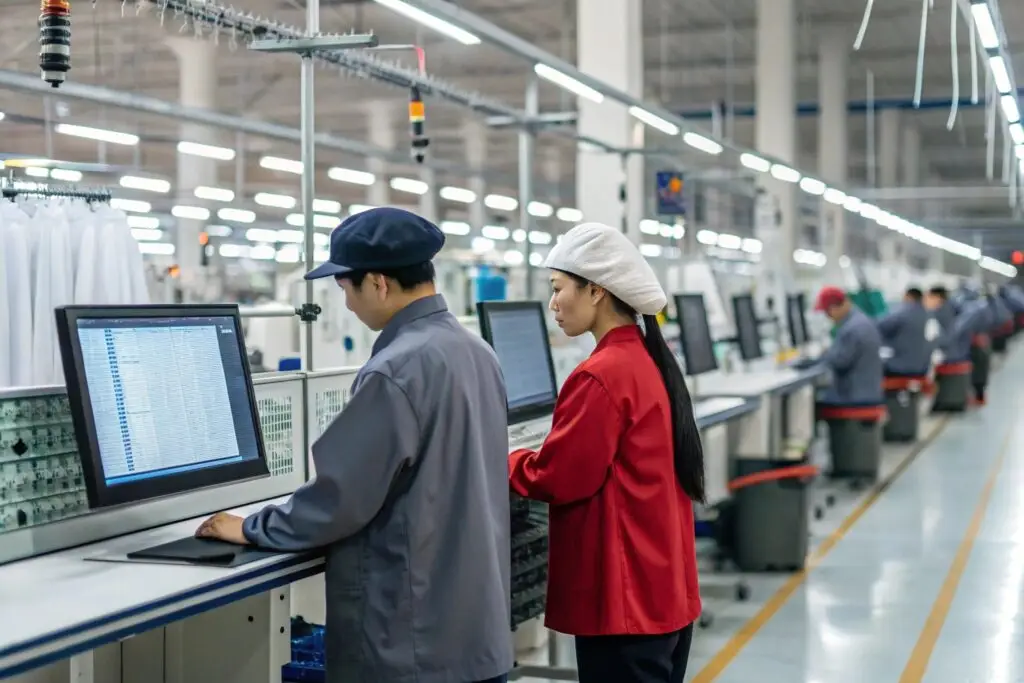
What’s different about AI-driven manufacturing?
Traditional manufacturing plans based on seasonal guesses. AI systems, however, process real-time data—social trends, body scans, weather shifts—and help manufacturers make what’s truly needed.
| AI Function | Benefit to Apparel Manufacturing |
|---|---|
| Demand forecasting1 | Reduces overproduction and waste |
| Size prediction2 | Improves fit and reduces returns |
| Pattern optimization | Cuts fabric consumption and cost |
| Quality control3 | Detects defects with image recognition |
At Fumao, we’ve started testing AI-based pattern generators. They help us adjust garments to client sizing specs more accurately, even for unusual body shapes.
How can small manufacturers benefit from AI?
You don’t need massive systems. Even basic AI tools like predictive reorder systems or smart CAD integrations can make small factories more efficient. AI democratizes smart manufacturing—not just for giants.
How will AI impact the retail industry?
AI is already changing how shoppers browse, buy, and return. But in 2025, the biggest transformation is happening behind the scenes.
AI will reshape retail by powering personalized experiences, streamlining operations, reducing returns, and helping retailers adapt faster to consumer behavior.

How does AI improve the customer shopping experience?
Imagine this: a shopper visits your website, gets a personalized size suggestion4, sees products that fit their lifestyle, and gets recommendations based on weather and events in their location. That’s not future talk—it’s AI in action.
| Retail Touchpoint | AI Enhancement |
|---|---|
| Product recommendations | Based on past purchases, body data |
| Size suggestions | AI matches to customer dimensions5 |
| Visual search | Shoppers upload photos to find products |
| Chatbots | 24/7 assistance that learns over time6 |
For retailers working with Fumao, we support back-end integrations that allow AI to adjust inventory suggestions based on trending SKUs and seasonal patterns.
Yes. With accurate size prediction and real-time shopper feedback, AI helps customers order the right size the first time. That means fewer exchanges, less waste, and higher satisfaction.
What are the challenges of AI in retail?
AI sounds powerful—but rolling it out across retail comes with real hurdles, especially for smaller brands or those with fragmented systems.
The biggest challenges of AI in retail include data accuracy, integration across platforms, training costs, and customer privacy concerns.

Why is data accuracy7 such a big issue?
AI only works if the data is clean. If your sizing charts are outdated, or your customer profiles are incomplete, predictions will miss the mark. This can frustrate shoppers even more.
| AI Challenge | Retail Risk |
|---|---|
| Poor data input | Wrong size or product suggestions |
| Inconsistent platforms | Breaks in the omnichannel experience8 |
| Low training quality | AI chatbots9 feel robotic or unhelpful |
| Privacy regulations | Legal risks with customer profiling |
Retailers need to clean and unify their data before applying AI. Otherwise, they automate confusion instead of solving it.
How do retailers overcome these challenges?
Start small. Use AI to solve one key issue—like size suggestions or back-in-stock alerts. Measure results, then expand. Work with platforms that offer plug-and-play solutions rather than building from scratch.
What are the disadvantages of AI in retail?
AI is powerful, but not perfect. If overused or misapplied, it can make retail experiences feel impersonal, invasive, or even discriminatory.
Disadvantages of AI in retail include job displacement, reduced human touch, algorithmic bias, and high upfront implementation costs.
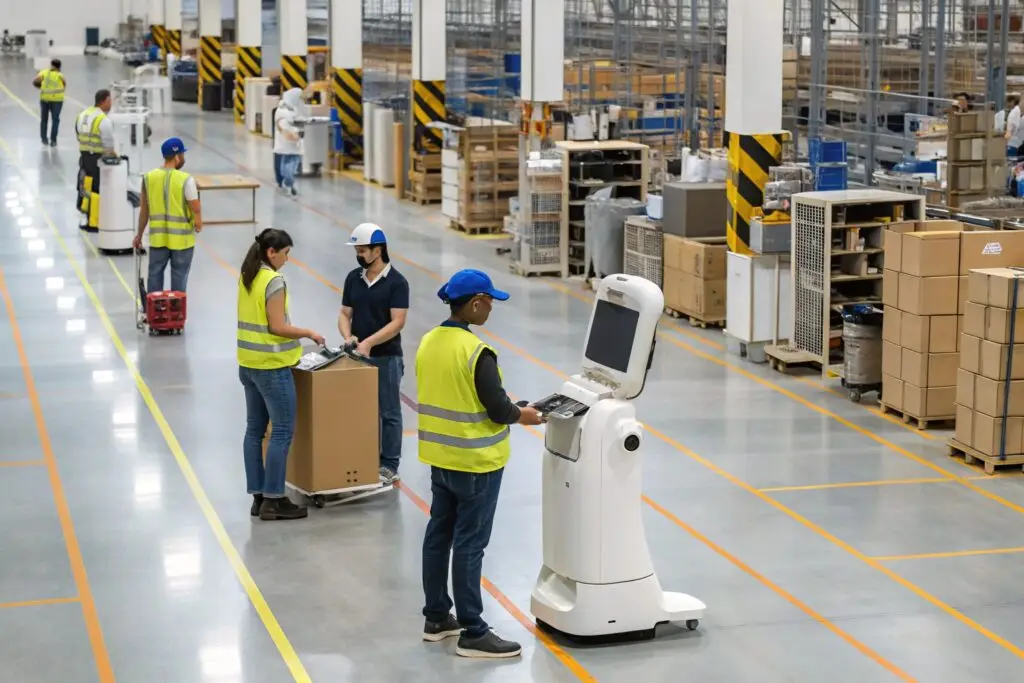
Why do some shoppers push back against AI?
Shoppers often crave real connection. An algorithm can’t replace a stylist’s intuition or a personal fitting experience. Plus, when recommendations feel “off” or creepy, trust breaks fast.
| AI Weakness | Impact on Customer |
|---|---|
| Generic personalization10 | Feels cold or irrelevant |
| Privacy invasion11 | Hesitation to share sizing or behavior |
| Lack of human fallback | Frustration with no real support |
| Bias in recommendations12 | Missed opportunities or offensive results |
At Fumao, we advise retailers to use AI to support—not replace—human interaction. The best experiences come from AI-powered humans, not robots running solo.
Is AI worth the cost for smaller brands?
Only if used wisely. Investing in smart sizing tools, inventory predictors, or product data optimization can have fast ROI. But flashy, untested tools drain budgets. Focus on fit and function—not just futuristic features.
Conclusion
AI and custom manufacturing have the power to solve retail’s fit crisis—but only when guided by strategy, data, and a focus on real human needs. Together, they’re not just fixing problems—they’re reshaping the future of fashion.
-
Understanding demand forecasting can help manufacturers reduce waste and optimize production, making it essential for efficient operations. ↩
-
Exploring size prediction can reveal how AI enhances fit and reduces returns, crucial for customer satisfaction and cost savings. ↩
-
Learning about AI in quality control can show how defects are detected early, ensuring higher product quality and reducing losses. ↩
-
Explore how personalized size suggestions enhance customer satisfaction and reduce returns, making shopping more efficient. ↩
-
Discover the benefits of AI matching customer dimensions for better fit and reduced returns in retail. ↩
-
Learn how AI chatbots enhance customer service by providing continuous support and improving over time. ↩
-
Understanding the significance of data accuracy can help retailers improve their AI strategies and customer satisfaction. ↩
-
Learning about the omnichannel experience can help retailers create a seamless shopping journey for customers. ↩
-
Exploring how AI chatbots enhance customer service can provide insights into effective retail strategies. ↩
-
Understanding the impact of generic personalization can help retailers improve customer experiences and build trust. ↩
-
Exploring the effects of privacy invasion can guide brands in creating safer shopping environments that respect customer data. ↩
-
Learning about bias in recommendations can help retailers avoid pitfalls and enhance their recommendation systems for better customer satisfaction. ↩