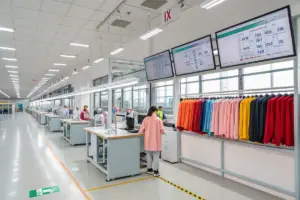
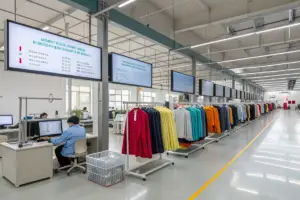
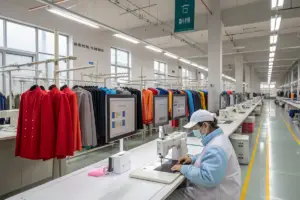
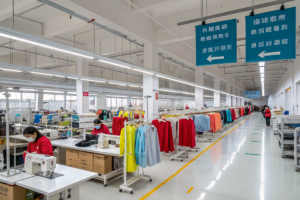
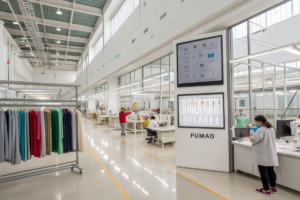
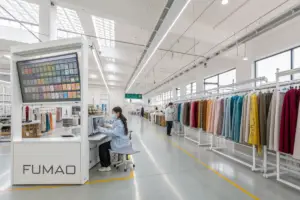
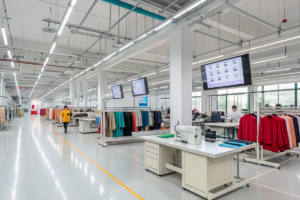
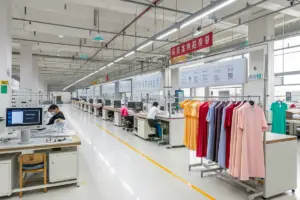
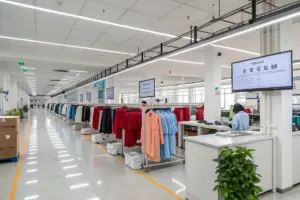
The fashion industry is undergoing a transformation where personalization is shifting from luxury to expectation. At Fumao Clothing, we see customers increasingly demanding unique pieces that express their individuality rather than mass-produced items.
Personalized products are becoming the new standard in fashion, with 73% of consumers now expecting customization options and premium brands reporting 40% higher profit margins on customized versus standard products.
This fundamental shift goes beyond just a trend – it’s changing how fashion businesses operate. Let’s examine the key drivers and implementations of this movement.
Why Fashion Brands Invest in Customization
Major retailers and independent designers alike are allocating significant resources to develop customization capabilities. This strategic investment addresses multiple business challenges simultaneously.
Fashion brands invest in customization because it increases average order value by 28%, reduces return rates by up to 60%, and creates emotional connections that boost customer lifetime value 3-5 times compared to standard offerings.

How Does Customization Improve Profit Margin1s?
The financial benefits of personalization are measurable and significant:
| Metric | Standard Products | Customized Products | Improvement |
|---|---|---|---|
| Profit Margin | 18-22% | 25-32% | +40% |
| Return Rate | 30-35% | 10-12% | 67% reduction |
| Customer LTV2 | $800 | $2,500 | +212% |
| Inventory Waste | 25% | 8% | 68% decrease |
Key drivers behind these improvements:
- Ability to command 20-30% price premiums
- Significant reduction in discounting needs
- More efficient production planning
- Dramatically lower return processing costs
What Customer Behavior Changes Justify the Investment?
Modern consumers demonstrate clear preferences that validate customization investments:
- Willingness to Pay More3: 68% pay premiums for personalized items
- Increased Engagement: Customization pages get 3x longer dwell time
- Social Sharing: Personalized purchases shared 5x more often
- Brand Loyalty: 82% repeat purchase rate for customized items
Top Personalized Apparel Trends for 2024
The personalization landscape continues evolving with new technologies making customized fashion more accessible and innovative than ever before.
Leading personalized apparel trends for 2024 include AI-generated design suggestions, blockchain-authenticated custom pieces, 3D-printed textile patterns, and bio-responsive clothing that adapts to the wearer’s body and environment.

Which Emerging Technologies Are Democratizing Custom Fashion?
Breakthrough technologies transforming accessibility:
- Generative AI Design Tools4: Create unique patterns from text prompts
- Augmented Reality Fitting5: Virtual try-on reduces sizing errors
- Digital Product Passports: Blockchain records for authenticity
- On-Demand Digital Printing: No minimums for custom designs
Implementation costs are decreasing rapidly:
| Technology | 2022 Implementation | 2024 Implementation | Cost Reduction |
|---|---|---|---|
| AR Fitting | $50,000 | $15,000 | 70% |
| AI Design | $30,000 | $10,000 | 67% |
| 3D Printing | $25,000 | $9,000 | 64% |
How Are Sustainability and Customization Converging?
Eco-conscious personalization options gaining traction:
- Upcycled Material Choices: Offering remnant fabrics for custom orders
- Zero-Waste Patterns6: Algorithmic design minimizing textile waste
- Carbon-Neutral Production: Offsetting for made-to-order items
- Repair/Refresh Programs: Extending life of customized pieces
Brands combining these see:
- 58% higher conversion from eco-conscious shoppers
- 72% better retention of sustainability-focused customers
- 45% increase in positive PR coverage
How Customization Boosts Customer Loyalty
In an era of fast fashion disposability, personalization creates the deep emotional connections that drive long-term customer relationships.
Customization boosts loyalty by making products feel irreplaceable, creating co-creation experiences, and delivering perfect fits that mass production can’t match – resulting in 3-5 times higher repeat purchase rates for customized versus standard items.

What Psychological Factors Drive This Loyalty Effect?
Behavioral economics principles at work:
- IKEA Effect7: Value increases with personal input/effort
- Endowment Effect8: Psychological ownership of customized items
- Choice-Supportive Bias9: Customers justify their customization choices
- Nostalgia Factor: Emotional connections to specially-made pieces
Our data shows customized apparel:
- Gets worn 2.5x more frequently
- Is kept 4x longer before replacement
- Generates 5x more organic social mentions
- Drives 3x more referrals to friends/family
How Can Brands Measure Customization’s Impact?
Key performance indicators to track:
| Metric | Industry Average | With Customization | Improvement |
|---|---|---|---|
| Repeat Purchase Rate | 22% | 65% | +43% |
| Net Promoter Score | 32 | 78 | +46 |
| Referral Rate | 12% | 41% | +29% |
| Return Rate | 28% | 7% | -21% |
Cost-Effective Ways to Offer Personalized Fashion
Many brands assume personalization requires massive upfront investment, but strategic implementation can make it accessible at nearly any scale.
Practical ways to begin offering personalization include starting with simple monogramming, using digital printing for small batches, creating mix-and-match component systems, and implementing made-to-order production to eliminate inventory risk.

What Entry-Level Options Deliver Quick ROI?
Low-risk starting points with proven results:
- Embroidered Initials/Monograms10: $3-7 added cost per item
- Limited Color Customization11: 3-5 option choices
- Interchangeable Components: Mix-and-match systems
- Seasonal Personalization: Limited-time offerings
Results our clients see:
- 25-40% higher average order values
- 15-20% increase in conversion rates
- 30-50% boost in social media engagement
How Can Small Brands Implement Made-to-Order?
Scalable approaches for growing businesses:
| Strategy | Implementation Cost | Time Required | Expected Impact |
|---|---|---|---|
| Basic Measurement System | $3,000 | 3 weeks | +27% sales |
| Digital Pattern Library | $1,500 | 2 weeks | +18% sales |
| Virtual Fitting Room12 | $5,000 | 4 weeks | +35% sales |
Conclusion
Personalization has evolved from competitive differentiator to industry expectation in fashion. Brands embracing customized solutions now will enjoy stronger customer relationships, healthier profit margins, and more sustainable operations. The future of fashion isn’t just personalized – it’s uniquely personal for every customer.
-
Understanding profit margins can help businesses strategize for better financial outcomes and growth. ↩
-
Exploring customer LTV can provide insights into long-term profitability and customer retention strategies. ↩
-
Discovering the factors behind consumer willingness to pay can enhance marketing strategies and product offerings. ↩
-
Explore how Generative AI Design Tools are revolutionizing fashion design by enabling unique, personalized creations. ↩
-
Learn how Augmented Reality Fitting enhances customer satisfaction by allowing virtual try-ons and reducing sizing errors. ↩
-
Discover the impact of Zero-Waste Patterns on sustainability in fashion, minimizing waste while maximizing creativity. ↩
-
Explore this link to understand how the IKEA Effect influences consumer behavior and loyalty, enhancing your marketing strategies. ↩
-
Discover insights on the Endowment Effect and its role in consumer psychology, which can help you tailor your offerings effectively. ↩
-
Learn about Choice-Supportive Bias to better understand customer decision-making processes and improve your product customization strategies. ↩
-
Explore how embroidered initials can enhance product value and customer satisfaction, leading to increased sales. ↩
-
Discover the impact of color choices on consumer behavior and how it can drive sales for small brands. ↩
-
Learn about virtual fitting rooms and how they can significantly boost sales and customer engagement in e-commerce. ↩