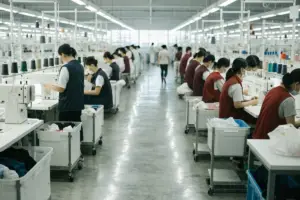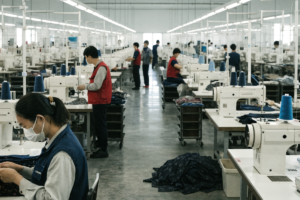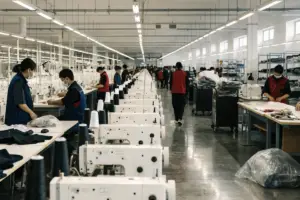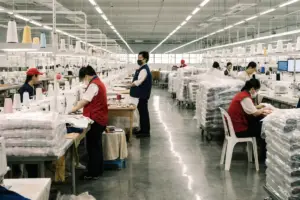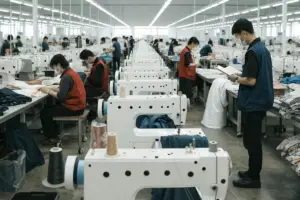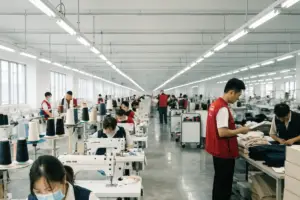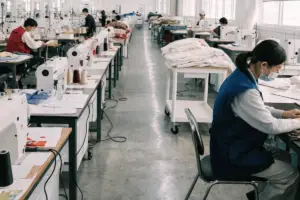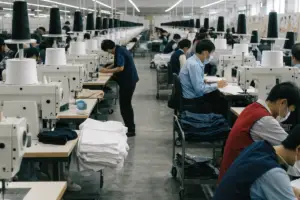
It’s no longer science fiction—artificial intelligence is now a strategic tool from sketchpad to sewing line.
AI is transforming the fashion industry by improving design speed, forecasting demand, reducing waste, and optimizing garment production through automation and real-time decision-making.
At Fumao, we’re helping clients tap into AI across production planning, sizing, and quality control. The future isn’t human vs. machine—it’s human plus machine.
How is AI transforming the fashion industry?
Fashion is shifting from reactive to predictive—and AI is the engine behind it.
AI is reshaping fashion by enabling smart design, precise inventory planning, personalized shopping, trend forecasting, and streamlined supply chain management.
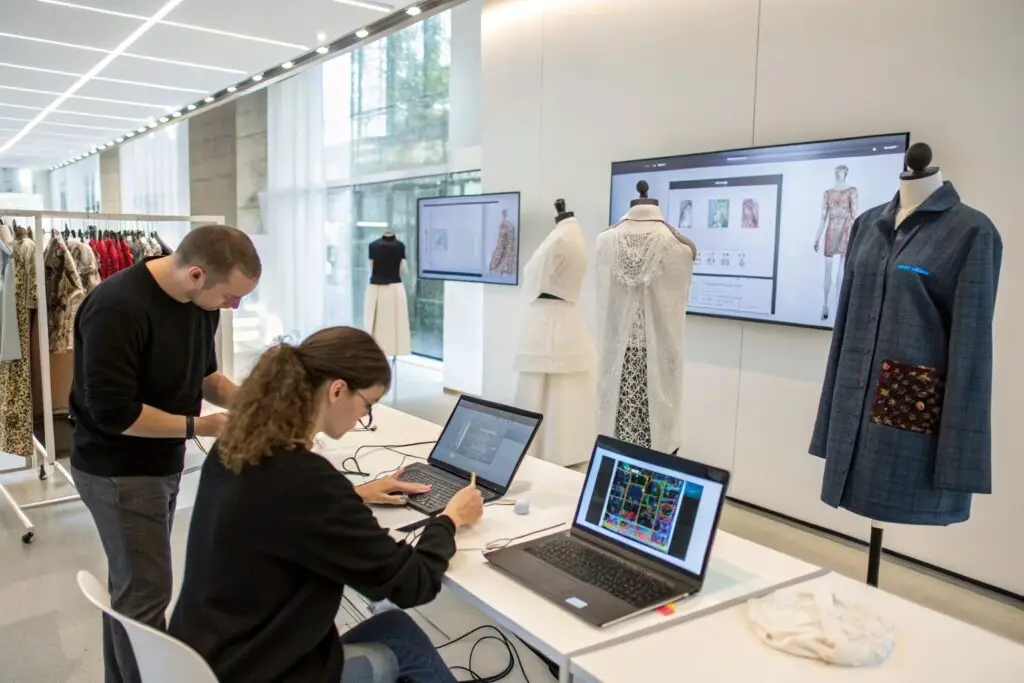
What does AI actually do for fashion businesses?
- Predictive Analytics1: Anticipate what customers want before they buy
- Visual Recognition: Analyze street style and influencer trends
- Automated Styling2: Power personal recommendation engines
- Inventory Optimization: Prevent overproduction and stockouts
- Virtual Try-Ons3: Reduce return rates and boost confidence
Retailers like Stitch Fix, ASOS, and Farfetch now use AI to customize offerings and manage backend logistics. Designers use tools like CALA and Adobe Firefly to ideate collections with smart prompts.
At Fumao, we integrate AI with ERP systems for smart batching, fabric yield analysis, and real-time quality flagging.
How is Zara using AI?
Zara doesn’t just follow trends—it calculates them.
Zara uses AI to predict demand, automate stock distribution, and speed up design feedback loops—allowing it to move from sketch to shelf in as little as two weeks.

How does Zara apply AI in practice?
- Demand Forecasting4: AI algorithms analyze past sales + real-time data to decide what and how much to produce.
- Store-Level Stocking5: Machine learning ensures each location gets tailored inventory—improving sell-through.
- Design Validation6: AI scans social media for trending aesthetics, color patterns, and silhouettes.
This data flows back to their design teams, who iterate quickly and avoid costly overproduction. That’s why Zara often sells out rather than mark down.
At Fumao, we’ve helped clients apply similar logic: running pre-order models tied to predictive demand inputs from AI dashboards.
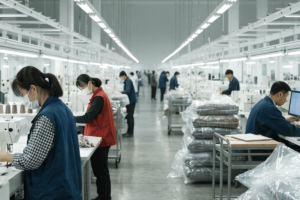
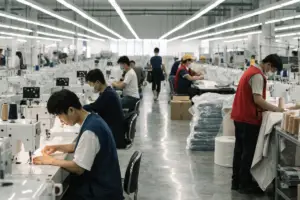
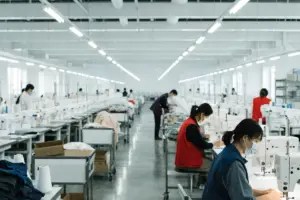
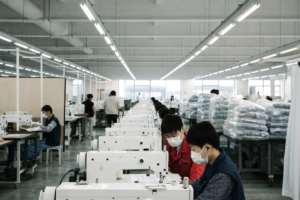
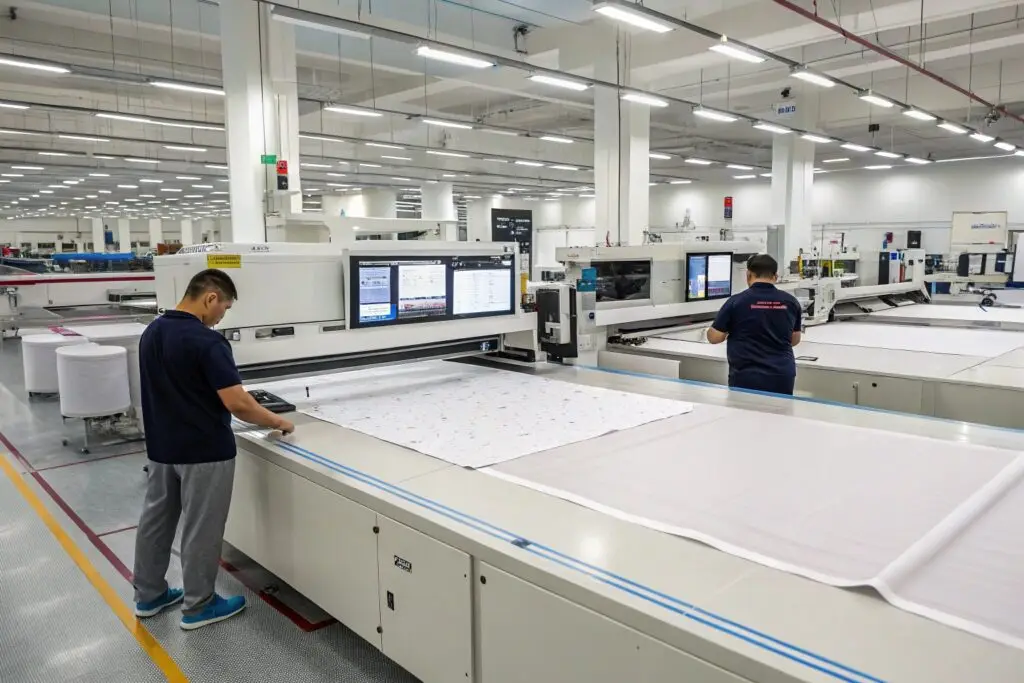
How AI is transforming garment manufacturing?
From cutting tables to production floors, AI is now a co-pilot—not just a calculator.
AI is revolutionizing garment manufacturing by enhancing precision, minimizing waste, automating defect detection, and enabling smart decision-making across production stages.
What specific AI technologies are factories using?
| AI Function | Impact on Manufacturing |
|---|---|
| Fabric Yield Optimization | Less waste from cutting plans |
| Defect Recognition | Cameras detect flaws in real time |
| Workflow Automation | Suggest optimal production sequences |
| Predictive Maintenance7 | Sensors alert before machine failures |
| Sizing Prediction | Links CRM size data to garment grading |
Fumao integrates AI-driven pattern optimization software8 to reduce fabric waste by up to 18%, especially in complex prints and shaped garments.
We also use AI quality control cameras9 at finishing stations, helping reduce defect rework by 40%.
What are the biggest benefits for buyers?
- More consistent output
- Fewer defective units
- Transparent production insights
- Shorter lead times with data-driven planning
How is H&M using AI?
H&M is going from global chain to data-led ecosystem.
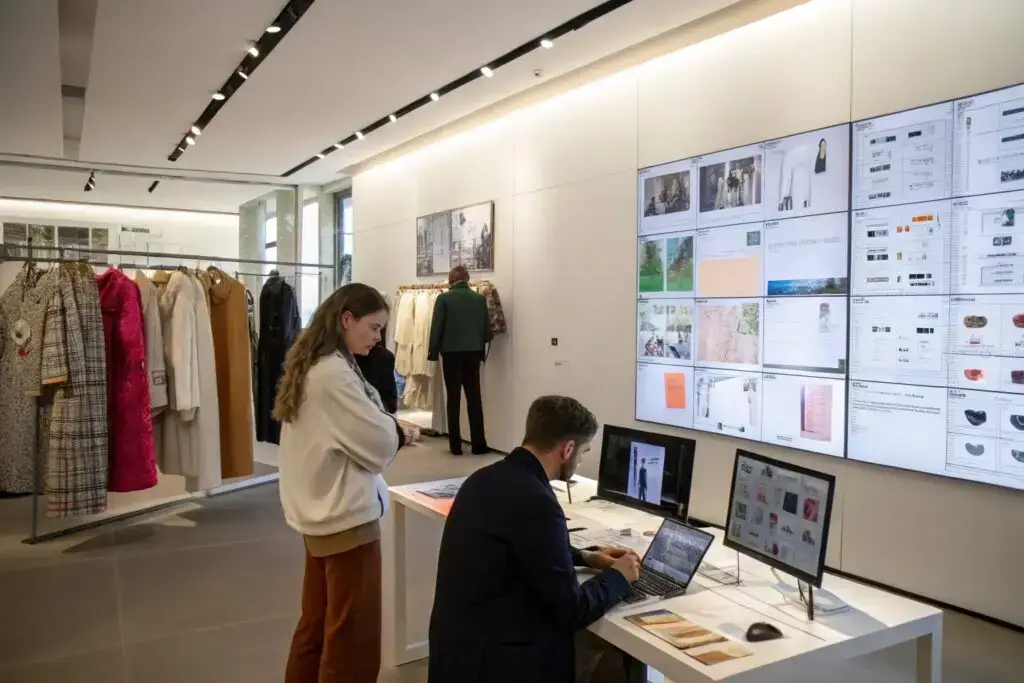
H&M uses AI for trend prediction, pricing optimization, sustainability initiatives, and supply chain automation—allowing it to move faster while aiming to reduce waste.
Where does AI show up in H&M’s strategy?
- Smart Pricing Tools10: AI analyzes real-time demand, adjusting prices dynamically to prevent markdown overuse.
- Circular Tech: AI supports recycling systems like Looop by sorting and identifying materials for reuse.
- Trend Engines: Their algorithm “Ivy” helps plan collections based on social, climate, and sales data.
- Chatbots + Style Advisors: Improve customer service while collecting preference insights
In sourcing, H&M partners with reverse logistics AI tools11 to track end-of-life garments and plan future circular lines.
At Fumao, we’ve helped clients feeding into this ecosystem by adding material ID tracking12 and AI-readable digital care labels.
Conclusion
AI isn’t a trend—it’s a transformation. From predicting next season’s look to spotting a stitch out of line, smart technology is changing every layer of the fashion world. At Fumao, we use AI not just to make more—but to make better, cleaner, and faster.
-
Explore how predictive analytics can transform customer insights and enhance sales strategies in the fashion industry. ↩
-
Learn how automated styling can personalize shopping experiences and drive sales in the fashion e-commerce sector. ↩
-
Discover the benefits of virtual try-ons in reducing returns and increasing customer satisfaction in fashion retail. ↩
-
Explore this link to understand how AI can enhance demand forecasting, leading to better inventory management and sales predictions. ↩
-
Learn about AI’s role in optimizing store-level stocking, ensuring that inventory meets local demand effectively. ↩
-
Discover how AI aids in design validation, helping brands stay ahead of trends and reduce waste in production. ↩
-
Discover how Predictive Maintenance can prevent machine failures and optimize production efficiency in factories. ↩
-
Explore how AI-driven pattern optimization software can significantly reduce fabric waste and improve efficiency in manufacturing processes. ↩
-
Learn how AI quality control cameras enhance defect detection and reduce rework, leading to higher quality products. ↩
-
Explore how Smart Pricing Tools leverage AI to optimize pricing strategies and enhance profitability. ↩
-
Learn about the role of reverse logistics AI tools in tracking garments and promoting sustainability in fashion. ↩
-
Discover the importance of material ID tracking for sustainability and efficient recycling in fashion. ↩