I remember a tense call with a distributor in Texas last May. He had placed a large wholesale order for summer coats from a factory he found online. The price was sharp. The samples looked decent. But when the bulk shipment arrived, the linen blazers were a wrinkled disaster, the crochet cardigans had stretched three inches on the hanger, and the colors were completely off from the approved swatches. He spent the entire summer handling returns and issuing credits to his retail accounts instead of building relationships and taking re-orders. His reputation took a hit he spent the next year repairing. The lesson was expensive but clear: in the wholesale game, product consistency and on-time delivery matter more than the lowest unit price.
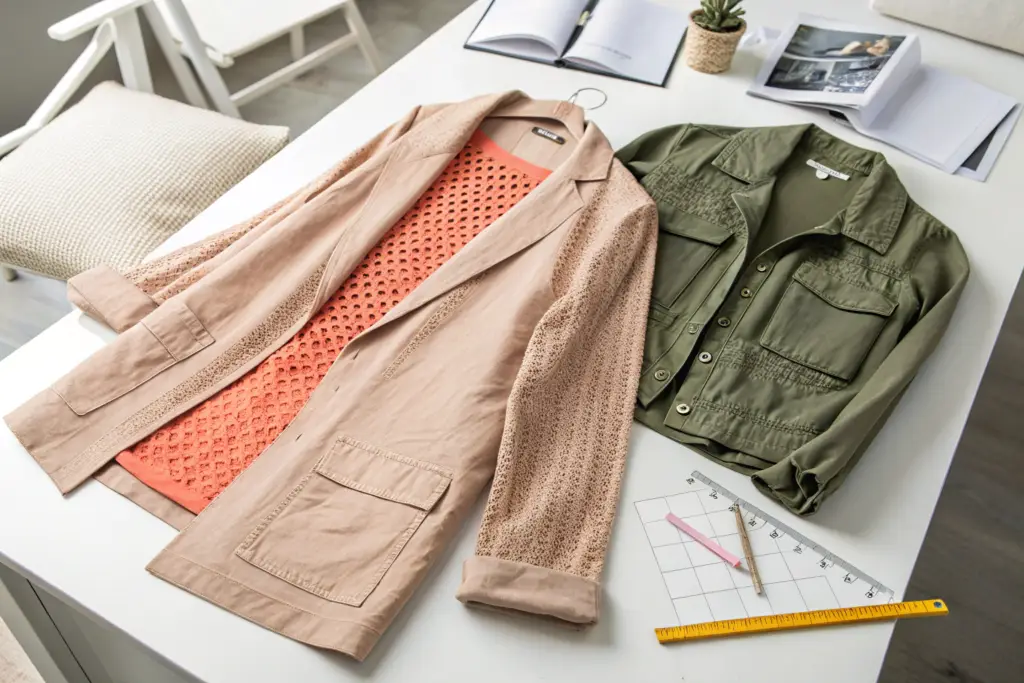
The best lightweight summer coats for wholesale in 2026 are the linen blazer, the crochet duster, and the utility shacket, each offering a proven high sell-through rate, scalable production, and a strong margin profile for both the wholesaler and the retailer.
These three styles form a balanced assortment that covers the professional, the bohemian, and the casual customer. At Shanghai Fumao, we produce these categories at scale for distributors and large brand buyers across North America. I want to share the specific product knowledge, quality control benchmarks, and margin strategies that make these styles the smartest bets for your wholesale line sheet in 2026.
Why Is the Linen Blazer the Cornerstone of Wholesale Summer Outerwear?
The linen blazer is not a trend. It is a category staple that performs year after year. Every retailer, from high-end boutiques to coastal resort shops, needs a reliable linen blazer program. The demand is predictable, which makes it the safest volume driver in your wholesale line. The risk of not having a strong linen blazer in your lineup is losing a foundational order to a competitor. Retailers buy this style in depth across multiple colors because it is a wardrobe workhorse for their customers.
The linen blazer anchors the wholesale summer coat category because of its universal customer appeal, its extended selling window from spring through summer, and its compatibility with scalable, repeatable production methods.
It is a garment that works for a boardroom, a beach wedding, or a weekend brunch. This versatility means retailers can market it to multiple customer segments with one SKU. The production is also relatively straightforward, which is critical for maintaining consistent margins at wholesale volumes.
What Fabric Specifications Guarantee Wholesale Quality?
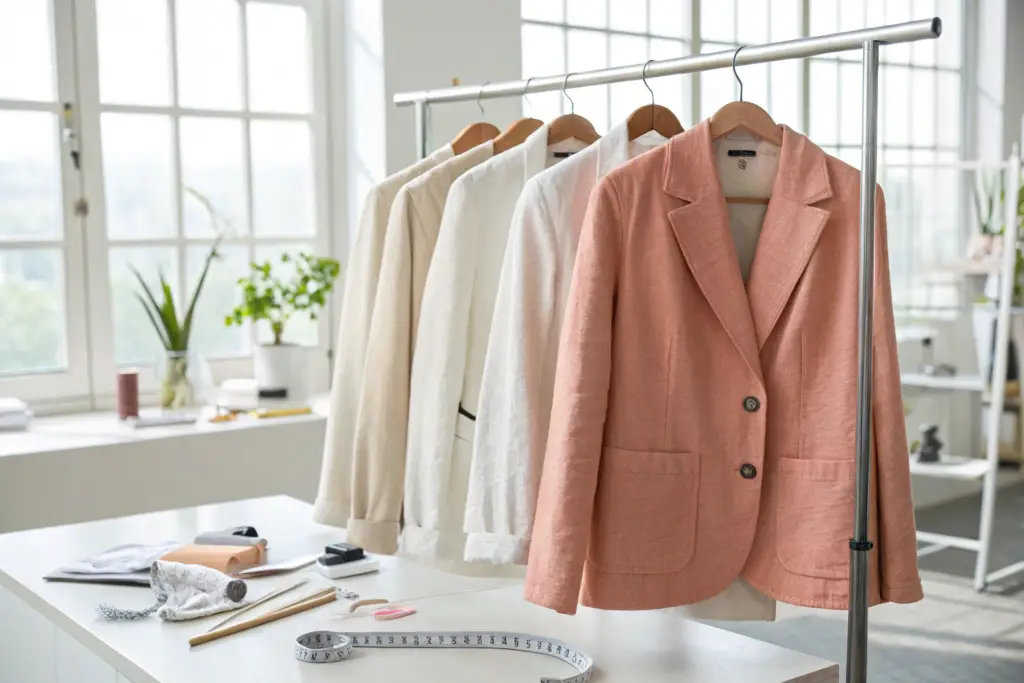
The difference between a linen blazer that retailers re-order and one they return starts at the fiber level. Pure linen is beautiful but can be a nightmare for consistency if the source is not tightly controlled. Linen fiber length varies dramatically by origin. Short-fiber linen wrinkles excessively and can feel scratchy. Long-fiber linen, from regions like Normandy in France or specific areas of Belgium, is softer, stronger, and wrinkles in a more attractive, relaxed way.
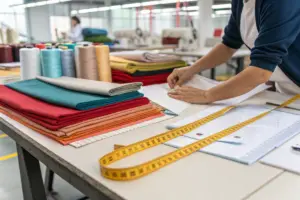
For wholesale, we strongly recommend a linen blend. A composition of 55% linen and 45% organic cotton gives the best balance of authentic linen texture and practical wearability. The cotton adds softness and reduces the sharp creasing that generates returns. The fabric weight is also critical. For summer blazers, we target 180 to 210 GSM. Lighter than that, and the blazer loses its structure and looks cheap. Heavier, and it feels like a fall garment. We also pre-wash all our linen fabric before cutting. This is a non-negotiable step. It removes the sizing and pre-shrinks the fabric, so the blazer does not change shape on the customer after its first wash. When you sell wholesale, you cannot afford a 5% shrinkage surprise on a 500-unit order.
How Do You Scale Production Without Sacrificing Fit Consistency?
Wholesale buyers need size runs that fit real bodies consistently. The number one complaint retailers hear from their customers about linen blazers is that the fit is inconsistent between colors in the same size. This happens when factories cut each color separately without a master pattern. At Shanghai Fumao, we use a single, digitized master pattern for each silhouette. The pattern is graded by computer to ensure the size 8 in the white blazer is identical in proportion to the size 8 in the coral blazer.
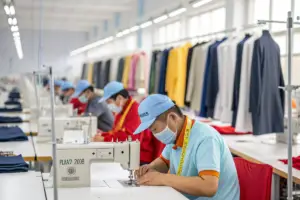
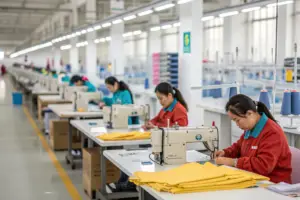
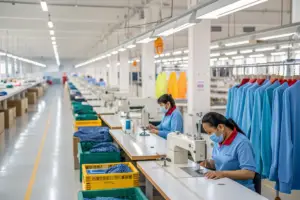
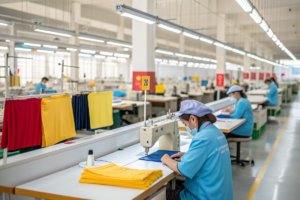
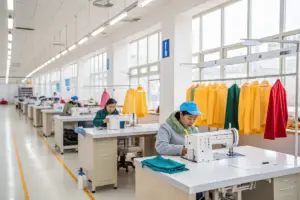
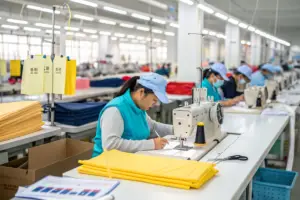
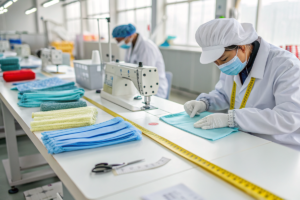
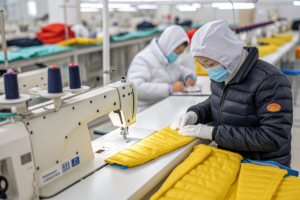
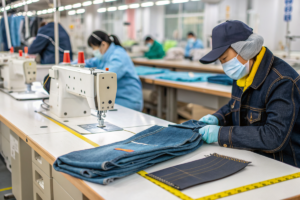
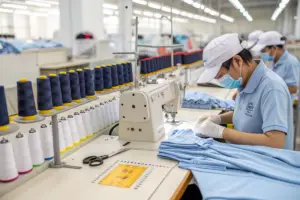
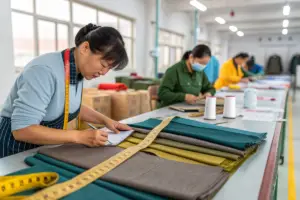
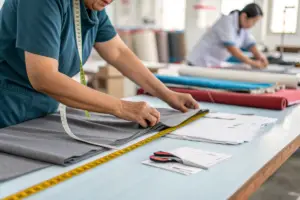
We also conduct an inline production check on every 50 units during the sewing process. A dedicated QC technician measures the key points on a random sample: the chest, the shoulder, the sleeve length, and the back length. These measurements are recorded on a control chart. If a measurement starts to drift, we pause the line and re-calibrate. This statistical process control is standard in high-end manufacturing but surprisingly rare in lower-priced wholesale. It is the invisible discipline that protects your reputation. We shipped 1,200 linen blazers to a Canadian distributor last April. The size consistency was so tight that their retail accounts reported zero fit-related returns for the entire season. That is the result of measuring obsessively.
What Makes the Crochet Duster a High-Margin Wholesale Opportunity?
The crochet duster is the margin star of the summer coat category. It has a high perceived value because of the intricate, hand-crafted look. Customers are willing to pay a premium for a piece that feels artisanal. This allows the wholesaler and the retailer to both enjoy a healthy markup. The challenge is that true hand-crocheted garments are impossible to scale and wildly expensive. The wholesale opportunity lies in engineered knit solutions that capture the crochet aesthetic with the consistency and cost-efficiency of machine production.
The crochet duster offers the highest potential margin in the wholesale summer coat assortment because its intricate aesthetic commands a premium retail price, while modern knitting technology allows for scalable, consistent production.
This gap between the perceived hand-made value and the efficient machine-made reality is where the profit lives. However, this margin opportunity comes with a specific set of quality risks that you must actively manage.
How Can Machine Knits Replicate the Crochet Look for Scalability?
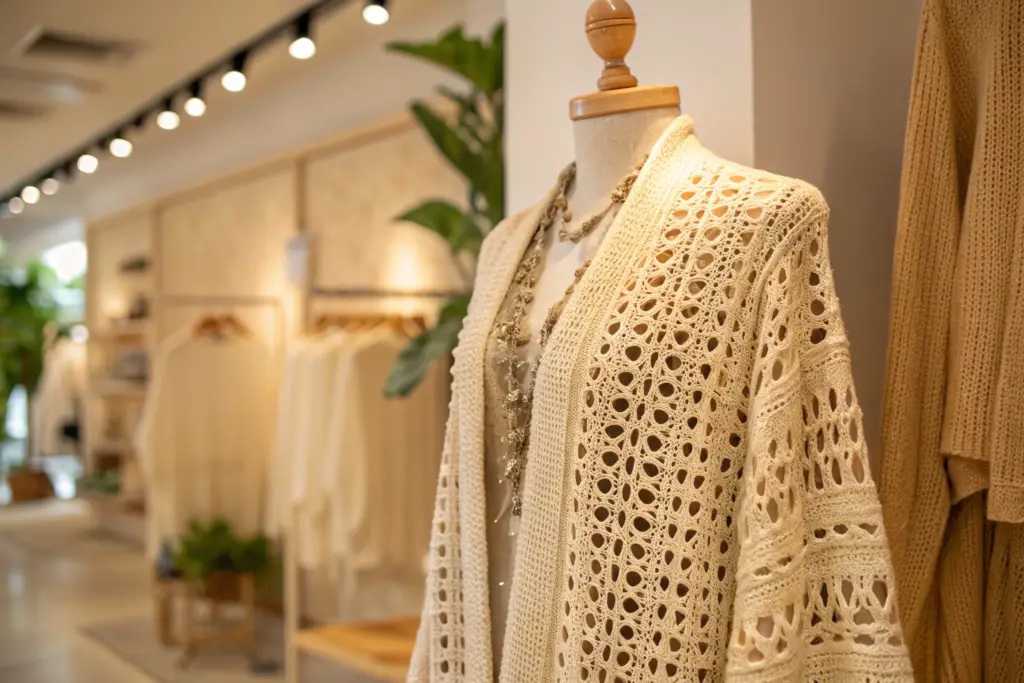
Genuine crochet is made by hand, loop by loop, with a single hook. A single duster can take a skilled artisan three days to make. For a wholesale order of 300 units, that timeline is impossible. The solution is a warp knitting machine programmed with a specific stitch simulation. This machine creates a fabric that mimics the open, lacy structure of crochet but is produced in continuous rolls. The fabric is then cut and sewn like a conventional garment.
The key is the programming. A generic open-knit pattern will look like a cheap sweater. We worked with a knit engineer to develop a proprietary stitch that replicates the irregular, organic look of hand crochet. The fabric includes random slubs and a slightly uneven stitch density that tricks the eye. It is an optical illusion created by precise machine programming. The result is a fabric that photographs beautifully, drapes elegantly, and costs a fraction of true hand crochet. We can produce 500 units in four weeks, a volume that would be laughable to an artisan cooperative. This scalability allows you to offer a "crochet" duster at a wholesale price of $45 to $60, which the retailer can then sell for $150 to $180. The margin structure works for everyone.
What Are the Critical Quality Control Points for Wholesale Crochet Garments?
Crochet-look fabrics are fragile. The open structure can snag and pull during cutting and sewing, creating a ladder run that destroys the panel. The first QC point is handling. Our cutting tables use a special vacuum system that gently holds the fabric flat without stretching it. The cut panels are immediately transferred on trays, not dragged in bundles.
The second critical point is seam strength. An open-knit fabric does not have a lot of material for a seam to grip. We use a specific stitch type, the 515 safety stitch, which combines a chain stitch and an overlock stitch in one pass. This creates a strong, secure seam that can withstand the tension of wearing and the pulling of the crochet structure. The third point is the final measurement and steam. We block every finished duster on a steam table. This sets the shape, relaxes the fibers, and ensures the garment hangs correctly. A duster that is not properly blocked can grow two inches in length after steaming, throwing off the entire size spec. I have seen entire wholesale orders rejected for this reason. It is a final step that separates a premium supplier from a commodity one.
Why Is the Utility Shacket a Volume Driver for Wholesale Distribution?
The utility shacket is the easiest coat to sell. It is unisex in spirit. It layers over everything. It appeals to a broad age demographic. Retailers love it because it has a high inventory turn. They can order it in multiple colors and know it will not sit on the shelf. For a wholesaler, the shacket is a volume driver. It might have a slightly lower unit price than the linen blazer, but the order quantities are significantly larger. Retailers will buy 12 shackets across three colors where they might only buy 8 linen blazers across two colors. The unit economics make it a powerful addition to your line sheet.
The utility shacket drives high wholesale volume because of its broad demographic appeal, its layering versatility that generates multiple outfit options, and its simple production profile that supports competitive pricing and reliable delivery.
It is a product that solves the "what to wear" problem for a huge number of customers. This demand reliability makes it a safe, large-order item for wholesale buyers who need to fill their racks with guaranteed sellers.
What Fabric Blends Offer the Best Price-Value Ratio?
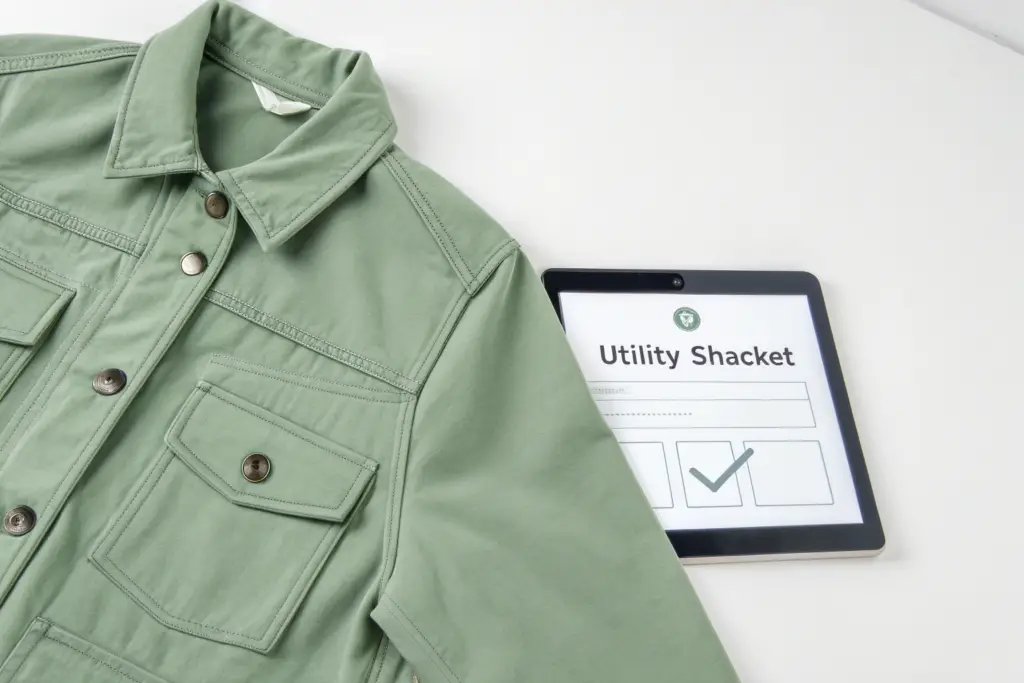
The shacket customer wants comfort and easy care. The price point is typically lower than a structured blazer, so the fabric cost must be carefully managed without sacrificing the tactile appeal. The best price-value ratio we have found is a blend of Tencel lyocell and organic cotton. Tencel gives the fabric a silky, cool hand feel and excellent drape. Cotton adds familiarity and breathability. This blend also resists wrinkling far better than pure cotton, which is a massive selling point for a garment that is thrown on and off.
For a more price-sensitive wholesale tier, a cotton and recycled polyester blend also works well. The recycled content allows the retailer to attach a sustainability story, and the polyester adds durability and reduces the cost. We always recommend brushing the fabric lightly. This mechanical finish raises a tiny nap on the surface, giving the fabric a soft, peach-skin feel that customers love to touch. The fabric cost might be $3.50 per yard, allowing a wholesale price around $22 to $28. The retailer can price it at $68 to $88. This is a sweet spot where volume explodes.
How Can Customization Options Increase Wholesale Order Value?
The base shacket is a volume item, but the real profit for a wholesaler is in customization. You can offer your retail accounts the ability to differentiate their shacket with custom trims. This turns a generic product into a branded exclusive, and you charge a premium for it. We offer a menu of custom options for our wholesale partners.
The simplest upgrade is the buttons. We can source custom snap buttons with the retailer's logo embossed or engraved. The minimum order for custom snaps is relatively low. Another option is a woven label at the back neck with the retailer's brand name. A third option is custom color development. If a retailer commits to a higher volume, say 200 units per color, we can dye the fabric to their exact Pantone specification. We did this for a chain of lifestyle boutiques in the Midwest. They ordered their shacket in three exclusive colors that matched their store's seasonal palette. Because no other store had those colors, they sold at full price with zero competition. The custom shacket program allowed our wholesale customer to deliver a unique product to their account, strengthening their relationship and increasing the order value by nearly 40%.
How Do You Build a Profitable Wholesale Summer Coat Program?
Selling wholesale summer coats is not just about picking the right styles. It is about building a program that makes it easy for your retail accounts to say yes. A confused buyer does not buy. An overwhelmed buyer defers their decision until it is too late. Your job as a wholesaler is to present a clear, concise, and well-supported product offering that removes all obstacles to ordering. This means having your logistics sorted, your marketing assets ready, and your pricing structure transparent.
A profitable wholesale summer coat program is built on a simplified, focused line sheet, a transparent DDP logistics solution, and professional marketing support that makes it effortless for retailers to sell the product to their end customers.
At Shanghai Fumao, we partner with our wholesale clients to provide this backend infrastructure. We are not just a factory. We function as an extension of your product development and logistics team.
What Should a Focused Wholesale Line Sheet Include?
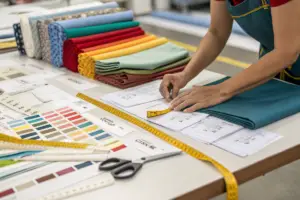
Do not send your retail accounts a catalog of 50 summer coats. That is a sure way to paralyze their decision-making. A focused line sheet for summer coats should include no more than 12 to 15 SKUs. It needs the three core silhouettes we discussed: the linen blazer, the crochet duster, and the utility shacket. Each silhouette gets three to four color options. This creates a tight, curated story that a buyer can understand in under five minutes.
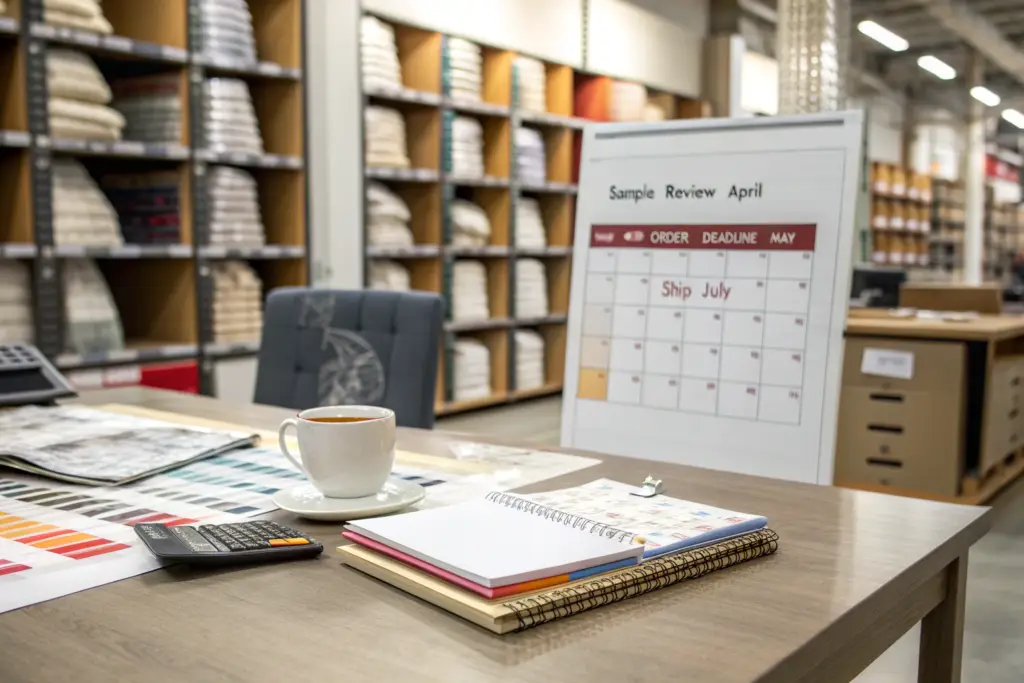
The line sheet itself must be a selling tool. Every SKU needs a professional, clean product photo on a white background. It needs the wholesale price, the suggested retail price, the fabric composition, and the available size range clearly stated. If the coat has a special feature, such as "pre-washed for shrinkage control" or "made with GOTS-certified organic cotton," put that on the line sheet. Also, include a section at the bottom with the key dates: order deadline, estimated ship date, and delivery window. We provide our wholesale partners with a completed line sheet template that they can brand and send to their accounts immediately. This speed to market is a competitive advantage.
How Does DDP Shipping Simplify Wholesale Transactions?
Logistics can kill a wholesale relationship. If a retailer orders 30 coats from you and then gets hit with a surprise customs bill, they will not order again. You need to offer Delivered Duty Paid shipping. DDP means the price you quote the retailer is the final, landed price to their door. There are no hidden fees. You handle the freight, the customs clearance, and the duty payment.
We manage this entire process for our wholesale partners. We ship directly from our factory to the retailer's store or warehouse under your brand's shipping label. The retailer places one order with you. You place one order with us. We handle the rest. This seamless logistics solution is a massive value-add that allows you to compete with much larger distributors. You can confidently tell a boutique owner in California, "The price is $55 per coat, and they will be on your doorstep by June 1st." That certainty closes orders. It also means you do not need to become a logistics expert. You focus on sales and building your brand. We focus on making and delivering the product. This division of labor is the foundation of a scalable wholesale business.
What Marketing Support Moves Inventory Faster?
A coat sitting in a retailer's stockroom is not a re-order. Your success as a wholesaler depends on your retailers' sell-through. You need to provide them with marketing assets that help them sell the product. Beautiful product photography is the bare minimum. We provide a digital asset kit with every wholesale order. This includes high-resolution images for web and social media, short video clips of the coat on a model, and pre-written product descriptions that the retailer can use on their website.
One of our most successful wholesale partners goes a step further. They create a bi-weekly "style guide" email for their retail accounts during the summer season. The email features one coat styled three different ways, using simple pieces their customers already own. The retailer can forward this email directly to their customer list. This turns the wholesaler into a marketing partner, not just a vendor. We support this by providing the raw photo assets and styling suggestions based on what is trending on social media. When you make your retailers successful, they re-order. It is that simple. The summer coat program is not a one-time transaction. It is a relationship built on mutual profitability.
Conclusion
The wholesale summer coat market in 2026 is a significant opportunity for distributors and brand buyers who get the product mix right. The linen blazer provides the reliable, high-volume foundation with its timeless appeal and scalable production. The crochet duster captures the high-margin, fashion-forward customer with its artisanal look and engineered knit construction. The utility shacket drives volume and broad demographic reach with its easy layering and customization potential. Together, these three styles form a balanced, low-risk, high-reward wholesale assortment that covers the professional, the bohemian, and the casual consumer.
Success in this space requires more than just good designs. It requires rigorous quality control that ensures size consistency across hundreds of units. It requires a transparent DDP logistics solution that removes the fear of hidden costs for your retail accounts. And it requires marketing support that helps your retailers turn inventory into sales. When you find a manufacturing partner who delivers all of this, you are no longer just a wholesaler. You are a full-service brand partner.
If you are building your wholesale summer coat line for 2026, I invite you to contact us at Shanghai Fumao. We are a factory that thinks like a brand partner. Our Business Director, Elaine, can walk you through our wholesale capabilities, our MOQ requirements, and our seamless DDP shipping process. You can reach her directly at elaine@fumaoclothing.com. Let's build a summer coat program that your retail accounts will re-order season after season.