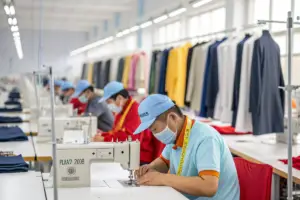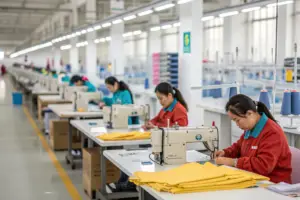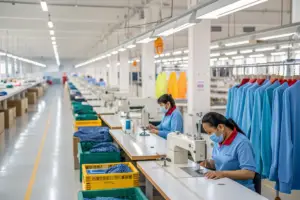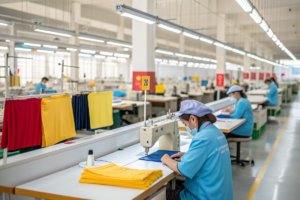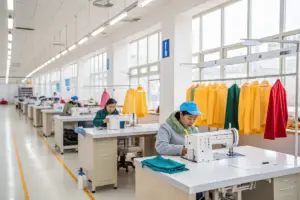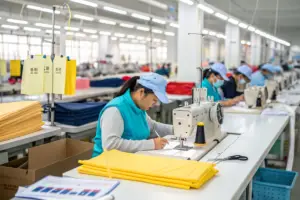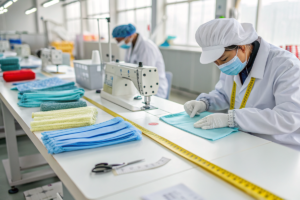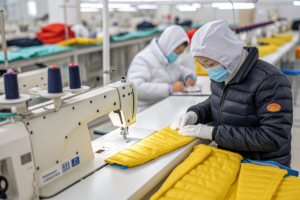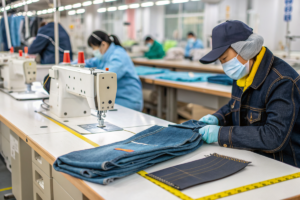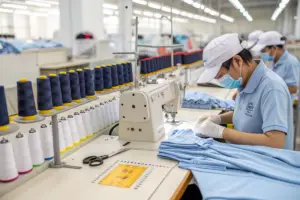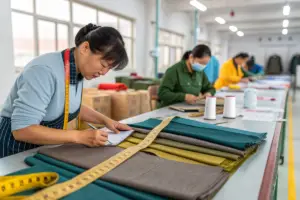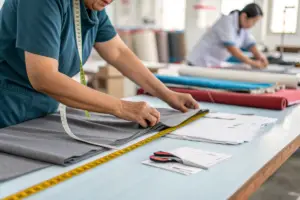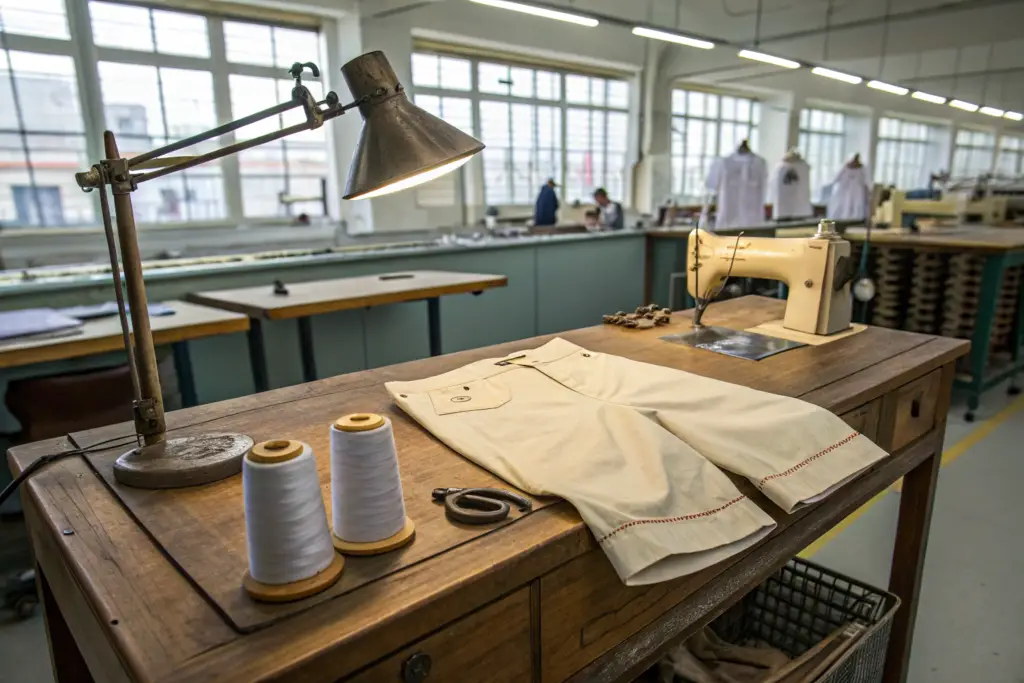
Seven years ago, a master tailor from Savile Row walked into our factory. He was not a buyer, and he was not scouting for a brand. He was on a personal mission. For three decades, he had made bespoke trousers for some of the most discerning clients in the world. He had recently launched a small ready-to-wear collection of classic shorts, and his first two manufacturing partners had failed him. The first produced shorts with side seams that twisted after washing. The second delivered shorts with waistbands that bubbled because the interlining was incorrectly fused. He was not angry. He was genuinely puzzled. He said to me, "I gave them the exact same specifications I use in my own workroom. Why can't they execute them?" I walked him through our production floor and showed him our fusing press temperature logs, our seam allowance tolerance checks, our bartack reinforcement protocol. He nodded slowly, then said something I have never forgotten. "You run your factory the way I run my workroom. The scale is different, but the discipline is the same."
Fumao Clothing has become the go-to manufacturer for classically trained tailors launching or scaling shorts collections because we bridge the critical gap that typically separates bespoke craftsmanship from industrial production, offering a manufacturing environment where the precise construction standards, material sensitivity, and fit discipline that define traditional tailoring are not simplified or compromised for the sake of production speed, but are instead systematized, documented, and consistently executed across production runs of any volume.
At Shanghai Fumao, we have developed a specialized understanding of what classically trained tailors value and what they will not tolerate. This understanding did not come from marketing research. It came from working directly with tailors, listening to their feedback, and adapting our production systems to meet standards that are higher than what most apparel brands require. Let me explain exactly what makes our factory different, and why tailors who have spent a lifetime perfecting their craft trust us with their products.
What Distinguishes a Tailor's Quality Standard from Standard Garment Manufacturing?
A classically trained tailor measures quality differently than a typical brand owner or a retail buyer. The brand owner looks at the overall appearance. The tailor looks at the seam allowance width, the stitch density, the grain line alignment, and the interior finishing. These are not details that most consumers consciously notice, but they are the details that determine how a garment wears, how it ages, and how it responds to repeated cleaning and pressing. When a tailor examines a pair of shorts, he is reading the construction the way a structural engineer reads a blueprint.
The quality standard of a classically trained tailor differs from standard garment manufacturing in five specific and measurable dimensions: seam construction, where tailors demand a specific stitch density and seam finishing that prioritizes durability over speed, pattern matching at side seams and pocket openings, which is often skipped in standard manufacturing, interior finishing quality including clean-finished seam allowances and properly installed interlinings, the use of traditional construction techniques such as a properly constructed fly with a protective facing and a shaped waistband rather than a straight strip, and a fit discipline that respects the relationship between the pattern, the fabric properties, and the body rather than relying on stretch fabric to compensate for imprecise cutting.
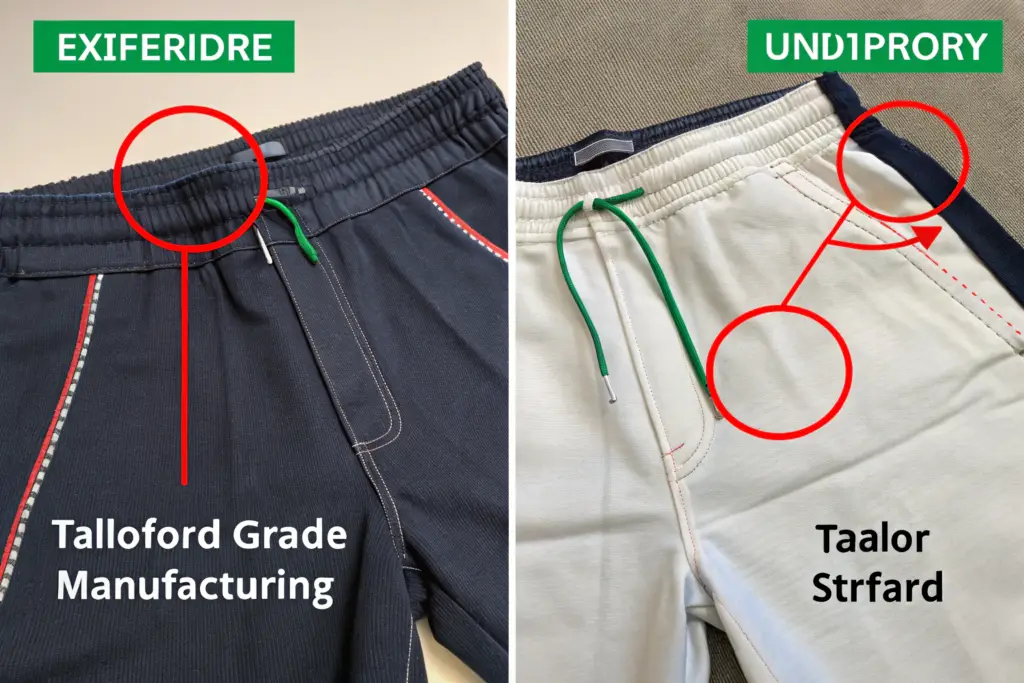
How Does Stitch Density and Seam Finishing Differ in Tailor-Grade Shorts?
In a standard factory, the primary motivation on the sewing line is speed. The stitch length is set as long as possible while still meeting the brand's minimum quality standard, because longer stitches mean fewer stitches per inch, which means faster sewing and higher output per operator. A standard stitch density for mass-market shorts might be 8 to 10 stitches per inch.
A tailor demands 10 to 12 stitches per inch for main construction seams. The higher stitch density creates a stronger, more durable seam and a finer, more refined appearance. The difference is visible and tactile. The seam finishing standard is equally distinct. In standard manufacturing, a seam allowance may be overlocked and left raw, which is functional but not refined. In tailor-grade shorts, the seam allowances on the side seams and inseam are typically flat-felled, a construction where the raw edges are enclosed within the seam itself, creating a clean interior finish and a seam that is significantly stronger and more resistant to fraying. The waistband interior is often bound with a clean-finished binding rather than left with an exposed overlock stitch. These interior finishes are labor-intensive and add time to the production process. They are the first operations cut by a factory trying to reduce cost. They are the details a tailor looks for first. This tailoring construction standards discipline is built into our production system at Shanghai Fumao.
Why Is Pattern Matching a Non-Negotiable for Tailor-Trained Eyes?
Pattern matching at seams is one of the most visible indicators of garment quality and one of the most frequently abandoned in standard manufacturing. A pair of shorts made from a plaid, a stripe, or a windowpane fabric should have the pattern aligned at the side seams so that the horizontal lines flow continuously around the body without a visible break or mismatch.
Achieving this alignment requires additional fabric consumption. The pattern pieces cannot be nested as tightly on the cutting marker because each piece must be positioned relative to the fabric pattern. The fabric utilization rate drops, typically by 5% to 10%, directly increasing material cost. The cutting process is also slower because the fabric must be laid up with the pattern aligned between plies. Standard factories avoid these costs by cutting without pattern matching and hoping the buyer does not notice or does not care. A tailor notices immediately. At Shanghai Fumao, we offer pattern matching as a specified option on our production orders. We calculate the additional fabric consumption, present it transparently to the client, and execute the cutting with the precision required. This pattern matching in garment production capability is one of the specific reasons tailors choose to work with us.
How Does Fumao Accommodate the Specific Construction Requests of Tailors?
The relationship between a classically trained tailor and a standard factory is often adversarial. The tailor requests a specific construction technique that the factory has never performed. The factory pushes back, claiming the technique is impossible at scale, too expensive, or unnecessary. The tailor hears this as an unwillingness to maintain quality. The factory hears the tailor's requests as unreasonable demands from someone who does not understand production realities. This dynamic is the reason many tailor-led brands fail to scale their manufacturing.
Fumao Clothing accommodates the specific construction requests of classically trained tailors by treating each tailor's specification not as an inconvenience to be negotiated away but as a technical challenge to be solved, maintaining production capability for a range of traditional construction techniques that have been abandoned by most high-volume factories, including hand-finished interior bindings, shaped waistbands, pick-stitching on pocket openings, and functional button-fly constructions, and by assigning each tailor client a dedicated technical liaison who has both sewing floor experience and the ability to communicate constructively in design terminology rather than only in production terminology.
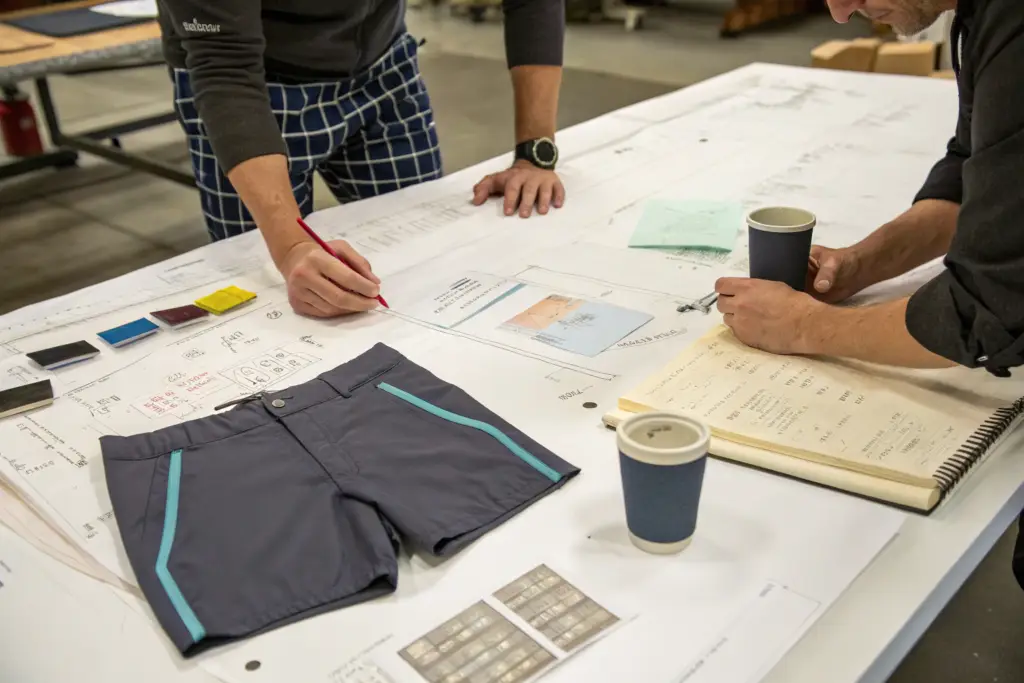
What Traditional Construction Techniques Does Fumao Maintain?
Most factories have streamlined their production to a narrow set of modern construction techniques that are fast, automated, and designed for stretch fabrics and casual silhouettes. The traditional techniques that tailors request are slower, require different equipment or different operator skills, and cannot be performed efficiently on a line optimized for speed.
We maintain the capability to produce a properly constructed button fly, which requires precise alignment of multiple fabric layers and accurate buttonhole placement, a technique that most factories have replaced entirely with zipper flies. We produce shaped waistbands, which are cut on a curve to follow the natural contour of the body, rather than straight waistband strips that are forced into a curve during attachment, causing tension and twisting. We offer pick-stitching, a fine, hand-guided machine stitch visible on the edge of pocket openings and waistbands, which is a hallmark of tailored trousers. We produce functional interior waistband curtain, the strip of lining fabric that cleanly finishes the inside of the waistband. These traditional tailoring techniques are not decorative. They affect the fit, the durability, and the longevity of the garment. At Shanghai Fumao, we have invested in the equipment, the training, and the time allocation required to perform them correctly.
How Does the Technical Liaison Process Work for a Tailor Client?
When a classically trained tailor partners with Shanghai Fumao, the first person they meet is not a sales representative. It is a technical liaison who has worked on the sewing floor and can speak the language of garment construction fluently. The liaison's job is to translate between the tailor's design intent and the factory's production capability, finding solutions that satisfy the tailor's standards without creating production bottlenecks that would make the order unviable.
The process begins with a detailed review of the tailor's tech pack, reference sample, and any specific construction notes. The liaison identifies any techniques that differ from our standard production methods and develops a production plan for each one. If a specific technique requires a specialized machine attachment, the liaison arranges it. If it requires an operator with specific experience, the liaison assigns the operation to a senior sewer and ensures the training is documented. The liaison then oversees the sampling process, personally inspecting each sample before it is shipped to the tailor, and writing detailed notes on any adjustments made. This design and production collaboration process ensures that the tailor's vision is not lost in translation between the design studio and the factory floor. At Shanghai Fumao, our technical liaisons are the bridge that makes tailor-level manufacturing scalable.
What Fabric Sourcing Advantages Does Fumao Offer to Small Tailor-Led Brands?
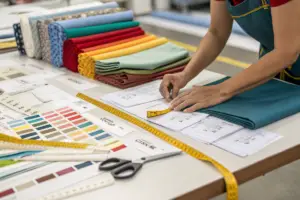
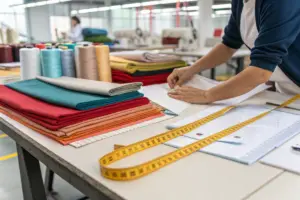
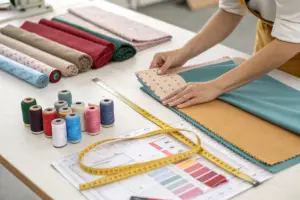
The single greatest barrier to entry for a tailor launching a shorts collection is fabric sourcing. Tailors are accustomed to selecting fabrics from the world's best mills, the Italian cotton specialists, the Irish linen weavers, the Japanese denim houses. These mills are accustomed to selling cut lengths to individual tailoring houses, not piece goods to small clothing brands. The minimum order quantities are high, often 500 to 1,000 meters per color, which is far beyond what a small tailor-led brand can commit to for a single style. The tailor is locked out of the premium fabric supply chain not by taste or budget but by scale.
Fumao Clothing solves the fabric sourcing barrier for small tailor-led shorts brands by leveraging our aggregate purchasing volume across multiple clients to access premium mills with high minimums, allowing a tailor to order as few as 200 meters of a specific Italian cotton twill by combining their order with our existing mill relationships and inventory, while also providing guidance on fabric selection based on the specific performance characteristics of each cloth, including drape, shrinkage, colorfastness, and tailoring compatibility.
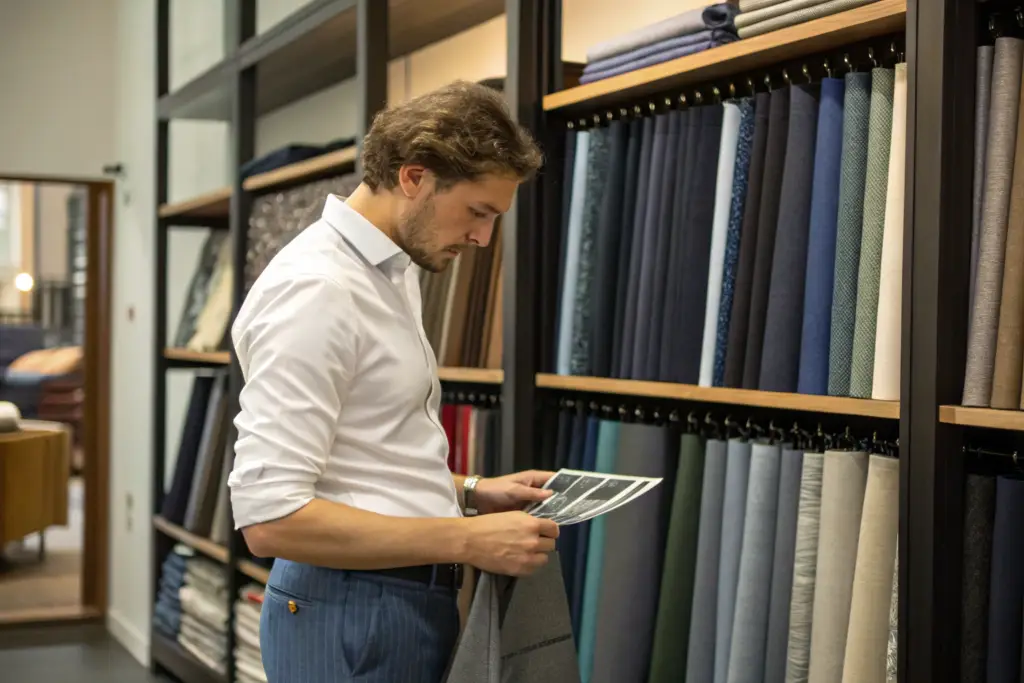
How Does Aggregate Purchasing Power Unlock Premium Mill Access?
The economics of textile mills are straightforward. Setting up a dye lot, a finishing run, and a quality control process for a specific fabric has a fixed cost that must be spread across the meters produced. Below a certain volume, the cost per meter becomes uneconomical for the mill. The minimum order quantity is the point at which the mill can produce profitably.
When a tailor-led brand approaches a premium Italian mill directly to order 200 meters of a specific cotton twill, the mill typically declines. The order is simply too small. When Shanghai Fumao approaches the same mill with a consolidated order that combines the tailor's 200 meters with orders from several other clients for different colors of the same base fabric, the total volume crosses the minimum threshold. The tailor gains access to a fabric that would have been unavailable to them as an independent brand. The price per meter is the same as if they had ordered at a higher volume. This fabric sourcing for small brands model is one of the most valuable benefits of manufacturing with an established factory. At Shanghai Fumao, we have active relationships with mills in Italy, Japan, Ireland, and China, and we use our purchasing volume to open doors for our tailor clients.
How Does Fumao Guide Fabric Selection Based on Tailoring Properties?
A classically trained tailor selects fabric differently from a fashion designer. The designer prioritizes visual appearance and trend relevance. The tailor prioritizes how the fabric will behave during construction and over the life of the garment. A fabric that drapes beautifully on a cutting table may be a nightmare to tailor, shifting under the presser foot, puckering at the seams, or delaminating during pressing.
We provide our tailor clients with technical information about each fabric beyond the standard weight and composition. We test and report on the fabric's dimensional stability, so the tailor can correctly calculate shrinkage allowance. We test and report on the fabric's tensile strength and seam slippage resistance, so the tailor can select appropriate seam constructions. We test and report on the fabric's colorfastness to crocking, washing, and light, so the tailor can predict how the shorts will age. We also provide guidance based on our production experience. "This Irish linen is beautiful, but it has significant seam slippage at stress points, so we recommend flat-felled seams and bartack reinforcement at the pocket openings." This level of fabric performance data is what a tailor needs to make an informed material decision. At Shanghai Fumao, our fabric library includes technical data sheets that we share transparently with our clients.
How Does Fumao Maintain Tailor-Level Quality at Production Scale?
The tailor who walks through a standard factory immediately notices the pace. Operators are working at speed, cutting corners that a tailor would never cut, producing garments that are "good enough" rather than "right." The tailor concludes that scaling production inevitably means sacrificing quality. This conclusion is correct for most factories. It is not correct for a factory that has specifically designed its quality systems to maintain tailor-level standards at production volume.
Fumao Clothing maintains tailor-level quality at production scale through a quality management system that embeds multiple verification gates directly into the production line rather than relying solely on final inspection, a workforce training and retention program that develops senior sewing operators with the skill level to execute complex traditional construction techniques, and a compensation structure that rewards quality over speed, ensuring that operators are not financially incentivized to cut corners at the expense of construction integrity.
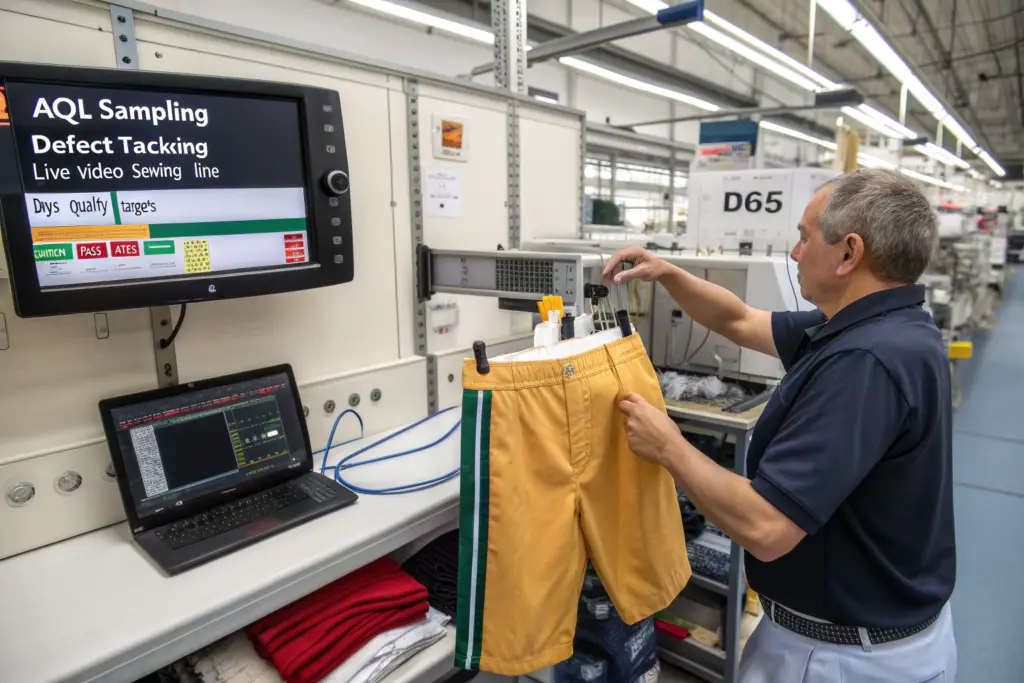
How Does the Inline Quality System Prevent Defects from Compounding?
In a standard factory, quality control is a final gate. The inspector checks the finished shorts after they are packed. Defects found at this stage require the garment to be unpacked, opened, reworked, re-pressed, and re-packed, a process so costly and time-consuming that marginal defects are often passed rather than corrected.
Our inline quality system places inspection stations at multiple points along the production line, not just at the end. The first station checks the cut panels before they reach the sewing machines, verifying correct pattern shape, correct grain line alignment, and absence of fabric flaws. The second station checks the initial subassemblies, the pocket construction, and the fly installation, before these components are enclosed within the garment where they cannot be easily inspected or corrected. The third station checks the main construction seams, the side seams, the rise, and the inseam. The fourth station checks the waistband attachment and the hem finishing. The fifth station is the final inspection. At each inline station, the inspector has the tailor's sealed sample and the technical specification sheet. A defect caught at station two costs minutes to fix and does not affect downstream operations. A defect caught only at station five costs significantly more time and material to correct, if correction is even possible. This inline quality control system is the structural reason we can maintain tailor-level standards at production speed.
How Does Operator Training Support Complex Tailoring Techniques?
The construction techniques that a tailor requests, a properly set button fly, a hand-finished interior binding, a pick-stitched pocket edge, cannot be performed by an inexperienced operator working at standard production speed. These techniques require a level of skill and experience that takes years to develop.
We have invested in developing a core team of senior sewing operators who specialize in the complex construction operations that tailor-led brands require. These operators have typically been with Shanghai Fumao for more than five years. They are paid at a higher rate than standard operators, and they are not pressured to meet the same output targets as operators on basic construction lines. Their work is measured primarily by quality, not by speed. When a new tailor client joins us with a specific construction request, the technical liaison identifies the senior operator best suited to the task and conducts a training session where the operator practices the technique on sample fabric until the result matches the tailor's standard. The training process is documented, and the operator becomes the designated specialist for that technique on future orders. This skilled garment worker training investment is the human foundation of our tailor-level manufacturing capability.
Conclusion
Classically trained tailors choose Fumao Clothing as their manufacturing partner because we have solved the problem that frustrates them most about the apparel industry: the assumption that scaling production inevitably means abandoning the construction standards that define quality tailoring. We reject that assumption, and we have built our factory systems, our workforce, and our client service model specifically to disprove it.
The tailor who works with us finds a manufacturing environment where their seam finishing specifications are not negotiated down, where their pattern matching requirements are not dismissed as impractical, and where their fabric selection is not limited to what is available from commodity suppliers. They find a technical liaison who speaks their language and translates their design intent into production reality. They find inline quality systems that catch defects early and a workforce that has been trained and incentivized to execute complex traditional techniques correctly.
The result is a product that honors the tailor's craft and carries their name with integrity, produced at a scale that allows their brand to grow and a cost that allows their business to be profitable. This is what we mean when we say we are the go-to manufacturer for classically trained tailors' shorts.
If you are a tailor or a tailoring-trained designer who is ready to scale your shorts collection without compromising the construction standards that define your work, we invite you to begin a conversation with us. At Shanghai Fumao, your specifications are not a problem to be solved. They are the blueprint we follow. Contact our Business Director, Elaine, at elaine@fumaoclothing.com. Let's discuss how we can bring your tailoring standards to production scale.