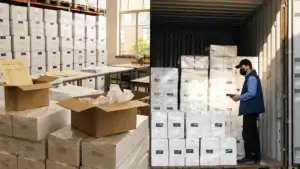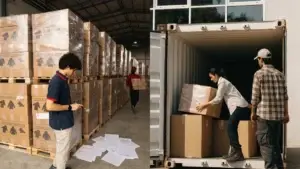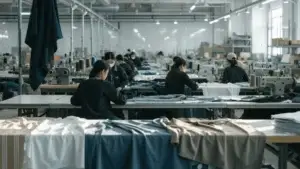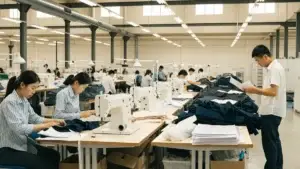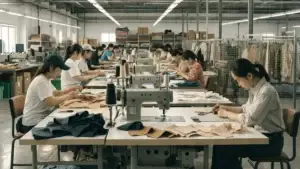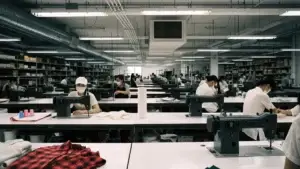
A brand owner from Seattle emailed me last month, furious. His previous factory had promised delivery of his custom golf shorts in 45 days. Day 45 came and went. Silence. Day 60, he got a blurry photo of unfinished cut goods. He had pre-sold that inventory to three pro shops. Those shops were calling him daily, threatening to pull their future business. He had lost control of his supply chain, and it was bleeding into his reputation. I see this too often. The lead time for custom classic shorts is not a mystery. It is a mechanical process with known variables. When you understand those variables, you take back control.
A realistic production lead time for custom classic shorts from a 5-line factory like ours is 35-55 days, with the final duration hinging almost entirely on fabric sourcing and trim customization complexity, not the basic stitching process.
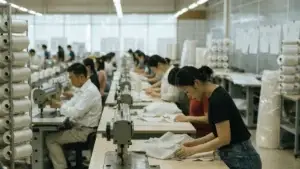
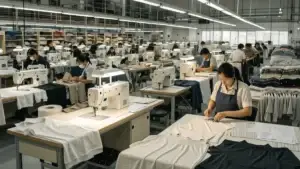
A five-line factory represents a specific production bandwidth. It is not a massive 20-line operation where your 3,000-unit order gets lost in the noise. It is not a tiny one-line workshop that collapses under volume. It is a sweet spot of flexibility and focus. At Shanghai Fumao, our five lines operate with precision, and we schedule based on strict cutoff windows. Let me break down exactly where the days go so you can plan your season without the panic.
What Factors Determine the Production Speed of Custom Classic Shorts?
You might think the sewing needle determines speed. It does not. The sewing machine is the fastest part of the whole operation. A skilled team can stitch a classic flat-front short in minutes. The real waiting game happens before the needle ever hits the fabric. It happens in the fabric mill, the trim supplier's warehouse, and the approval queue.
Fabric lead time, trim customization, and the pre-production sample approval loop are the three real bottlenecks that determine how fast a custom classic short order moves from PO to shipping dock.
I once had a client who thought we were dragging our feet because the stitching took three weeks. I showed him the Gantt chart. We had spent 18 days just waiting for his custom-label zipper pulls to arrive from a subcontractor. He was shocked. He had spent weeks stressing about the wrong thing. Let's look at where the time really goes.
| Production Phase | Standard Lead Time | Factors That Can Extend It |
|---|---|---|
| Fabric & Trim Sourcing | 10-20 days | Custom dye lots, rare fiber content, imported trims |
| PP Sample & Approval | 7-14 days | Number of revision rounds, shipping time for samples |
| Bulk Cutting & Stitching | 14-18 days | Order volume, style complexity, in-line quality checks |
| Wash/Finish & Pack | 5-7 days | Specialty washes, custom folding, hangtag attachment |
Can Custom Fabric Dyeing Really Add Two Weeks to My Order?
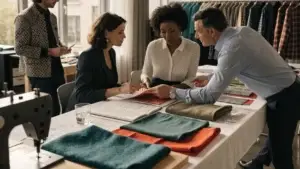
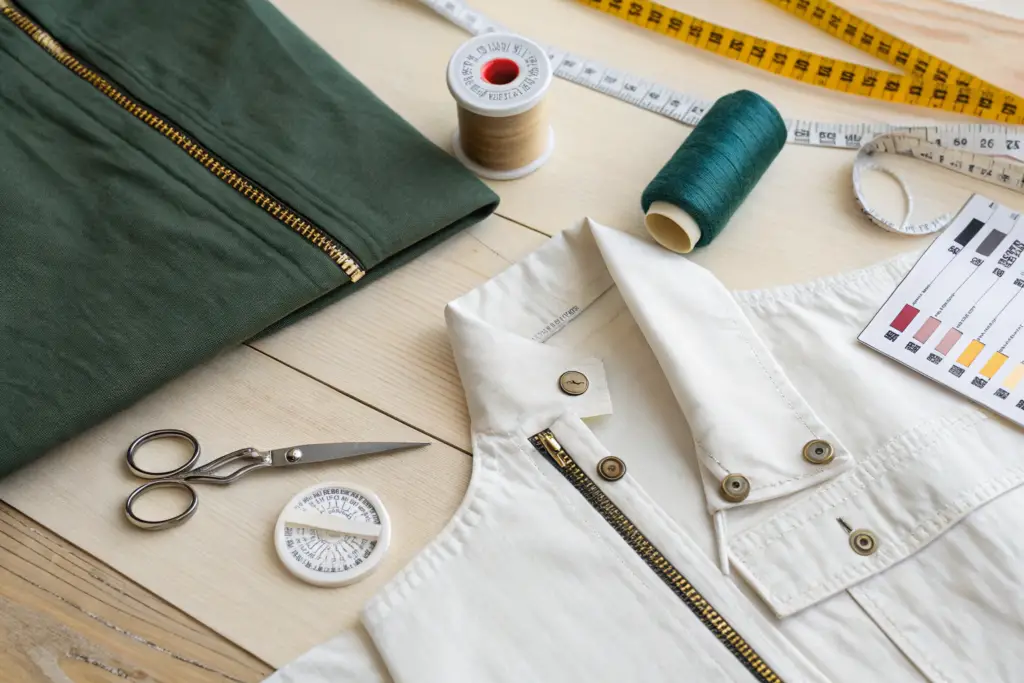
Yes, it can. This is the most common shock for new buyers. If you pick a stock fabric from a wholesale market, the fabric sits on a roll, ready to cut. Lead time: 2 days. But if you want a specific Pantone match—say, a unique burnt orange for your brand’s spring drop—the mill must spin the yarn and then dye it. This is a wet process. It takes days of soaking, fixing, and drying. If you want a detailed breakdown of how dye cycles affect physical fabric properties, the Textile Today resource library is a valuable place to study. At Shanghai Fumao, we always advise clients to check our in-house fabric library first. We hold hundreds of greige goods ready for piece-dyeing. This can shave a full 10 days off the sourcing phase compared to starting from scratch at the mill.
Why Does the Pre-Production Sample Consume So Much Calendar Time?
Because distance is a thief of time. You are in America. I am in China. I send you a sample. It takes 3-5 business days to arrive via express. You look at it. You compare it to your design spec. You take it to a meeting. That takes a day or two. You send comments. We make the adjustment in two days. We send it again. Another 4 days in transit. We have easily burned two weeks on just two iterations, even if the physical work only took hours. I tell all my partners: if you want to save 14 days, use a digital approval for stitch-downs and fabrics when possible. Reserve physical samples only for the final fit confirmation. This is how we cut the PP timeline from 21 days to 10 days for a major e-commerce brand last fall.
How Can a 5-Line Factory Balance Quality and Faster Delivery?
Speed without quality is just a fast track to chargebacks. A factory with five lines has a structural advantage here. It is small enough that the head of production can walk the floor and spot a tension problem on the feed dog before it ruins 100 units. Yet it is large enough to have a dedicated quality control team separate from the production team. The separation of production and QC is the line between chaos and consistency.
A 5-line factory balances speed and quality through in-line inspections, buffer capacity for urgent reworks, and a close partnership between the merchandising and cutting teams.
I remember a specific incident last March. We were running 4,000 pairs of classic stretch chinos for a client in Dallas. Our in-line QC inspector caught a subtle twisting on the left leg opening. It was barely visible. But she stopped the line. We checked the cutting knife. The blade had dulled slightly and was dragging the fabric. We replaced the blade in ten minutes. If that had gone to final inspection, we might have had 400 units to rework, wasting a whole day. That is the power of a nimble 5-line setup.
What Is In-Line Quality Control and Why Does It Save Time?
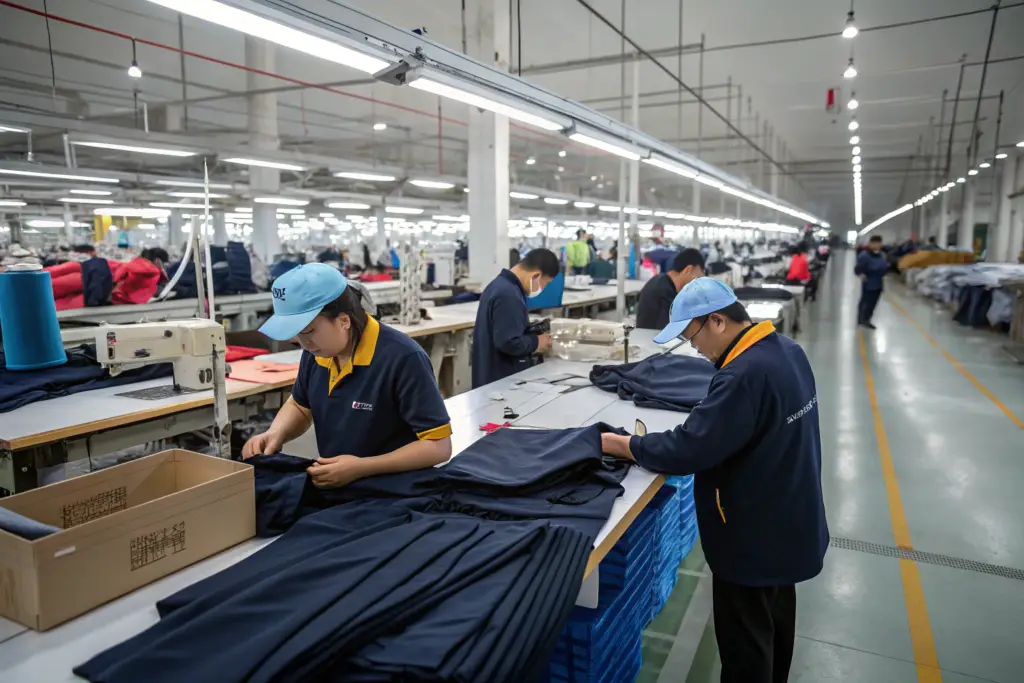
In-line QC means inspecting 10% of the pieces while they are still on the sewing line, not at the end when they are ironed and packed. Fixing a crooked pocket on a finished pair of shorts requires an expert to unpick, iron the fabric back flat, and re-stitch. That takes 15 minutes. Fixing it on the machine where it just happened takes 30 seconds. It is a broken stitch right there. You don't need to send it to a specialized repair station. For standards on this, we train our staff using methodologies aligned with the ISO 9001 quality management principles. This proactive checking is what allows us to maintain a right-first-time rate above 95% on classic shorts, even during peak season.
Does Having Dedicated Cutting Capacity Speed Up the Process?
It absolutely does. Many small factories outsource their cutting. They send your fabric to a shared cutting service, and your order waits in a queue behind twenty other orders. You cannot control that. A true 5-line factory has its own in-house cutting table with automatic spreading machines. This is a massive lever for speed. At Shanghai Fumao, we prioritize cutting for styles where we hold the fabric in-house. If your shorts use a 100% cotton twill that we stock, I can have that cut work ready in 48 hours of PO confirmation. For more insights on how vertical integration affects lead times, the Apparel Resources industry portal covers case studies on this frequently. Owning the cutting room means owning the start time.
Why Are Custom Classic Shorts Faster to Source Than Fashion-Forward Designs?
Trendy designs require a treasure hunt. Classic designs require a trip to your own storeroom. The difference in speed is not marginal; it is exponential. A fashion-forward short might demand a specific bio-based resin buckle sourced from one supplier in Northern Italy. If that supplier closes for August holidays, your production stops. The fashion supply chain is fragile because it relies on unique, irreplaceable parts.
Classic shorts are faster to source because they run on standardized, high-availability commodity components, eliminating the single-supplier bottlenecks that plague trendy designs.
I had a conversation with a brand owner recently who was obsessed with a unique shell button for a resort short. I found the button supplier. The MOQ was 10,000 buttons. The lead time was 30 days. He needed 6,000 shorts, which meant 6,000 buttons. He had to buy 4,000 extra buttons he didn’t need, wait a month, and pay a premium. I showed him a high-end, recycled polyester button we had in stock. It looked 90% similar, cost 40% less, and was available instantly. He chose the stock button and got his shorts to market three weeks earlier. That speed-to-market advantage is worth more than the unique button.
How Do Standard YKK Zippers Eliminate Supply Chain Delays?
A zipper is a tiny component, but it can kill an entire order. If a trendy cut specifies an extra-long, exposed metal zipper in a custom coating, that is a specialized product. Only a few factories make it. If their production line is backed up, you wait.
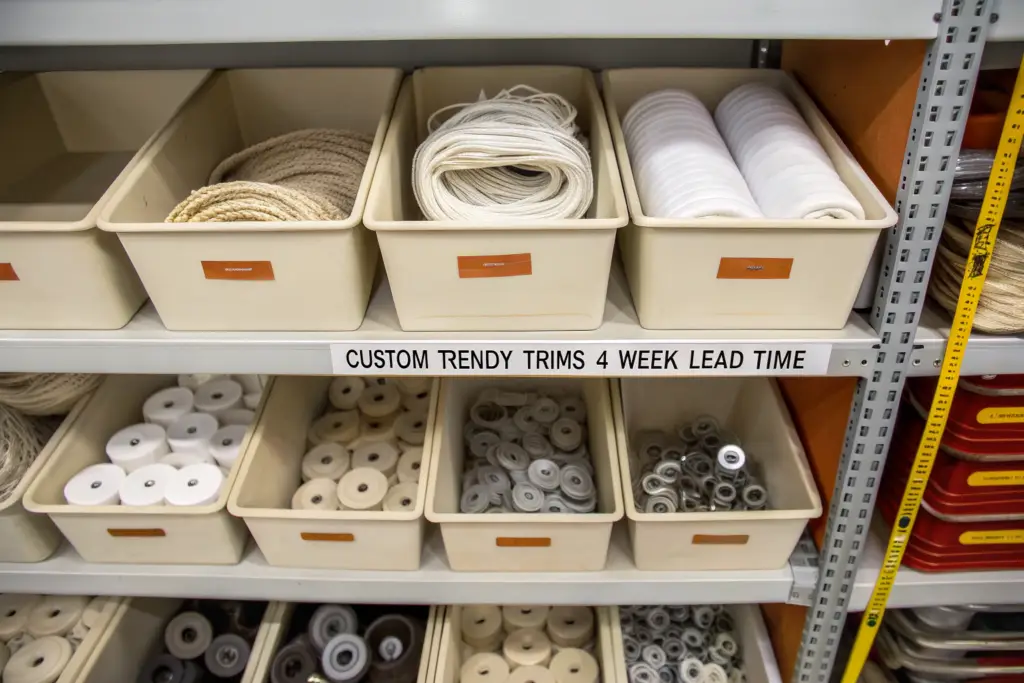
A classic short uses a standard brass or nylon coil YKK fly zipper. It is the most produced zipper in the world. Every trim distributor carries it. If our primary trim partner runs out, I can send a driver across town and pick up 5,000 pieces from a backup supplier within an hour. This interchangeability is the superpower of classic design. The YKK Fastening Network serves as a global benchmark for reliable zipper supply chains, and standardizing on their catalog avoids the custom-mold trap entirely.
Can Greige Fabric Inventory Shorten the Dyeing Window?
This is a strategy I use for partners who repeat classic chinos or twill shorts. We keep a stock of "PFD" (Prepared for Dyeing) fabrics in popular weights like 8oz and 10oz cotton. Because the fabric is already woven and finished in greige, we only need to do a piece-dye to match your seasonal color palette. Instead of a 20-day raw-yarn-to-fabric cycle, it becomes a 5-7 day color-dip cycle. This is a huge competitive edge. You can learn more about the technical benefits of piece-dyeing from the Cotton Incorporated resource hub, which offers extensive guides on dyeing technologies. Holding greige inventory costs us money, but it buys you time. For high-volume partners, it is the only way to turn a 45-day calendar into a 30-day calendar.
What Is the Fastest Realistic Lead Time for a Large-Scale Classic Shorts Program?
When a client asks me for the "fastest possible," I have to give them the "no surprises" version, not the fairy-tale version. A factory that promises 20 days for 5,000 custom classic shorts is lying. They are either cutting corners on your compliance or planning to switch your fabric without telling you. The fastest realistic timeline respects physics and machine capacity.
Under optimal conditions—meaning stock fabric, stock trims, and priority scheduling—a 5-line factory can safely deliver 3,000 to 5,000 pairs of classic shorts in 28-35 days without compromising quality.
This accelerated schedule is what I call a "fast-track slot." It requires everything to be pre-approved. It cannot be your first order with a factory. You need to have a relationship where trust and quality standards are already established. Let me walk you through how we pulled this off for a brand facing a catastrophic stock-out.
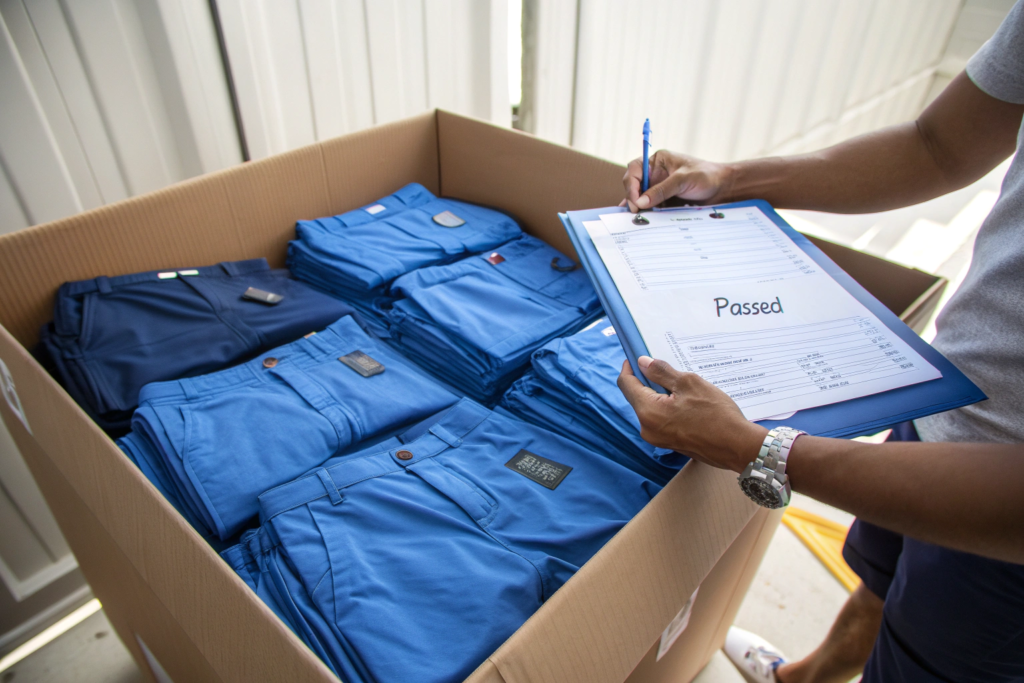
How Did We Execute a 30-Day Rush Order for a Client’s Best-Selling Chino?
Last April, a large American company came to us in a cold sweat. Their primary supplier in another country had missed the shipment window. They were going to be empty-shelved on their number one selling khaki chino short. They had a pre-negotiated digital spec. They agreed to use our stock 9oz stretch twill in a classic sand color. They picked a standard internal drawcord and a woven label we had in inventory.
We skipped the physical PP sample because they trusted our digital twin approval. We moved the fabric to the cutting table on Day 1. The sewing started on Day 3. Because it was a single, solid color with no complicated contrast stitching, the five lines ran in perfect sync. We air-freighted the shipment on Day 28. It hit their US warehouse on Day 31. The air freight cost them an extra $1.20 per unit, but they saved a retail space worth hundreds of thousands of dollars. This operation worked because there were zero new variables to solve.
What Pre-Conditions Must Be Met for an Expedited Lead Time?
You cannot roll these dice on a whim. You need four things locked before we can cut a single ply of fabric. First, a tech pack with zero ambiguity on seam construction. Second, 100% approval on lab dips via a digital color reader, not just a subjective eye-match. Third, certified payment terms to release the order immediately. Fourth, a commitment to use only our in-stock commodity fabrics and trims. Without these, the fast-track collapses. I spend a lot of my time educating new partners on how to build a Supply Chain Resilience framework into their annual sourcing calendar. If you plan for speed, it is available. If you demand speed at the last minute without preparation, it is a recipe for disaster.
Conclusion
The lead time for custom classic shorts is not a fixed number. It is a sliding scale that responds directly to your choices. Choose custom-dyed yarn from a slow mill, and you are looking at 55 days. Choose our in-stock greige goods with a standard wash and standard YKK zipper, and you are staring down 30 days. The machinery of a five-line factory like Shanghai Fumao can turn the stitching itself around in a little over two weeks. It is the decision-making around fabric and trims that adds or subtracts a month from your calendar.
My advice to any brand owner is to separate your line plan into two tracks. Use classic shorts for your volume replenishment program, where speed and safety matter most. Keep your high-risk, high-fashion experiments to capsule collections with flexible delivery windows. This segregation of the supply chain is what the smartest retailers do. It protects your cash flow and keeps your core shelf space full.
Your ability to predict your business starts with choosing a factory that explains the timeline honestly, not one that tells you what you want to hear. If you are staring at a delivery deadline and need a reliable partner to make your classic shorts program happen without the excuses, I encourage you to reach out. Talk to us at Shanghai Fumao. We can walk you through our current raw material inventory and lock in a production slot that matches your calendar. Send a direct email to our Business Director, Elaine, at elaine@fumaoclothing.com with your target quantity and we will build a realistic backward calendar for you today.