You are a European boutique buyer. You sit in a café in Paris, scrolling through lookbooks for the coming summer season. You see low-rise shorts. You see mid-rise shorts. You see high-waisted shorts. Your finger pauses on the high-waisted styles. They look elegant. They look like something a woman would actually wear to a long lunch, a gallery opening, or a weekend in Provence. But you hesitate. Is this a trend that will vanish next year? Or is this a permanent category you can invest in with confidence? You remember the low-rise craze of the early 2000s. You remember how quickly it died. You do not want to be stuck with dead stock. You need to know if the high-waisted short is a classic or a passing moment.
Yes, high-waisted shorts are a classic silhouette for women in Europe. They are not a micro-trend. They are an enduring category rooted in the tailoring traditions of French, Italian, and British fashion. The high-waisted short traces its lineage to the 1930s and 1940s, was revived in the 1950s by European cinema icons, and has been a steady presence in European women's wardrobes for decades. Unlike the low-rise short, which is a cyclical trend, the high-waisted short is a structural classic. It defines the waist, elongates the leg, and creates an hourglass proportion that flatters a wide range of body types. European women, who tend to invest in quality, fit, and timeless elegance over fast fashion, have made the high-waisted short a permanent part of their summer uniform.
At Shanghai Fumao, we manufacture high-waisted shorts for European brands and boutiques. I see the reorder patterns. The brands that stock a well-cut high-waisted linen or cotton twill short reorder it every season. They change the color. They tweak the fabric. They do not change the silhouette. The high waist is not a seasonal experiment for them. It is the backbone of their summer bottoms business. This article explains why the high-waisted short is a classic in Europe, what makes it different from other regions' interpretations, and how to specify it for the European market.
What Defines a Truly Classic High-Waisted Short for European Tastes?
European taste is specific. It is not the same as American taste. The American high-waisted short is often defined by denim cutoffs, raw hems, and a casual, sometimes distressed aesthetic. The European high-waisted short is defined by tailoring, proportion, and fabric quality. It is more likely to be seen in a linen blend, a cotton sateen, or a lightweight wool than in distressed denim. It is more likely to be worn with a silk blouse and leather sandals than with a graphic tee and sneakers. The silhouette is similar. The expression is different.
I worked with a French brand to develop their signature high-waisted short. They were very specific. The waistband had to be exactly 4 centimeters wide. The front rise had to be 12 inches for a size 38. The leg had to have a single forward pleat. The fabric had to be a 55% linen, 45% cotton blend in a natural, undyed color. The brand owner told me, "My customer wants to look like she is on holiday in Capri, not on a campus in California." That one sentence captured the European aesthetic perfectly. It is about a specific kind of elegance. Relaxed but never sloppy. Simple but never basic.
The classic European high-waisted short has specific measurement ranges. These are not arbitrary. They are the product of decades of tailoring tradition. Let's define the exact specifications that make a high-waisted short a European classic.
What Rise Measurement Makes a Short "High-Waisted" by European Standards?
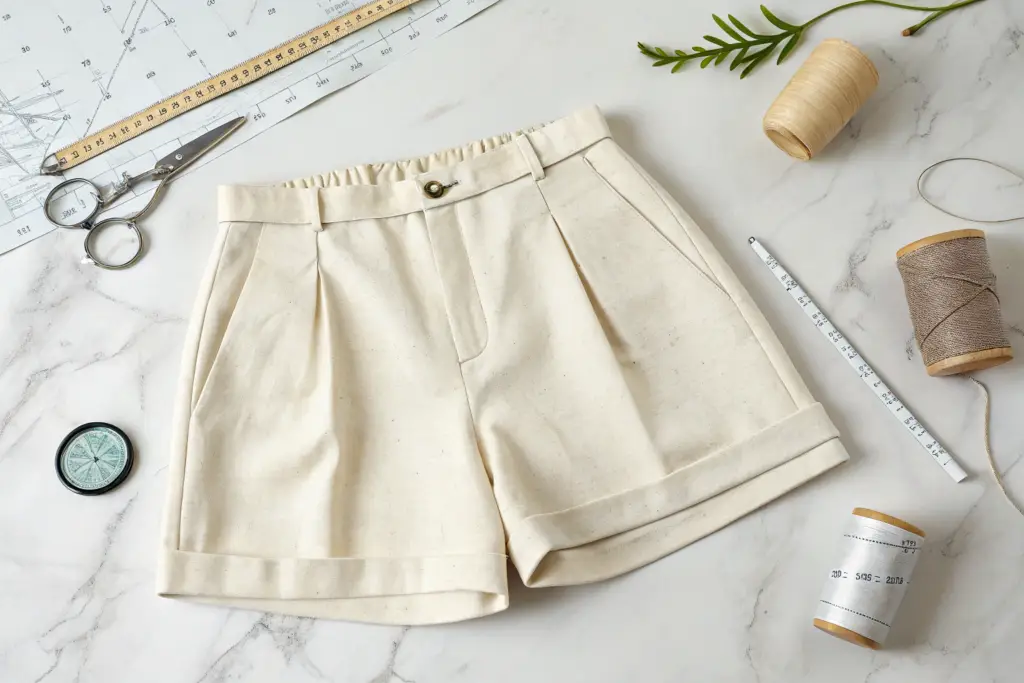
By European tailoring standards, a short is truly high-waisted when the front rise measures 11 to 13 inches for a standard size 38 or 40, which corresponds to a US size 8 or 10. This rise places the waistband at the natural waist, the narrowest part of the torso, typically at or just above the belly button. A mid-rise short measures 9 to 10.5 inches. A low-rise measures below 9 inches.
The high waist is not just a style choice. It is a structural choice that changes the entire proportion of the body. It makes the legs appear longer. It makes the waist appear smaller. It creates the classic hourglass silhouette that has been the foundation of European womenswear tailoring for nearly a century. This rise measurement is the defining feature. Without it, the short is not a high-waisted classic. It is just a short with a slightly higher waistband. The women's trouser rise measurements guide explains the rise categories. The 11 to 13-inch range is the classic high-waisted territory.
Why Do European Women Prefer Tailored Details Over Distressed Finishes?
The European high-waisted short is a tailored garment first. It borrows its details from trouser making. A clean flat front or a single forward pleat. A hook-and-bar closure or a concealed button placket. A cuffed hem or a clean blind-stitched hem. An invisible zipper at the side seam. These are the details of a dress trouser, cut short for summer. Distressed finishes, raw hems, heavy fading, and aggressive sanding are largely absent from the European classic version.
This preference comes from a cultural attitude toward clothing. European women tend to buy fewer, better-quality garments. They invest in pieces that will last for years. A tailored short in a high-quality fabric ages gracefully. A distressed short is designed to look old on day one. It is a different philosophy. The European versus American casual wear aesthetics article explores this cultural difference. The European high-waisted short is a piece of quiet luxury. The quality is in the cut and the fabric, not in the branding or the distressing.
How Does the European High-Waisted Short Differ from North American Versions?
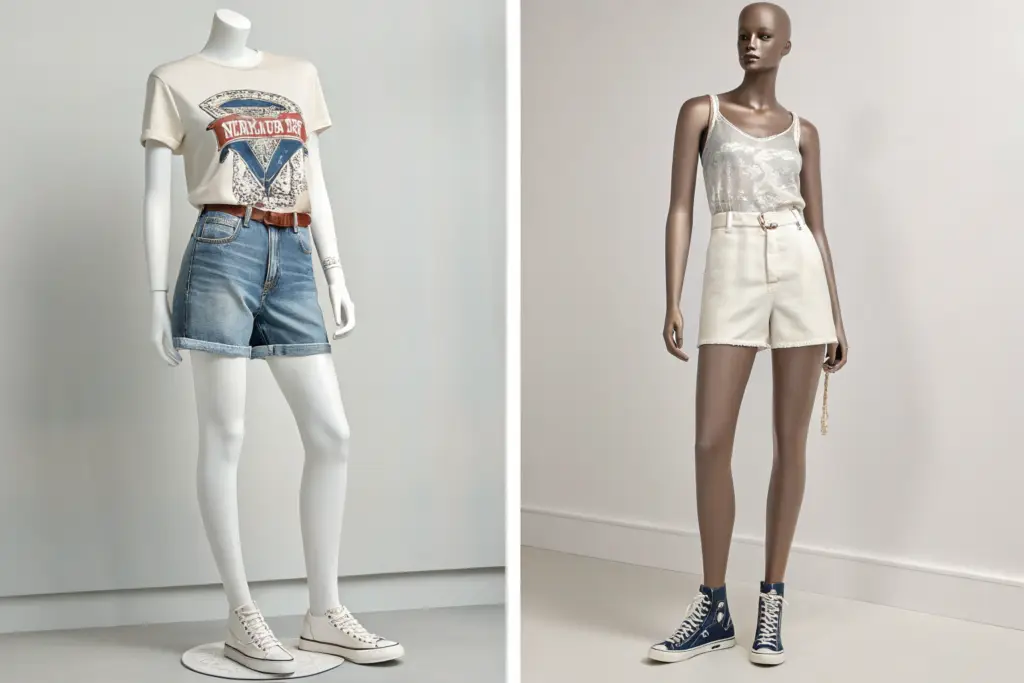
The same silhouette can be expressed in completely different ways. The high-waisted short exists on both sides of the Atlantic. But the dominant expression in North America leans casual, denim-based, and youthful. The dominant expression in Europe leans tailored, natural-fiber-based, and ageless. Both are valid. Both are classic in their own contexts. But a European buyer sourcing shorts for a European customer needs to understand the distinction.
I recall a trade show conversation with a buyer from Milan. She picked up one of our high-waisted denim cutoffs, a style that sells well in the U.S. She examined it carefully. She put it down. She said, "This is beautiful, but it is not for my customer. Do you have this same silhouette in a linen twill with a proper side zipper?" She loved the shape. She wanted the European expression of it. We developed that linen twill version for her. It became a best-seller in her boutique. The silhouette was the same. The fabric and finish made it European.
The differences are in the fabric, the color palette, the closure, and the styling context. These differences are not subtle to the European consumer. They are the signals of quality and appropriateness. Let's break down the key distinctions.
What Fabric and Color Palettes Define the European Classic Look?
The European high-waisted short palette is rooted in nature and architecture. Think of the colors of the Mediterranean coast. Natural flax, oyster white, sandy beige, soft terracotta, faded navy, olive green. The colors are muted, sun-faded, and harmonious. They do not shout. They whisper. The fabrics are natural. Linen, linen-cotton blends, lightweight cotton twill, cotton sateen, and for the high-end, tropical wool or a silk-linen blend.
The North American palette is broader and bolder. It includes bright colors, acid washes, and heavy distressing. The European palette is restrained. It is about texture and subtlety. A European customer wants to see the slub of the linen, the sheen of the sateen, the soft fade of a naturally dyed cotton. The fabric is the star. The color supports the fabric. The European summer color palettes in fashion guide shows this natural, muted spectrum. A brand sourcing for Europe should start with natural, undyed base fabrics and build the color story from there.
How Do Closure and Waistband Styles Vary by Region?
The European high-waisted short favors hidden closures. A side invisible zipper is the most common. It creates an uninterrupted front. A hook-and-bar at the center front waistband or a concealed button placket is also used. The goal is a clean, seamless waistline. The North American version often uses a standard front zipper fly with a visible metal button, similar to a jean.
The waistband itself is often more structured in the European version. It may include a curtain lining, a grosgrain ribbon on the inside, and a firmer interfacing. This structure keeps the waistband sitting perfectly flat and prevents rolling. It is a trouser waistband, not a casual short waistband. The European tailoring waistband construction guide details these construction methods. The closure and waistband are invisible quality signals. The European customer notices them.
Which European Cities and Style Cultures Define the High-Waisted Short Look?
Europe is not a monolith. Paris, Milan, Copenhagen, and Barcelona each have their own style culture. The high-waisted short appears in all of them. But the styling, the fabric, and the attitude change from city to city. Understanding these regional variations helps a brand target the right customer with the right product story. The Parisian look is not the Copenhagen look. The Milanese look is not the Barcelonan look. Each is a distinct expression of the same classic silhouette.
I have visited trade shows and showrooms in several European cities. In Paris, the buyers wanted high-waisted shorts in neutral linens and silks, with a focus on impeccable cut. In Copenhagen, they wanted brighter, bolder colors and sustainable fabric certifications. In Milan, they wanted luxurious fabrics and precise tailoring. The silhouette was the same. The nuance was in the fabric, the color, and the sustainability story. A smart brand develops a core high-waisted short block and then customizes the expression for each regional market.
The regional style cultures are well-documented. They are not stereotypes. They are real consumer preferences shaped by climate, culture, and lifestyle. Let's explore the two most influential style cities.
What Is the Parisian Way to Style a High-Waisted Classic Short?
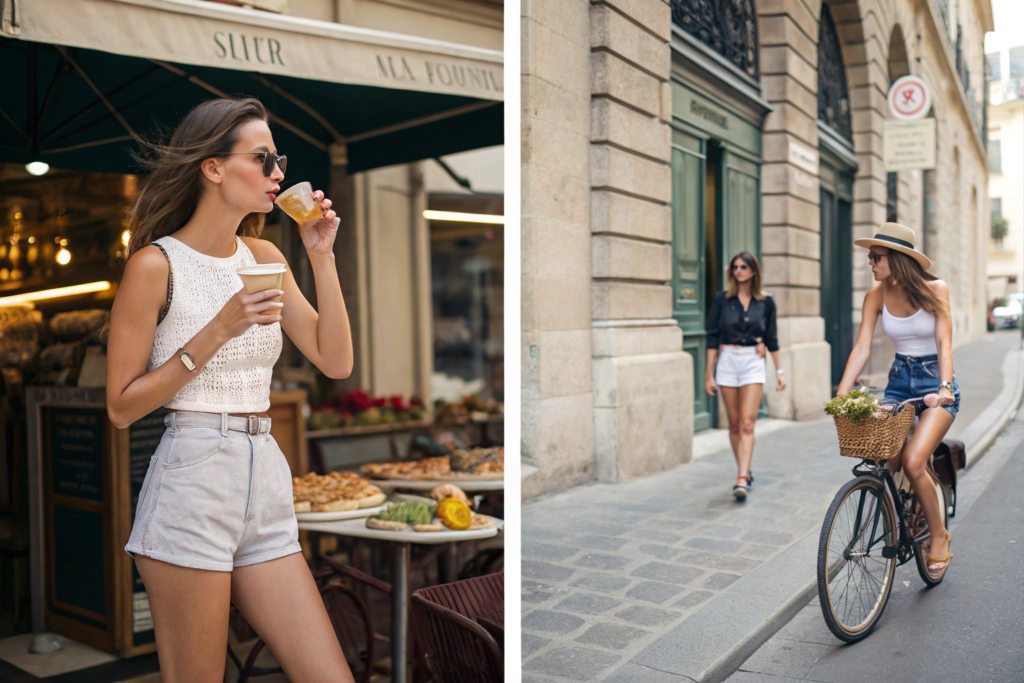
The Parisian look is defined by understatement. The high-waisted short is in a neutral color, beige, navy, or white. The fabric is a high-quality linen or a cotton-linen blend. The fit is relaxed but tailored. It is worn with a simple silk tank top or a crisp cotton shirt, half-tucked. The shoes are flat leather sandals or espadrilles. The accessories are minimal. A thin gold necklace. A vintage watch. A basket bag. No logos. No loud prints.
The Parisian woman looks like she did not try too hard. The effort is in the quality of the pieces, not in the complexity of the outfit. The high-waisted short is a canvas for this effortless elegance. The Parisian summer style guide captures this aesthetic perfectly. A brand targeting the Parisian customer should focus on impeccable fabric, a perfect fit, and a neutral, sophisticated color palette.
How Does the Italian "Bella Figura" Influence the Silhouette?
"Bella figura" means beautiful figure. It is the Italian cultural principle of presenting oneself with elegance, dignity, and style. The high-waisted short is a natural expression of bella figura. It creates a beautiful figure. It defines the waist. It elongates the leg. It is inherently flattering. The Italian version is often more overtly glamorous than the Parisian version.
The Italian high-waisted short might be in a luxurious silk-linen blend or a crisp cotton sateen with a subtle sheen. It might be worn with a matching tailored jacket as a summer suit. The shoes might be a heeled wedge or a sleek leather mule. The accessories might be bolder. Oversized sunglasses. A structured leather bag. The look is polished, confident, and put-together. The Italian bella figura style philosophy guide explains this cultural concept. A brand targeting the Italian market should emphasize silhouette, luxury fabrics, and the transformative power of a well-cut short.
What Makes the High-Waisted Short a Long-Term Investment for European Wholesale Buyers?
A wholesale buyer in Europe thinks differently from a buyer in a fast-fashion market. The European boutique model is built on curation, customer relationships, and repeat business. The buyer is not looking for a one-season wonder. She is looking for a style she can stock for five seasons, in different fabrics and colors, that her customers will ask for by name. The high-waisted short is that style. It is not a bet. It is a foundation piece.
I have a client who runs a boutique in Hamburg. She has stocked our high-waisted linen short for four consecutive summers. Every year, she orders the natural and navy colorways. She adds one seasonal color. Her customers come back every May and ask for the same short. She told me, "This short pays my rent for the summer. I never mark it down. I never worry about it. It is my safest buy." This is the wholesale reality of a classic piece. It is not flashy. It is reliable. It builds a business.
The European wholesale market values longevity, quality, and consistency. The high-waisted short delivers all three. Let's examine the business case.
How Does a Classic Silhouette Reduce Inventory Risk for Boutiques?
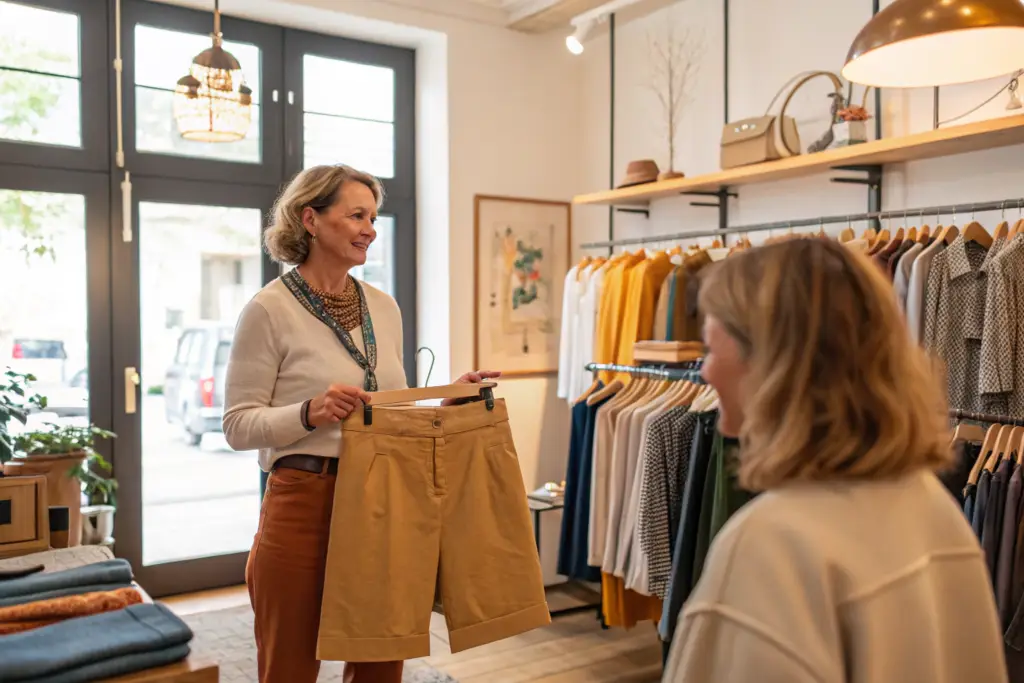
A boutique has limited shelf space and limited budget. Every piece must earn its place. A trendy piece is a gamble. It might sell out in two weeks. It might sit for two months and go to sale. A classic high-waisted short is not a gamble. The demand is known. The customer base exists. The boutique owner orders with confidence. She knows the sell-through rate from last season. She knows her margin.
This predictability reduces inventory risk. The boutique does not need to over-order to hit minimums because she worries about stockouts. She does not need to under-order and miss sales. She orders the right amount. The cash flow is stable. The markdown budget is near zero. The inventory management for fashion boutiques guide emphasizes the importance of core styles. The high-waisted short is a core style for the European market.
Why Does the European Consumer's "Buy Less, Buy Better" Mentality Favor This Style?
The European consumer, particularly in France, Italy, Scandinavia, and Germany, has increasingly adopted a "buy less, buy better" approach to clothing. She wants garments that are well-made, versatile, and timeless. She wants to wear them for years, not weeks. The high-waisted short fits this mentality perfectly. It is a quality piece that transcends seasons.
This consumer is willing to pay a higher retail price for a short that meets her standards. She wants to know the fabric origin, the factory's ethical certifications, and the construction details. She is a valuable customer. She is loyal. She tells her friends. A boutique that serves this customer with a classic high-waisted short builds a reputation for quality and taste. The sustainable fashion consumer in Europe report details this growing segment. The high-waisted short is exactly the type of product this consumer seeks.
Conclusion
The high-waisted short is not a trend in Europe. It is a classic. It has the tailoring DNA, the cultural resonance, and the commercial track record to prove it. The European version is defined by a 11 to 13-inch front rise, tailored details, natural fabrics, and a restrained color palette. It differs from the North American version in its expression, favoring quiet luxury over casual distressing. It is a staple in the style cultures of Paris, Milan, Copenhagen, and beyond. For a wholesale buyer, it is a low-risk, high-reliability investment that aligns with the European consumer's values of quality, fit, and longevity.
A brand that wants to enter or expand in the European market should build its summer collection around the high-waisted short. Start with a core block in a natural linen blend. Offer it in natural, navy, and black. Add one seasonal color. Ensure the tailoring details are precise. The product will sell. It will reorder. It will build a loyal following.
At Shanghai Fumao, we understand the European market's specific requirements for high-waisted shorts. We have the pattern blocks, the natural fabric sources, the hidden closure trims, and the tailoring construction expertise. We work with European brands to develop shorts that meet the expectations of a discerning customer. If you are a European buyer or a brand targeting Europe, contact our Business Director, Elaine, at elaine@fumaoclothing.com. She will prepare our European high-waisted short sample pack and fabric options. Let us build a short that embodies European elegance.