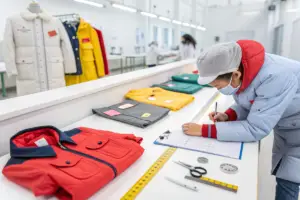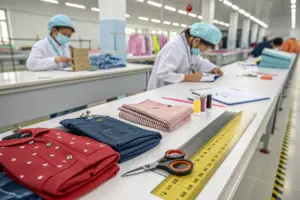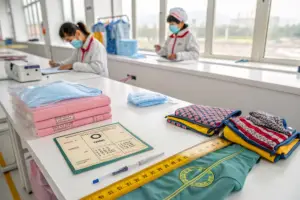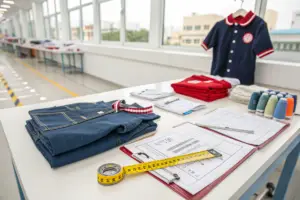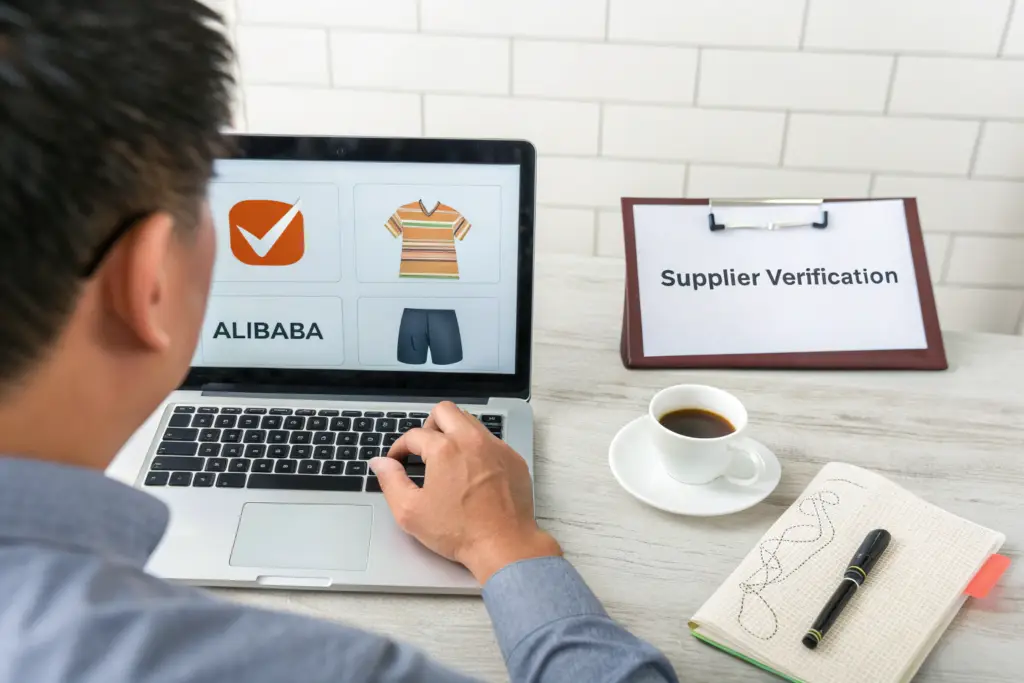
You type "classic shorts manufacturer" into the Alibaba search bar. Thousands of results appear. Gold suppliers. Assessed suppliers. Trade Assurance badges. Factory videos. The first page looks impressive. Every listing promises the same things. High quality. Best price. Fast delivery. Custom logo accepted. You send five inquiries. You receive five replies within hours. Each salesperson is friendly. Each quote is different. The cheapest one is half the price of the most expensive. They all send you similar photos. You feel a knot in your stomach. You have heard the horror stories. A buyer wires a deposit to a supplier. The supplier disappears. Or the goods arrive and they are nothing like the photos. You do not want to be that story. You need a system. A way to separate the real factories from the middlemen. The professionals from the scammers. The safe bets from the risks.
Picking the right classic shorts supplier on Alibaba safely requires a five-step verification process: filter for verified and assessed suppliers with at least 3 years on the platform, conduct a live video walkthrough of the production floor to confirm the supplier is a real factory, request and verify business licenses and quality certifications, check third-party audit reports and client references from your home market, and place a small trial order before committing to bulk production. The badges and the profile photos are marketing. The verification is your protection. A safe supplier welcomes verification. A risky supplier makes excuses.
I run Shanghai Fumao, a garment factory that has been on Alibaba for years. I have seen the platform from the supplier side. I know how easy it is for a trading company to present itself as a factory. I know which questions scare off the fakes and which questions earn respect from the real manufacturers. This article is your safety manual. It walks you through every step of the vetting process. After reading it, you will be able to send an inquiry, evaluate the response, and make a decision with confidence.
How Should You Filter and Search for Suppliers on Alibaba?
The search begins before you type a single word. You need a strategy. The wrong search terms bring up the wrong suppliers. Generic terms like "shorts supplier" bring up everything. Trading companies. Fabric vendors. Sock manufacturers who also list shorts. Specific terms filter the results before you even touch the sidebar. The search bar is your first filter. Use it well.
I have analyzed the search behavior of buyers who successfully find us versus those who end up with a trading company. The successful buyers use long-tail, technical keywords. They search for "custom chino shorts manufacturer 280 GSM cotton twill" not "cheap shorts." The technical terms signal to the platform's algorithm and to the supplier that the buyer knows what they want. The supplier responds with more seriousness. The cheap buyer gets cheap responses. The professional buyer gets professional responses.
The platform provides filters. Most buyers ignore them. Most buyers sort by price, lowest first. This is a direct path to the scammers and the lowest-quality suppliers. The filters are your second line of defense. Let's configure them correctly.

What Do "Verified Supplier," "Trade Assurance," and "Assessed Supplier" Actually Mean?
A Verified Supplier badge means a third-party verification company has visited the supplier's registered business address. They confirmed the business exists at that location. The verification is basic. It checks the business license. It does not check the production capability. It is a first, minimum filter.
An Assessed Supplier badge means a deeper audit has been conducted. The auditor visited the production facility. They checked the machinery, the QC processes, and the export capacity. They generated a report with photos and a score. This badge is more meaningful. It indicates a real factory with real production capability. Always look for the Assessed Supplier badge. Read the assessment report. Look at the photos of the production floor.
Trade Assurance is a payment protection service. Alibaba holds the payment in escrow. The supplier is paid only after you confirm receipt of the goods. It covers on-time shipment and product quality disputes. Always filter for Trade Assurance. It provides a financial safety net. However, a Trade Assurance badge does not guarantee the supplier is a factory. Trading companies can also use Trade Assurance. The Alibaba supplier verification badges explained guide details each badge. The badges are tools, not guarantees. Use them to filter. Then verify independently.
Why Should You Filter by "Years in Business" and "Response Rate"?
A supplier with less than 3 years on the platform is a higher risk. New companies appear and disappear. A supplier with 5, 10, or 15 years on the platform has a track record. They have survived platform reviews, customer disputes, and market fluctuations. Longevity is a signal of stability and reliability.
The response rate indicates how the supplier communicates. A response rate above 90% means the supplier answers inquiries promptly. A low response rate means communication will be a struggle. Prompt, clear communication is essential when you are managing a production order across time zones. Filter for suppliers with at least 5 years on the platform and a 95% or higher response rate. These are the professionals. The Alibaba supplier evaluation criteria guide emphasizes these filters. Time on platform and communication reliability are strong predictors of a positive experience.
What Questions Must You Ask in Your First Inquiry to Test the Supplier?
The first inquiry is a test. You are not just asking for a price. You are evaluating the supplier's knowledge, honesty, and communication style. A generic inquiry like "What is your best price for shorts?" will receive a generic, useless response. A technical inquiry will reveal who you are dealing with. A real factory answers technical questions with specifics. A trading company dodges them and talks about price.
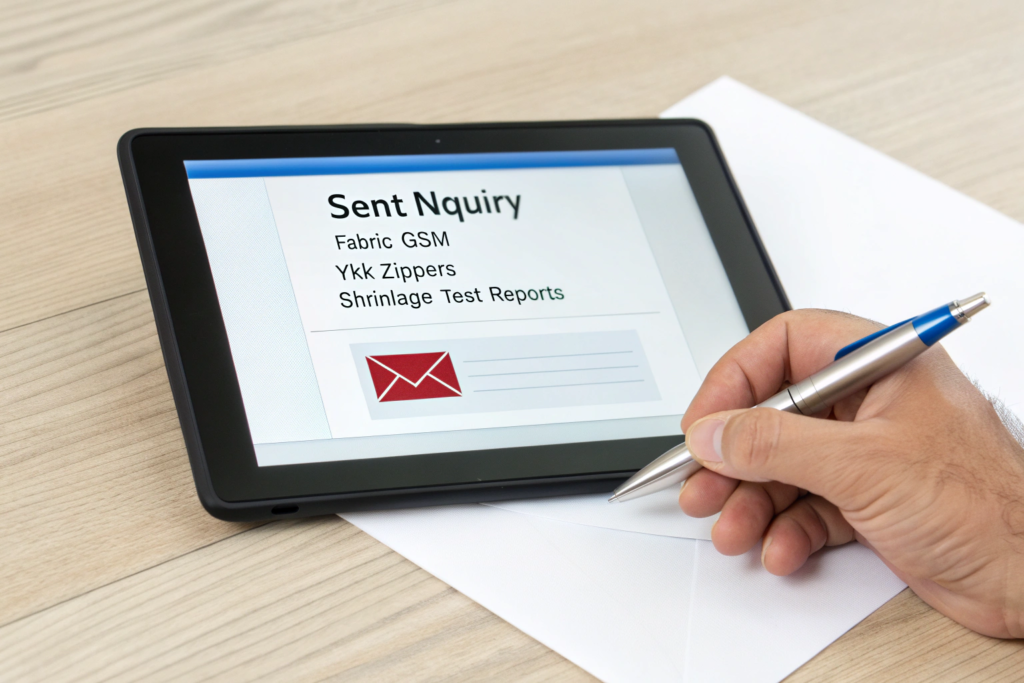
I receive dozens of inquiries every week. The ones that stand out ask specific questions. "Can you produce a 300 GSM cotton twill chino short with a YKK #5 zipper and provide a shrinkage test report per AATCC 135?" I know immediately that this buyer is a professional. I respond with the specific answers and the test report. The buyer who asks "Cheapest price?" gets a brief, polite response and is often ignored because they are not a serious business partner. The quality of your questions determines the quality of the responses.
The questions must be designed to expose the supplier's true nature. A real factory knows the answers immediately. A trading company has to check with the factory, causing delays and vague answers. Let's craft the killer first inquiry.
How Can Technical Fabric Questions Expose a Trading Company?
Ask for the exact GSM of the recommended fabric. Ask for the yarn count. Ask for the fabric composition breakdown, including the percentage of any blends. Ask for the fabric mill name and location. Ask for the available test reports: shrinkage, color fastness, tear strength.
A real factory has this information at their fingertips. The fabric is in their warehouse. The test reports are in a folder. They will answer within hours. A trading company does not have the fabric. They do not have the reports. They will say, "We can source whatever you need. Tell us your target price." They will avoid the specific questions. They will try to pivot the conversation to price. This pivot is the red flag. A professional supplier answers the technical question first. Then they discuss price. The supplier technical inquiry questions guide provides a full list. Use technical questions as a litmus test.
Why Should You Ask for a Video Call Walkthrough in the First Conversation?
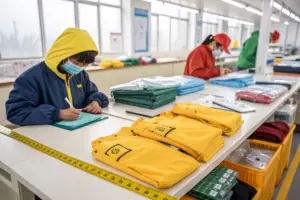
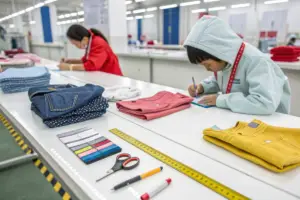
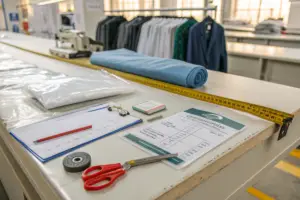
A request for a live video call walkthrough is the single most powerful test. A real factory has a production floor. It has sewing lines, cutting tables, fabric inventory, and workers. The owner or manager can walk through it with a phone and show you. A trading company has an office. Maybe a showroom. They cannot show you a production floor because they do not have one.
Ask in the first or second message. "Can we schedule a 10-minute video call? I would like to see your production floor and your current cutting table." A real factory will say yes and propose a time. A trading company will make excuses. "The factory is too far." "The internet is poor there." "Our policy does not allow video calls." These are lies. In 2026, every factory has a smartphone and a good internet connection. There is no technical barrier. There is only a lack of a production floor to show. The virtual factory tour verification guide explains this process. The video call is non-negotiable. Do not place an order without one.
How Do You Verify a Supplier's Legitimacy Beyond the Alibaba Profile?
The Alibaba profile is a marketing page. It is what the supplier wants you to see. Verification is what you discover on your own. The two are often different. A supplier can claim to be a factory on their profile. Independent verification confirms or denies that claim. You need documents. You need third-party evidence. You need references from people like you. Verification is the step that separates a hopeful buyer from a protected buyer.
I have built trust with buyers by providing our business license, our ISO certificate number for them to check online, and the email of a current U.S. client they can contact. I offer these before they ask. This transparency is the sign of a supplier with nothing to hide. A supplier who resists providing documents, who says "trust me," who gives vague answers about their company registration, is hiding something. The document check is a simple, powerful filter.
The documents to request are specific. They can be verified against public databases. A fake certificate is easy to spot if you know where to check. Let's go through the document verification process.

What Business Licenses and Certifications Must a Real Factory Provide?
A real factory in China must have a business license. Ask for a copy of the "营业执照" (business license). Check that the company name matches the name on the Alibaba profile exactly. Check that the registered address is in an industrial zone, not a virtual office. Check that the business scope includes "manufacturing" or "生产" specifically. A trading company's license will say "trading" or "贸易."
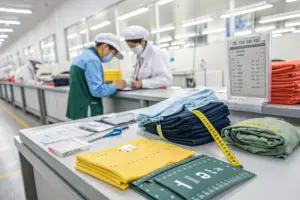
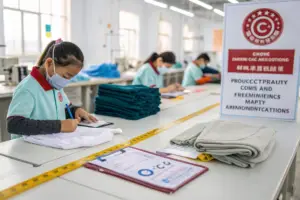
Ask for the ISO 9001 certificate. This is the quality management system certification. Ask for the certificate number. Go to the issuing body's website, such as SGS or Bureau Veritas, and verify the certificate online. A certificate that is expired, issued to a different company name, or cannot be verified is a red flag. Ask for a social compliance audit report, such as BSCI or WRAP. These audits verify safe and ethical working conditions. A factory that invests in these certifications is a professional operation. The factory certification verification guide explains the ISO standard. A real factory has these documents ready.
How Do You Use Client References and Third-Party Audits to Confirm Quality?
Ask for the contact information of two current clients, preferably in your country. A U.S. client for a U.S. buyer. A UK client for a UK buyer. Email the reference. Ask them three simple questions. How long have you worked with this supplier? Have they delivered on time? Have you had any major quality issues? A satisfied reference will respond positively. A supplier who cannot provide any references is a concern.
If the order size justifies it, hire a third-party inspection company. SGS, Bureau Veritas, and QIMA offer factory audit services. They send an auditor to the factory. The auditor verifies the facility, the machinery, the QC processes, and the working conditions. They produce a detailed report. This audit costs a few hundred dollars. It is the ultimate verification. The third-party factory audit process is the gold standard of supplier verification. It removes all doubt.
What Does a Safe Sampling and Trial Order Process Look Like?
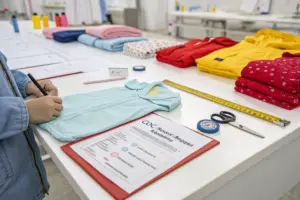
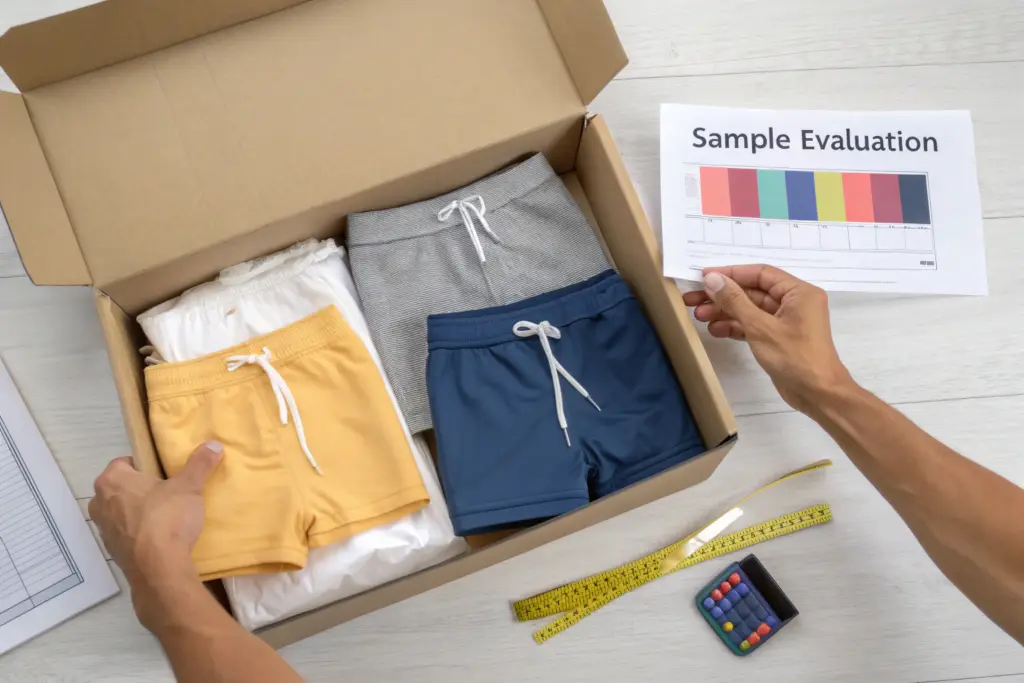
The sample is the physical proof. It is the moment where the supplier's promises meet reality. A safe sampling process has a clear structure, a reasonable cost, and a predictable timeline. A risky sampling process is free, rushed, and vague. A free sample from a trading company is usually a pre-existing stock sample that is not made to your specifications. It proves nothing. A paid, custom sample made to your tech pack proves the supplier can execute your design.
I recall a buyer who told me he ordered from a supplier who offered free samples and free shipping. The sample arrived in three days. It was a generic chino short with no customizations. The buyer approved it. The bulk order arrived. The shorts were completely different. The sample had been a bait-and-switch. The buyer had no recourse because the sample was not documented as a custom pre-production sample. The lesson is that a safe sampling process costs money and takes time. This is a feature, not a bug.
The sampling process is a microcosm of the entire production relationship. If the supplier is organized, communicative, and precise during sampling, they are likely to be the same during bulk production. Let's walk through the safe sampling and trial order process.
How Many Sampling Rounds Are Normal, and What Should They Cost?
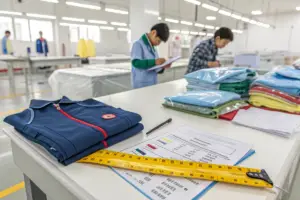
Two to three sampling rounds are standard for a custom classic short. The first round is the initial prototype. The second round is the revised sample incorporating your fit corrections. The third round is the pre-production sample in your exact fabric with your branding. Each round should take 7 to 14 days.
The cost per sample should be $50 to $150, plus shipping. This fee covers the factory's pattern-making, fabric, cutting, and sewing labor. A factory that charges for samples is a factory that values its time and resources. It is a professional operation. A factory that waives all sample fees without a clear policy is often desperate for business or not a real factory. Most professional factories will credit the sampling fee back to you when you place the bulk order. This is fair. The custom garment sampling costs guide explains the economics. A paid sample is a quality signal.
Why Is a Small Trial Order the Ultimate Safety Net Before Bulk Production?
A trial order is a small production run, typically 50 to 150 pieces. It is not a sample. It is a real production order, just small. It tests the factory's ability to produce consistent quality at scale. The fabric, the trims, the construction, and the packaging are all the same as the final bulk order. The trial order reveals problems that a single sample hides.
The trial order also tests the logistics. The shipping time. The customs clearance. The DDP delivery. The entire supply chain gets a practice run. If the trial order goes well, you have a proven supplier. You can scale up to bulk with confidence. If the trial order has problems, you have lost a small amount of money, not your entire season's inventory budget. The trial order is the ultimate safety net. The trial order best practices guide explains how to structure a trial order. Never skip this step. It is the final verification.
Conclusion
Alibaba is a tool. It is a marketplace that connects buyers with suppliers. Some of those suppliers are excellent, professional factories like Shanghai Fumao. Some are trading companies. Some are scammers. The platform itself will not protect you. The badges are a starting point. The real protection is your own verification process. You filter for the right badges. You ask technical questions. You demand a video walkthrough. You verify the business license and certifications. You talk to references. You order a paid sample. You place a small trial order. You scale up only when the supplier has proven themselves at every stage.
This process takes time. It takes effort. It is far less time and effort than recovering from a failed bulk order. A lost deposit. A shipment of unsellable shorts. A missed selling season. A damaged brand reputation. The cost of verification is a fraction of the cost of failure. The safe path is the smart path. The shortcut is the expensive path.
At Shanghai Fumao, we welcome the verification process. We are a verified and assessed supplier on Alibaba. We will provide our business license and certifications before you ask. We will schedule a video walkthrough of our five production lines at your convenience. We will connect you with our current U.S. clients for references. We will produce a custom sample for a fair fee and credit it back on your bulk order. We want you to feel safe. A confident buyer is a good long-term partner. If you are searching for a classic shorts supplier, contact our Business Director, Elaine, at elaine@fumaoclothing.com, or find us on Alibaba. Send us your technical questions. Let us earn your trust through transparency.