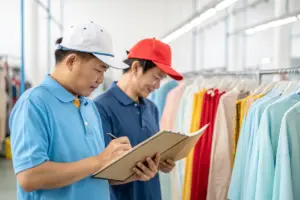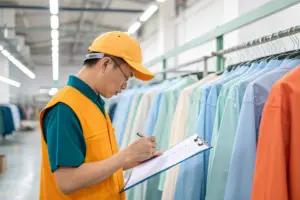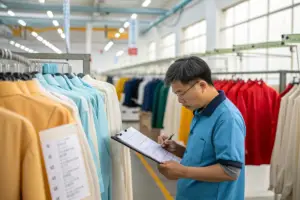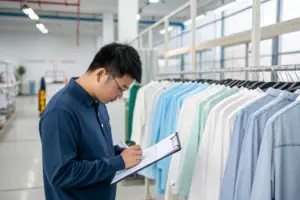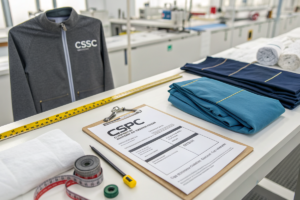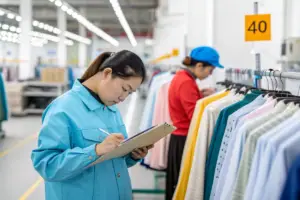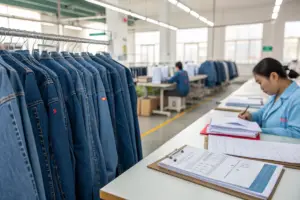
You have the design. You have the brand name. You have the website ready to launch. You have even pre-sold the idea to a few boutiques. Now you need the product. You need a factory that can make your classic shorts exactly to your specifications. You need them to use the right fabric, the right fit, and the right labels. You need them to deliver on time. You start searching. Google. Alibaba. Trade shows. LinkedIn. The options are endless. The factories all look the same on the screen. They all promise "high quality" and "best price." You send ten inquiries. You get ten quotes. The price range is wild. Some are suspiciously cheap. Some are too expensive. You do not know who is real and who is a middleman. You do not know who will deliver and who will disappear with your deposit. The search for a manufacturer is the most stressful part of launching a clothing brand. A wrong choice costs money, time, and reputation.
You find a reliable manufacturer for custom classic shorts by looking in three specific places: verified B2B platforms with supplier review systems, international trade shows where you can meet factory owners face-to-face, and direct referrals from other brand owners in your network. However, the place where you find the factory is less important than the verification process you use to vet them. A reliable manufacturer is defined by transparent communication, willingness to share certifications and client references, a clean and organized production floor you can see via video, and a clear, documented sampling and quality control process. The search ends not when you find a factory, but when you verify one.
I am the owner of Shanghai Fumao, a garment factory with five production lines. I have been on the receiving end of thousands of sourcing inquiries. I have seen good buyers find us through smart channels. I have seen desperate buyers find us after being burned by a bad factory. I know where reliable factories like mine show up and how we prefer to be approached. This article is an insider's guide. It tells you where to look, how to vet, and how to start the relationship on the right foot.
Where Are the Best Online Platforms to Find Classic Shorts Manufacturers?
The internet is the first place most buyers look. It is also the most dangerous. For every legitimate factory on a B2B platform, there are ten trading companies pretending to be factories. A trading company is a middleman. They do not own a production line. They take your order, mark up the price, and subcontract to the cheapest bidder. You lose control over quality. You lose transparency. The platform you choose and how you search on it determine whether you connect with a real factory or a slick sales office.
I have spoken with many buyers who found us through online platforms. Those who used the right filters and asked the right questions had a smooth experience. Those who sorted by the lowest price and clicked the first gold badge supplier often had a bad experience and ended up contacting us for a rescue order. The platform is a tool. You must know how to use it.
The goal is to use online platforms to create a shortlist of potential partners. You then take the vetting offline. You do not place an order based on a platform profile. Let's examine the two most effective online channels.
How Do You Use Alibaba and Similar B2B Platforms Effectively?
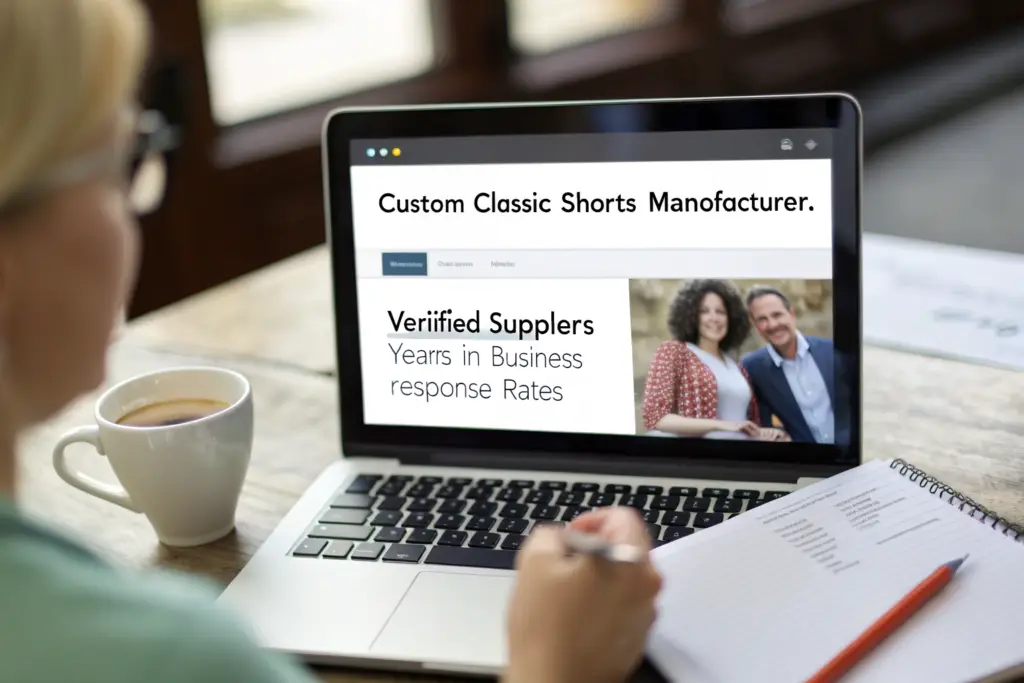
Alibaba is the largest B2B platform. It has thousands of garment suppliers. The key to using it effectively is to filter for "Verified Supplier" and "Trade Assurance" and then to ignore the badges and do your own verification. The badges are a starting point, not a guarantee.
Search for specific terms like "custom chino shorts manufacturer" or "private label linen shorts factory." Do not search for the cheapest price. Search for suppliers with at least 5 years on the platform, a response rate above 90%, and a transaction history that shows they actually ship orders. Look at the product images. A real factory will have images of their production floor, their workers, and their fabric inventory. A trading company will have slick marketing images that look like stock photos. Send an inquiry to 3 to 5 suppliers. Ask a specific technical question in your first message. For example, "Can you use a 280 GSM cotton twill with a YKK #5 zipper and provide a shrinkage test report?" A real factory will answer the technical question directly. A trading company will dodge it and talk about price. The Alibaba supplier verification guide provides a detailed process. The platform is useful. Your questioning is the real filter.
Can LinkedIn and Google Searching Reveal Direct Factory Contacts?
LinkedIn is an underused tool for finding factory owners and managers directly. You can search for titles like "Garment Factory Owner," "Production Manager," or "Export Manager" combined with "China" or "Vietnam." You can see their professional history, their connections, and their company page. You can send a direct, personal message.
This approach bypasses the generic info@ email address. You speak to a real person. Their profile is their reputation. A factory owner with a detailed LinkedIn profile, with posts about their production floor and their quality standards, is signaling transparency. Google searching is useful for finding a factory's direct website. A real factory has a website with a physical address, a landline phone number, and photos of their actual facility. Google the address. Does it show an industrial building in a garment manufacturing zone? Or does it show a virtual office in a commercial tower? The direct website of Shanghai Fumao shows our factory, our team, and our certifications. This transparency is the standard you should look for. A factory that hides its address is not a factory.
Why Are Trade Shows Still a Gold Standard for Meeting Manufacturers?
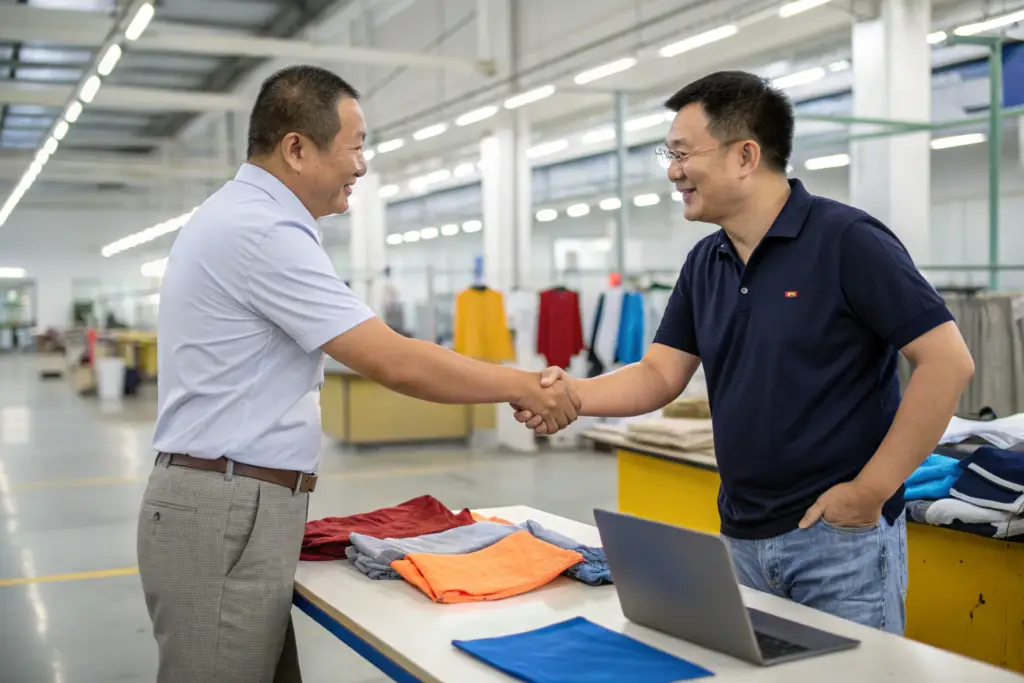
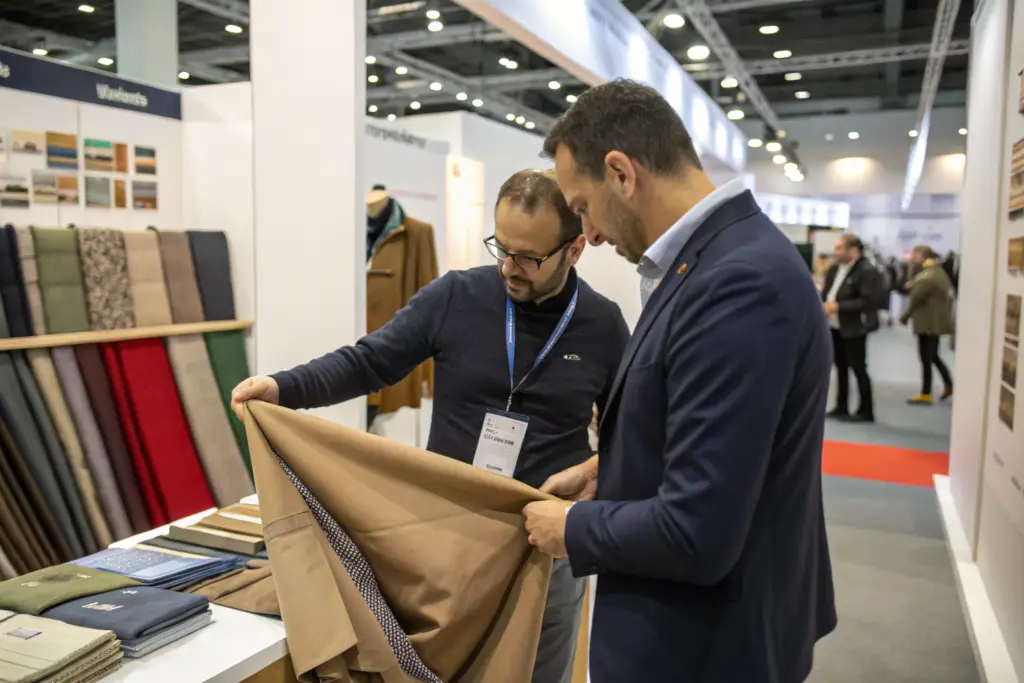
Trade shows are the traditional way to meet manufacturers. They are still one of the best ways. Nothing replaces the experience of touching a fabric sample, inspecting a stitch, and looking a factory owner in the eye. The handshake matters. The physical sample matters. The trade show booth tells you immediately about the factory's capabilities and professionalism. A booth with organized samples, a clean setup, and knowledgeable staff is a good sign. A messy booth with one shirt on a hanger is a bad sign.
I attend several trade shows each year with our fabric swatch books and sample shorts. I meet brand owners who have been searching online for months. They walk into our booth. They pick up our chino short sample. They feel the 280 GSM twill. They see the YKK zipper. They look at the stitching. The decision that took months of emailing is made in ten minutes of physical inspection. The trade show compresses the sourcing timeline. It builds trust quickly.
The key trade shows are in major cities. The investment in travel and tickets is small compared to the cost of a failed bulk order. The trade show is a risk-reduction tool. Let's look at the best shows and how to work them.
What Are the Top Trade Shows for Finding Apparel Manufacturers?
The most important shows for U.S. buyers are MAGIC Las Vegas, Sourcing at MAGIC, Texworld New York, and the Canton Fair in Guangzhou. MAGIC and Texworld bring international manufacturers to U.S. soil. The Canton Fair is the largest trade show in China, held twice a year in Guangzhou.
MAGIC Las Vegas is convenient for U.S. buyers. You can meet factories from China, Vietnam, India, and other countries in one place. The travel cost is lower. The time zone is your own. The Canton Fair is a deeper immersion. You see the scale of Chinese manufacturing. You can often visit factories in the surrounding Pearl River Delta region after the show. The apparel trade shows calendar lists the dates and locations. Plan your sourcing calendar around these events. A face-to-face meeting at a trade show is worth a hundred emails.
How Should You Prepare to Meet a Factory at a Trade Show?
Walk into a trade show with a plan. You are not browsing. You are interviewing. Bring your tech pack, even if it is a simple sketch with measurements. Bring a reference garment if you have one. Bring a list of specific questions. Fabric minimums? MOQ? Sampling time? Lead time? Payment terms? Testing certifications?
Wear professional but comfortable clothing. You will walk for hours. Have a specific business card ready. Do not just collect catalogs. Talk to the person in the booth. Ask them if they own the factory or if they represent it. A booth staffed by the owner is a valuable connection. A booth staffed by a hired salesperson is less so. Take notes after each conversation. You will meet twenty factories in a day. The details will blur. Take photos of the samples with the factory's business card. The trade show preparation guide provides a checklist. The trade show is an intensive, high-bandwidth sourcing method. Use it to build a shortlist of 2 to 3 serious candidates.
How Do You Verify a Manufacturer Before Placing a Custom Order?
Verification is where the sourcing process succeeds or fails. A platform badge and a trade show handshake are not verification. They are introductions. Verification is the active process of confirming that the factory is what it claims to be and can do what it claims it can do. This step takes time. It takes discipline. It is the step that most buyers skip, and it is the step that protects their money.
I have seen buyers verify our factory by asking tough questions. They asked for our business license. They asked for our ISO 9001 certificate number and checked it online. They asked for a live video call walkthrough of our production floor. They asked to speak to a current U.S. client. We provided all of it. We respected the buyer more for asking. A legitimate factory welcomes verification. A factory that resists verification, that makes excuses, that says "trust me," is hiding something. The verification process separates the professional suppliers from the opportunists.
The verification process has three pillars: document verification, visual verification, and reference verification. Let's examine each one.
What Certifications and Documents Should a Reliable Factory Provide?
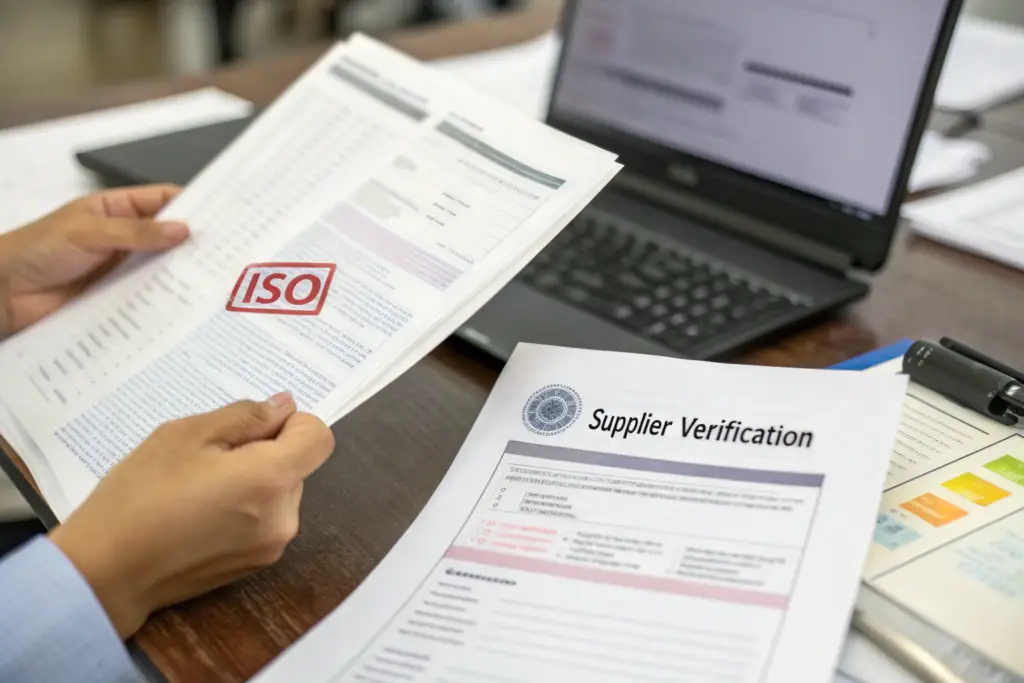
A reliable factory should provide a valid business license that matches the company name they are using. They should provide an ISO 9001 quality management system certification from a recognized body like SGS or Bureau Veritas. They should provide a social compliance audit report, such as BSCI or WRAP, to verify safe and ethical working conditions.
Ask for the certificate numbers. Check them against the issuing body's online database. A certification that is expired or issued to a different company name is a red flag. Ask for a factory audit report from a third party. If they do not have one, offer to pay for one. The cost of a third-party audit is a few hundred dollars. It is a small insurance premium on an order worth thousands. The garment factory audit checklist lists the documents to request. A factory that cannot provide basic documentation is not a factory you should trust with a deposit.
Why Is a Video Walkthrough More Powerful Than Any Certificate?
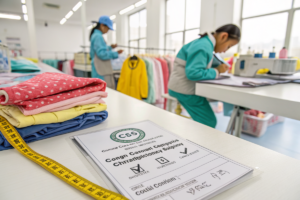
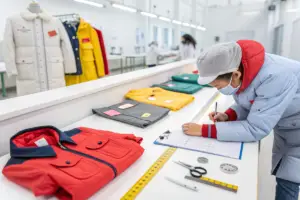
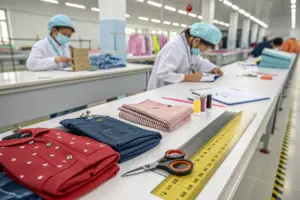
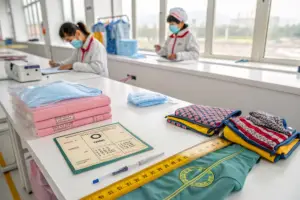
A live video call walkthrough is the single most effective verification tool. It cannot be faked in real time. You ask the contact to walk through the production floor. You see the sewing lines. You see the workers. You see the fabric inventory. You see the brand labels being sewn into other garments. You see the actual working conditions.
During the call, ask the contact to show you a specific machine. The fabric cutting table. The inspection station. The finished goods warehouse. Ask questions in real time. "What is that fabric on the cutting table?" "How many pieces do you produce per day?" "Show me the QC station." The answers and the visuals will tell you everything. A real factory is a busy, organized, slightly chaotic place with fabric rolls, sewing machines, and packing cartons. A virtual office is quiet and empty. The video call factory visit guide is a modern sourcing essential. Insist on a live video walkthrough before you pay a deposit.
What Should You Expect During the Sampling and Onboarding Process?
The sampling process is the test drive. It is where the factory proves they can translate your design into a physical garment. A reliable manufacturer has a structured, documented sampling process. They do not guess. They follow a specification. They communicate clearly at each stage. The sampling process is a microcosm of the entire production relationship. If the sampling phase is chaotic, delayed, and poorly communicated, the bulk production will be worse. If the sampling phase is smooth, precise, and communicative, the bulk production is likely to follow the same pattern.
I recall a new client who had been burned by a previous factory. The factory had sent one sample, it was completely wrong, and then they stopped responding. When she worked with us, she was nervous. We sent her a clear sampling timeline. We sent the first prototype within 10 days. She provided feedback. We revised. We sent the second sample within 7 days. She approved. The process was calm and predictable. She told me later that the sampling experience was what gave her the confidence to place the bulk order. The sampling process is not a cost. It is the foundation of trust.
The sampling process should be paid, but the cost should be reasonable. Free samples are a red flag. They usually mean the factory is a trading company using a generic sample from a third party. Let's look at the stages and the costs.
How Many Sampling Rounds Are Normal for a Custom Classic Short?
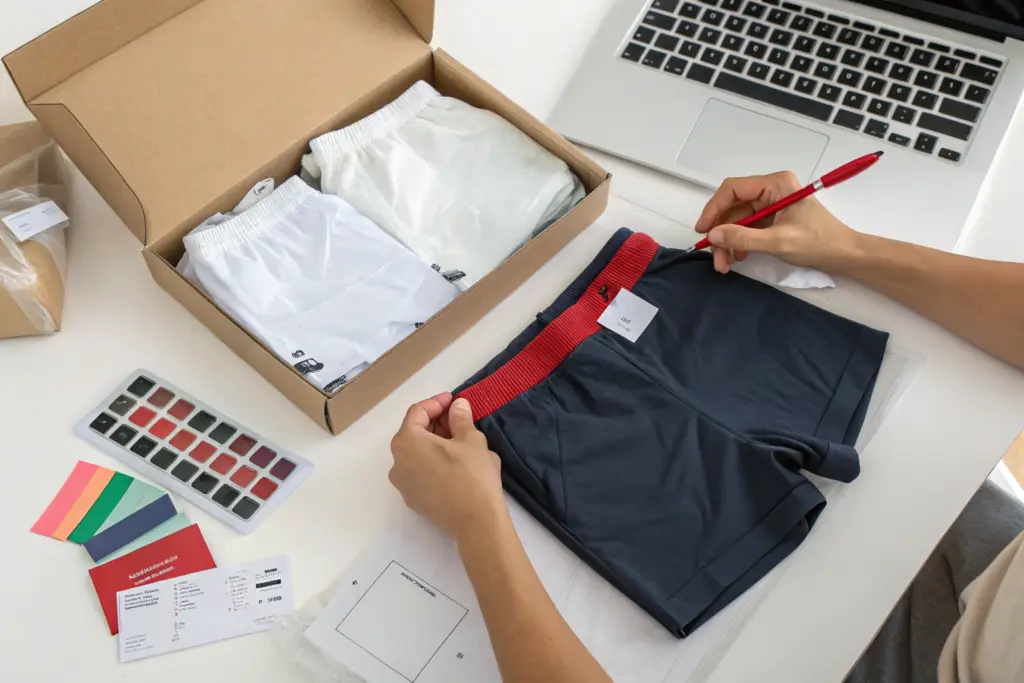
Two to three sampling rounds are standard for a custom classic short. The first round is the initial prototype. It tests the basic pattern and fit. The factory uses a base fabric, not your final fabric. The second round is the revised sample. It incorporates your fit corrections. It may use a closer fabric. The third round is the pre-production sample. It is made with your exact fabric, trims, and branding. This is the gold standard sample that you sign off on.
Any factory that promises a perfect sample in one round is being unrealistic or they are sending you a stock sample that is not truly custom. A factory that needs more than four rounds is struggling to understand your requirements. The sampling timeline should be clearly communicated. Each round should take 7 to 14 days. The custom garment sampling timeline is a documented process. A reliable factory follows a version of this process.
What Are Reasonable Sampling Fees, and When Should They Be Waived?
A reasonable sampling fee for a custom classic short is $50 to $150 per sample, plus courier shipping. This fee covers the pattern-making, the fabric, the cutting, the sewing, and the factory's time. A factory that offers completely free samples is likely sending you a pre-existing sample from their showroom. It is not custom to your design.
A reliable factory will often credit the sampling fee back to you when you place the bulk order. For example, we charge $80 for a custom chino short sample. When the client places a bulk order of 300 pieces or more, we deduct the $80 from the final invoice. This is a fair practice. It shows the factory is serious about winning the business. It also protects the factory from buyers who request samples from ten factories with no intention of ordering. The garment sampling costs and fees guide explains the economics. A sampling fee is normal and expected. Do not avoid it. Embrace it as a sign of a professional operation.
Conclusion
Finding a reliable manufacturer for custom classic shorts is a process, not a click. It begins on the right online platforms, with smart, filtered searches and specific, technical questions. It continues at trade shows, where you can shake a hand, touch a fabric, and look into the eyes of the person who will make your product. It is validated through verification, the non-negotiable step of checking business licenses, certifications, and live video walkthroughs. It is confirmed through a structured sampling process that proves the factory can execute your vision.
The search is an investment of time and focus. The payoff is a manufacturing partnership that lasts for years. A reliable factory is not just a vendor. It is an extension of your brand. It is a source of ideas, quality control, and delivery certainty. When you find the right partner, you stop searching. You start growing. Your product improves. Your stress decreases. Your business scales.
At Shanghai Fumao, we are that partner for many U.S. brands. We are a verified factory. We exhibit at trade shows. We welcome live video walkthroughs. We have a documented sampling process with fair fees and credit-back terms. We want to earn your trust, not just your order. If you are searching for a manufacturer for your custom classic shorts, contact our Business Director, Elaine, at elaine@fumaoclothing.com. She will arrange a video call walkthrough of our production floor. She will provide our certifications and client references. She will prepare a transparent quote and a sampling timeline. Let us show you what a reliable manufacturing partnership looks like.