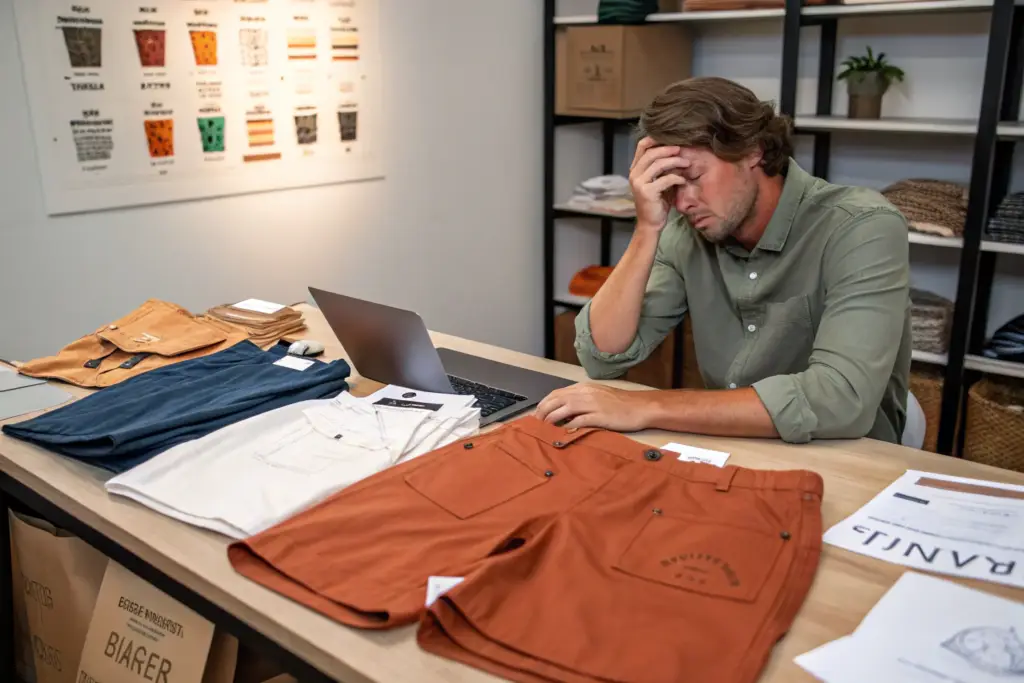
You have a vision. You see a gap in the market. You know your customer. She wants a high-waisted linen short in a specific shade of terracotta. Or maybe your customer is a man who needs a performance chino short with a hidden zip pocket. You have searched online wholesale marketplaces. You have ordered samples from generic suppliers. Nothing matches the picture in your head. The fabric is wrong. The fit is off. The branding is missing. You feel stuck. You are not a massive corporation with a dedicated sourcing office in Shanghai. You are an independent brand owner. You think customization is too hard, too expensive, or requires a 5,000-piece minimum order. This belief keeps you selling someone else's design. It keeps your brand from being truly yours.
Customizing your own brand of classic shorts with Fumao Clothing is a structured, step-by-step process that turns your design concept into a finished, branded garment. We guide you through fabric selection, pattern development, sample approval, branding application, and final bulk production. Our minimum order quantity is flexible, starting at 50 pieces per color for our core styles. You do not need to be an expert. You need a clear vision. We provide the technical expertise to bring that vision to life. The result is a pair of shorts that carries your brand label, fits your customer perfectly, and sells at your target margin.
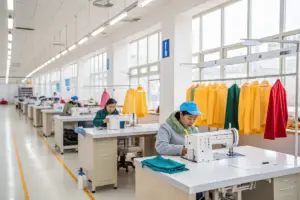
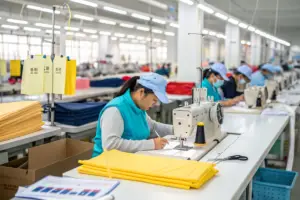
I run Shanghai Fumao, a garment factory with five production lines. I have walked hundreds of brand owners through the customization process. I have seen the nervous excitement of a first-time entrepreneur approving her first sample. I have seen the satisfaction of an established brand owner finding a factory that finally executes his tech pack correctly. The process is not magic. It is a series of clear decisions, documented at each stage. Let me walk you through every step. By the end, you will have a complete roadmap to your own branded short.
How Does the Customization Process Work from Start to Finish?
The unknown is scary. Many brand owners hesitate to customize because they do not understand the process. They fear hidden steps, hidden costs, and endless delays. Transparency is the cure for this fear. I want to show you exactly how a customization project flows at Shanghai Fumao. There is no mystery. There is a clear path from your initial idea to a carton of branded shorts arriving at your warehouse.
I recall a client named Sarah. She came to us with a Pinterest board and a hand-drawn sketch. She had never manufactured a garment before. She was terrified. She thought we would laugh at her sketch. We did not. We asked her questions about her customer, her price point, and her launch date. We translated her sketch into a technical specification. Eight weeks later, she received her first shipment of branded shorts. She sold out in three weeks. She reordered. The process worked because she followed the steps. The process works for everyone who follows the steps.
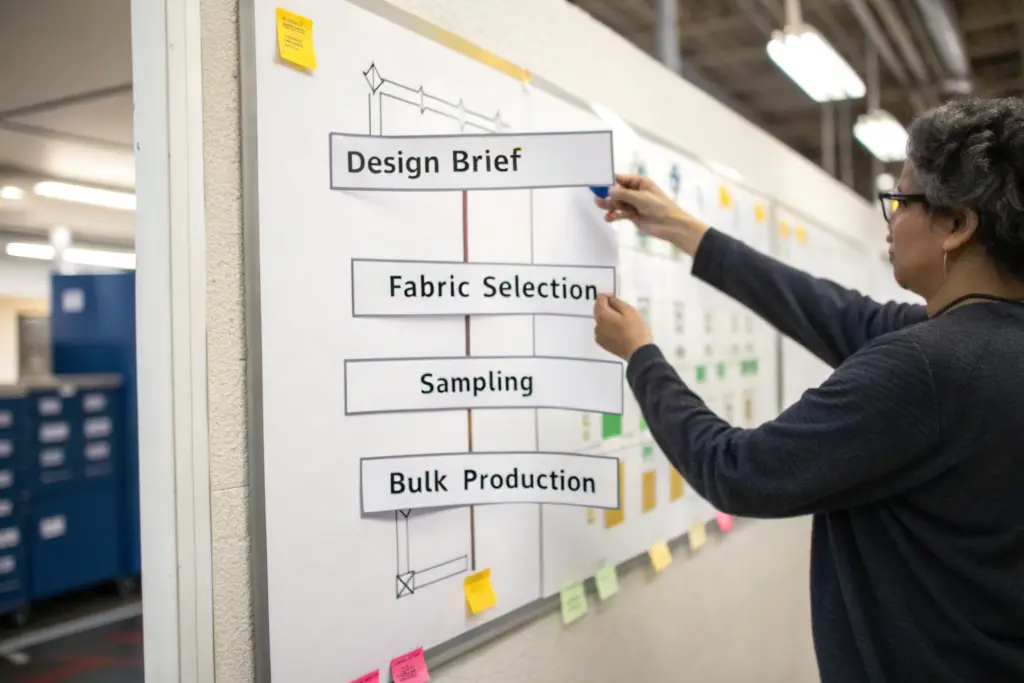
The customization journey has five main stages: Design Brief, Material Selection, Sampling, Branding, and Bulk Production. Each stage has a clear deliverable. You approve each stage before we move to the next. This gate system prevents mistakes. You are never surprised. Let me break down the entire flow.
What Happens During the Initial Design Brief and Consultation Stage?
The design brief is our first conversation. You tell us what you want to make. We listen. We ask clarifying questions. You do not need a professional tech pack at this stage. You can bring a reference garment, a photo from Instagram, a sketch on a napkin, or a detailed written description. We work with all starting points.
The goal of this stage is to define the core parameters of the product. We need to know the short style. Is it a flat-front chino, a high-waisted linen short, a denim cutoff, or a tailored Bermuda? We need to know the target customer gender. We need to know the approximate target retail price. This price target determines our material and construction recommendations. We need to know the approximate order quantity for the first production run. This helps us plan the fabric sourcing. We need to know the desired delivery date. This determines the production schedule. We document all these parameters in a Product Brief document. We send it to you for confirmation. This document is the foundation of the project. It aligns our understanding with your vision. The product design brief is a simple but powerful tool. It prevents the "I thought you meant" misunderstandings that derail projects.
How Does the Sampling Stage Guarantee a Perfect Fit?
Sampling is the heart of the customization process. This is where your idea becomes a physical garment you can touch, feel, and test. The sampling stage has three sub-stages: the first prototype, the revised sample, and the pre-production sample.
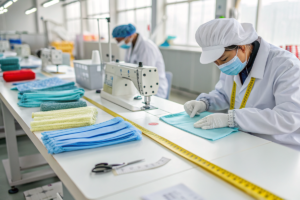
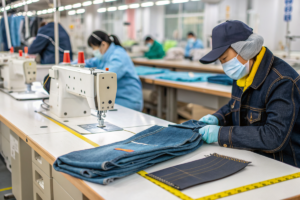
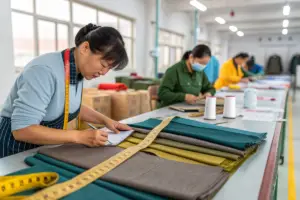
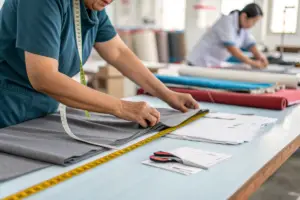
We start with the first prototype. Our pattern maker creates a digital pattern based on your design brief. We cut and sew one sample in a base fabric. This first sample is a 3D proof of concept. We send it to you along with a measurement report. You try it on a fit model or yourself. You mark it up with a red pen. "Shorten the rise by 1 inch." "Taper the leg from the knee down." "Move the pocket 1 inch forward." You send us the marked sample and your comments. We make the pattern adjustments. We create the revised sample. We send it back. This loop repeats until you are happy. The final step is the pre-production sample. This sample is made with your actual chosen fabric, your actual trims, and your actual branding. It represents exactly what bulk production will deliver. You sign off on this sample. It becomes the sealed reference standard for the entire order. The garment sampling process is iterative. It requires patience. A rushed sample is a risky bulk order. We typically complete the sampling loop in 2 to 3 rounds over 2 to 3 weeks.
What Types of Customization Options Does Fumao Clothing Offer?
Customization is not just about changing a logo. It is about building a product that matches your brand's specific identity. Your brand might be minimalist and sustainable. Your brand might be bold and streetwear-inspired. The materials and details must reflect this identity. I have seen two brands buy the same base chino short pattern from us. One brand used a heavy organic cotton twill, corozo nut buttons, and a kraft paper hang tag. The short looked like a $120 eco-luxury product. The other brand used a stretch twill, a shiny metal button, and a bold woven label. The short looked like a $65 contemporary streetwear piece. The base pattern was identical. The customization created two completely different products.
At Shanghai Fumao, we offer customization across four dimensions: fabric, trims, branding, and packaging. You can adjust each dimension independently. The combination of choices creates a unique product. You do not need to change the base pattern to create something distinctive. Let me walk you through the options.
The breadth of options can feel overwhelming. I will group them into two logical categories. The first is the visible, customer-facing customizations. The second is the invisible, structural customizations that affect fit and performance. Both matter.
How Can You Customize Fabrics, Colors, and Washes for Your Brand?
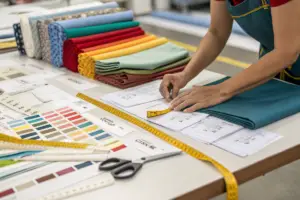
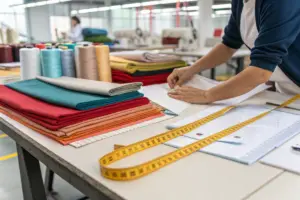
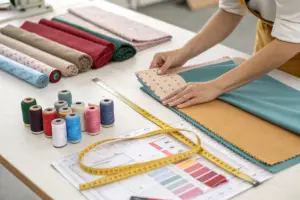
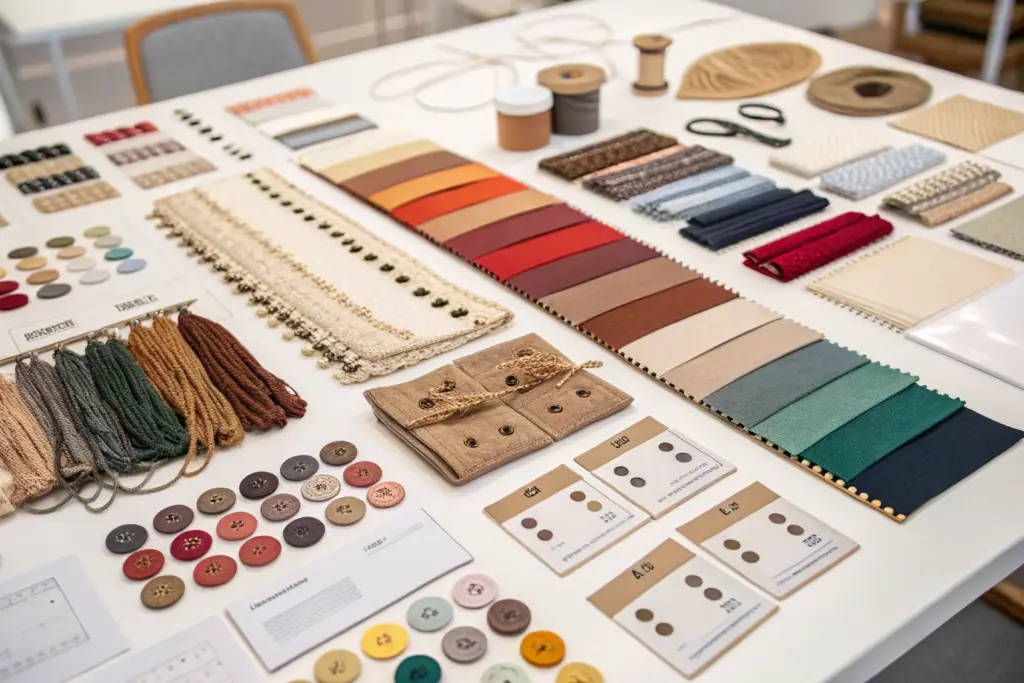
Fabric is the foundation of your product's identity. You can customize the fiber composition, the weight, the weave, the color, and the wash. If you want a standard cotton twill chino short, we have that fabric in stock in 20 colors. You choose from our existing color card. If you want a specific shade that matches your brand's palette, we can dye the fabric to your exact Pantone color. This is a custom lab dip process. We dye small swatches until the color matches your target.
The custom color process takes about 7 to 10 days. We send you the lab dip swatches by courier. You check the color under daylight and store light. You approve the final dip. We then dye the bulk fabric. The minimum order for a custom color is usually 500 yards of fabric. This is enough for about 600 pairs of shorts. If your first order is smaller, we can search for a stock color that is a close match. Beyond color, you can customize the wash. A heavy enzyme wash gives a soft, broken-in feel. A resin wash gives a crisp, wrinkle-resistant finish. A garment dye process dyes the finished short, which creates a unique, lived-in look with subtle color variation at the seams. The fabric dyeing and finishing options are a creative toolbox. We guide you through the choices based on your target retail price and your brand's aesthetic.
What Branding Elements Can You Add to Make the Shorts Uniquely Yours?
Branding transforms a generic short into your short. The customer sees your label and associates the quality with your name. We offer a full suite of branding customization. Woven labels are the most common. You design the label. We produce it and sew it into the back waistband or the side seam. We can also produce satin labels, cotton twill labels, or heat transfer labels.
Hang tags are the customer's first touch point. We can produce single cards, folded cards, or multi-page booklets. The paper stock can be uncoated kraft, glossy art paper, or textured recycled stock. You can include your brand story, size information, and care instructions. Embroidery is a premium branding option. You can embroider your logo directly onto the short, usually on the left leg hem or the back pocket. Embroidery adds a tactile, high-value detail. It cannot be removed like a hang tag. It is a permanent part of the garment. We also offer custom buttons. A metal button can be embossed with your brand name. A corozo button can be laser-engraved. These small details communicate quality. The customer with a branded button sees the thoughtfulness. She tells her friends. The custom apparel branding guide covers labels, tags, and packaging in detail. We help you select the options that fit your budget and brand positioning.
What Are the Minimum Order Quantities and Pricing Structures?
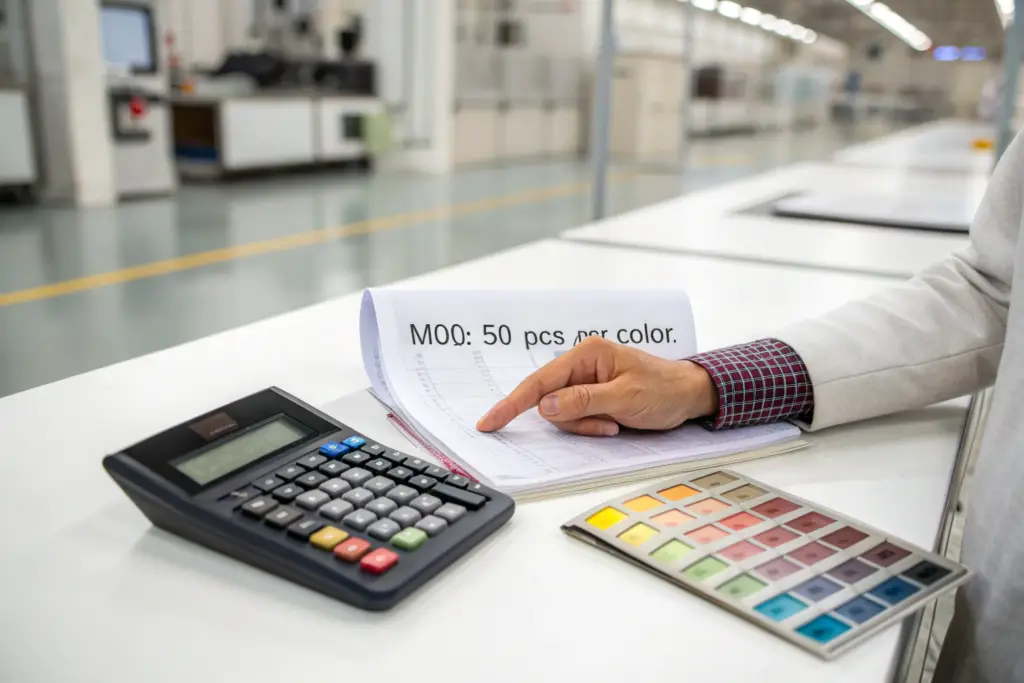
The biggest fear for a small brand is the minimum order quantity. I hear it in every first conversation. "I love your shorts, but I can only order 100 pieces. Is that too small?" It is not too small. At Shanghai Fumao, we have structured our production to serve emerging brands. Our standard MOQ for core styles using stock fabric is 50 pieces per color. You can order three colors, each with 50 pieces, for a total order of 150 pieces. This is a manageable inventory investment for a growing brand.
I remember a brand owner, David. He started his brand with a $5,000 budget. He ordered 150 pairs of customized chino shorts from us. He sold them through his Shopify store and at local markets. He reinvested the profit into a 300-piece order. Then a 600-piece order. Today, his brand is in 20 boutiques across the Southeast. He started with 150 pieces. The MOQ did not stop him. The right factory partnership made his growth possible.
Pricing is a function of quantity, fabric, and customization complexity. More pieces mean a lower cost per piece. More complex customizations mean a higher cost per piece. The pricing structure is transparent. Let me break it down.
How Does the Per-Unit Price Change with Order Volume?
The per-unit price decreases as the order volume increases. This is because the fixed costs, like pattern making, marker making, and machine setup, are spread over more units. The fabric cost also decreases with larger meterage.
To give you a concrete example, a standard chino short in a stock cotton twill fabric might cost $8.50 per piece at a quantity of 150 pieces. At 500 pieces, the price might drop to $7.20 per piece. At 1,000 pieces, it might drop to $6.50 per piece. These are illustrative numbers. The actual price depends on the specific fabric and customizations. But the principle is consistent. We provide a transparent costing sheet with every quote. The sheet breaks down the cost into fabric, trims, labor, and logistics. You see exactly where your money goes. There are no hidden fees. The development costs, like pattern making and sampling, are a separate, one-time investment. We charge a modest fee for the first pattern and sample. This fee is often credited back to you when you place your bulk order. This garment costing breakdown is the information you need to calculate your retail margin accurately. We want you to make money. A profitable customer is a repeat customer.
What Is Included in the DDP Pricing Option for Custom Orders?
DDP stands for Delivered Duty Paid. This is the simplest pricing option for U.S. brand owners. The DDP price per unit includes the product cost, the ocean freight from Shanghai to the U.S. port, the U.S. customs duty, and the trucking to your warehouse door. You pay one price per short. You receive the goods at your door. You do not deal with customs brokers, freight forwarders, or port fees.
This option simplifies your cash flow planning. You know the exact landed cost. You calculate your retail margin with certainty. A standard chino short with custom labels and a custom hang tag, shipped DDP to Los Angeles, might land at $10 to $14 per unit, depending on quantity and fabric. This is a fully customized, fully branded product, delivered to your door, ready to sell. The DDP model transfers the logistics risk to us. If the container is held for customs inspection, we handle it. If the duty rate is applied differently, we handle it. You are protected. This peace of mind is especially valuable for a first-time importer. The DDP shipping explained guide is a resource we share with all new clients. We want you to understand exactly what you are buying.
How Does Fumao Clothing Ensure Quality Control for Customized Orders?
Quality control is where the promise meets the product. A beautiful sample means nothing if the bulk order does not match it. This is the nightmare that keeps brand owners awake. I have heard the horror stories. A brand receives their order. The fabric is a different shade. The stitching is loose. The sizing is inconsistent. The brand is stuck with 500 pairs of shorts they cannot sell. This happens when the factory has a weak QC system or when the buyer did not establish clear quality standards upfront.
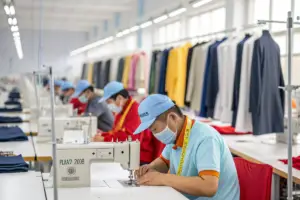
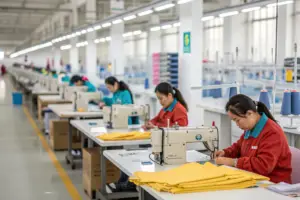
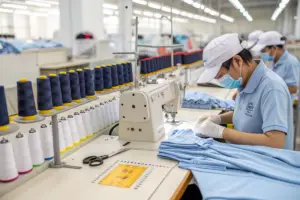
At Shanghai Fumao, quality is a process, not a checkpoint. It starts with the raw fabric inspection and continues through cutting, sewing, finishing, and packing. We have a dedicated QC team that works independently from the production team. The QC manager reports directly to me, not to the production manager. This separation of powers ensures that quality concerns are not overruled by production pressure. We also welcome third-party inspection. You can hire SGS, Bureau Veritas, or another inspection company to audit our facility and check your goods. We have nothing to hide.
The QC process for a customized order is more detailed than for a standard order. The custom branding elements, the specific color, and the unique fit require additional verification. Let me explain the two most important QC interventions for custom orders.
How Does the Pre-Production Sample Approval Protect Your Brand?
The pre-production sample is the quality contract. It is the physical standard against which the entire bulk order is judged. We make this sample with your exact fabric, your exact color, your exact trims, and your exact branding. It is not a mockup. It is the first real piece of your brand's product.
You receive this sample. You inspect it meticulously. You check the measurements against the spec sheet. You check the label placement. You check the hang tag string color. You check the button attachment. You wash it three times. You check for shrinkage and color fading. You wear it. You sit in it. You put your phone in the pocket. Only after you are completely satisfied do you sign the sample approval form. This signed sample is then locked in our QC office. When the bulk production begins, the QC team checks every bundle against this sealed sample. The color is checked under the lightbox. The measurements are checked with the same tape measure. The stitching is checked against the stitch-per-inch gauge. If a bulk piece does not match the approved sample, it is rejected. This is the power of the pre-production sample. It eliminates subjective arguments. The standard is objective and agreed upon. The pre-production sample approval is a mandatory step. We will not cut bulk fabric without it.
What Inspection Checkpoints Exist During Bulk Production?
Quality is checked at multiple points during production, not just at the end. We call this inline quality control. The earlier a defect is caught, the cheaper and easier it is to fix.
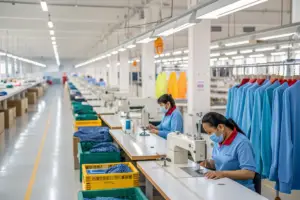
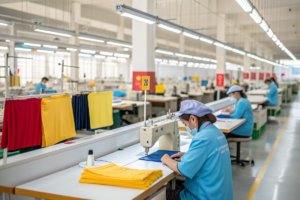
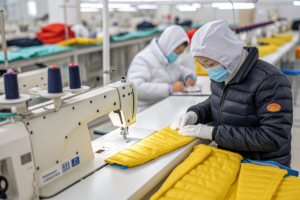
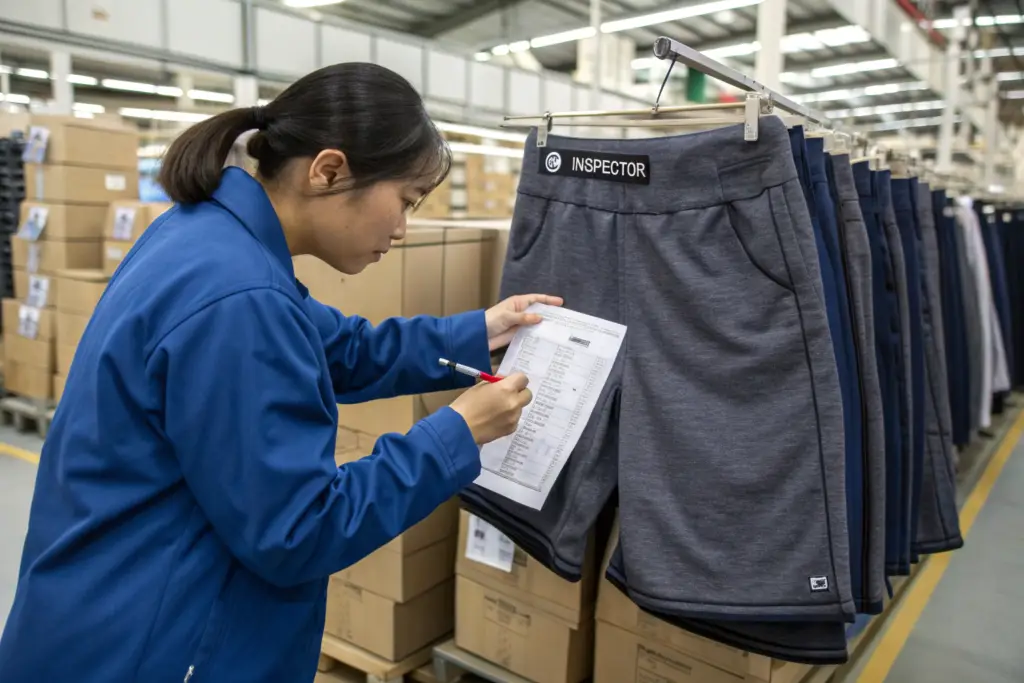
The first checkpoint is the fabric inspection. When the bulk fabric arrives from the dyeing house, our QC team inspects it on a light table. They check for color consistency, weaving defects, and weight accuracy. If the fabric fails, it is returned to the supplier before a single cut is made. The second checkpoint is the cutting inspection. The cut panels are checked against the pattern markers. The third checkpoint is the sewing line inline inspection. A QC inspector walks the line every two hours. She checks the garments coming off the machines. She checks the stitch tension, the seam alignment, and the pocket placement. She pulls defective pieces and sends them for repair. The fourth checkpoint is the finishing inspection. The finished shorts are checked for loose threads, stains, and pressing quality. The fifth and final checkpoint is the pre-shipment inspection. An AQL 2.5 random sampling is performed on the packed cartons. The inspector checks the final product, the packaging, and the carton markings. Only after this final inspection passes are the goods released for shipping. This inline quality control system is our commitment to you. It is how we ensure your customized order matches your approved sample.
Conclusion
Customizing your own brand of classic shorts is an achievable goal. The process is clear. You start with a design brief. You choose your fabrics, colors, and branding elements. You iterate on samples until the fit is perfect. You approve a pre-production sample that becomes the quality standard. Then you move into bulk production, protected by multiple QC checkpoints. Your branded shorts arrive at your warehouse, ready to sell.
The minimum order quantity is not a wall. It is a step. Fifty pieces per color. Three colors. A 150-piece order that tests the market. The pricing is transparent. You know your landed cost. You know your margin. The risk is manageable. The reward is a product that is uniquely yours. A product that builds your brand, not a supplier's brand. A product that your customers associate with your name, your fit, and your quality standards.
At Shanghai Fumao, we have built our factory to serve brands like yours. We are not a massive operation that ignores small orders. We are not a trading company that hides the factory. We are a family-owned manufacturer that wants to build long-term partnerships. We want to grow with you. Your first 150-piece order becomes a 500-piece reorder becomes a container program. This is the journey we have taken with many brands. It can be your journey too.
If you are ready to start customizing your own classic shorts, I invite you to contact our Business Director, Elaine, directly. Her email is elaine@fumaoclothing.com. Send her your ideas, your sketches, your Pinterest board, or your reference links. She will set up an initial consultation call. She will prepare a fabric swatch book tailored to your aesthetic. She will answer every question about MOQs, pricing, and timelines. Let's turn your vision into a physical product. Let's build your brand, one perfectly fitted pair of shorts at a time.