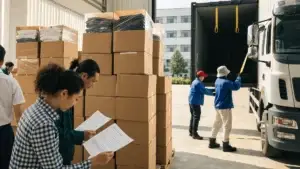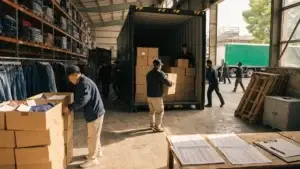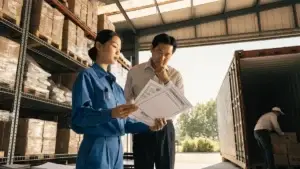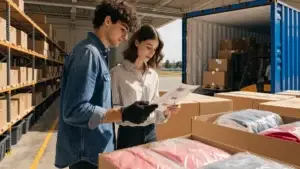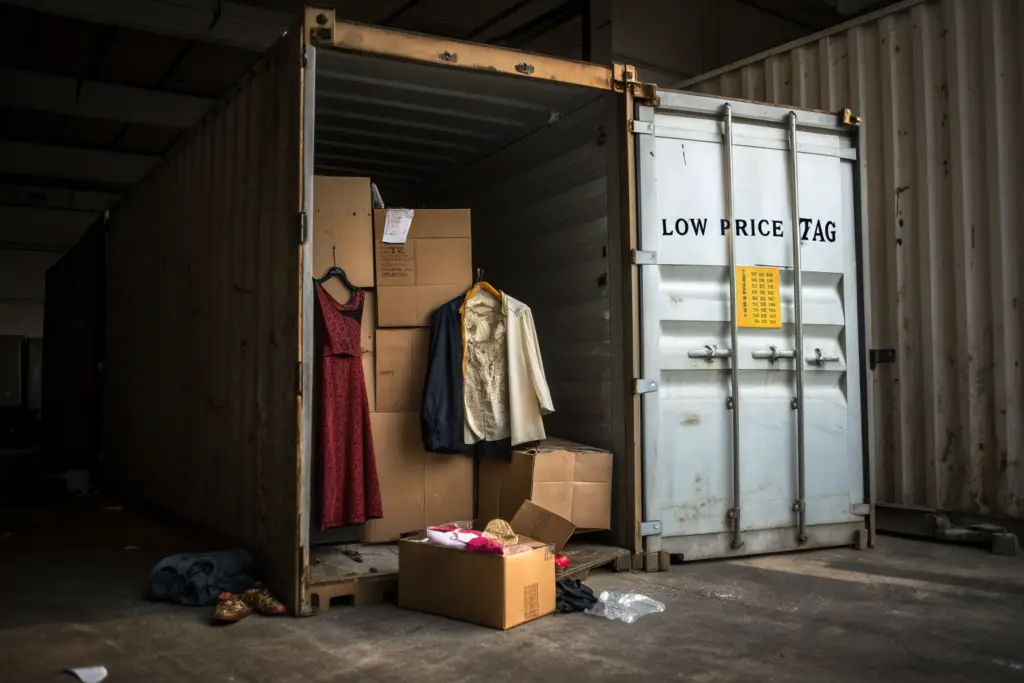
A long-term client of mine, a brand owner from Texas, called me in a panic last August. He had just received his first shipment from a new supplier he found on a B2B platform. The quotation was 35% lower than ours. He thought he had won the lottery. Instead, he won a nightmare. The zippers on 1,200 men's jackets were jamming after three pulls. The fabric lining was shedding black fibers onto white dress shirts. His first batch of customer reviews on his website were one-star disasters. He had to recall the entire line. The "saving" of $4 per unit evaporated into a loss of $25 per unit when he calculated the returns, the refunds, and the permanent damage to his brand reputation.
The hidden risks of accepting the lowest quotation from a garment supplier include material substitution with inferior fibers, the use of unauthorized subcontracting to unvetted workshops, and the complete absence of post-delivery accountability. A suspiciously low price almost always indicates that the factory is cutting costs in ways that are invisible on a sample but catastrophic in bulk. These hidden risks transform an apparent upfront saving into a total cost of ownership that is far higher than a fair-market quotation.
Price is what you pay. Value is what you get. In garment sourcing, these two things often diverge sharply. A low quotation is not a discount. It is a warning sign written in dollars and cents. It is the factory telling you, without saying the words, that they are going to cut corners. At Shanghai Fumao, we do not compete on being the cheapest. We compete on being the safest. Let me show you exactly what risks hide behind that temptingly low number on a spreadsheet.
What Material Substitutions Lurk Behind an Unusually Low Fabric Cost?
Fabric is the soul of a garment. It determines how the piece looks, feels, drapes, and washes. It also represents 50% to 60% of the total manufacturing cost. This makes it the primary target for a factory trying to hit an impossibly low price. When a quotation is 30% below the market average, the math simply does not work if the correct fabric is used. The factory must substitute something cheaper. And they will do it in ways that are very hard to detect in a photograph or even a quick physical inspection of the first sample.
Common material substitutions include replacing long-staple cotton with short-staple cotton, which pills and feels rough after washing; reducing the fabric weight by 10-20%, making the garment flimsy; and swapping certified organic or recycled fibers for conventional ones while keeping the fake certification hangtag. These substitutions gut the garment's quality while it still looks superficially correct on a hanger.
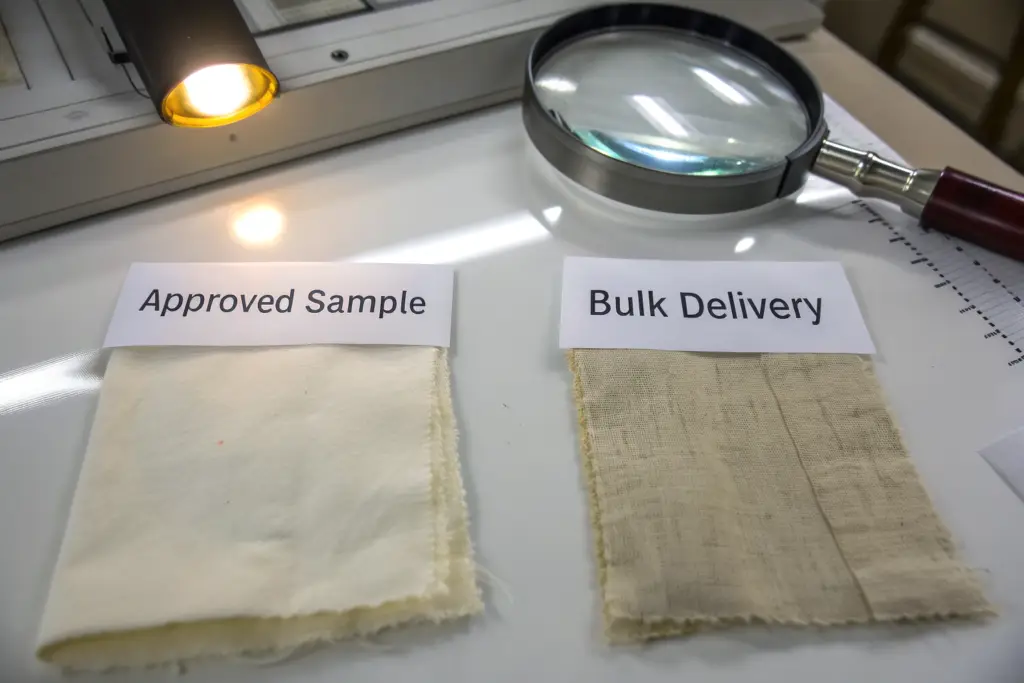
The first sample you receive will almost certainly use the correct, high-quality fabric. The factory knows you will inspect that sample. It is the bait. The bulk fabric is where the switch happens. They will source a "similar" fabric that is slightly thinner, slightly coarser, or dyed with cheaper, unstable chemicals. You will only discover the difference when your customers start complaining about pilling after three wears, or when the dress shrinks two sizes in the first wash. By then, the factory has your money and has moved on to the next victim.
How Does Fiber Quality Affect Your Customer's Long-Term Satisfaction?
A shirt made from long-staple cotton, like Supima or Giza Egyptian cotton, has a silky hand feel, a brilliant luster, and resists pilling for years. A shirt made from short-staple cotton, the kind used in the cheapest quotations, feels slightly rough out of the box and pills into a fuzzy mess after five wash cycles. The two shirts can look identical on a website product photo. They can even feel similar when a customer first touches them in the store. The difference reveals itself over time.
Customer satisfaction is not measured at the point of purchase. It is measured after the tenth wash, when the garment still looks good enough to wear to the office. If you build your brand on cheap short-staple fabric, you will get the first sale. But you will not get the second. The cost of acquiring a new customer is far higher than the cost of retaining an existing one. By saving $1.50 on the fabric of a shirt, you are churning customers who will never buy from you again and will tell their friends about their bad experience.
I remember a distributor who tried to compete on price with low-quality men's t-shirts. His initial sales were strong because the price was $25, compared to his competitors' $45. Within six months, his return rate was over 20%. His social media pages were flooded with photos of misshapen, pilled t-shirts. He had to rebrand entirely, at a massive cost, because his original brand name had become synonymous with poor quality. The cheap fabric destroyed not just a product line, but the business identity itself. The difference in fiber quality and its impact on garment longevity is a key reason why standards like those from Cotton Incorporated exist to help brands understand material performance before making sourcing decisions.
What Are the Signs That "Organic Cotton" Has Been Swapped for Conventional?
Organic cotton costs significantly more than conventional cotton. The farming is more labor-intensive. The certification process is costly. The yields are lower. If a factory quotes you a price for an organic cotton garment that matches the price of a conventional one, alarm bells should ring. They are likely buying conventional cotton, printing a fake GOTS certificate, and pocketing the difference.
The deception is profitable because it is hard to detect. A standard fiber burn test will not tell you if the cotton was grown organically. It will just tell you it is cotton. The only way to be sure is to trace the transaction certificates back through the supply chain. A genuine organic product has a chain of custody. The cotton gin, the spinner, the knitter, and the sewer all hold valid certificates.
We had a client come to us after a scandal with a previous supplier. The supplier had provided a GOTS certificate that looked authentic. The client's customer, a skeptical eco-boutique, checked the certificate number on the GOTS public database. It was fake. The certificate number belonged to a different company in a different province. The boutique canceled the order and blacklisted the brand. The brand owner was devastated. She had paid a premium price for what she believed was organic cotton. She was a victim of the fraud. Now, we always encourage our clients to independently verify every certificate number on the Global Organic Textile Standard public database before accepting a shipment. It is a five-minute check that can save a brand's integrity.
A factory's quotation is based on their own production capacity and their own overheads. A low quotation often comes from a factory that is not actually planning to make your order themselves. They are a trading company posing as a factory, or a small factory that has already sold its own capacity and plans to outsource your order to a cheaper, unvetted workshop. This is unauthorized subcontracting, and it is one of the most dangerous practices in the industry.
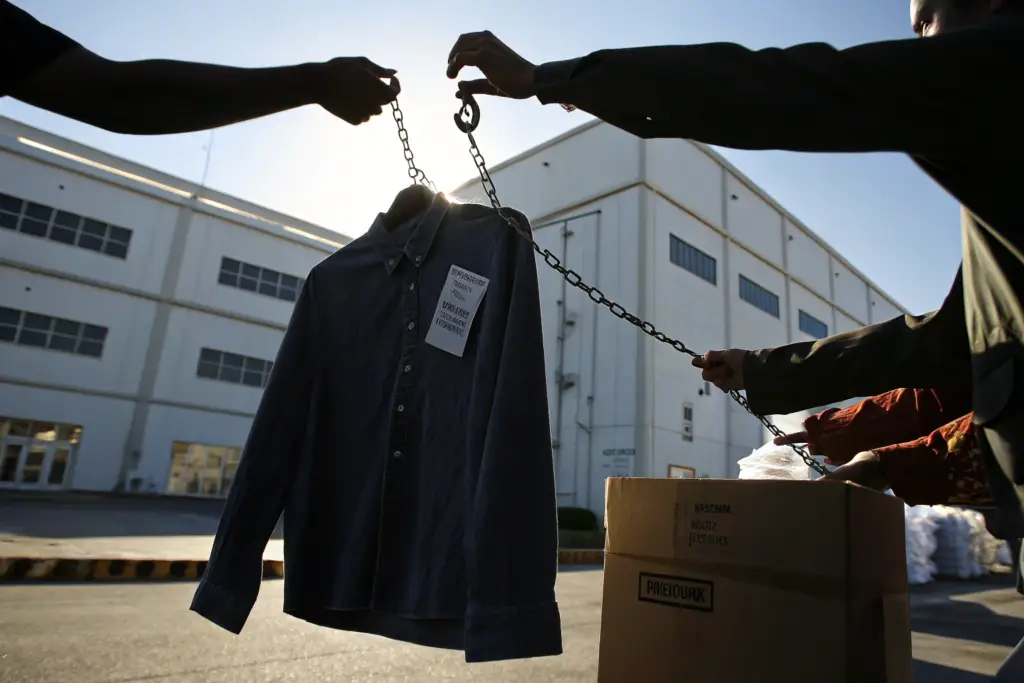
Unauthorized subcontracting happens when the supplier you contracted with secretly sends your order to a third-party workshop that you have never audited or approved. This workshop often operates with lower labor standards, zero quality control, and no compliance certifications. The supplier does this to squeeze out a margin from a quotation that was too low to be profitable in their own facility. You, the buyer, have no visibility into where your goods are actually being made or by whom.
When you lose sight of the production floor, you lose control of every quality and ethical standard you have specified. The subcontractor is invisible to you. You cannot audit them because you do not know they exist. They have no relationship with your brand and no incentive to meet your standards. They are just filling a one-time capacity gap for the middleman. The result is a product that bears no resemblance to the approved sample, often with slave-level stitching quality and questionable chemical safety.
How Can You Verify That Your Order Is Made In-House?
The most effective way is to ask for a live video walkthrough of the factory floor during your production run. Do not accept a pre-recorded video. A pre-recorded video can be shot in any factory, at any time. Ask the sales representative to walk onto the sewing line, right now, and show you your garments in progress. They should be able to pan the camera and show you your specific fabric, your specific trims, and your specific labels being attached to your specific style.
A second method is to ask for a "cut piece inspection" photo. After the fabric is cut, ask the factory to send a photo of the cut bundles with a handwritten note showing the date and your order number placed on top of the fabric. This is a simple, low-tech verification that the physical work has started in their facility. A factory that hesitates to provide these real-time, specific visuals is usually hiding something. The order may be in a truck heading to a subcontractor 200 kilometers away.
I once visited a "factory" that a client had been using for two years. The showroom was impressive. The sample room was well-equipped. But the production floor was strangely quiet for a factory supposedly running 20,000 units a month. It later emerged that they only made samples in-house. All bulk production was subcontracted to four different small workshops, none of which had ever been audited for child labor or chemical safety. The client was shocked. He had visited the factory twice and never realized the truth. The deception was sophisticated. Now, we advise all distributors to use third-party audit services that verify not just the existence of a factory, but its actual production capacity and output records. The Sedex platform is a valuable tool for checking if a factory's ethical audit matches its claimed production footprint.
What Quality Disasters Arise from Unvetted Workshops?
Unvetted workshops are the bottom of the garment industry food chain. They survive by offering the absolute lowest piece rate. To make a profit at that rate, they must operate with zero margin for error, which means zero investment in quality control, machine maintenance, or worker training. The sewing machines are often poorly calibrated. The needles are dull and create fabric pulls. The operators are paid by the piece, incentivizing speed over precision.
The specific quality disasters are predictable. Seam puckering because the thread tension is wrong. Crooked seams because the operator rushed. Oil stains from unmaintained machines. Inconsistent sizing because they do not use proper pattern notches. And the most dangerous: broken needles left inside the garment, a serious safety hazard, because they have no metal detector or broken needle control protocol.
A brand owner I know received a shipment of 800 women's dresses from a subcontractor he never knew existed. The stitching on the waist seams was so weak that the dresses split open when customers sat down. The entire order was a write-off. The factory that took his order claimed the fault was the subcontractor's, but that was legally irrelevant. The contract was with the factory. They were responsible, but they had no assets or reputation to lose. They simply dissolved their trading company and reopened under a new name. The brand owner had no recourse. This is the ultimate endgame of the low-quotation trap: a total loss of goods and money, with no one left to sue.
How Is After-Sales Accountability Avoided by Price-Driven Suppliers?
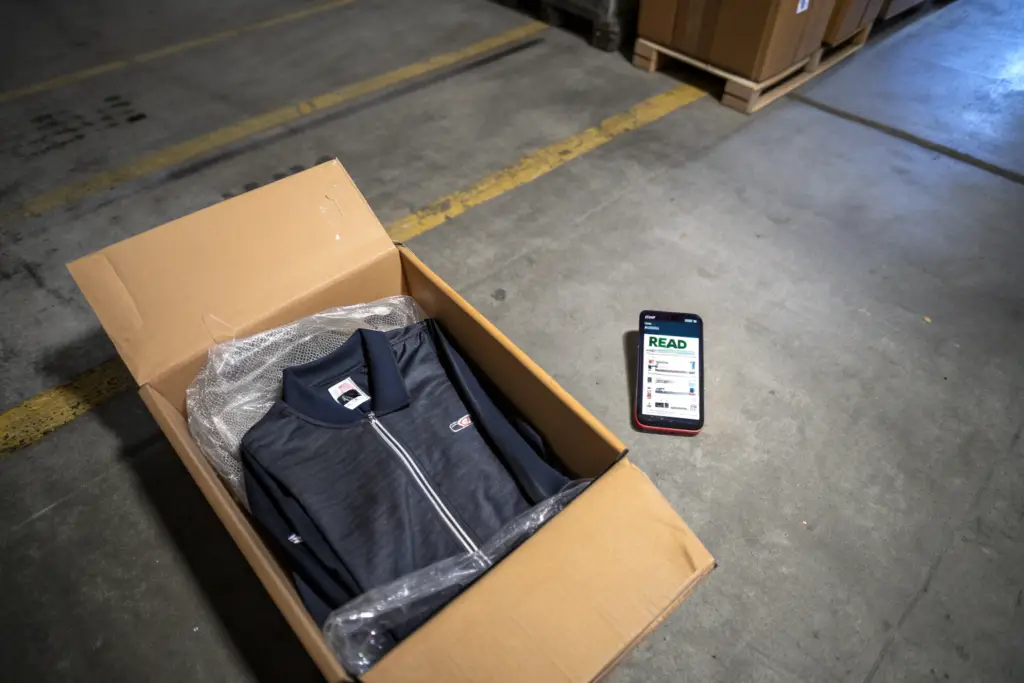
The transaction does not end when the container leaves the port. It ends when the end consumer wears the garment, washes it, and is satisfied. The period between delivery and consumer satisfaction is the "after-sales" window. A responsible factory stands behind their product during this entire window. A price-driven supplier disappears the moment the final balance payment clears their bank account. They treat the sale as a completed event, not an ongoing relationship.
Price-driven suppliers avoid after-sales accountability by being unreachable once the money is transferred. They ignore messages about quality defects, refuse to issue credit notes, and provide no support for returns or remakes. Their business model is based on one-off transactions, not long-term partnerships. They can afford to lose you as a client because they will simply find another buyer attracted by their low price, repeating the same cycle of disappointment.
This lack of accountability is a calculated business strategy. The factory knows their quality is inconsistent. They build the cost of losing a certain percentage of clients into their pricing. You are not a partner to them. You are a statistical unit in a churn model. When you complain about a defective shipment, you are not a valued customer with a problem to solve. You are an annoyance to be ignored.
What Should a Fair Defect Rate Compensation Policy Include?
Every factory produces defects. Perfection is impossible in mass manufacturing. The difference between a good factory and a bad one is how they handle those defects. A professional factory has a clearly stated defect rate policy. It is usually defined in the purchase contract or the terms of sale. A common international standard is AQL 2.5, which means that no more than 2.5% of the inspected garments can have major defects.
If the defect rate exceeds the agreed AQL, a fair compensation policy kicks in. This policy should specify the remedies. For a minor overage, the factory might offer a discount on the next order. For a major failure, the factory should take responsibility for the return shipping and remanufacture the goods, or issue a full refund. The key is that the policy is written down and agreed upon before the first cutting begins.
We once discovered that a dye lot on a batch of women's blouses was slightly outside the tolerance agreed with the client. The deviation was minor, but it was real. We informed the client before shipping. We offered two options: a 15% discount on that specific color, or a three-week delay to redye the fabric. The client chose the discount and sold the blouses as a "limited edition color variant." They sold out. We turned a potential dispute into a collaborative solution because we brought the problem to the client early, with options, rather than shipping and hoping they would not notice. This kind of transparent after-sales behavior is the hallmark of a factory that values partnership over transaction.
How Can You Contractually Protect Yourself from "Ship and Vanish" Suppliers?
The "ship and vanish" is the most aggressive form of after-sales avoidance. The factory ships the order, often with significant quality or quantity discrepancies, collects the final payment, and then disappears. Phones go dead. Emails bounce. The company may even be legally dissolved and reopened under a different name. You are left with defective goods and no legal recourse across international borders.
There are contractual protections that can reduce this risk. The first is to structure payments to retain leverage. A common structure is 30% deposit to start production, and 70% paid against a copy of shipping documents, but this still leaves you paying before you can inspect the goods. A stronger position is to negotiate a 30% deposit, 50% against shipping documents, and 20% retention to be paid 30 days after delivery, subject to a quality inspection. This retention gives you a financial lever if the goods are defective. Not all factories will accept it, but the ones that do are signaling their confidence in their own quality.
The second protection is to contract with a legal entity that has assets and a verifiable history. A trading company with a virtual office and no factory assets is a high flight risk. A factory that owns its own land and buildings is a lower flight risk because it cannot easily disappear. You can ask for a business license and cross-reference it with independent databases. Always define the governing law and dispute resolution mechanism in your purchase agreement. While international litigation is difficult, a clear contract with a real entity is a stronger deterrent than a vague email thread. Consulting resources on international trade law, such as those provided by the International Chamber of Commerce, can help structure enforceable agreements.
What Certification Fraud Is Most Common Among Budget Suppliers?
Certifications are the currency of trust in the garment industry. A GOTS label tells the consumer the cotton is organic. An OEKO-TEX label says the fabric is free from harmful chemicals. A WRAP certificate says the workers were treated fairly. These certifications add measurable value to a garment. A budget supplier knows this. They also know that most consumers and even many brand buyers never actually verify a certificate number. This creates an opportunity for fraud.
The most common certification frauds among budget suppliers are forged GOTS and OEKO-TEX certificates, fake social compliance audit reports, and "self-declared" sustainability claims with no third-party verification. A supplier will copy a real certificate from another company, change the name in Photoshop, and present it as their own. The price is low because the factory has never actually paid for the audit or the certified materials. They are selling you a lie printed on a hangtag.
The fraud works because the visual design of a certificate is easy to copy. The genuine article is a digital record in a secure database. The fake is just ink on paper. The difference is invisible unless you check the database. A responsible factory will actively encourage you to check. A fraudulent one will deflect or provide excuses.
How Can You Verify a Supplier's OEKO-TEX Certification Instantly?
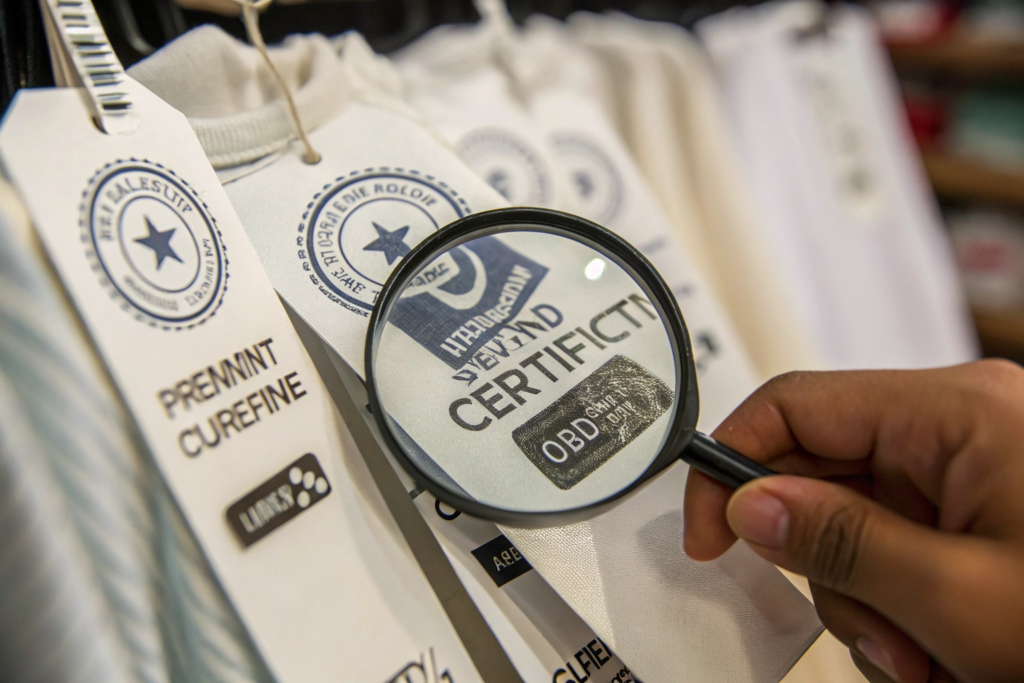
OEKO-TEX Standard 100 certification is one of the most requested and most frequently faked certificates. It tests for harmful substances in the finished textile. Every genuine OEKO-TEX certificate has a unique certificate number and a specific test report ID. The certification body, such as Hohenstein or Testex, maintains an online database.
To verify a certificate, you go to the OEKO-TEX website and navigate to the "Label Check" tool. You enter the certificate number printed on the supplier's document. The database will return the name of the certified company, the product categories covered, and the expiry date of the certificate. If the name on the database does not match the name of your supplier, the certificate is either fake or stolen. If the certificate has expired, it is no longer valid. If the number returns no result at all, it is a complete fabrication.
This verification takes sixty seconds. I have seen a supplier's face turn pale when a client performed this check live on a video call and the certificate number came back as invalid. The supplier stammered about a "database error." The client ended the call and the relationship. The sixty-second check saved them from a fraudulent shipment. The tool is publicly available and free to use, directly via the OEKO-TEX website. There is no excuse for not checking.
What Are the Real-World Consequences of Fake Social Compliance Audits?
A fake social compliance audit is a time bomb. It is not just a piece of paper. It is a fabricated assurance that the factory does not use child labor, forced labor, or unsafe working conditions. When a US or European brand places an order based on that fake audit, they are staking their entire corporate reputation on a lie. The consequences of exposure are severe and irreversible.
If a newspaper or an NGO investigates your supply chain and finds a sweatshop with a fake audit certificate, your brand becomes the face of exploitation. The PR disaster will cost you far more than any lost shipment. Consumers will boycott. Retailers will delist your products. Investors may divest. In some jurisdictions, there are also legal penalties for making false claims about your supply chain ethics.
I recall a situation where a mid-sized European brand was publicly shamed because their "ethically made" jackets were traced to a factory using unsafe, locked fire exits. The factory had provided a falsified BSCI audit report. The brand's internal sourcing team had filed the report without verifying it. The brand had to issue a public apology, withdraw the entire product line, and spend hundreds of thousands on a supply chain remediation program. The factory itself faced no consequences. It was the brand that absorbed all the damage. The lesson is brutal: a fake certificate in your supplier's file is your legal and reputational liability, not the supplier's.
Conclusion
The lowest quotation is not a bargain. It is a risk priced into a number. We have walked through the hidden dangers that lurk behind that seductive low price. Material substitutions that turn a premium garment into a disposable one, destroying your customer's trust and your repeat sales. Unauthorized subcontracting that sends your order into the shadows, where quality and ethics are sacrificed for a margin. After-sales abandonment that leaves you alone with a container of defective goods and no one to call. And certification fraud that wraps a toxic product in a fake halo of sustainability and safety, exposing your brand to catastrophic reputational damage.
Every one of these risks converts a short-term "saving" into a long-term loss. The $4 you saved per unit on the FOB price becomes a $25 per unit loss when the returns, refunds, and brand rehabilitation costs are tallied. The math is consistent and unforgiving. In garment sourcing, the cheapest quote is almost always the most expensive option when measured by total cost of ownership.
At Shanghai Fumao, we do not offer the lowest price. We offer the honest price. Our quotations are built on verifiable material costs, compliant labor, in-house production, and a genuine commitment to standing behind every garment we ship. We price our products to be competitive, but we will never be the cheapest bid in a blind auction. We are the safe bid. The predictable bid. The partner who answers the phone after the final payment clears.
If you have been tempted by a low quotation and want a second opinion, or if you are ready to build a supply chain on a foundation of verified quality rather than risky discounts, I invite you to contact our Business Director, Elaine. She can walk you through our costing model, show you our in-house production verification system, and demonstrate how we validate every certification we claim. Reach her at elaine@fumaoclothing.com. Do not let a low price cost you your brand. Choose certainty. Choose accountability. Choose a partner who is still there after the container lands.