In 2023, a sportswear brand owner from Colorado sat in my office with a lab report that had just cost her $47,000. Her previous supplier in China had provided a test report certifying that her yoga leggings fabric passed the ASTM D5034 tensile strength standard. The report looked official. It had a logo, a stamp, and a signature. When the leggings hit the market, the fabric tore at the inner thigh seam after three wears. The returns flooded in. The brand commissioned an independent test from a US-based lab. The fabric failed. Tensile strength was 40% below the claimed value. The original test report was from an unaccredited lab that had never actually tested the fabric. It was a photocopied template with the brand's style number typed in. She asked me, "How do I make sure this never happens again?" I told her that the answer is not to trust a supplier's word. The answer is to demand specific, verifiable testing standards, performed by accredited laboratories, with original reports that can be validated online.
US buyers must demand that their Chinese suppliers provide fabric test reports from ISO/IEC 17025 accredited laboratories, using the specific ASTM or AATCC test methods that govern their product category, with reports that include the lab's accreditation number, the test date, the batch or lot identification, and a clear pass/fail result against an agreed-upon specification. A generic "quality test report" without these elements is worthless. The four non-negotiable testing categories are fiber content verification, colorfastness, dimensional stability, and mechanical performance. For children's wear, sleepwear, or activewear, additional chemical safety and flammability testing are mandatory by US federal law.
The relationship between a US brand and a Chinese supplier is built on trust, but trust must be verified. A fabric test report is the verification. It is the only objective evidence that the fabric in the garment matches the fabric in the purchase order. When I onboard a new brand partner at Shanghai Fumao, I do not wait for them to request testing. I present our testing protocol as part of the pre-production package. I want them to demand rigorous testing, because a brand that tests thoroughly is a brand that understands quality, and a brand that understands quality is a long-term partner. Here are the specific standards, methods, and verification steps that every US buyer should write into their supplier agreements.
Which Fiber Content and Labeling Tests Are Legally Required for the US Market?
The Textile Fiber Products Identification Act is not a suggestion. It is a federal law enforced by the Federal Trade Commission. Every textile product sold in the United States must be labeled with the correct fiber content, listed in descending order of weight percentage, using the generic fiber names recognized by the FTC. A label that says "Bamboo" when the fiber is actually viscose derived from bamboo is a violation. A label that says "100% Cotton" when the fabric contains 3% spandex is a violation. The penalties include fines of up to $16,000 per violation, and each mislabeled garment is a separate violation. A single shipment of 5,000 mislabeled T-shirts is not one violation. It is 5,000.
The mandatory fiber content test for the US market is ASTM D629, which specifies the quantitative analysis of textile fiber composition using chemical dissolution, microscopy, or infrared spectroscopy. The test must be performed by a laboratory with ISO/IEC 17025 accreditation, and the test report must clearly state the percentage of each fiber present, the test method used, and the lab's accreditation body. Buyers should require a fiber content test for every new fabric batch, not just once per style, because fiber composition can drift between dye lots if the mill changes its yarn supplier.
The FTC enforces these rules actively. I have seen a children's wear brand receive a warning letter because their factory had substituted a rayon-rich blend for a cotton-rich blend without informing the brand. The brand's label said "60% Cotton, 40% Polyester." The actual fabric was "45% Cotton, 35% Rayon, 20% Polyester." The brand did not know. The FTC did not care about the brand's ignorance. The brand was the importer of record and bore full legal responsibility. Fiber content testing is not a quality check. It is a legal defense.
What Is the Difference Between Qualitative and Quantitative Fiber Analysis?
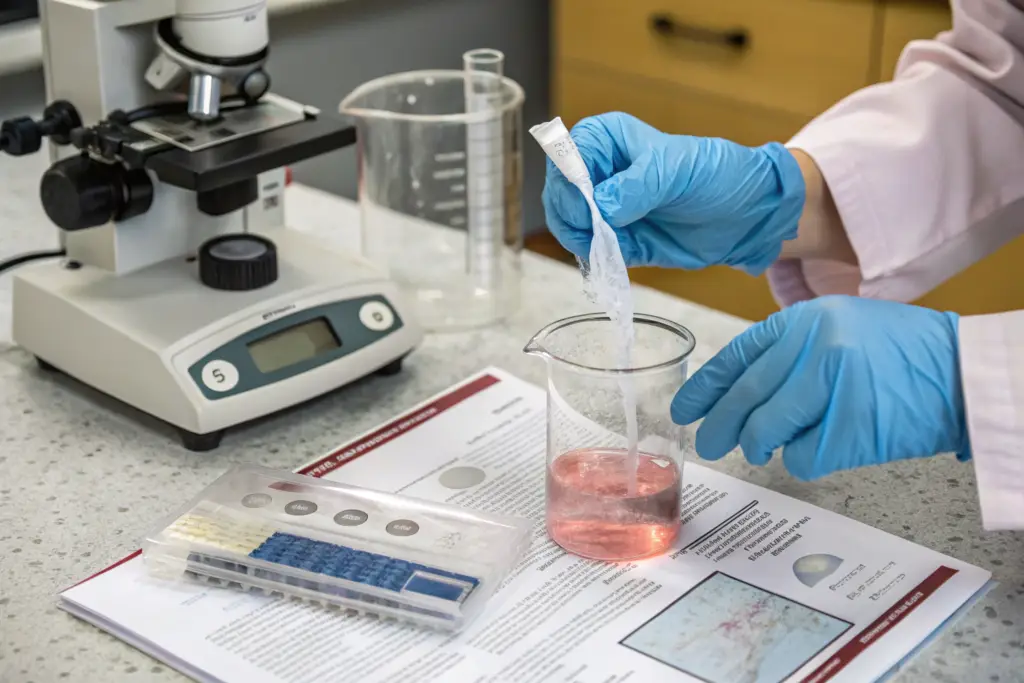
Qualitative fiber analysis answers the question "What fibers are present?" It identifies the types of fibers in a fabric blend. A burn test is a crude qualitative test. A microscope examination is a more accurate one. Qualitative analysis is useful for initial fabric development, but it is not sufficient for a legally compliant label. A label must state the percentage of each fiber by weight, which requires quantitative analysis.
Quantitative analysis separates and weighs each fiber component. For a cotton-polyester blend, the test dissolves the cotton in a sulfuric acid solution, leaving the polyester intact. The remaining polyester is weighed, and the cotton percentage is calculated by difference. The method is destructive, precise, and legally defensible. ASTM D629 specifies the dissolution procedures and chemical reagents for each common fiber blend. A test report that says "Qualitative Analysis Only" is not a substitute for a quantitative report. I require our mills to provide a quantitative ASTM D629 report from an accredited lab for every new fabric quality before we cut a single garment. I recommend every US buyer do the same.
How Does the FTC Textile Rules Govern Fiber Name Usage?
The FTC maintains a list of approved generic fiber names. You may call your fabric "Cotton." You may call it "Polyester." You may call it "Spandex" or "Elastane." You may not invent a trademarked fiber name unless it is accompanied by the generic name. You may not use ambiguous terms like "Eco-Fiber" or "Natural Blend" in place of the actual fiber names.
The most common violation I see from new suppliers is the misuse of "Bamboo." The FTC has ruled repeatedly that "Bamboo" is not a fiber. A fabric made from bamboo pulp processed through a chemical solvent is rayon, and the label must say "Rayon" or "Viscose," with "made from bamboo" as optional supplementary text. I keep a printout of the FTC Threading Your Way Through the Labeling Requirements guide in our compliance office. Every new member of our labeling team reads it. It is 32 pages that can save a brand from a federal enforcement action.
What Performance Testing Prevents Customer Returns on Woven and Knit Fabrics?
Customer returns are the silent margin killer in apparel e-commerce. A garment that looks beautiful in a product photo but pills after two washes, shrinks in the dryer, or tears at a stress seam generates a return. The return costs the brand the original shipping, the return shipping, the inspection labor, and the lost resale value if the garment is discounted as a return. The average return rate for online apparel is over 20%, and a significant fraction of those returns are driven by fabric performance failures that could have been caught with pre-production testing.
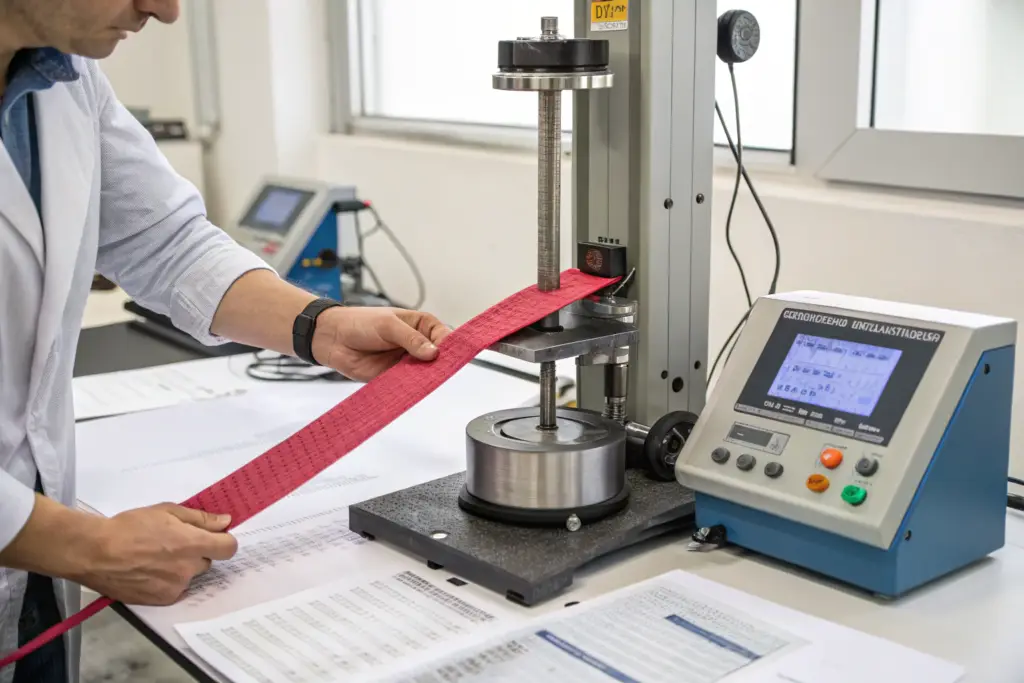
The essential performance tests for woven fabrics are ASTM D5034 for tensile strength, ASTM D1424 for tear strength, and ASTM D4970 for pilling resistance. For knit fabrics, ASTM D3786 for burst strength replaces tensile and tear testing because knits fail differently under stress. For all fabric types, ASTM D3512 for random tumble pilling and AATCC TM135 for dimensional stability to home laundering are non-negotiable. A fabric that passes these tests is not guaranteed to satisfy every customer, but a fabric that fails these tests is guaranteed to generate returns.
Performance testing is not a universal requirement. A chiffon blouse does not need the same strength tests as a pair of denim work jeans. The test menu must match the end use. The buyer and the supplier must agree on the test methods and the pass/fail thresholds before production begins. I include a "Testing Protocol" page in every tech pack we receive from a new brand. If the brand has not specified their own testing protocol, I propose one based on our experience with similar product categories. Here is how the two most impactful performance tests work and what they prevent.
Why Is Pilling Resistance the Most Underrated Performance Metric?
Pilling is the formation of small, fuzzy balls of fiber on the fabric surface. It makes a one-season-old sweater look ten years old. It is the number one consumer complaint about knitwear and fleece, and it is entirely preventable with proper yarn selection, fabric construction, and anti-pilling finishing.
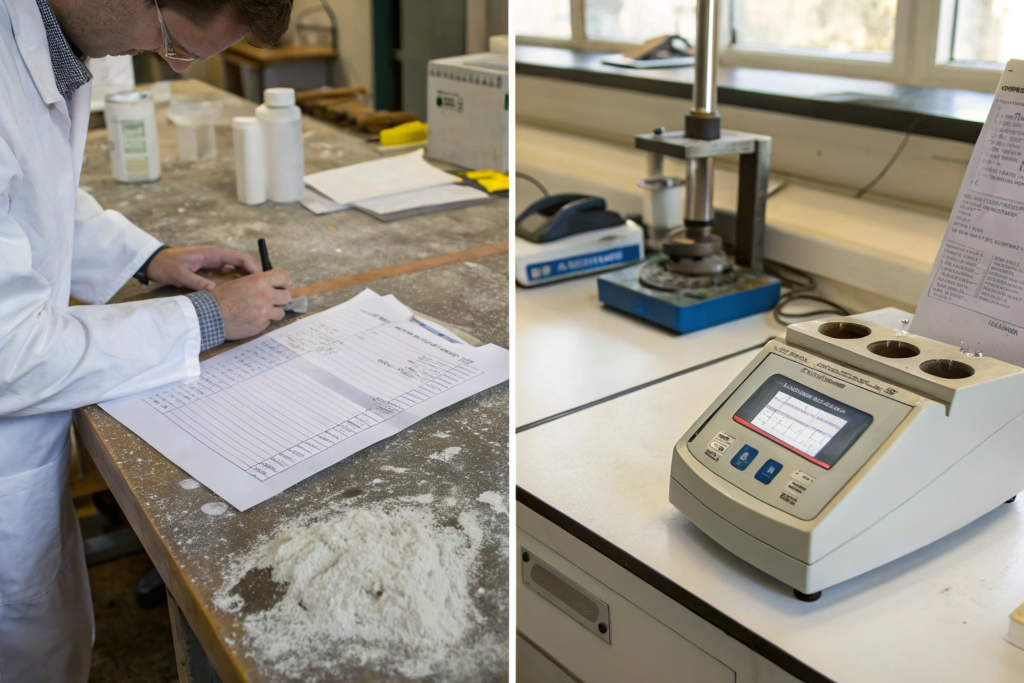
The pilling test, ASTM D4970 for woven fabrics and ASTM D3512 for knitted fabrics, uses a Martindale or random tumble pilling tester to subject the fabric to controlled abrasion. The fabric is rubbed against itself or a standard abradant for a specified number of cycles, then visually compared to a set of standard pilling rating photographs. A rating of 4 or higher on a 1-to-5 scale is generally acceptable for commercial apparel. A rating of 3 or below will generate visible pilling within a few wears. I rejected a fleece fabric last winter that our mill submitted for a jogger program. The pilling rating was 2.5 after only 500 cycles. The mill argued that "fleece pills naturally." I argued that a brand's customer does not care what is natural. They care that their $68 joggers do not look like a used tissue after two washes. We sourced a different yarn with a higher twist and a tighter knit construction. The pilling rating improved to 4.0. The brand received zero pilling complaints.
How Does Dimensional Stability Testing Prevent Post-Wash Shrinkage Claims?
Shrinkage is the other top consumer complaint. A customer buys a Large. They wash it once according to the care label. It now fits like a Medium. They return it and leave a one-star review. The brand loses the sale and the customer.
Dimensional stability testing, AATCC TM135 for woven and knit fabrics, measures the percentage change in fabric dimensions after a specified number of home laundering cycles. A fabric is marked with benchmarks at a precise distance apart, washed and dried according to the care label instructions, and remeasured. The difference is the shrinkage percentage. For most apparel fabrics, a shrinkage of 2% to 3% in length and width is considered acceptable. Anything above 5% is a defect that will generate returns.
The test must be performed on the finished fabric, not the greige fabric. Finishing processes like compacting, sanforizing, or resin treatment affect shrinkage. A fabric that shows 2% shrinkage at the greige stage might show 8% after dyeing and finishing if the finishing process was inadequate. I require our mills to provide dimensional stability reports on the finished, dyed fabric that will actually be cut and sewn. This seems obvious, but I have seen suppliers submit greige test reports to hide finishing-related shrinkage. The buyer must specify "test on finished fabric" in the testing requirement.
What Chemical Safety Tests Protect Against US Liability?
Chemical safety is the highest-stakes category in fabric testing. A garment with excessive lead, phthalates, or formaldehyde does not just generate a return. It generates a lawsuit. It generates a recall. It generates a Consumer Product Safety Commission investigation. The legal liability for chemical safety violations falls entirely on the importer of record, which is the US brand, not the Chinese supplier. The supplier provides the fabric. The brand provides the assurance to the consumer. If the assurance is false, the brand pays.
The mandatory chemical safety requirements for US apparel are governed by the Consumer Product Safety Improvement Act, which sets limits on lead in surface coatings and lead in substrates, and bans specific phthalates in children's products. California Proposition 65 adds additional requirements for products sold in California, including limits on cadmium, formaldehyde, and a list of over 900 chemicals. A supplier's generic "non-toxic" certificate is not a legal defense. Buyers must demand a CPSIA compliance certificate for children's products and a Proposition 65 compliance certificate for products sold in California, supported by test reports from an accredited laboratory.
The chemical testing landscape is complex because the requirements depend on the product type, the target age group, and the states where the product will be sold. A blanket for a toddler has different requirements than a jacket for an adult. A garment sold in a California boutique has different requirements than one sold exclusively in Texas. I maintain a chemical compliance matrix for every brand partner that maps their product categories to the required tests. This matrix is a living document, updated when regulations change.
How Does CPSIA Testing Differ for Children's Versus Adult Apparel?
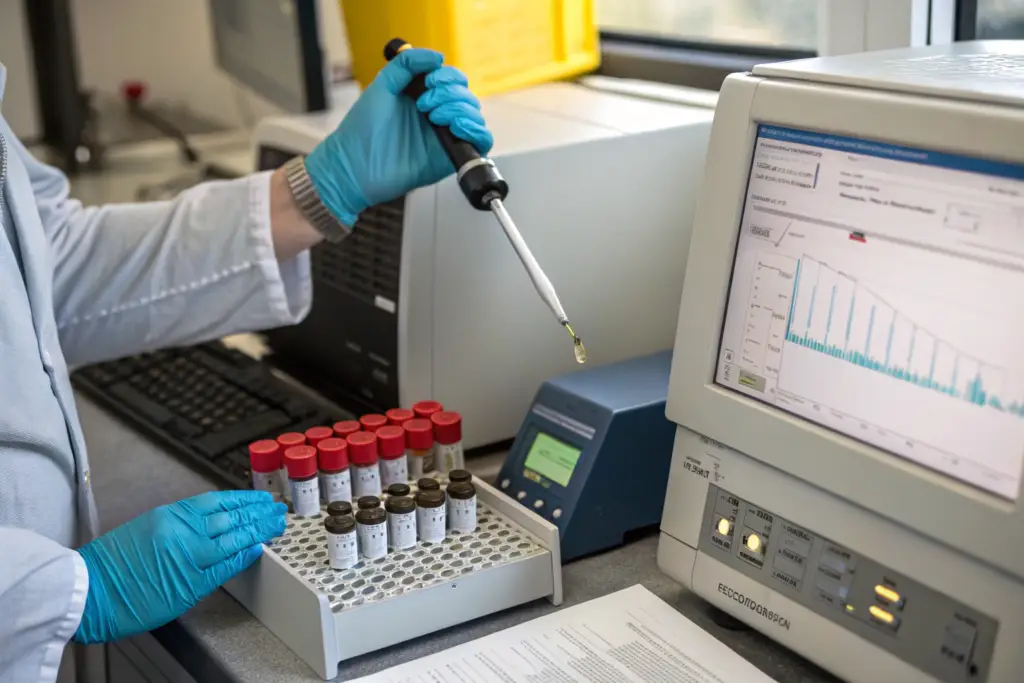
The CPSIA imposes dramatically stricter requirements on children's products, defined as products designed for children aged 12 and under. Children's apparel must undergo third-party testing for lead in surface coatings, lead in substrates, and for specific phthalates, DEHP, DBP, BBP, DINP, DIBP, DCHP, DPENHEA, and DHEXP. The testing must be performed by a CPSC-accepted laboratory, and the results must be documented in a Children's Product Certificate that accompanies every shipment.
Adult apparel is exempt from the mandatory third-party testing requirement, but it is still subject to the underlying safety standards. An adult garment that contains excessive lead or a banned phthalate is still a banned hazardous substance under the Federal Hazardous Substances Act. The difference is that the brand is not required to submit the product for third-party testing before import. However, if the product is later found to be non-compliant, the brand is still liable. I recommend our adult apparel brand partners voluntarily test for lead and phthalates, even though the law does not mandate it. The test cost is small relative to the liability of a recall. The CPSC testing and certification requirements page is the authoritative reference.
What California Proposition 65 Chemicals Most Affect Apparel?
Proposition 65 requires businesses to provide a warning before exposing California consumers to chemicals known to cause cancer or reproductive harm. The list contains over 900 chemicals, but the ones most commonly found in apparel are lead, cadmium, formaldehyde, and certain phthalates. Lead can appear in metal buttons, zippers, and screen printing inks. Cadmium can appear in synthetic dyes and plastic trims. Formaldehyde is used in wrinkle-resistant and anti-shrink finishing treatments.
A Proposition 65 violation can be enforced by the California Attorney General or by private citizen lawsuit. Private enforcers, often law firms that specialize in Prop 65 litigation, actively test consumer products for listed chemicals. A positive test generates a notice of violation and a settlement demand. The settlement amounts are typically in the tens of thousands of dollars, plus attorney fees. I have seen these notices arrive at brand offices with no prior warning. The brand was not aware that the metal zipper pull on their jacket contained lead above the Prop 65 safe harbor level. The cost of testing a zipper pull for lead is under $50. The cost of settling a Prop 65 lawsuit starts at $15,000. The math is straightforward.
How Can Buyers Verify That Test Reports Are Authentic and Current?
The ugliest secret in the garment testing industry is that fake test reports are common. A supplier who wants to avoid the cost of real testing can download a template, copy a logo from a legitimate lab's website, and fabricate a test report in an afternoon. The brand receives a PDF that looks official and approves the shipment. The fabric was never tested. The defect is discovered when the customer washes the garment and it falls apart. I have personally encountered three cases of fraudulent test reports in the last five years, all from fabric mills that were trying to enter our supply chain and did not pass our verification process.
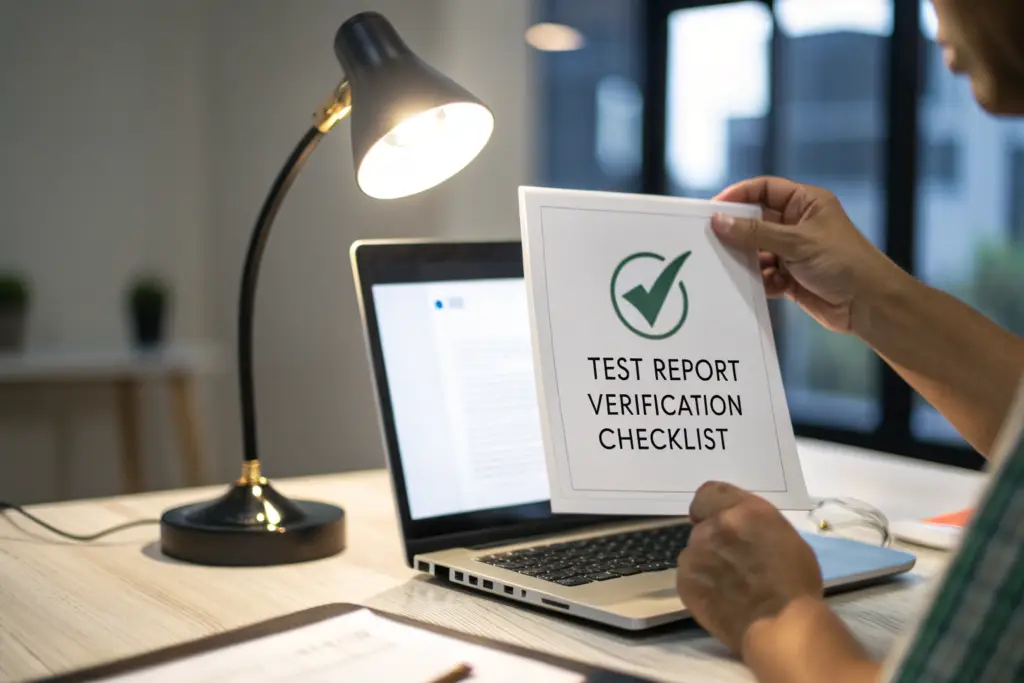
Buyers can verify the authenticity of a test report by checking the testing laboratory's ISO/IEC 17025 accreditation status on the accrediting body's online database, contacting the lab directly using the phone number on the lab's official website, not the phone number on the report, to confirm the report number and date, and requiring that the test report include a sample identification that matches the fabric's lot number, purchase order, and shipping marks. A report that lacks a verifiable accreditation number, a traceable sample ID, or a lab contact that can be independently confirmed is not a valid test report.
Verification is not a bureaucratic exercise. It is a fraud prevention measure that protects the buyer's financial interest. Here is the step-by-step verification process I use, and I recommend every US buyer adopt it.
How to Look Up a Lab's ISO 17025 Accreditation Status?
Every legitimate testing laboratory that serves the US market holds an accreditation from a recognized body. Common accreditations include A2LA, Perry Johnson Laboratory Accreditation, and IAS. The accreditation certificate lists the lab's name, address, scope of accreditation, and a unique accreditation number. This number is printed on every valid test report.
To verify, go to the accrediting body's website. A2LA has a directory of accredited labs at A2LA.org. Enter the lab name or accreditation number. Confirm that the lab is currently accredited, that the accreditation has not expired or been suspended, and that the scope of accreditation includes the specific test method printed on the report. A lab may be accredited for fiber analysis but not for phthalate testing. If the test method is outside the lab's accredited scope, the report is not a valid accredited test. This verification takes five minutes. It is the most effective single step a buyer can take to avoid fraudulent reports.
Why Should Buyers Demand Batch-Specific Test Reports?
A test report from a fabric sample tested two years ago for a different brand is not valid for your order. Fabric properties change between batches. The yarn source changes. The dye formulation changes. The finishing chemistry changes. A report from a previous batch proves that the mill was capable of producing quality fabric at one point in time. It does not prove that your specific batch meets the standard.
Every test report must include a sample identification that links it to the buyer's specific order. The lot number, the purchase order number, the style number, or a combination of these identifiers should appear on the report. At Shanghai Fumao, we require our mills to label every test report with our internal fabric code and the brand's PO number. We cross-check the PO number on the test report against the PO number on the fabric delivery note. If they do not match, the fabric is quarantined until a batch-specific test is performed. This discipline prevents the common practice of "report recycling," where a mill submits an old passing report to cover a new, untested batch.
Conclusion
Fabric testing is not a cost. It is an insurance policy. The cost of testing a fabric batch for fiber content, colorfastness, shrinkage, and pilling is a few hundred dollars. The cost of a single return is the gross margin on that unit plus the cost of processing the return. The cost of a recall is the value of the entire production run. The cost of a CPSIA or Prop 65 violation is the legal settlement and the reputational damage. The math is overwhelming. Testing pays for itself many times over.
At Shanghai Fumao, I have built a quality system that treats fabric testing as a prerequisite for production, not an optional add-on. We test every new fabric quality for fiber content, colorfastness, dimensional stability, and pilling. We test children's wear components for lead and phthalates. We verify the accreditation of every external lab we use, and we share the original test reports with our brand partners, not photocopies, not summaries. The original PDF from the lab. Because when a buyer demands rigorous testing, they are not insulting our quality. They are protecting their brand. A factory that resists testing is a factory that fears the result.
If you are sourcing apparel from China and you need a manufacturing partner who treats fabric testing with the seriousness it deserves, let us show you our testing protocol. We can walk you through the specific ASTM and AATCC standards that apply to your product category, and we can include a testing schedule in your pre-production timeline. Reach out to our Business Director, Elaine, at elaine@fumaoclothing.com. Demand the tests. We will pass them.