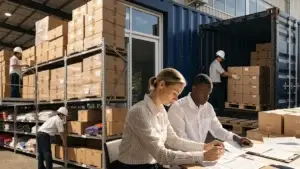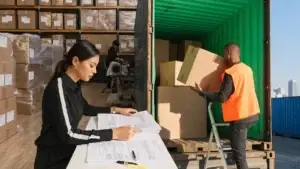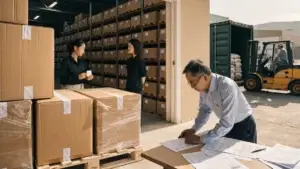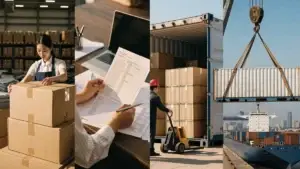
Last quarter, I sat across a conference table from a sourcing director at one of the top ten North American department store groups. She had flown to Shanghai with a clear mandate from her CEO: consolidate the supply base, reduce the number of vendor touchpoints, and shorten the time from design approval to floor set. She had visited four factories in China and two in Vietnam before ours. When she walked through our Shanghai Fumao facility, she stopped at the fabric inspection station, watched a bolt of organic cotton twill being checked against a spectrophotometer reading, and asked, "You do this in-house? You do not outsource the fabric sourcing, the cutting, the printing, the embroidery, and the packing to five different subcontractors?" I said yes. That one word, and the ability to prove it on the factory floor, was the moment the conversation shifted from a vendor interview to a partnership negotiation.
Large North American retailers are gravitating toward Shanghai Fumao's vertical integration model because it eliminates the fragmented accountability, hidden subcontracting risks, and communication delays that plague traditional multi-vendor supply chains. By controlling fabric sourcing, pattern making, cutting, sewing, printing, embroidery, finishing, quality inspection, and logistics under one roof and one management team, we offer retailers a single throat to choke, a compressed lead time that no distributed supply chain can match, and a transparency of cost and process that satisfies increasingly stringent compliance and sustainability reporting requirements.
Vertical integration is not a new concept in manufacturing. It is standard practice in automotive and electronics. But in the fragmented, relationship-heavy world of garment production, true vertical integration is rare. Most "full-service" factories are actually general contractors who manage a network of specialized subcontractors. The brand pays for the appearance of integration but receives the reality of distributed risk. Large North American retailers, the ones with compliance departments, sustainability mandates, and quarterly floor-set deadlines that cannot slip, have figured this out. They are now actively seeking genuine vertical partners, and that shift is reshaping the competitive landscape of apparel sourcing. Let me explain the specific elements of our model that matter most to these enterprise buyers.
What Does "True Vertical Integration" Mean in Garment Manufacturing?
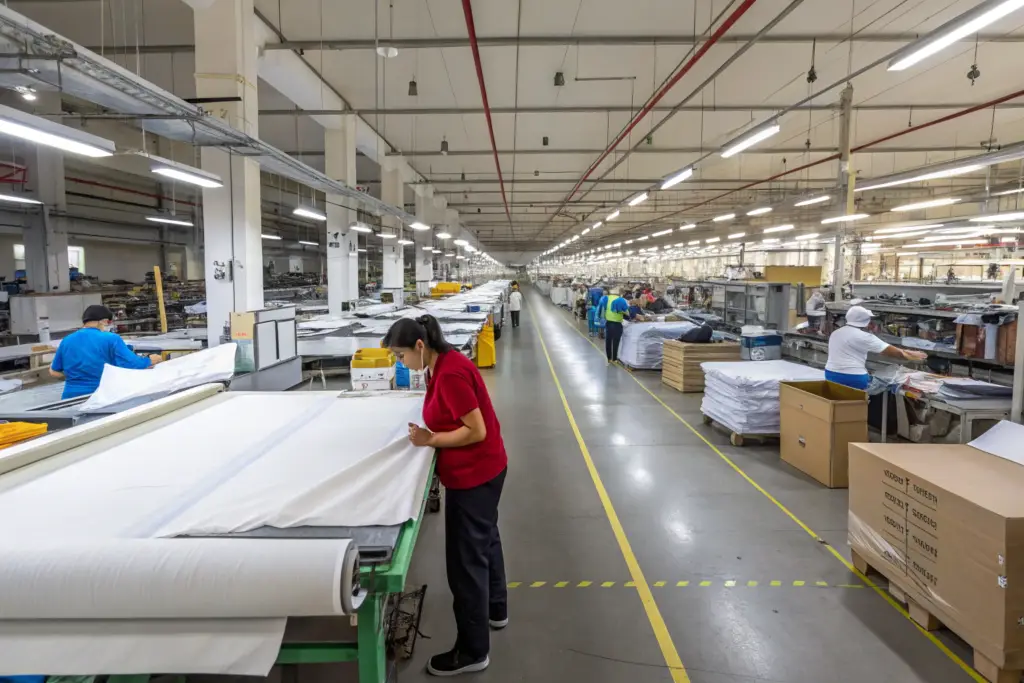
The term "vertical integration" is thrown around loosely in the apparel industry. Many factories claim it. Few practice it. A factory that owns a sewing floor but subcontracts cutting, printing, and embroidery is not vertically integrated. It is a sewing contractor with a good address book. True vertical integration means that the core production processes, from fabric receipt to finished, packed carton, happen within a single operational entity under a single quality management system. The fabric does not leave the building on a truck to go to an off-site cutting shop. The cut panels do not travel across town to an embroidery house. The finished garments do not sit in a third-party warehouse waiting for a separate inspection team to arrive. Everything happens in one flow, under one roof, with one team accountable for the outcome.
True vertical integration in garment manufacturing means that fabric inspection, cutting, sewing, printing, embroidery, finishing, quality control, and logistics preparation are all performed within the same facility and managed by the same operational leadership. This model eliminates the transaction costs, communication gaps, and schedule risks inherent in coordinating multiple independent subcontractors. For a large North American retailer placing a 50,000-unit seasonal order, the difference between a vertically integrated supplier and a subcontracting network is often the difference between an on-time, on-spec delivery and a delayed, inconsistent shipment that requires expensive rework at the destination distribution center.
The value of this model becomes clear when you examine what happens in a non-integrated supply chain. A delayed fabric shipment from the mill delays the cutting contractor. The cutting contractor delays the sewing contractor. The sewing contractor delays the embroidery house. Each delay cascades through a chain of independent businesses that each have their own priorities, their own production schedules, and their own incentives to blame the upstream supplier for the problem. The retailer gets a late shipment and five different explanations. In a vertically integrated facility, the fabric delay is visible to the cutting team immediately. The cutting schedule is adjusted within hours. The sewing lines are notified before the delay affects their workflow. The entire operation compensates as a single organism. That is the structural advantage that large retailers are paying for.
How Does In-House Fabric Sourcing Reduce Lead Times by 3-5 Weeks?
Fabric sourcing is the longest pole in the lead time tent. In a traditional, non-integrated model, the factory tells the brand to nominate a fabric supplier. The brand contacts the supplier, negotiates a price, places a purchase order, and waits. The fabric is produced, shipped to the factory, and inspected. If the fabric fails inspection, the entire process starts over. This sequence adds three to five weeks to the production timeline compared to a factory with an in-house fabric sourcing and inspection capability.
At Shanghai Fumao, we maintain a pre-vetted network of mills across China, and we hold a strategic inventory of core fabric qualities in black, white, navy, and ecru. When a retail buyer approves a design, we do not wait for the brand to source fabric. We pull from our approved mill network, place the fabric order on our own credit terms, and begin the inspection process as soon as the fabric arrives. We absorb the fabric sourcing risk and the fabric inventory risk. The brand pays for the fabric when they pay for the finished garment. This shift in who holds the fabric procurement responsibility compresses the lead time by the three to five weeks that the brand would otherwise spend shopping for fabric. For a retailer planning a Black Friday promotion in July, those three weeks are the difference between confident execution and a prayer.
Why Does Single-Facility Cutting, Sewing, and Finishing Reduce Defect Rates?
Every time a bundle of cut fabric is loaded onto a truck and transported to a different facility, three things happen. First, the bundles are handled, increasing the risk of lost pieces, mixed sizes, or damaged fabric. Second, the quality standard shifts. The cutting contractor has one standard. The sewing contractor has another. The finishing contractor has a third. No single quality manager oversees the entire process. Third, accountability fractures. When a finished garment has a defect that originated in the cutting stage, the sewing contractor blames the cutting contractor. The cutting contractor blames the fabric. The retailer receives a defective garment and a circular argument.
In a single-facility model, the quality manager sees the fabric arrive, watches it pass through cutting, monitors the sewing lines, and inspects the finished garment. If a defect pattern emerges, a mismatched stripe, a recurring seam puckering, the root cause is traceable to a specific machine, a specific operator, or a specific process step. The fix is immediate. The defect rate drops because the feedback loop is measured in minutes, not days. I have seen our single-facility defect rate on a complex printed dress program drop from an industry-typical 4% to under 1.5% specifically because our cutting team, our sewing supervisor, and our finishing inspector share the same floor, the same daily meeting, and the same quality target. This is not theory. It is a measurable operational result.
How Does Vertical Integration Guarantee Compliance and Ethical Standards?
For a large North American retailer, a compliance violation in the supply chain is not a quality problem. It is an existential risk. A single report from a labor rights organization linking a retailer's house brand to a factory with forced labor or unsafe working conditions can trigger a consumer boycott, a shareholder lawsuit, and a front-page news cycle that erases billions in market value in days. The retailers who have lived through these crises, and every major North American retailer has either experienced one or watched a competitor experience one, have fundamentally changed their sourcing behavior. They no longer accept a factory's word. They demand auditable, verifiable control over the entire production chain.
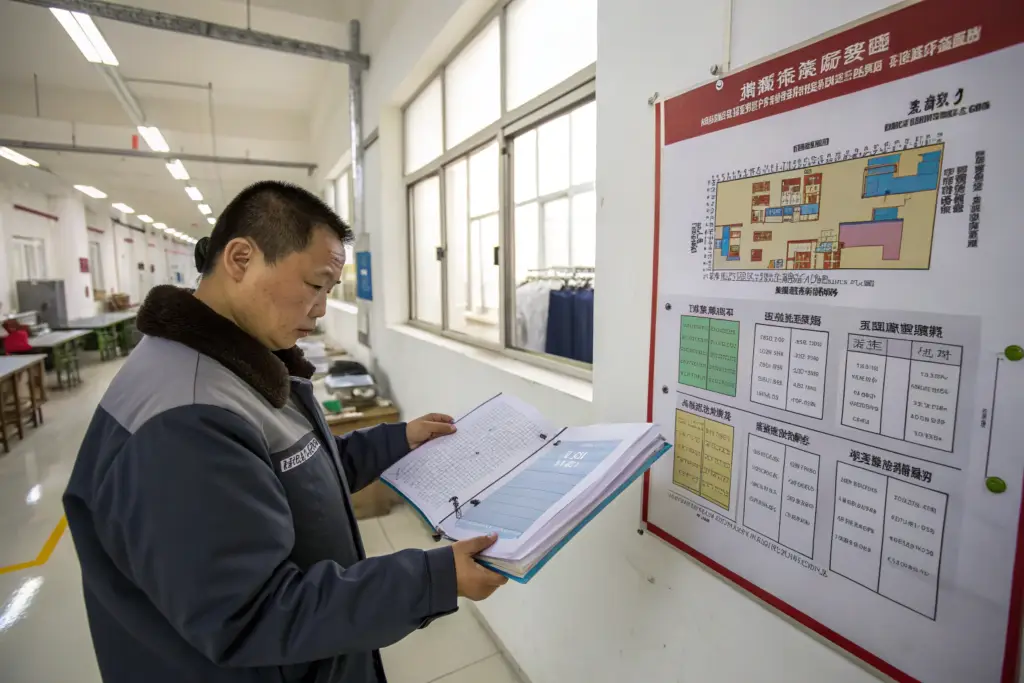
Vertical integration strengthens compliance assurance by eliminating the "subcontractor black box" that is the primary source of labor and environmental violations in apparel supply chains. When a retailer audits Shanghai Fumao, they audit the entire production chain, not just the final assembly step. There is no unauthorized subcontractor working in an unventilated shed three towns away. There is no fabric being sent to a dye house with unmonitored chemical discharge. The entire production footprint is visible, auditable, and accountable under one legal entity and one set of operational policies. This visibility is the strongest compliance guarantee a factory can offer.
The subcontracting problem is endemic in garment manufacturing. A brand places an order with a factory. The factory, facing capacity pressure, sends the cut fabric to a smaller workshop that has never been audited. The brand does not know. The retailer does not know. The workshop employs underage workers or operates with blocked fire exits. When the violation is discovered, the brand and the retailer are held responsible, while the original factory claims ignorance. I have seen this exact scenario destroy a mid-sized Canadian brand that sourced through a non-integrated factory. The brand's entire production was pulled from a major retailer's shelves within 48 hours of a media report. The brand never recovered. Vertical integration makes this scenario structurally impossible because there is no outside workshop to subcontract to. The capacity is internal. The accountability is internal.
How Does an In-House Auditing Team Maintain Ongoing Compliance?
Third-party audits are a snapshot. They capture a factory's condition on one day, often a day the factory has been preparing for weeks. An in-house auditing capability transforms compliance from a scheduled event into a continuous process. Our internal compliance team walks the production floor every single day. They check that fire exits are unblocked. They verify that chemical storage areas are properly ventilated. They audit a random sample of payroll records against worker interviews to ensure hours and wages are reported accurately.
This internal function is not a replacement for third-party audits. It is a complement that operates between audits, maintaining the standard so that when the external auditor arrives unannounced, the factory is already compliant. A large retailer's compliance director once told me that she values a factory's internal compliance team more than a clean audit report. A clean audit report can be staged. An internal compliance team that documents its own findings, tracks corrective actions, and shares its reports transparently is evidence of a genuine compliance culture. We share our internal compliance reports with retail partners upon request. We do not wait for the annual audit to fix problems. We fix them on the Tuesday afternoon when they are discovered.
What Certifications Are Essential for North American Retail Partnerships?
The certification landscape is fragmented, but a core set of standards has emerged as table stakes for large North American retailers. For social compliance, WRAP, Worldwide Responsible Accredited Production, and SMETA, Sedex Members Ethical Trade Audit, are the most commonly requested. For environmental management, ISO 14001 is the baseline. For organic cotton claims, GOTS certification is mandatory. For recycled content claims, GRS certification is required. For chemical management, OEKO-TEX Standard 100 is the minimum, with many retailers now requesting the more stringent OEKO-TEX STeP certification for sustainable production processes.
At Shanghai Fumao, we hold and maintain WRAP, ISO 14001, GOTS, GRS, and OEKO-TEX Standard 100 certifications. The certification burden is real. Each standard requires an annual audit, a documentation package, and a fee. But the alternative is not viable for a factory that wants to serve the top tier of North American retail. A large retailer's vendor onboarding process includes a certification check as a gate. If the factory does not hold the required certifications, the conversation does not begin. I recommend any factory seeking large retail partnerships invest in this certification portfolio proactively. It is a cost of entry, not a competitive differentiator. But failing to pay the entry fee means you never enter the competition at all.
Why Are Retailers Consolidating Vendor Relationships Around Integrated Suppliers?
The average large North American retailer's vendor roster is bloated. Decades of decentralized sourcing have created a supply base of hundreds of factories across dozens of countries, each producing a small slice of the total volume. This fragmentation creates massive management overhead. The retailer employs an army of sourcing managers, quality auditors, and compliance officers just to keep the vendor base under basic control. The cost of managing 50 vendor relationships is not 50 times the cost of managing one. It is exponentially higher because of the coordination complexity.
Retailers are consolidating vendor relationships around vertically integrated suppliers because each integrated partner replaces three to five specialized vendors in the supply base. This consolidation reduces the retailer's internal management cost, simplifies the compliance audit calendar, and strengthens the remaining vendor relationships into strategic partnerships rather than transactional engagements. An integrated supplier who receives 20% of a retailer's volume is a partner who invests in the retailer's success. A specialist who receives 2% of the volume is a vendor who fills purchase orders.
This consolidation trend is a rational response to the rising cost of supply chain management. The retailer's cost of managing a vendor, the compliance audits, the quality inspections, the communication overhead, the purchase order administration, is fixed regardless of the vendor's volume. By consolidating volume into fewer, more capable vendors, the retailer reduces the total number of vendor relationships, lowers the total management cost, and increases the strategic importance of each remaining vendor. The integrated vendor, who can handle the entire production process internally, is the natural beneficiary of this consolidation logic.
How Does Vendor Consolidation Simplify the Retailer's Supply Chain?
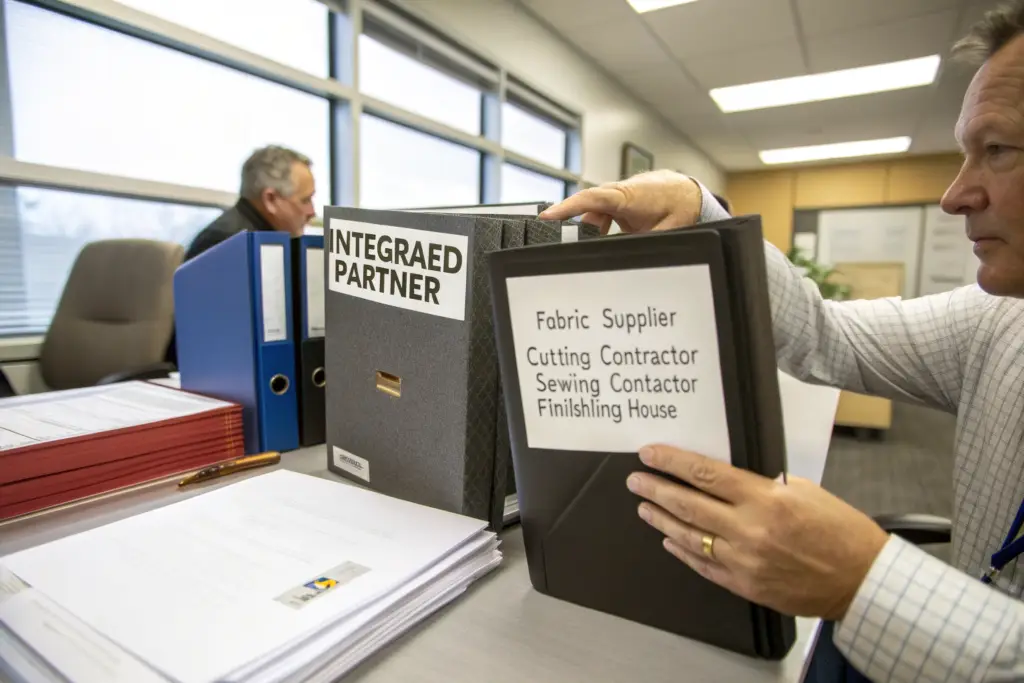
The simplification is dramatic. A retailer sourcing a men's woven shirt program through a non-integrated model might manage five separate relationships: the fabric mill, the cutting contractor, the sewing factory, the embroidery house for logo application, and the laundry for garment washing. Each relationship requires a purchase order, a quality agreement, a compliance audit, and a communication channel. When a delay occurs, the retailer's sourcing manager spends days triangulating between five different suppliers to identify the bottleneck.
An integrated supplier replaces all five relationships with one. The retailer issues one purchase order. The retailer audits one facility. The retailer communicates with one account manager. When a delay occurs, the integrated supplier identifies the bottleneck internally and presents a recovery plan. The retailer's sourcing manager spends minutes on the problem, not days. This operational simplicity is so valuable that retailers are increasingly willing to pay a slight price premium for it. The premium for integration is less than the hidden cost of managing fragmentation.
What Cost Efficiencies Do Integrated Suppliers Offer Beyond Piece Price?
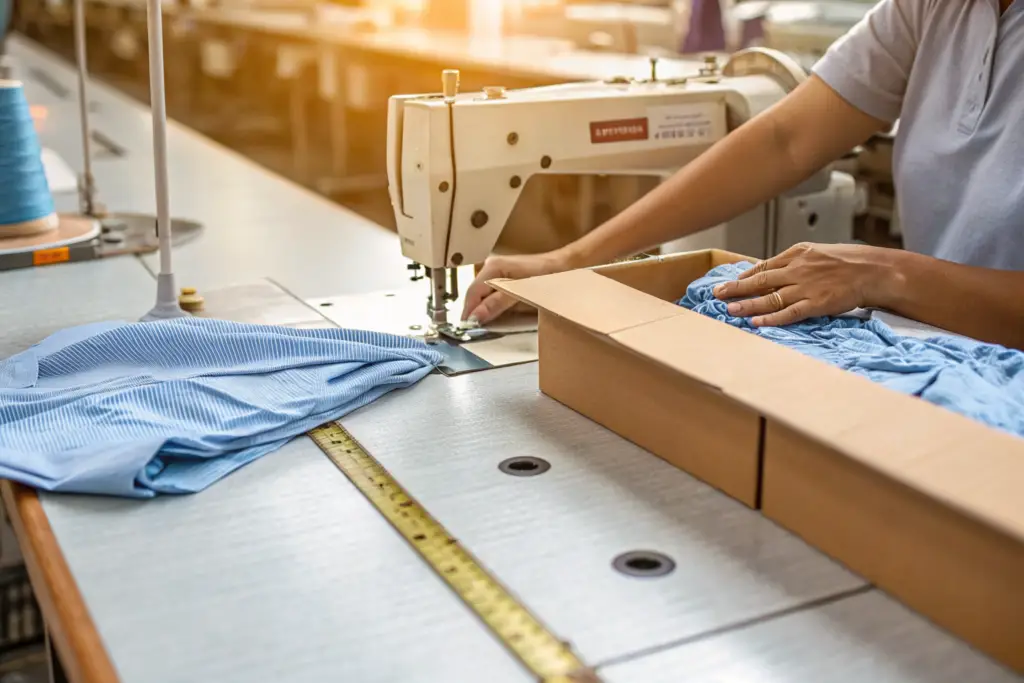
The piece price is the most visible cost, but it is not the total cost. A non-integrated supply chain has hidden costs at every handoff. The fabric is shipped from the mill to the cutting contractor. The cut panels are shipped from the cutting contractor to the sewing factory. The sewn garments are shipped to the embroidery house. The embroidered garments are shipped to the finishing facility. Each shipment is a freight charge, a handling cost, and an opportunity for damage or loss. An integrated supplier eliminates all internal freight and handling between production stages. The fabric moves from receiving to cutting on an internal conveyor. The cut panels move to sewing on a rolling rack. The sewn garments move to finishing on the same rack.
The cumulative cost of internal freight and handling in a fragmented supply chain can reach 3% to 5% of the total product cost. The integrated supplier captures that 3% to 5% as a structural cost advantage. Additionally, the integrated supplier has zero cost of subcontractor management. There is no subcontractor markup, no subcontractor quality rework, and no subcontractor delay penalty. The retailer and the integrated supplier share this efficiency. The retailer pays a piece price that may be equal to or slightly higher than the non-integrated quote, but the total landed cost, including the hidden costs of fragmentation, is lower. Large retailers with sophisticated cost modeling capabilities understand this distinction. They are buying on total cost, not piece price.
How Does Vertical Integration Improve Speed-to-Market for Seasonal Collections?
Speed-to-market is the holy grail of fashion retail. The brand that gets a trend-driven product onto the floor two weeks before its competitor captures the early adopters, sets the price, and owns the season. The brand that arrives two weeks late competes on clearance racks. For large North American retailers, the seasonal calendar is unforgiving. A Spring collection has a fixed floor-set date. Every day of delay between design approval and store delivery is a day of lost full-price selling. The supply chain is the constraint on speed. Vertical integration widens that constraint.
Vertical integration compresses the seasonal production timeline by 20% to 40% compared to a fragmented supply chain. The compression comes from three sources: the elimination of inter-vendor transit time and handling, the ability to overlap production stages that would be sequential in a fragmented model, and the instant communication between production departments that allows real-time problem-solving instead of email-driven, multi-day issue resolution. For a retailer launching a 50,000-unit seasonal collection, a four-week timeline compression can mean the difference between a full-price sell-through and a 40% markdown liquidation.
The speed advantage of vertical integration is most visible in seasonal collections where the design is approved late, the fabric is on a tight delivery schedule, and the retailer's marketing campaign is already booked. In a fragmented supply chain, a late design approval cascades into a late fabric order, a late cutting slot, a late sewing allocation, and a missed delivery window. In an integrated facility, a late design approval triggers a compressed internal schedule where cutting can begin on a partial fabric delivery, sewing can begin on a partial cut, and finishing can begin on a partial sew. The factory operates like a continuous pipeline rather than a series of disconnected batch processes.
How Does Concurrent Cutting and Sewing Shorten the Production Calendar?
In a non-integrated model, cutting must be 100% complete before sewing begins. The cutting contractor cuts the entire order, packs the bundles, and ships them to the sewing factory. The sewing factory receives the shipment, unpacks the bundles, and allocates them to lines. This sequential process adds one to two weeks to the production calendar.
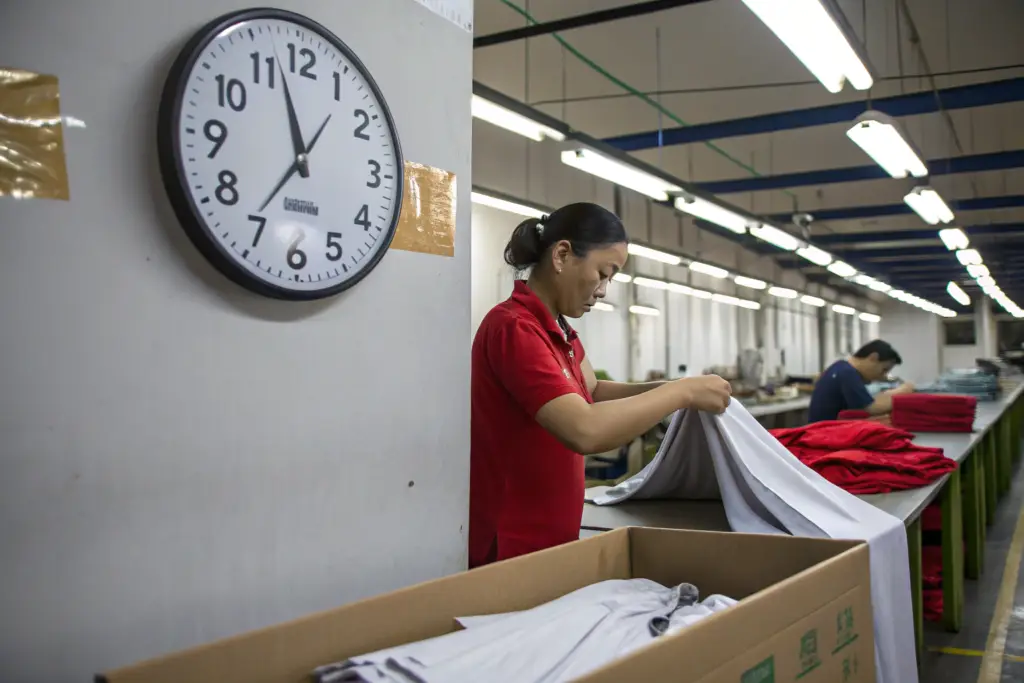
In an integrated facility, cutting and sewing are concurrent processes. The cutting team spreads and cuts the first batch of fabric. As soon as the first bundle is cut, it moves directly to the sewing line. While the sewing operators are assembling the first batch, the cutting team is cutting the second batch. The two departments run in parallel, not in sequence. This concurrent model is only possible when cutting and sewing share the same floor and the same production control system. It compresses the total production calendar by the amount of time that a non-integrated model spends waiting for the cutting to finish. For a 10,000-unit order of a moderately complex garment, concurrent cutting and sewing can save 5 to 7 working days.
Why Is Real-Time Problem Resolution Critical for Seasonal Delivery Windows?
A seasonal collection has zero tolerance for a problem that takes a week to resolve. If the fabric has a shade variation issue discovered at the cutting table, an integrated factory can have the fabric manager, the cutting supervisor, and the quality manager standing at the cutting table together within 15 minutes. They assess the issue, decide whether to recut, redye, or accept with a concession, and execute the decision within the hour.
In a fragmented model, the cutting contractor discovers the shade issue. They email the sewing factory. The sewing factory emails the brand. The brand emails the fabric mill. The fabric mill requests photos. The photos are sent. The mill responds with an explanation. The brand decides. The decision is communicated back down the chain. This sequence consumes three to five business days. During those three to five days, the cutting is paused, the sewing is waiting, and the seasonal delivery window is shrinking. The integrated factory resolves the same problem in hours. The seasonal calendar survives. The retailer's floor set remains intact. This is the operational reality that large retailers experience with integrated versus fragmented suppliers, and it is the reason their vendor consolidation strategies are accelerating toward vertically integrated partners.
Conclusion
The shift of large North American retailers toward vertically integrated suppliers is not a trend. It is a structural correction. The fragmented, subcontracted supply chain model that dominated apparel sourcing for the past three decades is buckling under the weight of its own complexity. It is too slow for the speed demands of modern retail. It is too opaque for the compliance demands of modern regulation. It is too expensive to manage for the margin demands of modern competition. Vertical integration is the answer to all three pressures.
At Shanghai Fumao, I have invested twenty years in building a truly integrated operation, not because it is the easiest model to run, but because it is the only model that delivers the speed, transparency, and accountability that large retailers require. Our fabric arrives at our inspection station and never leaves our control until it departs as a finished, packed, and compliant garment. There is no subcontractor network to audit. No finger-pointing between separated facilities. No hidden freight and handling costs. There is one facility, one team, one quality standard, and one person, me, who is ultimately accountable for the result.
If you are a sourcing director or a brand owner supplying large North American retailers, and the compliance, speed, and transparency pressures are intensifying on your supply chain, let us talk. We can show you how a vertically integrated partner reduces your vendor count, compresses your lead times, and strengthens your compliance story. Reach out to our Business Director, Elaine, at elaine@fumaoclothing.com. The retailers are consolidating around integrated suppliers. Make sure you are positioned with the right partner.