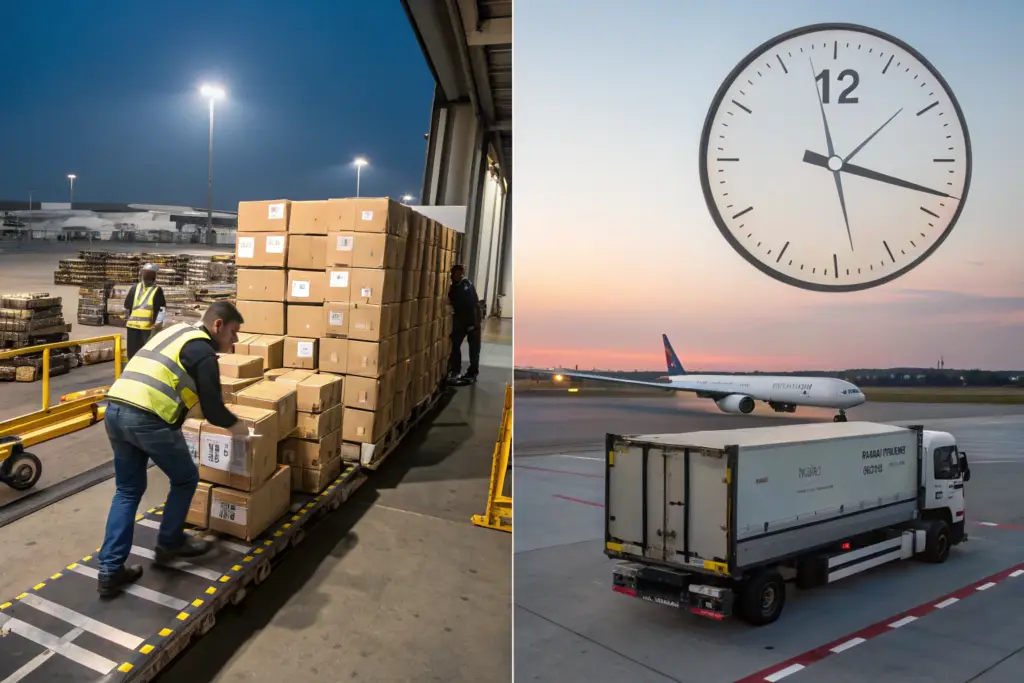
In October 2024, I received a call from a brand owner in Chicago who was in full crisis mode. Her Christmas collection of embroidered fleece jackets had been delayed by a fabric mill that went silent for three weeks. The goods were finally ready in our Shanghai warehouse on November 18th. She had a December 1st delivery deadline to a major department store. Miss that window, and the order would be refused, leaving her with 3,000 units of highly seasonal inventory that would have to be liquidated at a loss. We had thirteen days to move 85 cartons from Shanghai to a distribution center in Illinois during peak shipping season. The standard ocean freight lane was impossible. We activated a hybrid solution that involved a truck to Hong Kong, an air charter consolidation, and a pre-cleared customs broker in Chicago. The goods arrived on November 28th. The department store received them on December 1st, at 9:00 AM. The margin on the order was cut by 7% due to the expedited freight, but the alternative was a 100% loss on the production cost.
Minimizing shipping delays for last-minute seasonal orders requires abandoning single-mode transportation in favor of hybrid logistics strategies that combine air freight for high-velocity core inventory, sea-air combinations for mid-weight orders, and bonded warehousing with pre-clearance to eliminate customs processing time. The solution is not simply "ship earlier." The solution is building a logistics toolkit that can compress the timeline at multiple points—origin, transit, and destination—so that a late production finish does not automatically mean a missed selling season.
Seasonal fashion is a binary business. You are either in the store for the Christmas floor set, or you are not. You are either on the rack for the spring break window, or you are liquidating inventory in May at a 60% discount. The logistics chain is the last mile of that binary outcome. A factory that sews perfectly but ships carelessly is a factory that fails. Let me explain the specific logistics architectures that I have used to rescue seasonal orders for our brand partners.
When Should a Brand Switch from Ocean to Air Freight for Seasonal Inventory?
The moment to switch from ocean to air freight is not when the goods are already late. By then, you are paying emergency rates that destroy whatever margin was left in the order. The moment to switch is when the production completion date crosses the "air freight threshold." This threshold is calculated by subtracting the ocean transit time plus two buffer weeks from the delivery deadline. If your goods are not finished by that date, you switch to air. You do not hope the ocean carrier finds a tailwind. You do not negotiate with the factory to "somehow make it faster." You switch modes and you protect the sell-through.
The air freight threshold is calculated as: Delivery Deadline minus 14 Days Buffer minus Ocean Transit Time. If the production finish date falls after this threshold, the order must move to air freight immediately. The buffer covers port congestion, customs clearance, and inland trucking. Operating without this threshold calculation leads to emotional, last-minute decisions made under pressure. Operating with it turns the decision into a cold, mathematical trigger.
At Shanghai Fumao, we calculate this threshold for every seasonal order at the time of purchase order confirmation. We share the date with the brand. If the production milestone slips past the threshold, we do not wait for the brand to ask about air freight. We recommend it proactively. Here is how the cost math works and how we reduce that cost.

How to Calculate the True Cost of a Missed Seasonal Window?
The air freight surcharge is a known number. On a shipment of 1,000 lightweight jackets, ocean freight might cost $1,200. Air freight might cost $4,800. The surcharge is $3,600. The brand looks at this number and instinctively resists.
But the missed window cost is often much larger. Take those 1,000 jackets with a wholesale price of $45 each. Total wholesale value is $45,000. If they miss the Christmas window and must be liquidated in January at 60% off, the recovery is $18,000. The loss is $27,000. The air freight surcharge of $3,600 is 13% of the loss. I have sat with brand owners and walked them through this math. When you frame it as "pay $3,600 to protect $27,000," the decision makes itself. I recommend brands keep a "Cost of Lateness" calculator for each seasonal order, updated with current freight spot rates and liquidation recovery estimates. This turns a gut-wrenching decision into a data-driven one.
Can Air Freight Charter Consolidations Reduce the Cost for Smaller Brands?
A full air charter is for 5,000-kilo orders. Most small and mid-sized brands do not have that volume for a single shipment. But consolidation services allow multiple shippers to share space on a single charter or a block of commercial cargo space. The freight forwarder aggregates cargo from several clients heading to the same destination and negotiates a blended rate that is significantly cheaper than an individual spot rate.
We work with a freight forwarder in Shanghai that runs a weekly consolidation to Chicago and Los Angeles during peak season. The consolidation rate is typically 30% to 40% below the standard express air freight rate for individual shipments. The trade-off is a slightly less predictable departure schedule, because the consolidation must reach a minimum volume before the flight is booked. For a brand that is close to the threshold but not in a full emergency, consolidation offers a middle path between the slowness of ocean and the cost of dedicated air. Ask your factory or your freight forwarder about consolidation options before peak season begins. The capacity exists, but it is often not advertised.
How Does Bonded Warehousing Speed Up Last-Minute European Deliveries?
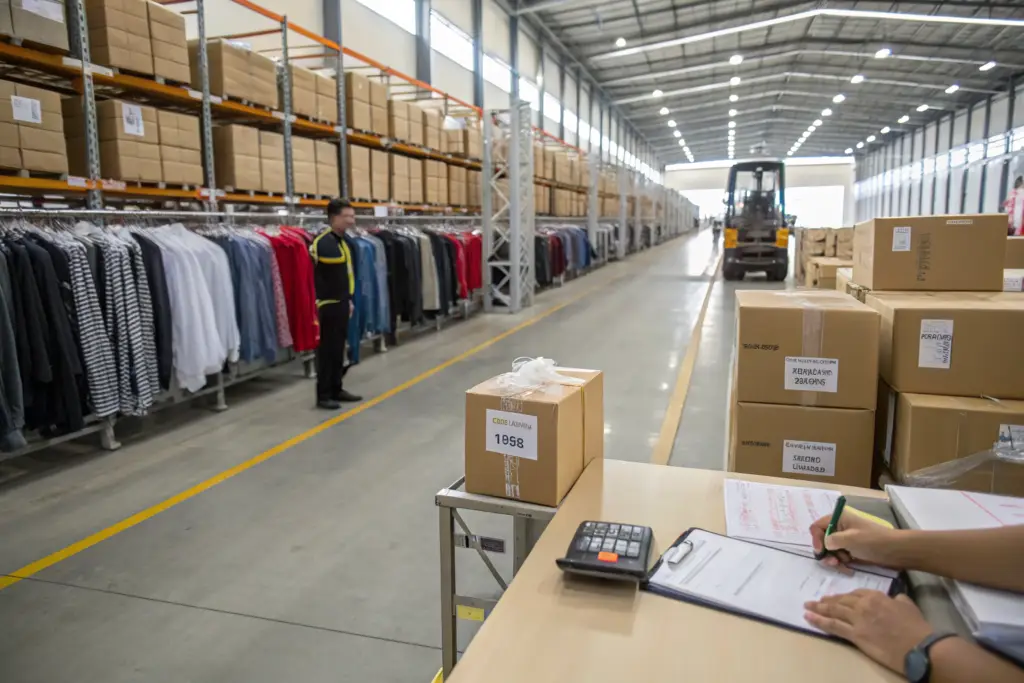
The single biggest bottleneck in seasonal garment logistics is not the ship. It is customs clearance. A shipment that arrives at Rotterdam or Hamburg on December 10th can sit for a week waiting for clearance during the peak holiday backlog. A bonded warehouse eliminates this bottleneck by moving the clearance step to a quieter period before the goods are even needed. The goods arrive in Europe, enter a bonded facility under customs supervision, and sit there duty-unpaid until the brand issues a release order. At that point, clearance is often same-day because the goods are already physically present and the documentation has been pre-submitted.
Bonded warehousing allows a brand to ship finished seasonal inventory early without triggering import duty payments or consuming warehouse space at their own facility. The goods sit in a customs-controlled warehouse near the destination market. When the retail delivery window opens, the brand submits the final delivery address, clears customs digitally, and the goods are trucked to the retailer within 24 to 48 hours. This removes the entire customs clearance step from the critical path during peak season.
I have used bonded warehousing extensively for European clients who run seasonal programs. It is particularly effective for the Christmas season because the ocean transit happens in October and November, before the peak logistics chaos, and the final delivery happens in late November or early December, when the goods are already on the continent. Here is how the process works and what it costs.
What Is the Customs Pre-Clearance Process for EU-Bound Shipments?
Pre-clearance means submitting the customs declaration before the goods arrive at the port. The freight forwarder files the entry with the destination country's customs authority while the ship is still at sea. If the documentation is complete and correct, the customs authority can clear the goods while they are in transit. The container moves directly from the vessel to the bonded warehouse without stopping in a customs examination bay.
This requires perfect paperwork. The commercial invoice, the packing list, the certificate of origin, and any applicable import licenses must be submitted 72 hours before vessel arrival. Any discrepancy will cause the pre-clearance to be rejected and the shipment to be routed to the standard inspection queue, which defeats the entire purpose. At Shanghai Fumao, we verify every EU-bound shipping document against a pre-clearance checklist before we release the shipment to the forwarder. We check the HS code, the declared value, the fiber composition, and the EORI number of the importer. One missing digit in an EORI number can cause a three-day delay. The EU Customs Pre-Arrival guidelines provide the framework for this process, and I recommend brands share them with their logistics providers.
How to Choose a Bonded Warehouse Location That Minimizes Final-Mile Time?
The bonded warehouse should be located within one day's trucking distance of the retailer's distribution center. If your retailer's DC is in Southern Germany, a bonded warehouse in Rotterdam adds a full day of transit at the critical moment. A bonded warehouse in Frankfurt or Munich eliminates that final-mile delay.
I work with a logistics partner that operates bonded facilities in Venlo, Netherlands, which is strategically positioned to serve both the German and Benelux markets within hours. For French retail delivery, a bonded warehouse near Paris or Lyon makes sense. For UK delivery, a bonded facility in the Midlands can reach any UK retailer within a day. The cost of the bonded storage is typically comparable to standard third-party logistics storage, plus a small customs supervision fee. The value is in the time compression. When a retailer says "we need the goods Thursday," you can say yes because the goods are already in a warehouse 200 kilometers away, not on a ship in the Suez Canal.
What Role Do Sea-Air Hybrid Routes Play in Urgent Garment Logistics?
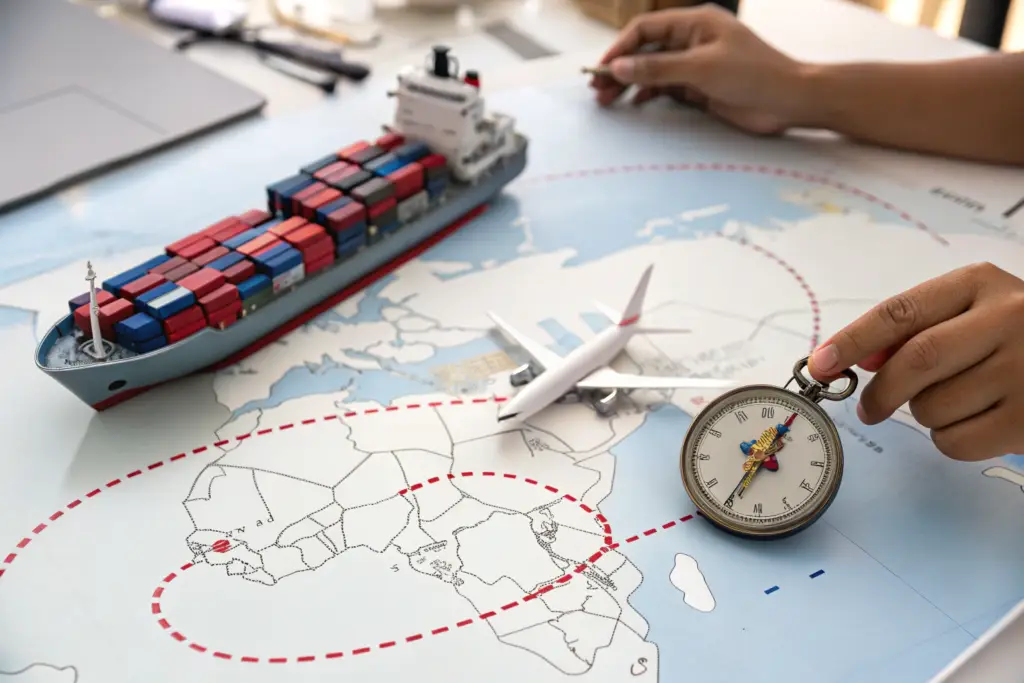
Sea-air hybrid is the most underutilized logistics solution in garment shipping. It takes the cost structure of ocean freight for the long-haul leg and the speed of air freight for the final leg. The typical routing sends the goods by ocean from Shanghai to Dubai, then by air from Dubai to the final European or American destination. The ocean leg takes 15 to 18 days. The air leg takes one to two days. The total transit is 18 to 22 days, compared to 28 to 35 days for pure ocean and five to seven days for pure air. The cost is typically 40% to 50% less than pure air freight.
Sea-air hybrid routes compress the total transit time by routing through Middle Eastern hubs like Dubai or Doha, where cargo transfers seamlessly from sea containers to air pallets. This solution is ideal for orders that are too heavy for pure air freight economics but too late for pure ocean freight timelines. The sweet spot is a production finish date that is 20 to 25 days before the delivery deadline. Pure ocean cannot do it. Pure air destroys the margin. Sea-air hits the window at a survivable cost.
I have used the Shanghai-Dubai-Frankfurt sea-air corridor several times for European seasonal orders. It requires a freight forwarder who specializes in multimodal logistics and who has a team on the ground in Dubai to manage the transfer. Here is how to structure the routing and what risks to manage.
How to Structure a Sea-Air Shipment Through Dubai or Doha?
The process starts with booking the ocean freight to Jebel Ali port in Dubai. The cargo is loaded into a sea container that is consigned to the freight forwarder's warehouse at the Dubai airport free zone. When the container arrives, the forwarder deconsolidates the cargo, transfers it to air pallets, and books it on the next available cargo flight to the destination airport. The transfer time in Dubai can be as short as 24 hours if the documentation is pre-filed and the flight schedule aligns.
The critical success factor is the forwarder's ability to manage the sea-to-air transfer without losing a carton. A deconsolidation error in Dubai means a missing carton in Frankfurt that nobody discovers until the retailer unpacks the shipment. I only use forwarders who provide a carton-level scan at the Dubai transfer point and who share that scan data with us in real time. The scan confirms that every carton that arrived by sea is loaded onto the air pallet. This is non-negotiable. Brands should ask their forwarder specifically about their sea-air transfer scanning protocol before booking a hybrid shipment.
What Are the Risks of Customs Delays at the Transfer Hub?
Dubai is a free trade zone. Goods in transit through the free zone do not require a full UAE import customs clearance. They move under a transit bond from the port to the airport. However, if the cargo is selected for a random customs inspection in Dubai, the timeline can slip. A physical inspection in Jebel Ali can add three to five days to the sea-air transfer, which eats the time savings that justified the hybrid route in the first place.
To minimize this risk, I ensure that the sea-air shipment is booked as "transit cargo" with the Dubai customs authority and that the documentation package is identical to the one that will be presented to the final destination customs authority. Consistency between the Dubai transit declaration and the final import declaration reduces the probability of a discrepancy flag. I also recommend brands build a two-day buffer into their sea-air timeline for the transfer hub. It is better to under-promise and over-deliver than to miss the window because of a random inspection in a transit country.
How Can Factory and Brand Collaborate on a Pre-Season Logistics Contingency Plan?
The most effective logistics solution for last-minute seasonal orders is not a faster ship or a cheaper plane. It is a contingency plan that was written before the order was even placed. The factory and the brand sit down during the development phase and map out the production timeline against the delivery deadline. They identify the air freight threshold. They pre-select a freight forwarder for the sea-air option. They agree on who pays for the mode switch if the delay is the factory's fault versus an act of God. This plan sits in the purchase order file, not in anyone's head, and it activates automatically when a trigger date passes.
A pre-season logistics contingency plan contains three shipping scenarios—on-time, delayed, and emergency—with a pre-approved freight forwarder and cost allocation for each. The plan is signed as an addendum to the purchase order. When a production milestone is missed, neither side negotiates or argues. The plan executes. The factory books the pre-approved air freight. The brand knows the cost impact before it happens. This eliminates the emotional, high-stakes phone calls that define a logistics crisis and replaces them with a predetermined workflow.
This level of planning is rare in the garment industry, but it is the single highest-return investment a brand can make in their supply chain. Here is how we structure these plans at Shanghai Fumao and how we handle the cost question fairly.

What Triggers Should Activate a Pre-Agreed Mode Switch?
The triggers are specific calendar dates tied to production milestones. Trigger One is the fabric arrival date. If the fabric arrives at our factory more than five days after the scheduled date, the plan automatically activates the sea-air option because the cutting and sewing timeline is compressed beyond the ocean freight window. Trigger Two is the finished-goods inspection date. If the goods are not packed and ready for inspection by the air freight threshold date we discussed earlier, the plan activates the pure air freight option.
Each trigger has a corresponding cost allocation that was agreed upon before the order started. If the fabric delay was the factory's fault, because we ordered the fabric late, we absorb the freight upgrade cost. If the fabric delay was the brand's fault, because they approved the lab dip two weeks late, the brand absorbs the freight upgrade cost. This fairness is what makes the plan work. Neither side feels they are being punished for the other's mistake. The Incoterms 2020 framework provides a useful reference for allocating risk between buyer and seller, and I recommend every brand and factory align their contingency plan with the agreed Incoterms rule.
How to Build a Pre-Vetted Express Freight Partner Network?
An express freight partner is not a vendor you call for the first time during a crisis. You vet them during calm periods. You test them with a small, non-urgent shipment. You confirm their communication responsiveness, their real-time tracking capability, and their problem-solving behavior when something goes wrong.
At Shanghai Fumao, we maintain relationships with three tiers of freight forwarders. Tier One handles our standard ocean freight at competitive rates. Tier Two handles our sea-air and consolidation services. Tier Three handles our pure air charter and hand-carry express services. Tier Three is the most expensive but also the most critical. We have tested each Tier Three partner on at least one real, time-sensitive shipment before adding them to our contingency roster. We know which forwarder has the best Hong Kong-to-Los Angeles express lane. We know which forwarder can get a carton from Shanghai to Paris in 72 hours. Brands should ask their factory to name their Tier Three forwarder and explain how they vetted them. If the factory does not have a Tier Three relationship, they do not have a true logistics contingency capability.
Conclusion
Logistics for seasonal fashion is not a shipping problem. It is a timeline compression problem. The production will slip. The fabric will arrive late. The lab dip will take an extra week. These are not exceptions. They are the normal operating conditions of the garment industry. The brands that survive seasonal peaks are the brands that have built the logistics toolkit to absorb these delays and still hit the delivery window.
At Shanghai Fumao, we do not just sew garments and hand them to a forwarder. We calculate air freight thresholds at the purchase order stage. We offer sea-air hybrid routing through Dubai for European clients. We manage bonded warehousing for brands that want to ship early and deliver just-in-time. We maintain a pre-vetted network of express freight partners who can move a pallet from Shanghai to Chicago in four days. We do this because we know that a seasonal order delivered late is not a late order. It is a lost order.
If you have been burned by a seasonal shipment that arrived two weeks after the selling window closed, let us build a logistics contingency plan for your next collection. We will map the timeline, identify the triggers, and pre-select the mode-switch options before we cut a single meter of fabric. Reach out to our Business Director, Elaine, at elaine@fumaoclothing.com. The time to plan for the Christmas rush is not in November. It is now.