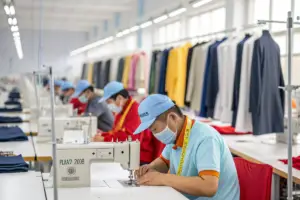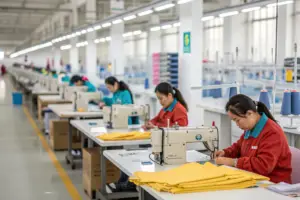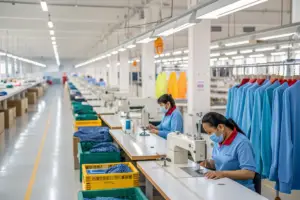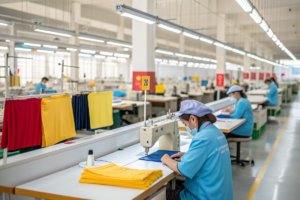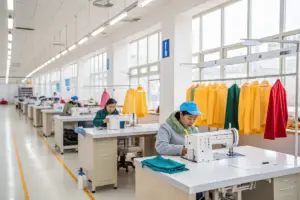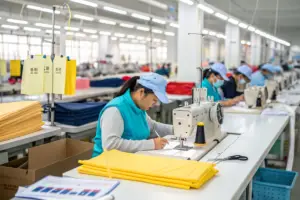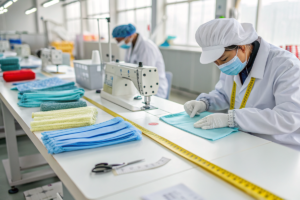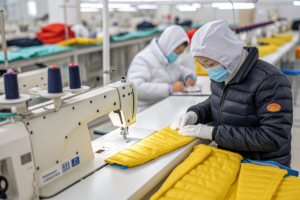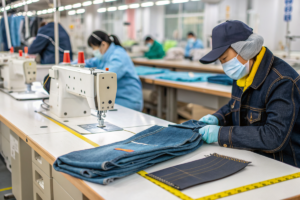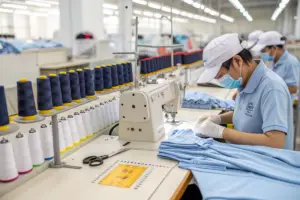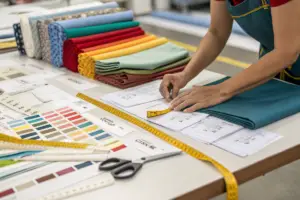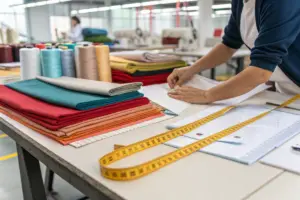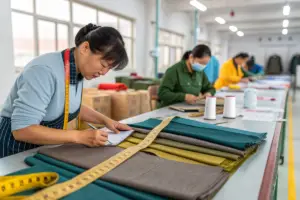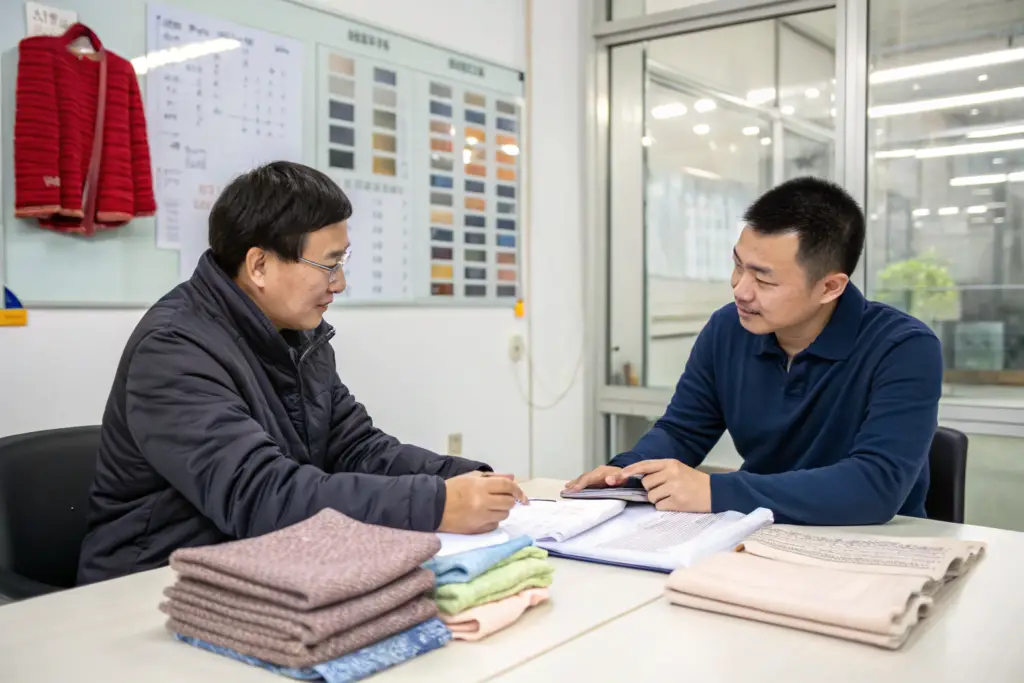
Three years ago, I watched a promising streetwear brand almost collapse before its first real launch. The founder, a young designer from Austin, Texas, had a brilliant concept. He needed 150 pieces each of six styles to test the market. He came to Shanghai Fumao after a large factory quoted him a 1,000-unit minimum per style. He could not afford 6,000 units. He could not store them. He was ready to quit. We found a middle path. We structured a phased production deal that started at 150 units per style, with a clear roadmap to scale up when the sell-through data came in. That brand is now a steady client ordering 800 units per style. The relationship survived because we treated the MOQ not as a wall but as a conversation. Most factories will not do this. I know, because I have been on the other side of that table, and I understand the math that makes low MOQs painful for a manufacturer.
Negotiating MOQs with a full-service manufacturer requires you to shift the value proposition away from pure volume and toward long-term partnership commitment, fabric platforming, and shared risk structures. Instead of asking a factory to simply lose money on a small run, you propose a solution that reduces their setup cost through design consolidation, allows them to reuse leftover raw materials for your future orders, or commits to a rolling purchase agreement that guarantees the total volume over six months rather than in a single drop.
The factory is not your enemy in this negotiation. They have legitimate fixed costs. The cutting table has to be set up whether you order 50 units or 500. The fabric supplier has a minimum dye lot. The printing screen costs the same to engrave. If you understand these cost drivers, you can negotiate around them instead of against them. Let me show you exactly how to structure a deal that gives you the quantities you need and gives the factory the economics they require.
What Are the Hidden Cost Drivers Behind a Factory's MOQ?
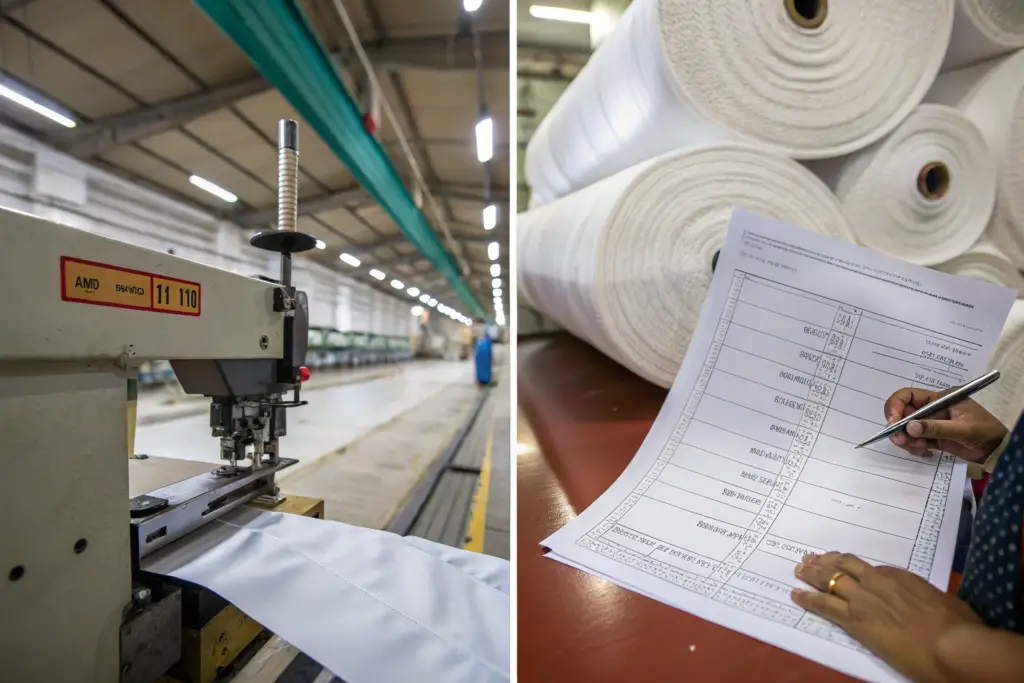
A factory does not pull an MOQ number out of thin air. The number comes from the fixed costs that hit the moment we accept a purchase order. If you do not understand these costs, you cannot negotiate them down. The biggest driver is the dye lot minimum at the fabric mill. Most mills will not run a custom color for less than 50 to 100 kilograms of fabric. If your design uses a specific shade, we have to pay for that entire dye lot whether you use it or not. The second driver is cutting room setup. The spreading machine, the marker paper, and the cutting blade do not care if they are cutting 20 layers or 200. The setup labor is the same. The third driver is the sewing line changeover. Taking a line off a running style to set it up for yours costs production time. These three costs form the floor of the MOQ. If your order does not cover them, the factory loses money.
The hidden cost drivers include the minimum dye lot quantity for custom colors, the fixed setup time for the cutting room, and the opportunity cost of tying up a sewing line for a small batch. These costs are often not visible to the buyer, who sees only the final piece price, but they are the real reason a factory rejects a 100-piece order. By addressing each of these directly, a buyer can propose alternatives that lower the effective MOQ without bankrupting the factory.
Let me walk you through each of these cost centers in detail. Knowing them will make you a more credible negotiator.
Why Do Custom Dye Lots Force High Minimums?
I cannot buy two kilograms of a custom sage green cotton jersey. The dyeing machine at the mill holds 50 kilograms of fabric. If I need only 15 kilograms for your small order, I am left with 35 kilograms of dead stock. That dead stock cost has to be absorbed somewhere. Either you pay a surcharge, or I refuse the order.
This is where fabric platforming becomes your best negotiation tool. If you agree to use a fabric that we already stock or that we can use across multiple clients, the dye lot minimum disappears as a constraint. I keep a running inventory of core fabrics in black, white, navy, and ecru for exactly this reason. A brand willing to design into our stock fabric palette can often reduce their MOQ by 60% overnight. If a custom color is essential to your brand identity, offer to pay a "dye lot surcharge" of $150 to $300 to cover the dead stock risk. This small payment transforms the math for the factory and signals that you understand the game.
How Does Cutting Room Setup Affect Small Order Viability?
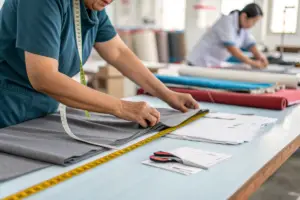
The cutting room is the bottleneck in any garment factory. The spreading table is a fixed length. The cutting machine operator spends 30 minutes setting up the marker and spreading the fabric, regardless of the order size. If you order only 30 units, that setup cost per unit is astronomical. If you order 300 units, the setup cost per unit is negligible.
I calculate cutting efficiency as "spread cost per layer." To help a small brand get started, I have sometimes suggested they consolidate multiple styles onto a single marker. If you have three T-shirt styles that use the same fabric and color, we can spread them on the same table and cut them together. This amortizes the setup time across three styles. Suddenly, a 50-unit order per style becomes a 150-unit combined cut, and the economics start to work. Ask your factory if they offer "combined marker" cutting for small orders. Not all factories will do this because it complicates the bundling process, but it is a legitimate cost-saving technique that a full-service partner should be able to execute.
How Can a Phased Production Agreement Lower Your Risk?
The single most effective negotiation strategy I have seen from small and mid-sized brands is the phased production agreement, also called a rolling purchase order or a stepped commitment. Instead of placing an order for 600 units upfront, the brand commits to a total of 600 units over a six-month period, delivered in three smaller drops of 200 units each. This gives the brand the cash flow flexibility to sell through the first drop before paying for the second, and it gives the factory the volume commitment needed to justify the production setup. Both sides win, but only if the agreement is structured with clear, enforceable milestones.
A phased production agreement binds both parties to a total volume commitment over time, while releasing inventory in smaller, manageable batches that match the brand's sell-through rate. The contract typically includes a deposit for the total raw material commitment, with production payments tied to each individual drop. This structure eliminates the fear of overcommitment for the buyer and reduces the factory's risk of holding dead stock if the buyer walks away after the first small run.
I have used this model with several brands now. It requires more administrative tracking than a single bulk order, but the relationship value is enormous. Here is how to structure the deal and what to watch out for in the contract language.
How to Structure a "Test, Rebuy, Scale" Commitment?
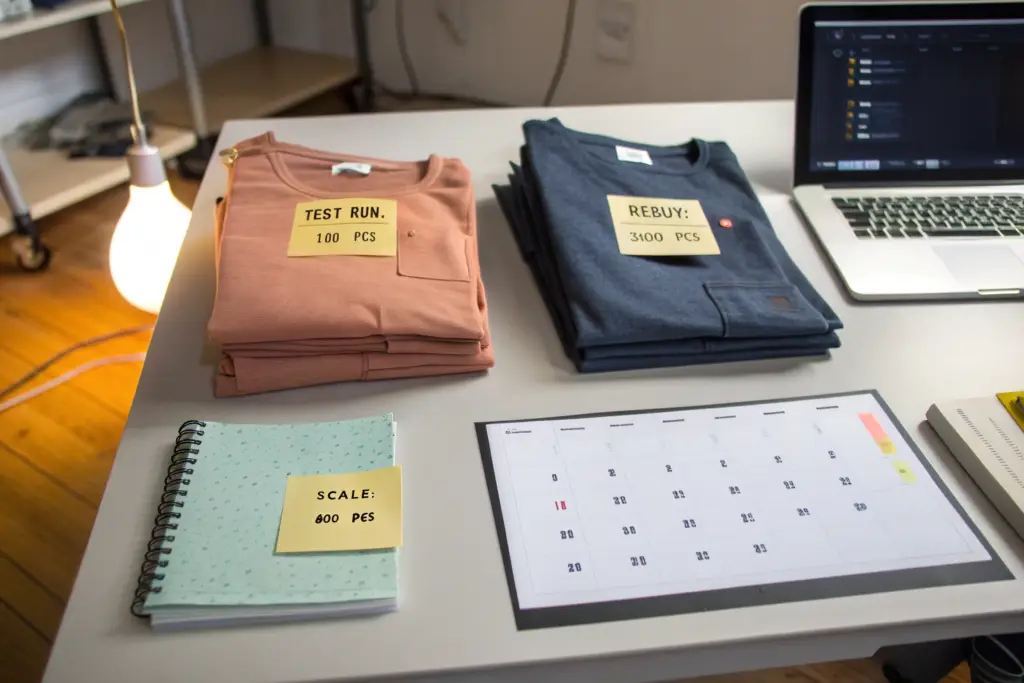
This is the model I used with the Austin streetwear brand I mentioned earlier. We broke their order into three phases. Phase One was a test run of 150 units per style at a slightly higher price per piece to cover the setup costs. Phase Two was a rebuy of 300 units per style, triggered by a sell-through report showing that 60% of the test run had moved within 30 days. The price per piece dropped by 8% because we could now cut more efficiently. Phase Three was a scale run of 800 units per style, with the price dropping another 5%.
The contract specified the trigger dates and the total fabric reservation. We reserved enough raw material for all three phases upfront. The brand paid a 30% deposit on the total fabric cost. This locked in the material, which is the long-lead item. The production payments were then staggered per phase. If the test run failed, the brand was on the hook for the reserved fabric but not for the Phase Two and Three sewing labor. That was a calculated risk the brand was willing to take.
What Contract Clauses Prevent Factory-Side Overcommitment?
This works both ways. Just as the brand fears overcommitting to inventory, the factory fears reserving capacity for a brand that never sends the Phase Two order. We address this with a "Capacity Reservation Fee." This is a small, non-refundable payment, usually 5% of the projected Phase Two order value, that secures a production slot on our calendar.
If the brand places Phase Two, that 5% is deducted from the final invoice. If the brand cancels, the factory keeps the fee as compensation for the idle production slot. This is fair. It costs the brand a small amount to keep their options open, and it gives the factory confidence to say no to other potential orders during that window. I also recommend a "Material Diversion Clause." If the brand cancels and the factory is left with dead stock fabric, the contract should specify that the factory has the right to sell that fabric to recover costs, but only after a 90-day waiting period during which the brand has the first right to purchase it at cost.
Why Does Design Consolidation Unlock Better MOQ Terms?
Your design choices directly affect my production costs. If you send me a collection with six different fabrics, four different zipper types, and three different button sizes, your MOQ is going to be high. Each new material requires a separate minimum purchase. Each new trim requires its own setup. But if you consolidate your designs around shared materials, you create a multiplier effect that reduces waste and lowers the threshold for a viable production run. I have seen a brand reduce their effective MOQ from 500 units per style to 200 units per style simply by agreeing to use the same 8-gauge zipper across all their jackets and the same rib knit for all their cuffs.
Design consolidation reduces the per-style MOQ by pooling the material consumption across multiple SKUs. Instead of ordering 100 zippers for Style A and 100 zippers for Style B from a supplier with a 500-piece minimum, the brand orders 200 of the same zipper, getting closer to the supplier's minimum while maintaining design distinction through silhouette and color-blocking rather than hardware variation. This strategy turns a fragmented purchase order into a concentrated material buy that suppliers and factories both prefer.
This is not a compromise on creativity. It is a constraint that often produces stronger, more cohesive collections. Here is how to think about fabric platforming and trim reduction as strategic design tools.
How to Use "Fabric Platforming" to Pool Multiple Styles?
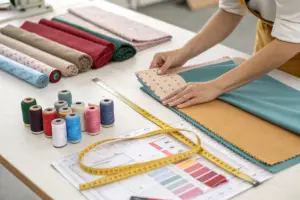
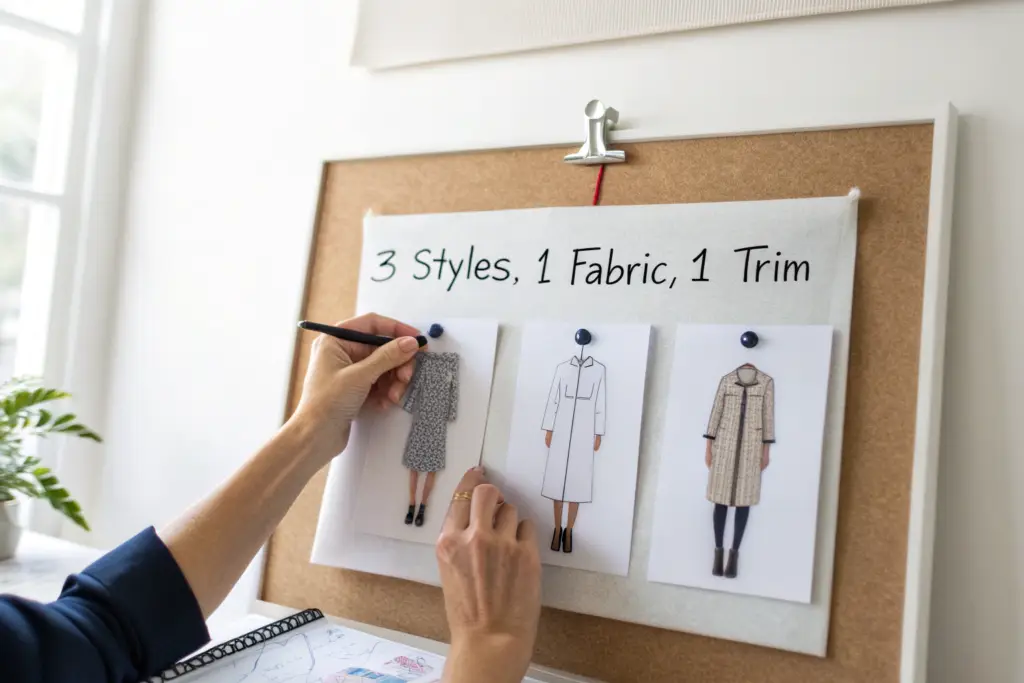
Fabric platforming means selecting one or two base fabrics and using them across multiple styles in your collection. For example, a womenswear brand might choose a single 180 GSM organic cotton jersey for their T-shirt, their tank top, and their casual dress. The three styles share the same fabric. The total fabric consumption across the three styles might be 300 kilograms, which easily meets a 100-kilogram dye lot minimum. If each style used a different fabric, the brand would have three separate 100-kilogram minimums to meet.
I suggest brands show me their line plan before finalizing fabrics. I can often identify opportunities to substitute a close-match stock fabric or to combine fabric buys. One of my clients designed a jacket and a matching skirt in two different fabrics. By switching both to the same cotton-nylon twill and differentiating with stitching color instead, they cut their combined MOQ from 600 units to 300 units. The collection looked more intentional, and the production cost dropped by 12%.
Can Standardizing Trims Across a Collection Cut MOQs?
Absolutely. Zippers, buttons, threads, and labels all have supplier minimums. A custom-engraved button might have a minimum order of 1,000 pieces. If you use that button on one blazer style with a 200-unit MOQ, you are buying 1,000 buttons to use only 200. The remaining 800 sit on a shelf. But if you use that same button on three blazer styles, each with a 200-unit MOQ, you now use 600 buttons. The waste drops, and the unit cost drops.
I recommend brands create a "Trim Matrix" for their collection. List every zipper, button, and drawcord. Look for duplicates. Can the hoodie and the jacket use the same zipper pull? Can the dress and the blouse use the same size button? I have seen a single standard zipper specification replace five different custom zippers. The MOQ for the jacket program dropped from 400 to 150 units because the zipper supplier was now fulfilling a combined order of 1,500 pieces instead of five separate orders of 300. The YKK catalog and similar suppliers are your friends here. Stock trims have no minimums.
What Are the Alternatives If You Still Cannot Meet the MOQ?
Sometimes, even with design consolidation and phased agreements, the numbers simply do not work for a full production run. The brand is too new. The concept is too untested. The budget is too tight. This does not mean the partnership is dead. It means you need to look at alternative paths that bridge the gap between sampling and full-scale production. I have helped brands navigate this gap using three specific strategies: stock fabric programs, pre-production sampling services as a standalone offering, and shared-cost models with other non-competing brands.
When the standard MOQ remains out of reach, alternatives include using the factory's in-stock deadstock or core-program fabrics that carry no dye lot minimum, commissioning a professional sampling run for market testing rather than full production, or entering a shared production agreement where two compatible brands split a production run. These paths do not offer the full margin benefit of a scaled order, but they allow a brand to prove market demand before committing significant capital.
These are not ideal permanent solutions. They are stepping stones. They get you into the market with real product while you build the sales data you need to justify a larger commitment.
How Do Stock Fabric Programs Work for Micro-Brands?
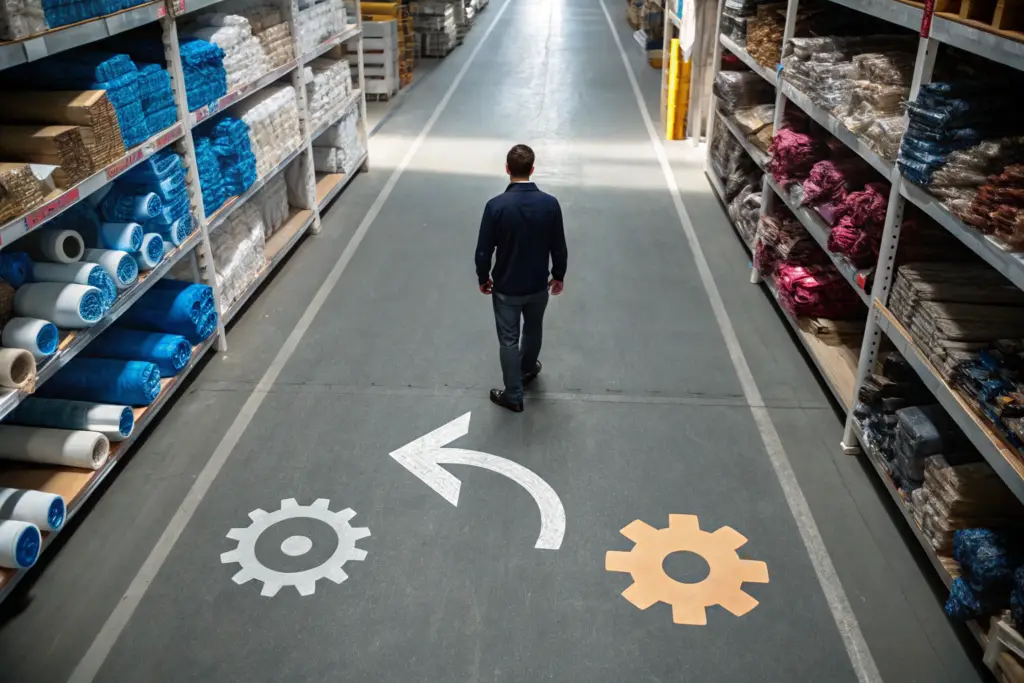
Many full-service factories, including Shanghai Fumao, maintain a library of stock fabrics. These are fabrics we have purchased for previous large orders, or core basics we keep in inventory because they are used frequently. The colors are usually limited to black, white, grey, and navy. The quantities are limited to what is on the shelf.
For a micro-brand needing 50 pieces of a T-shirt, I can pull from our stock cotton jersey inventory. There is no dye lot minimum because the fabric already exists. The color selection is restricted, but the production is possible. The price per piece will be higher than a bulk order because we are not getting the fabric at volume pricing and the cutting efficiency is low. But the brand gets a real production run, not a sample run. They can sell the product, generate revenue, and use the data to fund a larger custom order next season. Ask your factory directly: "Do you have a stock fabric program I can buy into?" Many factories do not advertise this, but they will offer it to a serious buyer who asks the right question.
This is less common, but it can work for basic categories like blank T-shirts, hoodies, and tote bags. Two non-competing brands agree to use the same base garment and differentiate with printing, embroidery, or labeling. The factory runs one production batch but splits the finished goods for separate finishing.
I facilitated this once for two small lifestyle brands. One sold to yoga studios, the other to coffee shops. They did not compete. Both needed a heavyweight organic cotton sweatshirt. We ran 600 units of the same blank sweatshirt body, then applied different screen prints and woven labels for each brand. The effective MOQ per brand was 300 units, but the factory ran a 600-unit batch, which made the cutting and sewing viable. This requires trust and coordination, and I would only recommend it for brands that have a personal relationship with each other. A factory will not typically match strangers. But if you have a fellow brand owner in a different niche, this can be a clever way to crack the MOQ barrier.
Conclusion
An MOQ is not a punishment. It is a reflection of the real costs that a factory incurs when it turns on the machines for you. If you approach the negotiation as a demand for the factory to simply absorb those costs, you will get a no. If you approach it as a collaborative problem-solving conversation, you will find that the MOQ is surprisingly flexible. The key is to understand the cost drivers, propose structures that share risk over time, and consolidate your design to maximize material efficiency.
I have built Shanghai Fumao to be the kind of factory that says "let's figure it out" instead of "no." We have stock fabric programs for micro-brands. We write phased production agreements for growing brands. We consolidate markers and pool trims. We do this because we believe that today's 100-unit order is next year's 1,000-unit order, and the only way to earn that growth is to support the brand when they are small.
If you are sitting on a collection design and you have been told by other factories that your quantities are too low to even get a quote, send me the line plan. We will look at the fabrics, the trims, and the timeline, and we will find the structure that works. You can reach our Business Director, Elaine, directly at elaine@fumaoclothing.com. Let us prove that a full-service factory can be your growth partner, not your gatekeeper.