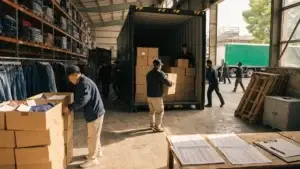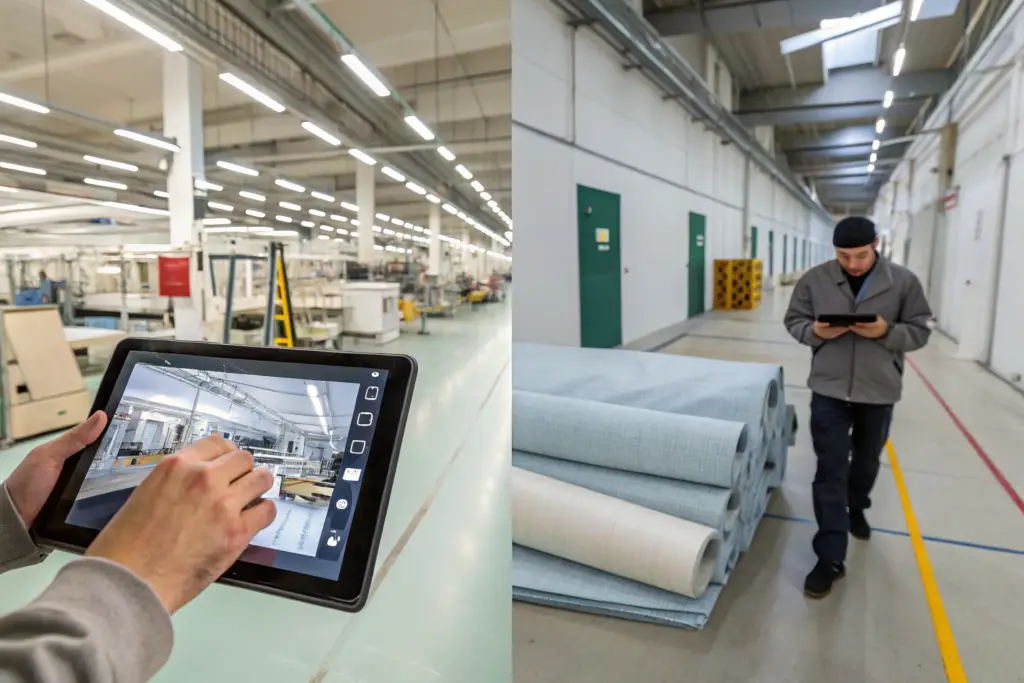
In 2024, I almost signed a $170,000 production contract with a fabric mill I found through a polished Alibaba storefront. Their profile was perfect. They had a 5-star rating, a GOTS certificate uploaded, and high-resolution photos of a clean, modern factory floor. Something felt off, so I booked a flight to their facility instead of sending the deposit wire. The factory I visited was not the one in the photos. The real facility had broken fire extinguishers, migrant workers sleeping in a back room, and dye vats leaking into an open drain. The "GOTS certificate" belonged to a different legal entity. The digital storefront was a complete fabrication. I walked away, and that decision saved my company from a disaster that would have destroyed our reputation with a key U.S. retail partner.
On-site factory auditing remains non-negotiable because digital vetting tools capture only what a supplier chooses to show, while a physical visit reveals the unscripted operational reality, including worker treatment, machine maintenance, and safety infrastructure. A virtual tour cannot verify whether a fire exit is actually unlocked, whether the fabric cutting tables are level enough for precise pattern matching, or whether the quality control team is genuinely independent from the production manager. These invisible factors directly determine whether your shipment arrives on spec and on time.
Digital sourcing platforms have changed the game for initial supplier discovery. I use them every day. But they have also created a dangerous illusion of transparency. A LinkedIn profile, a Google search, and a Zoom factory tour can show you 60% of the picture. The remaining 40% is the part that costs you money. Let me explain what the camera does not capture, and why your physical presence on the ground is still the most powerful risk management tool you have.
What Do Virtual Factory Audits Always Miss About Production Reality?
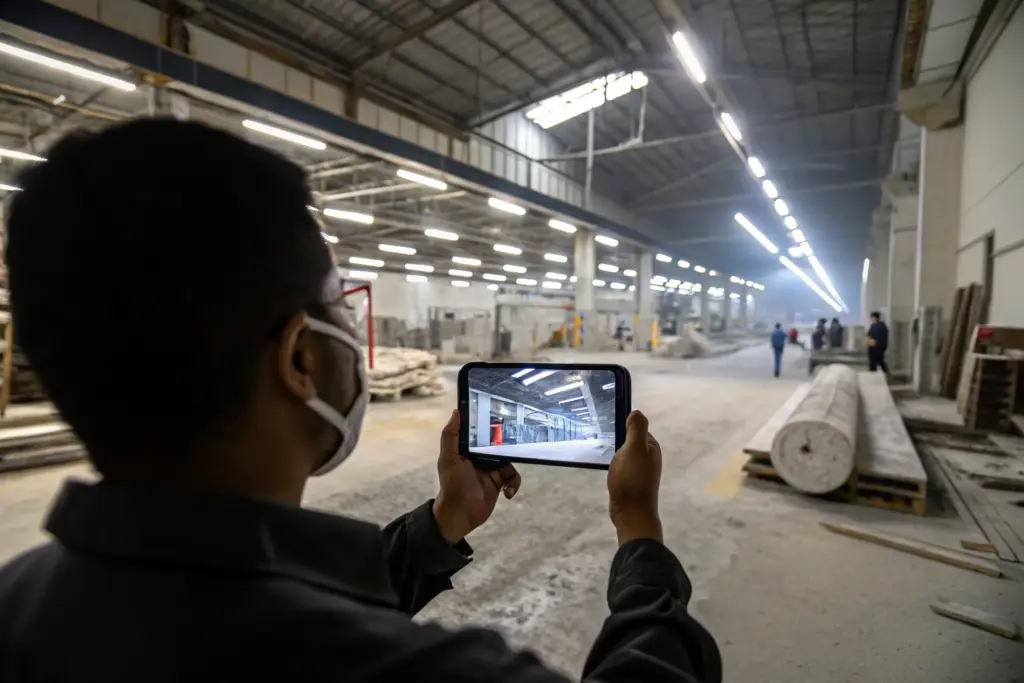
A video call puts the factory manager in control of the camera. They walk the phone down the cleanest aisle, at the quietest time of day, showing you the newest machine. They never pan left to show the pile of stained fabric scraps. They never pause at the electrical panel with exposed wires. I have conducted remote audits where the factory's internet "mysteriously cut out" right when I asked to see the chemical storage area. The digital lens is curated. The physical lens is not. When I walk through a factory unannounced, or even with notice but on my own path, I see the real production floor. I see whether operators are wearing metal gloves on the cutting machines. I see whether the finished garments are stored in polybags on a clean rack or in a dusty corner.
The critical blind spots of virtual audits fall into three categories: workplace safety infrastructure that cannot be verified through a screen, the real-time condition and calibration of production machinery, and the unspoken power dynamics between workers and supervisors that signal whether a factory has a culture of hiding problems or fixing them. These factors are only observable through direct, physical inspection and spontaneous interaction with the floor-level staff.
Here is what I specifically look for when I am standing on the ground, and why these checks cannot be outsourced to a Zoom call.
Why Can't a Video Call Verify Fire Safety and Structural Integrity?
A fire extinguisher on a video call looks fine. It is red. It is mounted on a wall. In person, I check the pressure gauge to see if it is in the green zone. I check the inspection tag to see the last service date. I have found extinguishers that were last inspected three years before the visit. That means they would likely fail in a real fire.
Structural issues are even harder to spot digitally. I visited a facility in another Asian country where the factory owner had painted the walls and installed bright LED lights for a "digital showroom" feel. The building itself was a converted residential structure with a single narrow staircase. 300 workers were sewing on the third floor. If a fire had broken out, the evacuation would have been a catastrophe. I only knew this because I counted the exit routes myself. An audit is not just about product quality. It is about whether the building will still be standing when your goods are halfway through production. I use the Social & Labor Convergence Program framework as a mental checklist during my own pre-audit walkthroughs, even before bringing in a formal third-party auditor.
How Does Machine Calibration Affect Your Garment Specs?
A sewing machine that looks clean on a video feed can still be wildly out of calibration. Stitch per inch settings drift over time. Cutting machines lose their zero-point alignment. If a cutting blade is 2 millimeters off, your entire size run shifts. A Medium fits like a Small, and your e-commerce return rate spikes.
I carry a simple stitch counter and a steel ruler when I visit a new factory floor. I will stop at a random station, pick up a garment piece, and count the stitches. I check the seam allowance against the spec sheet on the spot. Once, I found a factory that was running its lockstitch machines at 8 stitches per inch when the brand standard was 10. The machines were physically set wrong. On a video call, you see a machine humming. In person, you see the gauge. I also look for maintenance logs. Are they handwritten and current, or dusty and blank? A factory that does not oil and calibrate its machines will produce garments with puckered seams and irregular sizing. No digital checklist can replace the physical verification of machine settings, which is why I still travel with AATCC stitch density standards in my bag.
How Can an In-Person Visit Uncover Subcontracting Risks?
Unauthorized subcontracting is the dirty secret of the garment industry. A factory accepts your order. They look at their capacity. They realize they cannot meet the deadline. Instead of telling you, they quietly send your cut fabric to a smaller, unvetted workshop down the road. That workshop has never passed a social compliance audit. It may not even have a legal business license. Your brand name is now being sewn in a facility you have no knowledge of, and you are legally liable for any labor violations that occur there. I have caught this happening in real time during a physical visit.
An on-site audit allows the buyer to physically trace the entire production flow from cutting table to packing station, verifying that no unfinished bundles are leaving the premises on unmarked trucks. Digital tracking systems and factory profiles cannot expose this because the subcontractor is deliberately omitted from the official paperwork. The only reliable detection method is to compare the factory's claimed daily output capacity with the volume of your order and to physically observe the movement of cut parts during an unannounced walkthrough.
When I suspect subcontracting, I do not ask the general manager. I look at the physical evidence. Here is how I follow the trail and what I do when I find a violation.

How to Check Production Capacity Against Your Order Volume?
This is a math problem. A factory has 50 sewing machines. They run one 8-hour shift. They claim to produce 2,000 complex jackets per day. I know from our own production data at Shanghai Fumao that a single line producing a tailored jacket can output maybe 80 units per day. Fifty machines cannot produce 2,000 units of complex outerwear in a day. The numbers do not add up. That gap between claimed capacity and actual capacity is the subcontracting zone.
I bring a notebook. I count the machines. I ask to see the shift schedule. If the factory is working a single shift and has 30 machines, their real daily output is capped at a certain number. If my order requires more than that cap, I ask them directly: "Which other facility will be producing the balance?" A transparent factory will disclose a partner facility upfront. A dishonest one will deny it, and I will find out anyway when I track the WIP. Capacity analysis is not complex; it is just arithmetic. I compare their claims to published industry benchmarks from Better Buying Institute on factory capacity reporting.
What Physical Signs Reveal a "Shadow Factory" Operation?
The trucks tell the story. If I see a van pulling up to the back loading dock at 4 PM, and workers are loading cut fabric bundles wrapped in clear plastic, and those bundles look exactly like my production, I follow the trail. I note the license plate. I ask where the van is going. The answers are often evasive.
Inside the factory, look for "ghost lines." These are sewing stations set up in a back room, a separate floor, or an adjacent building that is not on the official floor plan. During a walkthrough of a supposed single-site operation, I walked through an unmarked door at the back of the finishing area and found 20 workers pressing garments in a non-ventilated shed. They were handling my order. The factory manager had not mentioned this space during the tour. I stopped the production on the spot. Subcontracting without consent violates our master agreement and, more importantly, exposes the buyer to legal risk from unethical labor practices. No digital platform would have ever shown me that unmarked door.
Can Third-Party Audit Reports Be Trusted Without Your Own Eyes?
Third-party social compliance audits are necessary, but they are not sufficient. I have a folder of audit reports from major firms that gave passing scores to factories I later found to have serious violations. The audit industry has an inherent structural problem: the auditor is paid by the factory being audited. This creates a perverse incentive to produce a favorable report so the factory will book them again next year. I am not saying all third-party audits are corrupt. Many are professionally rigorous. But relying on them exclusively is a gamble.
A third-party audit report provides a structured baseline for compliance, but it captures only a snapshot of a single day, often one the factory has been preparing for weeks in advance. Cross-referencing that report with your own direct observation, including checking the authenticity of payroll records against worker interviews conducted privately, is the only way to validate its accuracy. An auditor who never speaks to a worker alone outside the factory gate will never hear about the second set of books.
I treat third-party audits as a starting point for my own inquiry, not as the final answer. Here is how I stress-test their findings.

Are Announced Audits Just a Performance for the Factory?
Yes, often they are. An announced audit gives the factory two weeks to prepare. They coach workers on the "correct" answers. They hide the overtime records. They bring in a catered lunch for the auditor. I have seen factories that are normally chaotic and dirty transform into spotless, orderly showrooms for a single day. Then, 48 hours after the auditor leaves, the fire exits are blocked again and the 14-year-old workers are back on the line.
The only way to know is to compare an announced audit report against an unannounced one. If the scores drop by 30% on the unannounced visit, the factory is performing compliance rather than practicing it. I have started asking factories for their full audit history, not just the most recent passing report. If they have a trail of failures followed by a single "pass," that pattern tells me the pass was likely managed. I recommend buyers look at the Sedex Members Ethical Trade Audit methodology, which includes an option for unannounced audits that significantly reduces this coaching effect.
How to Conduct Private Worker Interviews During Your Visit?
This is the most sensitive and important part of any physical audit. An auditor who interviews a worker in the HR manager's office, with the HR manager sitting three feet away, will get nothing but scripted praise for the factory. Real information comes from private conversations.
I do not speak the local language in every sourcing country, but I hire an independent interpreter who is not from the factory's town. I walk outside the factory gate at shift change. I approach workers casually, not with a clipboard but with a simple, "Where are you from? How long have you worked here?" I ask if they have their own ID documents or if the factory holds their passport. I ask if they are paid by the hour or by the piece. The answers to these basic questions reveal whether the factory's payroll records match reality. One worker told me she was paid $0.40 per garment piece and worked until 11 PM. The factory's official audit showed an 8-hour day with an hourly wage above the legal minimum. That conversation, held on a dusty roadside outside the factory gate, was worth more than a hundred pages of an audit report. I follow the guidance from the Fair Labor Association on conducting off-site worker interviews.
How Does Physical Fabric Inspection Prevent Billion-Dollar Recalls?
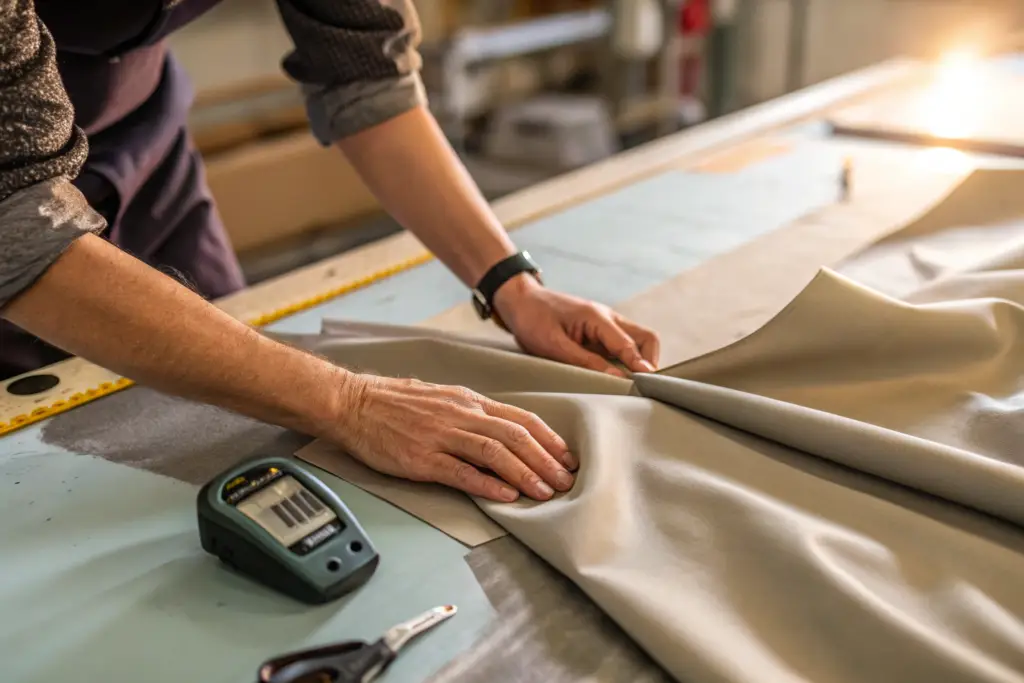
You cannot touch a fabric through a screen. You cannot smell it. You cannot hear the rustle of a taffeta or the scratchy hand feel of a cheap wool blend. I sat in a meeting with a luxury brand founder last year. He had approved a cashmere blend fabric based on a digitally scanned lab dip and a mailed swatch that had been heavily steamed and pressed. When the bulk production arrived, the hand feel was completely different. The fabric was stiff and lifeless. The lab dip had been "doctored" with a softener that washed out of the bulk fabric. The only way to catch that deception is to feel the actual bulk fabric roll on the factory floor.
Physical fabric inspection allows the buyer to assess the intrinsic qualities that spectrophotometers and digital scans cannot measure, including drape, hand feel, elasticity recovery, and the presence of residual chemical odors. These sensory attributes directly influence consumer perception of quality and cannot be captured in a PDF test report. A fabric that passes every ASTM lab test can still feel cheap, and the customer who touches it in a store will put it back on the rack.
I have developed a physical ritual when I stand in front of a bulk fabric roll. It catches issues that a lab report never will.
Why Is "Hand Feel" the Most Underrated Quality Metric?
Hand feel is not subjective fluff. It is a technical attribute that drives purchase decisions. A cotton poplin can be crisp and cool, or it can be limp and papery, depending on the finishing process. A rayon challis can drape like liquid silk or hang like a wet rag. These differences come from the finishing chemistry applied at the mill.
I train my hands by keeping a "touch library" of reference swatches in my office. When I visit a factory, I ask to see the bulk fabric roll, not the sample cutting. I rub the fabric between my fingers. I ball it up in my fist and release it to see how quickly the wrinkles fall out. I drape it over my arm to see the hang. These are the tests that a consumer performs unconsciously in a fitting room. No digital scan captures the recovery rate of a wrinkle. No lab report tells you if a fabric feels "expensive." The Textile Institute publishes research on objective hand feel measurement, but in practice, the human hand is still the best instrument we have.
How to Test for Colorfastness and Shrinkage in Real Time?
A lab report for colorfastness takes three days and costs money. A real-time rub test takes thirty seconds and costs nothing. I carry a white cotton handkerchief in my pocket when I do factory visits. I ask for a fabric cutting from the bulk roll. I wet a corner of the handkerchief with a bit of water. I rub it firmly against the colored fabric. If any color transfers to the white cloth, I know the dye is not properly fixed. That fabric will bleed in the customer's first wash.
I also carry a small measuring tape. I mark a 10cm by 10cm square on the fabric with chalk. I ask the factory to iron it with steam. I measure the square again. If it has shrunk by 2mm, the fabric has a 2% shrinkage issue that will show up when the consumer launders the garment. These are physical, immediate tests that require no lab equipment. They are not a substitute for formal AATCC Test Method 135 dimensional stability testing, but they give me a real-time risk assessment. If the handkerchief comes back pink, I do not need a lab to tell me the dye is unstable. I stop the cutting and demand a re-dye.
Conclusion
Digital sourcing platforms have made the world smaller. They have connected me with buyers I would never have met otherwise, and they have streamlined the initial discovery process in ways I could not have imagined twenty years ago. But they have also created a dangerous illusion that a factory can be fully vetted from behind a desk. It cannot. A screen does not tell you that a fire exit is bolted shut. A PDF certificate does not reveal that the GOTS number belongs to a different building. A video call does not let you feel the stiff, over-finished hand of a fabric that looked soft under studio lights.
The 40% of the picture that digital tools miss is the part that destroys brands. It is the unauthorized subcontractor, the doctored payroll, the leaking dye vat, and the fabric that feels nothing like the sample. At Shanghai Fumao, we welcome physical audits because we have nothing to hide. We keep our fire extinguishers charged, our machine maintenance logs current, and our production floor open to your eyes. We want you to come here, walk the lines, talk to our people, and touch the fabric that will carry your label.
If you have been burned by a supplier who looked perfect on a screen but failed to deliver in reality, you understand the value of a pair of boots on the ground. Before you commit your next big production run, come see us. Walk our floor, pull a random sample from the line, and verify every claim we make with your own senses. To schedule a visit or to discuss how we can build a transparent, audit-proof supply chain for your brand, reach out to our Business Director, Elaine, at elaine@fumaoclothing.com. The flight is cheaper than a recall.