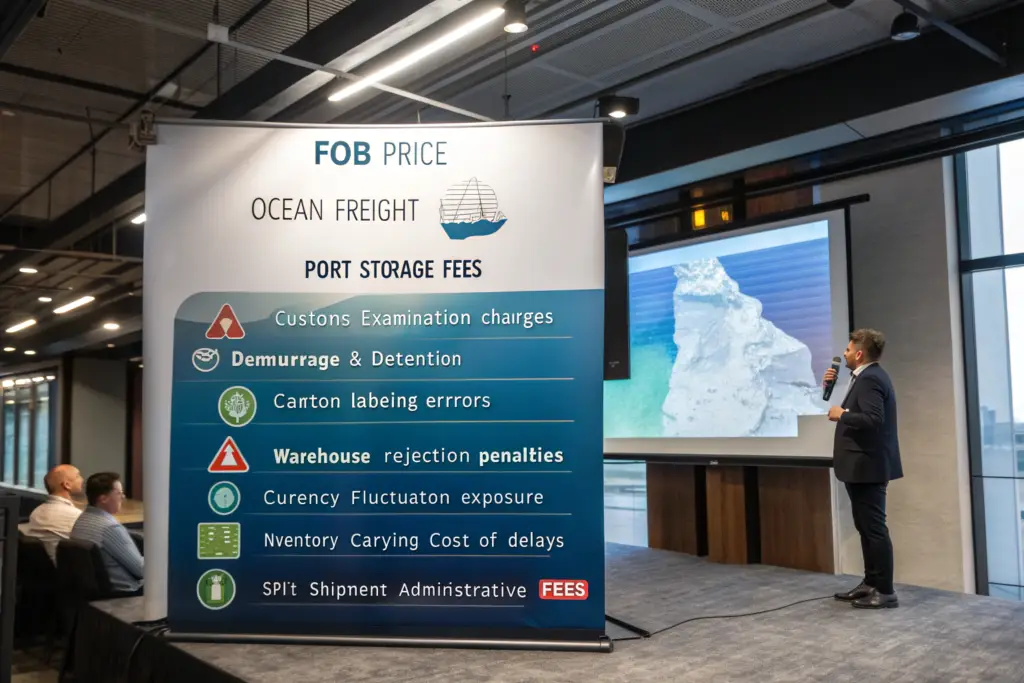
You negotiate a competitive FOB price with your factory. You book ocean freight at a reasonable rate. You calculate your estimated landed cost and set your retail prices with confidence. Then the invoices start arriving after the goods have shipped. A port congestion surcharge that was not on the original freight quote. A customs examination fee because the HS code was queried. Storage charges because the container was held for three days pending examination. A chassis usage fee, a pier pass charge, and a clean truck fee from the drayage carrier. A warehouse receiving charge because the carton labels did not scan correctly. By the time the goods are on your warehouse shelves, the actual logistics cost is 15-25% higher than you budgeted. Your margin has eroded before you sell a single unit.
The hidden logistics costs in apparel sourcing that most buyers overlook fall into five categories: port and terminal accessorial charges including demurrage, detention, pier pass, and chassis fees that are not included in the base freight quote, customs and compliance costs including examination fees, broker disbursement charges, and bond insufficiency penalties that arise from documentation issues, drayage and final-mile variable charges including fuel surcharges, clean truck fees, and appointment miss penalties, warehouse and receiving friction costs including non-compliance labeling charges, rework fees, and inventory system integration failures, and inventory carrying costs driven by logistics delays including working capital tied up in pipeline inventory and the markdown risk of late deliveries. These costs are not hypothetical. They are recurring charges that experienced logistics managers budget for and inexperienced buyers discover through painful invoice reconciliation.
At Shanghai Fumao, our DDP model eliminates these hidden costs for our brand and distributor partners because we absorb them within a single, locked landed cost. But we also believe that buyers should understand what they are avoiding when they choose DDP, and what they are exposed to when they accept FOB terms. Let me walk you through each category of hidden costs, how they arise, and how to protect your margins from them.
What Port and Terminal Accessorial Charges Surprise FOB Buyers?
The ocean freight quote you receive from a forwarder typically covers the vessel transport from the origin port to the destination port. It does not cover what happens to the container before it boards the vessel at origin, or after it is discharged at destination. The terminal environment at both ends generates a series of charges that are billed separately, often weeks after the shipment has been delivered, when the buyer has lost all leverage to dispute them. These charges are standard industry practice, not scams, but they are opaque to buyers who do not manage freight regularly.
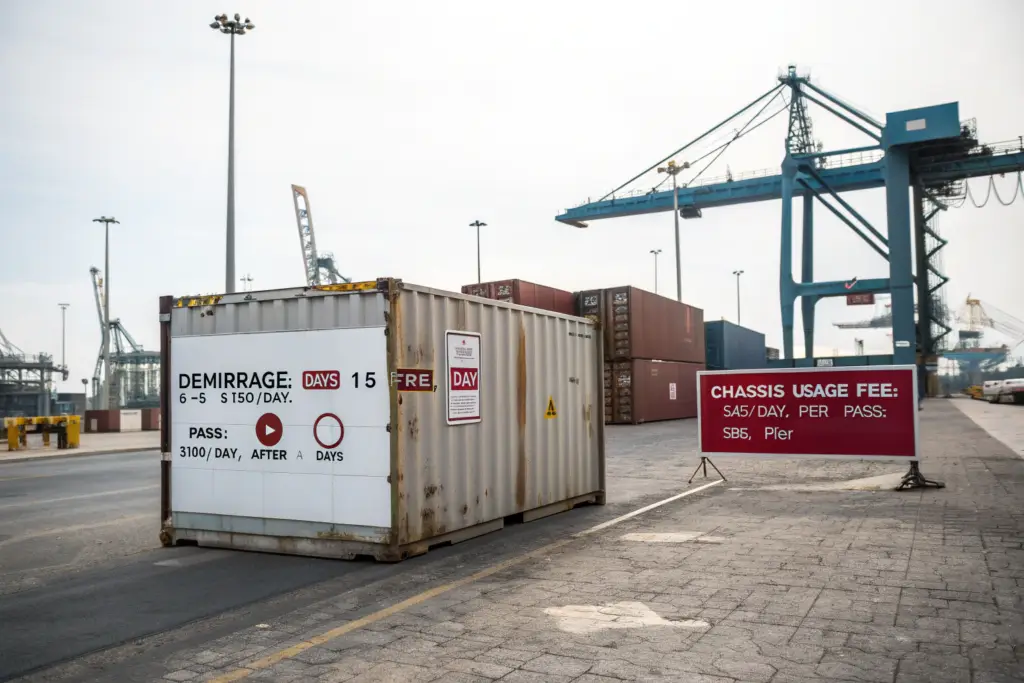
The most common port and terminal accessorial charges include demurrage, which is a daily fee charged by the shipping line when the container remains at the terminal beyond the free storage period, typically 3-5 days; detention, which is a daily fee when the container is not returned to the terminal within the allowed free time after being picked up; chassis usage fees, which are daily charges for the trailer chassis used to haul the container; pier pass fees at US West Coast ports, which fund extended gate hours; and port security and documentation fees. A single container delayed by a customs hold can generate $500-$1,500 in these charges in a week.
How Do Demurrage and Detention Accumulate During Customs Holds?
A container arrives at the Port of Los Angeles. The consignee has five free days of container storage before demurrage charges begin. On day three, customs flags the shipment for a documentation review. The review takes four days. By the time the container is released, it has been at the terminal for seven days. Two days of demurrage have accrued at $150 per day. That is $300 that was not in the freight budget.
The container is picked up and delivered to the warehouse. The warehouse takes two days to unload it. The container must be returned to the terminal. The trucker has four free days of container usage before detention charges begin. The two-day unloading keeps the container within the free period. But if the warehouse had been backed up and the unload took five days, the detention charge would be $100 for the fifth day. These charges are triggered by common, often unavoidable delays in the import process. A buyer who does not know the free time periods and daily rates for their specific shipping line and terminal is exposed to costs they cannot predict or control. This demurrage and detention charges explained is essential knowledge for any buyer managing FOB shipments.
What Are Chassis Fees and Why Do They Appear on Invoices?
A container cannot move by truck without a chassis—the wheeled trailer frame that the container sits on. At many US ports, the chassis is provided by a separate company from the trucking company, and the chassis provider charges a daily usage fee. This fee is not included in the trucking quote. It appears as a separate line item on the invoice, often weeks after delivery.
Chassis fees typically range from $25 to $45 per day. If the container is picked up and returned on the same day, a one-day chassis fee applies. If the container sits at the warehouse for three days before being unloaded and returned, three days of chassis fees apply. A buyer who has negotiated a trucking rate without asking about chassis fees may find an additional $75-$135 on the invoice for a three-day warehouse turnaround. This chassis usage fees in container shipping is a specific example of the type of accessorial charge that experienced logistics managers include in their cost models and inexperienced buyers discover after the fact.
How Do Customs and Compliance Issues Generate Unplanned Costs?
Customs compliance is not a binary state—either compliant or not compliant. It is a spectrum of documentation quality, classification accuracy, and broker responsiveness that determines whether a shipment clears customs in hours or days. A shipment that sails through customs with no queries incurs only the standard duty and broker fee. A shipment that is flagged for a documentation review, an X-ray exam, or a physical examination incurs additional costs that compound daily.
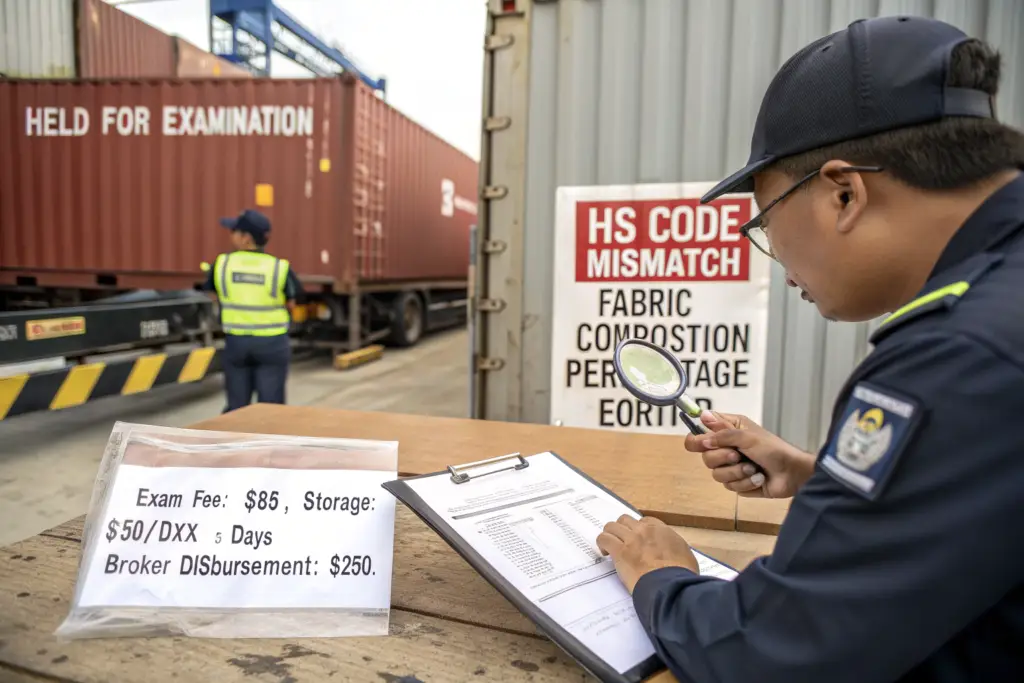
Customs-related hidden costs include customs examination fees charged by the terminal for the labor and equipment to perform the examination, which can range from $400 for a basic tailgate exam to $2,000+ for an intensive physical examination, storage charges that accrue during the examination period, broker disbursement fees for handling the examination coordination, and bond insufficiency penalties if the continuous customs bond amount is inadequate. These costs are triggered by documentation errors, HS code misclassification, inconsistent product descriptions, or simply random selection. A well-documented shipment minimizes the risk. A poorly documented shipment practically invites it.
What Documentation Errors Most Commonly Trigger Customs Examinations?
Customs and Border Protection uses a risk assessment system to select shipments for examination. Certain documentation patterns raise the risk score. An HS code that does not match the product description on the commercial invoice raises a flag. A vague product description—"garments" instead of "women's knitted cotton T-shirts"—raises a flag. A declared value that appears inconsistent with the product category raises a flag. Missing or incomplete fabric composition percentages raise a flag.
A buyer whose factory provides generic, minimal commercial invoices is exposing themselves to elevated examination risk. The examination itself may find nothing wrong, but the process generates costs that were not budgeted. We have seen buyers incur $1,500+ in examination-related costs on shipments that were ultimately cleared with no issues found. The trigger was documentation quality, not product issues. This customs documentation requirements for apparel imports is an area where factory diligence directly protects the buyer's logistics budget.
How Does HS Code Misclassification Create Financial Exposure Beyond the Duty Difference?
The immediate risk of HS code misclassification is paying the wrong duty rate. If the garment is classified under a code with an 8% duty rate but the correct classification carries a 12% rate, the buyer owes back duties of 4% on the entire declared value when the error is discovered, plus potential penalties and interest.
Beyond the duty difference, misclassification creates examination risk. A customs officer who notices an apparent misclassification will flag the shipment for review. The examination costs and storage fees accumulate regardless of whether the misclassification was intentional or accidental. And once a buyer has a misclassification on their record, future shipments from the same importer may face elevated scrutiny. The cost of misclassification compounds over time. This HS code classification for apparel imports is a technical discipline that a top manufacturing partner handles as a core compliance function. A factory that applies generic HS codes to shipments is exposing the buyer to cumulative financial risk.
What Drayage and Final-Mile Costs Are Excluded from Standard Freight Quotes?
The ocean freight quote covers the container's journey from the origin port to the destination port. The drayage quote covers moving the container from the port to the delivery address. Neither quote typically includes the full set of variable charges that can arise during the final-mile journey. These charges are legitimate—the carrier incurs real costs—but they are not included in the base rate, and buyers who do not ask for an all-inclusive drayage quote receive an unpleasant surprise when the invoice arrives.
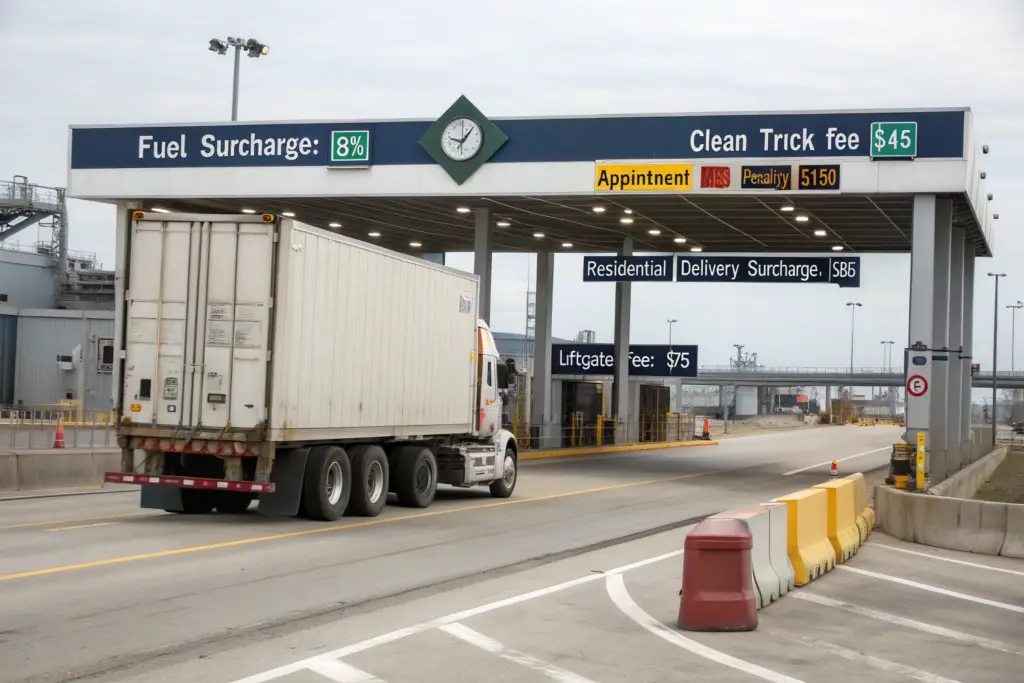
Common drayage and final-mile hidden costs include fuel surcharges, which can fluctuate significantly and are calculated as a percentage of the base rate, often 15-25%, clean truck fees mandated by California and other states for low-emission truck compliance at ports, appointment miss penalties if the truck arrives outside the warehouse's scheduled receiving window, chassis split fees if the container and chassis must be picked up from different locations, and special equipment fees for liftgate delivery, residential delivery, or limited-access locations. An FOB buyer who receives a drayage quote of $450 may pay $650-$800 after all variable charges are applied.
How Do Fuel Surcharges Fluctuate and Impact Budget Predictability?
Fuel surcharges are calculated as a percentage of the base freight or drayage rate, indexed to diesel fuel prices. The percentage is updated weekly or monthly by the carrier. A buyer who receives a freight quote in March, when the fuel surcharge is 15%, may ship in June when the surcharge has risen to 22%. The quoted freight cost has increased by 7% due to a factor entirely outside the buyer's control.
For a distributor importing multiple containers per year, the cumulative impact of fuel surcharge fluctuations can be thousands of dollars of unbudgeted cost. The only protection is either to negotiate a fixed fuel surcharge for the contract period—which carriers resist—or to use DDP terms where the factory absorbs the fuel surcharge risk. This fuel surcharge in ocean freight and trucking volatility is a hidden cost that FOB buyers manage themselves and DDP buyers transfer to their manufacturing partner.
What Happens When a Truck Misses a Warehouse Delivery Appointment?
Most distribution centers and large 3PL warehouses operate on scheduled receiving appointments. The truck is assigned a specific window—often two hours—on a specific day. If the truck arrives outside that window due to traffic, port delays, or scheduling errors, the warehouse may refuse the delivery. The truck must return to a holding yard and secure a new appointment.
The missed appointment generates a penalty fee from the carrier, typically $100-$200. The container sits on the chassis for additional days, accruing chassis fees and potentially detention charges. A new delivery appointment may be days later. The total cost of a missed appointment can easily exceed $400, all of which falls to the buyer who arranged the drayage. This warehouse delivery appointment scheduling and penalties is a final-mile friction point that DDP logistics management prevents through proactive appointment coordination.
What Warehouse Receiving and Inventory Costs Result from Logistics Failures?
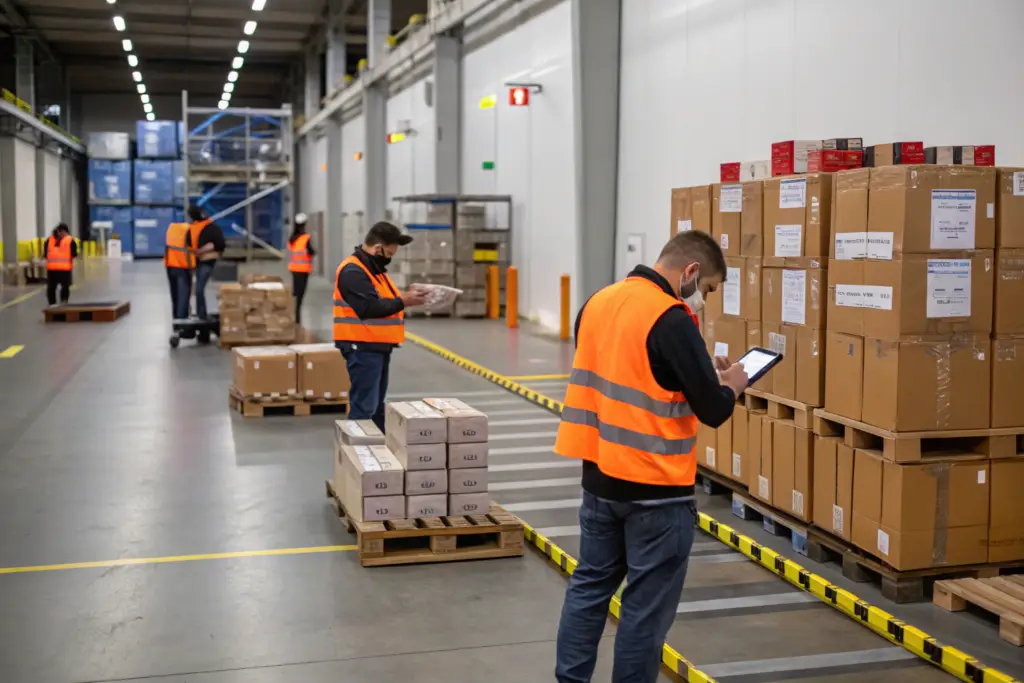
The container arrived at the warehouse on time. The port charges were paid. The drayage went smoothly. The logistics costs should be done. But when the warehouse team begins receiving the shipment, a new set of costs emerges. The carton labels do not scan correctly. The packing list does not match the Advance Shipment Notice in the warehouse management system. Some cartons are damaged. The goods require relabeling before they can be put away and made available for sale. The warehouse charges for this work, and the inventory availability is delayed by days.
Warehouse receiving and inventory costs triggered by logistics failures include non-compliance labeling charges where the warehouse charges per carton to relabel goods that do not scan into their system, typically $1-$5 per carton, rework fees for repackaging damaged cartons or correcting packing errors, system integration fees where the warehouse charges for the administrative work of reconciling a shipment that does not match its ASN, and the hidden cost of delayed inventory availability where goods sit in a quarantine area rather than being available for sale, potentially missing selling days or triggering stockouts on high-demand items.
How Do Carton Labeling Errors Create Cascading Warehouse Costs?
A warehouse management system expects incoming cartons to have barcodes that match the ASN data the brand uploaded before the shipment arrived. When a carton barcode does not scan, or scans but does not match the expected data, the carton cannot be received through the standard automated process. It is diverted to a quarantine area for manual processing.
Manual processing involves a warehouse worker opening the carton, identifying the contents, and manually entering the data into the system. The warehouse charges for this labor. If the entire shipment has labeling errors, the cost can be substantial: 200 cartons at $3 per carton for manual processing equals $600 of unbudgeted receiving cost. Beyond the direct cost, the inventory in those cartons is not available for sale during the manual processing period, which can take days. This carton labeling requirements for warehouse receiving is a factory-level logistics discipline that directly impacts the buyer's warehouse costs and inventory availability.
What Is the Financial Impact of Delayed Inventory Availability?
A shipment that arrives at the warehouse but cannot be received for three days due to labeling or documentation issues is not just costing warehouse processing fees. It is also costing sales. If the shipment contains a best-selling style that is out of stock, every day of delayed availability is a day of lost revenue.
For a distributor whose wholesale customers are waiting for the product, delayed availability can mean missed delivery windows, canceled orders, and damaged retail relationships. The financial impact of the missed sales is often far larger than the warehouse processing fees. This inventory availability and supply chain velocity is the ultimate hidden cost of logistics failures. It is the cost of not having product available to sell when demand exists, caused by logistics friction that is entirely preventable through proper carton labeling, ASN integration, and documentation accuracy.
Conclusion
The hidden logistics costs in apparel sourcing are not hidden because they are secret. They are hidden because they are not included in the standard FOB and freight quotes that buyers use to compare sourcing options and build their cost models. Demurrage, detention, chassis fees, customs examination charges, fuel surcharges, appointment miss penalties, warehouse relabeling fees, and the inventory carrying costs of delays are real, recurring costs that experienced logistics managers budget for and inexperienced buyers discover through painful experience.
The total impact of these hidden costs is significant. On a typical container of apparel with an FOB value of $40,000, hidden logistics costs can add $2,000 to $5,000 to the landed cost—a 5% to 12.5% increase over the visible freight and duty costs. For a distributor operating on a 10% net margin, these hidden costs can consume a quarter to a half of the annual profit.
At Shanghai Fumao, our DDP model eliminates the buyer's exposure to all of these hidden costs. We quote a single landed cost that includes every charge from our factory floor to the buyer's specified delivery address. Demurrage, detention, chassis fees, examination charges, fuel surcharges, appointment coordination, and carton labeling compliance are all our responsibility, absorbed within the locked DDP price. The buyer's logistics budget is the DDP quote. There are no surprises.
If you are tired of discovering logistics costs after the goods have shipped, or if you want to compare your current true landed cost—including all the hidden charges—against a locked DDP alternative, let us provide a DDP quotation for your product categories. Contact our Business Director, Elaine, at elaine@fumaoclothing.com. Share your typical order volumes and delivery destinations. We will provide a transparent, binding landed cost that eliminates the hidden logistics costs and gives you the cost predictability your business deserves.