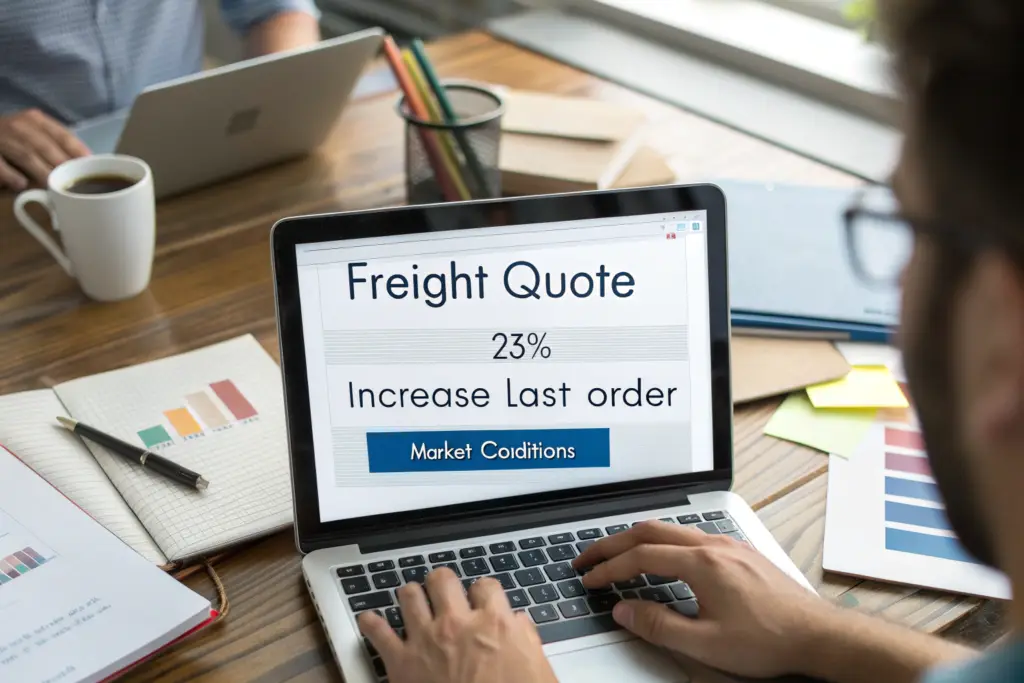
The freight quote for your upcoming shipment lands in your inbox. The cost has risen 23% since your last order. Your factory tells you the increase is "market conditions" and offers no alternatives. You either absorb the margin hit or raise your retail prices and risk losing customers. Neither option is acceptable. This scenario has played out across thousands of brand-owner inboxes over the past two years as global logistics costs have swung wildly. Container shortages, port congestion, fuel surcharges, and geopolitical disruptions have turned shipping from a predictable line item into a volatile gamble. The brands that survive this volatility are not the ones that find slightly cheaper factories. They are the ones partnered with manufacturers that have built structural defenses against logistics cost inflation.
Shanghai Fumao remains a top clothing manufacture choice despite rising global logistics costs because we have built a multi-layered cost protection system that insulates our brand partners from the full impact of freight market volatility. This system includes locked DDP pricing with risk absorbed by the factory, volume-aggregated carrier contracts that secure below-market rates, predictive route optimization that avoids congestion surcharges, and a flexible production model that allows brands to adjust order timing to capture rate dips.
Logistics cost is no longer a minor afterthought in the apparel sourcing equation. It can represent 15-25% of the total landed cost of a garment. A factory's ability to manage, predict, and partially absorb logistics costs is now as important as its ability to sew a quality seam. At Shanghai Fumao, we recognized this shift years ago and restructured our logistics and pricing model accordingly. Let me explain the specific mechanisms that protect our brand partners and why switching to a factory without these defenses is a growing financial risk.
How Does the DDP Model Protect Brand Margins from Freight Volatility?
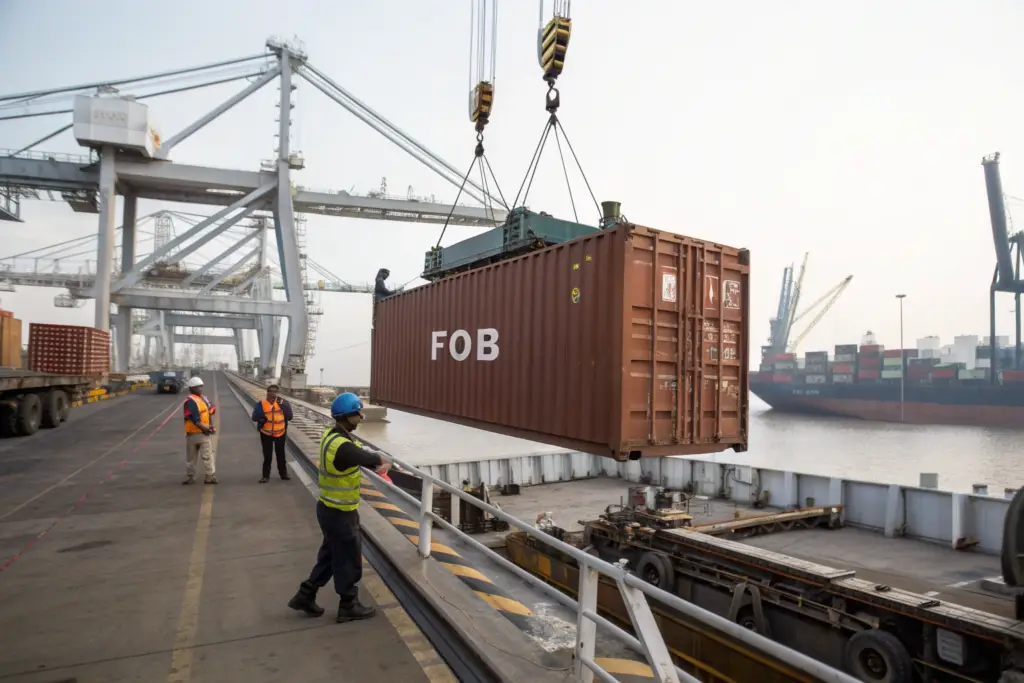
FOB (Free On Board) is the dominant shipping term in the apparel industry. The factory's responsibility ends when the container crosses the ship's rail at the port of origin. From that moment, every logistics cost is the brand owner's problem. A fuel surcharge added mid-transit? Brand pays. A port congestion fee at Long Beach? Brand pays. A customs exam charge? Brand pays. The FOB quote that looked attractive on the purchase order becomes a starting point for a series of unpredictable, non-negotiable surcharges that arrive after the goods are already in transit. The brand has zero leverage and zero protection.
DDP (Delivered Duty Paid) transfers all logistics cost risk from the brand to the factory. Shanghai Fumao quotes a single, all-inclusive landed price that covers the garment, ocean or air freight, insurance, customs duties, brokerage fees, and final delivery to the brand's specified destination. If freight rates surge after the quote, we absorb the increase. If port fees rise, we absorb the increase. The brand's landed cost is locked at the moment of order confirmation, providing absolute margin predictability regardless of what happens in the global logistics market.
What Happens When Freight Rates Spike Mid-Production Under DDP?
In the spring of 2025, ocean freight rates on the Shanghai-to-Los Angeles route spiked 18% over a six-week period due to Red Sea rerouting and peak season demand pressure. Multiple brands we work with had orders in mid-production at that time. Under FOB terms, those brands would have received a notification from their freight forwarder: "Your rate has increased. Please remit the difference before we release the bill of lading." They would have had no choice but to pay, watching their margin evaporate on an order they had already priced for retail.
Our DDP partners received no such notification. Their landed cost was locked. We absorbed the freight rate increase across those orders because the risk was ours, not theirs. The total additional cost to us across those shipments was substantial, but the long-term value of protecting our partners' margins far exceeded the short-term cost absorption. One brand partner calculated that our DDP model saved them $12,000 in unexpected freight costs across two orders during that period. That $12,000 was their profit on the orders. Without DDP protection, the orders would have been breakeven or loss-making. This DDP shipping risk transfer is not a theoretical benefit. It is a margin insurance policy that pays out when the logistics market turns hostile.
How Does Factory-Absorbed Risk Change the Buyer's Financial Planning?
A brand CEO presenting financial projections to investors or a board needs cost certainty. "Our landed cost will be between $18 and $22 per unit depending on freight conditions" is not a forecast. It is a guess. Investors discount guesses. "Our landed cost is $19.50 per unit, locked by our manufacturing partner's DDP contract" is a forecast. It is a commitment the CEO can be held accountable to because the variable has been fixed.
This certainty transforms financial planning. The brand can set retail prices with confidence, knowing the gross margin will be realized. The brand can project cash flow requirements accurately because the total order cost is known upfront. The brand can evaluate marketing spend efficiency because the true cost of goods sold is stable, not fluctuating with each shipment. A women's apparel brand we partner with used our DDP cost certainty to secure a line of credit from their bank. The bank's credit committee was impressed by the predictable cost structure and approved a larger facility than the brand had requested. The brand's CFO told us our locked DDP pricing was a material factor in the credit decision. This apparel brand financial planning stability is a second-order benefit of DDP that extends beyond the shipping department into the brand's overall financial health.
How Do Volume-Aggregated Contracts Secure Below-Market Freight Rates?
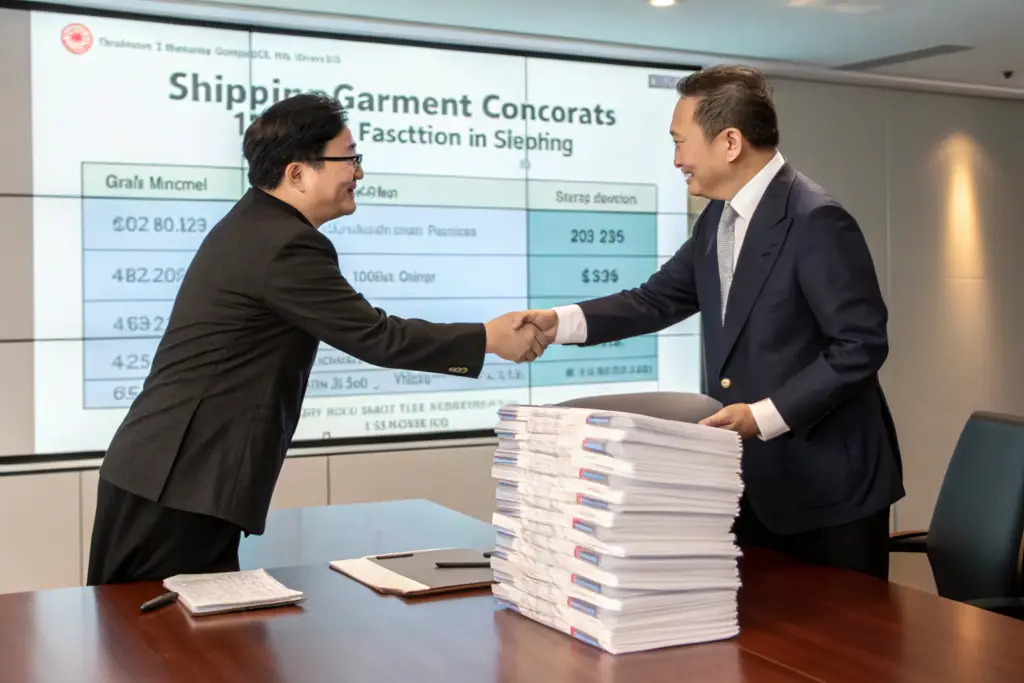
A single brand shipping 5,000 units per year negotiates freight rates from a position of weakness. The carrier's sales representative offers the spot rate plus a small loyalty discount, if any. The brand pays what the market demands. A factory shipping 500,000 units per year across multiple brand partners negotiates from a position of strength. The carrier wants the factory's volume and will offer contracted rates significantly below spot market levels to secure the business. This volume aggregation is one of the most powerful but least visible benefits of partnering with a large, established manufacturer.
Shanghai Fumao's aggregate shipping volume across all brand partners allows us to negotiate annual freight contracts with major ocean carriers at rates 20-35% below prevailing spot market rates. These contracted rates are then passed through to our DDP customers, insulating them from the spot rate volatility that punishes independent shippers. The brand benefits from the factory's buying power without needing to generate the volume themselves.
What Is the Real Rate Difference Between Spot Market and Contracted Freight?
Spot market freight rates are volatile and punitive to small shippers. In the fourth quarter of 2025, the spot rate for a 40-foot container from Shanghai to the U.S. West Coast fluctuated between $3,200 and $4,800. A brand shipping one container at spot rates paid within that range, with no ability to predict which end of the range they would hit. Our annual contract with our primary ocean carrier locked a rate of $2,400 for the same route, with a corridor that limited peak season surcharges to a pre-agreed maximum percentage. The difference between our contracted rate and the spot market high was $2,400 per container. Across fifty containers shipped during that quarter, the aggregate savings to our brand partners exceeded $100,000.
These savings are not achieved through clever negotiation alone. They are achieved through volume commitment. We guarantee the carrier a minimum container volume over the contract period. In exchange, the carrier guarantees us a fixed rate with capped surcharges. The carrier values the predictable volume. We value the predictable cost. The brand receives the benefit of a rate they could never access independently. This ocean freight rate negotiation capability is a structural advantage of the large-manufacturer model that directly impacts the brand's landed cost.
How Does Route Optimization Further Reduce Costs During Disruptions?
When the Port of Vancouver was congested last year due to a labor disruption, spot rates for alternative West Coast ports spiked as shippers scrambled to reroute. Brands whose freight forwarders simply booked the next available routing paid premium rates. Our logistics team activated a pre-planned rerouting protocol. We shifted shipments to the Port of Seattle and the Port of Oakland based on real-time congestion data from our carrier partners. Because our contract included multiple port-of-call options at pre-agreed rates, the rerouting incurred no rate penalty.
This predictive logistics capability requires investment in logistics expertise and technology that a brand managing its own freight rarely possesses. We employ a full-time logistics manager whose sole responsibility is monitoring global shipping conditions, optimizing routings, and negotiating with carriers. This dedicated expertise catches cost-saving opportunities that a brand's operations manager, who also manages inventory, customer service, and warehouse operations, simply does not have the bandwidth to identify. The supply chain route optimization function is a cost-reduction asset embedded in our service model.
How Does Production Timing Flexibility Avoid Peak Season Freight Surcharges?
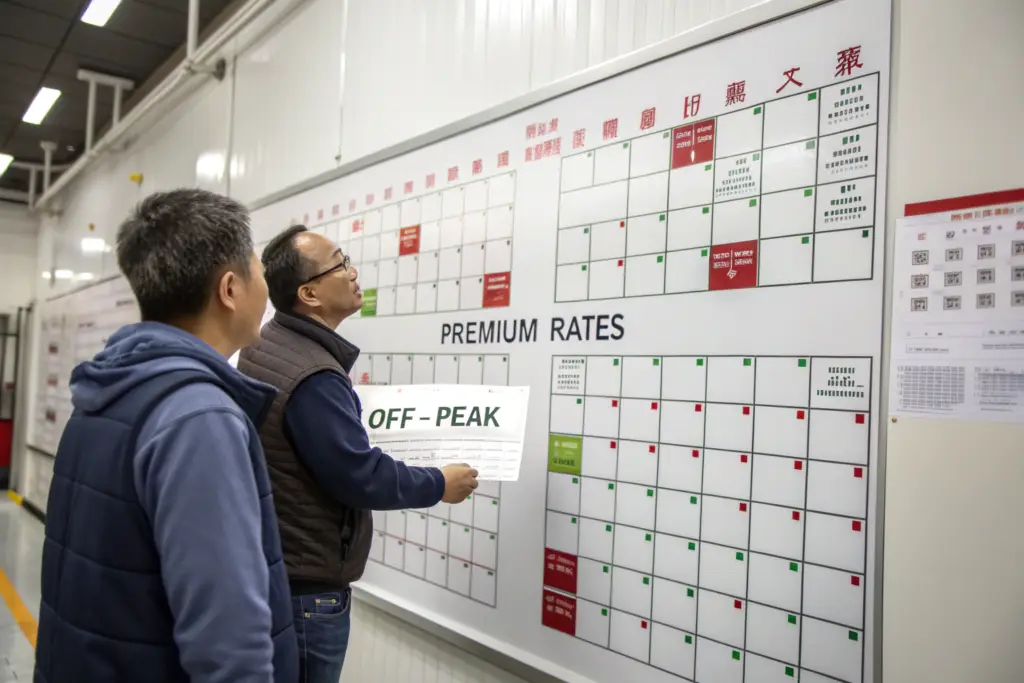
Peak season surcharges are one of the most frustrating logistics costs because they are entirely predictable yet unavoidable for brands with rigid production schedules. Every year, from August through October, ocean carriers impose peak season surcharges of $500 to $1,500 per container as retailers rush to stock inventory for the holiday season. A brand whose production schedule forces shipment during this window pays the surcharge. A brand with a flexible factory partner can shift production timing to ship before or after the peak window and avoid the surcharge entirely.
Shanghai Fumao's production scheduling flexibility allows brand partners to adjust order timing to avoid peak season freight surcharges without sacrificing delivery dates. By building production buffers into our planning and offering early or late shipping windows with the same delivery commitment, we help brands sidestep the annual peak season cost spike. A brand that ships three weeks earlier or two weeks later avoids a surcharge that adds $0.30 to $0.80 per unit to their landed cost.
What Is the Financial Impact of Shipping Outside Peak Windows?
Consider a brand ordering 5,000 units of a women's knit dress for holiday delivery. If the order ships in mid-September during peak season, the container incurs a $1,200 peak season surcharge, adding $0.24 per unit. If the same order ships in early August or early November, the surcharge is avoided. The per-unit saving seems small, but across a year and multiple orders, the accumulated surcharges can reach five figures.
We work with brand partners to identify which orders have genuine hard delivery dates and which have flexibility. An order for a spring collection that will launch in February does not need to ship during the October peak. We schedule production so that the order completes in late October and ships in early November, after the peak window closes. The goods still arrive in time for the February launch, but the brand avoids the peak surcharge. A brand we serve saved $8,400 in avoided peak surcharges last year across four orders by accepting adjusted production schedules that shifted shipping dates by two to three weeks. The delivery dates remained within their required windows. The only change was production timing. This peak season shipping strategy requires a factory that treats the brand's total landed cost as its own problem to solve, not just the production cost.
How Does Material Pre-Ordering Decouple Production from Shipping Urgency?
A common cause of forced peak-season shipping is delayed material availability. The fabric arrives late, production is compressed, and the shipment window is forced into peak season because there is no buffer. We address this by pre-ordering greige fabric and long-lead-time trims for our recurring brand partners before their formal purchase orders are issued. The materials are on our shelves, ready for production when the brand confirms the order.
This decouples production timing from material lead time. The brand can place the order later, confident that materials are available, and we can schedule production in the optimal shipping window rather than the earliest possible window. A men's outerwear brand we work with places their fall collection order in February. We pre-order the shell fabric in November of the previous year based on their forecast. When the order is confirmed, we can schedule production for completion in June and ship in July, entirely avoiding the August-October peak season. The fabric is already in our warehouse, tested and approved. This supply chain material planning integration requires a level of partnership and forecast sharing that transactional factory relationships do not support.
How Does Logistics Cost Stability Translate into Competitive Advantage for the Brand?
Logistics cost stability is not just a financial benefit. It is a competitive weapon. When a brand knows its landed cost will not fluctuate, it can price confidently for the entire season. It can commit to wholesale partners with fixed pricing. It can run marketing campaigns with predictable margins. Competitors who are exposed to spot freight rates must either absorb the volatility, which erodes margins unpredictably, or pass the volatility to customers through price increases, which erodes sales. Either outcome creates an opening for a brand with stable costs to capture market share.
Brands that partner with a DDP manufacturer with volume-aggregated freight contracts gain pricing stability that their spot-market-exposed competitors lack. This stability allows confident wholesale pricing, predictable digital marketing ROI, and consistent gross margins that attract investor and lender confidence. When logistics costs spike, the stable brand holds price while the exposed brand raises prices or absorbs margin losses. The stable brand gains market share by simply maintaining its position.

How Does Stable Pricing Support Wholesale Account Relationships?
Wholesale buyers at department stores and boutiques demand fixed pricing for the season. They build their open-to-buy plans around the prices the brand commits to at the buying appointment. If the brand's costs spike mid-season due to freight volatility and the brand asks to renegotiate prices, the wholesale buyer loses confidence. The brand may lose the floor space for the next season.
Our brand partners who serve wholesale accounts can commit to seasonal pricing with confidence because their landed cost is locked by our DDP contracts. Their wholesale price list is built on a cost foundation that does not shift. When freight rates spiked in 2025, one of our brand partners reported that three of their competitors raised wholesale prices mid-season. The brand held their prices steady because their costs were stable. They captured additional floor space from two retailers who dropped a competitor for the pricing instability. Their wholesale revenue grew 15% that season, partly driven by market share gains from less stable competitors. This wholesale apparel pricing strategy benefit is a direct result of logistics cost protection.
How Does Margin Predictability Enable Smarter Marketing Investment?
Digital marketing efficiency is measured by return on ad spend. If a brand knows exactly what a unit costs landed, they can calculate exactly how much they can spend to acquire a customer while maintaining their target margin. If the landed cost fluctuates by $1.50 per unit due to freight volatility, the acquisition cost target becomes a moving number. The brand either over-invests when costs are low and loses margin, or under-invests when costs are high and loses sales volume.
Stable landed costs enable stable customer acquisition cost targets. The marketing team can optimize campaigns with confidence that the margin behind each sale is consistent. A DTC brand we work with used our stable DDP pricing to lock in a fixed cost per acquisition target for their entire spring campaign. While competitors adjusted their ad spend up and down in response to changing margin profiles caused by freight cost fluctuations, our partner ran consistent campaigns. Their customer acquisition volume grew 22% that season, funded by marketing efficiency gains rather than budget increases. This DTC marketing and supply chain alignment is only possible when the supply chain provides cost certainty.
Conclusion
Rising global logistics costs are not a temporary problem that will disappear when container availability improves. Geopolitical instability, climate-driven route disruptions, carrier consolidation, and regulatory changes are structural features of the global shipping landscape. Brands that treat logistics as a passive cost to be managed after production will continue to see their margins whipsawed by forces entirely outside their control. Brands that partner with manufacturers who actively manage, predict, and absorb logistics risk will build a structural cost advantage over their competitors.
Shanghai Fumao's DDP model, volume-aggregated carrier contracts, predictive route optimization, flexible production scheduling, and material pre-ordering capability form an integrated logistics cost protection system. This system is not a marketing promise. It is a set of operational capabilities that have delivered measurable savings to our brand partners through multiple freight market disruptions. When other factories pass freight cost increases to their customers with an apologetic email, we absorb them because our model is designed for exactly that purpose.
If rising and unpredictable logistics costs are threatening your brand's margins and complicating your financial planning, let us provide a binding DDP quote for your upcoming production. We will show you a single landed cost number that includes the garment, the freight, the duties, and the delivery. That number will not change between quote and delivery, regardless of what the freight market does. Contact our Business Director, Elaine, at elaine@fumaoclothing.com. Lock in your costs, protect your margins, and focus on building your brand instead of fighting freight bills.