Rebranding is terrifying. You have spent years building a customer base, and now you are changing the logo, the hang tag, the fit, or the entire product story. One misstep in execution—a crooked label, a scratchy neck tape, a button that falls off after three washes—and your loyal customers start questioning everything. They do not see the supply chain problem. They see a brand that cut corners. I have witnessed a promising streetwear label lose 30% of its Instagram following within a month of a botched rebranding launch because the new custom hardware tarnished after the first wash. The owner was devastated.
Shanghai Fumao could be your ideal rebranding manufacturing partner if your project demands precision execution of custom branding elements, consistent quality across a refreshed product line, and a partner who treats your new brand identity as seriously as you do. We specialize in translating rebranding vision into physical garments that strengthen, rather than undermine, your new market positioning.
But rebranding is not just about sewing a new label into an old shirt. It is a complex, emotional, and technically demanding process that tests a factory's flexibility and attention to detail. You need a partner who can handle the granular specifications of your new identity while keeping your production timeline intact. Let me explain exactly how we approach these projects and why our factory structure is built for this specific challenge.
What Makes a Clothing Manufacturer Truly Capable of a Rebranding Project?
Many factories claim to offer "custom branding." What they mean is they will sew in a basic printed satin label that curls at the edges after two washes. They do not have the trim sourcing network to find the exact brushed metal zipper pull that matches your new logo's modern aesthetic. They do not have a quality inspector who checks label placement against a 2mm tolerance measurement. Their rebranding capability is a checkbox. Yours needs to be a craft.
A rebranding-capable manufacturer possesses three distinct capabilities: an established network of specialized trim suppliers for custom hardware and labels, an in-house sampling team that can prototype branding placement on existing silhouettes, and a quality control process that treats brand element placement as a critical-to-quality checkpoint equal to seam strength. Without these three, rebranding execution is left to chance.
How Do We Source Custom Trims That Match a New Brand Identity?
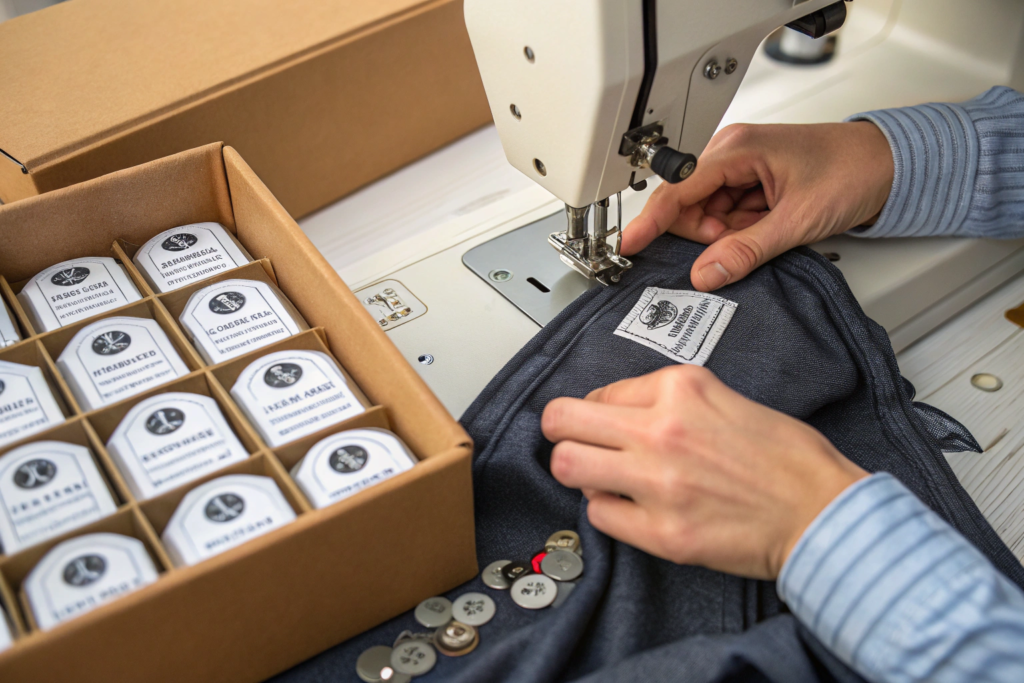
Your rebranding might call for a tonal embossed leather patch, a gunmetal zipper with a custom puller shape, or a hang tag made from recycled seed paper with your new mission statement. A basic factory has one trim supplier who offers three colors of standard labels. That limits your brand expression. We maintain a curated network of over 40 specialized trim manufacturers across China, South Korea, and Italy. Each one specializes in a specific category: one does only high-density woven labels with micro-text capabilities, another does only eco-friendly packaging solutions, another focuses on custom metal hardware with antique finishing.
When a premium menswear brand approached us last year for a rebranding project, their new logo required a specific copper-toned shank button with an engraved geometric pattern. The level of detail was finer than standard mass-production buttons. Our usual button supplier could not hold the detail on that small surface area. We reached out to a specialist hardware studio in Guangdong that serves luxury handbag brands. They produced a sample button in ten days that captured the exact line weight of the engraving. The brand's creative director told us it was the first time a factory had matched their vision without asking them to simplify the design. This sourcing agility means your rebranding is not limited by a factory's existing inventory. It is enabled by our ability to find the right specialist for your specific aesthetic requirements. Our access to custom trim manufacturing ensures that every touchpoint on the garment reinforces the premium positioning you are building.
What Production Line Flexibility Is Needed for Rebranding Multiple SKUs?
Rebranding rarely applies to a single product. You are likely refreshing your entire core range: the best-selling polo shirt, the classic chino, the lightweight bomber jacket. Each garment category requires different branding application methods. The polo gets an embroidered chest logo. The chino gets a subtle leather patch on the back waistband. The bomber gets a printed inner lining with the new brand pattern. A factory with a rigid, single-process production line cannot pivot between these techniques efficiently.
Our 5 production lines are configured for flexible small-batch manufacturing. We do not just run one style for three weeks straight. We schedule daily changeovers based on the branding requirements of each SKU. One line might be running woven shirts with new neck labels in the morning, then switching to outerwear with custom snap buttons in the afternoon. This flexibility is built into our standard operating procedures. The sewing stations are modular. The heat transfer machines and embroidery units are positioned centrally so multiple lines can access them without moving bundles across the factory floor. This configuration allowed a women's activewear brand to rebrand six core SKUs simultaneously with us. They launched their new look across their entire product line in a single season, not a staggered rollout. This unified market presentation strengthens brand cohesion. Working with a manufacturer experienced in multi-category production ensures your rebranding reaches your customers as a complete collection, not a piecemeal update that confuses your identity.
How Does Rebranding Affect Quality Control and Consistency?
The scariest part of rebranding is not the design. It is the first batch arriving and discovering that 20% of the neck labels are crooked by 5 degrees. The human eye catches that instantly. Your customer picks up the shirt, feels the uneven label, and the subconscious perception of quality drops. That single detail can undermine the entire rebranding investment. Consistency across thousands of units is not a hope. It is a measurement.
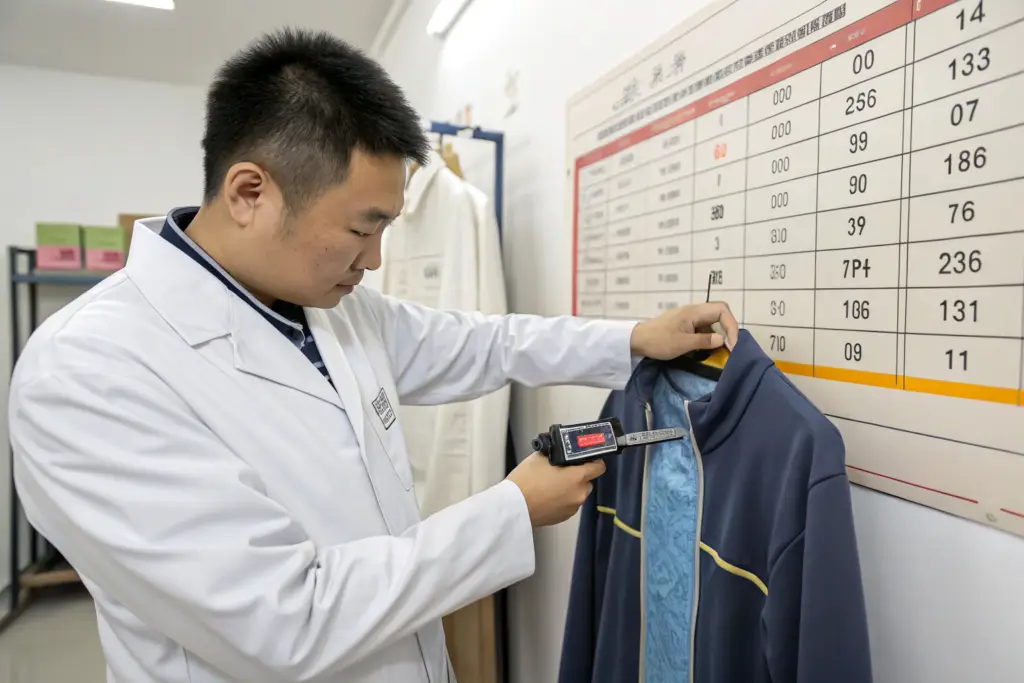
Rebranding places extraordinary stress on quality control because every new branding element—label, embroidery, button, print—introduces a new point of potential failure. A specialized QC protocol for rebranding projects adds specific branding checkpoints to the standard garment inspection: label position tolerance, embroidery tension and registration, hardware attachment torque, and print wash durability. These are measured, not eyeballed.
How Do We Measure and Guarantee Embroidery and Print Consistency?
Embroidery on a chest logo must look identical on a size XS and a size 3XL. But fabric tension changes as the garment stretches. We digitize every new logo into embroidery software and run test sew-outs on each size grade before bulk production. The stitch count, thread tension, and backing stabilizer are adjusted per size to ensure the logo proportion remains consistent. We measure the registration of each embroidered element against a digital overlay to confirm accuracy within a 1mm tolerance.
For screen prints and heat transfers, wash durability is the silent brand killer. A logo that cracks after five washes tells your customer the brand does not care about longevity. We test every new print technique through an AATCC-standard accelerated wash cycle. The print is visually inspected and adhesion-tested after 5, 10, and 20 washes. We only approve a printing method for bulk production once it passes 20 washes with no visible cracking, peeling, or color fading. A contemporary brand we worked with for their rebranding launch used a puff-print technique on their new logo. The initial sample cracked after three washes. Our print technician adjusted the curing temperature and dwell time, and added a stretch additive to the ink. The revised print survived 30 wash tests without failure. This adherence to garment testing standards builds a rebranded product that maintains its premium appearance throughout its usable life, turning first-time buyers into loyal advocates.
What Inspection Gates Prevent Labeling and Tagging Errors?
A label sewn into the wrong size garment, a hang tag with a misspelling, a care label with the wrong fiber content—these errors are catastrophic for a rebranding launch. They scream amateurism. We prevent them through barcode-driven verification gates. Every production order has a unique barcode that links to the digital tech pack containing the approved label specifications.
At the cutting stage, the barcode is printed on the bundle ticket. Before the label is attached, the sewing operator scans the bundle ticket and the label roll. If the system detects a mismatch between the size of the garment and the label size designation, it locks the machine and alerts the line supervisor. The same scan occurs at the finishing stage when hang tags are attached. This eliminates manual matching errors. For a rebranding project with a new sustainable womenswear label last spring, we caught a batch of care labels where the supplier had made a typo in the RN number. The scanning system flagged it during the finishing scan. We quarantined the 500 incorrect labels before a single one reached a garment. The client never saw the error. This level of quality management transforms rebranding from a risk into a controlled, predictable process where errors are caught and eliminated before they leave the factory floor.
What Is the Typical Timeline for a Full-Scale Rebranding Manufacturing Project?
A rebranding project cannot be rushed through in two weeks. You have likely been planning this brand refresh for months. The manufacturing execution needs equal care. The most common mistake brand owners make is underestimating the trim sourcing and sampling phases. They assume a custom woven label takes a week. In reality, a high-quality woven label with fine detail requires a custom loom setup, color matching the threads to the Pantone specification, and sample approval before production. This takes time.
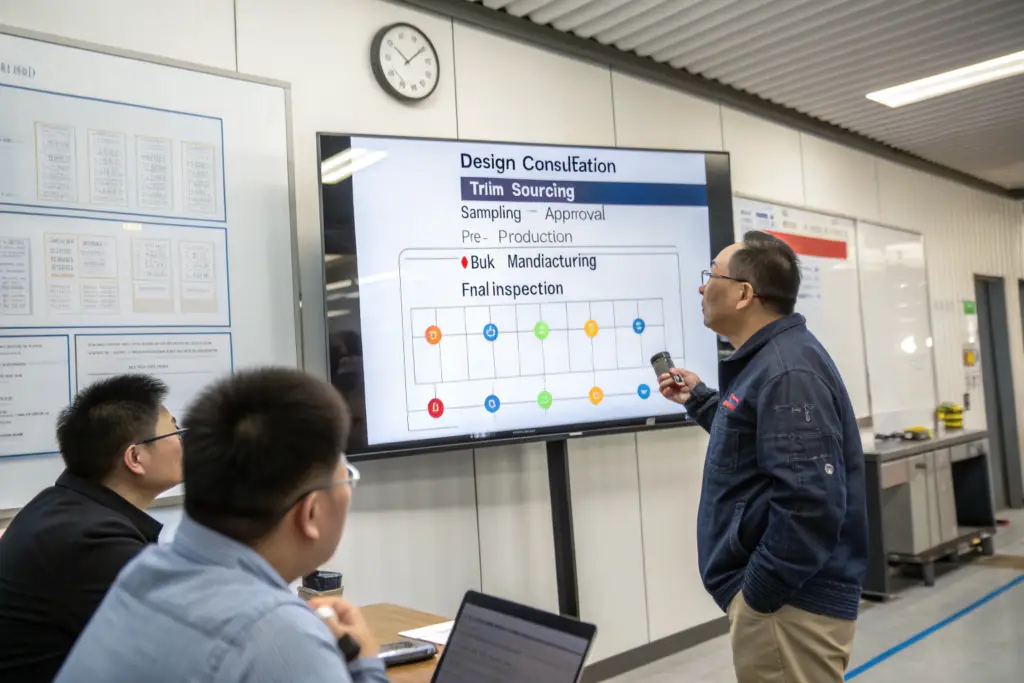
A full-scale rebranding manufacturing project typically spans 8 to 12 weeks from final design approval to bulk shipment. The timeline breaks into four phases: Trim Sourcing and Development (2-3 weeks), Pre-Production Sampling (2-3 weeks), Bulk Manufacturing (3-4 weeks), and Final Inspection and Shipping (1-2 weeks). Rushing any phase introduces quality risks that directly damage the rebranding launch.
Why Does the Sampling Phase Require More Time During Rebranding?
A standard reorder of an existing product skips the sampling phase entirely. The factory already has the approved seal sample. Rebranding starts from scratch on every element. The first sample you receive will likely not be perfect. The label position might be 3mm too low. The embroidery thread might not reflect light the way your flat design mockup suggested. The hang tag string might be the wrong shade of natural cotton. These are normal iterations, not failures.
We build two rounds of sampling into every rebranding timeline. The first round is a photo sample. We apply the new branding to the garment, photograph it on a mannequin under studio lighting, and send you detailed images. You mark up the images with corrections. The second round is a physical approval sample shipped to your office. You touch the label, stretch the garment, and test the zipper pull. You sign off on this sample, and it becomes the production standard against which all bulk units are measured. A streetwear brand we rebranded last year went through three rounds of label iteration because the metallic foil color shifted subtly between the digital mockup and the physical thread. We worked with the trim supplier to adjust the foil pigment concentration until the physical label matched the vision. This process took four weeks. The brand owner later told us that patience during sampling saved the integrity of the launch. The alternative—rushing to bulk with an imperfect label—would have been a costly mistake. Engaging in a thorough pre-production sampling process is the most valuable investment of time in any rebranding project.
How Can We Align Manufacturing Timelines with a Planned Brand Launch?
Your marketing campaign is scheduled. The influencer unboxing videos are booked. The website refresh goes live on a specific Monday. The inventory must be in your fulfillment center before that date. There is no room for shipping delays. This is where backward planning from the launch date becomes critical.
We start every rebranding project by asking for your hard launch date. We then work backward, building in buffer days at each phase. If ocean freight takes 18 days to the West Coast, we add a 5-day buffer for port delays. If bulk production takes 4 weeks, we add a 1-week buffer for unexpected machine downtime. The resulting timeline determines the latest possible date for final sample approval. If that date is missed, we have a transparent conversation about the risk to the launch date. This buffer-based planning saved a men's formal wear brand last December. A typhoon in the Pacific delayed their container by six days. Because we had built a buffer into the schedule, the shipment still arrived four days before the launch event. The brand owner never had to make a panicked phone call to his marketing team. Coordinating production scheduling with marketing calendars is a specialized service that turns a manufacturing partner into a true brand ally.
Why Choose Fumao Over a Trading Company for Your Rebranding Project?
A trading company presents your rebranding vision to a factory they have never visited. They relay your comments about label placement through a translator who does not understand garment construction. They mark up your sample approvals with second-hand interpretations. The factory executes based on degraded information. The result is a game of telephone where your brand identity gets lost in translation. This is not a partnership. It is a liability.
Choosing Shanghai Fumao over a trading company means your rebranding instructions travel directly from your creative team to our production floor with zero intermediary distortion. You communicate with the people who will sew your labels and attach your custom buttons. The feedback loop is direct, fast, and technically precise. The accountability sits with one entity that owns the entire manufacturing process.
How Does Direct Factory Communication Prevent Brand Identity Loss?
When you explain your rebranding vision to a trading company rep, they take notes. Those notes are interpreted into a different language, sent via email, and read by a factory merchandiser who has her own assumptions. The original nuance—"we want the label to feel organic, like uncoated cotton paper, not glossy or plastic"—gets reduced to "use cotton label." The result misses the emotional intent.
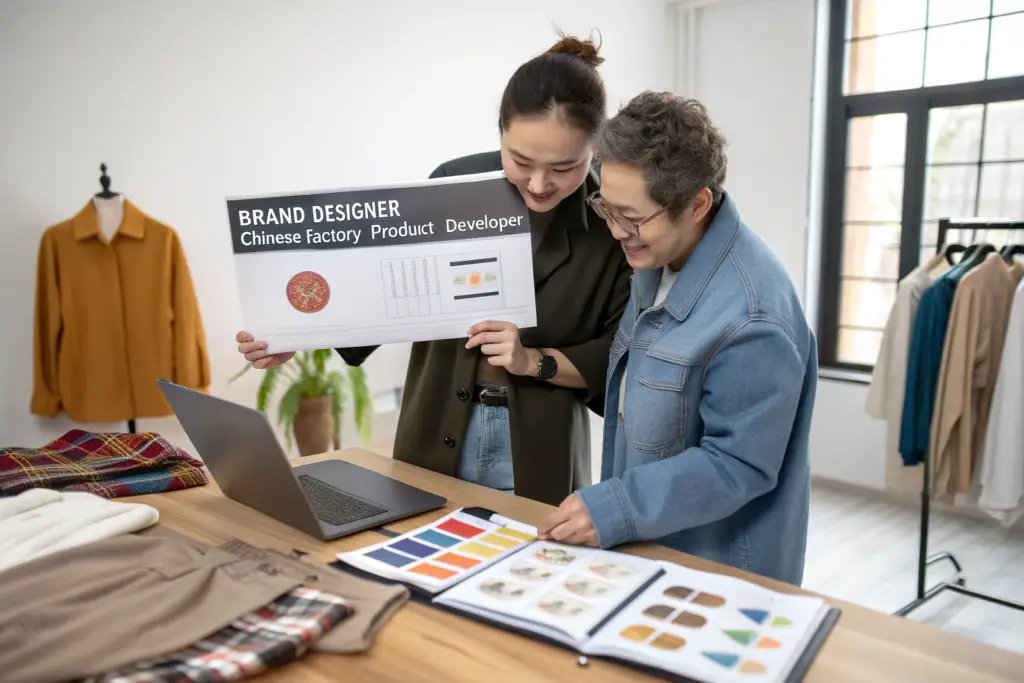
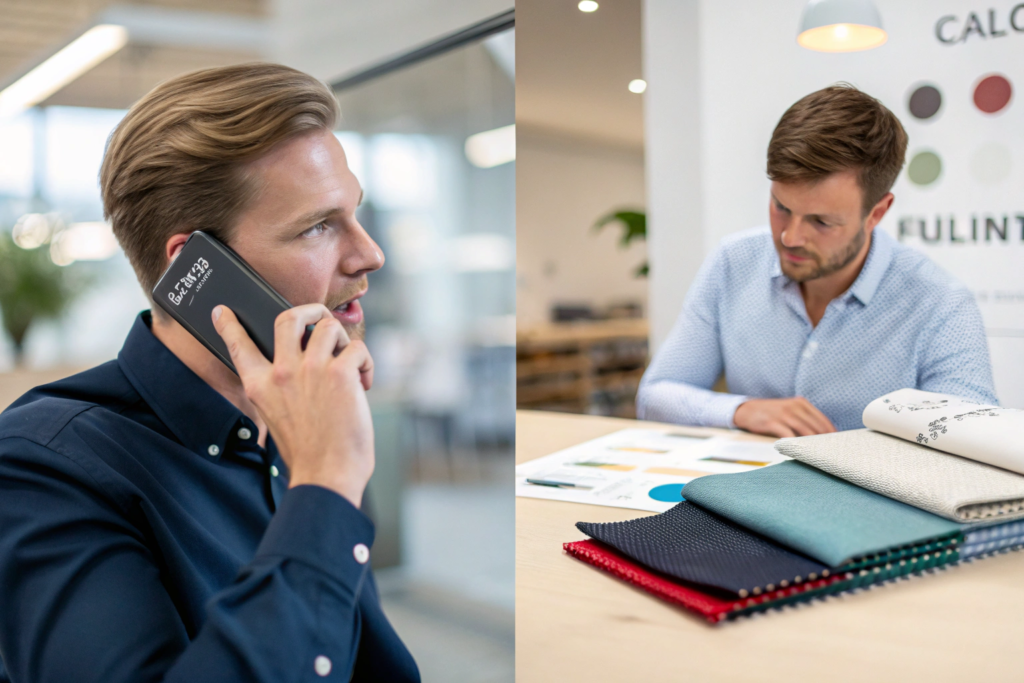
When you talk directly to our Shanghai Fumao production team in a video call, you can hold up a piece of uncoated cotton paper to the camera. Our trim developer sees it. She understands the tactile quality you want. She pulls three physical samples from our supplier network and sends you a video of her touching each one, describing the hand feel. This sensory information cannot pass through a trading company filter. A premium womenswear brand owner told us this direct access was the single most valuable difference in our partnership. She could message our head pattern maker at midnight her time with a fit adjustment, and the pattern was revised when she woke up. The direct factory communication preserves the intent, emotion, and specificity of your rebranding vision in a way that relay-based sourcing never can.
What Happens If a Branding Error Occurs During Bulk Production?
Errors happen in every factory. The difference is in the response. A trading company that discovers a labeling error in bulk production has a difficult conversation ahead. They must convince the actual factory to absorb the cost of reworking 2,000 garments. The factory has no direct relationship with you, so their incentive to fix the error quickly is low. The trading company is stuck mediating, and your launch date becomes the victim of their conflict.
When we discover an error in our own production, the response is immediate and accountable. There is no one else to blame, so we fix it. Last year, during a rebranding run for a children's wear client, our finishing supervisor noticed that the custom hang tags had a subtle color variance between the morning and afternoon print batches. The printer's ink density had drifted. We paused the finishing line immediately. We contacted the hang tag printer, identified the batch error, and had them reprint the affected tags within 48 hours. Our finishing team worked overtime to re-tag the affected garments. The shipment left on time. The client received a full incident report with our corrective action plan. They told us later that this transparency, not the error, defined their experience of the partnership. Owning our manufacturing accountability means your rebranding project is protected by a team that has no one to pass the blame to, and therefore every incentive to get it right.
Conclusion
Rebranding is a moment of vulnerability and opportunity for your apparel business. The factory you choose for this project either amplifies your new brand identity or dilutes it. A manufacturer that treats your custom label as a commodity trim order will produce garments that look like commodity products. A manufacturer that treats your label as the physical embodiment of your brand story will produce garments that communicate the quality and intention behind your refresh.
At Shanghai Fumao, we take rebranding projects personally. We know that every custom button, every hang tag, and every label placement is a word in the story you are telling your customers. Our 5 production lines, our extensive trim sourcing network, our barcode-driven quality gates, and our direct communication model are all organized around one goal: ensuring the garment in your customer's hands builds trust in your new brand identity, not doubt.
If you are planning a rebranding launch and need a manufacturing partner who will protect your vision through every stitch and label, let us start the conversation. Send your new brand guidelines, your tech pack, or just a mood board describing where you want to take your brand. We will translate that vision into a production plan with clear timelines, transparent costs, and precise quality standards. Contact our Business Director, Elaine, at elaine@fumaoclothing.com. Let us build the physical products that will make your rebranding a success your customers can see and feel.