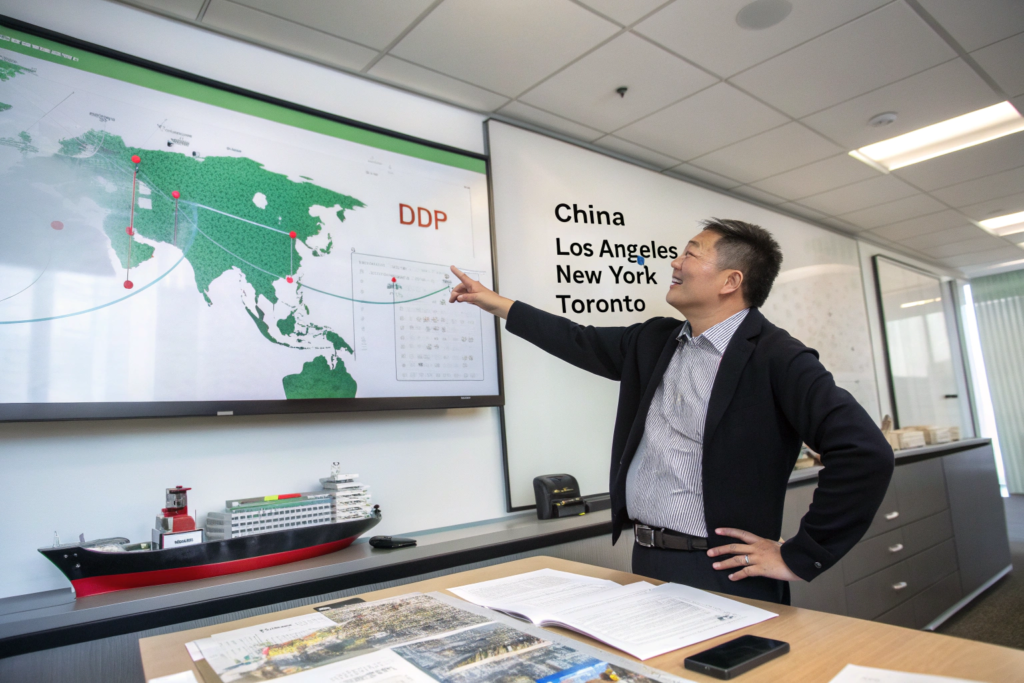
Waiting for a shipment to clear customs with no idea of the final landed cost is a nightmare. You budgeted for a specific margin, but unexpected duties and handling fees at the port eat into your profit before you even sell a single piece. Many factory owners avoid Delivered Duty Paid (DDP) like the plague because it forces them to own the risk of international logistics. They prefer to wash their hands the moment the container leaves their dock. That leaves you, the buyer, holding the bag and the bill.
Yes, Shanghai Fumao is structured specifically to handle DDP logistics to North America with precision and confidence in 2026. We treat DDP not as an add-on shipping method, but as our core delivery promise. Our integrated customs clearance system, bonded warehouse partnerships, and real-time tariff calculators turn complex cross-border shipping into a flat, predictable line item for your budget.
But claiming expertise in DDP is easy. Actually delivering it without customs holds, surprise fees, or missed delivery windows requires a completely different operational backbone. You need to see the specific infrastructure that makes this possible. Let me walk you through how we handle the most stressful part of your supply chain, so you can focus entirely on selling.
What Makes a Factory Truly DDP-Ready for the U.S. Market in 2026?
Many suppliers offer DDP on paper. But when a shipment gets flagged for a random exam by U.S. Customs and Border Protection (CBP), they panic. They lack the proper Importer of Record (IOR) setup or the correct bond. This panic translates to delays, storage fees, and threatening letters from customs brokers. True DDP readiness is not about filling out a form; it is about having a legal and operational presence that makes U.S. customs trust your shipments.
A DDP-ready factory must possess a valid Continuous Customs Bond, an established non-resident importer number, and a dedicated compliance team that proactively files Importer Security Filings (ISF) accurately and on time. Without these three pillars, DDP is just a risky promise that endangers your inventory.
How Does a Continuous Customs Bond Actually Protect My Shipment?
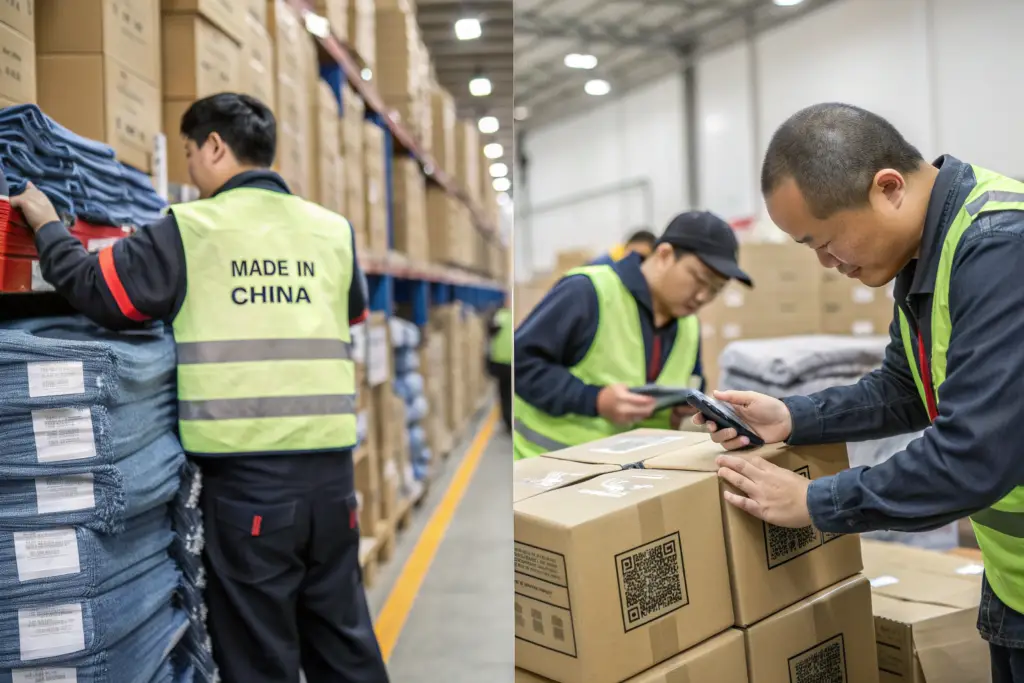
A Single Entry Bond only covers one shipment. If the bond amount is insufficient or if there is a clerical error, the goods sit at the terminal, accumulating demurrage fees. Last year, we onboarded a men's loungewear brand that previously used a small trading company. Their shipment was held at the port of Long Beach for seven days because the broker filed a single bond with a wrong tariff code. The storage fees alone cost them $2,300.
We solved this by operating under a Continuous Customs Bond. This is a rolling coverage bond that remains active all year, covering multiple shipments. It signals to CBP that we are a permanent, responsible importer, not a fly-by-night operation. When our container arrives, the clearance process is faster because our bond is pre-vetted. We also use automated software to submit ISF filings 72 hours before vessel departure, never missing the cutoff. This consistent adherence to import regulations means our shipments rarely trigger random holds. If they do, our dedicated broker resolves it within hours, not days, because the financial instrument to cover any potential duties is already in place.
Why Is an In-House Tariff Classification Engine Essential for Cost Certainty?
Guessing a Harmonized System (HS) code is gambling with your money. If a customs officer reclassifies your shipment of men's woven shirts, you might owe an extra 8% duty that you never planned for. For a $50,000 order, that is an unexpected $4,000 bill. We removed this guesswork by building an internal HS code engine. Our system cross-references the garment's material breakdown, construction method, and gender with the latest rulings from U.S. Customs and the International Trade Commission.
I recall a specific shipment of hybrid jackets for a Pacific Northwest brand. The jacket had a knitted wool body and woven nylon sleeves. The default HS code for a wool coat has a higher duty rate. Our system identified that the woven nylon constituted 52% of the visible surface area, legally allowing us to classify it under the lower-rate synthetic outerwear heading. We provided the ruling documentation to back this up. The duty savings amounted to $1.85 per unit. This precision ensures that the DDP price we quote you is the final price. There are no post-delivery invoices for adjustment. We manage the trade compliance complexity so your budget remains solid.
How Does Shanghai Fumao Handle North American Warehousing and Last-Mile Delivery?
DDP does not end at the port. The "Delivered" part means the box sitting inside your warehouse or even heading straight to your customer. This is where many Chinese factories fumble. They handle ocean freight well but then hand the shipment to a random third-party logistics provider for the domestic leg. The tracking goes dark. The delivery appointment gets missed. You receive an angry email from your warehouse manager about a truck that showed up at 5 PM on a Friday with no warning.
Effective North American last-mile delivery requires pre-built integrations with domestic carriers and a network of bonded warehouses strategically located near major logistics hubs. We do not "hand off" the shipment; we manage the transition from ocean freight to ground delivery through long-term partnerships with established 3PL networks across the continent.
Can a Chinese Factory Directly Integrate With Amazon FBA Warehouses?
Yes, and we have been doing it since last year. The requirements for Amazon FBA are strict. Cartons must be labelled perfectly. The shipping plan must be approved before dispatch. Failure to comply results in rejected inventory. We set up a specific FBA preparation line in our Shanghai facility. Here, products undergo individual poly-bagging, bubble wrapping, and FNSKU labeling according to Amazon’s standards. Before sealing the master carton, our system double-scans the box content against the digital shipping plan.
We also have a direct partnership with a receiving warehouse in California that specializes in Amazon dock appointments. Once the ocean freight clears, our domestic partner palletizes the load according to the specific fulfillment center requirements, schedules a delivery slot, and ensures the inventory is checked in. Last Christmas, we shipped 8,000 units of branded kids' pajamas directly to Amazon ONT8 and LGB8 warehouses for a client. The entire shipment was received and scanned into available inventory within three days of arrival at port. We tracked the entire flow through our logistics dashboard. By fulfillment by Amazon standards, that is near-perfect execution. This direct integration eliminates the need for the brand owner to touch the product at all. They run the advertising, and we deliver the stock.
How Do We Solve the "Blind Shipment" Problem for Brand Owners?
Many of our clients do not want their end customer knowing the goods came from China, or worse, they do not want their retail partner knowing their supplier. This is called a blind shipment. It requires documentation that strips the manufacturer’s identity from the label. We handle this natively. Our shipping software generates commercial invoices that list a domestic shell address or the 3PL's name as the shipper.
The crucial step is the physical label. No carton leaves our factory with visible Chinese text or factory logos if a blind shipment is specified. We use pre-approved neutral packing. For the trucking leg to a retailer like Nordstrom or a boutique store, we instruct our delivery partner to use the provided non-descript delivery paperwork. I remember a streetwear brand that launched exclusively in a major department store. The store's distribution center had a strict "no direct import" receiving policy without an approved vendor number. We routed the cargo through our approved 3PL, relabeled it according to the store's specifications, and delivered it compliantly. The retailer never knew the origin beyond the domestic consolidation point. This attention to detail protects our clients' distribution agreements and brand equity at every step of the supply chain.
Why Choose a Specialized Manufacturer Over a Freight Forwarder for DDP?
Freight forwarders are logistics experts, not product experts. They know how to move a box, but they don't know how that box was packed or whether the contents match the declaration. When you separate manufacturing from logistics, you create a gap where problems breed. If a customs officer wants to inspect the goods, the freight forwarder calls you, you call the factory, the factory looks for the paperwork, and three days pass. This disconnect is the number one cause of DDP failure.
Choosing a specialized manufacturer for DDP closes the gap between production and delivery. We own the logistics chain because we own the product origin. When customs asks for a material breakdown or a fiber content test, we pull the data instantly from our production records, not from a forwarded email three days old. This unified responsibility ensures no finger-pointing when issues arise.
How Does Factory-Controlled Logistics Reduce Inspection Delays at the Border?
When a container is selected for a VACIS (Vehicle and Cargo Inspection System) scan or a physical exam, the clock starts ticking. A forwarder needs to request the packing list from the factory, verify the details, and forward it to the CBP. We eliminate this back-and-forth entirely. Our logistics team sits 30 meters from the packing station. Before the container doors close, we digitally attach the entire production file—including fabric test reports, trim photos, and packing images—to the shipment reference number in our logistics portal.
If CBP queries the exact cotton content of a pair of chinos, we don't need to dig. We reference the mill certificate from the batch that was cut. We share this directly with the broker in minutes. This rapid response translates to quicker releases. We operate with a trusted trade lane partner for U.S. Customs-Trade Partnership Against Terrorism (CTPAT) certified shipments. Being part of a secure supply chain reduces the statistical probability of inspection. But when inspections happen, our compliance record keeps the process smooth. We view every cleared shipment as an opportunity to learn and refine our packing protocols. Last quarter, we noticed zip ties on a specific carton type confused a scanner. We switched to a different carton sealing method the very next shipment, something a disconnected forwarder would never observe.
What Hidden Fees Do Freight Forwarders Often Miss?
Fuel surcharges, chassis usage fees, pier pass, split chassis fees—these are the monsters hiding in the small print. A forwarder's initial quote might look attractive, but the final invoice often swells by 15-20%. We operate on an all-inclusive DDP quote model. When we calculate your price, we build in these predictable variables. We use an algorithm that tracks the historical average of these accessorial charges on specific routes. For a shipment to the East Coast, we automatically factor in the Panama Canal transit fees or the higher intermodal rail costs.
A men's formal wear client came to us after a forwarder charged them an exorbitant "clean truck fee" for a container that was supposedly dirty upon return. They had no way to dispute it because they never saw the container. We handle this differently. We partner with trucking companies that provide photo evidence of the container condition at pickup and drop-off. We refuse vague surcharges. Because we ship significant volume annually, we have the leverage to negotiate fixed haulage rates with drayage carriers, which a smaller forwarder cannot do. This logistics management approach means the price we agree upon is the price you pay. It gives our clients the confidence to set their retail pricing months in advance without fearing a margin-eroding invoice after delivery.
What Does the End-to-End DDP Journey Look Like with Shanghai Fumao?
Transparency removes anxiety. The worst part of international sourcing is the black hole between the factory gate and your warehouse door. You refresh the tracking page endlessly, wondering if the ship is delayed or if the container even made the vessel. We believe you should never wonder. The process needs to be visible, predictable, and supported by real humans who answer your questions immediately.
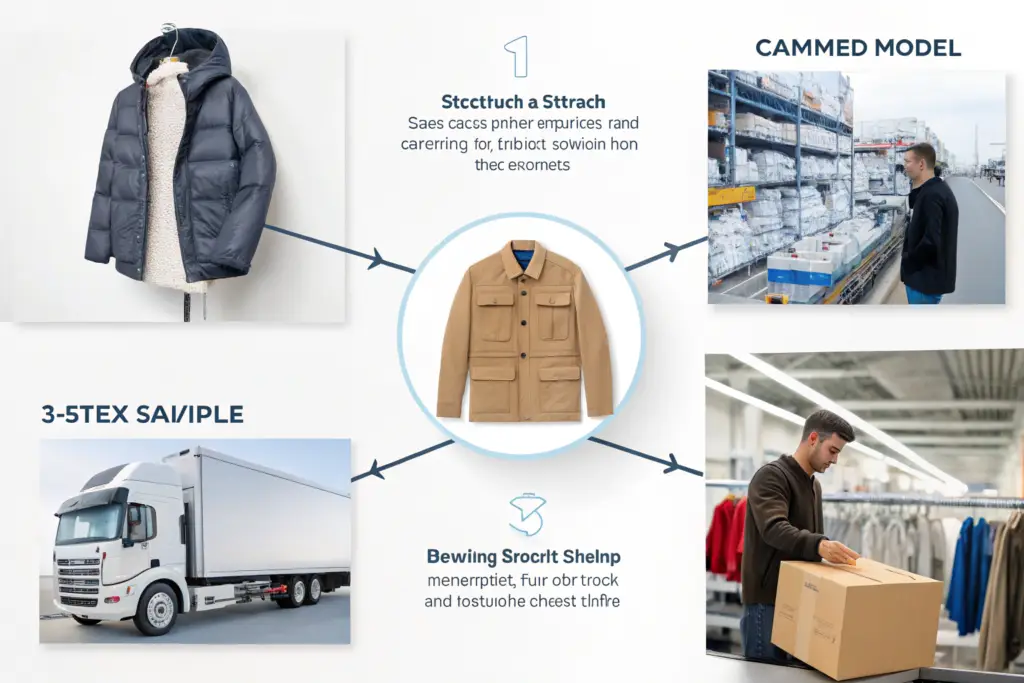
Our end-to-end DDP journey is a fixed six-stage process: Order Confirmation, Production & Compliance, Vessel Booking & ISF Filing, Customs Clearance, Deconsolidation, and Final Mile Delivery. At every stage, you receive a notification, a supporting document, and a photo. This visibility turns shipping from a stressful mystery into a manageable timeline.
What Happens Before the Container Leaves Our Facility?
Preparation prevents port delays. Two weeks before the ship date, our shipping team holds a pre-shipment meeting with the production line leader. We pull three random cartons from your order and open them. We verify that the barcode on the polybag matches the carton label and the packing list. We photograph the contents and upload them to your client portal. This is your chance to confirm everything looks perfect before the container seals.
Then, we create the commercial invoice. This is not a generic template. It includes detailed fabric breakdowns, the IOR number, and the tax ID for the consignee. We submit the Importer Security Filing (ISF 10+2) immediately. We book the vessel with a carrier known for schedule reliability on the Pacific route, checking their on-time performance stats. We also apply for the necessary fumigation certificate if the pallets require it. You receive a document labeled "Ready to Ship" with photos of the sealed container and the vessel name. From this point, the supply chain is locked and traceable. We work closely with ocean carriers to get the earliest possible loading slot.
How Do We Manage the Final Delivery Appointment at Your Warehouse?
Arriving at a warehouse without an appointment is the last-mile failure point. Large distribution centers in Dallas or Chicago will turn a truck away if it misses its window. The truck then returns to a holding yard, incurring redelivery fees and day-use charges. We never allow a surprise delivery. As soon as the container is deconsolidated at the U.S. port, our domestic partner contacts your warehouse manager to set a delivery window.
We ask for specifics: hours of operation, dock height requirements, and whether a pallet jack is needed. We relay these details to the driver. On the delivery day, our team monitors the truck's GPS. If there is a traffic delay, we call your warehouse before the window closes to reschedule. A sportswear distributor we work with in New Jersey has a very narrow 8-10 AM receiving window. We have hit that window 18 out of the last 20 shipments. This consistency is not luck. It is about treating warehouse operations with the same care we treat stitching. The delivery is not complete until you confirm the carton count. We close every DDP shipment with a delivery confirmation report and a final invoice reconciliation, ensuring there are zero open questions.
Conclusion
DDP logistics does not have to be the most stressful part of your apparel business. In 2026, it is a solved equation when you partner with a manufacturer that has invested in the legal, technological, and operational infrastructure required to own the entire journey. Shanghai Fumao has done exactly that. We have moved beyond the old model where the factory washes its hands of responsibility at the port of origin. We take full responsibility from the cutting table to your loading dock.
We built this capability because we listened to what large company buyers, brand owners, and distributors actually needed: certainty. Certainty of cost, certainty of compliance, and certainty of delivery date. Our continuous bond, our automated tariff engine, our dedicated FBA prep line, and our blind shipment expertise are not marketing bullet points. They are the daily operations that have safely delivered millions of units to North American soil.
If you are ready to eliminate logistics anxiety and work with a Shanghai Fumao factory that treats shipping as seriously as sewing, let's start the conversation. Stop worrying about customs clearances and hidden fees. Start focusing on your next best-selling collection. Reach out to our Business Director, Elaine, at elaine@fumaoclothing.com. She will prepare a transparent, binding DDP quote for your upcoming men's wear, women's wear, or kids' wear program. Let us show you how smooth true door-to-door delivery can be.