Most garment factory owners treat LinkedIn like an online resume they forget about after posting a grainy photo of their building. They chase buyers at crowded trade shows, collect business cards that end up in a desk drawer, and hope for email replies that never come. This passive approach leaves them invisible to the very people searching for reliable manufacturing partners. You have experienced the other side of this frustration—scrolling through generic Alibaba listings, unsure who is a real factory and who is a middleman with a nice website.
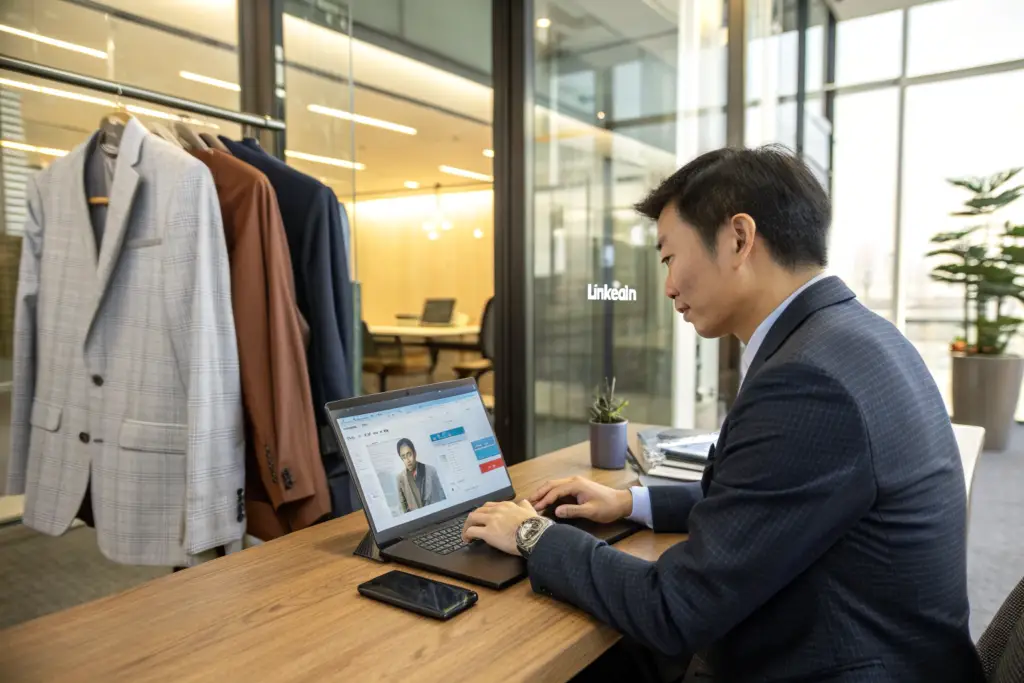
A strong LinkedIn presence allows a top clothing manufacture to demonstrate operational transparency, build verifiable professional credibility, and engage directly with qualified U.S. brand owners and distributors. It transforms the factory from an anonymous supplier into a trusted industry voice that buyers actively seek out, rather than a name buried in a sourcing directory.
But simply having a profile is not enough. The platform is filled with factories posting low-resolution photos of messy production floors and using broken English to spam connection requests. That approach repels the exact clients you want to attract. Let me explain how Shanghai Fumao uses LinkedIn strategically, and why this matters for your sourcing decisions.
How Can Buyers Verify a Factory’s Legitimacy Through LinkedIn?
A website can say anything. Photos can be stolen. Certificates can be photoshopped. But a LinkedIn profile built over years tells a different story. It shows a timeline of activity, real connections to other industry professionals, and a trail of content that reveals how the factory thinks and operates. When I connect with a potential buyer, I am not just sending a sales pitch. I am opening a window into our daily operations and our industry relationships.
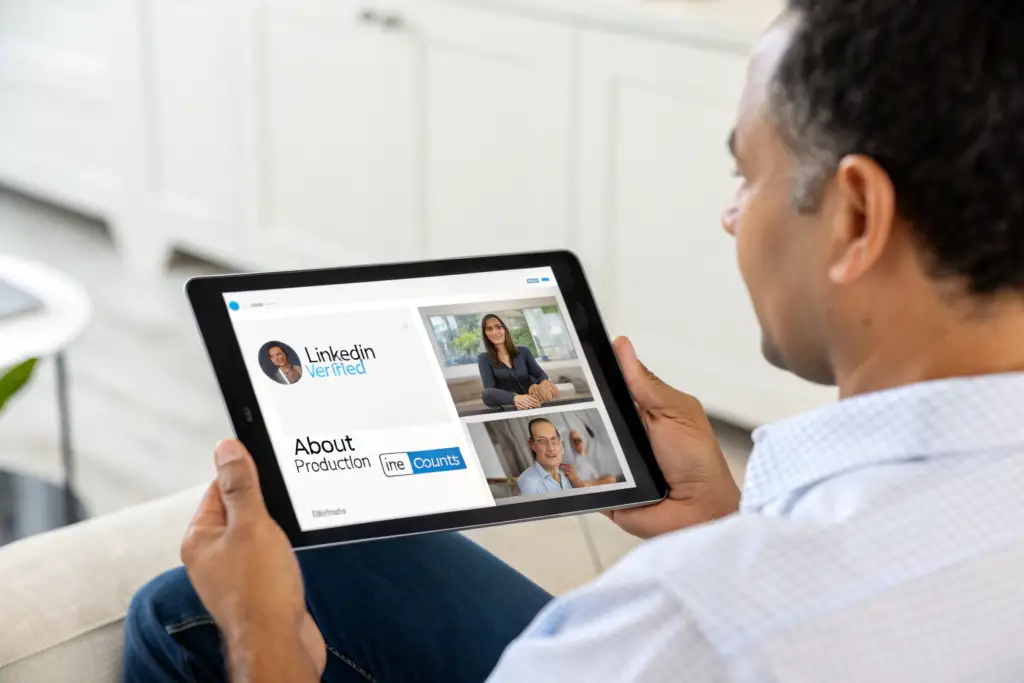
LinkedIn serves as a dynamic verification layer that static websites and B2B platforms cannot provide. Buyers can assess a factory's legitimacy by examining the depth of the owner's professional network, the consistency and technical accuracy of their content, the recommendations from mutual connections, and the engagement from real industry peers on their posts.
What Red Flags Should Buyers Look for on a Factory’s LinkedIn Profile?
A factory profile created last month with 50 connections is a warning sign. Real factories have histories. Check the "Experience" section. Does it show a logical career progression in the apparel industry, or did this person suddenly become a "CEO" with no prior manufacturing background? A genuine factory owner will often have past roles in production management, textile engineering, or apparel merchandising. Their endorsements for skills should include technical terms like "Pattern Grading," "Apparel Sourcing," or "Quality Management," not just generic business buzzwords.
Another red flag is the complete absence of employee profiles. If the owner's profile is the only one associated with the company, it suggests a one-person trading operation. At Shanghai Fumao, our production manager, quality supervisor, and senior merchandisers all maintain active LinkedIn profiles linked to our company page. This creates a verifiable organizational footprint. A buyer recently told me he chose us over a competitor because he saw our pattern maker had received an endorsement for pattern making from a software vendor we use. That specific, verifiable detail built trust. Look for posts that show the interior of the factory consistently over months. Scammers steal one set of photos. Real factories post updates from the same cutting tables and sewing lines week after week. Cross-reference the factory address shown on the LinkedIn company page with the building visible in video walkthroughs posted by employees. Consistency proves presence, and any mismatch warrants a direct question before proceeding with factory audits.
How Do Real Recommendations From Industry Connections Influence Sourcing Trust?
A recommendation from a fabric mill owner in China or a logistics partner in Los Angeles carries weight. These are business-to-business votes of confidence that cannot be easily faked. When I receive a recommendation from the director of a textile mill praising our consistent payment terms and professional communication, it tells buyers we are respected within the supply chain. It means I am not just selling to you; I am also buying responsibly. This matters when you need a factory to secure premium deadstock fabric or negotiate urgent delivery slots.
Recommendations from past clients are even more powerful. A verified recommendation from a brand owner that mentions a specific project—like developing a custom activewear line with unique heat-sealed seams—provides social proof that a generic testimonial on a website never can. The buyer can click through to that brand owner's profile and see their legitimate business. We actively request recommendations after successful project deliveries, not just when we launch a new marketing campaign. This creates a steady, authentic stream of credibility over time. Beyond recommendations, mutual connections create immediate context. If a buyer sees that three of their existing contacts in the apparel industry are already connected to me, the introduction feels warm rather than cold. They can even message those mutual contacts privately to ask about their experience. This back-channel verification is invaluable and cannot be replicated by a factory that treats LinkedIn as a broadcasting megaphone rather than a relationship-building tool.
What Content Should a Clothing Manufacturer Post to Attract U.S. Brands?
Posting a blurry photo of a cargo container with the caption "Another shipment ready!" does not attract premium brand owners. It attracts bottom-feeders looking for the cheapest price. Your content strategy defines the quality of your inquiries. After years of experimenting, I have learned that U.S. brand owners and large distributors respond to educational transparency, not hard selling. They want to see how you solve problems, not just that you ship boxes.
Content that attracts U.S. brands falls into three categories: production process transparency, technical problem-solving, and logistics reliability proof. Posts that explain how a specific garment challenge was overcome, or that detail the steps of a quality inspection, demonstrate manufacturing competence. Posts that celebrate winning a low price attract price-shopping clients with no loyalty.
Why Do "Behind-the-Seams" Factory Videos Generate High Engagement?
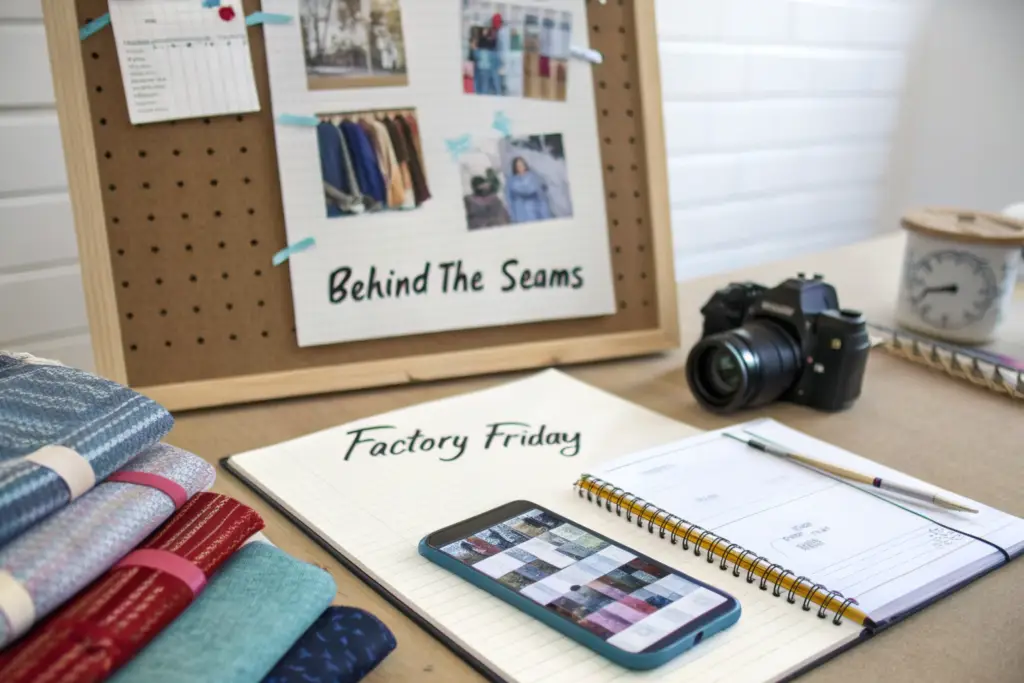
A polished corporate video feels like an advertisement. A 90-second iPhone video of our head tailor explaining how he matches plaid patterns at the side seam of a shirt feels like an exclusive consultation. These videos work because they answer the unspoken fear of every brand owner: "Will the factory cut corners when I am not watching?" By showing the cutting corners of the fabric being carefully aligned, we prove we do not cut corners on quality.
I started a weekly series called "Machine Check Monday" where I film a specific piece of equipment and explain what it does. Last month, I filmed our automatic pocket setter machine and explained how it ensures every pocket on a batch of workwear shirts is placed within a 1mm tolerance. That post received a direct message from a Midwest uniform company that became a $60,000 order. Buyers are searching for garment manufacturing partners who understand machinery, not just sellers who trade goods. These videos do not require a production crew. Authenticity beats polish. Good lighting and a clear explanation of a real production moment build more trust than any stock photo. We tag the specific machinery brands and relevant industry hashtags to reach buyers searching for specialized capabilities like automatic cutting or laser finishing, connecting our daily work to the broader fashion technology conversation.
How Do You Write a LinkedIn Article That Demonstrates Technical Expertise?
A status update disappears in a day. An article lives on your profile forever and gets indexed by Google. When I write an article titled "How We Solved Seam Slippage in Lightweight Down Jackets," I am not just sharing a story. I am creating a permanent searchable asset. A brand owner researching down jacket manufacturing might find that article months later and reach out already convinced of our technical capability.
The key is to write from the perspective of a problem-solver, not a promoter. I start every article by describing a specific technical challenge a real client faced. I explain the failed first attempts honestly. Then I detail the solution: the specific needle size we switched to, the stitch density we adjusted, the interlining we added. I include close-up photos of the before and after. I end with quantifiable results: the seam strength improved from 15 pounds of force to 28 pounds in independent lab testing according to ASTM standards. This format establishes deep credibility. A buyer from a technical outerwear brand recently told me he read three of our articles before requesting a quote. He said the depth of our quality control documentation in the posts made him confident we could handle his complex seam-sealed jacket program. He never asked for a sample; he asked for a production timeline. That is the power of demonstrated expertise. When writing, avoid vague claims. Reference specific industry standards like AATCC test methods or ISO certifications. These acronyms act as trust signals to technically literate buyers searching for apparel quality standards.
How to Use LinkedIn to Shorten the B2B Sales Cycle for Custom Clothing Orders?
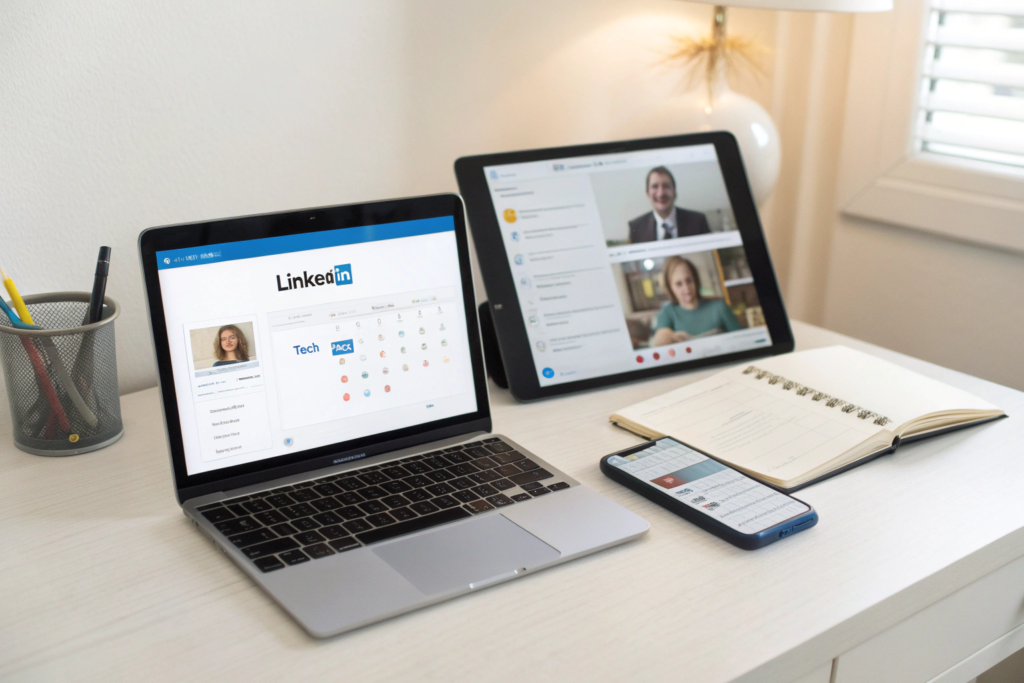
The traditional B2B clothing sales cycle is painfully slow. A buyer submits an inquiry through a website contact form. It goes to a generic sales email. Three days later, a sales rep replies asking for more details. Two days after that, you get a rough quote. A week has passed before any real conversation begins. LinkedIn compresses this timeline dramatically because it enables real-time, informal communication between the decision-makers on both sides.
LinkedIn shortens the B2B sales cycle by enabling direct, asynchronous messaging between the buyer and the factory owner, allowing for instant sharing of visual references, immediate answers to technical questions, and rapid qualification of project fit. The sales conversation begins within hours, not days, because both parties can assess credibility through each other's profiles before exchanging a single word.
How Does Direct Messaging Replace the Back-and-Forth Email Chain?
Last quarter, a brand owner from Los Angeles sent me a LinkedIn message at 9 AM his time, which was midnight in Shanghai. He asked if we could produce a heavyweight French terry hoodie with a specific enzyme wash. He attached a photo of the desired wash effect directly in the message. When I woke up at 6 AM, I saw his message. I checked his profile, saw his legitimate brand with 15 retail accounts, and recognized a mutual connection in the fabric industry. I replied within minutes: "Yes, we do that wash in-house. Here is a photo of a similar finish we achieved last month." I attached the photo from our production archive.
By 9 AM his time, he had a quote. By the end of the week, we had a signed contract and were sourcing the greige fabric. This entire process, which would have taken three weeks via traditional email and website forms, happened in five days. Direct messaging removes the formal barriers. Conversations feel like collaboration, not sales pitches. I can send a quick voice note explaining a technical detail about shrinkage control while I walk the production floor. The buyer hears the sewing machines in the background. That ambient sound is a subtle but powerful proof of a real factory. This immediacy also allows for rapid visual feedback loops. I can snap a photo of a specific zipper and send it instantly. The buyer can circle a detail on the photo using the app's annotation tool and send it back. This informal but highly efficient communication removes the friction that kills momentum in the early stages of product development.
Can LinkedIn Analytics Help Target the Right Decision-Makers?
Posting blindly is a waste of effort. LinkedIn provides detailed analytics on who is viewing your content. I regularly check the demographics of my post viewers: their job titles, their company industries, and their locations. When I posted about our DDP logistics process to the U.S., the analytics showed that "CEO," "Owner," and "Supply Chain Director" were the top job titles engaging with the content. This confirmed I was reaching the exact decision-makers I wanted. I leaned into logistics content and saw a 40% increase in inbound inquiries from distributors asking about door-to-door shipping.
We also use LinkedIn's advanced search filters to identify potential partners. I search for "Founder" or "Head of Sourcing" within the "Apparel & Fashion" industry in specific U.S. cities. I do not send blind connection requests. I engage with their content first. I leave thoughtful comments on their posts about retail challenges or fabric trends. I share their articles with a brief note about why the insight was valuable. This social selling approach warms the relationship before any direct pitch. A connection request that follows genuine engagement has an acceptance rate above 70%. A cold request from a stranger has a rate below 20%. The difference is whether you are seen as a peer or a spammer. By monitoring which content resonates with specific buyer personas, we continuously refine our posting strategy to attract more of the right audience, turning our company page into a lead generation engine rather than a static brochure for wholesale apparel.
Why Is a Personal Founder Brand Critical for an Overseas Manufacturing Partner?
Buying from a faceless corporation overseas feels risky. You send money to a company name and hope goods come back. Buying from a person you have seen explain his process on video, share his thoughts on industry trends, and respond to comments thoughtfully feels entirely different. The distance shrinks. The transaction becomes a relationship. This is why I put my name and face on our content, not just our company logo. It personalizes a complex, expensive business decision.
A personal founder brand humanizes an overseas factory, transforming it from an anonymous entity into a known, accountable individual. When a brand owner sees the factory owner consistently demonstrating technical knowledge and transparent operations online, the perceived risk of the partnership drops significantly, and the willingness to place an initial trial order increases.
How Does Founder-Led Content Build Confidence Before the First Factory Visit?
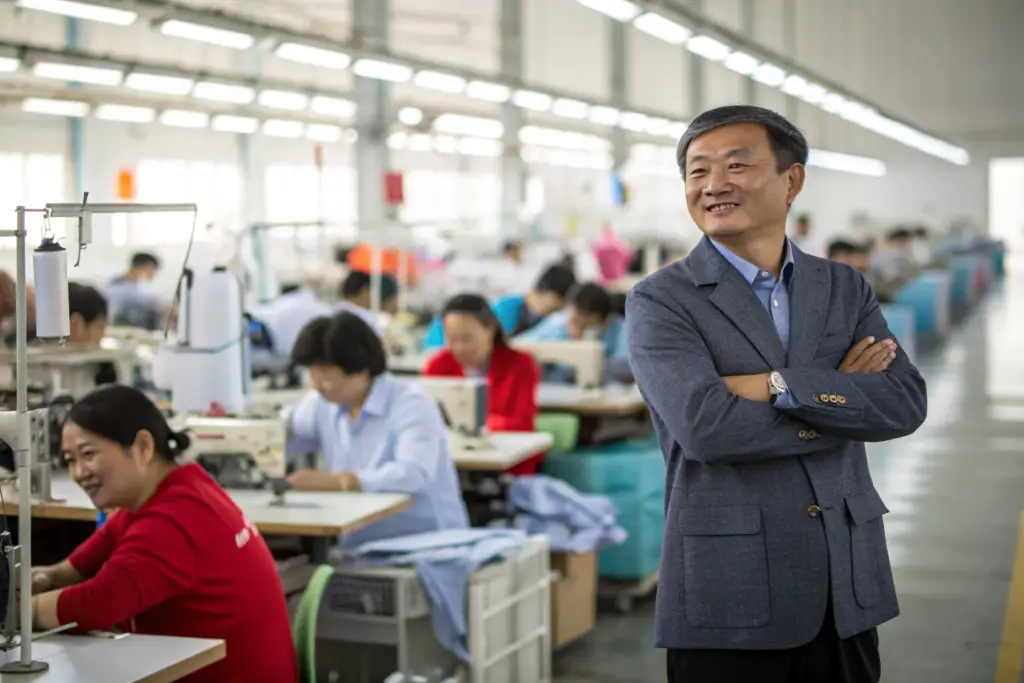
Most buyers cannot fly to Shanghai for every initial sourcing meeting. They must make a preliminary judgment remotely. When a buyer watches five of my videos and reads three of my articles, they form a mental model of who I am and how we operate. They hear me explain a quality problem we solved. They see me interact respectfully with a sewing operator. They observe my attention to detail when I point out a stitching feature on a sample.
This accumulated exposure builds a sense of familiarity that a sales deck cannot achieve. A New York-based brand owner recently told me on a video call, "I feel like I already know you after watching your content for two months." That first call, which often involves awkward trust-building, felt like a second meeting. We moved immediately into discussing his tech pack because he had already vetted my technical competence through our articles. This pre-established trust is particularly valuable when discussing sensitive commercial topics like minimum orders, payment terms, and intellectual property protection. A buyer is more willing to share a confidential design with a manufacturer whose professional integrity they have observed publicly over time. They reason that a factory owner who builds a public reputation would not risk it by stealing a design or delivering subpar quality. We also use this personal connection to handle problems proactively. If a shipment is delayed by two days, I record a quick video message explaining exactly what happened and what we are doing to fix it, then send it directly to the client. This personal accountability, delivered through the same channel that built the relationship, transforms a potential dispute into a reinforcement of trust. We share our journey and insights into the apparel manufacturing process openly, which invites collaboration rather than transactional negotiation.
What Is the Long-Term Value of Building a Professional Network on LinkedIn?
A trade show ends after three days. A LinkedIn network compounds over years. Every week, I connect with fabric suppliers, trim vendors, logistics coordinators, fashion designers, and brand founders. This network becomes a living resource that benefits our clients. When a buyer asks for a specific sustainable button made from corozo nut, I search my LinkedIn network. Within minutes, I find a connection who runs a specialized button factory in Italy, introduced through a mutual contact at a textile trade publication. I make the introduction, and the buyer gets their custom button without weeks of independent searching.
This networked capability adds tremendous value beyond the sewing floor. We are not just a production line; we are a gateway to a global supply chain of specialized vendors. For a premium womenswear brand, this kind of sourcing agility is invaluable. They get a single point of contact who can pull in resources from across the world. This network also serves as an early warning system for industry shifts. I see when multiple logistics managers in my network start posting about port congestion in a specific region. I see when fabric mill owners comment on raw material price fluctuations. This real-time intelligence allows us to advise clients proactively. Last year, I noticed several Vietnamese factory owners posting about severe flooding in their region. I immediately contacted our clients sourcing from that area to check if they had orders at risk. One of them had a large production batch stuck and was able to arrange alternative routing because of the early heads-up. This intelligence sharing builds deep loyalty. A buyer knows that being connected to our network means they are plugged into a broader flow of fashion industry news and operational intelligence, not just a factory that sews fabric together.
Conclusion
LinkedIn is not a digital resume or a vanity project for a top clothing manufacturer. In 2026, it is a critical business infrastructure for building verifiable trust, demonstrating technical expertise, accelerating sales conversations, and constructing a valuable professional network that directly benefits our clients. The days of hiding behind a company logo and a generic sales email are over. Brand owners and distributors demand transparency, and they reward factories that provide it with their long-term business.
At Shanghai Fumao, our LinkedIn presence is an extension of our factory floor. It is where we show our work, share our knowledge, and build the relationships that lead to successful, multi-year partnerships. It is where you can vet us thoroughly before committing a single dollar. It is where you can see the real people behind the production lines and witness the consistency of our operations over time. We invest in this platform because we believe a well-informed buyer is the best long-term partner.
If you value transparency, technical precision, and direct access to decision-makers, I invite you to connect with us on LinkedIn and experience the difference. And when you are ready to discuss a specific garment program—whether it is custom men's wear, women's wear, or children's wear with DDP shipping to your U.S. warehouse—reach out directly. Contact our Business Director, Elaine, at elaine@fumaoclothing.com. Let us show you not just a quote, but a true partnership built on trust and proven expertise.