Agonizing over a supplier who takes 48 hours to reply while your launch deadline is in three weeks is exhausting. You stare at a spreadsheet, wondering if the factory actually has the right certificate or if they are just telling you what you want to hear. This gap between expectation and reality costs money. It kills trust. As the owner of Shanghai Fumao, I have seen this frustration on the faces of countless U.S. brand owners visiting our facility. The old way of sourcing clothing is broken.
AI is not replacing the human touch in garment manufacturing; it is fixing the broken parts. In 2026, our factory uses AI to cut response times from days to minutes, verify compliance instantly, and predict logistics bottlenecks before they delay your shipment. This means you get accurate answers, verified quality, and on-time delivery without the communication nightmare.
But understanding how this technology actually works on the factory floor is crucial. You do not need a theoretical lecture on large language models. You need to know how a real partner uses these tools to save you money and time. Let me walk you through exactly how we have rebuilt our operations to serve large company buyers like you, without losing the craftsmanship that makes your clothes sell.
Why Do B2B Buyers Still Struggle with Traditional Sourcing Communication?
You send a detailed email about modifying a puffer jacket's fill power. You go to sleep hoping for a reply. You wake up to a generic "OK, let me check" response that ignores half your questions. This back-and-forth stretches a simple tech pack update into a week-long conversation. It creates a risk of error that sends shivers down your spine.
The root cause of sourcing communication delays is not language barriers or time zones; it is asynchronous, fragmented data retrieval. Traditional sales reps act as slow manual routers, digging through paper files or disconnected Excel sheets to find the answers you need. AI eliminates this intermediary delay by allowing direct, intelligent querying of the factory’s central knowledge base in real-time.

How Can AI Instantly Answer Technical Spec Questions for Custom Garments?
Last March, a sportswear brand from Texas needed to know the specific denier of a ripstop nylon we had on file to see if it matched their durability standards. In the past, our sales rep would have to walk to the fabric library, search a physical binder, and email back the next day. Instead, we used our internal system. We simply typed the question into our AI-driven material database. The system instantly displayed the full technical data sheet, including the 70D x 160D density and a tensile strength report from our latest batch test. We shared the screen during our Zoom call.
This speed is possible because we digitized our entire fabric archive. Every yarn count, finish, and material safety data sheet lives in a centralized system. If a buyer asks about the shrinkage rate of our organic cotton, the algorithm pulls the lab test result from the last quality control batch instantly. You do not wait for a human to find a file. You get the raw data faster than you can pour a cup of coffee. We often handle inquiries about eco-friendly dyes. The system cross-references our stock with the latest GOTS standards in seconds, ensuring our claims are always backed by verifiable documentation from certified facilities.
How Does AI Stop Certificate Fraud Before Shipment?
Certificate fraud ruins relationships. A year ago, a startup owner from New York told us he was burned by a Vietnamese supplier who sent a photoshopped lab report. His customs broker held the goods for three weeks. We solved this with a zero-touch verification protocol. When a raw material shipment arrives, our system scans the third-party lab report from SGS. AI checks the digital signature and cross-references the report number with the testing agency’s public database in real-time.
If there is a mismatch, the system blocks that material from entering our inventory. It sends a red alert to our compliance team and to you, the buyer. I remember a specific batch of children’s sleepwear fabric. The AI flagged a slight deviation in flame retardant chemical concentration that a human eye missed. We quarantined the roll before a single cut was made. This proactive barrier ensures the final product you receive is exactly what the label says. It protects your brand reputation from lawsuits and keeps shipments moving through customs without detention.
How Can AI Predict and Prevent Logistics Delays in Clothing Exports?
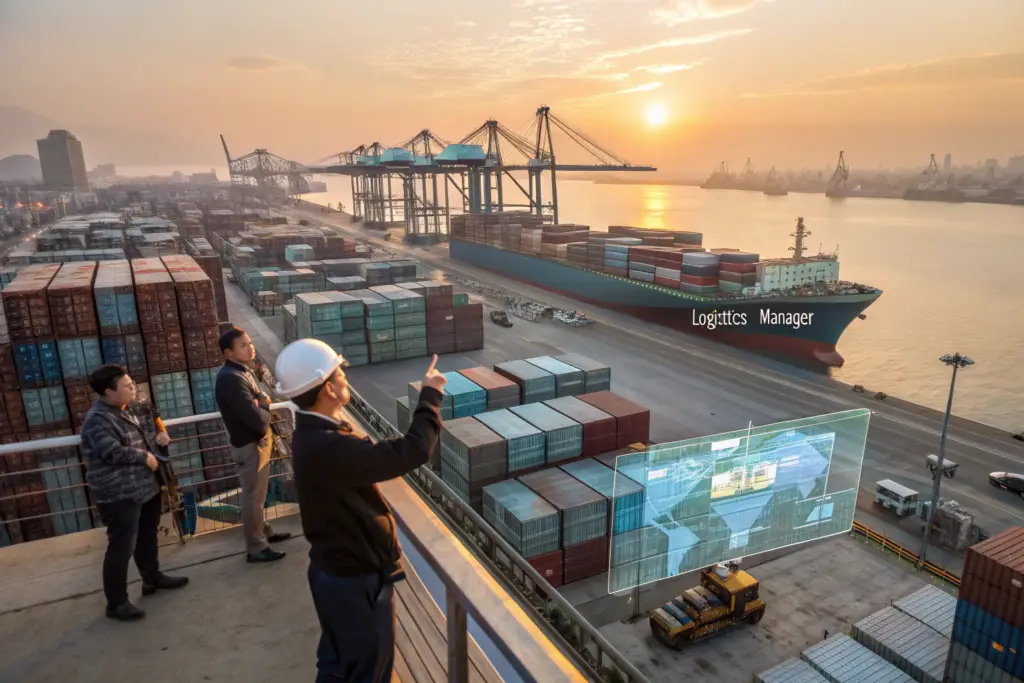
Missing a holiday sales window by three days often means liquidating inventory at a loss. I watched a promising East Coast brand suffer this last December because their supplier did not factor in the Chinese Spring Festival rush. You feel helpless watching the tracker stay static while your competitors sell out. This is not just about bad luck; it is about bad planning. The problem is that humans struggle to process the thousands of variables that affect global logistics. We solve this by letting machines handle the probability math.
Predictive logistics AI does not just track your container; it forecasts the intersection of weather, port congestion, and geopolitical events weeks in advance. By analyzing historical and live data streams, our system alerts us to a 75% chance of delay at Long Beach and automatically reroutes or rebooks long before the bottleneck cripples other shippers.
Why Is Real-Time Inventory Allocation Critical for U.S. Seasonal Sales?
Speed is useless if the product mix is wrong. We supply a large wholesale distributor in Chicago who places blanket orders but needs staggered delivery by size and color based on real-time sell-through. In the past, we relied on a weekly spreadsheet. Now, we connect directly to their inventory management via EDI protocols. When their system shows a stockout of men's medium blue polo shirts, our production queue instantly reprioritizes that SKU.
This dynamic allocation means we ship what is selling, not just what was forecasted six months ago. I recall a scenario where unexpected warm weather in October spiked demand for a short-sleeve dress. Our AI noticed the inventory drain velocity at the distributor’s warehouse and suggested a re-run of the fabric before the buyer even asked. We cut and sewed a top-up order in five days, capturing sales that would have been lost to stockouts. This predictive restocking relies on clear supply chain transparency and shared data goals.
How Does DDP Shipping Become Simpler Through Automation?
Delivered Duty Paid (DDP) scares many factory owners because miscalculating a tariff rate can wipe out the profit margin. We love DDP because it makes life frictionless for our American buyers. You pay one price, and the goods arrive at your warehouse door. We use an automated duty calculator that pulls the latest Harmonized System (HS) codes and tariffs from U.S. Customs and Border Protection. When we finalize a tech pack, the AI instantly computes the exact landed cost, including all duties and fees.
This removes the guesswork. Last quarter, for a shipment of women’s woven jackets heading to California, the system identified a slight tariff advantage by reclassifying the garment based on fiber content breakdown, saving the client $1.20 per unit legally. We cross-check these calculations with our shipping partners digitally. The result is a binding DDP quote generated in two hours, not two weeks. You never face unexpected clearance fees upon arrival, and you can set your retail pricing with confidence weeks before the order leaves China.
What Role Does AI Play in Boosting Quality Control for Custom Apparel?
You run a premium brand. A single shirt with a crooked seam that reaches the end consumer can trigger a return that destroys your net profit on that item. Quality is not just about checking the final piece; it is about preventing the error from happening in the first place. When we produce 50,000 units, a 1% error rate means 500 unhappy customers. That scares us as much as it scares you.
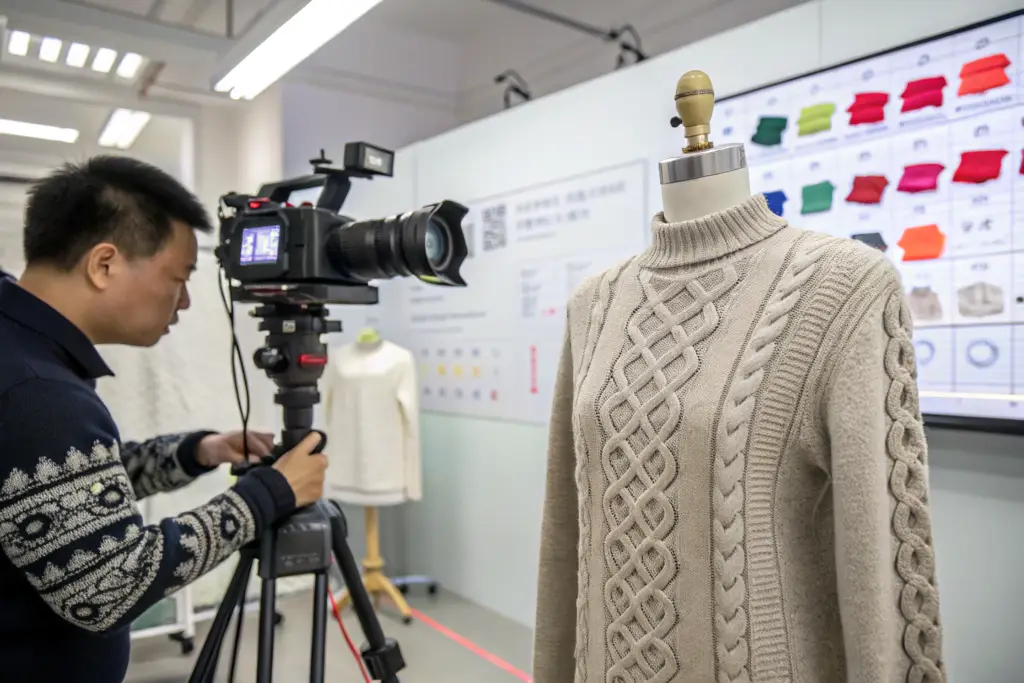
Traditional quality control relies on random sampling, which statistically misses sporadic defects. AI-driven visual inspection systems scan 100% of the production line in real-time. They compare every stitch, color, and print placement against the approved digital reference sample, stopping the line the moment a deviation crosses a statistical threshold.
How Do Automated Inspections Catch Defects Humans Usually Miss?
Human eyes get tired. After staring at 300 black T-shirts for four hours, a worker's focus diminishes. Our automated fabric inspection machine uses high-resolution cameras and laser sensors. It measures stitch density per inch with an accuracy no human can match. Two months ago, during a run of expensive merino wool sweaters, the system detected a subtle tension drift in the linking machine that was creating a slight puckering on the shoulder seam. The variance was less than 1mm.
The machine paused automatically. The technician reset the tension, and we only lost three panels, instead of discovering 200 defective sweaters at final inspection. We also use this technology for color consistency. Using spectrophotometers, the AI checks fabric color under three different light sources (D65, A, and UV) to ensure the bulk fabric matches your lab dip. It flags metamerism issues—where colors match in one light but not another—before cutting begins. This rigorous scanning ensures your e-commerce shots match the physical reality, keeping return rates low and brand loyalty high for items like women’s knit dresses.
Can AI Maintain Consistent Fit Across Different Garment Sizes?
Grading a pattern from size S to 3XL should not distort the design. We received a tech pack for a specific tailored blazer where the original factory's grading added length only to the body but not to the sleeve, creating an odd proportion. We fed the construction specs into our 3D simulation software. The AI modeled the drape on avatars of different sizes. It instantly showed that the sleeve pitch was wrong for sizes above large. We fixed the grading rules digitally before cutting the physical sample. The final look was consistent across the entire size curve.
This process saves weeks of back-and-forth sample shipping. We send our clients a 3D render that is 98% accurate to the real fabric feel. You can rotate the garment, check the tension points, and see the fit on a digital avatar that matches your customer demographic. We compare these specs against standardized measurements to ensure compliance with US sizing expectations. It takes the "hope" out of fit approval, replacing it with physics-based simulation data.
How Does Product Development Speed Up Using Digital Collaboration Tools?
Creativity dies when you wait six weeks for a sample that looks nothing like the sketch. I understand the heartbreak of a designer who sees their vision lost in translation. We used to rely on courier services racing against time. Now, we use a shared digital workspace that collapses time zones. You sketch an idea on a napkin in New York at 9 PM; by the time you wake up, we have already mapped it onto a 3D avatar in Shanghai.
The fusion of AI with digital product creation (DPC) allows for a true-to-life, editable prototype within hours. Instead of sewing a physical muslin, we build a digital twin that renders fabric weight, stretch, and print placement accurately. This allows buyers to iterate silhouettes rapidly without wasting physical materials or time.

How Can 3D Sampling Reduce the New Product Launch Timeline?
A denim brand we partnered with last autumn needed a complex wash-down effect on a jacket. Typically, developing this requires multiple physical wash trials, each taking five days and burning chemicals. We scanned the fabric base into our system. Using AI, we applied the digital wash simulation, showing the exact fading pattern on the seams. The client adjusted the whisker intensity on his screen in real-time. The entire sampling cycle took eight hours instead of fifteen days. We referenced specific textile design software tools to finalize the look within an afternoon.
This cuts the launch time significantly. Once the 3D sample is approved, the system automatically generates the cut files and sends them to the automated spreaders. There is zero data loss between design and production floor. This digital thread ensures the production piece matches the approved digital sample exactly. It helps brands be first to market with trending aesthetics, from rare sleeve silhouettes to unique print placements, without the eco-guilt of shipping multiple failed samples across the ocean.
How Do We Use AI to Pick Trending Fabrics for U.S. Brands?
We source over 2,000 new fabric swatches a season, but physically browsing them is sensory overload. We launched an internal trend radar that scrapes anonymized data from runway shows, social media mood boards, and e-commerce best-sellers in your market. It identifies upward-moving trends in texture and composition. When a New York client asked for a "soft, but structured sustainable outerwear fabric," the AI correlated this to a rising spike in brushed recycled polyester twills, backed by data from fashion trend analytics.
It presented five options we held in stock, complete with carbon footprint data and bulk availability. We recently suggested a specific weft-knit structure to a buyer looking for the "rare style" factor, based on its emerging popularity in the European scandi-style segment. This data-driven curation gives our partners the confidence to buy, transforming them from followers to trendsetters. It merges our deep textile knowledge with real-time market intelligence from the global sourcing network.
Conclusion
The apparel industry of 2026 is not about cheap labor. It is about intelligent execution. We have moved past the era of delayed emails, fixed sample photos, and container ship prayers. Today, Shanghai Fumao stands as a shield between you and the chaos of international manufacturing. By integrating AI into our core operations, we transform your pain points into our checklist. We verify certificates before the roll leaves the shelf. We predict a port delay before it jams your inventory. We catch a sewing defect before the needle finishes the stitch. And we do this while keeping our competitive pricing sharp and our custom logo quality pristine.
The result is a partnership where you, the confident brand owner, take the lead in conversation with absolute data certainty. You no longer need to second-guess a factory sales rep. You just look at the dashboard. Whether you source men’s wear, women’s wear, or kids’ wear from China, the standard has changed. The old way was fragile. Our new way is robust.
If you are a large distributor or an established brand owner looking for a factory with 5 production lines that offers DDP shipping and truly understands the U.S. market’s rhythm, let’s talk directly. You deserve a manufacturing extension that speaks your language and protects your margin. Reach out to our Business Director, Elaine, at elaine@fumaoclothing.com. Let us show you how we can bring your next collection to life faster than ever before.