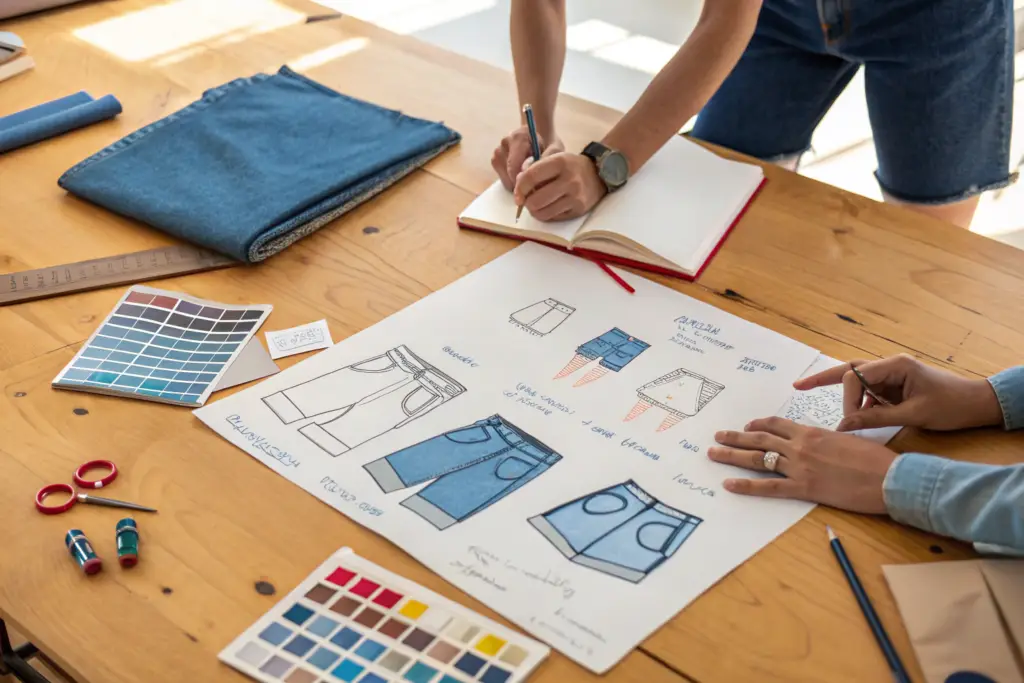
You have a sketch. Maybe it is on a napkin. Maybe it is a full tech pack. You can see the shorts in your mind. The curved hem. The vintage wash. The custom embroidery on the back pocket. You have carried this idea for months. Now you want to make it real. You contact a factory. You send the sketch. The reply comes back. "We can make this. Minimum order 3,000 pieces. Send deposit." No questions. No design feedback. No discussion about fabric weight or wash options. Just a price and a bank account number. That reply is a warning sign. A factory that does not ask questions about your design is a factory that does not care about your design. They will make something. It will not be what you imagined.
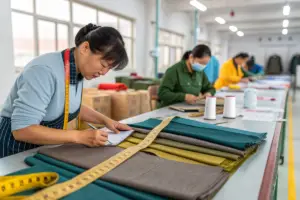
When you design custom denim shorts with Shanghai Fumao's R&D team, the process is a structured collaboration. You are paired with a dedicated product developer who asks about your target customer, your retail price point, your fit preferences, and your aesthetic vision. The R&D team includes our pattern maker, our wash technician, our embellishment specialist, and our sourcing manager. Together, we translate your sketch into a physical sample through four defined stages: design consultation, tech pack development, proto sampling, and fit approval.
I run Shanghai Fumao, and our R&D team is the part of the factory I am most proud of. It is where we prove that a Chinese garment factory can be a creative partner, not just a production unit. In this article, I will walk you through the entire design collaboration process. I will introduce you to the team members. I will explain the decisions you will make at each stage. And I will show you how we turn your idea into a sample you can hold in your hands, ready for production.
What Happens During the Initial Design Consultation?
The first conversation is the most important one. It sets the direction for the entire project. A bad first conversation leads to a sample that misses the mark. A good first conversation aligns the factory's understanding with the designer's vision. We spend more time on this stage than most factories spend on the entire sampling process. That is not inefficiency. That is investment in getting it right the first time.
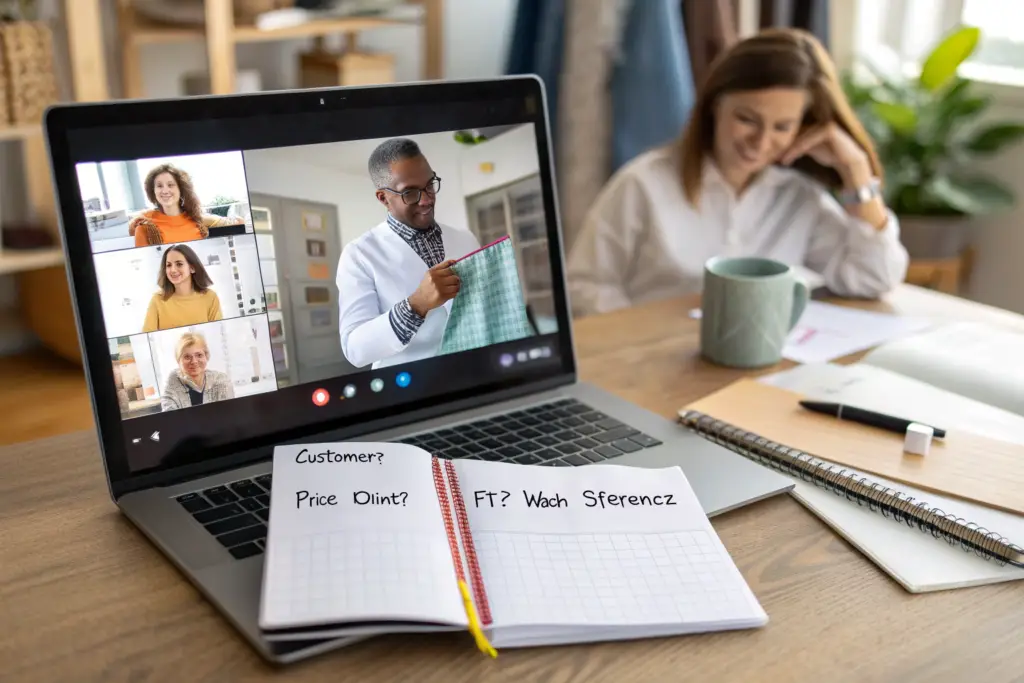
The consultation is a structured conversation, not an order-taking exercise. Our product developer leads the call. They have a list of questions, but they also listen and adapt. The goal is not to fill out a form. The goal is to understand what makes your brand unique and how these shorts fit into your collection. Are they the hero piece or a supporting style? Are they for a streetwear customer who wants bold branding or a minimalist customer who wants subtle details? The answers to these questions inform every technical decision that follows.
Let me introduce the team members involved from day one and the specific questions they will ask you.
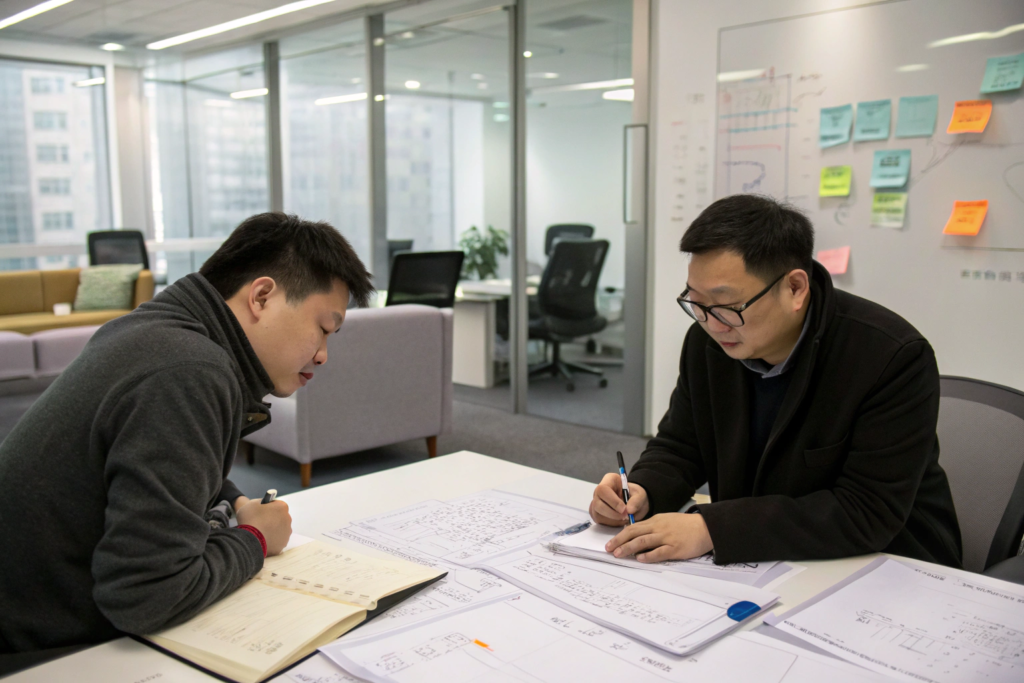
Who Are the Key Members of Our R&D Team?
When you begin a design project with us, four people are assigned to your account. You will interact with all of them at different stages.
The product developer is your primary contact. This person manages the project timeline, facilitates communication, and ensures your design intent is translated accurately at each stage. Our lead product developer is Elaine. She has a background in fashion design and has worked in our factory for eight years. She speaks fluent English and understands both the creative and technical sides of product development. The pattern maker is responsible for translating your design into a 2D pattern and grading it across sizes. Our head pattern maker has twenty-two years of experience. He specializes in denim and woven bottoms. He knows how different denim weights and stretch percentages affect fit. The wash technician runs our wash development lab. She has a degree in textile chemistry and ten years of experience in denim finishing. She can look at a reference image of a vintage fade and reverse-engineer the enzyme wash, ozone cycle, and hand-sanding steps required to replicate it. The sourcing manager handles fabric and trim procurement. He maintains relationships with our denim mills, hardware suppliers, and label manufacturers. He can source a specific fabric weight, stretch percentage, or sustainable fiber blend to match your requirements.
This team meets weekly to review all active development projects. When your project is discussed, all four members contribute their expertise. You are not relying on one person's interpretation of your design. You have a cross-functional team working to solve problems and propose ideas. The apparel product development team structure is common in large brands but rare in contract manufacturing. We built it because we believe a factory should add creative and technical value, not just sewing capacity.
What Design Questions Will We Ask Before Starting Your Tech Pack?
The consultation covers seven key areas. I will list them so you can prepare before the call. First, the brand context. Who is your customer? What is your retail price point? What other products do you sell? This helps us understand the quality level and the cost constraints. Second, the design inspiration. Do you have a sketch, a reference photo, or a physical sample you want to replicate or modify? If you have a physical sample, we ask you to send it to us so our pattern maker can analyze the construction. Third, the fit and silhouette. What is the rise? High, mid, low? What is the leg shape? Straight, slim, relaxed, flared? What is the desired length? Above knee, mid-thigh, knee-length? Fourth, the fabric preferences. Do you have a specific weight in mind? A stretch or rigid preference? A selvedge requirement? Fifth, the wash and finish. Is the short raw, rinsed, lightly washed, or heavily distressed? Do you have a reference image for the wash? Sixth, the branding and trim. What logo applications do you want? Leather patch, embroidery, metal button, woven label? Seventh, the target cost and retail price. We need to know your budget constraints so we can propose fabric and construction options that fit within your margin requirements.
These questions ensure that when the pattern maker begins the tech pack, they are working from a complete creative brief, not a vague sketch. The design brief for apparel manufacturing process is the foundation of a successful development project. We invest the time upfront.
How Do We Translate Your Sketch into a Technical Spec Pack?
The tech pack is the blueprint. It is a document that converts your creative vision into technical specifications that a production team can execute. Every measurement, every stitch type, every wash instruction, every trim placement is defined in the tech pack. If it is not in the tech pack, it will not be on the garment. That is the rule.
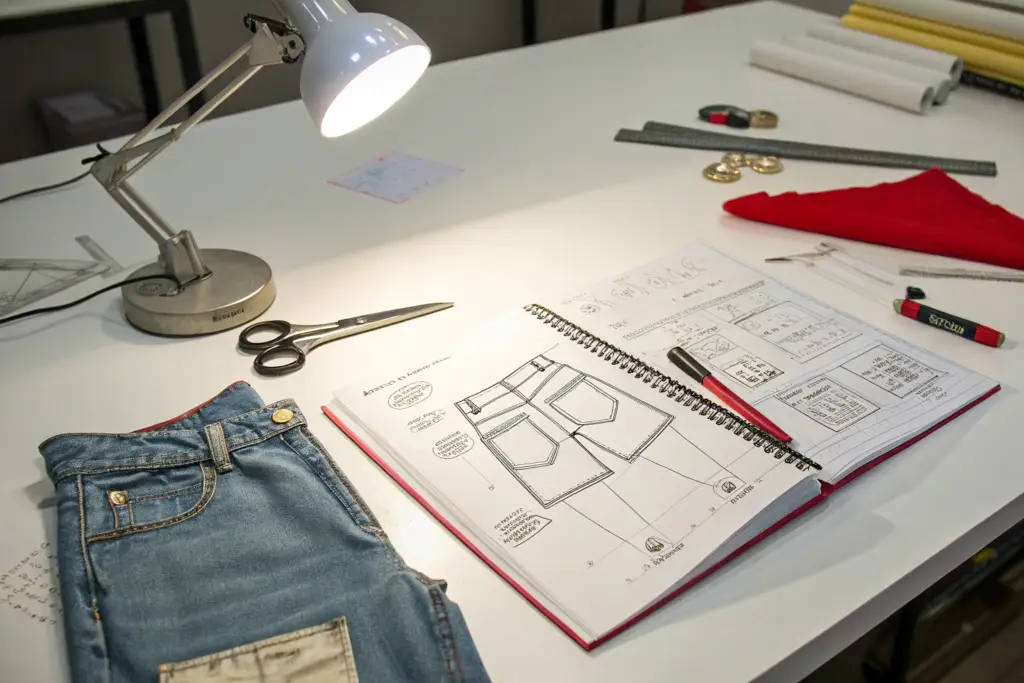
Our pattern maker creates the tech pack after the design consultation. The first draft is sent to you for review. You will see a technical sketch of the short, front and back, with measurement callouts. You will see a bill of materials listing the fabric, the hardware, the labels, and the packaging. You will see stitch and construction details. You will see the wash recipe description. This document is the contract between your vision and our production. We do not proceed to sampling until you approve the tech pack.
Let me explain how the key technical decisions are made and documented during this stage.
How Do We Determine the Fit Block and Measurement Specifications?
The fit block is the foundational pattern shape for your short. We can start from one of our existing fit blocks, our standard slim, straight, or relaxed blocks, and modify it to match your design, or we can develop a completely new block based on a reference sample or detailed measurements you provide.
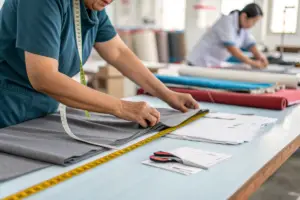
If you have a reference sample, we deconstruct it. The pattern maker carefully opens the seams and traces each pattern piece onto pattern paper. They measure the rise curve, the inseam, the outseam, the waistband width, the pocket placement, and the leg opening. They note the seam allowances, the stitch types, and the construction sequence. This deconstruction produces a pattern that replicates the reference garment. From that base, we make the modifications you request. Raise the rise by one centimeter. Taper the leg by two centimeters. Add a curved hem. The modified pattern is digitized into our Gerber CAD system. If you are starting from a sketch without a reference sample, the pattern maker uses your design and your fit description to draft a pattern from scratch. This requires more iteration. The first sample is a fit test. You try it on a model. You send us feedback and photos. We adjust the pattern. The process repeats until the fit is approved. The apparel fit block development is an iterative process. Patience at this stage prevents problems at the bulk production stage.
What Fabric, Wash, and Trim Decisions Are Made at This Stage?
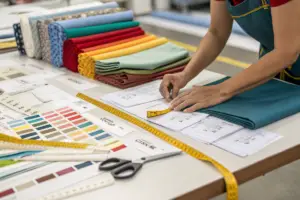
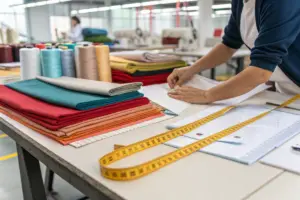
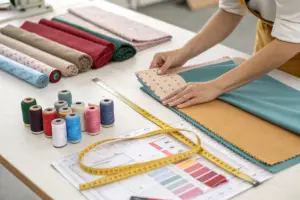
The tech pack specifies every material and process. The fabric specification includes the weight in ounces per square yard, the fiber composition, the weave type, the stretch percentage, and the mill source. If the fabric is custom-developed, the tech pack references the lab dip approval number. The wash specification includes the wash type, the enzyme wash recipe, the ozone cycle, the hand-sanding instructions, and the final hand feel. The wash recipe is developed in parallel with the fit sample. The wash technician takes a swatch of the approved fabric and runs a matrix of wash tests to match the reference image. The approved wash recipe is documented with the specific chemical concentrations, temperatures, and cycle times. The trim specification lists every component. The zipper brand, size, and color. The button type, size, finish, and attachment method. The rivet type and finish. The label types, sizes, and placement. The hangtag design and attachment. The polybag and carton specifications. Each trim item is sourced and a physical sample is attached to the tech pack for reference. The apparel tech pack elements guide lists all the components that should be specified. A complete tech pack eliminates ambiguity. When the production team picks up the tech pack, every question should already be answered.
What Happens During the Proto Sampling and Fit Approval Stage?
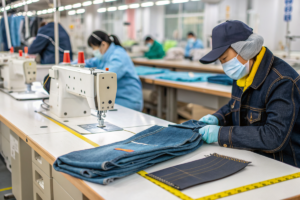
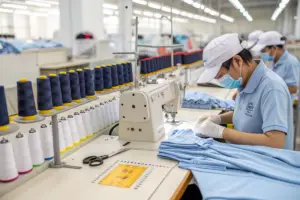
The proto sample is the first physical version of your short. It is made from the actual production fabric, or a close substitute if the fabric is still being sourced. The proto sample is cut and sewn by our sampling room, a separate department from the bulk production lines. The sampling room is staffed by our most experienced sewers, but the proto is not meant to be a handcrafted piece of art. It is meant to be a proof of concept. Does the pattern work? Does the fit match the specification? Does the wash look like the reference?
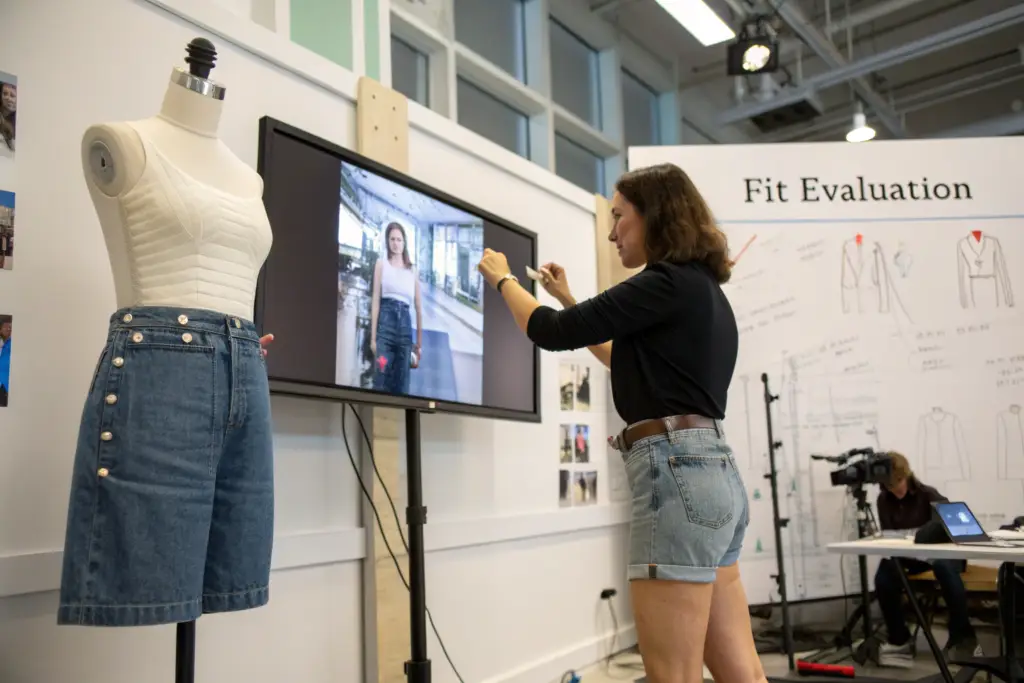
When the proto sample is complete, we ship it to you with a fit evaluation form. You put the sample on a fit model, or on a mannequin, or on yourself if you are the fit model. You take photos from the front, back, and side. You mark up the photos with your comments. You send the form and the photos back to us. We review your feedback with the pattern maker and the product developer. We discuss which changes are simple pattern adjustments and which require rethinking the construction. Then we make the revisions and cut the next sample.
Let me explain the specific evaluation criteria and the typical number of sampling rounds.
How Do We Collaborate on Fit Feedback and Pattern Adjustments?
Fit feedback is a communication skill. Vague comments like "the fit is off" are not actionable. We ask clients to use specific, measurable language. "The waistband is 1 cm too tight." "The front rise is 2 cm too short." "The thigh is too loose through the upper leg." We provide a measurement sheet with the approved spec from the tech pack. You measure the sample and compare the actual measurements to the spec. The differences are objective data that the pattern maker uses to adjust the digital pattern.
Photos are essential. A photo of the short on a standing model from the front, back, and side shows how the garment drapes and where the tension lines are. Horizontal pull lines across the hip indicate the hip width is too narrow. Vertical folds at the front crotch indicate the front rise is too long. Diagonal drag lines from the side seam indicate a balance issue in the pattern. Our pattern maker reads these visual signals and translates them into pattern corrections. We also conduct a video call during the fit session if the time zones allow. You hold up the sample on the model. Our pattern maker watches live and asks you to describe what you are seeing. This real-time collaboration can resolve fit issues in one session that would take two or three rounds of email. The garment fit evaluation guide explains the common fit issues and how to identify them. A shared vocabulary between the designer and the pattern maker speeds up the process.
How Many Sampling Rounds Are Typically Needed?
The number of sampling rounds depends on the complexity of the design and the clarity of the initial brief. For a design that is similar to a style we have made before, using an existing fit block with minor modifications, one round of sampling is often sufficient. The proto sample is approved and becomes the pre-production sample. For a completely new design with a new fit block, two to three rounds are typical. The first round is the proto, which tests the basic pattern and construction. The second round incorporates fit adjustments. The third round, if needed, fine-tunes minor details.
Each round takes approximately two to three weeks, including shipping time. A three-round sampling process can take six to nine weeks. This timeline frustrates brands that want to launch quickly, but rushing sampling is a false economy. A fit issue that is not resolved at the sampling stage becomes a production issue that affects every unit in the order. Fixing a pattern before bulk cutting costs a few days. Fixing 5,000 pairs of shorts after bulk production costs weeks and thousands of dollars. We encourage clients to invest the time in sampling. The apparel sampling process timeline is a critical path item in the product development calendar. It cannot be compressed without increasing risk.
How Does the R&D Team Support Custom Washes and Embellishments?
The wash is the personality of the short. Two shorts cut from the same pattern in the same fabric can look completely different based on the wash. A dark rinse looks clean and premium. A vintage enzyme wash looks worn-in and casual. A heavily distressed wash looks edgy and streetwear. The wash development process is where our lab technician translates your aesthetic reference into a repeatable chemical and mechanical recipe.
Embellishments are the branding and decorative details. Embroidery, patches, printing, laser engraving. These applications require their own development process. The artwork must be digitized. The application must be tested on the denim fabric for adhesion, color fastness, and durability. Our R&D team manages both the wash development and the embellishment development as integrated parts of the product creation process.
Let me walk through how we develop a custom wash and how we test embellishments for production.
How Do We Develop a Custom Wash Recipe from a Reference Image?
You send us a photo. It might be a picture of a vintage pair of shorts you found in a thrift store. It might be a screenshot from a competitor's website. It might be a mood board image from a fashion editorial. Our wash technician analyzes the image. She identifies the base wash level. Is it a dark rinse, a medium wash, or a light wash? She identifies the contrast level. Is the fading even and uniform, or are there pronounced highlights on the thighs and seat? She identifies the tint. Is it a pure blue cast, a yellow cast, or a grey cast?
Based on this analysis, she develops a test matrix. She cuts five to eight small swatches of your fabric. She runs each swatch through a different recipe. Swatch A might be a 20-minute enzyme wash with no stone. Swatch B adds pumice stones for 10 minutes. Swatch C uses ozone instead of enzyme. Swatch D adds a light potassium permanganate spray on the thigh area. Swatch E adds a tinting step with a reactive dye. Each swatch is dried and measured on the spectrophotometer. The color coordinates are recorded. The swatches are photographed under standardized D65 lighting and sent to you for review. You select the swatch that best matches your vision, or you ask for a modification. "Swatch C is close, but can you make it 10% lighter?" We adjust the recipe and re-test. The approved swatch becomes the sealed wash standard. The recipe is documented with exact chemical concentrations, temperatures, cycle times, and machine settings. This recipe is used for the pre-production sample and for every bulk production lot. The denim wash development process is a blend of art and science. Our lab has the equipment and the expertise to make it objective and repeatable.
Can We Prototype Embroidery, Patches, and Other Embellishments?
Yes. Our in-house embellishment department can prototype most applications. For embroidery, we digitize your logo or design artwork and run a stitch-out on a swatch of your denim fabric. We test different thread colors and densities. We send you the physical stitch-out for approval. For leather patches, we laser-engrave or foil-stamp your logo onto a patch sample and sew it onto a denim swatch. For screen printing, we expose a screen with your artwork and print a sample on denim. For heat transfers, we press a sample transfer onto denim. For laser engraving, we program the laser with your design file and test it on a denim swatch to find the right power and speed settings.
Each embellishment prototype is tested for durability. The embroidered swatch is washed five times to check for thread breaks or color bleeding. The printed swatch is washed and abraded to check for cracking or peeling. The laser engraving is inspected for consistent depth and color. The test results are shared with you. If an application does not meet our durability standards, we suggest alternatives. The garment embellishment techniques vary in their suitability for denim. We guide you toward methods that will look good and last.
Conclusion
Designing your own denim shorts with our R&D team is a structured, collaborative process that transforms your creative vision into a production-ready sample. It begins with a detailed consultation where we learn about your brand, your customer, and your design intent. It continues with the development of a technical spec pack that specifies every measurement, material, and process. It becomes tangible with the proto sample, which is evaluated, adjusted, and approved through a structured fit feedback process. And it is enriched with a custom wash and embellishments developed in our laboratory and tested for durability.
This process takes time. It requires your active participation. It is not a transaction where you send a sketch and receive a box of shorts. It is a partnership where your creative direction and our technical expertise combine to create a product that neither could produce alone. The brands that invest in this process are the brands that build loyal customers. Their shorts fit consistently. Their washes are distinctive. Their branding is precise. The product tells the customer that the brand cares about details.
If you have a denim short design you want to develop, start the conversation. Contact our Business Director, Elaine. She will schedule the initial design consultation with you and our R&D team. Send her your sketches, your reference images, your ideas, even if they are rough. Our job is to help you refine them into a product. Her email is elaine@fumaoclothing.com. At Shanghai Fumao, we do not just manufacture your designs. We help you create them.