Last spring, a distributor from Dallas sent me a certificate that a competing factory had emailed him. It was a BSCI audit report with a shiny "A" grade stamped on the front page. He asked me, as a courtesy, if I could take a look. I spent ten minutes with the document. The audit company's logo was slightly blurry. The report number didn't match the format that the legitimate audit firm uses. The auditor's signature was a pixelated scan of a name I recognized from a different audit firm entirely. The certificate was fake. A complete fabrication. The distributor had been ready to wire a $35,000 deposit to this factory. He had no idea the document was fraudulent until I flagged it. He's now a client of Shanghai Fumao. That experience, and a dozen similar ones I've seen over the years, convinced me that AI-assisted certificate verification is not a futuristic gimmick. It's a necessary survival skill for any brand owner sourcing from overseas factories. I'm Richard, the owner of Shanghai Fumao. I'm going to teach you exactly how to use AI tools to verify factory certificates, and I'm going to do it from the perspective of someone inside the industry who knows where the frauds hide.
What Types of Factory Certificates Should a Denim Supplier Have?
Before you can verify certificates with AI, you need to know which certificates actually matter. The industry is flooded with paper. A supplier can send you twenty PDFs, and fifteen of them might be meaningless. Knowing the difference between a rigorous, audited certification and a decorative piece of paper is the first filter.
The certificates that carry real weight in denim manufacturing fall into three categories: social compliance, environmental management, and quality management. Social compliance certificates verify that the factory treats its workers properly. Environmental certificates verify that the factory manages its chemical and resource footprint responsibly. Quality management certificates verify that the factory has systems to produce consistent output. A legitimate denim supplier should hold at least one active certificate in each category.
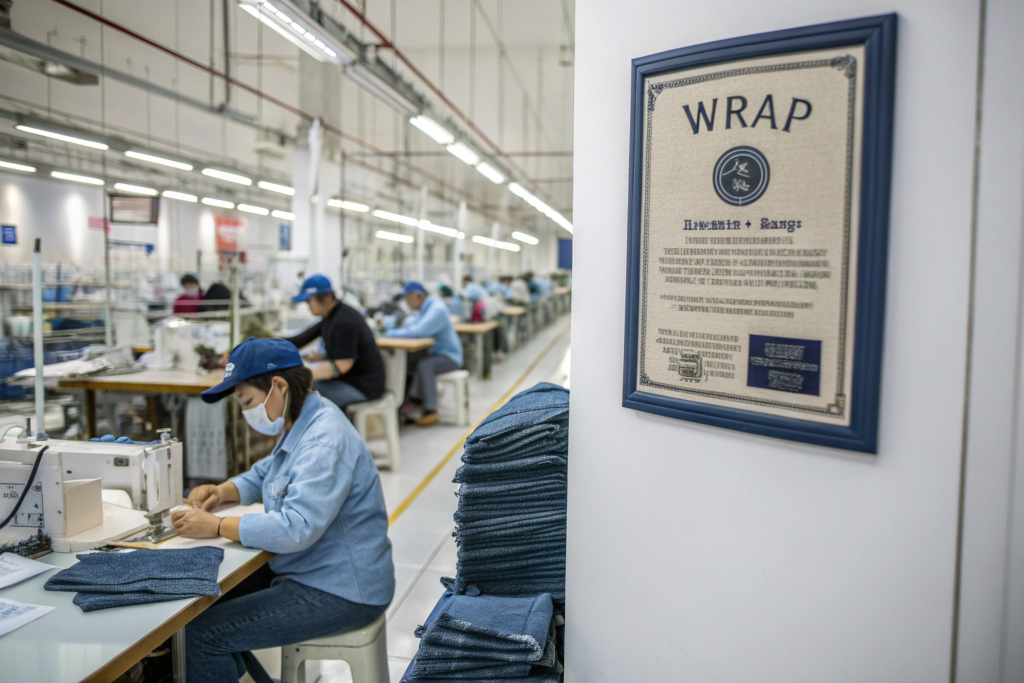
The most widely recognized social compliance standards are BSCI (Business Social Compliance Initiative), SMETA (Sedex Members Ethical Trade Audit), WRAP (Worldwide Responsible Accredited Production), and SA8000. BSCI and SMETA are audit frameworks; they don't issue certificates per se, but they produce detailed audit reports with a grade or findings summary. WRAP and SA8000 issue actual certificates. A denim factory that exports to North America should have at least one of these, and the audit should be recent—within the last 12 months.
For environmental management, the key standards are ISO 14001, which certifies an environmental management system, and OEKO-TEX Standard 100, which certifies that the fabric and trims are free from harmful substances. For denim specifically, you might also see a GOTS (Global Organic Textile Standard) certificate if the factory handles organic cotton, or a ZDHC (Zero Discharge of Hazardous Chemicals) compliance report if the factory is part of that program.
For quality management, the gold standard is ISO 9001. This certifies that the factory has a documented quality management system with continuous improvement processes. A factory with ISO 9001 is not guaranteed to produce perfect shorts, but it is guaranteed to have a system for catching and correcting defects when they occur.
A certificate is only as good as the body that issued it. The most credible certificates come from third-party audit firms that are accredited by the standard holder. For example, a BSCI audit must be conducted by an independent audit company approved by amfori, the organization that runs BSCI. A factory cannot audit itself. The audit report should clearly state the name of the audit firm, the name of the auditor, the date of the audit, and the validity period. If any of these elements is missing or looks generic, that's a red flag.
I keep a current matrix of my own factory's certificates in a shared folder that any client can access. The folder contains the full audit reports, not just the summary pages, and it's updated whenever a certificate is renewed. A factory that hesitates to share the full report, or that only shares a one-page summary, is a factory that may have something to hide in the findings section.
Which Certifications Are Non-Negotiable for U.S. Import Compliance?
U.S. customs does not require a specific social compliance certificate to import denim shorts. Legally, you can import goods from a factory with no certifications at all. But practically, the landscape has shifted. Major U.S. retailers—Walmart, Target, Nordstrom, Macy's—all require their suppliers to meet certain social compliance standards, and they audit accordingly. If your brand sells to these retailers, or aspires to, your factory needs to be compliant with their vendor requirements.
Beyond retailer requirements, U.S. law prohibits the import of goods made with forced labor. This is enforced by U.S. Customs and Border Protection under the Tariff Act. If CBP suspects that a factory is using forced labor, they can detain the shipment, and your goods sit at the port while your retail delivery window closes. A valid social compliance audit from a recognized body is your best defense against a forced labor allegation. It demonstrates that an independent third party has inspected the factory's labor practices and found them compliant.
The Withhold Release Orders, or WROs, issued by CBP have increased significantly in recent years, targeting specific products and regions. Denim and cotton products from certain sourcing regions have faced heightened scrutiny. A factory that can provide a clean, recent SMETA or WRAP audit is in a much stronger position than one that cannot.
From a practical sourcing standpoint, I consider two certifications non-negotiable for any denim factory I would recommend to a U.S. brand client. The first is a social compliance audit from BSCI, SMETA, WRAP, or SA8000, conducted within the last 12 months, with a passing grade and a corrective action plan for any findings. The second is an OEKO-TEX Standard 100 certificate for the fabric and trims, which provides assurance that the product meets U.S. safety standards for harmful substances. Everything else is valuable but secondary.
How Can You Distinguish Genuine Audits From Superficial Paperwork?
The certificate industry has a shadow side. There are companies that will issue a professional-looking certificate to any factory that pays a fee, with no audit conducted or a superficial audit that checks almost nothing. These are sometimes called "certificate mills." A factory that buys a certificate from a mill is not a compliant factory. It's a factory that knows how to spend a few hundred dollars to look compliant.
You can distinguish a genuine audit from superficial paperwork by checking several specific elements. The audit report should be detailed—20 pages or more, not a two-page summary. It should list the specific areas of the factory that were inspected, the specific documents that were reviewed (payroll records, time cards, safety training logs), the specific workers who were interviewed, and the specific findings. A real audit finds something. A perfect audit with zero findings is either a superficial audit or a fraudulent one.
The audit report should include photos of the factory floor, taken by the auditor during the inspection. These photos should show the actual working conditions, not staged beauty shots. They should include the auditor's timestamp and sometimes a GPS tag. If the photos look like they were taken by the factory's marketing department, the audit may not be genuine.
The audit report should also include a corrective action plan, or CAP. This is a list of the non-conformances found during the audit, with a timeline for the factory to fix them and evidence that the fixes were implemented. A factory that has a genuine audit will have a CAP and will be able to show you the evidence that the corrective actions were completed. A factory with a fake audit will not have a CAP, or the CAP will be generic and unverified.
Finally, you can verify the audit directly with the standard holder. BSCI audits are uploaded to the amfori platform, and you can check the validity of an audit by contacting amfori with the factory's DBID number. SMETA audits are uploaded to the Sedex platform. WRAP certificates can be verified on the WRAP website. If the factory refuses to provide the reference number that allows you to verify the audit independently, that's a deal-breaker.
How Can AI Tools Quickly Scan a Certificate for Inconsistencies?
This is where the technology gets interesting. AI tools can now analyze documents with a level of speed and pattern recognition that surpasses a human reviewer. They can spot inconsistencies that a tired brand owner scrolling through a PDF on their phone at midnight would almost certainly miss. I've started using these tools myself to double-check the certificates from my own suppliers—the mills, the trim factories, the chemical vendors—and I've been impressed by what they catch.
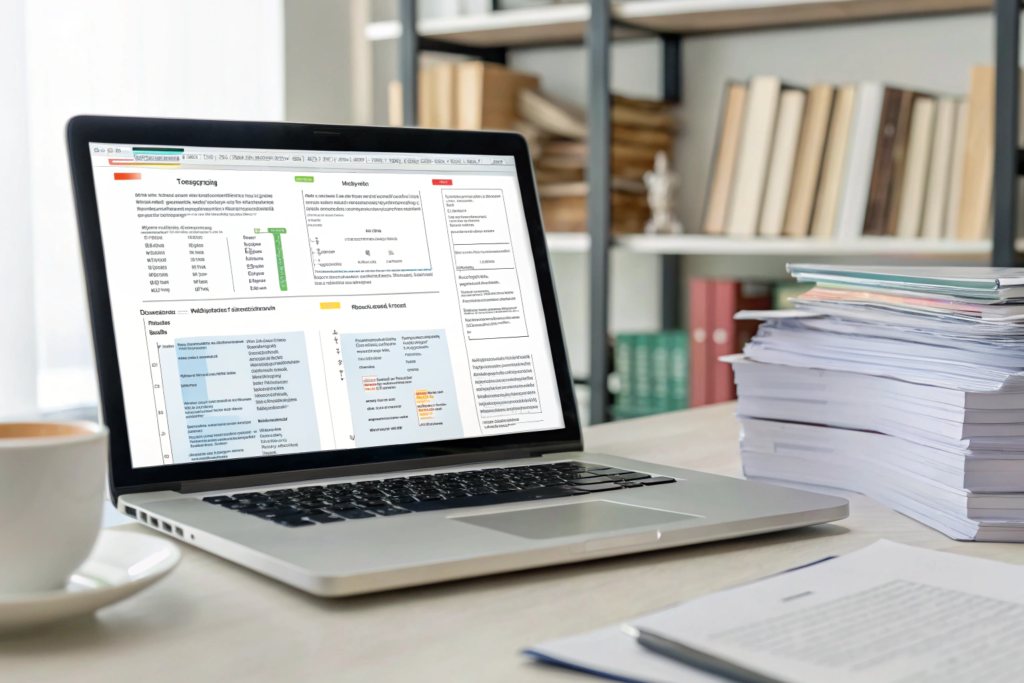
The most accessible AI tool for certificate verification is a large language model with vision capabilities, like ChatGPT or Claude. You can upload a PDF of an audit certificate directly into the chat interface and ask the AI to analyze it. The AI can read the text, examine the layout, and compare what it sees against a vast internal knowledge base of what legitimate certificates from various standards bodies look like. This is not a perfect system, and I'll discuss its limitations later, but it's a powerful first-pass filter that takes five minutes and costs almost nothing.
The AI can check for several categories of inconsistency. Formatting and visual inconsistencies: Does the logo on the certificate match the official logo of the certifying body? Are the fonts consistent throughout the document? Are there alignment issues or pixelation that suggest the document has been digitally altered? A human eye might gloss over a slightly stretched logo or a font that's 90% correct. An AI trained on design pattern recognition can flag these anomalies.
Content and language inconsistencies: Does the language in the certificate match the standard terminology used by that certifying body? Does the report number follow the correct format? Is the auditor's name consistent with the audit firm's known personnel? Are there grammatical errors or awkward phrasings that a professional audit firm would not produce? A legitimate audit report is written by professionals who produce hundreds of these documents. The language is precise, standardized, and grammatically flawless. A forgery often has telltale language mistakes.
Numerical and data inconsistencies: Do the dates make sense? Is the certificate validity period correct for that type of audit? Does the scope of the audit match the factory's stated capabilities? If a factory claims to have 500 workers but the audit report covers a facility with 50 workers, something is off. AI can cross-reference these numerical claims and flag discrepancies.
I'll walk you through a specific example. A few months ago, I uploaded a BSCI audit report that a potential client had received from a competing factory into an AI analysis tool. The AI flagged three issues within thirty seconds. First, the audit firm's logo was a low-resolution image that had been clearly copied and pasted onto the document, not embedded as a vector graphic as the legitimate firm uses. Second, the report number format was close to the correct format but had an extra digit that the legitimate firm's numbering system doesn't use. Third, the auditor's stated qualifications included a credential that doesn't exist. The AI provided links to the legitimate audit firm's website showing the correct report format and the correct credential names. I forwarded the analysis to the potential client. He didn't send the deposit.
Can ChatGPT or Claude Detect Forged Audit Reports?
The short answer is yes, with important caveats. ChatGPT and Claude, the two most widely used AI chat platforms, both have the ability to analyze uploaded documents and images. They can read the text, examine the visual layout, and cross-reference the information against their training data, which includes publicly available information about major certification standards.
When you upload a certificate to ChatGPT or Claude, the AI will typically begin by extracting and summarizing the key information: the factory name, the audit firm, the standard, the date, the grade, and the validity period. It will then compare these elements against what it knows about the standard. If the AI notices that the certificate claims to be a WRAP Gold certificate but the WRAP standard only has Platinum, Gold, and Silver levels and the criteria described don't match the Gold level requirements, it will flag that.
The AI can also detect image manipulation. A forged certificate is often a real certificate from a different factory that has been edited to change the factory name, the date, or the grade. The editing process leaves artifacts—subtle variations in background color around the edited text, slight misalignments of text blocks, inconsistencies in font rendering. A human reviewer comparing the certificate to a known genuine sample would need a trained eye and a lot of time to spot these. The AI can identify them algorithmically.
However, and this is critical, the AI's analysis is not definitive proof. The AI can tell you that a certificate has suspicious characteristics and warrants further investigation. It cannot replace direct verification with the certifying body. I treat the AI analysis as a screening tool. If the AI flags multiple issues, I don't need to spend time verifying with the certifying body; the factory has already disqualified itself. If the AI finds the certificate clean, I proceed to manual verification. The AI narrows the field, but it doesn't make the final call.
There's also the issue of AI hallucinations. An AI might confidently assert that a certificate is invalid because it misremembers a detail about the certification standard. This is why I always ask the AI to cite its sources or explain its reasoning. If it says "the report number format is incorrect," I ask it to show me the correct format and where it got that information. If it can't provide a verifiable source, I treat the flag with caution. AI is a tool, not an oracle.
What Are the Best Prompts to Use for Certificate Analysis?
The quality of the AI's analysis depends heavily on the quality of the prompt you give it. A vague prompt like "check this certificate" will produce a vague, unhelpful response. A detailed, structured prompt will produce a thorough, actionable analysis.
I've developed a set of prompts that I use consistently for certificate verification, and I'm going to share the exact phrasing. You can copy these prompts directly into ChatGPT or Claude.
The first prompt is for initial document analysis. I upload the certificate PDF and type:
"Analyze this factory audit certificate. Identify the certifying body, the audit standard, the audit firm, the factory name, the audit date, the validity period, and the grade or outcome. Check the formatting, logo, fonts, and layout for any signs of digital alteration or inconsistency with the official branding of the certifying body. Check the report number format against the standard format for this certifying body. Check the auditor's stated qualifications for legitimacy. Check the language and terminology for consistency with professional audit reporting standards. Flag anything that appears suspicious or inconsistent. Provide your reasoning for each flag."
This prompt forces the AI to do a structured, element-by-element analysis rather than giving a general impression. The "provide your reasoning" instruction is critical because it makes the AI's thinking transparent. You can evaluate the reasoning yourself and decide whether the flag is valid or a hallucination.
The second prompt is for cross-referencing the certificate against the official standard. After the AI has extracted the key information, I type:
"Based on the information in this certificate, does the certificate align with the published requirements of [certifying body] for a [standard name] audit? Specifically, check: the validity period, the grading scale, the scope of the audit, and the required elements of the audit report. If there are discrepancies, list them and explain why they are inconsistent with the standard."
This prompt leverages the AI's training data about the certification standard. If the certificate claims a five-year validity for a standard that requires annual re-audit, the AI will flag the discrepancy. If the certificate uses a grading scale that doesn't exist for that standard, the AI will flag that too.
The third prompt is for image forensics. If the certificate is a scanned image rather than a digital PDF, I upload the image and type:
"Examine this image for signs of digital manipulation. Look for inconsistencies in background texture around text, variations in font rendering, misaligned text blocks, and artifacts that suggest the image has been edited. Identify any areas that appear to have been altered and explain what suggests alteration."
This prompt uses the AI's image analysis capabilities to do a basic digital forensics check. It's not as thorough as a dedicated image forensics tool, but it catches the obvious Photoshop jobs.
How Do You Cross-Reference Supplier Claims Using AI and Public Databases?
AI analysis of the certificate itself is only one layer of verification. The next layer is cross-referencing the information on the certificate against external data sources. A certificate might look perfect in isolation but fall apart when you check the factory name against a government business registry or the audit firm against an accreditation database.
This cross-referencing work used to be tedious. You had to navigate multiple government and industry websites, each with its own search interface, and manually type in factory names and registration numbers. AI tools have made this process dramatically faster. A large language model can guide you to the correct databases, explain what to look for, and in some cases, perform the search itself if the database has a public API or a web-accessible interface.
The key external data sources for verifying a denim factory are the business registration database of the factory's country, the accreditation database of the certifying body, the U.S. Customs and Border Protection forced labor enforcement database, and industry-specific platforms like the Open Apparel Registry. Each of these sources provides a different piece of the verification puzzle.
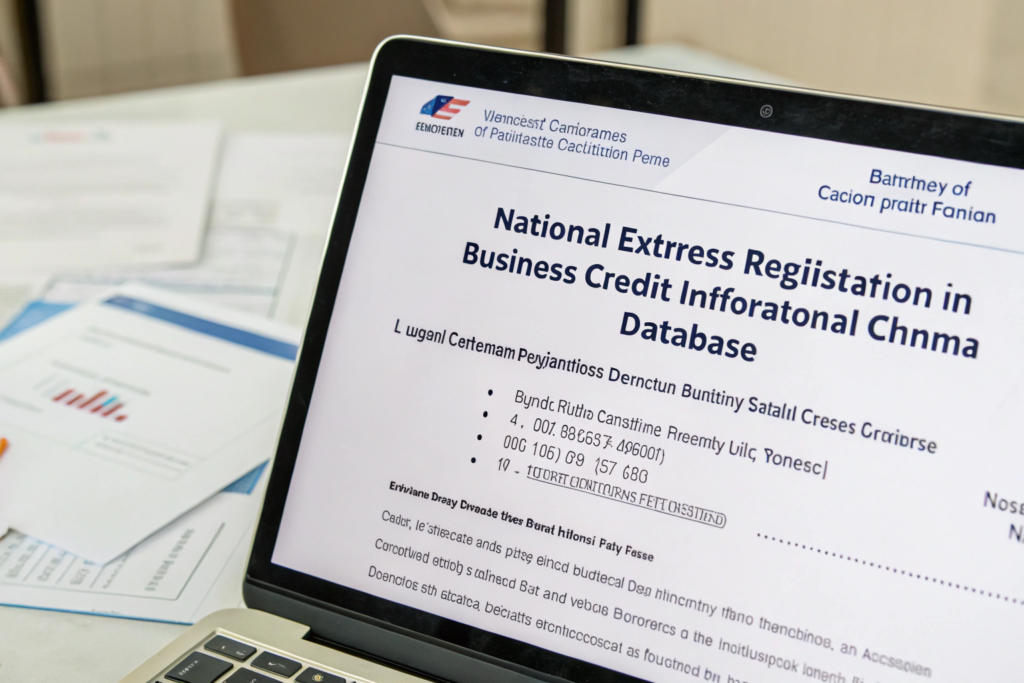
The business registration database confirms that the factory actually exists as a legal entity and that the name on the certificate matches the registered business name. In China, this is the National Enterprise Credit Information Publicity System. In Vietnam, it's the National Business Registration Portal. In India, it's the Ministry of Corporate Affairs portal. A factory that operates under a different legal name than the name on its certificate, or that cannot be found in the business registry at all, is a red flag.
The accreditation database confirms that the audit firm that issued the certificate is actually accredited to conduct audits for that standard. The major standards bodies—amfori for BSCI, Sedex for SMETA, WRAP, SAAS for SA8000—all maintain online directories of accredited audit firms. If the audit firm on the certificate is not in the directory, the certificate is invalid, regardless of how genuine it looks.
When I'm vetting a new supplier—a fabric mill, a trim vendor, a subcontract wash house—I run through this cross-referencing checklist systematically. It takes about thirty minutes with AI assistance, and it has saved me from bad partnerships more than once.
Which Databases Should You Check for Factory Registration Numbers?
The factory registration number on a certificate is the single most verifiable piece of data. It's the key that unlocks the factory's legal identity. If the registration number is missing, invalid, or doesn't match the factory name, the certificate is worthless.
For factories in China, the registration number is the Unified Social Credit Code, an 18-digit alphanumeric identifier. You can verify this code on the National Enterprise Credit Information Publicity System, which is the official government business registry. The website is in Chinese, but most browsers can translate it adequately. You enter the code, and the system returns the registered business name, the legal representative, the registration date, the business scope, and any regulatory violations.
I ask the AI to guide me through the verification process. I upload a photo of the certificate with the registration number visible and type:
"The factory on this certificate is located in China. The registration number is [number]. Guide me through the process of verifying this registration number on the National Enterprise Credit Information Publicity System. What is the URL? What should I enter? What specific information should I verify? What discrepancies between the certificate and the registry would indicate a problem?"
The AI provides a step-by-step walkthrough. It tells me the exact URL, which field to enter the number into, and how to interpret the results. If the business name in the registry doesn't match the business name on the certificate, that's a major red flag. If the business scope in the registry doesn't include garment manufacturing, that's another red flag. If there are regulatory violations listed, that's information I want to know before entering a partnership.
For factories in other countries, the process is similar. I ask the AI: "What is the official government business registry for [country]? How do I verify a factory registration number on that registry?" The AI provides the correct URL and the verification procedure. I don't have to maintain my own mental database of every country's business registration system. The AI serves that function.
How Can AI Help Verify an Auditor's Accreditation Status?
The auditor's name and the audit firm's accreditation are the second and third most verifiable pieces of data on a certificate. A legitimate audit is conducted by an auditor who works for an audit firm that is accredited by the standard holder. The certificate should identify both the audit firm and, in many cases, the lead auditor.
AI can help verify the audit firm's accreditation by cross-referencing the firm name against the standard holder's directory. For a BSCI audit, I ask the AI:
"Is [audit firm name] an accredited BSCI audit firm? Check the amfori website or any publicly available directory of approved BSCI audit firms. If the firm is accredited, confirm its accreditation status and scope. If the firm is not listed, explain where to find the official list."
The AI will either confirm the accreditation, if the information is in its training data or accessible via web search, or direct me to the specific webpage where I can verify it myself. If the AI has browsing capability enabled, it can perform the search in real time and provide a direct answer.
For verifying an individual auditor, the process is more complex. Not all standards publicly list individual auditor credentials. But if the auditor claims a specific certification—a Certified Quality Auditor from ASQ, or a lead auditor credential from IRCA—you can verify that credential with the issuing body. I ask the AI: "What organization issues [credential name]? How do I verify that an individual holds this credential?" The AI provides the verification URL and procedure.
A common fraud tactic is to use the name of a real auditor from a real audit firm, but the auditor never actually conducted the audit. The certificate is fabricated, but the names check out. This is harder to catch with AI alone, which is why direct verification with the standard holder is the ultimate step. You send an email to the certifying body with the report number and ask them to confirm its validity. A fraudulent factory will often panic when you announce your intention to do this. That panic itself is a red flag.
What Role Does AI Play in Virtual Factory Visits and Inspections?
AI is transforming virtual factory inspections from a passive viewing experience into an active verification tool. When you can't physically visit a factory—and most small and mid-sized brand owners can't—AI can help you extract more reliable information from a video call or a set of factory photos than you could with your own eyes alone.
The traditional virtual factory tour is a video call where the factory owner walks around with a phone, showing you what they want you to see. As I discussed in a previous article on factory visits, the risk is that the factory controls the camera and the narrative. They show you the cleanest corner, the newest machines, the most presentable workers. The areas with problems remain off-camera. AI can help you level the playing field by analyzing the video feed for inconsistencies that your eye might miss.
One approach I've started recommending to my brand clients is to record the virtual tour video with the factory's permission, then run the recording through an AI analysis tool. The AI can identify elements in the video that are relevant to certification verification: the presence or absence of safety equipment, the condition of the machinery, the layout of the production floor, the visibility of fire exits and extinguishers. The AI can flag discrepancies between what's visible in the video and what's claimed in the audit report. If the audit report says the factory has 200 sewing machines but the video shows a floor with roughly 50 machines, that's a discrepancy worth investigating.
AI can also analyze factory photos for certification-related red flags. If a supplier sends you photos of their production floor as evidence of compliance, you can upload those photos and ask the AI: "Examine these factory photos for occupational health and safety compliance. Look for visible fire extinguishers, clearly marked emergency exits, adequate lighting, machine guards, and clean work areas. Flag any potential violations of standard factory safety practices." The AI will scan the photos and provide a structured analysis. It might notice that the fire extinguisher in the corner is blocked by a stack of fabric rolls, or that the emergency exit sign is not illuminated, or that the workers are not wearing protective gear appropriate for a wash house environment.
These AI-assisted virtual inspections are not a replacement for a professional third-party audit. But they are a powerful supplement, and they're accessible to brands that can't afford to commission their own audits. Combined with the certificate analysis and the database cross-referencing, they create a multi-layered verification system that catches most fraudulent suppliers before they can do damage.
Can AI Analyze Live Video Feeds for Safety Compliance Red Flags?
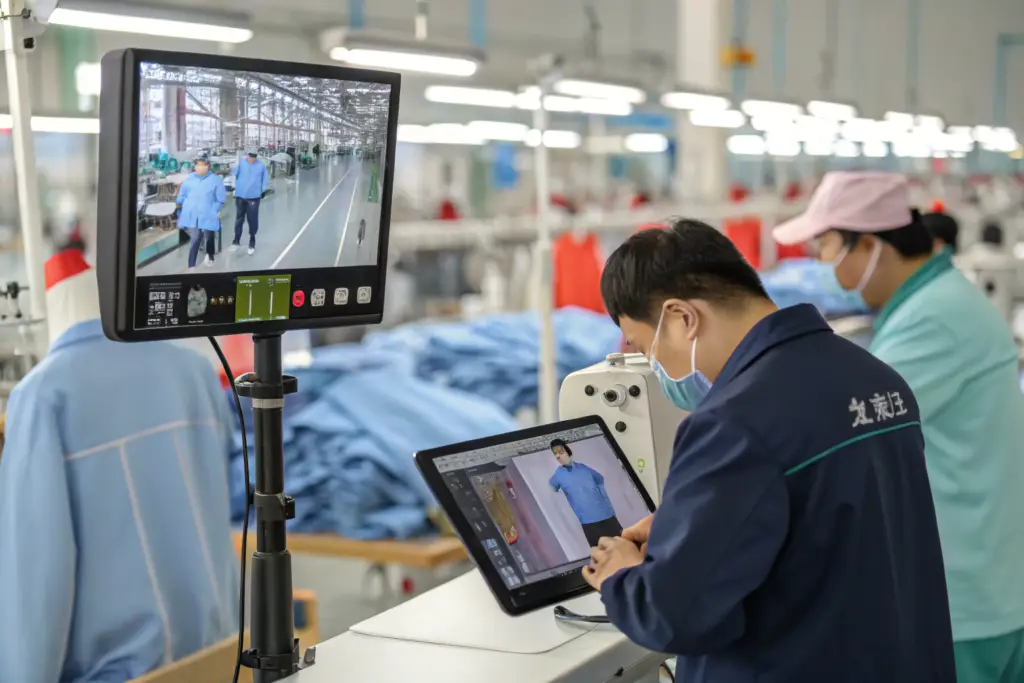
This capability is still emerging, but it's developing fast. Real-time video analysis by AI can now detect specific objects and conditions in a factory environment: whether workers are wearing hard hats and safety vests in required areas, whether aisles are clear of obstructions, whether machines have visible guards, whether chemical storage areas have proper containment.
During a live virtual tour, you can ask the factory to pan the camera slowly across the production floor while an AI tool analyzes the feed. The AI can count the number of visible fire extinguishers, check whether they are mounted at the correct height and free of obstructions, and verify that exit signs are visible and illuminated. If the AI detects a potential violation, it can flag it in real time, and you can ask the factory owner to move the camera back to that area for a closer look.
This is not a consumer-grade feature yet, but enterprise tools are available. Some third-party inspection companies now offer AI-assisted remote audits where an auditor directs the factory's camera while an AI system provides real-time analysis in the background. The cost is higher than a simple video call but far lower than an on-site audit. For a brand placing a significant order with a new supplier, it's an investment worth considering.
I've used a simpler version of this in my own supplier vetting. When a potential trim supplier sent me a video of their factory, I uploaded the video file to an AI tool and asked it to identify any visible safety equipment and any potential hazards. The AI flagged that a chemical storage area visible in the background of one shot did not appear to have a secondary containment tray. I asked the supplier about it. They admitted it was an older section of the factory and sent photos of the upgraded storage area. The AI had caught a real issue that I might have missed watching the video at normal speed.
How Can You Use AI to Compare Worker Conditions Against Audit Claims?
This is perhaps the most sensitive and important application of AI in factory verification. A social compliance audit makes specific claims about worker conditions: wages paid, hours worked, safety training provided, grievance mechanisms in place. AI can help you check whether the visual evidence from the factory is consistent with those claims.
If the audit report claims that workers are provided with ergonomic seating, you can upload photos or video stills of the sewing line and ask the AI: "Examine these images of a garment factory sewing line. Are the chairs at the workstations ergonomic, with adjustable height and lumbar support, as would be expected in a factory that meets modern occupational health standards?" The AI will analyze the visible chairs and provide an assessment.
If the audit report claims a certain number of workers, you can ask the AI to estimate the number of workstations visible in a panoramic photo or video of the production floor. The estimate won't be exact, but if the audit claims 500 workers and the visible workstations suggest a capacity of 100, that's a discrepancy that demands an explanation.
Worker interviews are the core of a social compliance audit, and AI can assist here as well. As I described in a previous article on ethical production, you can request a live worker interview during a virtual tour. If you record that interview with permission, AI can analyze the worker's responses for indicators of coaching or duress. A worker who has been coached to give specific answers will often use unnatural phrasing, repeat the same sentence structure across different questions, or show micro-expressions of stress. AI sentiment analysis and linguistic pattern recognition can flag these indicators. This is not a lie detector test, and it shouldn't be treated as one, but it's an additional data point in your overall assessment.
The ethical boundary here is important. AI analysis of worker interviews should be done transparently, with the worker's consent, and with the understanding that it's a screening tool, not a judgment. A worker who appears nervous on a video call with a foreign brand owner might simply be nervous, not lying. The AI's analysis should be weighed alongside other evidence, not used in isolation.
Conclusion
Verifying a denim shorts supplier's factory certificates is no longer a manual process of squinting at PDFs and hoping for the best. AI tools have transformed it into a systematic, multi-layered investigation that any brand owner can conduct from a laptop. The process I've outlined in this article has four layers. First, you identify which certificates actually matter—social compliance, environmental, and quality management—and you learn to distinguish genuine audits from superficial paperwork by checking the audit firm, the report detail, and the corrective action plan. Second, you use AI language and vision models to scan the certificate document itself for formatting, language, and numerical inconsistencies that suggest forgery. Third, you cross-reference the supplier's claims against external databases—government business registries, certification body directories, and industry platforms—using AI to guide you to the correct sources and interpret the results. Fourth, you use AI to analyze virtual factory tours and photos for visual evidence that either confirms or contradicts the claims in the audit report.
This four-layer system is not foolproof. A sophisticated fraudster with time and resources could potentially evade each layer. But the vast majority of certificate fraud in the garment industry is not sophisticated. It's lazy Photoshop jobs, reused audit numbers, and claims that fall apart under the first round of scrutiny. AI makes that scrutiny accessible, fast, and thorough.
At Shanghai Fumao, I welcome this level of scrutiny. I share our full audit reports, our registration documents, and live video tours with any client who asks. A factory that resists AI-assisted verification is a factory that has something to hide. A factory that embraces it is a factory that is confident in its operations and committed to transparency.
If you're in the process of vetting denim suppliers and want to see what a fully transparent factory looks like, or if you have certificates from other suppliers that you'd like a second opinion on, I invite you to reach out to our Business Director, Elaine. She can provide our complete compliance documentation, walk you through a live virtual tour, and help you compare what you're seeing from other suppliers against the standards we maintain every day. You can contact her directly at elaine@fumaoclothing.com. Due diligence is not a burden. It's the foundation of a supply chain you can be proud of.