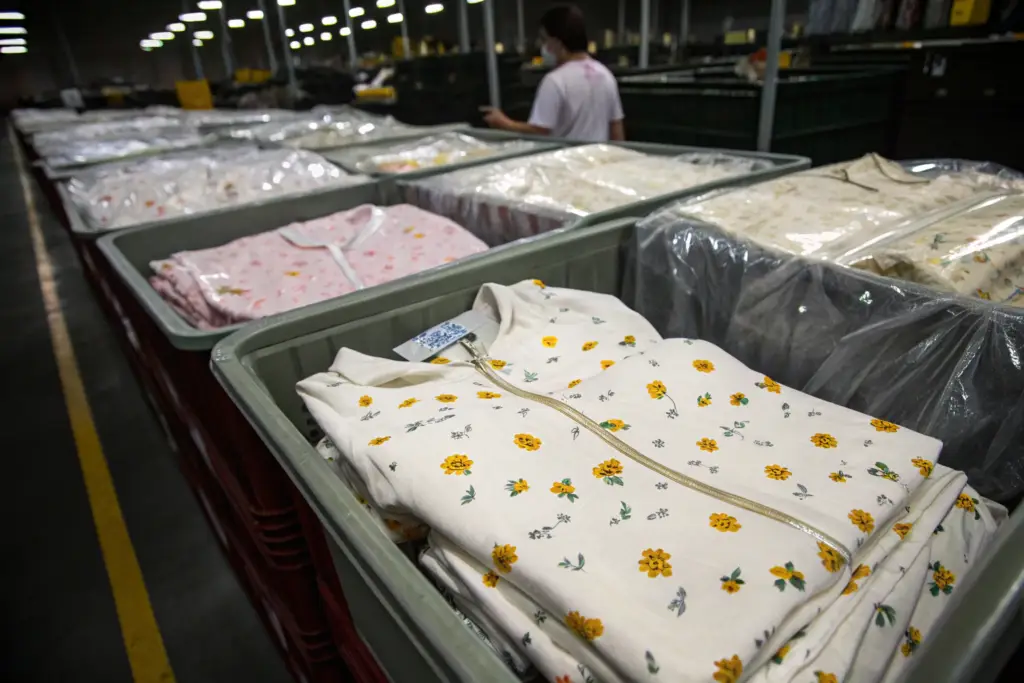
You have just received a container of your beautiful floral dress collection. The bulk production was flawless. The print matching was perfect. The fabric hand-feel was luxurious. Your 3PL warehouse confirms receipt, and you breathe a sigh of relief, thinking the manufacturing risk is now behind you. Then, three weeks later, your customer service inbox fills with an eerily similar set of complaints. Customers are reporting a musty, sour smell when they open the polybag. Some report finding tiny, scattered yellowish spots on the white background of a floral print. Others say the zipper feels stiff and is catching on the fabric. You are not facing a manufacturing defect. You are facing a silent, creeping, and entirely preventable warehouse storage catastrophe driven by uncontrolled humidity. I have been called in to investigate this exact scenario for U.S. brand partners more times than I can count, and in nearly every case, the garments left our Shanghai Fumao factory in perfect condition. The damage happened on American soil, inside a warehouse that treated delicate floral printed fabrics like they were boxes of non-perishable hardware.
Humidity affects floral garment storage by triggering a cascade of chemical and biological degradation processes: high moisture levels activate residual printing chemicals, causing yellowing and color migration in reactive floral prints; they create ideal breeding conditions for mold and mildew that permanently stain and odor-contaminate natural fibers; and they accelerate the corrosion of metal zippers, buttons, and trims, a set of interconnected risks that can render an entire shipment unsellable within weeks if the warehouse environment is not actively controlled.
The tragedy of humidity damage is that it is almost always invisible in its early stages. A box of floral dresses can look perfectly fine when it's unloaded from a container. The polybags are clear, the folds are crisp, and the colors are bright. But inside that sealed polybag, a microscopic time bomb is ticking. The fabric, especially a natural fiber like cotton or viscose, acts as a humidity sponge during the ocean freight journey and the subsequent warehouse storage. It absorbs moisture from the air until it reaches an equilibrium moisture content. If the surrounding air is at 70% relative humidity, the fabric itself can hold enough water to activate dormant mold spores that were always present in the natural fiber but were kept inert by dryness. The visual evidence of this process—the yellow spot, the musty smell, the weakened fiber—may not appear for days or weeks. This means that by the time your customer opens her package, the damage is complete and irreversible. Understanding this hidden, delayed-action threat is essential for any brand owner who stores inventory in a climate that experiences seasonal humidity swings, which is virtually the entire continental United States.
The Moisture-Fabric Relationship That Silently Destroys Inventory
Fabric is not a dead, inert material. It is a hygroscopic substance, meaning it actively seeks to reach equilibrium with the moisture level of the surrounding air. A cotton floral dress in a warehouse with 65% relative humidity is not just sitting there. At a molecular level, it is absorbing water vapor from the air. This absorbed moisture does not just sit on the surface; it penetrates the fiber's internal structure, causing the cellulose molecules to swell. This swelling and contracting cycle, as humidity fluctuates, physically stresses the fibers, weakening them over time. But the more immediate and commercially devastating effect of this trapped moisture is its role as a chemical catalyst. I vividly remember inspecting a returned shipment of viscose floral blouses for a brand based in Florida. The blouses had been stored in a non-climate-controlled warehouse near the Everglades for only six weeks. The white background of the floral print had developed a faint but pervasive yellow tint, while the blue and pink flowers remained vibrant. The moisture had selectively attacked the unprinted, white areas of the fabric.
The moisture-fabric relationship silently destroys inventory because hygroscopic fibers like cotton, viscose, and linen continuously absorb atmospheric water vapor, and this bound moisture acts as a solvent and a transport medium, activating residual chemicals from the printing and finishing process that cause localized yellowing, weakening the fabric's tensile strength, and providing the exact water activity level required for dormant mold spores to germinate and feed on the cellulose.
The chemistry of this yellowing is specific and directly tied to the floral printing process. A high-quality floral print on a cotton poplin dress, the kind we produce at Shanghai Fumao, uses reactive dyes that chemically bond to the fiber. The unprinted white areas are left as bare, natural cotton. To achieve a bright, commercially desirable white, the fabric undergoes an optical brightening finish. These optical brightening agents, or OBAs, are fluorescent compounds that absorb invisible ultraviolet light and re-emit it as visible blue light, masking the natural creamy yellowness of raw cotton. However, OBAs are notoriously sensitive to humidity and acidic conditions. When the fabric absorbs moisture and is stored in a sealed polybag, the OBAs can undergo hydrolysis, a chemical reaction with water that breaks the fluorescent molecule apart, destroying its brightening ability. The natural yellow of the cotton is then unmasked, and the dress appears to have yellowed. Simultaneously, any residual alkaline chemicals from the pre-treatment or printing process can migrate within the moist fabric and create localized yellowish-brown spots, often in seemingly random patterns. This is not a manufacturing defect in the traditional sense. It's a predictable chemical reaction triggered by a storage environment that the garment was never designed to survive.
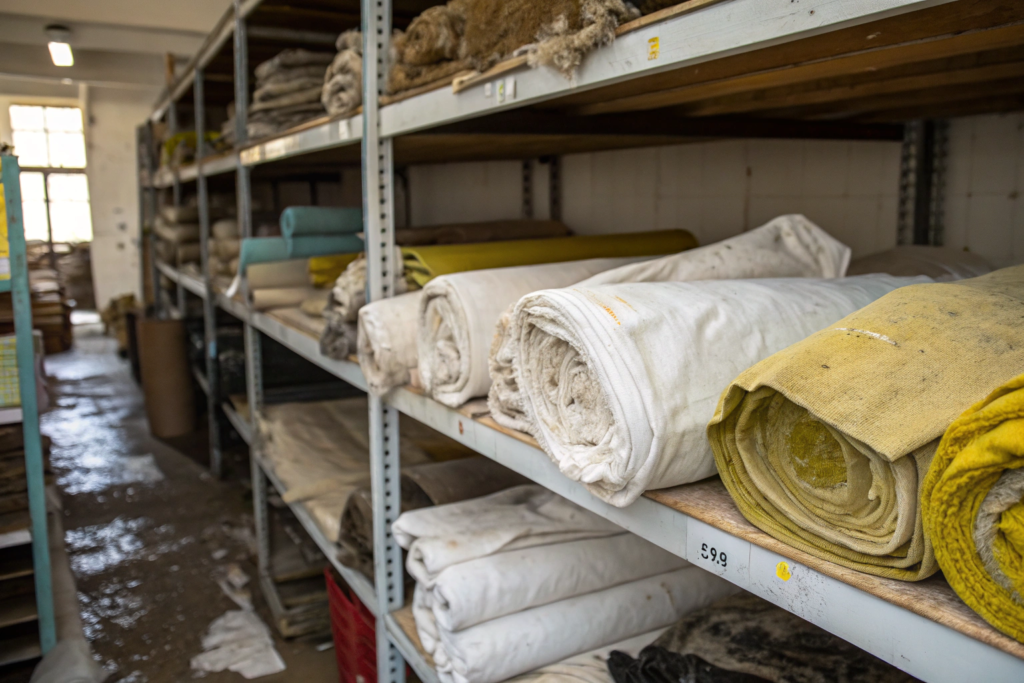
Why Do White Areas of a Floral Print Yellow First in Storage?
The selective yellowing of the white, unprinted areas of a floral dress is a tell-tale diagnostic sign pointing directly to a humidity-induced optical brightener failure. The colored, printed areas of the dress are protected because the reactive dye molecules have occupied the fiber's chemical bonding sites and act as a UV screen, absorbing the energy that would otherwise degrade the fiber. The white areas are naked and vulnerable. They have been chemically stripped and bleached to a high whiteness standard, and then coated with a thin layer of OBAs. This bright white surface is extremely chemically reactive. When moisture levels rise, the OBAs break down, and the white area can also act like a wick, drawing any residual, migrating chemicals from the printed areas through capillary action along the yarns. This creates a faint, yellow halo effect around the edge of a printed flower, a subtle but commercially deadly defect that a sharp-eyed customer will spot immediately as a sign of an "old" or "defective" dress.
This problem is particularly acute for garments stored in standard, uncoated polybags. The polybag creates a microclimate. The fabric absorbs moisture from the warehouse air before it is packed, or moisture-laden air is trapped inside the bag during the packing process. The polybag then seals this moisture in, creating a high-humidity chamber directly against the fabric. The moisture has nowhere to go. It can't evaporate. It sits against the white cotton, day after day, slowly catalyzing the optical brightener degradation. The preventive measure is two-fold. First, the fabric must be bone-dry and "conditioned" to the correct moisture content before it is packed into polybags. At Shanghai Fumao, our final pressing and conditioning process ensures the fabric reaches a standard equilibrium moisture content of 6-8% before sealing. Second, a small, non-toxic silica gel desiccant packet should be placed inside every individual polybag, not just in the shipping carton. This packet actively scavenges any residual moisture trapped during the sealing process and any moisture that tries to permeate through the polybag film during storage.
Can Natural Fiber Floral Dresses Develop "Storage Mold" Even in Sealed Boxes?
Yes, and this is one of the most shocking and financially devastating realizations for a brand owner. A sealed, taped-shut shipping carton sitting in a warehouse is not a sterile, protected environment. It is a dark, quiet, and potentially perfect incubation chamber for mold. The threat is not external mold spores blowing in from outside. The threat is internal. Natural fibers like cotton, viscose, and linen are agricultural products. Even after ginning, spinning, weaving, and finishing, they contain a natural, low-level background population of dormant mold spores. These spores are harmless and inert when the fabric is kept dry, below a water activity level of 0.65 Aw. When the fabric's moisture content rises and the water activity exceeds 0.75 Aw, these dormant spores germinate. They send out microscopic hyphae, root-like filaments that penetrate the fiber's cell wall and begin to digest the cellulose. This is the mold you eventually see as a visible spot, but the digestion process has been invisibly underway for days or weeks.
The nutrition for this mold is the fabric itself, along with any trace starches, sizing agents, or even microscopic skin cells trapped in the fabric weave. The sealed carton provides the stagnant, non-ventilated air that mold loves. The temperature inside a warehouse, even an air-conditioned one, can fluctuate, and a stack of cartons near a sun-exposed wall can create localized hot spots. This combination—a food source, dormant spores, trapped moisture, and warm temperature—is the biological formula for a mold outbreak. The visible mold, when it finally appears, is usually a greyish-green or black spot, often clustered along fold lines where moisture tends to collect. The accompanying musty smell is caused by microbial volatile organic compounds, or MVOCs, which are metabolic waste products of the mold colony. This smell penetrates the fabric and is notoriously difficult and expensive to fully remove, often requiring specialized ozone treatment. A garment with a musty smell is a 100% return and a permanent brand reputation damage event.
The Chemical Odor Trap: Why Polybags Amplify Humidity Damage
The polybag is a necessary, cost-effective tool for protecting garments during transit and storage. But it is also a sealed chemical reactor that, under the wrong humidity conditions, concentrates and amplifies volatile organic compounds into a customer-repelling odor bomb. The "new dress smell" that a customer expects is a faint, clean, slightly chemical scent that quickly dissipates. The smell that triggers an instant return is a sour, acrid, or intensely chemical odor that hits her the moment she tears open the polybag. This bad smell is not a mysterious factory contamination. It is almost always a predictable, moisture-driven concentration of legitimate, but trapped, manufacturing chemistry. At Shanghai Fumao, we use only certified, safe, and compliant dyes and finishing agents. But even the best reactive printing process leaves behind trace, non-toxic by-products. In a well-ventilated, dry environment, these residual volatiles slowly off-gas and dissipate harmlessly into the air. Seal them inside a polybag with a moisture-saturated fabric, and that off-gassing process reverses into a concentration process.
The chemical odor trap occurs when a sealed polybag creates a high-humidity microclimate that prevents the normal off-gassing of residual print and finish chemicals from a floral dress, instead concentrating those volatile organic compounds into a confined space until the customer's first opening releases an overwhelmingly strong and unpleasant odor that is falsely perceived as a product defect.
The specific culprits are often the harmless breakdown products of the print paste. Reactive printing uses a paste containing the dye, an alkali for fixing the dye, and urea, which helps dissolve the dye and keeps the fabric swollen during the steaming fixation process. If the post-print washing process is even slightly insufficient, trace amounts of urea can remain on the fabric. Urea is a stable, odorless white crystal. However, in the presence of moisture and warmth, urea undergoes hydrolysis and decomposes into ammonia and carbon dioxide. Ammonia is a sharp, intensely pungent gas. Inside a sealed polybag, the ammonia has no escape. Its concentration builds up over days and weeks, dissolving into the moisture within the fabric itself. When the customer opens the bag, she is hit in the face with a concentrated blast of ammonia odor. She perceives this as a toxic chemical smell, and the dress is instantly returned. This is not a safety hazard at these trace concentrations, but it is a catastrophic commercial failure. The solution at the manufacturing level is a rigorous, multi-stage, hot-water wash-off process that removes 99.9% of residual print chemistry, followed by a final fresh-water rinse and a drying process that ensures the fabric is chemically clean and pH-neutral before it is ever sealed in a bag.
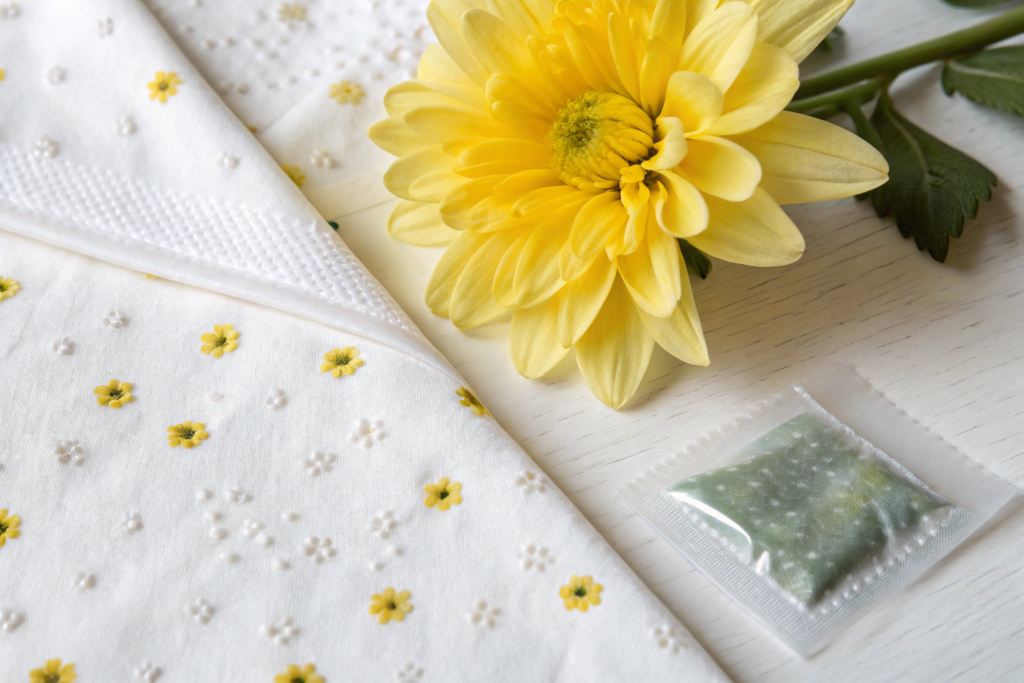
Is the "New Dress Smell" Actually a Warning Sign of Poor Post-Print Washing?
In a professionally manufactured garment, a very faint, fleeting "new" smell is normal and caused by simple oxidation of packaging materials. However, a strong, persistent, or acrid chemical smell is almost always a definitive warning sign of inadequate post-print washing. The washing process after reactive printing is not a simple rinse. It's a complex, multi-bath chemical extraction sequence that is the single most water-intensive and costly part of the printing process, and it is therefore the step most likely to be cut short by a factory racing to lower costs. A proper wash-off line has 8 to 10 separate compartments. The fabric enters the first bath of cold water to rinse away the loose, unfixed dye. It then passes through a series of increasingly hot soaping baths, often at 90 to 95 degrees Celsius, where detergents break down and remove the print paste thickener, the urea, and the alkali. The final baths are fresh, warm water rinses, often with a mild acid like acetic acid to neutralize any residual alkalinity and bring the fabric's pH to a skin-safe, neutral level.
A factory that shortens this process by two tanks, or that recycles the hot wash water for too many batches to save on energy and water costs, is leaving a chemical residue time bomb on the fabric. The dress looks fine when it's packed. The residual chemicals are dry and inert. But the first exposure to high humidity, whether in a warehouse in Houston or in a customer's bathroom while she showers, activates them, and the odor or the irritation appears. This is why I tell my brand partners to always ask a factory one specific, probing question: "Can you walk me through your reactive print wash-off line, step by step, including the temperatures of each bath?" A factory that can answer this in detail, with pride, is a factory that invests in the invisible, expensive, and absolutely essential chemistry of a clean, stable garment. At Shanghai Fumao, this wash-off line is the part of our factory tour that we never skip, because we know that the cleanliness a customer smells is the quality she trusts.
Why Should You Demand Ventilated Polybags for All Floral Shipments?
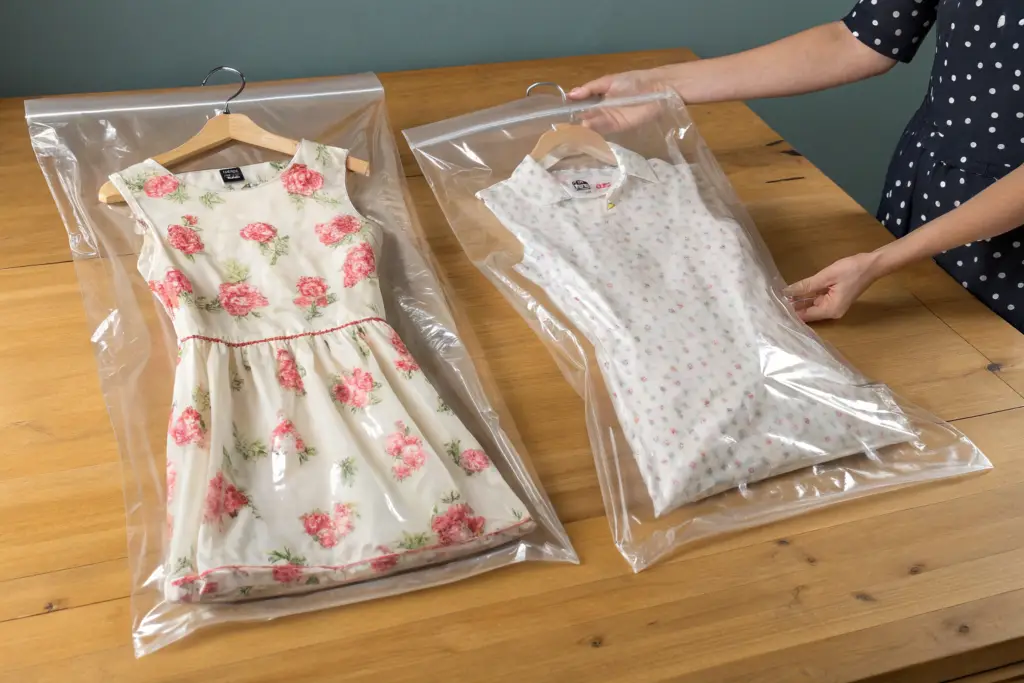
The standard, non-ventilated polybag is an airtight seal. It's perfect for keeping external dirt and water out, but it is also perfect for sealing internal chemical reactions in. For delicate, chemically active floral prints on natural fibers, this is a major design flaw in the packaging. The solution is surprisingly simple and vastly underutilized: the ventilated polybag. A ventilated polybag is identical to a standard polybag, but it has a series of small, die-cut holes, usually 6mm to 8mm in diameter, punched through both layers of the film. These holes are too small to allow dirt or insects to enter, but they are large enough to allow for passive air exchange. They break the sealed microclimate and allow any residual moisture vapor and any slowly off-gassing volatiles to escape into the carton's environment, where they can diffuse harmlessly.
Demanding ventilated polybags for all floral garment shipments is a simple, near-zero-cost mandate that can single-handedly eliminate the musty smell and chemical odor returns. The carton itself should also be ventilated, with a couple of small holes to allow the overall carton environment to breathe, particularly if the garments will be stored for more than a few weeks. I have a specific clause in our shipping protocol at Shanghai Fumao for any floral program destined for a humid geography or for a long ocean freight journey. The polybags are ventilated. The cartons are vented. And a humidity indicator card, a small paper card with blue spots that turn pink at specific humidity thresholds, is placed inside the carton. The receiving warehouse team knows to check the card. If the spots are pink, the carton has experienced a high-humidity event, and the garments inside need to be immediately unpacked, inspected, and air-conditioned in a dry room before being stored. This simple, visible, early-warning system has saved our partners from accepting and storing already-compromised inventory.
The Unseen Metal Threat: Corrosion of Trims and Zippers
When a brand owner thinks about humidity damage, their mind goes straight to the fabric. But the most immediate, visually alarming, and functionally destructive damage often happens to the smallest, hardest components of a floral dress: the metal zipper, the metal button, the metal rivet, and even the tiny metal eyelets on a drawstring. A dress with a corroded, jammed, or rust-stained zipper is not a dress that gets a bad review; it's a dress that gets an instantly escalated, furious customer service complaint and a chargeback threat. The zipper failure turns a beautiful, wearable garment into a useless piece of fabric in a literal instant. I had a brand partner whose entire shipment of 1,500 floral maxi dresses was nearly written off because the antique brass-finish zippers, which looked beautiful on the sample, had developed a uniform, powdery green corrosion and seized solid after six weeks of summer storage in a New Jersey warehouse. The dresses were otherwise perfect. The single, small component destroyed the entire product's value.
Humidity in a warehouse attacks metal trims through a process called galvanic and atmospheric corrosion, where the moisture in the air acts as an electrolyte, allowing a tiny electrical current to flow between the different metals in a zipper's alloy composition, causing the zinc, copper, or iron to oxidize into unsightly white powder, green verdigris, or red rust that physically seizes the zipper mechanism and permanently stains the surrounding fabric.
The science of this silent component murder is unforgiving. A dress zipper is not made of a single, pure metal. The teeth are usually an alloy, often a zinc-based alloy plated with a thin layer of brass, nickel, or antique silver for appearance. The slider body is a different metal. The tiny spring inside the slider is a different metal again, often steel. When relative humidity in the storage environment exceeds 60%, a thin, invisible film of water molecules condenses on the surface of all these metals. This water film acts as a liquid electrical connection, a continuous electrolyte bridge between the dissimilar metals. This creates a tiny, short-circuited battery, a process called galvanic corrosion. The less noble metal in the couple, often the zinc in the teeth or the steel in the spring, begins to sacrifice itself and oxidize. The result is a buildup of white, powdery zinc oxide or red iron rust that physically jams the tiny, precise mechanical tolerances of the zipper teeth and the slider mechanism. The customer pulls the zipper tab, and it either sticks, grinds, or snaps off entirely. The dress is, for all practical purposes, destroyed.
Why Do Antique Brass Zippers Corrode Faster in a Humid Warehouse?
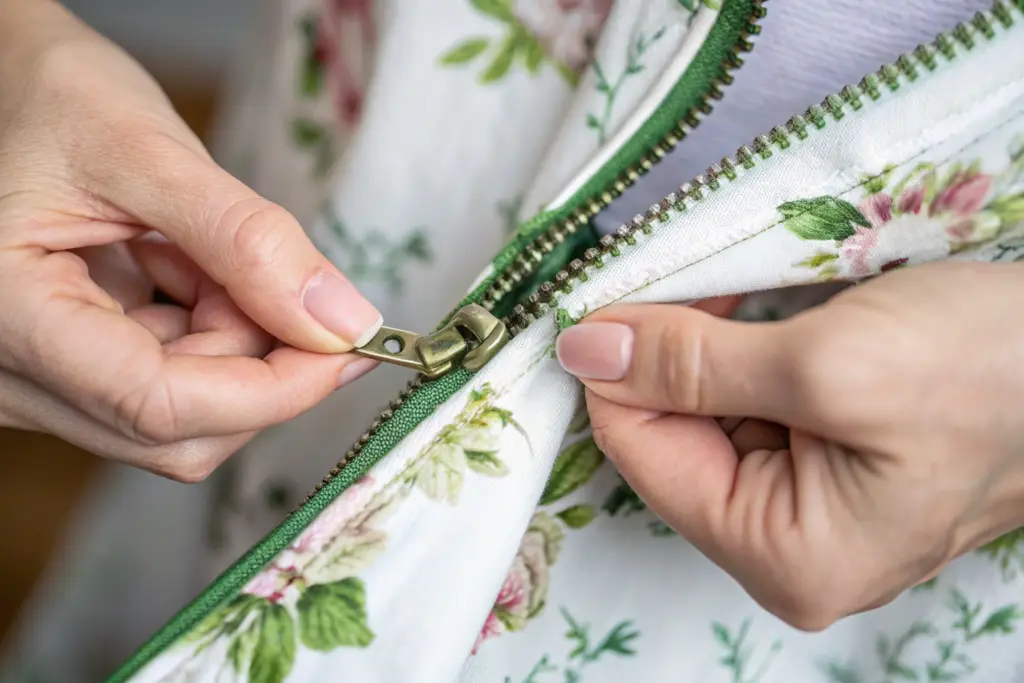
Antique brass is a deliberately reactive, living finish. A brand owner chooses it for its beautiful, warm, old-world aesthetic. What they often don't realize is that this aesthetic is achieved by creating a chemically active surface that is primed to continue reacting with its environment. A shiny, polished brass zipper has a protective, clear lacquer coating that seals the metal surface from the air. An antique brass finish is created by chemically stripping this lacquer and applying an oxidizing agent, like a liver of sulfur solution, to deliberately darken and age the metal's surface. The resulting dark, slightly uneven patina is gorgeous. But the protective lacquer is gone. The raw, reactive metal is exposed directly to the air. In a dry environment, the patina is stable. In a humid warehouse, the exposed brass becomes a direct reactant site. The copper in the brass alloy reacts with the moisture, carbon dioxide, and trace chlorides in the air to form copper carbonate, that characteristic soft, powdery green substance known as verdigris. This corrosion is not just on the surface. It migrates into the microscopic pits and grain boundaries of the metal, physically expanding and pushing the zipper teeth apart, which seizes the mechanism.
Furthermore, this powdery green corrosion is fugitive. It easily transfers from the zipper to the surrounding fabric, leaving a permanent, greasy green stain on the floral print that is completely impossible to remove. The zipper is ruined, and the dress's print is stained. The preventive measure for any dress using a reactive metal finish like antique brass or uncoated copper is a mandatory, individual, protective wrapping of the zipper pull and the upper zipper tape inside the polybag. A small piece of acid-free, waxed tissue paper is simply folded over the zipper and secured with a tiny piece of pH-neutral tape. This creates a physical barrier that prevents moisture from condensing directly onto the reactive metal surface and also prevents any corrosion that does form from migrating onto the fabric. This is a five-cent step in the finishing process that can save a forty-five-dollar dress from a guaranteed landfill destiny.
How Do You Prevent a Zipper from Staining a Floral Print During Storage?
A rusted or corroded zipper doesn't just destroy itself. It acts like a slow-release inkjet, bleeding colored corrosion products directly into the delicate floral fabric it's sewn into. This is a permanent, visually catastrophic defect. The stain is not a superficial surface mark; it's a chemical bond between the metal ion and the fiber. Rust, which is iron oxide, bonds tenaciously to cellulose fibers like cotton and viscose, creating a deep orange-brown stain that is virtually impossible to fully remove without damaging the print's dyes. The green verdigris from brass is an oily, waxy copper salt that penetrates the fiber's core and requires harsh, acidic solutions to dissolve, which then strip the reactive dyes.
Prevention is entirely a packaging and storage protocol. The first line of defense is the zipper tissue wrap I just described. The second is a material specification choice that a brand can make at the sourcing stage. When ordering custom metal trims for a floral dress that will likely be stored in a non-climate-controlled retail or warehouse environment, you should specify a zipper with a "premium anti-tarnish finish." This is a nano-ceramic, clear coating applied by the zipper manufacturer that is invisible to the eye but provides a highly effective, durable moisture barrier over the metal, even over an antique finish. The third and most powerful preventative measure is a warehouse-level intervention. A small, low-cost, vapor-phase corrosion inhibitor, or VCI, emitter can be placed inside each shipping carton. A VCI emitter is a small, plastic device or a paper tab that slowly releases an invisible, non-toxic, odorless vapor that fills the sealed carton. This vapor adsorbs onto all exposed metal surfaces at a molecular level, forming a one-molecule-thick protective layer that actively repels moisture and disrupts the electrochemical corrosion reaction. The emitter protects the zipper for up to 12 months of storage. This is a standard, proven technology in the electronics and automotive industries, and it is vastly underutilized in the garment industry for high-value dresses with exposed metal trims.
Building an Active, Low-Cost Warehouse Humidity Defense System
The good news in all of this chemically complex doom is that the defense system is simple, well-understood, and surprisingly inexpensive to implement. You do not need a multi-million-dollar climate-controlled cleanroom. You need a deliberate, three-part system: monitor, separate, and actively dry. This system transforms your warehouse from a passive, hopeful storage box into an active, verifiable preservation environment. The core principle is that you cannot manage what you do not measure, and you cannot prevent damage you cannot see coming. The time to discover a humidity problem is not when a customer opens a musty box. It's when a cheap, wireless sensor sends a gentle alert to your warehouse manager's phone at 3 AM, saying the dew point in aisle 4 has crept above the safe threshold.
Building an active, low-cost warehouse humidity defense system involves deploying a network of cheap, wireless Bluetooth humidity data loggers throughout the storage area to provide real-time, zone-specific alerts, physically isolating natural-fiber floral garments from exterior walls and doors, and using portable, commercial-grade dehumidifiers to maintain a constant, safe relative humidity range of 45-50%, a set of interventions that costs a few hundred dollars and can protect hundreds of thousands of dollars of delicate inventory.
The specific target for a mixed inventory of cotton, viscose, and polyester-blend floral dresses is a stable relative humidity of 45% to 50%. This range is dry enough to keep mold spores dormant, to prevent optical brightener hydrolysis, and to arrest the electrochemical process of metal corrosion. It is also not so dry that it embrittles natural fibers or causes excessive static electricity buildup, which becomes a problem below 35% RH. Stability is as important as the absolute level. A warehouse that swings from 30% to 70% relative humidity every day as the temperature changes is more damaging than one that sits steadily at a slightly high 60%. The constant physical expansion and contraction of the fibers, called hygroscopic fatigue, mechanically works the fabric like bending a paperclip back and forth until it weakens. The goal is a flat, steady line on the humidity graph. This is achieved by sealing the building envelope—fixing dock door seals, insulating exposed roof panels, and blocking direct sunlight onto storage racks—and then using one or two portable, self-draining dehumidifiers sized for the cubic footage of the storage area. The units are set to a target of 48% RH, and their internal humidistat cycles them on and off to maintain the dead band.
How Should You Store Floral Dresses Differently Than Basic T-Shirts?
This is the single most important operational distinction for a brand that sells both commodity basics and premium floral dresses. A box of white cotton t-shirts is a rugged, low-value, low-risk product. A box of reactive-printed viscose floral dresses is a fragile, high-value, chemically sensitive product. Treating them the same way in the warehouse is a direct path to destroying the margin on the premium product. The basic tee can survive a wider humidity and temperature swing. The floral dress cannot. The storage protocol must reflect this difference in fragility and value. At Shanghai Fumao, I explicitly advise our brand partners to designate a specific, premium "cool and dry" zone within their warehouse that is dedicated to high-value, natural-fiber, printed garments.
This designated zone has specific physical rules. First, the floral dress cartons are never stored directly on a concrete floor. Concrete is porous and acts as a massive, passive reservoir of ground moisture. A carton sitting directly on a concrete slab will wick that moisture up through the cardboard, creating a high-humidity microclimate at the bottom of the carton while the top stays dry. All floral dress cartons must be stored on plastic pallets or metal racking that provides a mandatory, ventilated air gap of at least 6 inches between the concrete and the bottom carton. Second, the cartons are never stacked directly against an exterior wall. The temperature differential between the air-conditioned interior and the sun-baked exterior wall creates a condensation risk zone. A carton stored against this wall can experience localized, invisible condensation on its inside surface, dripping onto the garments. A mandatory 12-inch air gap from all exterior walls is a simple rule. Third, this designated zone has its own dedicated, calibrated, and independently powered humidity data logger that sends alerts. The zone is visually marked with colored tape on the floor. The warehouse pickers are trained that this zone is a climate-critical area, and that open dock doors nearby are a violation. This physical and procedural separation acknowledges a simple business truth: the margin structure of your floral dress line depends on an uncompromised storage environment.
What Is an Effective, Cost-Effective Desiccant Strategy for Packed Cartons?
Even inside a well-maintained, climate-controlled warehouse, the inside of a sealed carton can be its own problematic little world. The cardboard itself contains residual moisture. The garments were packed in ambient conditions that may have been slightly above the ideal. The carton will be shipped through a non-climate-controlled truck to a retailer or a customer. Adding a correctly calculated amount of desiccant inside the carton is the final, low-cost insurance policy that mops up this residual, trapped moisture. The key word is "calculated." Tossing a single, tiny silica gel packet into a large carton is a meaningless, performative gesture. A single 5-gram packet can absorb its own weight in water, which is 5 grams. A carton containing 20 viscose dresses might have several hundred grams of residual moisture to safely buffer.
The standard and highly effective material is calcium chloride, typically packed inside a porous, leak-proof container, often called a "container desiccant" or a "cargo desiccant strip." Calcium chloride is a far more aggressive desiccant than silica gel, capable of absorbing over 200% of its weight in moisture. For a standard carton containing 20 to 30 floral dresses, a single 100-gram or 200-gram calcium chloride desiccant strip, adhered to the inside top flap of the carton with its self-adhesive backing, is the correct and cost-effective solution. This strip costs around 20 to 40 cents per carton. As humidity inside the carton rises, the calcium chloride absorbs the water vapor and turns it into a harmless, contained gel, effectively trapping the water out of the air and away from the fabric. This desiccant strip protects the garments during the entire sealed-carton phase of their life, from the moment the carton is closed at the factory, through the ocean journey, through the warehouse storage, and right up to the moment a retail store employee opens the carton to put the dresses on the rack. For a brand, mandating a single calcium chloride desiccant strip inside every carton of floral dresses is one of the simplest, highest-return specification additions you can write into your manufacturing agreement with a factory.
Conclusion
Humidity is a slow, silent, and completely predictable destroyer of floral garments, but it is also a threat that can be neutralized with simple, deliberate, and inexpensive protocols. We have traced the invisible, molecular pathway of moisture damage, from the hydrolysis of optical brighteners that yellows white fabric, to the germination of dormant mold spores that feed on natural cellulose fibers, to the concentration of chemical odors inside sealed polybags, to the electrochemical corrosion of metal zippers that physically destroys a dress's functionality. The common thread in all these failure modes is that they happen out of sight, inside a sealed bag or a sealed carton, and they only become visible when the end customer opens her purchase and experiences a musty smell, a yellow stain, or a broken zipper. By that point, the damage is done, and the cost is a lost customer, a chargeback, and a destroyed brand reputation.
The defense against humidity is not a massive capital expense. It is a set of procedural specifications that can be written into your manufacturing contract and your warehouse standard operating procedure. Demand that your factory uses ventilated polybags and places a calcium chloride desiccant inside each carton. Insist on a final wash-off protocol that ensures a clean, pH-neutral fabric. Establish a designated, monitored, low-humidity storage zone in your warehouse with wireless data loggers and a commercial dehumidifier. And enforce simple rules like palletized storage away from walls and floors. These interventions, collectively costing perhaps a few hundred dollars per season, are the insurance policy that protects the tens of thousands of dollars you have invested in your beautiful, high-quality floral dress inventory.
At Shanghai Fumao, our commitment to your brand's quality does not end when the container leaves our loading dock. We actively advise our partners on the correct post-shipment storage and handling protocols for the specific fabrics and prints we have manufactured together. If you are sourcing a floral dress collection and want a manufacturing partner who thinks as rigorously about the garment's entire lifespan as you do, I invite you to start that conversation. To discuss how we can build a comprehensive quality-preservation protocol into your next production run, from the wash-off line to the warehouse storage rack, please contact our Business Director, Elaine, at elaine@fumaoclothing.com. Let's protect your beautiful product all the way into your customer's hands.