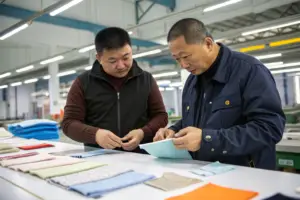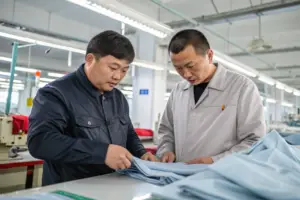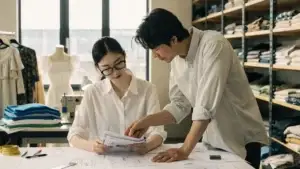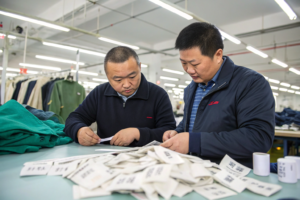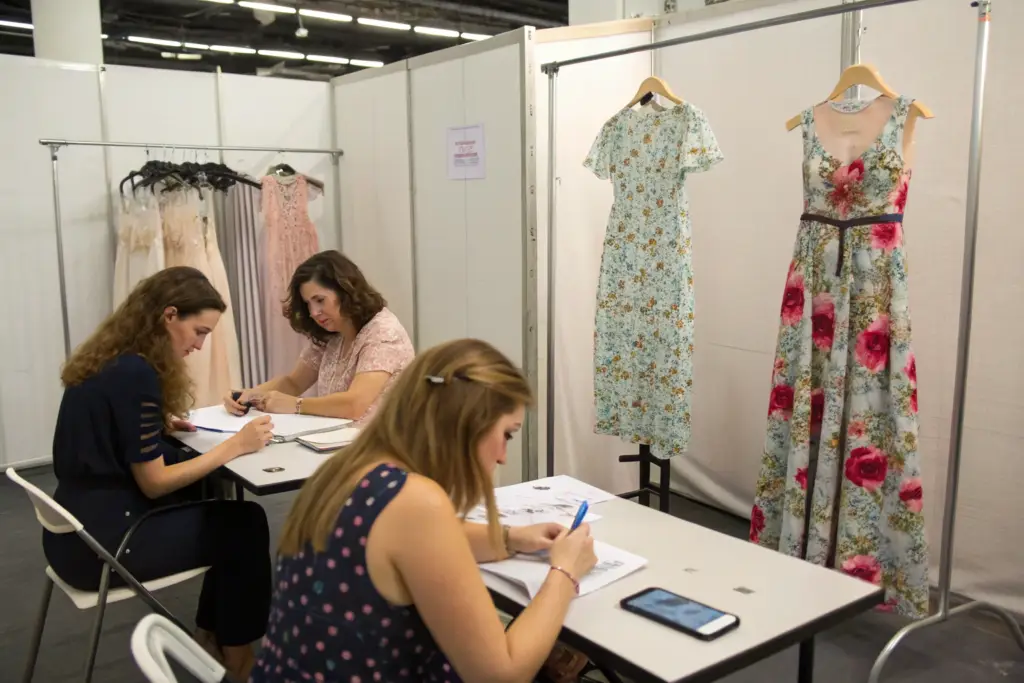
You have a rack of beautiful floral dress samples in your studio. Your designer loves them. Your merchandiser thinks they are on-trend. Your gut says this is the collection that will break your sales records. You are ready to place a $40,000 production order. But a quiet, nagging thought keeps surfacing: what if my customer doesn't see what I see? What if the fit is slightly off, the print is overwhelming in person, or the sleeve length feels restrictive? Every brand owner I work with has felt this moment of cold fear. It's the moment just before you commit tens of thousands of dollars to a single, irreversible decision, backed only by the opinions of a handful of people inside your own company. That fear is not irrational. It's the voice of hard-won experience, whispering that internal bias has killed more collections than bad design ever has.
Yes, you should absolutely test your floral dress samples in a small, structured focus group before committing to bulk production, because this process uncovers the critical, hidden barriers to purchase—such as a neckline that gapes when sitting, a print that photographs poorly on a smartphone, or a fabric that feels clammy after a few hours of wear—that are invisible to a designer's eye but fatal to your sell-through rate, and fixing these issues at the sample stage costs hundreds of dollars, while discovering them after a bulk shipment costs tens of thousands.
I learned the value of this process not from a textbook, but from a painful, expensive mistake that I now view as a tuition payment to the school of real-world manufacturing. Years ago, we developed a floral midi dress that we thought was flawless. The design was beautiful, the print was on-trend, and the fit was technically perfect on our dress form. We skipped any external testing and went straight into a 2,000-unit bulk run for a brand partner. The dresses shipped. Then the returns started. The feedback was consistent and brutal: the high neckline, which looked elegant and modest on a static form, choked the wearer when she sat down at a desk or bent to pick up her child. The dress was unwearable for the very life the customer actually lived. That one un-tested design detail cost the brand its season's profit. The focus group is not a luxury for large corporations with huge R&D budgets. It is the cheapest, fastest insurance policy a small or mid-size brand can buy. It replaces dangerous internal assumptions with objective, real-world data, and it does so at a point in the timeline when changes are still cheap and easy to make.
Why Your Internal Team’s Bias Is Your Biggest Commercial Risk
Your internal team is the worst possible judge of your product's commercial viability. This is not an insult to their talent or their dedication. It is a recognition of a fundamental psychological trap called the "creator's bubble." Your designer has been staring at the floral print for four months. She has lived with the fabric, touched it a thousand times, and watched the dress evolve from a rough sketch to a finished garment. Her brain has formed a deep, emotional attachment to the design. She sees the dress not as a customer encountering it for the first time in a cold, distracted, 3-second Instagram scroll, but as the beautiful, hard-won culmination of a creative journey. This emotional proximity makes objective evaluation neurologically impossible. The same bias affects you, the brand owner. You have invested your reputation, your time, and your upcoming marketing budget into this collection. Your brain is powerfully incentivized to see a winner, because admitting doubt at this stage is psychologically painful and financially frightening.
Your internal team's bias is your biggest commercial risk because their deep, prolonged exposure to the product creates a cognitive blind spot known as "design fixation," where flaws in fit, wearability, and photographic appeal become literally invisible to them, while a fresh, naïve customer will spot and reject the dress for these exact same issues within seconds of her first encounter.
I see this bias play out in almost every design handover meeting at Shanghai Fumao. The brand's team is in love with a beautiful, delicate, sheer floral georgette sleeve. They talk about how romantic and feminine it looks on the hanger. I ask a simple question: "Has anyone on your team worn this dress for a full workday? Has anyone tried to drive a car wearing those sleeves?" The silence that follows is the sound of a design fixation bubble about to burst. The designer has not worn the dress. She has only seen it on a perfectly still, size-4 dress form under studio lights. She has not experienced the sleeve catching on a car door handle, the fabric feeling scratchy against a desk-worn arm by 3 PM, or the sheer panel showing a bra strap in direct sunlight. These are not "quality defects" in the traditional manufacturing sense. They are wearability failures that only emerge when a real human being lives in the garment. Your internal team, through no fault of their own, has not lived in the garment. They have only curated it. The focus group is the tool that smashes the creator's bubble and forces the dress to survive in the wild.
What Is "Design Fixation" and How Does It Blind You to Fit Flaws?
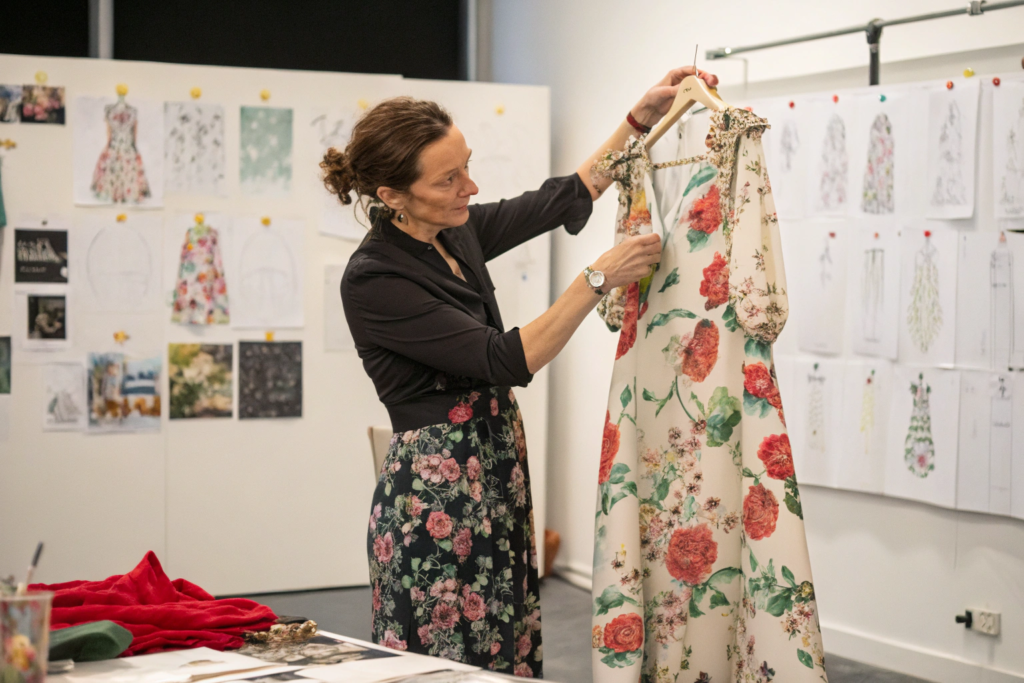
Design fixation is a well-documented cognitive bias where a designer becomes so deeply attached to a specific visual solution that they become literally unable to process information that suggests a flaw. The dress's high, modest neckline was a core, intentional design feature. It was on the very first mood board. It has been in every sketch, every fitting, every conversation for months. When the designer looks at the sample on a live model, her brain actively filters out the subtle, tell-tale horizontal drag lines across the front neck that indicate tension. She doesn't see the model subtly pulling the neckline away from her throat between photographs. Her brain registers these as "noise," not as critical data. This is not a conscious choice. It's a perceptual defense mechanism. Acknowledging the flaw means dismantling a core, long-held design assumption, and the human brain resists that cognitive pain.
A fresh focus group participant has no such attachment. She puts the dress on, feels the neckline press against her throat, and immediately says, "I can't wear this. I feel like I'm being choked." Her feedback is instant, unfiltered, and brutally accurate. She has no investment in the neckline's design history. She only has an investment in her own comfort. This is precisely the feedback you need. It's the feedback that catches the return-generating flaw before 2,000 units are cut and sewn. The cost of responding to this focus group feedback is a pattern adjustment on the neckline curve, a new sample, and a few days of delay. The cost of missing it is a 40% return rate and a permanently scarred brand reputation with that customer. The focus group participant is not a design critic. She is a live-fire stress test for your assumptions, and she works for a fraction of the cost of a bulk production error.
Can a "Fresh Eyes" Session Catch Print Scale Issues Your Team Missed?
Absolutely, and this is one of the most immediate, high-value revelations a focus group provides. Your team has seen the floral print as a small, neatly trimmed swatch, as a digital CAD rendering on a perfectly flat screen, and as a dress on a size-S dress form. They have an abstract, idealized mental image of the print's scale. The focus group participant encounters the print as a three-dimensional, moving reality on her own body, in a real mirror, in a room with normal lighting. The difference between these two perceptions can be jarring and commercially fatal. A print that looked "bold and confident" as a 6-inch square swatch can look "overwhelming and clownish" when it wraps around a size-14 body and a 20-inch repeat puts a giant, distorted peony directly over the bust.
The "fresh eyes" of the focus group catch this instantly. You will hear specific, actionable language that your team has lost the ability to generate: "This print is wearing me, I'm not wearing it." Or, "I feel like a walking sofa." Or, "This would be beautiful on a pillow, but I would never wear it on my body." This is priceless, money-saving intelligence. It tells you that the print scale, not the print design, is the fatal variable. The fix might be as simple as re-engineering the pattern marker to reduce the print repeat scale by 30% for the bulk fabric order. That adjustment, made at the sample stage, saves the entire collection. Without the focus group, your team would have approved the print based on the swatch, and you would have discovered the scale disaster only when the finished dresses hit your e-commerce site and generated a wave of one-star reviews with customer-uploaded photos. The focus group transforms a catastrophic, post-production discovery into a minor, pre-production course correction.
How a Small Focus Group Exposes Hidden Photographic Failures
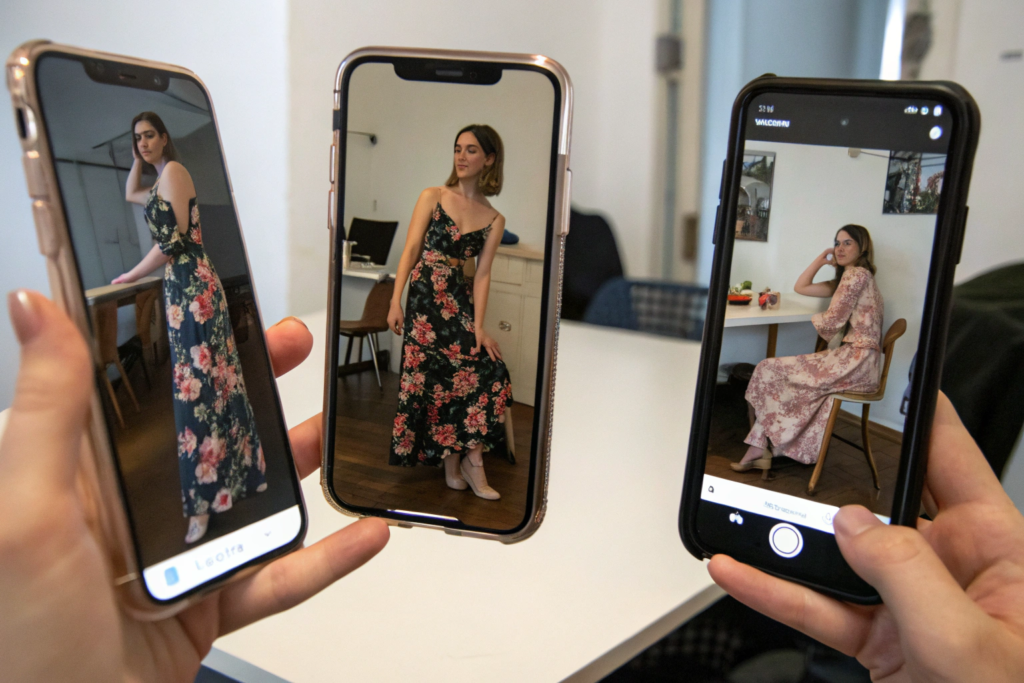
A dress today is not just worn. It is photographed, posted, and scrolled past. The most critical commercial test a floral dress must pass is not the mirror test in your studio. It is the smartphone camera test in a dimly lit restaurant, a sun-drenched park, and a harshly lit office bathroom. Your customer's purchase decision is now almost entirely mediated through a screen, and her post-purchase satisfaction is heavily influenced by how she and her friends look in photos wearing the dress. A floral print that looks stunning to the human eye can photograph as a chaotic, muddy mess. A dress that fits beautifully in a static pose can look frumpy and shapeless in a candid, seated photo. The focus group is your opportunity to systematically test and preempt these photographic failures before they become the user-generated content that kills your conversion rate.
A small focus group exposes hidden photographic failures by generating a library of real-world, un-styled smartphone photos in multiple lighting conditions, immediately revealing whether the floral print reads as a crisp, desirable pattern or a blurry blob, and whether the dress's silhouette flatters or fails a woman in natural, candid sitting and standing poses, insights that a professionally styled studio shoot systematically conceals.
When I work with a brand on a new floral dress, I insist on one specific, non-negotiable test. We give the dress to three focus group participants of different sizes. We ask them to take a selfie in a mirror in a room with standard warm indoor lighting. We ask them to have a friend take a candid photo of them sitting down, in natural daylight. We then print these photos out and pin them on a board, right next to the brand's beautiful, professionally lit, retouched editorial campaign images. The gap between the two boards is often shocking. The professional image is aspirational art. The focus group image is commercial reality. The print that looked vibrant and contrasty under strobe lights looks dark and muddy in a living room. The hem that looked perfectly elegant on a standing model looks awkwardly bunched around the knees when sitting. This is not a failure of the dress to match the sample. It's a failure of the sample to match real life. The focus group photos are the most honest product review you will ever receive, and they arrive in time for you to change the print's color contrast or adjust the hem length before you commit to a bulk order.
Why Does a Smartphone Selfie Test Predict Your Return Rate?
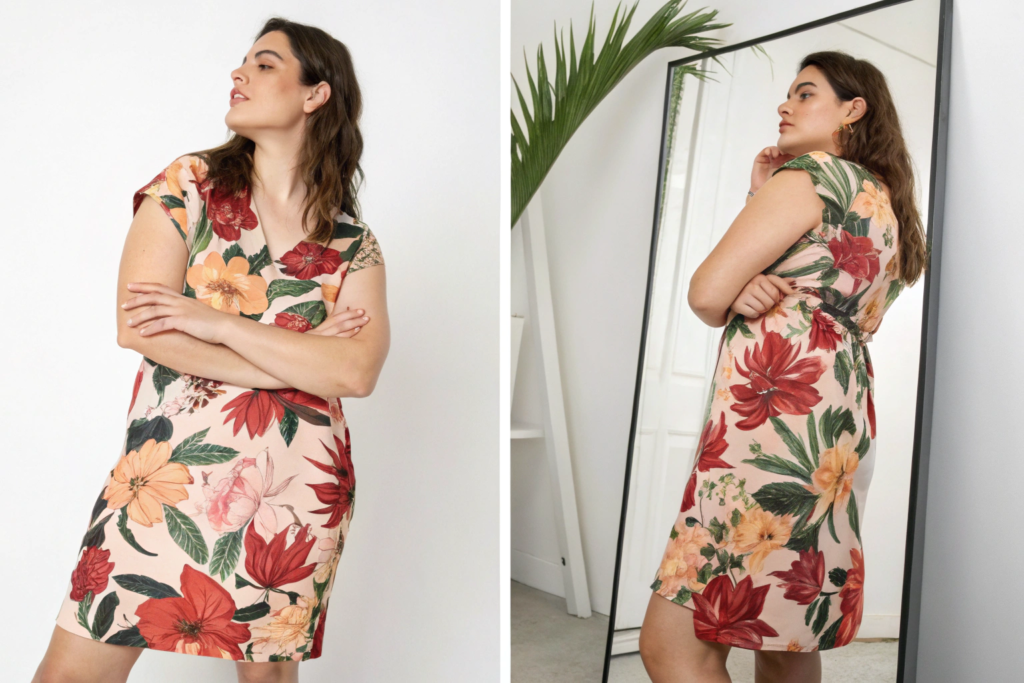
The smartphone selfie is the single most predictive diagnostic tool for an e-commerce fashion brand's return rate. The logic is simple and irrefutable. When a customer receives your dress, the very first thing she does is try it on and look at herself in the mirror. The very second thing she does is take out her phone and snap a selfie. She sends this selfie to her sister, her best friend, or her social media group chat with a simple, loaded question: "Does this look good?" Her friend's response, based purely on that un-styled, un-filtered, often poorly lit selfie, is a powerful thumbs-up or thumbs-down on your entire product. If that selfie makes her look and feel beautiful, she keeps the dress. If it makes her look frumpy, washed out, or bigger than she feels she is, the dress goes back in the bag. The return is initiated not by a quality defect, but by a photographic failure.
A focus group that explicitly includes a selfie test surfaces these failures instantly. You see how the phone's auto-exposure struggles with your high-contrast print, blowing out the white flowers and plunging the dark background into a black hole. You see how a beautiful, delicate, low-contrast tonal print completely disappears, registering as a flat, sad, solid grey. You see how an unflattering neckline or a poorly placed seam creates a harsh shadow on the face in overhead lighting. These are not details a designer stares at on a calibrated monitor. They are the brutal, real-time physics of a smartphone lens and a social media judgment. Fixing the print's contrast ratio, adjusting the neckline's angle, or changing the fabric's surface finish from overly shiny to a matte that absorbs unflattering glare—these are direct, technical responses to the selfie test that dramatically lower your return rate.
Does a "Candid Sitting Photo" Reveal Unseen Modesty Failures?
For the modest fashion market, this test is non-negotiable. The vast majority of design and fit testing happens on a standing form or a standing model. But the modest customer lives her life. She sits at her desk for hours. She sits in her car during the school pickup line. She sits on the floor to play with her children. She sits on a chair at a dinner party. A dress that perfectly covers the knee and provides a beautiful, flowy silhouette while standing can ride up several inches when sitting, exposing the knee or lower thigh in a way that violates her modesty standards. A neckline that sits demurely at the collarbone while standing can gape open when she leans forward to eat or work, creating a deeply uncomfortable exposure moment.
The candid sitting photo, taken by someone else without warning, captures this reality. You tell the focus group participant to simply sit naturally and chat for ten minutes. You then have someone discreetly photograph her from the front and the side. The resulting images are often a revelation and a horror show for a modest brand. You see the true functional hem length when seated. You see if the back waist gaps. You see if the long, beautiful bishop sleeves drag in an imaginary plate of food. These are not theoretical concerns. They are the daily friction points that turn a beloved dress into a "never wear" item hanging in the back of the closet. A focus group that includes this test allows you to add a modest, hidden gusset to a neckline, adjust a hem length by a critical inch, or add a small, discreet weight to a sleeve hem. These tiny, almost invisible engineering tweaks are the difference between a dress that passes a standing inspection and a dress that succeeds in a sitting life.
The Objective Fabric and Fit Data Only a Focus Group Can Give You
A spec sheet tells you the numerical measurements of a dress. A fit model tells you how it looks on one, specific, professional body. Neither of these standard industry tools tells you how the dress feels over time, on different bodies, in different states of movement and rest. The focus group is the only tool that generates subjective, qualitative, and crucially, time-based comfort data. This data is not "soft." It is directly tied to your return rate and your repeat purchase rate. A dress that feels slightly scratchy at the wrist seam after two hours of wear, a dress that requires constant re-adjustment of a slipping neckline, a dress whose fabric makes a faint swishing noise that feels embarrassingly loud in a quiet office—these are the hidden sensory failures that a spec sheet cannot capture and a 10-minute fit model session will never reveal.
The objective fabric and fit data only a focus group can give you includes time-based comfort scores, multi-body ease-of-movement reports, and tactile comparisons against the customer's existing wardrobe favorites, generating a rich dataset that directly predicts post-purchase satisfaction and pinpoints the exact seam, fabric, or closure that needs re-engineering before bulk production.
At Shanghai Fumao, we have integrated a simple, structured wear-test protocol into the sample development phase for brands that want this level of rigor. We recruit five women who match the brand's target customer profile. They each take a sample dress home with a simple, one-page wear diary. They are asked to wear the dress for a full, normal day—a workday, a weekend day of errands, a day of religious or community activity. They record their observations at three specific time points: after the first 10 minutes, after 3 hours, and at the end of the day. The specific questions are brutally practical: "At any point did you feel the need to adjust the dress?" "Did the fabric feel different against your skin after several hours of wear?" "Could you comfortably drive a car?" "Could you comfortably pick up a heavy object from the floor?" The answers to these questions are a treasure map of hidden design flaws. One client discovered through this diary that a beautiful, high-end metal zipper at the center back became uncomfortably hot when the wearer sat in a car with a sun-exposed back window. The fix was a simple, inexpensive zipper guard. Without the wear diary, the brand would have received a wave of vague, negative reviews about the dress being "uncomfortable," with no actionable data to fix the problem.
How Does a 4-Hour Wear Test Reveal a Dress's True "Keep or Return" Score?
A 10-minute try-on session in a focus group facility is a first-impression test. It tells you if the dress is immediately appealing and if the static fit is in the ballpark. A 4-hour wear test is a relationship test. It tells you if the customer will actually keep the dress after the honeymoon phase of the unboxing is over. The 4-hour mark is the critical threshold where sensory irritations and functional frustrations break through conscious awareness and become a firm, negative opinion. A seam that felt fine for the first hour becomes an itchy, unignorable distraction by hour three. A sleeve cuff that seemed elegantly snug begins to feel like a restrictive shackle. A waist seam that felt supportive starts to feel like a cutting band after a large lunch.
The wear diary captures this progression in real-time, which is far more reliable than a post-wear retrospective interview where the participant has already formed a summary judgment and forgotten the sequence of her feelings. The data point you are looking for is simple: at the end of the 4-hour test, would she buy this dress with her own money? If three out of five participants say "no," and their diary notes point to a consistent, specific reason—the neckline is too high, the sleeve is too tight at the elbow, the fabric doesn't breathe—you have an objective, actionable, sample-stage mandate to fix that specific feature. This 4-hour test, conducted with five women and costing you perhaps a few hundred dollars in sample costs and participant gift cards, can prevent a $30,000 bulk order of dresses that would have generated a 60% return rate due to a single, fixable discomfort point.
Why Should You Record the "First 30-Second Touch" Reaction?
The very first moment a potential customer touches your dress, her brain makes a lightning-fast, subconscious quality judgment that heavily influences everything she sees and feels afterwards. This is the "primacy of touch" effect in consumer psychology. If her first tactile impression is one of luxury, softness, and substance, she is primed to see the fit and the print as beautiful. If her first touch registers as cheap, scratchy, thin, or synthetic, a negative halo effect is cast over the entire garment, and she will subconsciously look for confirming flaws. This 30-second touch test is something your internal team can never replicate, because their hands are already intimately familiar with the fabric.
In the focus group, you simply hand the dress to the participant and ask for her immediate, unfiltered verbal reaction to the fabric's hand-feel. You record her exact words. "Oh, this feels expensive." Or, "Hmm, this feels a bit cheap and shiny." Or, "It's a lot thinner than I expected." These raw, unprimed reactions are direct, predictive data points. If a majority of participants register a negative or even a neutral first-touch impression, your dress has a serious conversion problem that no amount of beautiful photography can fix. The customer will open the polybag, touch the dress, and the first seed of "return" will be planted before she even tries it on. The fix is a fabric sourcing issue, not a design issue. You need to upgrade the yarn count, change the weave, or switch from a pigment print to a reactive print to achieve the soft, luxurious hand-feel that triggers a positive first-touch reaction. This is a conversation you have with your factory's fabric sourcing team, like our team at Shanghai Fumao, armed with the recorded verbatim feedback from real customers.
Building a Cost-Effective, Repeatable Focus Group System
The biggest objection I hear from brand owners about focus groups is not about their value, but about their perceived cost and complexity. "I can't afford a formal market research agency. I don't have a fancy facility with a one-way mirror." The beautiful truth is that for a floral dress sample test, you don't need any of that. An expensive, formal focus group with a professional moderator and a rented facility is for testing marketing messages and brand positioning. For testing the physical, functional reality of a garment, you need a living room, five honest women, and a structured set of simple, repeatable tasks. The entire system can be built and run for the cost of a few sample dresses and a modest gift card.
Building a cost-effective, repeatable focus group system requires abandoning the expensive, formal market research model and instead creating a simple, in-house "Real Life Panel" of five target customers who, for a small honorarium, take your sample dresses home, follow a structured one-page wear-test protocol, and provide their raw, unvarnished feedback via voice notes and smartphone photos, a system that delivers 90% of the commercial insight for 5% of the cost of a formal agency.
The system I have helped my brand partners set up is deliberately low-friction and high-honesty. You recruit participants from your actual customer base, not from a general consumer panel. An email to your last 100 customers offering a $100 gift card and a chance to "preview and influence our next collection" will generate more qualified, engaged candidates than you can use. You select five women who match your core customer profile in age, size, and lifestyle. You send them each a sample dress with a simple, one-page instruction sheet and a link to a private, shared online album. The instructions are not a survey. They are a series of specific, real-world tasks: "Wear this dress for a full day. Take a selfie in natural light. Take a photo of the dress on a hanger after you've worn it. Send us a 60-second voice note telling us the one thing you'd change and the one thing you absolutely love." The voice note is a particularly powerful tool. It captures emotional nuance, hesitation, and spontaneous, unfiltered language that a written survey response completely misses. A woman's written "the sleeves are a bit long" might be a minor note. Her voice note saying, "I loved it, but honestly, the sleeves drove me CRAZY by the end of the day, they kept dipping in my coffee cup," is an urgent, visceral, and utterly clear mandate for a design change.
How Do You Select the Right Five Participants for Predictive Feedback?
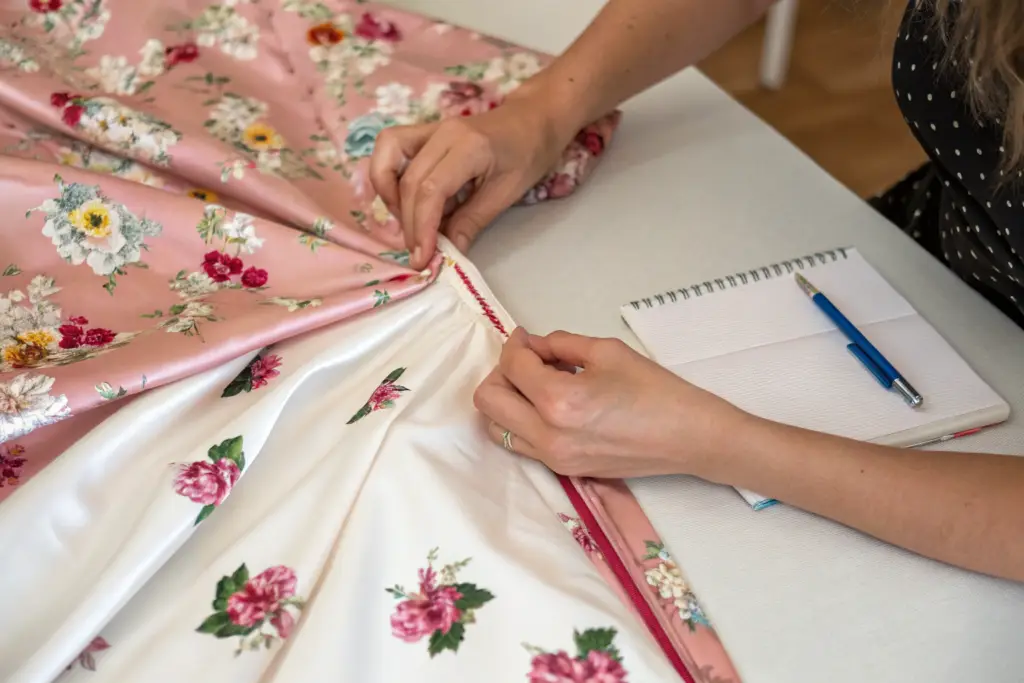
The selection of these five participants is the single most important variable in the accuracy of your feedback. A random selection will give you random, potentially misleading data. You need a "maximum variation" sample within your core customer demographic. This means you intentionally select participants who represent the edges of your size range, not just the middle. If your core size range is US 4-16, you select one size 4, one size 8, one size 12, one size 16, and one size 8 petite or tall. This ensures that fit issues at the extremes, which are often glossed over by a fit model in the center of the range, are loudly and clearly surfaced.
Beyond size, you select for life-context diversity. You want a college student, a working professional, a mother of young children, and a woman who is active in her community or religious institution. These different life contexts will stress-test the dress in completely different ways. The college student will test it for walking across campus and looking good in harsh lecture-hall lighting. The mother will stress-test it for bending, lifting, washing, and surviving a messy snack time. The professional will test it for all-day sitting comfort and looking polished in a meeting. This diversity ensures that no single, narrow lifestyle's assumptions are baked into the design. The feedback from this varied panel will give you a comprehensive map of the dress's functional performance across the real spectrum of your customer's lives. The cost of this precision is simply the intentionality of your selection. The return on that cost is a collection designed for reality, not for a single, abstract "ideal" customer.
Can a Simple Voice Note Capture More Honest Feedback Than a Survey?
A typed survey is a cognitive filter. The participant reads the question, formulates an answer in her head, edits that answer for social acceptability, and then types it out. The result is a sanitized, rationalized, and often overly polite version of her true feelings. A voice note, recorded spontaneously and conversationally, bypasses much of this internal editing process. The participant is just talking, often while the dress is still on and the feeling is fresh. She uses her natural vocabulary, her own emotional inflections, and her unfiltered analogies. This raw, vernacular data is commercial gold. It tells you not just what she thinks, but how she feels, and it gives you the exact language she and thousands of customers like her will use when they talk about your dress to their friends or write online reviews.
I have listened to hundreds of these voice notes in my work with brand partners. The difference between the written feedback and the spoken feedback is consistently striking. A written comment might say, "The print is quite bold." A voice note on the same dress will say, "Okay, so I put this on and my husband looked at me and said, 'Whoa, that's a LOT of flower.' I kind of love it but I also feel a little self-conscious, like everyone's staring at my chest." That voice note tells you everything. The print is engaging but potentially overwhelming. It creates a focal point on the bust that some women may be uncomfortable with. It's a conversation piece, which is good for social media but risky for a conservative customer. This rich, nuanced, emotionally textured data is completely absent from a survey response. It gives you the power to make a nuanced design decision—perhaps keep the bold print but shift the motif placement to avoid the bust apex, creating the same visual impact without the self-conscious side effect. A survey could never give you that level of actionable, specific design intelligence.
Conclusion
Testing your floral dress samples in a small focus group is not an optional, nice-to-have step for a well-funded brand. It is the single most cost-effective, risk-reducing investment you can make in your collection's commercial success. We have exposed the dangerous, invisible bias of your internal team's design fixation, and shown how a fresh pair of eyes, unburdened by months of emotional attachment to the design, can spot a fatal fit flaw or a print scale disaster in the first 30 seconds of contact. We have revealed the hidden world of photographic failure, proving that a dress's true commercial test is not a studio photoshoot but a dimly lit selfie and a candid sitting photo, the very images that drive your customer's "keep or return" decision. We have given you the tools to gather objective, time-based comfort data through a simple 4-hour wear test, data that predicts post-purchase satisfaction more accurately than any spec sheet or fit model session. And finally, we have built a cost-effective, repeatable, in-house focus group system that uses voice notes and real-life tasks to generate brutally honest, actionable feedback for a fraction of the cost of a single bulk production error.
The market does not reward the most beautiful design. It rewards the most wearable, photographable, and comfortable design, as judged by the actual woman who lives her actual life in the dress. A focus group is the mechanism that transforms your design from a beautiful object in a studio into a beloved, kept, and re-purchased garment in a customer's closet. This process is not about doubting your team's talent. It is about validating your team's instincts with the hard, irrefutable reality of the customer's voice.
If you are developing your next floral dress collection and want to integrate this structured, real-world testing methodology into your pre-production process, Shanghai Fumao is built to support that rigorous approach. We can produce small-batch sample runs specifically for your focus group panel, and we can rapidly incorporate the clear, data-backed design tweaks that emerge from your wear-testing. Let's ensure your bulk production order is backed by real customer evidence, not just internal hope. To discuss how our sample development process can fuel your focus group testing program, please contact our Business Director, Elaine, at elaine@fumaoclothing.com. Let's build a collection that passes the toughest test: a real woman's real life.