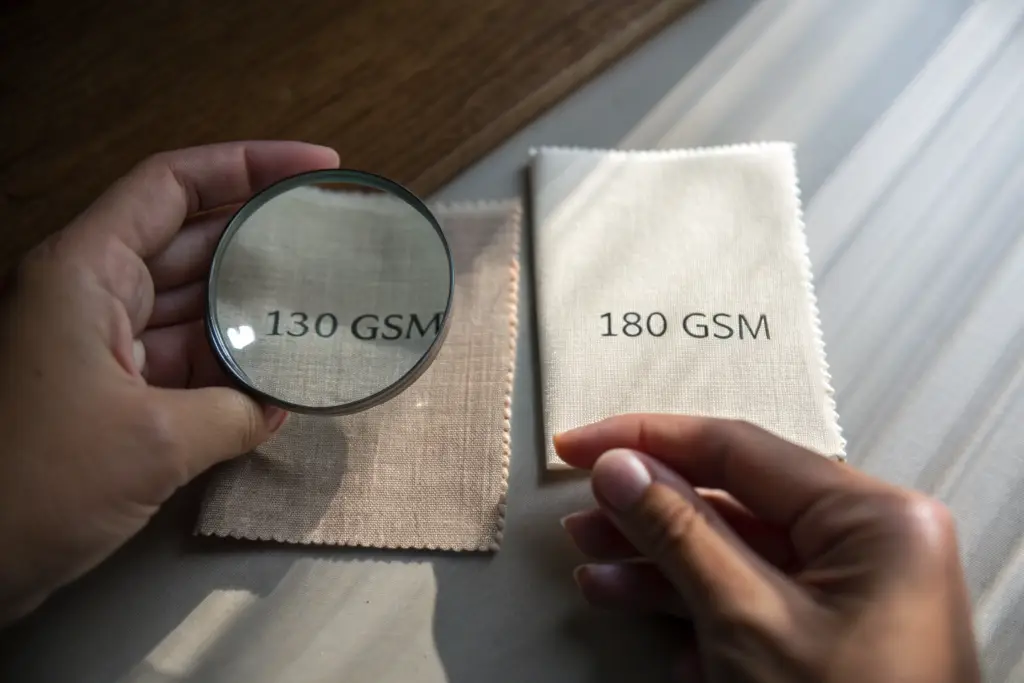
A brand owner from Chicago called me in a panic last March. She had received her bulk shipment of 2,000 floral A-line dresses. The sample was perfect. It was a beautiful, mid-weight cotton voile that draped like a dream. The bulk dresses felt completely different. They were thin. They were flimsy. You could see straight through the fabric when you held it up to the light. She had ordered a 180gsm fabric. The factory had shipped a 130gsm fabric. She had no way to check the weight before the dresses arrived at her warehouse. She had to mark down the entire batch by 40%. She lost $18,000. She told me later, "I didn't know I could have checked the fabric weight before the bulk was cut. I thought I just had to trust them." Trust is not a quality control strategy.
You check fabric weight before placing a bulk order by requesting a physical fabric header from the exact dye lot that will be used for your production, then verifying the weight yourself using a simple gram scale and a GSM calculation. You cut a precise 10cm by 10cm square from the header, weigh it in grams, and multiply by 100. The result is the fabric weight in grams per square meter. You compare this to the factory's specification. If the numbers match, you approve the bulk cutting. If they don't, you reject the fabric lot and demand a compliant replacement. This test takes five minutes and can save you thousands of dollars in substandard inventory.
I have rejected fabric lots that were 10% under the specified weight. I have saved my clients from the exact disaster that happened to the brand owner in Chicago. Let me show you exactly how to verify fabric weight yourself, and how to request the right documentation from your factory before a single dress is cut.
What Is GSM and Why Does It Matter for Your Floral Dress?
GSM stands for grams per square meter. It is the universal standard for measuring fabric weight. A piece of fabric that is one meter wide and one meter long is weighed. The weight in grams is the GSM. A 180gsm cotton voile means one square meter of that fabric weighs 180 grams. The GSM determines the fabric's thickness, opacity, drape, and durability. It is the single most important technical specification on a fabric.
GSM directly determines how your floral dress will look, feel, and wear. A fabric below 130gsm is sheer and suitable only for lightweight blouses or lining. A fabric between 140gsm and 170gsm is a lightweight dress fabric, suitable for casual summer dresses. A fabric between 180gsm and 210gsm is a mid-weight dress fabric with excellent drape, opacity, and durability. A fabric above 220gsm is a heavy-weight dress fabric suitable for structured silhouettes and cooler seasons. For a floral A-line dress, 180gsm to 200gsm is the ideal range for a premium, opaque, well-draping garment.
When a factory substitutes a lighter fabric, they save money. Fabric is sold by the kilogram. A lighter fabric uses less raw material. The factory's cost per meter is lower. They pocket the difference. Your customer receives a dress that is sheer, flimsy, and disappointing. The GSM specification is your contract with the factory. You must verify it.
How Does Fabric Weight Affect the Drape of an A-Line Dress?
The A-line silhouette depends on the fabric's ability to flare out from the shoulders and hold a gentle shape. A fabric that is too light will collapse. It will hang limp against the body. The A-line shape will disappear. The dress will look like a sack. A fabric that is too heavy will stand stiffly. It will not flow. The dress will look like a tent.
The 180gsm to 200gsm range is the sweet spot for an A-line dress. The fabric has enough body to hold the flare away from the body. It has enough softness to move gracefully when the wearer walks. It skims the hips without clinging. It photographs beautifully because it creates a clean silhouette.
I have tested A-line dresses in cotton voile from 120gsm to 240gsm. The 120gsm dress looked like a nightgown. The 240gsm dress looked like a heavy canvas tunic. The 180gsm dress looked like a high-quality, premium garment. The weight made the difference.
How Does GSM Relate to Opacity and the "See-Through" Problem?
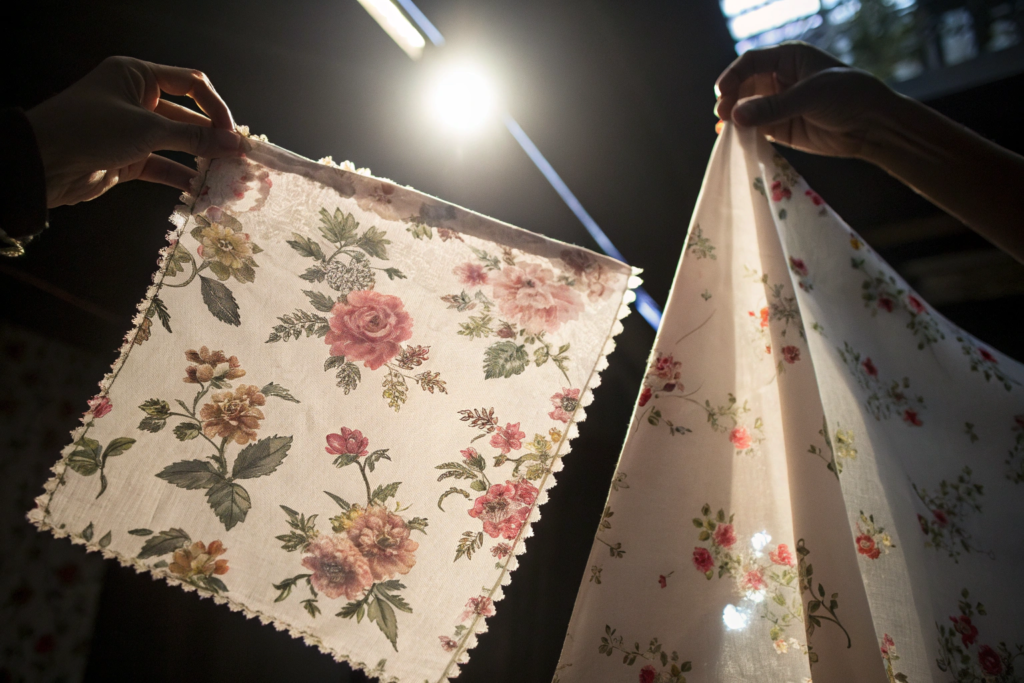
The "see-through" problem is a major return driver for floral dresses. The customer tries on the dress in natural light. She can see her underwear. She can see the outline of her legs. She returns the dress immediately. The opacity of a fabric is directly related to its weight and its weave density.
A 130gsm cotton voile is semi-sheer. In bright sunlight, it is translucent. White and light-colored dresses at this weight are see-through. They require a lining, which adds cost. A 180gsm cotton voile is opaque. It is not see-through in normal lighting conditions. A nude undergarment is invisible underneath. The customer feels secure and confident.
When I source fabric for a client's floral dress, I always specify the GSM in the purchase order. "180gsm Cotton Voile, Plain Weave, +/- 5% tolerance." The tolerance allows for minor, unavoidable variations in the dyeing and finishing process. A 180gsm fabric might arrive at 176gsm or 184gsm. That is acceptable. A 145gsm fabric labeled as 180gsm is not a tolerance issue. It is a specification failure.
How Do You Perform a Simple GSM Check at Home or Office?
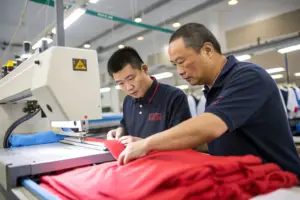
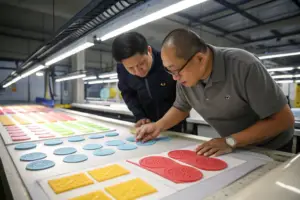
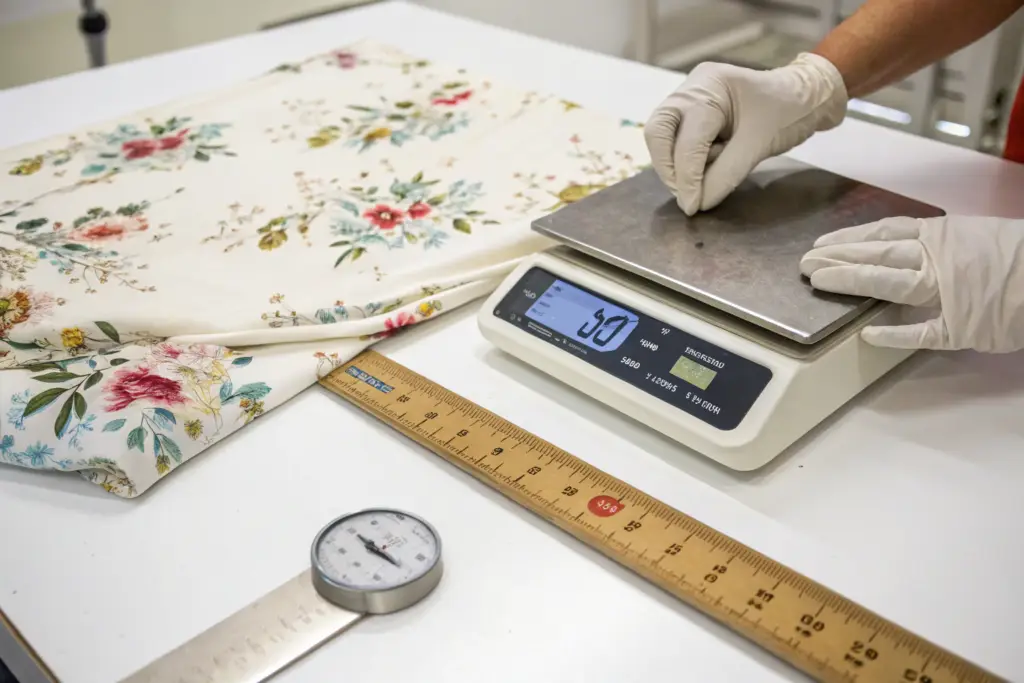
You do not need to send the fabric to a lab. You do not need expensive equipment. You need a precision gram scale, a ruler, a pair of sharp scissors, and five minutes. This simple test will tell you whether the factory is shipping the fabric weight you specified. I do this test on every new fabric lot that arrives at Shanghai Fumao. It is the first gate before the fabric is approved for cutting.
The home GSM test is simple. First, ask the factory to send you a fabric header, a piece cut from the exact roll that will be used for your bulk production. Second, from that header, cut a perfect 10 centimeter by 10 centimeter square using a ruler and sharp scissors. Third, weigh that square on a gram scale that measures to 0.1 grams. Fourth, multiply the weight in grams by 100. The result is the GSM of the fabric. A 10cm square that weighs 1.85 grams indicates a 185 GSM fabric.
This test is accurate to within 3% if you cut the square precisely. It is the same method used by textile labs for a quick field check.
What Tools Do You Need for an Accurate Measurement?
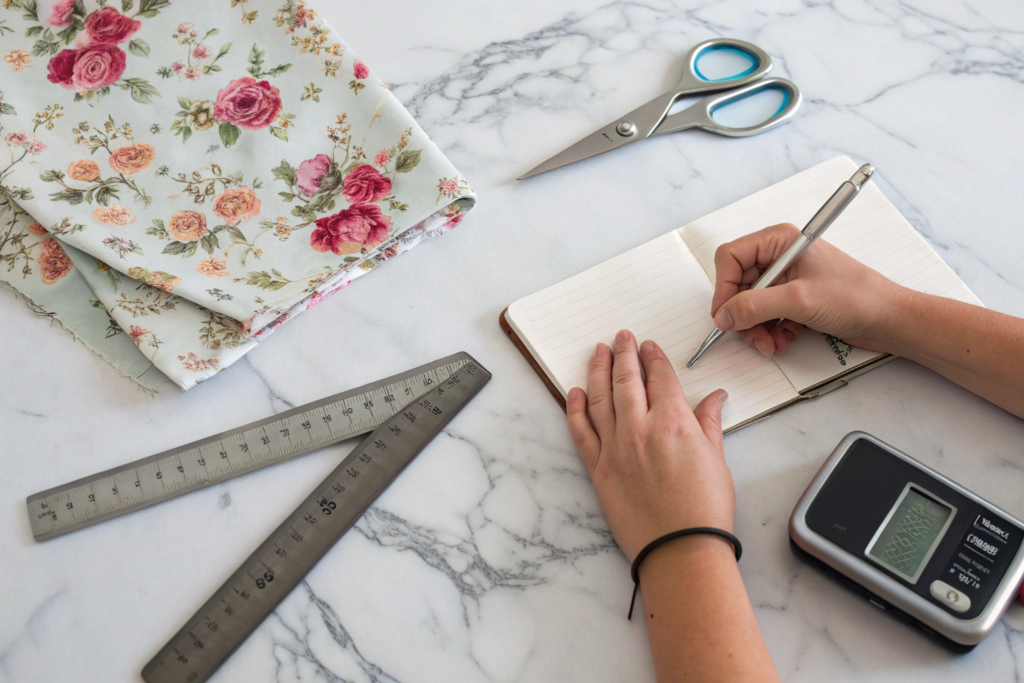
You need a digital gram scale. A jewelry scale or a kitchen scale that measures in 0.1-gram or 0.01-gram increments works perfectly. These cost $15 to $30 on Amazon. You need a metal ruler with a straight edge. You need sharp fabric scissors that can cut a clean, precise edge. A rotary cutter and a cutting mat are even better for precision.
You also need a flat, clean surface to work on. Any dust or debris on the fabric will add weight and skew the measurement. Brush the fabric clean before cutting.
The key to accuracy is the precision of the cut. Your square must be exactly 10cm by 10cm. If it is 10.5cm by 10.5cm, your calculation will overstate the GSM. If it is 9.5cm by 9.5cm, you will understate the GSM. Measure twice. Cut once. Be precise.
How Do You Calculate the GSM from a Smaller or Larger Sample?
If you cannot cut a 10cm square, you can use any size square and do the math. Cut a square. Measure the length and width in centimeters with your ruler. Multiply the length by the width to get the area in square centimeters. Weigh the square in grams. Divide the weight by the area. Multiply by 10,000. The formula is: GSM = (Weight in grams / Area in square centimeters) x 10,000.
A 5cm by 5cm square has an area of 25 square centimeters. If it weighs 0.46 grams, the calculation is (0.46 / 25) x 10,000 = 184 GSM.
This method works for any size sample. The larger the sample, the more accurate the reading. A 10cm by 10cm square is the standard because the math is easy and the sample size provides a good average weight that smooths out minor fabric variations.
I always cut three squares from different parts of the fabric header. I weigh each one. I calculate the average GSM. If the three squares measure 183, 185, and 184 GSM, the average is 184 GSM. The fabric is consistent. If the three squares measure 170, 185, and 195 GSM, the fabric is inconsistent. The weaving or finishing was uneven. I reject the fabric based on inconsistency, even if the average meets the spec. Consistency is a quality metric in itself.
What Documentation Should You Request from the Factory?
Your own GSM test is the gold standard. But you should also request formal documentation from the factory. This documentation creates a paper trail. If the bulk fabric does not match the documentation, you have a written record of the agreed specification. This is critical evidence if you need to file a dispute or request a refund.
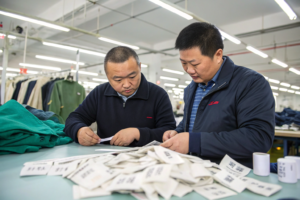
Before bulk cutting begins, request three documents from the factory: the mill's technical data sheet for the specific fabric lot, the factory's own incoming fabric inspection report, and a physical fabric header with a label showing the lot number, the roll number, and the claimed GSM. The mill's data sheet shows the fiber composition, the yarn count, the weave type, and the finished weight. The inspection report shows the results of the factory's own GSM test and any defects they found. The header allows you to do your own independent test.
A factory that cannot or will not provide these documents is either disorganized or hiding something. Either way, it is a risk.
What Is a Mill Technical Data Sheet and How Do You Read It?
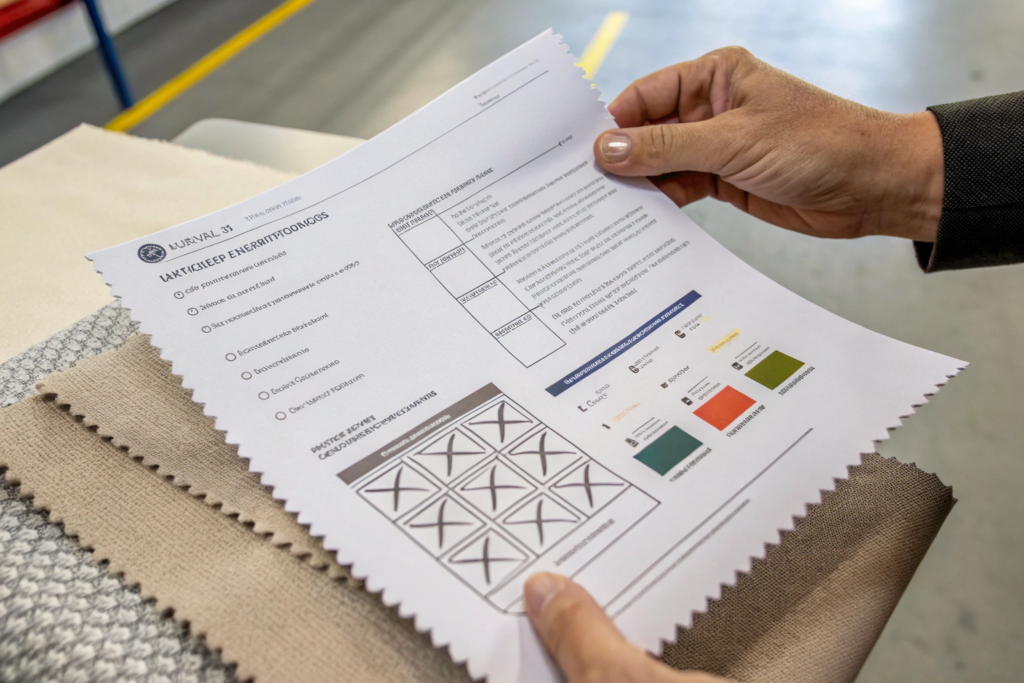
The mill technical data sheet is the fabric's birth certificate. It is issued by the textile mill that wove and finished the fabric. It lists the fabric construction. The warp and weft yarn counts. The ends per inch and picks per inch. The fiber composition with percentages. The finished width. And critically, the finished weight in GSM.
The data sheet also lists the finishing processes applied. Enzyme wash. Softening. Pre-shrinking. These finishes affect the final weight. The pre-finished weight might be 190 GSM. After enzyme washing, the weight might drop to 182 GSM because the process removes some surface fibers. The finished weight is the correct weight for your garment.
The data sheet has a lot number. This lot number should match the lot number on the fabric headers and on the bulk fabric rolls. The traceability ensures the data sheet corresponds to the actual fabric you are receiving.
I provide the mill data sheet to my clients for every custom fabric order. It is not a secret document. It is a transparency document. A client in Austin reviews the data sheets for every production run. She keeps them in a binder. If a bulk shipment ever has a quality issue, she has the paper trail.
How Do You Verify the Factory's Incoming Inspection Report?
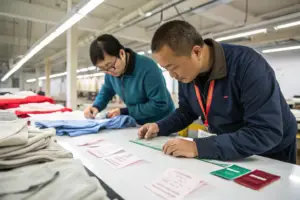
When the fabric arrives at the factory from the mill, the factory's QC team should inspect it before accepting it into inventory. They should check the weight, the shade, the hand feel, and the visual defects. They should record their findings in an incoming inspection report.
Ask the factory for a copy of this report for your specific fabric lot. The report should show the test date, the lot number, the quantity inspected, and the results. The GSM measurement should be on there. The shade comparison against the master standard should be recorded. Any defects found should be listed.
If the factory has not inspected the fabric, or if they refuse to share the report, they are not doing basic quality control. This is a red flag. A factory that does not inspect incoming fabric is a factory that will ship substandard garments.
I share my incoming inspection reports with my clients. They show the fabric lot number, the GSM test results from three sample squares, the shrinkage test result, and the visual inspection notes. The report is signed by the QC inspector. It is a record of accountability.
What Are the Common Fabric Weight Scams to Watch For?
Unfortunately, fabric weight substitution is a known issue in the apparel manufacturing industry. A factory or a fabric supplier may deliberately ship a lighter, cheaper fabric than what was agreed upon. They rely on the brand owner not checking the weight. The savings are significant for the supplier. The damage is catastrophic for the brand.
The most common fabric weight scam is "thickness illusion." The supplier uses a finishing process, like a heavy softener or a temporary starch, to make a lightweight fabric feel heavier and more substantial. The sample header feels good. The weight seems correct to the hand. But after the first wash, the finishing chemicals wash out. The fabric collapses to its true, lighter weight. The only defense against this scam is the GSM test. Your hands can be fooled. Your scale cannot.
A related scam is showing a sample header from one lot and shipping a different lot. The header is heavy. The bulk is light. The lot number on the header does not match the lot number on the bulk rolls. The traceability is broken.
How Does the "Wash-Out" Scam Work?
A chemical softener or a resin finish is applied to the fabric to give it more body and a heavier hand feel. The fabric feels substantial. It drapes like a heavier fabric. The customer handling the dress in the store feels the weight and thinks it is high quality.
The customer buys the dress. She washes it once, as the care label instructs. The chemical finish washes out. The fabric becomes thin, limp, and possibly sheer. The dress that felt premium in the store now feels cheap. The customer is disappointed. She returns the dress if she still can. She never buys from the brand again.
The GSM test before washing may show a heavier weight due to the chemical loading. A more rigorous test is to wash the fabric header, dry it, and then perform the GSM test. The true fabric weight is the post-wash weight. I always test fabric weight after a wash cycle for this reason.
How Do You Check That the Bulk Fabric Matches the Header?
You have tested the header. It is correct. Now the factory is cutting the bulk. How do you know the bulk fabric is the same as the header? You request a "bulk lot sample" after the fabric arrives at the factory but before cutting begins. The factory cuts a small piece from the beginning, middle, and end of the bulk fabric roll. They send you these pieces. You perform the GSM test on each piece. They must match the header weight.
You also check the lot numbers. The header has a lot number. The bulk lot sample has a lot number. They must match. If the lot numbers are different, the factory has substituted a different fabric lot. This is a breach of contract.
I provide bulk lot samples to my clients as a standard part of our pre-production process. The bulk lot sample and the header are from the same fabric roll. The lot numbers match. The GSM tests match. The client approves the bulk cutting. The transparency is built into the process.
Conclusion
Fabric weight is not a subjective assessment. It is a number. It is a specification. You can verify it in five minutes with a $20 scale and a ruler. The GSM test is your defense against the single most common quality issue in apparel manufacturing: fabric weight substitution. A dress that is supposed to be a premium, opaque, 180gsm cotton voile must not arrive as a flimsy, sheer, 130gsm disappointment. The difference is your brand's reputation and your customer's trust.
The process is simple. Request the fabric header with the lot number. Cut a precise 10cm square. Weigh it. Multiply by 100. Compare the result to the specification. Request the mill data sheet and the factory inspection report. Verify the lot number on the bulk fabric matches the header. Do a wash test to detect temporary finishes. These steps take a total of 30 minutes of your time. They can save you from a $20,000 inventory disaster.
If you are placing a bulk order for floral dresses, I encourage you to test every fabric lot. At Shanghai Fumao, I will send you the fabric header, the mill data sheet, and the inspection report for your approval before we cut a single dress. I will show you how to do the GSM test on a video call if you want. Our Business Director, Elaine, can walk you through our fabric verification process. Email her at elaine@fumaoclothing.com. Ask for our Fabric Quality Verification Kit. It includes a sample header, a mill data sheet template, and instructions for the home GSM test. A beautiful floral dress begins with the right fabric. Verify the weight. Protect your brand. Your customers will feel the difference.