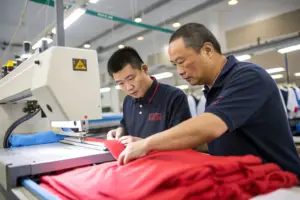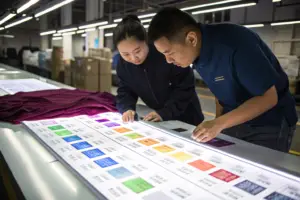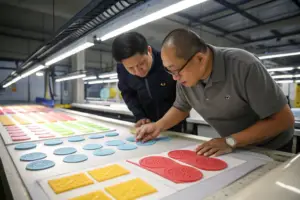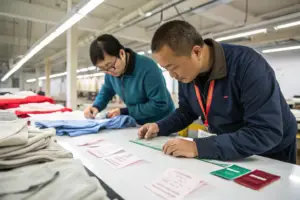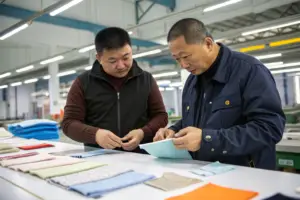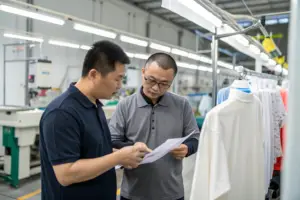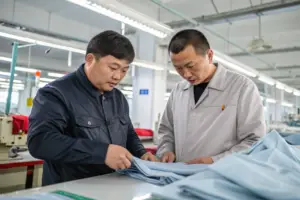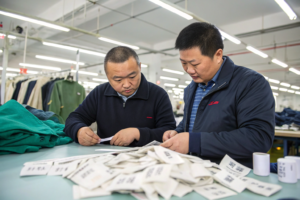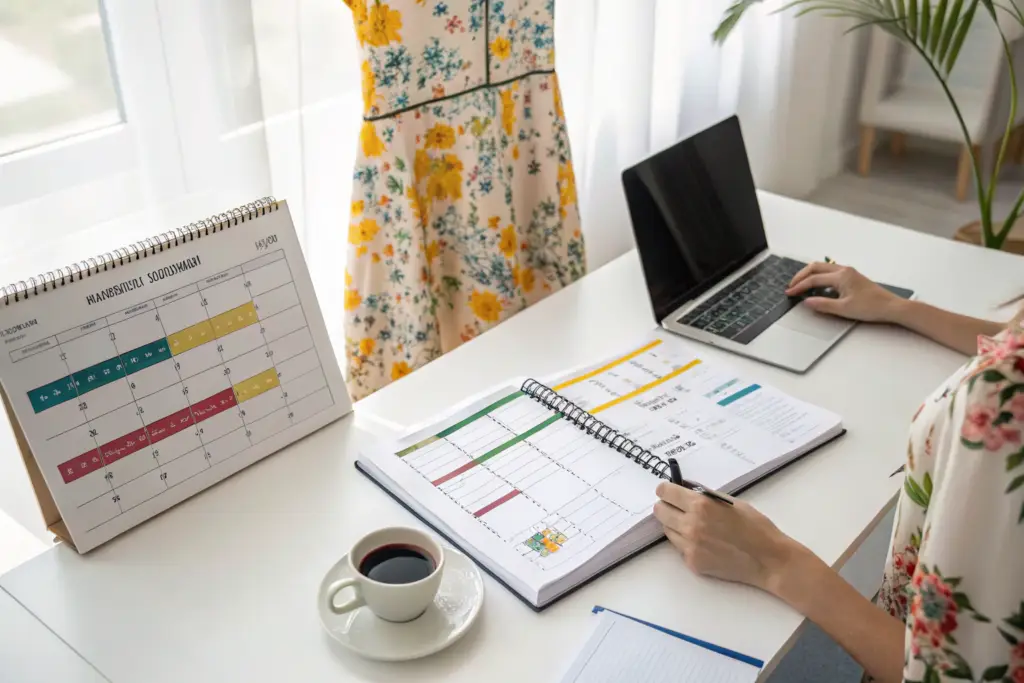
A brand owner from Los Angeles called me on March 1st last year. She had just secured a purchase order from a major department store for 4,000 custom A-line floral dresses. The in-store date was May 15th. She was ecstatic. Then she asked me the question that made her blood run cold. "Ron, can we make the timeline?" I pulled up my production calendar. I counted backward from May 15th. Shipping time. Customs clearance. Bulk production. Pre-production sampling. Fabric procurement. Pattern making. The math was tight but possible. We started the next day. The dresses shipped on April 20th. They hit the store floor on May 12th, three days early. She called me after the launch. "I didn't just make the deadline. I beat it. My buyer was impressed. She gave me a second order."
The total lead time for a custom A-line dress at Shanghai Fumao ranges from 45 to 75 days, depending on the complexity of the design and whether the fabric is a stock option or a custom print. A standard custom dress with stock fabric can be delivered in 45 to 55 days. A dress with a custom-developed floral print requires 60 to 75 days. These timelines include pattern making, pre-production sampling, your fit approval, fabric procurement, bulk production, final inspection, and DDP shipping to your US warehouse. We build buffer weeks into every phase to absorb unexpected delays.
Lead time is not a single number. It is a sequence of interconnected steps. Each step has a standard duration and a potential delay risk. I want to break down the entire timeline so you can plan your collection launch with confidence.
What Are the Production Stages That Determine the Total Lead Time?
A dress is not made in a day. It moves through a series of distinct production stages. Each stage has a fixed minimum time. You cannot rush a pattern. You cannot rush the dye to bond with the fabric. You cannot rush a ship across the Pacific Ocean. The total lead time is the sum of these minimum times plus the buffer for revisions and unexpected delays.
The production of a custom A-line dress follows seven sequential stages: design and pattern making, pre-production sampling and fit approval, fabric procurement and printing, bulk fabric cutting, bulk sewing and finishing, final quality control inspection, and packing and shipping. The first three stages, from design to fabric readiness, typically take 20 to 30 days. The bulk production stages take another 20 to 25 days. The shipping stage takes 15 to 20 days. The total is 55 to 75 days from deposit to delivery.
Understanding each stage helps you plan your own calendar and communicate realistic timelines to your retail buyers or your customers.
How Long Does the Design and Pattern Making Stage Take?
The clock starts when you pay your deposit and send us your design brief. The design brief can be a detailed tech pack, a sketch with measurements, or a photo of a dress you want to replicate with modifications. The more complete your brief, the faster this stage goes.
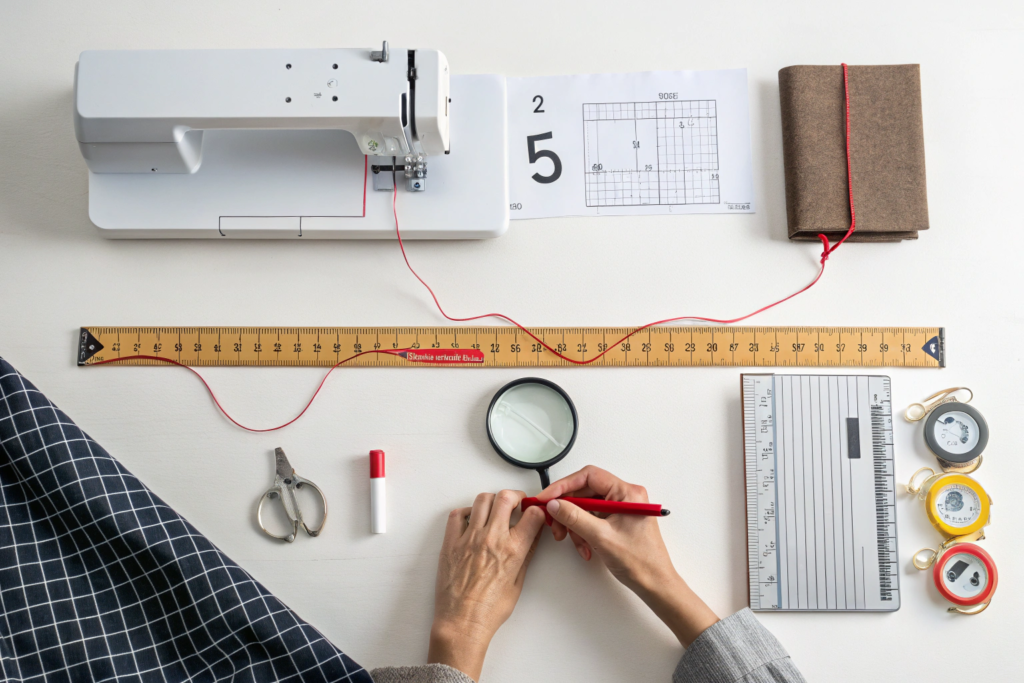
My pattern maker takes your design and creates a digital pattern. This takes 3 to 5 working days for a standard A-line silhouette. If the dress has complex details, like a tiered skirt, a fitted bodice with darts, or an unusual neckline, the pattern work can take 5 to 7 days. We then make a first prototype sample in a stock fabric to check the silhouette and proportions. This sample is called a "muslin" or a "toile." It is a rough version of the dress, not in the final fabric. We photograph it and send you the photos for initial silhouette approval.
This stage is collaborative. You might see the toile photo and say, "The flare is not wide enough. Add two inches to the hem circumference." We adjust the pattern. We make a second toile. You approve the silhouette. The design and pattern stage is complete. This takes 7 to 10 days total with one round of revision.
A client in Austin sent me a highly detailed tech pack with a graded spec sheet for all her sizes. My pattern maker digitized it in two days. The first toile was approved with no changes. The design stage took four days. A detailed tech pack is the single biggest accelerator of the pre-production timeline. I provide a tech pack template to all my new clients to help them prepare.
What Happens During the Pre-Production Sample Stage?
Once the pattern is approved, we make the Pre-Production Sample, the PPS. This is the critical sample. It is sewn in the actual production fabric with the actual trims, the actual labels, and the actual print if it is a custom floral. This sample is the exact dress you will receive in bulk. It is your last chance to change anything.
Making the PPS takes 5 to 7 working days. It involves cutting the actual fabric, sewing it with the approved stitching methods, finishing the seams, and attaching the trims and labels. The sample is then pressed and inspected. We ship it to you via DHL or FedEx. Shipping takes 3 to 5 days to the US.
You receive the PPS. You put it on a fit model. You wear it. You wash it. You check the drape, the fit, the print placement, the label position, the hem depth. You compile your feedback. If the fit is perfect and no changes are needed, you approve the PPS. This stage takes 10 to 14 days including shipping time.
If changes are needed, we make a second PPS. The revision adds another 7 to 10 days. This is why I always budget for one round of revisions. Most custom dresses need one fit tweak. The hip needs a bit more ease. The waist needs to be taken in slightly. The neckline needs to be lowered. This is normal. It is part of the process.
I had a client in New York who approved her PPS on the first try. She had used my tech pack template and provided very detailed measurements. The fit was perfect. She saved 10 days on the timeline. Her dresses shipped two weeks earlier than planned. She used the extra time to do a pre-launch photoshoot that drove massive early sales.
How Do Custom Prints and Stock Fabrics Affect the Timeline?
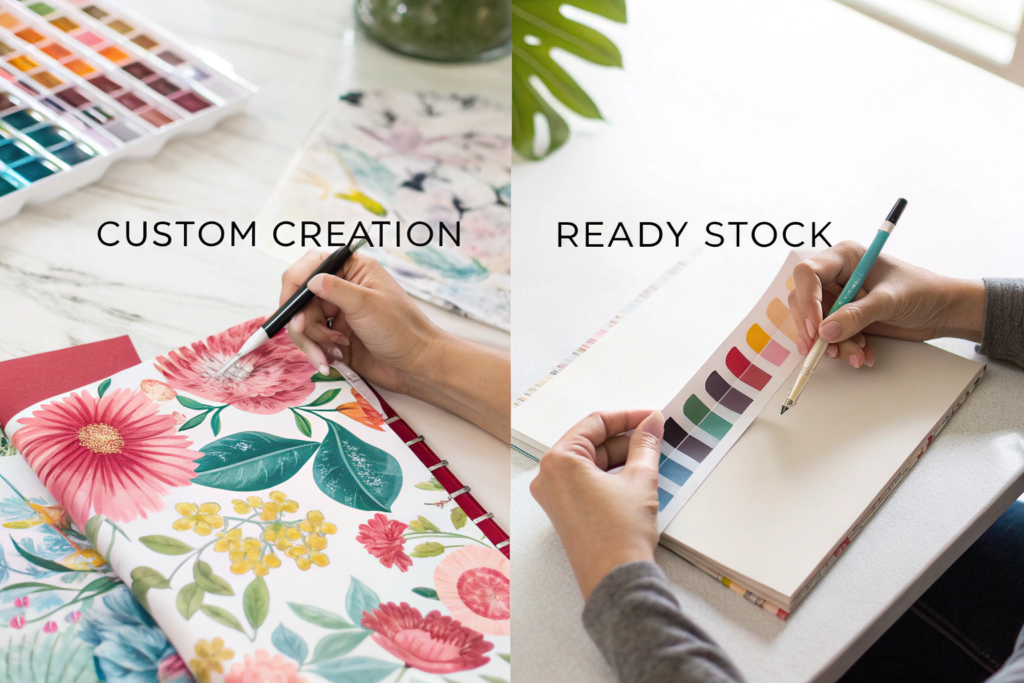
The single biggest variable in lead time is the fabric. If you choose a stock fabric from our existing library, we can start cutting within days. If you want a custom-developed floral print, the fabric must be designed, printed, and finished before cutting can begin. This adds weeks to the timeline. The choice between stock and custom is a choice between speed and exclusivity.
A custom floral print adds 10 to 15 days to the lead time. The custom print process includes digital artwork preparation, color matching, strike-off printing, your approval of the physical strike-off, and then bulk fabric printing. A stock fabric, whether solid or a pre-existing print, has no additional lead time. The fabric is already in our greige reserve or can be sourced from the mill within 7 days.
There is a middle ground. You can choose a stock fabric color and add custom printing later for a future season. Many of my clients launch with a stock pastel or solid color, test the silhouette, and then invest in a custom print for the next season.
What Is Involved in the Custom Print Approval Process?
The custom print process begins with your artwork or inspiration. You send us a digital file or a reference image. Our textile designer creates a print-ready digital file. They adjust the scale, the repeat pattern, and the color separations. This takes 3 to 5 days. They send you a digital proof via email. You review it on your screen.
Screen colors are not fabric colors. A digital proof is an approximation. You must approve a physical strike-off. A strike-off is a small piece of the actual fabric, printed with the actual inks, on the actual production fabric. The strike-off takes 3 to 5 days to print and finish. We ship it to you. You see the true colors, the true texture, the true scale.
You compare the strike-off to your original inspiration. You hold it under different lights. You wash it to test colorfastness. You approve it, or you request adjustments. If adjustments are needed, a second strike-off is printed. This adds 5 to 7 days.
Once the strike-off is approved, we print the bulk fabric. The bulk printing takes 5 to 7 days for a 2,000-meter order. The fabric is then finished, washed, and stabilized. It is ready for cutting. The total custom print timeline is 15 to 20 days from artwork to bulk fabric readiness.
A client in Miami designed a custom watercolor floral for her summer collection. The first strike-off was too bright. The second strike-off was perfect. The strike-off process added 12 days to her timeline, but the result was an exclusive print that no other brand had. She sold the collection at full price. The extra wait was worth the exclusivity.
How Fast Can You Start with Stock Fabric?
If you choose a stock fabric, we can start cutting within 5 to 7 days of the PPS approval. The stock fabric is either in our greige reserve or available from the mill with a short lead time.
Our stock fabric library includes organic cotton voile, Tencel twill, rayon challis, and linen in a range of core colors. We also have a selection of pre-existing floral prints that are exclusive to Shanghai Fumao but not custom-developed for a single client. These are prints we have developed in-house that are available for any client to use.
A client in Chicago chose a stock sage green organic cotton for her A-line dress. The PPS was approved on a Monday. We started cutting on Friday. The bulk production was complete in 18 days. The dresses shipped on day 55 total. The stock fabric choice saved her three weeks compared to a custom print. The dress was simple, elegant, and on-trend. She sold 2,000 units in the first month.
How Does Bulk Production and Quality Control Fit into the Timeline?
Once the fabric is ready and the PPS is approved, bulk production begins. This is the phase where your order moves from a single beautiful sample to hundreds or thousands of identical dresses. The bulk production phase is a carefully orchestrated sequence of cutting, sewing, finishing, pressing, and inspecting. The speed of this phase depends on the order quantity, the complexity of the dress, and our current production line schedule.
Bulk production for a custom A-line dress order of 1,000 to 3,000 units takes 18 to 25 working days. The cutting takes 2 to 3 days. The sewing takes 12 to 16 days. The finishing, pressing, and packing takes 3 to 5 days. The final AQL inspection and metal detector scan takes 1 to 2 days. We build a 3-day buffer into the bulk production schedule to absorb minor delays like a trim shortage or a machine repair. The final shipping stage takes 15 to 20 days by sea to a US port.
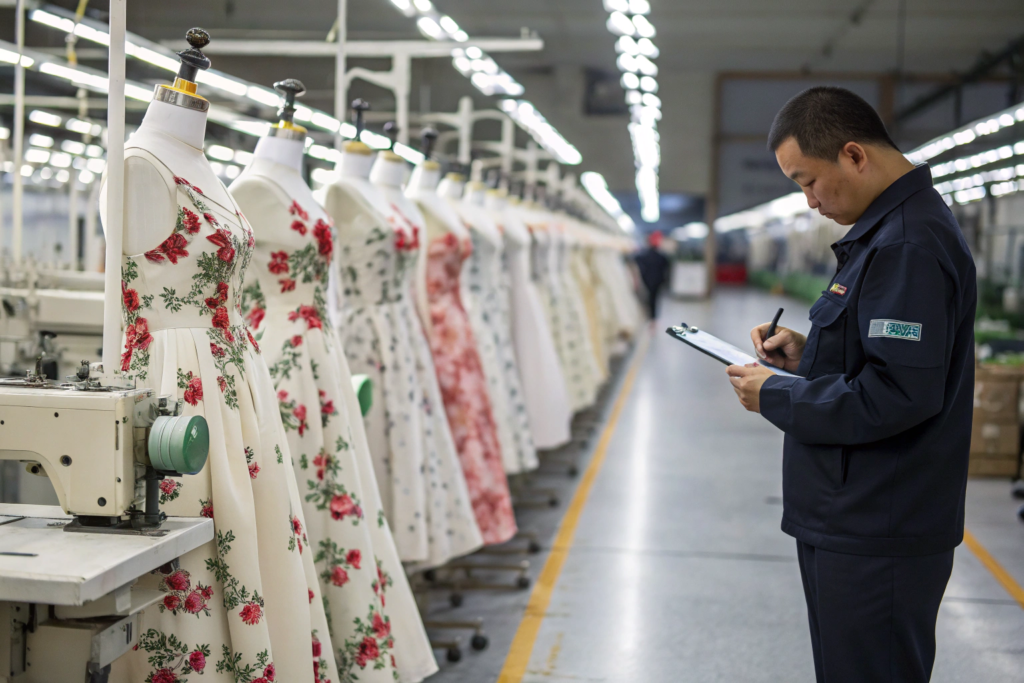
The bulk production phase is where our five production lines prove their value.
How Does the Production Line Assignment Work?
When you place your order, you are assigned a dedicated production line and a production slot. The slot is a date range on my master calendar. Your order does not compete with other orders for capacity. The line is yours for the duration of your production.
If your order is 3,000 simple A-line dresses, it might occupy Line 2 for 15 sewing days. If your order is 500 complex dresses with multiple tiers and custom trims, it might occupy our Atelier Line 4 for 20 days. The production slot is reserved. Your fabric arrives. Your cut panels are ready. The line switches over to your style. The sewers are briefed on your specifications. The line runs your order until it is complete.
This dedicated line system is the reason we can accurately predict our production completion dates. A single-line factory is vulnerable to overbooking. A larger client pushes a smaller client's order back. Deadlines slip. Our five-line system isolates your order. Your deadline is protected.
A distributor in Texas orders 5,000 A-line dresses every season. His production slot is booked six months in advance. He knows exactly when his dresses will be cut, sewn, and shipped. He plans his entire sales cycle around that schedule. The predictability is as valuable as the speed.
What Happens During the Final Quality Control Stage?
The final QC inspection happens after the dresses are sewn, pressed, and packed into cartons. The cartons are randomly selected according to the AQL 2.5 Level II sampling plan. My QC team opens the cartons. They pull the sample dresses. They inspect each one against the approved PPS and the spec sheet.
They check the stitching. The seam strength. The print placement. The label attachment. The hem depth. The measurement tolerances. Any dress with a major defect is rejected. If the number of major defects exceeds the AQL limit, the entire batch fails. The batch is 100% inspected and reworked. The shipment is delayed until the batch passes.
This inspection takes one to two full working days. It is a non-negotiable step. I will not ship a batch that has not passed the AQL audit. The inspection report is sent to the client with the shipping notification. The client can see the exact number of units inspected, the number of defects found, and the final disposition.
A client in San Francisco told me she has never received a quality inspection report from any other factory. She only knew the quality when the dresses arrived at her warehouse. By then, it was too late. The inspection report I send gives her peace of mind. She knows the batch passed a rigorous audit before it left the factory. The inspection is the final gate.
How Can You Accelerate the Lead Time for Urgent Orders?
Sometimes the standard lead time is too long. You have a sudden opportunity. A celebrity wears a similar dress. A competitor drops out of a retail slot. You need dresses in 35 days, not 60 days. There are ways to compress the timeline. They cost more. They require compromises. But they can save a season.
The lead time can be compressed by 15 to 20 days by choosing stock fabric over custom print, approving the PPS in one round without changes, paying a rush production fee to prioritize your order on the cutting and sewing schedule, and shipping by air freight instead of sea freight. An urgent order with stock fabric, a simple design, one-round PPS approval, rush production, and air shipping can be delivered in 30 to 40 days from deposit to your warehouse door.
This is the emergency playbook. It is not the standard. It is the exception.
When Does Air Freight Make Financial Sense?
Air freight is expensive. It costs $3.50 to $5.00 per dress compared to $0.80 to $1.20 for sea freight. On a 3,000-unit order, air freight adds $10,000 to $12,000 to the logistics cost. That is a significant premium.
Air freight makes financial sense when the cost of missing the season is higher than the air freight premium. If your dresses retail for $88 and you will lose 1,000 units of full-price sales if they arrive two weeks late, the lost revenue is $88,000. The air freight premium of $10,000 is a fraction of the lost revenue. Pay it.
Air freight makes sense for a launch event. You need 500 dresses for a pop-up shop opening on a specific date. The sea freight timeline misses the date. Air freight hits it. The 500 dresses sell out at full price. The premium is covered.
I have air-freighted dresses for a client in Miami who had a sudden influencer collaboration. The influencer posted about the dress. Pre-orders exploded. We air-freighted 800 units. They arrived in five days. The client capitalized on the viral moment. The air freight cost was an investment in momentum.
What Are the Rush Production Options?
Rush production means your order jumps the queue. It moves to the front of the cutting schedule. It gets priority on the sewing line. It gets priority in finishing and packing. This requires shifting other clients' schedules slightly, which we manage carefully to avoid impacting their deliveries.
The rush production fee is typically 15% to 20% of the FOB cost. On a $15 FOB dress, the rush fee is $2.25 to $3.00 per unit. This compensates the factory for the overtime labor and the schedule disruption. Rush production can compress the bulk production phase from 25 days to 15 days.
Rush production combined with stock fabric and air freight is the fastest possible timeline. I have completed an order of 1,000 simple A-line dresses in 28 days using this combination. The client paid a premium. She hit her launch date. The dresses sold out. She was happy.
Conclusion
The lead time for a custom A-line dress at Shanghai Fumao is a predictable, well-documented process, not a guess. A standard order with stock fabric and a simple design takes 45 to 55 days from deposit to delivery. An order with a custom floral print takes 60 to 75 days. The timeline breaks down into clear stages: design and pattern making, pre-production sampling, fabric procurement, bulk production, quality control, and shipping. Each stage has a known duration. Each stage has a buffer for the normal, expected delays of garment manufacturing.
You can control your timeline through your choices. A detailed tech pack shortens the design stage. Stock fabric shortens the procurement stage. A one-round PPS approval shortens the sampling stage. Rush production and air freight compress the entire back half of the timeline. The choices you make about your design and your fabric directly determine your delivery date.
If you are planning a custom A-line dress collection, the most important thing you can do is start early. Contact us before your design is finalized. Reserve a production slot. Order your fabric swatches. Understand the timeline for your specific design. The brands that plan ahead are the brands that launch on time.
Our Business Director, Elaine, can prepare a detailed production calendar for your specific custom dress project. Email her at elaine@fumaoclothing.com. Tell her your design concept, your target quantity, and your ideal delivery date. She will send you a week-by-week timeline with every milestone clearly marked. Your timeline is our commitment. Let's plan it together.