A brand owner from Los Angeles called me in October last year. She had just walked the Première Vision fabric trade show in Paris. She was overwhelmed. She had seen a thousand floral prints. Watercolor blooms. Digital psychedelics. Retro daisies. Dark romantic roses. She had 45 minutes to make a decision that would determine her entire Spring-Summer 2026 collection. She called me from the taxi to the airport. "Ron, what actually sells? Not what looks pretty on a mood board. What do women actually put in their shopping carts?" I told her I had been tracking fabric orders from my North American and European brand clients. The data was clear. Five distinct print directions were dominating the sample orders and the bulk production bookings. She picked three of the five. Her collection launched in February. Two prints sold out in the first month.
The top 5 floral prints for Spring-Summer 2026 are: Faded Watercolor Blooms, Retro 70s Daisies, Dark Romantic Roses, Digital Lavender Florals, and Hand-Drawn Tropical Botanicals. These five directions reflect the converging macro trends of quiet luxury, dopamine dressing, romantic escapism, digital innovation, and sustainable craftsmanship. Each print speaks to a different customer emotion and a different market segment. The most successful brands are mixing at least two of these directions in their collections.
I am not a trend forecaster. I am a manufacturer. I see trends six months before they hit the retail floor because I am the one dyeing the fabric and cutting the dresses. Let me show you what my clients are betting on for Spring-Summer 2026, and why each print works commercially.
Why Are Faded Watercolor Blooms the Leading Floral for 2026?
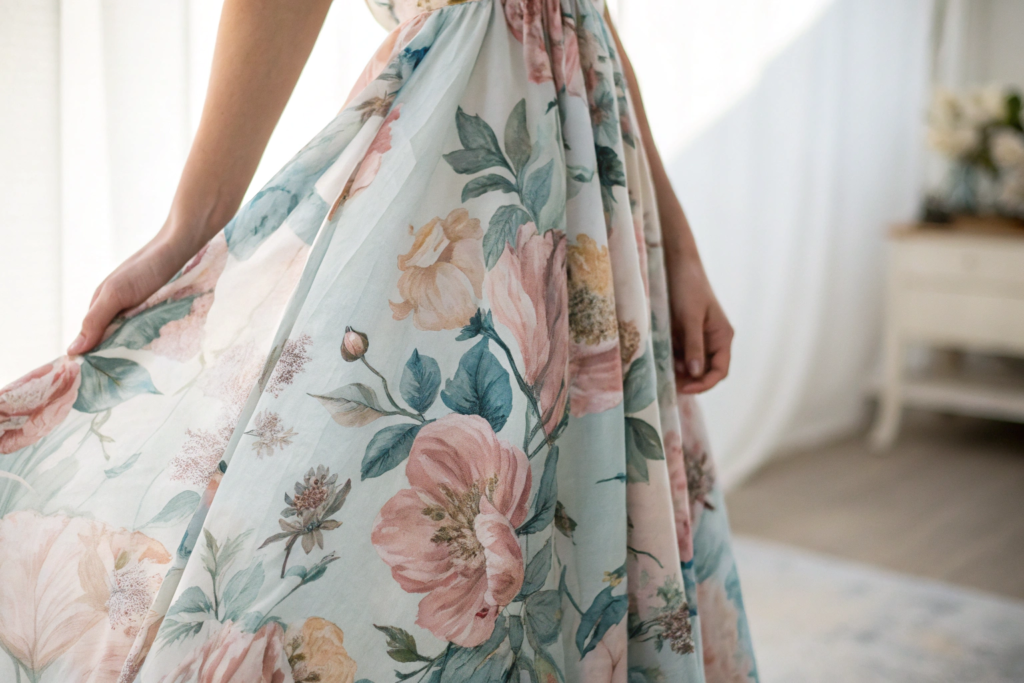
The number one floral print my clients are ordering for Spring-Summer 2026 is not a loud, graphic floral. It is the opposite. It is soft, blurred, and almost abstract. Think of a watercolor painting left out in a light spring rain. The colors bleed into each other. The edges dissolve. The flowers are suggested, not defined. This is the "Faded Watercolor Bloom."
Faded watercolor blooms are dominating because they align perfectly with the ongoing "quiet luxury" trend. The print is artistic, sophisticated, and understated. It does not scream for attention. It whispers. It looks like a piece of wearable art rather than a mass-produced fabric. The soft, blended edges are also very forgiving on the body, which reduces returns due to print placement issues. A loud, distinct flower placed in the wrong spot on a hip can be unflattering. A soft watercolor bloom melts into the fabric and flatters any body type.
This print is not about the specific flower. It is about the mood. It evokes a garden seen through a rainy window.
What Are the Key Color Palettes for This Watercolor Story?
The watercolor trend is not a single palette. It splits into two lanes. Lane one is the pastel watercolor. Think soft peach, dusty rose, washed lavender, and pale sage green. The overall impression is light, airy, and romantic. This palette works beautifully on a summer A-line dress in a lightweight cotton voile or a soft rayon challis.
Lane two is the muted earth watercolor. Think terracotta, ochre, olive, and faded indigo. The colors are still soft and blurred, but the base is warmer and more grounded. This palette appeals to the "sustainable minimalist" customer who wants natural, organic-feeling colors.
I am producing both palettes for different clients. A brand in San Diego ordered the pastel lane for her "Artist’s Garden" collection. A brand in Portland ordered the earth lane for her "Desert Bloom" collection. Both palettes are performing well in pre-orders. The common thread is the watercolor execution, not the specific hue.
The printing technique matters here. A standard digital print with sharp edges will fail this trend. The print must be intentionally softened. The ink must be formulated to bleed slightly into the fabric. At Shanghai Fumao, I use a specific reactive dye process on natural fibers that creates this soft, absorbed look. The ink penetrates the fiber rather than sitting on top. The result is a print that looks like it has been washed a hundred times but still holds its color. This is the technical execution behind the trend.
Why Is This Print So Forgiving for Different Body Types?
A distinct, hard-edged floral motif is a placement risk. If a large, solid rose lands directly on the bust apex, it draws the eye like a target. If a dark flower sits on the widest part of the hip, it can visually widen that area. A blurred watercolor pattern eliminates this risk. There are no hard edges to catch the eye. The colors flow and blend. The pattern distracts from the body’s contours rather than highlighting them.
This makes the watercolor floral an excellent commercial choice for brands that sell to a broad age range and a broad size range. The dress looks beautiful on a Size Small and a Size 2XL. The print adapts to the body because it has no fixed visual anchors.
A client in Austin who sells to women aged 35 to 65 switched her core floral print from a graphic daisy to a watercolor bloom last season. Her return rate for "unflattering print" dropped from 8% to 2%. The print choice directly impacted her profitability. The watercolor floral is not just an aesthetic choice. It is a returns-reduction strategy.
Why Are Retro 70s Daisies Making a Major Comeback?
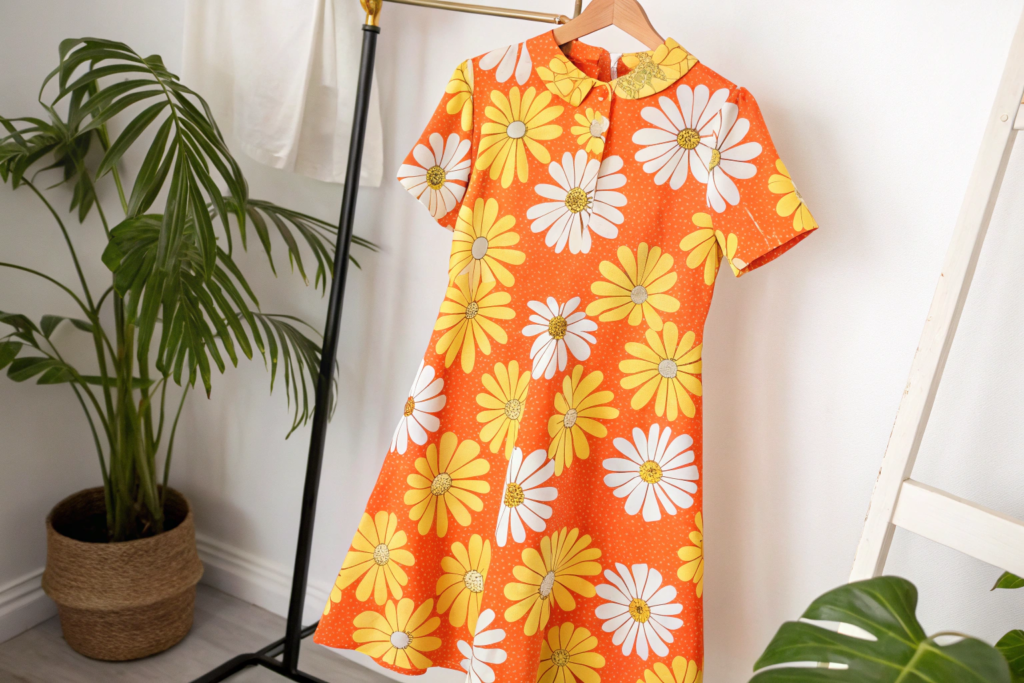
The second major print direction is the polar opposite of the watercolor. It is bold. It is graphic. It is unapologetically happy. The Retro 70s Daisy is back. I saw this trend building in late 2024 when three different clients, who don’t know each other, sent me nearly identical reference images from old 1970s Vogue magazines. The daisy is the defining flower of the decade, and it is returning with full force for Spring-Summer 2026.
Retro 70s daisies are surging because of the "dopamine dressing" movement. After years of minimalism and muted tones, consumers want clothes that spark joy. A bold, sunny daisy print on an A-line dress is an instant mood lifter. The print has a nostalgic pull for Gen X and Millennials, and an ironic, vintage-cool appeal for Gen Z. It photographs exceptionally well for social media, which drives organic reach and viral potential.
This print is not subtle. It is a statement. It says, "I am on vacation. I am happy. Take my picture."
What Are the Defining Characteristics of an Authentic 70s Daisy Print?
An authentic 70s daisy print has specific visual codes. The daisies are large, often 3 to 5 inches in diameter. The petals are simple, flat, and graphic. The colors are solid, not shaded or blended. The classic palette is mustard yellow, avocado green, burnt orange, and warm brown on a cream or off-white background. The flowers are spaced with a slightly irregular, hand-drawn rhythm. They are not perfectly aligned like a digital repeat.
A modern reinterpretation might shift the palette to hot pink, electric blue, and lime green on a white background for a more contemporary pop-art feel. The key is the flat color and the graphic simplicity. A photorealistic daisy is not a 70s daisy. A watercolor daisy is not a 70s daisy. The print must look like it was screen-printed, even if it is digitally produced.
I produce this print using a digital technique that mimics the slight ink spread of old screen printing. The edges are intentionally thickened by half a millimeter. The color is ever so slightly uneven, with a 2% opacity noise overlay. This gives the digital print the soul of an analog print. A client in New York said her customers thought the dresses were true vintage until they saw the modern size label. That is the level of authenticity the market demands.
Which Silhouettes and Fabrics Work Best with This Bold Print?
The 70s daisy print works best on simple, clean silhouettes that don’t compete with the graphic impact. An A-line mini dress is the classic canvas. A fit-and-flare midi dress also works. The fabric should be a smooth, matte surface that shows the print crisply. Cotton poplin and cotton sateen are excellent choices. A textured fabric like linen would break up the graphic edges and weaken the impact.
This print is not for every brand. It is for brands with a strong, playful identity. A surf-inspired brand in California ordered this print on a short A-line dress with a white contrast collar. The collection was called "Daisy Days." It was featured by three influencers in the first week of launch. The print did the marketing for her. A bold print is a social media asset.
What Is Driving the "Dark Romantic" Floral Trend?
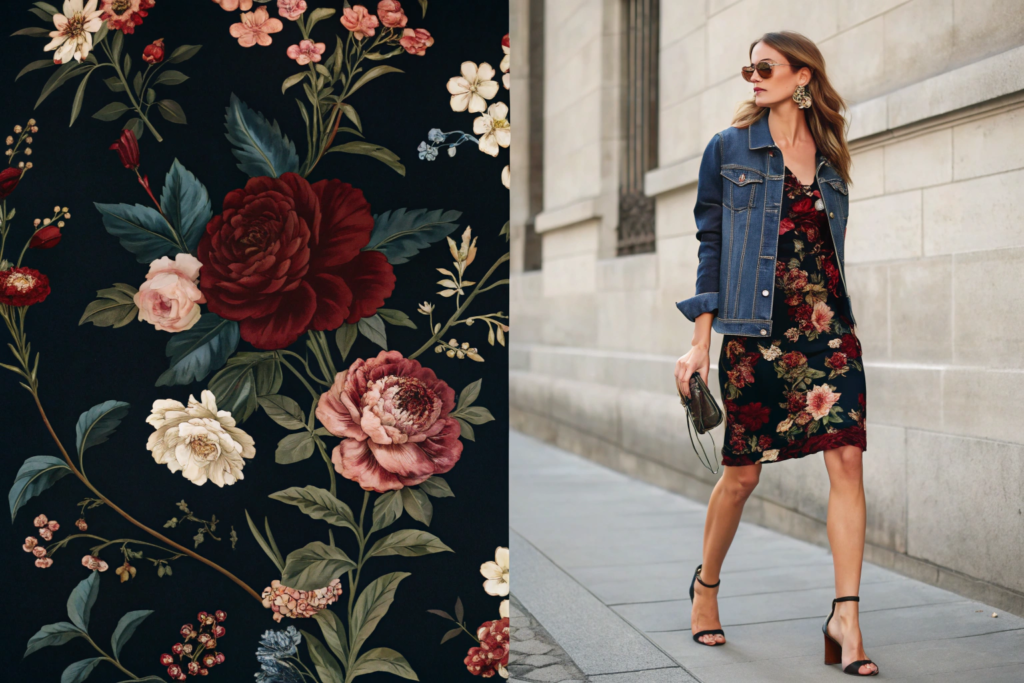
The third print direction is a complete departure from spring pastels. It is dark, rich, and intensely romantic. The "Dark Romantic" floral features deep burgundy roses, midnight blue peonies, and dusty plum hydrangeas on a black or very dark background. This print has been building in the evening wear and event dressing categories and is now crossing into day dresses for the customer who wants a more dramatic, sensual look.
Dark romantic florals are driven by the "moody maximalism" trend and the growing demand for seasonless dressing. A dark floral print transitions easily from a spring brunch with a denim jacket to a summer evening event with heels and statement jewelry. It appeals to a customer who finds traditional pastel florals too sweet or too young. The dark base is slimming, and the rich jewel tones are universally flattering on a wide range of skin tones.
This print is a counter-trend to the watercolor. It is for the woman who wants to feel powerful, not just pretty.
How Does This Print Transition from Day to Evening?
The versatility of a dark floral is its commercial strength. A watercolor pastel dress is a daytime dress. It looks out of place at a candlelit dinner. A dark floral dress works for both. Wear it during the day with flat sandals and a straw bag. Wear it at night with heeled sandals, gold jewelry, and a bold lip. The dress transforms with the styling.
This dual functionality appeals to the modern consumer who wants fewer, better pieces in her closet. She does not want a dedicated "occasion dress" that she wears once. She wants a dress that works for multiple contexts. The dark floral delivers this.
The fabric choice is critical for this versatility. A lightweight crepe or a soft georgette elevates the dress. It moves beautifully. It catches the light. The dark background recedes, and the jewel-toned flowers shimmer subtly. At Shanghai Fumao, I print dark romantic florals on a soft, matte crepe with a slight sand-washed texture. The finish is luxe and slinky. The dress feels expensive. It can command an $88 to $128 retail price point.
What Base Fabrics and Colors Work Best?
The base fabric must be dark, but not necessarily pure black. A deep charcoal, a midnight navy, or a dark forest green base all work. The flowers should be in jewel tones: ruby red, amethyst purple, emerald green, sapphire blue. The contrast between the dark base and the saturated flowers creates the drama.
The fabric should have a soft drape and a slight sheen. A rayon challis, a Tencel twill, or a silk-like polyester crepe works well. The fabric must hold the dark color without fading. I use a reactive dye process that penetrates the fiber completely. The dark base stays dark wash after wash.
Why Are Digital Lavender and CGI-Inspired Florals Emerging?
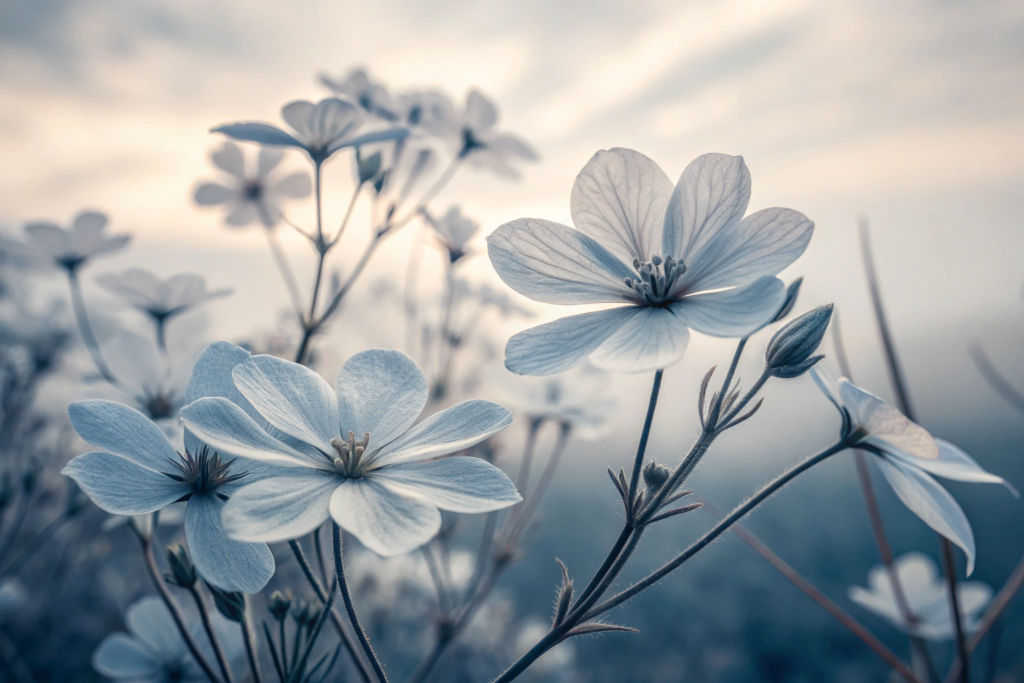
The fourth print direction is born from the digital world. "Digital Lavender" was the color of the year in 2023, but the trend has evolved. Now it is not just about the color. It is about a digitally-inspired aesthetic. Flowers that look airbrushed, slightly surreal, or even AI-generated. Soft gradients. Ethereal, monochromatic palettes. A subtle, dreamy, virtual-reality feel.
Digital lavender and CGI-inspired florals are emerging because Gen Z and younger Millennials now live in a world where the line between digital and physical is blurred. A floral print that looks like it was created by a computer, rather than a paintbrush, feels current and native to their aesthetic. The color palette of soft lavenders, lilacs, and cool-toned pinks is also gender-neutral and very popular in the unisex fashion space.
This is the most forward-looking of the five trends. It is not for every brand. It is for the early adopter.
What Makes a Floral Look "Digital"?
A digital floral has specific visual characteristics. The colors are blended with smooth, seamless gradients. There are no hard edges or painterly brushstrokes. Some elements may appear to float. Others may be slightly out of focus, like a shallow depth-of-field photograph. The overall mood is surreal, calm, and slightly otherworldly.
The print might incorporate subtle digital artifacts. A flower with a faint, ghosted outline. A petal that dissolves into scattered pixels. A geometric grid overlaid at 5% opacity. These touches are a wink to the digital-native consumer. They are not literally a computer screen print. They are a poetic interpretation of the digital world.
I produced a digital lavender floral for a brand in Berlin last season. The print featured large, blurred peonies in shades of lavender, lilac, and pale grey. The edges were softly feathered. The dress sold out in two weeks. The customer base was 90% under 30. The digital aesthetic signaled that the brand understood their visual language.
Which Fabrics Work for This Futuristic Look?
The digital lavender print works best on smooth, modern fabrics with a slight technical sheen. A Tencel twill, a matte satin, or a soft micro-crepe. The fabric should have minimal texture so the digital gradients appear perfectly smooth. A natural linen would break up the illusion.
The print also works beautifully on performance fabrics for an active-inspired dress. A moisture-wicking knit with a digital lavender floral is an innovative, forward-looking product.
What Is the Hand-Drawn Tropical and Block Print Revival?
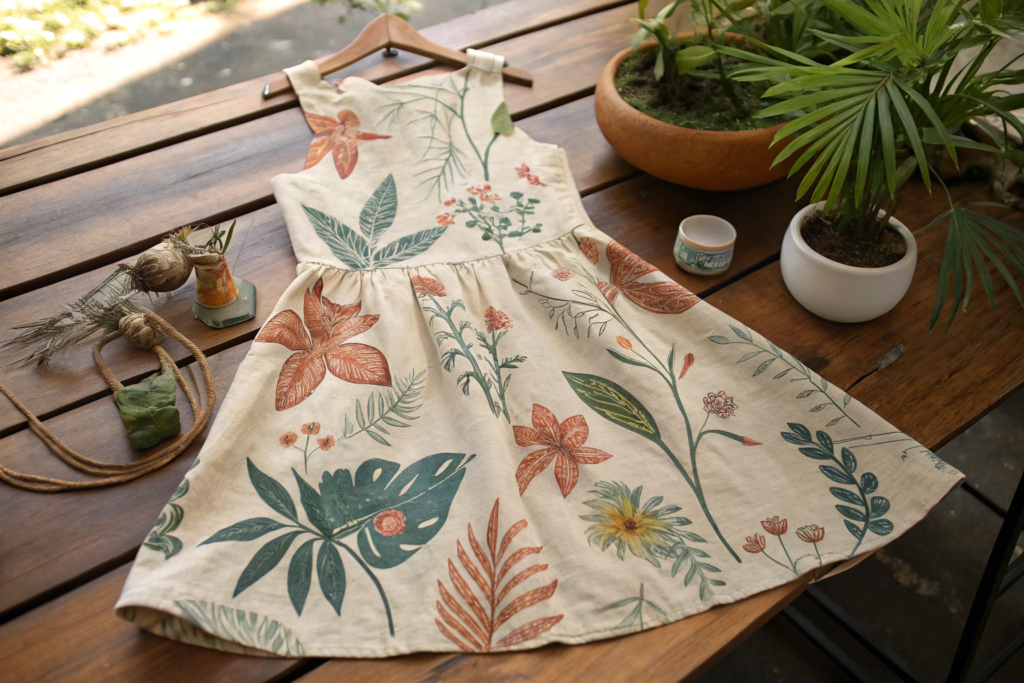
The fifth and final print direction is a return to the handmade. "Hand-Drawn Tropical Botanicals" and block-print-inspired designs are gaining traction as the counter-trend to digital perfection. The prints feature tropical leaves, palm fronds, and exotic botanicals drawn with a loose, sketch-like quality. The colors are earthy and natural. The repeat is often irregular, with a human touch.
Hand-drawn tropicals and block print aesthetics are driven by the sustainable fashion movement. A print that looks hand-crafted signals artisanal production, natural dyes, and ethical manufacturing. The customer feels they are buying a piece of art, not a mass-produced commodity. This print appeals to the conscious consumer who values story, craft, and connection to nature.
This print is the aesthetic of a Bali artisan market crossed with a Parisian concept store. It is global, ethical, and soulful.
How Is This Print Artistically Different from a Standard Tropical Print?
A standard tropical print is bold, colorful, and photorealistic. Think bright green palm leaves on a hot pink background. It looks like a vacation shirt. It is fun, but it can feel cheap. A hand-drawn botanical print is different. The lines are looser. The shapes are simplified. There are sketch marks and slight irregularities. The colors are earthy and muted: soft sage green, warm terracotta, dusty ochre, and natural indigo.
The print often resembles a botanical illustration from an old scientific journal, or a hand-carved block print on raw cotton. It has texture and depth. It looks like it was created by a person, not a machine.
I produce this print using a digital technique that overlays a subtle linen-canvas texture at 5% opacity. The print feels like it is on raw artist’s canvas, even on a soft rayon. A client in Amsterdam built her entire brand around this aesthetic. She calls it "Botanical Poetry." Her customers are loyal. Her brand identity is crystal clear.
Why Does This Print Align with the Sustainability Story?
A hand-drawn, block-print aesthetic tells a story of slow, intentional creation. It pairs naturally with sustainable fabrics like organic cotton, linen, and Tencel. The earthy color palette reinforces the natural, eco-friendly message.
A brand can market this dress as "Inspired by traditional Indian block printing. Digitally printed with low-impact dyes on organic cotton." The print carries the marketing message. The customer feels good about the purchase. She connects with the story.
This is the print for brands that compete on values, not just on price. It commands a premium retail price because the perceived value is high. The customer is paying for artistry and ethics, not just a pretty dress.
Conclusion
The five floral prints dominating Spring-Summer 2026 are not random. They are a reflection of the cultural moment. Faded watercolor blooms speak to the desire for quiet luxury and artistic softness. Retro 70s daisies speak to the craving for joy, nostalgia, and dopamine dressing. Dark romantic roses speak to the need for versatility, drama, and seasonless elegance. Digital lavender florals speak to the blurred boundary between the physical and the digital world. Hand-drawn tropical botanicals speak to the values of sustainability, craft, and human connection.
A smart brand does not pick one and bet the farm. A smart brand picks two or three that align with their customer persona. The watercolor for the core customer. The daisy for the statement piece. The dark floral for the elevated evening option. Together, they form a collection with range and depth.
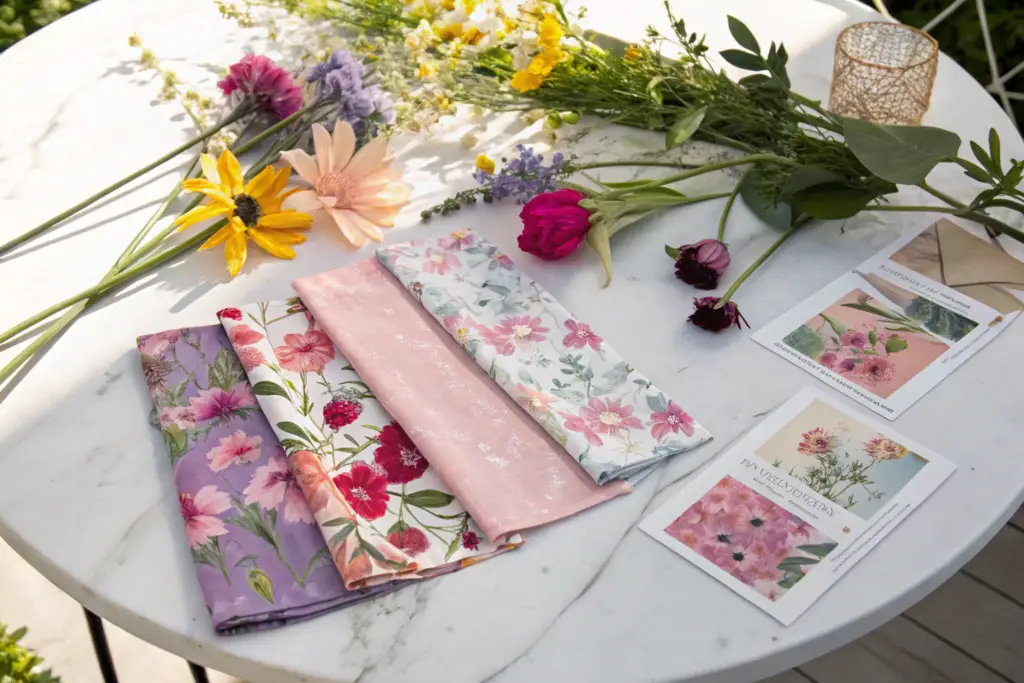
If you want to see these five prints in physical fabric, I can send you a trend swatch kit. It includes a sample of each print direction on the recommended base fabric. You can feel the hand, see the colors in real light, and drape them on a mannequin. Our Business Director, Elaine, will put the kit together for you. Email her at elaine@fumaoclothing.com. Tell her you want the Spring-Summer 2026 Floral Print Kit. I will also include the exact Pantone codes and the printing specifications for each style, so you can start your development immediately. The trends are clear. The fabric is ready. Your customer is waiting for a dress that makes her feel something. Let’s print it.