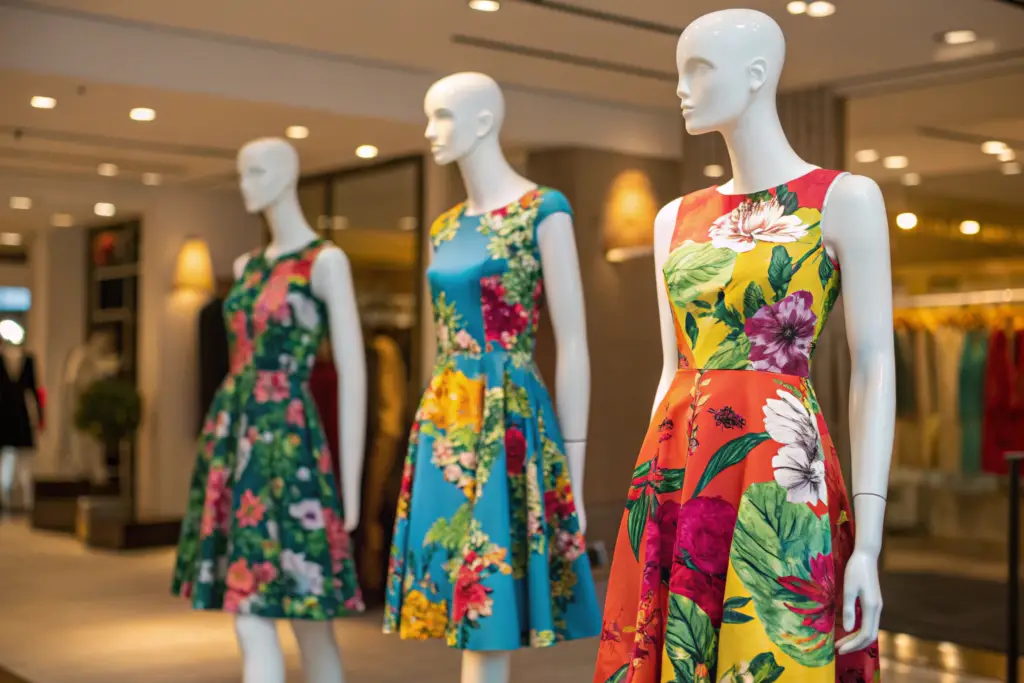
A brand owner from Portland called me two years ago with a problem. She had designed a beautiful A-line floral dress. The sample looked stunning on her fit model, a standard size Small. She ordered 2,000 units across four sizes. The dresses sold quickly, but the returns poured in. Size Large customers complained the bust was too tight. Petite customers said the waist hit at the wrong place. Curvy customers said the hip area pulled and distorted the floral print. She had designed the dress for one body and scaled it up mathematically. She had not designed it for real women with different proportions. The return rate was 22%. She almost killed her best-selling silhouette because the fit was not inclusive.
The A-line floral dress is one of the most universally flattering silhouettes in women's fashion. It skims the midsection. It allows freedom of movement. It suits a wide range of body types. But a universal silhouette is not a universal pattern. A well-fitting A-line dress requires a graded pattern that accounts for bust-to-waist ratio changes, a correctly placed waist seam or empire line, a skirt flare that accommodates hips without adding volume, and a neckline that balances the shoulder line. The dress must be engineered for bodies, not just sized up from a single sample.
I have manufactured A-line dresses for dozens of brands. I know the fit adjustments that make the difference between a dress that returns and a dress that stays in the closet. Let me walk you through how to fit an A-line floral dress for every body type your customer has.
Why Is the A-Line Silhouette Universally Flattering for Floral Dresses?
The A-line dress has a simple geometry. It is fitted at the shoulders and bust, and it gradually flares out toward the hem. It does not cling to the waist, the hips, or the thighs. It skims over them. This simple shape creates a powerful optical effect. It elongates the body. It creates a balanced proportion between the upper and lower body. It hides the midsection without adding bulk. These properties make it inherently friendly to a wide range of body shapes.
The A-line silhouette works because it shifts the fit focus to the shoulders and bust, which are the easiest areas to fit, and away from the waist and hips, which are the most variable. A pear-shaped body gains room for the hips. An apple-shaped body gains comfort at the midsection. An hourglass body gains a silhouette that highlights the waist without restriction. A rectangular body gains the illusion of curves through the flare of the skirt.
The floral print adds another advantage. A busy floral pattern distracts the eye. It disguises fit wrinkles and minor tension lines. A solid color dress shows every pull. A floral dress is more forgiving. This is one reason floral A-line dresses are a staple for brands that sell to a broad customer base.
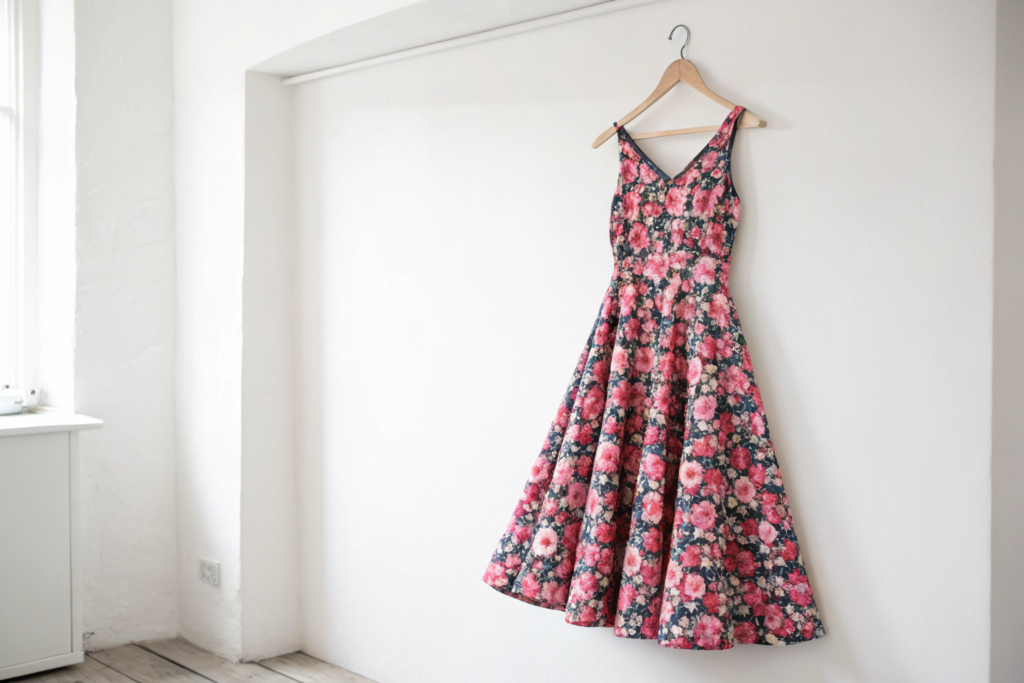
How Does the A-Line Shape Compare to Other Silhouettes?
A bodycon dress demands a specific body shape. It fits only if the customer's proportions match the pattern exactly. A shift dress hangs straight from the shoulders and can look boxy on a curvy figure or shapeless on a straight figure. A fit-and-flare dress has a defined waist seam and a full skirt. It is beautiful, but the fixed waist position can hit at the wrong place for a long-torso or short-torso customer.
The A-line dress has no defined waist seam in its purest form. It transitions from the bust to the hem in a smooth, continuous flare. The waist is suggested by the silhouette, not locked in by a seam. This means a single dress can accommodate a wide range of waist positions and hip curves.
I have a client in Charleston who sells only A-line floral dresses. Her customer base is women aged 35 to 65. She has customers who are 5'2" and customers who are 5'10". Her return rate is 4%, which is exceptionally low for e-commerce apparel. She attributes this to the silhouette. "The A-line is forgiving. It fits a nurse and a lawyer and a grandmother. They all feel beautiful in the same dress." This is the commercial power of the silhouette.
What Body Features Does the A-Line Dress Camouflage?
The A-line dress camouflages the midsection. It does not have a waistband that digs in or creates a muffin top. The fabric floats over the stomach. A woman who is self-conscious about her tummy feels safe in an A-line dress.
It camouflages the upper thigh and hip width. The flare begins above the widest part of the hip and continues outward. The dress does not grip the hip. It does not create horizontal pull lines. The widest part of the body is hidden inside the volume of the skirt.
It does not camouflage the bust and shoulders. This is important. The dress fits at the top. The bust and shoulder fit must be accurate because the rest of the dress hangs from them. A good A-line dress fits the upper body precisely and allows the lower body to relax. This is the opposite of a pencil skirt, which fits the lower body tightly and allows the upper body to relax. The A-line strategy is easier because most women's bodies are easier to fit on top than on the bottom.
How Should You Grade an A-Line Floral Dress for Different Bust Sizes?
The bust is the anchor of an A-line dress. The dress hangs from the shoulders and the bust. If the bust fit is wrong, the entire dress hangs wrong. The neckline gaps. The armholes cut in. The waist placement shifts up or down. The flare of the skirt is distorted because the fabric is being pulled in the wrong direction. Grading for bust size is not just about making the chest measurement larger. It is about adjusting the entire bodice proportion.
Premium grading for an A-line floral dress adjusts the bust dart position, the armhole depth, and the neckline width as the size increases. A Size Large dress should not be a Size Small dress stretched horizontally. The bust dart must shift down and slightly out to accommodate a fuller bust. The armhole must be cut deeper to prevent cutting into the underarm. The neckline must be widened slightly to balance a broader shoulder line. The floral print placement should be adjusted so the motif does not land in an unflattering position on a larger bust.
This is work. It requires a skilled pattern maker and separate fit samples for the key sizes. It is the difference between a dress that fits a DD cup and a dress that was designed for a B cup.
What Is a Bust Dart and Why Does Its Position Matter?
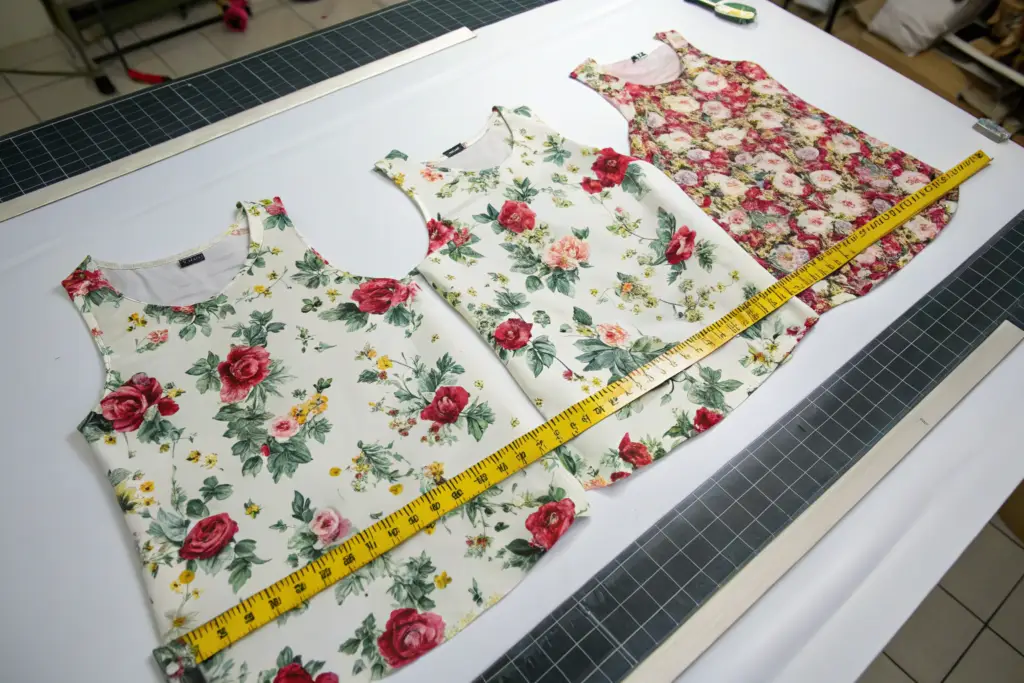
A bust dart is a triangular fold sewn into the side seam or the shoulder seam of the bodice. It creates a three-dimensional shape that accommodates the curve of the breast. The dart points toward the apex of the bust, the fullest point. The position of the dart is determined by the distance from the shoulder to the bust apex.
On a Size Small, the bust apex might be 10 inches from the shoulder. On a Size Large, the bust apex might be 11.5 inches from the shoulder. If the dart is not moved down, it points too high. The fabric below the dart is loose and pouches. The fabric above the dart is tight and pulls. The fit looks cheap. The customer feels like the dress was not made for her body.
I require my pattern maker at Shanghai Fumao to adjust the bust dart position for every size grade. We use a 1-inch vertical drop for every two size increases. The dart also becomes slightly wider to accommodate the increased cup depth. This takes extra pattern work. It produces a dress that fits a full bust without gaping at the neckline or pulling at the side seam.
A client in Nashville who sells to a curvy customer base saw her return rate for "bust fit" drop from 12% to 3% after we implemented this graded dart adjustment. Her customers noticed. The reviews said, "Finally, a dress that fits my chest!" That is a loyal customer for life.
How Does Armhole Depth Change with Size?
The armhole is the opening where the sleeve or the bodice edge goes around the underarm. On a Size Small, the armhole is a certain depth. If you simply enlarge the armhole proportionally for a Size Large, the opening becomes too large. It gapes. The bra shows. The dress looks sloppy.
A better approach is to lower the armhole depth slightly as the size increases. A Size Large armhole is cut about 0.5 to 1 inch lower than a Size Small armhole. This accommodates a fuller upper arm and a broader underarm area. The armhole remains secure and does not gape. The customer can raise her arms without the entire dress lifting up.
I test armhole fit on live fit models, not just on mannequins. A mannequin does not move. A woman moves. She reaches. She hugs. She drives a car. The armhole must allow this movement without gaping or cutting. I have a fit model in Size Medium and a fit model in Size 2XL. They both wear the dress and perform a range of motion test. The armhole depth is adjusted until both models report a comfortable, secure fit.
How Do You Adjust Skirt Flare and Length for Petite, Tall, and Curvy Figures?
The A-line skirt has two critical variables: the degree of flare and the length. The flare determines how much volume the skirt has. Too little flare, and the dress becomes a straight shift that binds at the hips. Too much flare, and the dress becomes a tent that adds visual weight. The length determines where the hem hits the leg. The wrong length can make a woman look shorter or taller in an unflattering way.
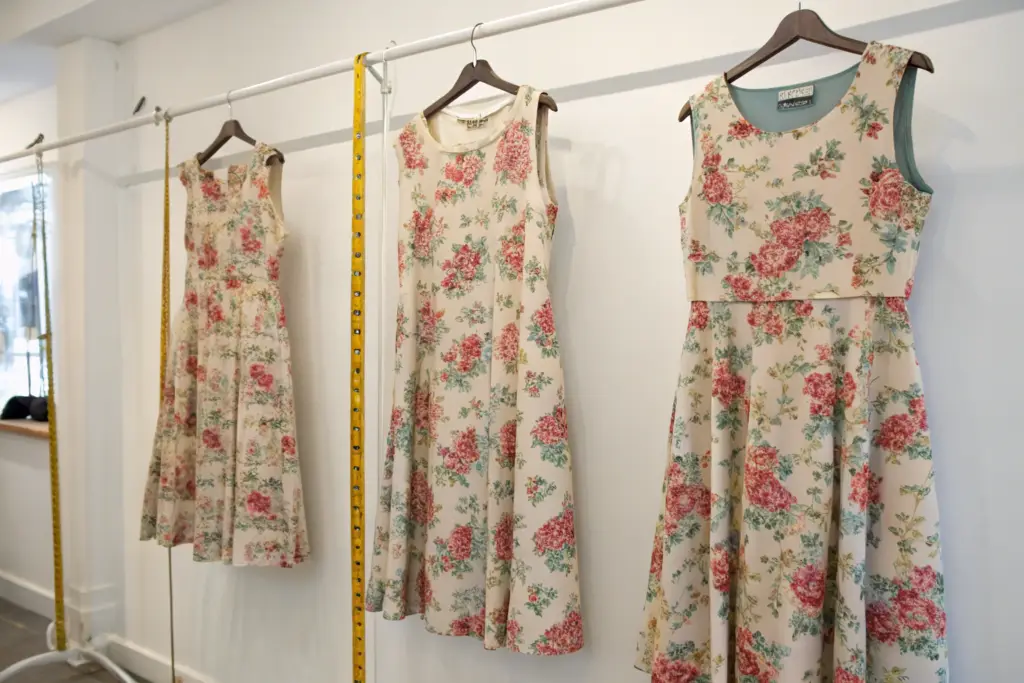
The ideal flare for a universally flattering A-line floral dress is approximately 15 to 20 degrees from the vertical. This provides enough room to clear the hips without excess fabric volume. The length should be graded proportionally, not just a flat amount added per size. A Size Small at 36 inches from shoulder to hem might be a Size Large at 37.5 inches. A petite fit should have a proportionally shorter rise and hem. A tall fit should have a proportionally longer rise and hem.
I offer three length options for many of my clients: Petite, Regular, and Tall. The production cost is slightly higher. The return rate reduction more than pays for it.
How Does Flare Degree Affect the Fit on Curvy Hips?
A woman with a 10-inch difference between her waist and hips needs more flare than a woman with a 4-inch difference. If the flare is insufficient, the skirt will pull tight across the hips. Horizontal stress lines will appear. The floral print will distort. The pockets will gape open. The dress will ride up as she walks.
A woman with a straighter figure needs less flare. Too much flare adds unnecessary volume. The dress looks like a tent. It hides her shape rather than skimming it.
The standard A-line flare is a compromise. It is designed to accommodate an average hip-to-waist differential of about 8 inches. This works for about 70% of customers. For the curvy customer, I recommend a slightly increased flare angle, maybe 22 degrees. The pattern is adjusted so the side seam flares out more rapidly from the underarm. The extra room is concentrated at the hip, not at the hem. This is a "curvy fit" block. It is a separate pattern, not just a wider standard pattern.
A brand in Atlanta offers a "Curvy A-Line" option. It is the same floral print, the same bodice, a subtly different skirt pattern. The curvy option sells out first every time. The customers who need it know to look for it.
Why Is Proportional Length Grading Important?
A common grading mistake is to add a fixed amount of length per size. One inch per size. This means the length difference between a Size Small and a Size 2XL is six inches. The Size Small dress hits at the knee. The Size 2XL dress hits at the mid-calf. The proportion is completely different. The dress looks like a different style.
Proportional grading adds length as a percentage of the overall size increase. The dress maintains the same proportional relationship to the body. It hits at the same point on the leg for every size.
For petite sizing, the entire bodice is shortened, not just the hem. The shoulder-to-waist distance is reduced. The waist-to-hem distance is reduced. The dress is not just chopped off at the bottom. It is a proportionally scaled-down pattern. For tall sizing, the opposite. The bodice is lengthened. The hem is lowered. The dress fits a long torso and long legs.
I produce petite and tall sizes for several clients. The MOQ is higher because each length is a separate pattern. The investment is worth it. The return rate for "length issue" drops to almost zero. The customer who is 5'1" has a dress that fits her frame. She becomes a loyal repeat buyer.
What Neckline and Sleeve Options Flatter Different Shoulder Types?
The neckline is the frame for the face. It draws the eye upward. It can balance broad shoulders, soften narrow shoulders, or create the illusion of height. The sleeve, or lack of sleeve, does the same for the upper arm and shoulder line. Together, the neckline and sleeve define the entire upper-body proportion of the dress.
A V-neckline elongates a short neck and narrows broad shoulders. A round or jewel neckline balances narrow shoulders and a small bust. A square neckline broadens narrow shoulders and highlights the collarbone. A cap sleeve visually widens the shoulder, while a sleeveless cut with a wider shoulder strap narrows the shoulder. The neckline and sleeve should be chosen to balance the customer's shoulder width and bust size, not just for aesthetic preference.
I offer multiple neckline options on the same A-line body for many clients. The dress is the same. The top piece is different. This is a cost-effective way to expand a collection.
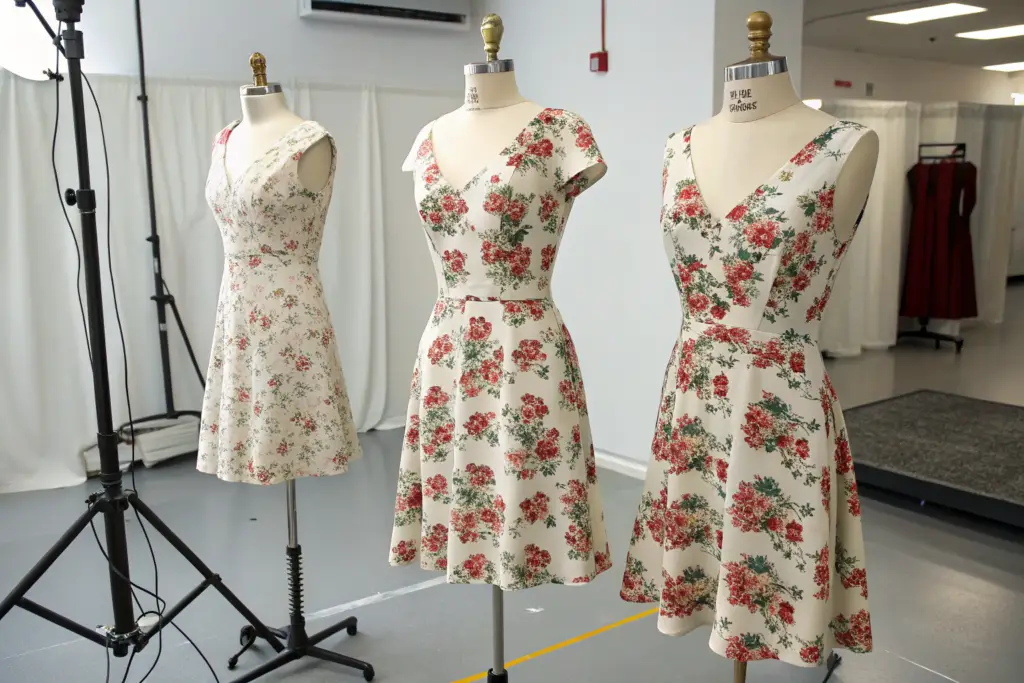
Who Looks Best in a V-Neck Versus a Round Neck?
A V-neck creates a vertical line down the center of the body. This line draws the eye inward and downward. It is the most slimming neckline. It is ideal for a woman with a full bust, broad shoulders, or a round face. The V breaks up the horizontal mass of the chest and creates a more vertical, elongated impression.
A round neck, also called a jewel neck, sits at the base of the throat. It is a classic, modest neckline. It works well for a woman with a smaller bust or narrow shoulders. It creates a horizontal line that visually widens the shoulder area. It balances a pear-shaped body by adding visual weight to the upper body.
A square neck is architectural and structured. It shows the collarbone beautifully. It works well for an hourglass or rectangular body shape. It adds width to the shoulder line and creates a beautiful frame for jewelry.
A client in New York offers her bestselling A-line floral dress in a V-neck option and a round-neck option. The V-neck is chosen by 60% of customers. The round neck is chosen by 40%. She captures both preferences with the same base dress. The production cost is slightly higher due to the two bodice pieces. The sales volume more than justifies it.
How Do Sleeves Change the Fit and Style of the Dress?
A sleeveless dress is the most common A-line option for summer. It is cool and comfortable. But a sleeveless cut exposes the upper arm. Some women are self-conscious about this. Offering a short flutter sleeve or a cap sleeve dramatically expands the customer base.
A cap sleeve adds a small amount of fabric at the shoulder. It covers the very top of the arm. It visually widens the shoulder. It is a good choice for a pear-shaped body that benefits from more shoulder width. A flutter sleeve is a soft, loose sleeve that drapes over the upper arm. It provides coverage without constriction. It is flattering on almost every body type.
A three-quarter sleeve is elegant for a transitional season dress. It ends at the mid-forearm, the narrowest part of the arm. It provides significant arm coverage while still showing the wrist, which is a visually slim point.
At Shanghai Fumao, I can produce an A-line floral dress with a sleeveless, cap sleeve, flutter sleeve, or three-quarter sleeve option. The sleeves are cut from the same floral fabric. The pattern adjustments are minimal. The market reach expands considerably.
Conclusion
The A-line floral dress is a miracle of pattern engineering when it is done right. It skims the midsection. It glides over the hips. It flares into a graceful, moving hem. It fits a small bust and a full bust. It fits narrow shoulders and broad shoulders. It fits a 5'1" frame and a 5'10" frame. But it only does these things if the pattern is built for real bodies from the start. The bust dart must shift with the size grade. The armhole must deepen. The flare must accommodate the hip curve. The length must scale proportionally. The neckline and sleeve must balance the upper body.
A dress that is simply sized up from a single Small sample will fail a large portion of your customers. A dress that is engineered with multiple fit models, proportionally graded patterns, and optional lengths and necklines will build a devoted following across every body type.
If you want to develop an A-line floral dress that truly fits your customer, I can help. Our Business Director, Elaine, can send you our graded spec sheet template. It shows exactly how we adjust the pattern for every size, every length, and every body type. Email her at elaine@fumaoclothing.com. Tell her your target customer and the size range you want to offer. She will prepare a fit strategy for your specific floral dress design. A beautiful print catches the eye. A beautiful fit keeps the customer. Let's build both.