You found a factory online. Their photos look beautiful. The price is competitive. But you are in Los Angeles, and they are in China. You cannot touch the fabric. You cannot try on the pants. You cannot inspect the seams with your own eyes. You are being asked to trust them with your brand based on pixels on a screen. The voice in your head asks, "What if the real thing arrives, and it's a scratchy, puckered, poorly draped mess?" This is the core anxiety of remote sourcing. And it is a legitimate fear. But here is the truth: you can assess the quality of a linen wide-leg pant from the other side of the world. You just need a specific, objective, data-driven assessment protocol instead of relying on a subjective "feel."
You can remotely assess a Chinese factory's linen wide-leg pant quality by demanding five specific pieces of evidence. First, a high-resolution macro video of the fabric. Second, a live video fit session. Third, a detailed seam construction sample. Fourth, a documented shrinkage test report. And fifth, a pre-wash and post-wash comparison of the same pant. A factory that can provide all five is technically competent and transparent. A factory that hesitates or refuses is hiding the truth about their quality. At Shanghai Fumao, we provide all five as standard for our remote clients.
Why these five specific tests? Because together, they cover the four critical quality dimensions of a linen pant: fiber and fabric integrity, fit and drape engineering, seam strength and finishing, and dimensional stability. A beautiful photo can hide flaws in all four. These tests expose the truth. Let me walk you through each one.
Test One: The High-Resolution Macro Fabric Video
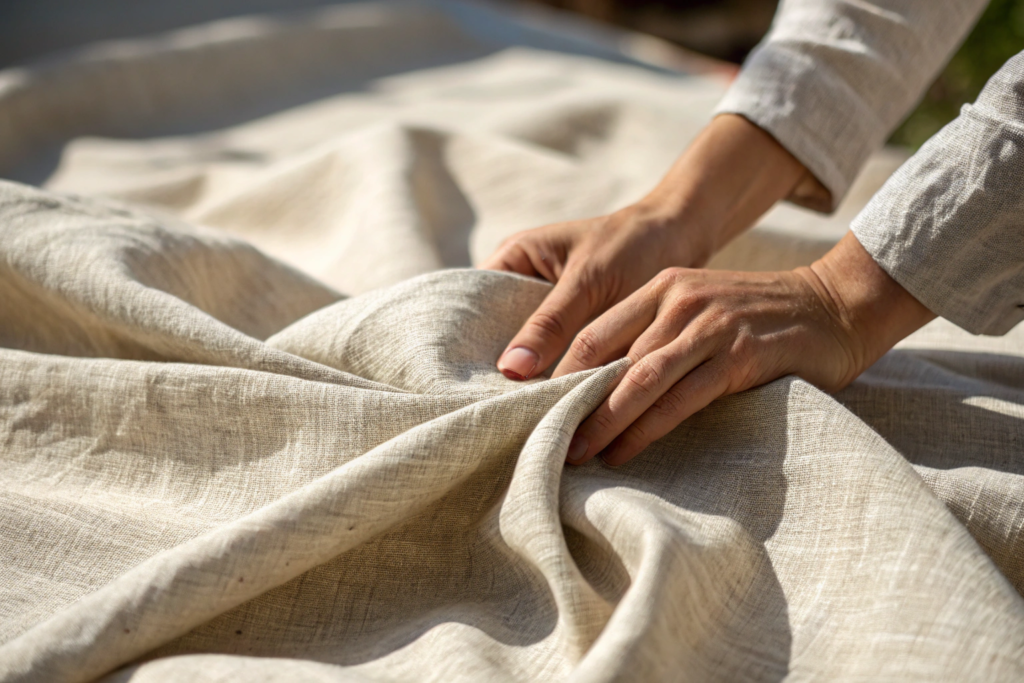
A static, professionally lit photo can make a coarse, cheap linen look soft and premium. The first tool to cut through the illusion is a high-resolution macro video taken under natural or neutral, unflattering light. This video must show the fabric in motion. The factory should crumple the linen in their hand. They should hold it up to the light to show the weave density. They should run a fingernail over the surface to show the slub texture.
We provide every remote client with a standardized macro video of the actual production fabric, not a sample swatch, under 5000K neutral light. The video shows the fabric being crumpled to assess wrinkle recovery, stretched to show the weave, and rubbed to show surface texture. You can see the length and consistency of the linen fibers. You can see if the slubs are a beautiful, natural irregularity or a coarse, scratchy defect. You can see if the fabric has a soft, fluid drape or a stiff, boardy hand. This video is the closest thing to holding the fabric yourself.
What Are the Visual Signs of High-Quality Linen in a Macro Video?
High-quality linen, typically from France, Belgium, or Italy, has specific visual characteristics. The fibers are long and relatively uniform, creating a clean but characterful slub texture. The weave is even and dense, not loose and gauzy. When the fabric is crumpled, it wrinkles beautifully, but the wrinkles are soft, not sharp, and the fabric shows a degree of natural recovery. When held up to light, a quality linen shows a fine, even, light penetration through the weave.
Low-quality linen, often from short-flax fibers, looks hairy and rough. The slubs are frequent, thick, and stiff. The weave is irregular. When crumpled, it creates harsh, sharp creases that do not relax. It often has a dusty, dull appearance. A macro video under good light reveals all of these distinctions in seconds. For a New York-based brand we work with, this video was the deciding factor in approving a premium Belgian linen for their wide-leg trouser program. They could see the quality of the slub and the fluidity of the drape instantly, without a physical swatch.
Why Must the Video Show the Fabric in Motion, Not Just a Static Photo?
A static photo can be starched and ironed to look perfect. It hides the true drape, the stiffness, and the wrinkle behavior. A video of the fabric being lifted, draped over a curved surface, and moving in the air reveals its true hand. The factory should drape the uncut fabric over a dress form or a curved object. You need to see how it falls.
Does it fall into soft, fluid, elegant folds? Or does it stick out stiffly, creating angular, architectural shapes? A wide-leg pant demands a linen with a soft, flowing drape. A stiff linen will create a bulky, unflattering silhouette. The drape video tells you the truth. We always include this "drape test" in our fabric video. It is a non-negotiable quality indicator.
Test Two: The Live Video Fit Session
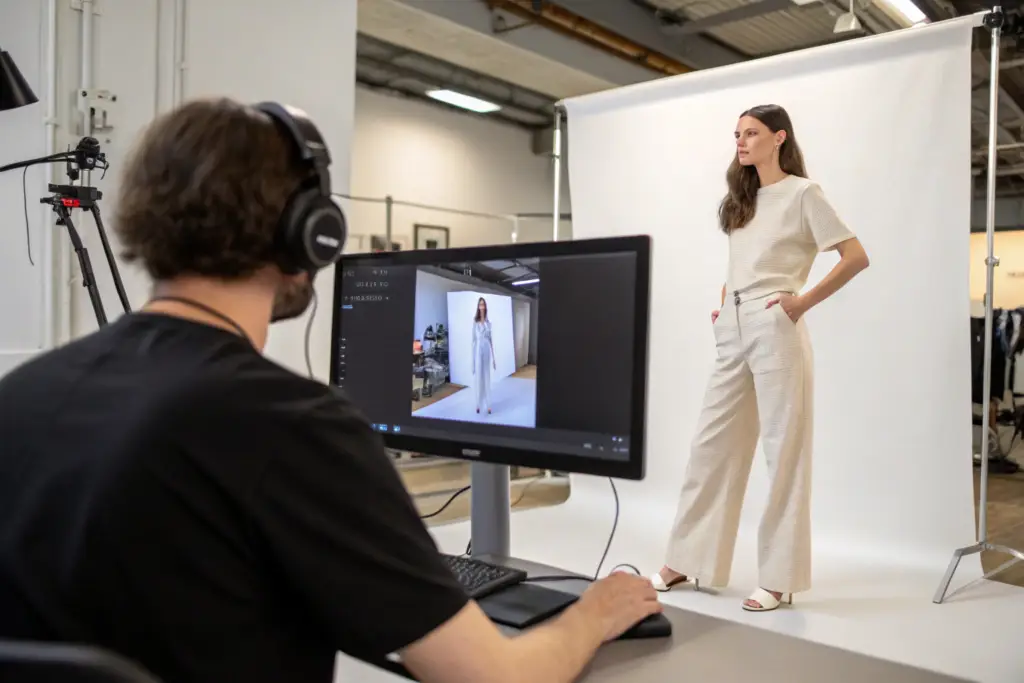
A static photo of a pant on a mannequin tells you nothing about fit. A mannequin does not sit, walk, or breathe. The only way to remotely assess fit is to see the pant on a live human body that matches your target size specifications. This must be a live, interactive video call, not a pre-recorded video. You must be able to direct the model and ask the factory's pattern maker questions in real-time.
We conduct live video fit sessions for all our remote clients. We book a fit model who matches your size chart. On a live Zoom call, the model walks, sits, and bends. You direct the camera. You see how the pant moves with the body. You see if there is pulling at the crotch or gaping at the waistband. Our pattern maker is present, and you can ask for a pin adjustment on the spot. You see the change made in real-time. This is not a static photo. It is a dynamic, interactive fit validation that gives you the same control as being in the room.
What Specific Fit Points Should You Examine on a Live Model?
For a linen wide-leg pant, the critical fit points are the waistband, the hip, the rise, and the leg drape. On the live call, ask the model to stand straight. Look at the waistband. It should sit smoothly against the body, with no gaping at the center back. Ask the model to sit down. Look at the back rise. Does it pull down uncomfortably? Is it secure? The linen should not bind at the hips when seated.
Ask the model to walk. Watch the wide legs. They should swing freely and fluidly, not tangle between the knees. The hem should not drag. The front rise should be smooth, with no pulling "whiskers" radiating from the crotch. This dynamic, functional fit test reveals in seconds what a static photo will hide. For a Chicago-based brand, our live fit session revealed a slight tightness at the hip on the sitting pose. Our pattern master added 1cm of ease to the back hip curve on the call. The next sample was perfect.
How Does a Live Session Validate the "Wide Leg" Silhouette?
A poorly engineered wide-leg pant collapses inward, looking like a baggy straight leg. A well-engineered wide leg holds its architectural shape while remaining fluid. On the live call, ask the model to stand with feet slightly apart. The pant leg should fall straight down from the widest part of the hip, creating a clean, vertical line, not a diagonal line that tapers inward. The volume should be consistent from thigh to hem.
You can ask the factory to measure the leg opening width on camera with a measuring tape to verify it against the spec. You can ask the model to walk and pause. The leg should open and flow with the movement, not constrict. This visual and measured confirmation of the silhouette is essential for the wide-leg style. It cannot be assessed from a flat lay photo.
Test Three: The Seam Construction and Finishing Detail Sample
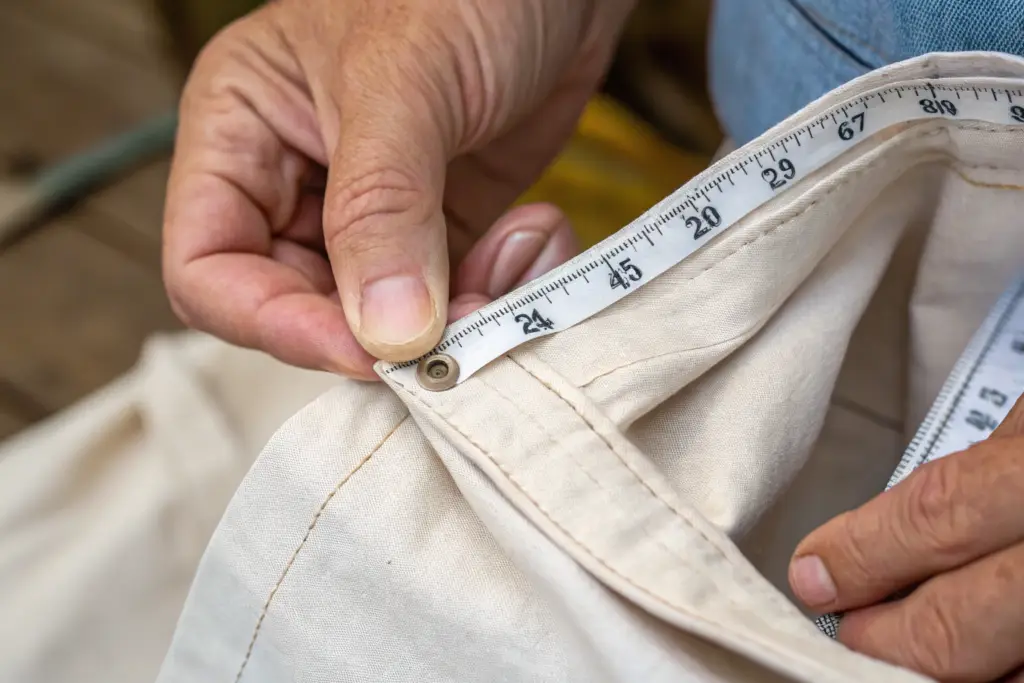
The internal construction of a linen pant determines its longevity and its luxury feel. A cheaply made pant will have raw, overlocked seams that fray and itch. A premium pant will have clean, enclosed seams, like a French seam or a flat-felled seam. You need to see a dedicated seam sample, not just a photo of the finished pant. The factory should cut a cross-section of the seam and show it to you in a macro video or high-resolution photo.
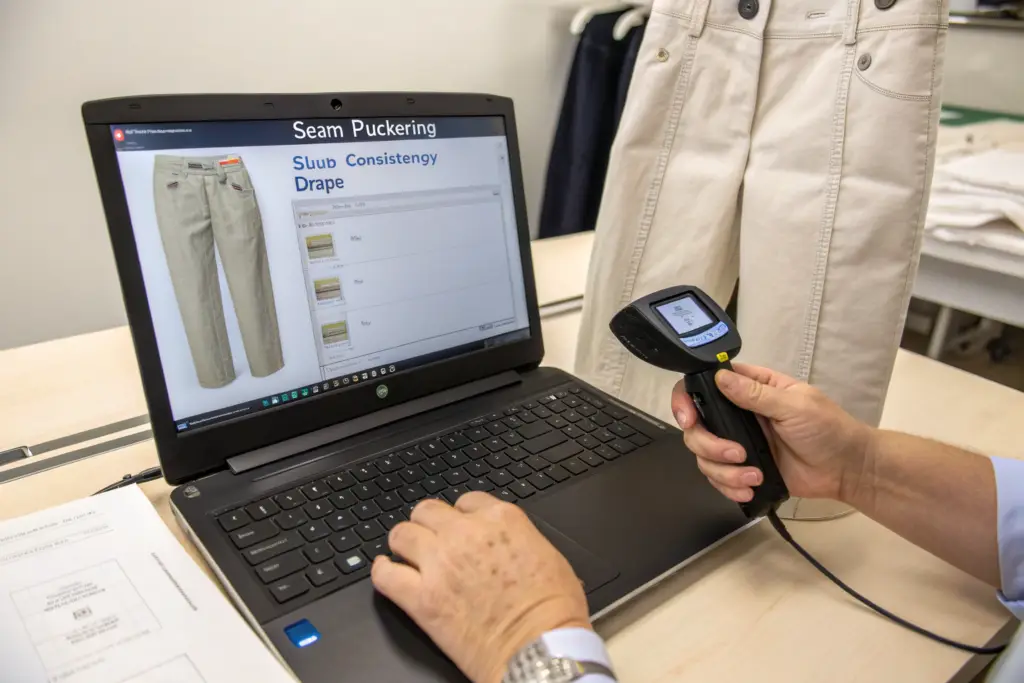
We provide a detailed seam construction sample video for remote assessment. We show the inside and outside of every critical seam: the side seam, the inseam, the rise seam, and the hem. We use a macro lens to show the stitch density and the thread quality. We demonstrate the standard seam types we recommend for linen: French seams for unlined trousers and flat-felled seams for a more casual, durable finish. We pull the seam to demonstrate its strength. You see exactly how the pant is built, inside and out.
Why Is a French Seam the Quality Standard for Unlined Linen Pants?
Linen frays. A standard overlocked seam on unlined linen will eventually have threads unraveling and poking through to the outside. It looks cheap and feels scratchy against the skin. A French seam is a self-enclosed seam. The raw edge is completely hidden within a neat, folded channel of fabric. The inside of the pant looks as clean as the outside. There is nothing to fray. There is no scratchy overlock thread against the skin.
This is a non-negotiable quality marker for a premium linen pant. It requires an extra sewing operation and more skill, which is why cheap factories avoid it. When we present a seam sample to a remote client, we specifically highlight the French seam finish. It immediately communicates the quality level of our work. For an Australian brand, this single detail, demonstrated on a macro video, was the proof they needed to trust us with their luxury linen program.
What Stitch Density Should You Demand for Linen?
Linen yarns are strong but can be slippery. A stitch density that is too low will result in seams that gap and slip under tension. We use a standard of 12 to 14 stitches per inch for our linen main seams. This provides the necessary strength without creating a tight, perforated seam line that could weaken the fabric. On the seam sample video, we show a digital caliper measuring the stitch length. We also show a close-up of the thread. We use a high-quality, 100% polyester core-spun thread, which has the strength of polyester but the matte appearance of cotton, perfectly matching the natural aesthetic of linen. This level of detail, demonstrated visually, removes the uncertainty of a remote assessment.
Test Four: The Documented Shrinkage and Colorfastness Test Report
Linen shrinks. This is a physical law. A factory that does not pre-shrink their fabric and does not provide a shrinkage test report is handing you a ticking time bomb. The customer washes the pant once, and it no longer fits. The return rates spike. A remote buyer must demand a documented test report from the specific fabric lot that will be used for their bulk order.
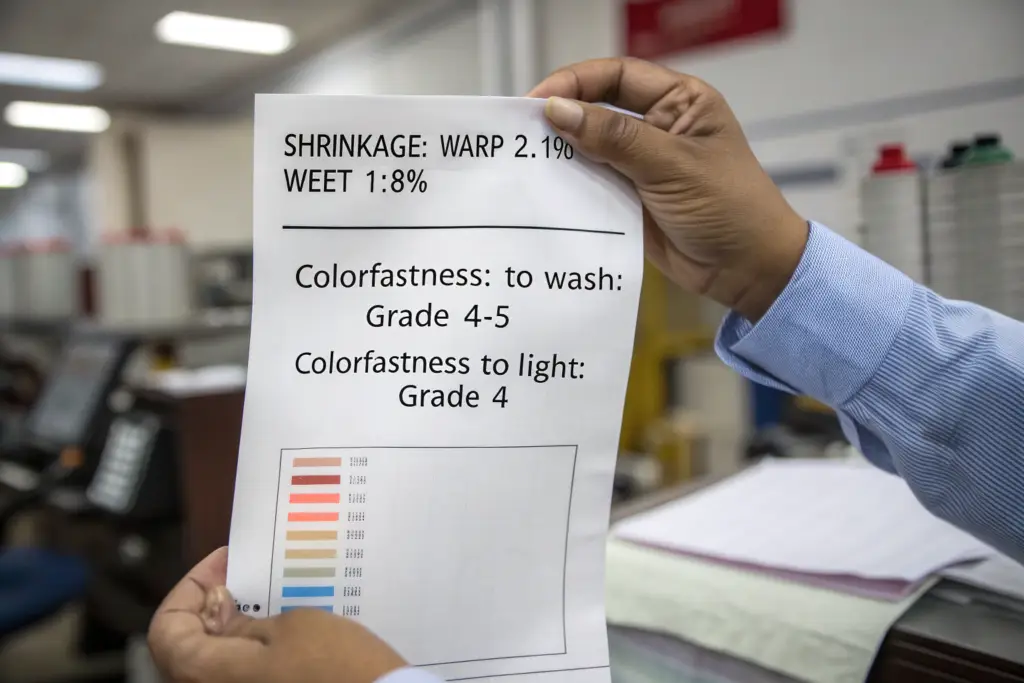
We provide a third-party or in-house lab test report for every fabric lot. The report shows the percentage of shrinkage in both the warp and weft directions after a standard home laundry cycle. We also provide colorfastness to wash and light test results. Our target for linen is a maximum of 2% to 3% residual shrinkage. We achieve this through a controlled, mechanical compacting process before cutting. The report is your objective proof that the pant will maintain its size and color after washing.
What Shrinkage Percentage Is Acceptable for Linen?
A completely un-treated linen can shrink up to 5% or more. This is unacceptable for a fitted garment. Our standard is a maximum of 3% residual shrinkage after our compacting process. This is within the ISO standard for acceptable dimensional change in woven garments. The test report will show the specific numbers for your fabric.
We conduct the test according to AATCC Test Method 135 for dimensional change. The fabric is marked, washed in a standardized machine, dried, and re-measured. The percentage change is calculated. This report is not optional. It is a standard deliverable. For a Canadian brand, our documented shrinkage report was the critical document that gave their quality manager the confidence to approve the bulk fabric. The pants have been on the market for two seasons with a negligible return rate for sizing issues.
How Do We Prove Colorfastness Without a Physical Swatch?
Colorfastness to washing and to light is critical for a dyed linen, especially a deep or bright color. A pant that fades dramatically after three washes is a failure. Our test report shows the colorfastness grade on a 1 to 5 scale, with 5 being the best. We use the AATCC Test Method 61 for washing and Method 16 for light. Our standard is a minimum of Grade 4.
We also provide a pre-wash and post-wash visual comparison video. We take the finished pant, photograph it under controlled lighting, wash it according to the care label, and then photograph it again in the same conditions. You see the two images side-by-side. The color difference, or lack thereof, is visually evident. This visual proof, combined with the numerical test report, provides a robust remote assessment of color performance.
Conclusion
Assessing the quality of a linen wide-leg pant remotely is not a matter of faith. It is a matter of demanding the right evidence. A macro video of the fabric in motion reveals the fiber quality and the drape. A live video fit session on a model validates the fit, the movement, and the silhouette. A detailed seam construction sample exposes the internal quality and the finishing standard. And a documented shrinkage and colorfastness test report proves the dimensional stability and color performance. If a factory can confidently provide all four pieces of evidence, they are technically competent and transparent. If they cannot or will not, that is a clear warning sign.
At Shanghai Fumao, we have integrated these four tests into our standard remote client onboarding process. We do not ask you to trust a beautiful photo. We give you the objective data, the live interaction, and the visual proof to make an informed, confident decision.
If you are considering sourcing a linen wide-leg pant program and want to test our remote assessment protocol, let us walk you through it. We will prepare the macro fabric video, schedule a live fit session, present our seam construction standards, and provide a sample test report for your review.
Contact our Business Director, Elaine, at elaine@fumaoclothing.com. She will arrange a remote quality assessment for your specific linen pant design and demonstrate our commitment to verifiable, transparent quality. Let us prove that distance is not a barrier to quality assurance.